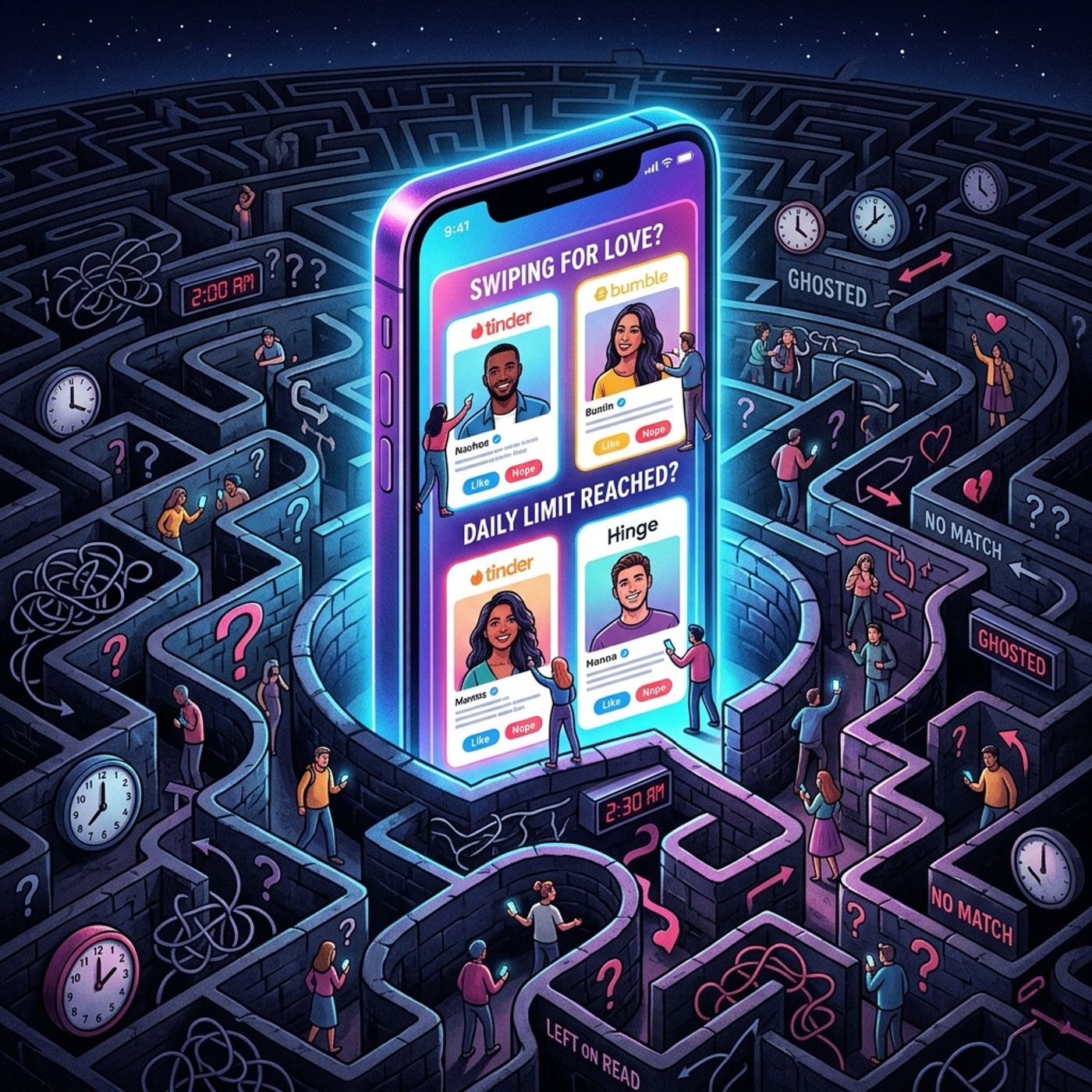
What Dating Apps Actually Optimize For (Hint_ Not Your Happiness)
About this episode
Become a supporter of this podcast: https://www.spreaker.com/podcast/conspiracy-theories-exploring-the-unseen--5194379/support.
Get every episode summarized
Each time Conspiracy Theories Exploring The Unseen publishes, we email you a written briefing from the transcript — the topics, who appeared, and any specific claims, with the ad reads skipped.
Email me new episodesFree for 3 shows. No card needed.
Hosts & guests
Transcript ready
94 searchable segments. Every word is indexed and playable.
Full transcript
Conspiracy Theories Exploring The Unseen — What Dating Apps Actually Optimize For (Hint_ Not Your Happiness). Machine-transcribed; use the interactive transcript above to jump the player to any line.
Tyler Reddick here from 2311 Racing. Another checkered flag for the books. Time to celebrate with Chamba. Jump in at chambacacino.com. Let's Chamba. No purchase necessary, BTW Group. Boy, we're prohibited by law. CCNC, 21 Plus, sponsored by ChambaCacino. When you download a dating app, what's your goal? Finding love, companionship, a fun night out? It's easy to think that these platforms are designed for your happiness and success. However, the truth may be more complex and a little unsettling. Let's start with a closer look at how dating apps operate. Most of them use a freemium model, meaning basic features are free, but you have to pay for the juicy extras. With Tinder, for example, they offer tiered subscriptions, Tinder Plus, Gold, and Platinum, each unlocking more desirable perks to entice you to spend. Sounds appealing at first, right? But as it turns out, the real goal behind these monetization strategies is to keep you hooked, not necessarily to help you find lasting happiness.
Speaking of being hooked, have you ever found yourself mindlessly swiping at your phone? You're not alone. According to a recent study, a staggering 78% of frequent users check their apps more than 10 times a day. Each session averages about eight minutes. This compulsive usage isn't just a quirky habit. It's designed that way. In fact, in 2024, a lawsuit was filed against Match Group, the parent company of Tinder and Hinge, claiming that the apps are intentionally designed with game-like addictive features. They create a cycle of compulsive use that can feel more like a pay-to-play loop than a genuine pursuit of romance. Critics, such as entrepreneur Arno Poissonier, argue that these apps create a facade of true love while being structurally engineered for inefficiency and profit. Leading users on without a real sense of fulfillment. The consequences of this business model extend beyond financial impact. A 2026 meta-analysis by Dr. Lisa L.
Shirabi reveals that dating app users report worse psychological health than non-users with higher levels of anxiety, loneliness, and depression. So while you might initiate the search for a partner with excitement, you could be stepping into a world that's ultimately more damaging to your emotional well-being. With the dating landscape rapidly evolving, thanks to apps like Tinder and Bumble, the historical context is crucial. Traditional dating often included slower, more thoughtful interactions, things like meeting through friends or shared activities. Now, we've moved to Swift Swipes and Instant Chats, which, while convenient, also strip away those deeper connections and vulnerabilities. As we continue this exploration, it's essential to recognize the impact of this shift on individual experiences. Dating apps promise connection and engagement, but they often prioritize their profits over your happiness. The addiction to checking for matches and securing likes can overshadow genuine,
meaningful relationships. As we conclude this first part of our dive into the world of dating apps, one crucial takeaway stands out. While these platforms can facilitate connections, they largely optimize for engagement and monetization. As users, we need to be aware of these dynamics and consider how they might affect us emotionally. In the next episode, we'll unpack further how to navigate these waters with awareness and perhaps find ways to reclaim our dating experience from the clutches of algorithms. Thanks for joining the Fortune Factor podcast. Tyler Reddick here from 2311 Racing. Victory Lane? Yeah, it's even better with Chumba by my side. Race to ChumbaCasino.com, let's Chumba. No purchase necessary, VTW Group, voidware prohibited by law, CTNCs, 21 Plus, sponsored by ChumbaCasino.
More episodes
More from Conspiracy Theories Exploring The Unseen

The Digital Mirage_ AI and the Death of Authentic Romance
Conspiracy Theories Exploring The Unseen

The Trust Trap_ AI and the Future of Romance
Conspiracy Theories Exploring The Unseen

The Ghost in the Machine_ Navigating AI Romance
Conspiracy Theories Exploring The Unseen

The Love Recession_ Why Digital Romance is Offline for Good
Conspiracy Theories Exploring The Unseen