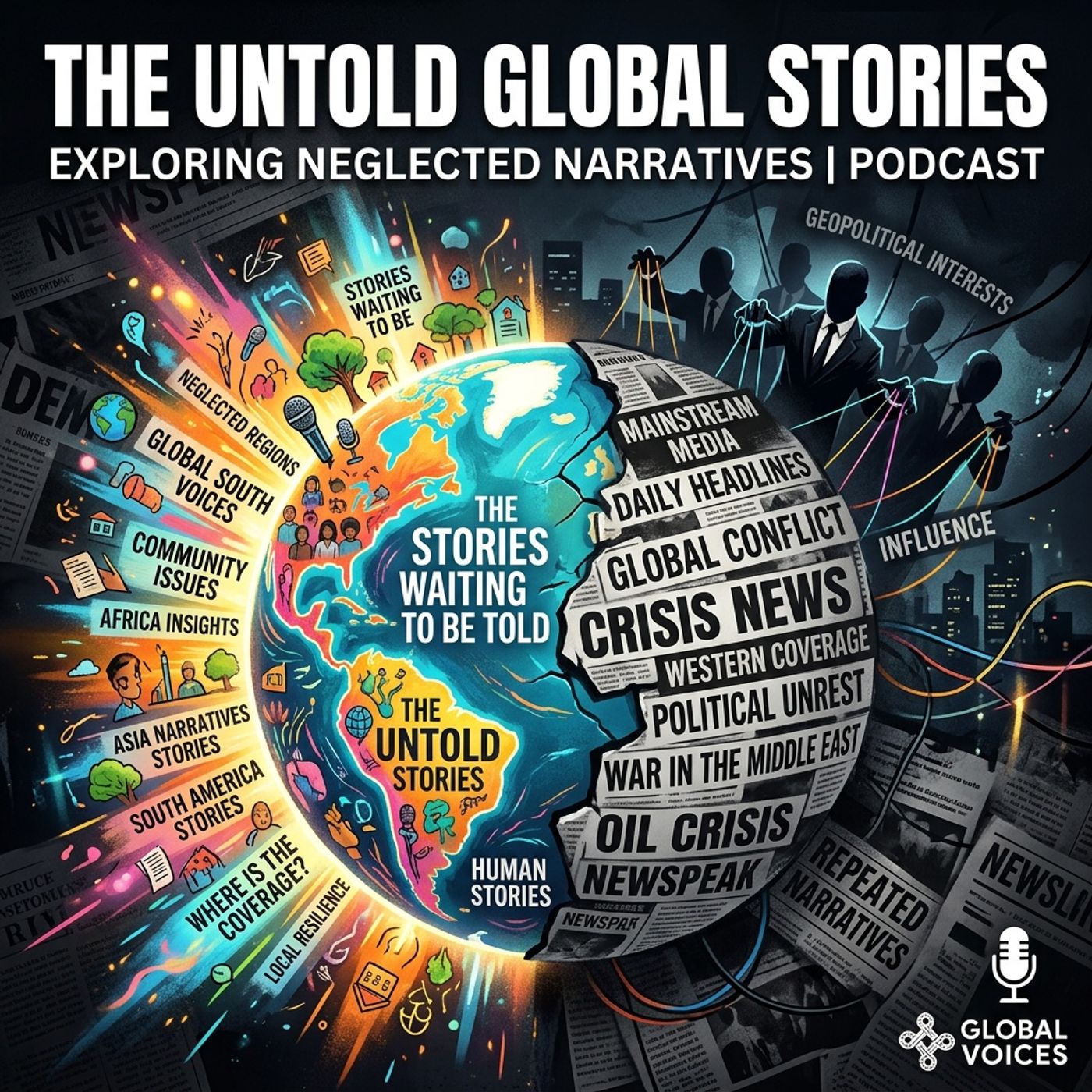
Under the Radar_ The Foreign News Gap
About this episode
Become a supporter of this podcast: https://www.spreaker.com/podcast/conspiracy-theories-exploring-the-unseen--5194379/support.
Interactive timestamps
Jump to segmentGet every episode summarized
Each time Conspiracy Theories Exploring The Unseen publishes, we email you a written briefing from the transcript — the topics, who appeared, and any specific claims, with the ad reads skipped.
Email me new episodesFree for 3 shows. No card needed.
Hosts & guests
Transcript ready
51 searchable segments. Every word is indexed and playable.
Full transcript
Conspiracy Theories Exploring The Unseen — Under the Radar_ The Foreign News Gap. Machine-transcribed; use the interactive transcript above to jump the player to any line.
0:00Let's dive into a critical issue that's shaping our understanding of the world. Why does mainstream media often under-report foreign claims? This isn't just a simple matter of choice. It encompasses a web of geopolitical influences, resource constraints, and even the interests of audiences that media outlets serve. First, let's take a closer look at those geopolitical influences. Often, media coverage aligns closely with the foreign policies of the countries where the outlets are based. Think back to the Russo-Georgian War in 2008, Western media coverage faced serious scrutiny for potentially favoring Georgia. The biases that crept in seem to reflect political alliances rather than neutral reporting. When it comes to wars and conflicts, the narratives we see are sometimes shaped more by what's happening in diplomatic halls than by the reality on the ground. Next, let's talk about resource constraints. Living international stories requires a lot.
1:01Experienced correspondence, logistical support, and sometimes a deep understanding of complex local dynamics. But with economic pressures rising, many media outlets opt to prioritize domestic news, leaving foreign events under-reported. The International Center for Journalists has highlighted how smaller, ethnic, and indigenous media have stepped up to provide coverage that often counters misinformation while mainstream outlets struggle to allocate necessary resources. And what about audience engagement? It's no secret that public interest drives media focus. According to a 2021 survey, a substantial two-thirds of Russians preferred news from state television, indicating a strong lean toward domestic issues. If mainstream media is catering predominantly to what resonates with its main audience, it's clear why foreign claims might slip through the cracks. Let's consider the broader implications of this under-reporting. Media critics argue that this leads to a narrow worldview, a perspective filled with domestic
2:05stories while global issues fade into obscurity. Without a comprehensive understanding of international affairs, public discourse suffers, leaving us with a society that may not fully grasp significant global events. On the flip side, many media practitioners insist that this under-reporting isn't rooted in a desire to omit foreign claims, but is a response to practical constraints like budget limitations and the complexities of international reporting. This paints a picture of a media landscape grappling with challenges, rather than one that's simply failing in its duty. In the end, as Edward Lucas, a well-regarded journalist, points out, the real battles and conflicts often occur in the information realm, not just on the physical battlefield. The outcomes of these battles can shape perceptions and reactions across the globe. This episode scratches the surface of a much deeper issue, one that's intertwined with our historical context, influenced by colonial interests and the evolution of communication
3:09technologies. Understanding how and why foreign claims are under-reported is essential in today's interconnected world. As we conclude this segment, remember these key takeaways. Geopolitical influences shape what we see in the media, resource constraints, limit foreign coverage, and audience preferences often dictate news priorities. It's a complex interplay that has profound implications for our world view. Thanks for joining the Fortune Factor podcast.
More episodes
More from Conspiracy Theories Exploring The Unseen

The Digital Mirage_ AI and the Death of Authentic Romance
Conspiracy Theories Exploring The Unseen

The Trust Trap_ AI and the Future of Romance
Conspiracy Theories Exploring The Unseen

The Ghost in the Machine_ Navigating AI Romance
Conspiracy Theories Exploring The Unseen

The Love Recession_ Why Digital Romance is Offline for Good
Conspiracy Theories Exploring The Unseen