About this episode
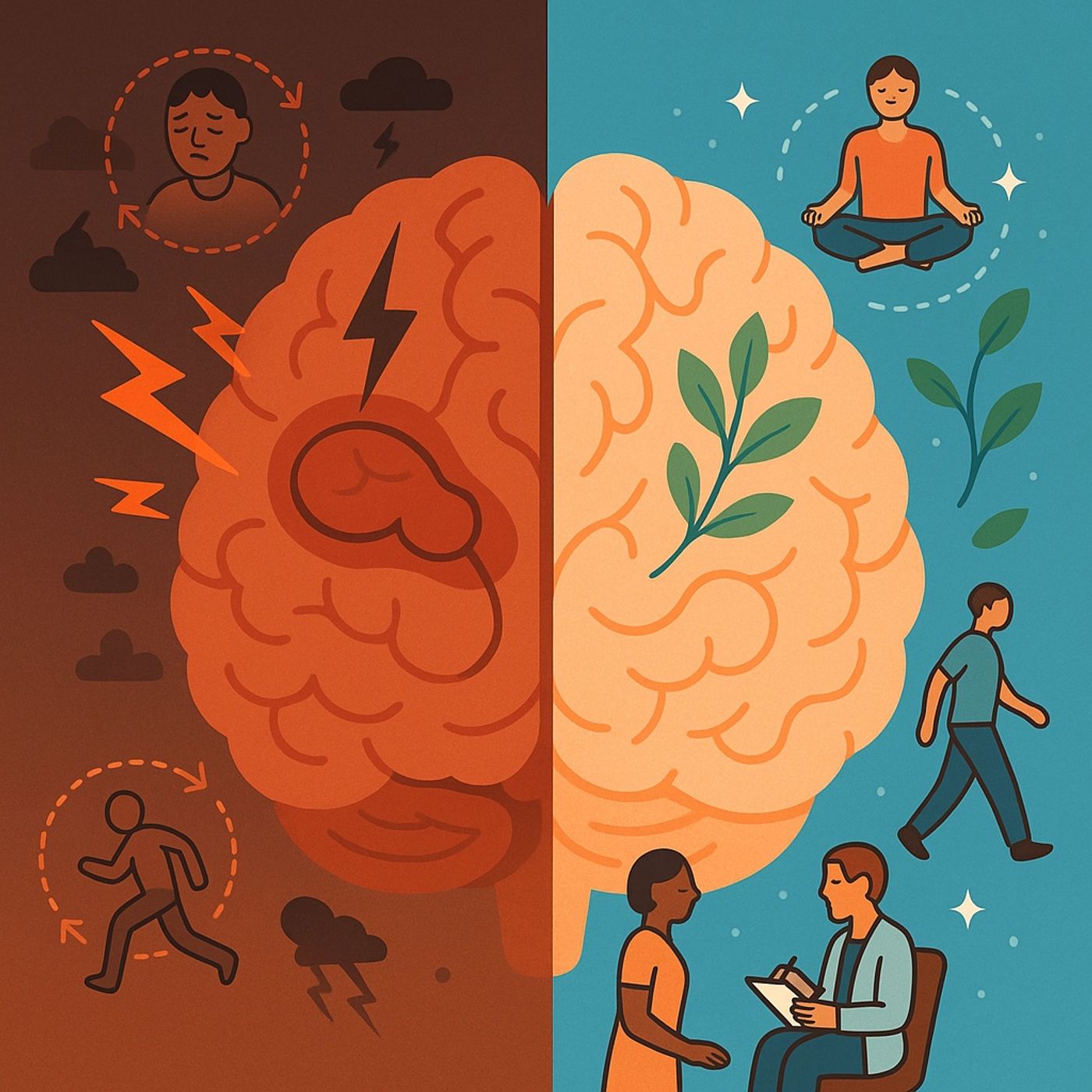
Explains how psychological trauma can physically change the brain’s structure and chemistry. Trauma can make the amygdala hyperactive, heightening alertness; reduce activity in the prefrontal cortex, impairing rational thinking; and shrink the hippocampus, which affects memory.
It also describes common consequences, including dissociation and being caught in a trauma loop characterized by fight, flight, or freeze responses.
Importantly, the passage emphasizes a hopeful perspective: the brain’s neuroplasticity allows for recovery through strategies such as mindfulness, physical movement, safe relationships, creative expression, and professional therapy.
You can listen and download our episodes for free on more than 10 different platforms:
https://linktr.ee/life_notes
Produced by:
https://www.podcaistudio.com/
It also describes common consequences, including dissociation and being caught in a trauma loop characterized by fight, flight, or freeze responses.
Importantly, the passage emphasizes a hopeful perspective: the brain’s neuroplasticity allows for recovery through strategies such as mindfulness, physical movement, safe relationships, creative expression, and professional therapy.
You can listen and download our episodes for free on more than 10 different platforms:
https://linktr.ee/life_notes
Produced by:
https://www.podcaistudio.com/
Get every episode summarized
Each time Life Notes publishes, we email you a written briefing from the transcript — the topics, who appeared, and any specific claims, with the ad reads skipped.
Email me new episodesFree for 3 shows. No card needed.
Hosts & guests
No transcript yet
This episode has not been transcribed. Request it and it moves to the front of the queue.
More episodes


