About this episode
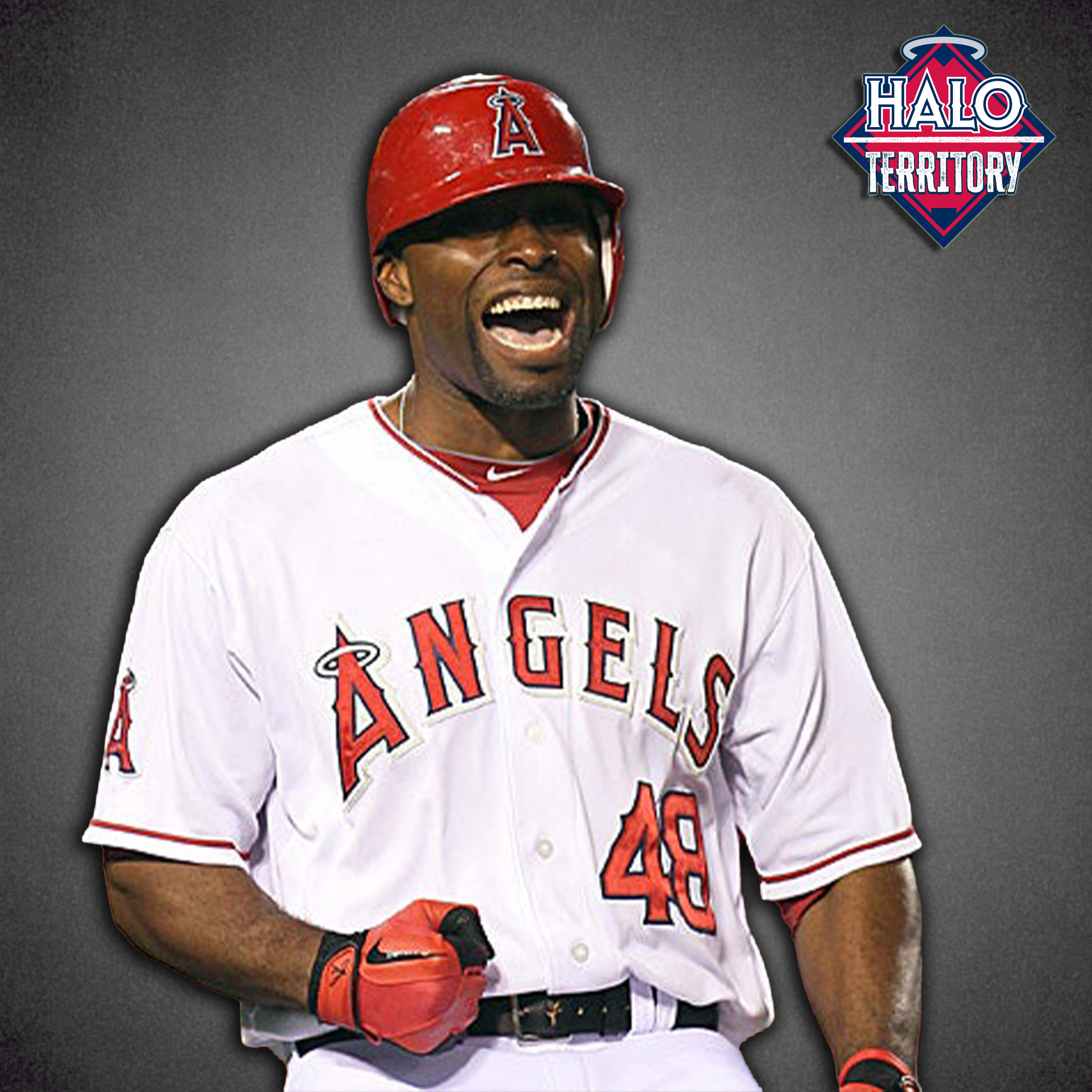
Former Angels outfielder Torii Hunter joins Halo Territory to discuss his new job as special assistant to the Angels general manager.
The nine-time Gold Glove Award winner also talks about his greatest catches, Mike Trout moving back to center field, Jo Adell's breakout season and more.
See omnystudio.com/listener for privacy information.
Get every episode summarized
Each time Foul Territory publishes, we email you a written briefing from the transcript — the topics, who appeared, and any specific claims, with the ad reads skipped.
Email me new episodesFree for 3 shows. No card needed.
Transcript ready
909 searchable segments. Every word is indexed and playable.
Full transcript
Foul Territory — Torii Hunter joins Halo Territory. Machine-transcribed; use the interactive transcript above to jump the player to any line.
On the Serving Pancakes Podcast, conversations about volleyball go beyond the court. Today we have a little best-friend compatibility test. Okay! And how long have we been best friends? It's just a day we met. As the league won volleyball season heads towards its final stretch, there's no better time to tune in. You'll hear unfiltered analysis behind-the-scenes stories and conversations with leaders making an impact across the sport, whether you're following the final push of love season or just love the game, Serving Pancakes brings you closer to the action and the people shaping the future of volleyball. Join your free iHeartRadio app, search Serving Pancakes, and listen now. Presented by Capital One, founding partner of iHeart Women's Sports. Ready for a different take on Formula One? Look no further than no grip, a new podcast tackling the culture of motor racing's most coveted series. Join me, Lily Herman, as we dive into the under-explored pockets of F1. Including the astrology of the current grid, the story of the sport's most consequential driver's strike, and plenty of other mishaps, scandals, and sagas that have made Formula One a delightful, decadent dumpster fire for more than 75 years. Listen to no grip on the iHeartRadio app, Apple Podcasts, or wherever you get your podcasts.
Hey, I'm Jay Shetty, host of The On purpose podcast. My latest episode is with Noah Kahn, the singer-songwriter behind the multi-platinum global hit, Stick Season, and one of the biggest voices in music today. Talking about the mental illness stuff, it used to be the thing that I was ashamed of. Being the talk about this is not common for me, and right now I need it more than ever. Listen to on purpose with Jay Shetty on the iHeartRadio app, Apple Podcasts, or wherever you get your podcasts. Hey angel fans, and welcome back to Halo Territory, I'm Mike D. Javana, joined by my regular co-host, Mark Trumbo. And as you can see, we have a very special guest with us today, Tori Hunter, former angels outfielder, current special assistant to the angels general manager, Tori, welcome to the show, how you doing on this morning of the angels foam opener tonight.
Well, first of all, thank you guys for having me. It's great to be with my old teammate, Mark Trumbo, Mike D. Javani, man, and you've always reported the news correctly. Appreciate it. Well, thank God for having me on the show, and I'll play. Yeah, this morning I woke up, ready to go, open a day. I'm talking to you guys starting off, and there we go to Angel Stadium and take care of business there, hopefully. All right. Well, Tori, you are nine time gold glove winner, nicknamed Spider-Man for your ability to scale walls and take home run balls back. Going to put you on the spot right at the top here. What were your top three catches of your career? Man, top three, I would definitely have to put just a moment of the All Star game in 2002. The guy that's hitting the ball is very bonds, and this is my first All Star game of 25 years old, and to be able to take away a home run on a big stage like that from one of
the greatest hitters that ever played the game. If not the best hitter, they have played the game. For me, a 25 year old kid from Palmblef, Arkansas, to take a home run away from very bonds. Definitely my probably my number one, probably not my best catch, but it was my greatest moment. And I was a Carlos Lee with the white socks, hit a ball in the metradome, and I jumped over that baggy fence out there in the center field and stretched down and caught the ball. The next day I was so sore, I felt like I couldn't play, but you know Trump, I don't come out of the game. And then number three, I would say with the Angels on Mother's Day, I made a catch on Mother's Day against the Royals, and I was able to catch that ball, and I was so pumped up and so hyped that I almost passed out. Of course there was some great catches, and then there was always the one that got away game two of the 2013 ALCS, you're playing right field for the Detroit Tigers, you're in
Fenway Park, Detroit has a 5-1 lead in the eighth inning, you're about to go up two games to none on the Red Sox, and up steps, big poppy David Ortiz, take us through that sequence two. Man, you know what's crazy, there's a story behind that, Ortiz and I went to Capitol Creole the night before, and just we sitting up talking, we're sitting up talking, and he says, hey, I got Joaquin Benoit's pitches, I'm like, oh snap, right? So I went back to the stadium for the next day, the day of that game was like, and why? You got to change it up on big poppy, he said he has your pitches. And Benoit was like, man, forget that, I always get him out, I'm like, oh my God. So Mal certainly comes out of the game in the eighth inning, and he's just struck out the side. We thought he was going to go back out there, but I saw Benoit running to the Mal when I went back out there in the ninth, and all of a sudden, I'm thinking like, I hope
he doesn't throw a change up because he knows it, it was an 88 mile an hour change up, and David Ortiz hit the ball. I'm like, oh my God, I'm running after this ball, swearing, pissed off, I'm like, I can't believe it's got through this pitch. So it's now, it's hit, and it's in the lights, and I felt the wall, and I'm like, forget this, it's the AOCS, I've never been to the World Series, that's it, my life, I'm half a down this field today. I knew I was going to die, but I came back to life after I got on, when I woke up on the other side, I came back to life, so, and then the cop, he was right there, he's supposed to be protecting his servant, but no, he was so far away, man, he had no shot to help of me, so it was just, it was a great effort, great moment for the Red Sox, great moment for a big poppy, one of my best friends in the game, but that's all out effort, and I was 38 years old. Does that play still kind of keep you up at night or show up in your dreams, no, that
played them or show up in my dreams at all, that pitch does, because Ortiz struck out three times a game, he didn't hit the ball at all, and then he stepped up right there, and the night before he told me, and it's all I can remember, this guy had his pitches, and trust me, first pitch, 88 mile now, he throws 98, so how you sit on that in the first pitch, am I right, Tom? Well, you don't, you don't, and now T, you see what I have to deal with, I mean, you caught almost 5,500 balls in your career. That's 14th in history, and this man wants to talk about the one you didn't catch. Right. When you got these, I didn't tell you about earlier. How iconic was this photo, the two V's, the cop, and unfortunately, down Torey. Did you ever talk to that cop, or sort of graph a picture form, did you ever, you two ever hook up after that crazy photo?
I know him before that. Oh, really? The spoken worst. Oh, yeah, he's a great guy. He had no shot. I cracked the joke afterwards, and I said, man, he's supposed to be protecting himself. I think people got kind of serious. I'm like, I was joking. He's like 20 yards away from the wall. Yeah. He can't help me. I was already dead. All right. Well, one of the, one of the rare, great guys in Boston, at least when you're on the visiting team, but all right, all right. I got a question. I got a question. It's a little more serious, but can you kind of take us through what your day-to-day role looks like with the angels right now as a special assistant to GM Perry, a manasian? Well, I mean, I'm there. I'm like a Shaolin monk. And you walk in a clubhouse and get there when they're there. And I just, I try to be present, you know, you've got guys that have things going on off the field. You've got guys that have things with, with finance, it was relationships with their family.
But also with, in baseball, they give it, I give them a different perspective on, on, on different things and, and on how to hit, you know, running a basis, preparing themselves. So I just try to be available for all the guys. And then if, if Perry needs an extra eye, only evaluate something or someone, I actually I'm there for them. They ask questions, but I try to be available when I'm here and be at the stadium as much as I can so they can see me and be, and be present for those guys. I mean, that's invaluable. I think that, you know, I've kind of wondered too, what, what is that, you know, special assistant? You see that title and it's not always totally clear, but it sounds like you're doing it all, which is cool and really helpful for these guys. Yeah. One question that, you know, I've been out of the game for the five or six years now, things have changed a lot. Can you talk about, like, what the day to day work looks like that the guys are doing compared to, you know, maybe when you played, I don't see as many guys out there hitting
batting practice. Some teams rarely do it, apparently. And I'm wondering when, when guys are working on their defense and other things, I mean, I know what we were used to, but it seems different to me now. Is that true? Uh, I feel like it was. I think this year with Kurt Suzuki coming in, they really tried to put more emphasis on defense. Um, the guys are out with Brady Anderson as the hidden coach now, you know, he's going to have them out there early, and I saw trout, you know, he's there eight in the morning on the field, hitting, you know, extra and some guys will go out with him so he can catch it, get a break and, and the results are shown in this early part of the season and in spring training. He was actually hitting the ball, going back to hitting line drives and, and getting his fist to, to hit, I think he stopped hitting up the machine and, and, and started going with live arm and, and, and, and we definitely see some results. So these guys do work, you know, they still have a lot of injuries in Major League Baseball.
And you got all this technology, you guys got workout programs, nutritionists, massage therapists, they got everything they need, but at the same time they got more injuries. And, uh, so I don't understand that, but I, I think it's, they get a lot of days off. They don't have the, like when you're working out, uh, you, you bench press 200 pounds, but if you do it enough and then you max out, then you can bench press 220, then you can bench press 240. I think these guys got to push themselves to play every day as much as they can if you have an opportunity, and then that, that actually, your mind will overtake, uh, the body and say, Hey, you got to go out and perform and it heals itself. So if you keep, you know, uh, baby and a lot of these guys giving them days off because they don't feel right or whatever it may be, then they don't know how to push through those walls and, uh, and then you get a lot of injuries, uh, that way. On the serving pancakes podcast, conversations about volleyball go beyond the court. Today we have a little best friend compatibility test. Yay. How long have we been best friends for since the day we met?
As the league won volleyball season heads towards its final stretch, there's no better time to tune in. We really are like Ian and Yang, vodka and tequila. You'll hear unfiltered analysis behind the scene stories and conversations with leaders making an impact across the sport. Today we have Logan, my mecky. I feel like our fan base in general is very connected, just like a comforting feeling getting to play at home. Whether you're following the final push of love season or just love the game, serving pancakes brings you closer to the action and the people shaping the future of volleyball. Jordan Thompson had that microphone out. Doctor, maybe we make mistakes or cuss at our coach like my time or two times. Open your free iHeart radio app, search serving pancakes and listen now. This has been serving pancakes and we'll catch you on the flip side. Okay. Presented by Capital One, founding partner of iHeart Women's Sports. Ready for a different take on Formula One? Look no further than no grip, a new podcast tackling the culture of motor racing's most coveted series. Join me, Lily Herman as we dive into the under-explored pockets of F1, including the astrology
of the current grid. Louis Hamilton, Crapacorn Sun, Cancer Moon, wouldn't you know it? Michael Schumacher is also a Capricorn Sun, Cancer Moon. The story of the sport's most consequential driver's strike. We have one man who upon hearing that he was going to be fired, freaked out and apparently climbed out the window of the bathroom. Was Daniel Riccardo's illustrious F1 career a success story, a cautionary tale, or some combination of both? He started getting all this attention and he may be started to think, I'm bigger than this. I'm better. And plenty of other mishaps, scandals and sagas that have made Formula One a delightful, decadent dumpster fire for more than 75 years. Listen to no grip on the iHeart Radio app, Apple podcasts or wherever you get your podcasts. Hey, I'm Jay Shetty, host of The On purpose Podcast. My latest episode is with Noah Kahn, the singer-songwriter behind the multi-platinum global hit, Stick Season, and one of the biggest voices in music today. Noah opens up about the pressure that followed his rapid success, his struggles with mental
health and body image, and the fear of starting again after such a defining moment in his career. It's easy to look at somebody and be like, your life must be so sick. Man, you have no f***ing clue. Talking about the mental illness stuff, it used to be this thing that I was ashamed of. I'm just now trying to unwind this idea that I have to be unhealthy physically or in pain in some emotional way in my life to create good music. If someone says that I did a good job, I'm like, yeah, I'm good. Someone says that I suck, I'm a f***ing guy suck. Getting to talk about this is not common for me, and right now I need it more than ever. Listen to On Purpose with Jay Chetty on the IHAR radio app, Apple Podcasts, or wherever you get your podcasts. Mike Trout back in center field this year after towing with right feel for a little bit. You played center field most of your, pretty much all of your career in a late career switch to right field. What is it, you know, Trout's talked about, people have talked about this being easier
on your body moving the right field, but is it really easy on your body? Is there any big difference? Well, it's less running, especially if the dugout is on the first base side. You shoot. You're having a hard all the way across the field, but you know what, there are some quick burst in right feel. Some balls have a little seek, some balls have a cut, and you really have to really get after it for about five to ten steps. In center field, you go out there and you can stay as smooth as possible, and that's what I think Trout is talking about playing center field. Actually, it's less on your body because you're able to glide to the ball and without that quick burst, and with Trout having leg injuries and to his lower body, I definitely think that's center field, and you know what, mentally, him playing center field and be able to be that kid again, I mean, he's 34 years old, I think. And just to be in center field and be that kid again, he still could run, he still can
go out to the ball. It actually probably would help him in his total gain. So allow him to go and be that kid again and be the Trout that his mind tells him to be, then his body will follow. Yeah. I think there's a lot of backing up bases and things in the corners, too, that people don't always account for, you know, right field, you're counting on to bust it, you know, all the players to first base, whether everybody does that, you know, you can judge for yourself. But, you know, I played a lot of right field, couldn't hold your knock, but, you know, I would have liked to, but I, you know, I never had the speed remote, you know, part of this is you have to have the speed center field. You were fast. You do. Yeah, sure. You're really fast. That's right. I'll tell my daughter. No, you were my teammate for two years, so I know. Maybe. Well, I appreciate that even if you'd be in nice, okay, so truthful.
Well, thank you very much. I know it means a lot. Another thing that it means a lot, I think probably you, Joe Adele credited you with really helping him out, improving his approach at the plate, improving his defense, especially in right field. I mean, I watch, well, now I watch every game. And he made some tremendous strides, and it really seems like it came out for the work you guys did. And I know from, you know, doing some coaching and hitting, especially with hitters last few years, when you're not playing kind of the next best thing is getting credit, you know, and it's not the credit, but, you know, somebody showing appreciation for the work you put in to help them. And that was really neat to see. Maybe if you, if anything, click with Joe that you can talk about, was it more mental maybe? Yeah, I definitely think it was more mental. I think he's maturing. He's, he's listening to more wisdom and, and he's able to, to separate, you know, what works for him and what doesn't work for him so you can give him a lot of options and
whatever doesn't work, he's, he's maturing up to throw it out the window and, and keep the things that does. And I think that's just maturation over time, he's, he's, he's starting to gather the right information. He's starting to shoot the ball the other way a little more so he could cover the whole field. This guy has tremendous, a tremendous amount of pop, you know, maybe the highest exit velocity on the team, of majority of the time. And, and the ball that flies out to rice in the field, he has more power than most people I know, maybe not you, Trumbo, but this guy has some thumb and right, he's got some, he's got some. And defensively, you know, the last two or three years, we're in the outfield, all he wants to do is get better defensively. Hitting, hitting is like it has his ebbs and flows, it's up and down and defense should never slump. And I tell him, you want to play a long time, play defense because if he can be relied upon on defense, when you struggling at the plate and you're not good at defense, then
you're not good at all for the team. But when you struggling at the plate and you actually save rise on defense, you actually can keep yourself in the game and sometimes making good plays on defense can carry over to your offense. So he wants to get better defensively and you can see the improvement in the last two or three years. Joe has some, oh, go ahead, Mark. Sorry, Mike, you don't get enough credit for your throwing arm, I think. You know, everyone talks about your, you know, the acrobatic plays, the, you know, Robin home runs, but I mean, you had literally the, I, the most accurate throwing arm that I play, I mean, I played first base. So part of the time you're counted on to cut balls that have, you know, side spin, not online. Sometimes you're going to cut them if the runner might be safe at home and the, the batter runner is going to just run into that silly out. But with you, I mean, I don't think I cut, I can't remember cutting anything. There were always right on the money, perfect one hop, never over through the cutoff man
either, which really speaks to like fundamentally sound baseball. And I, and, you know, it's, it pains me to see these outfills, throw these, you know, grenades. And I'm not, I'm not saying the angel players, but around the league, it just like, and that's, but as an outfiller, that is in your control. But you were, I just wanted to point that out that you're throwing arm just doesn't get enough credit because strong and accurate. I'll probably do one of the last guys that actually took infield at 615 before the game started, you know, and they kind of took that out of baseball. So we had to throw with Tom Kelly with the twins. If you missed the cutoff, man, he would take you all the field in front of all the people and say, get off the field, you're not ready, right? So we always had to take their field and there was a serious thing. And, and, and so we have to be fundamentally sound with the twins. Kirby Puckett was one of the guys say, I need you to be accurate. You got a strong arm, but be more accurate and hot only way you can be more accurate is one hop the base. So I learned to throw hard and one hop the base, which keeps it accurate.
So when the ball bounces, it only bounces a small disbursement and you can make the player. You know, me trying to throw the ball all the way to the basis, it's, it's a hundred and ten percent, which doesn't exist. And actually you throwing it, you're off, but your arm looks good. It's for show, but you're not, you're not getting any dough. You're not getting making any money. So you're not throwing anybody out because they have to reach up and come back down. That's too much time for them to be safe. So one thing I teach when I'm going to outfill with the guys the last three years with the angels is, hey, one hop the base and not try to throw the ball all the way. So we're doing that from the minor leagues, always to the major leagues. Be more accurate. You'll be more accurate if you can just one hop that base with, with your strength. One follow up on Joe Tory, you know, he has struggled a little bit moving to center field. And he's a lot better of a right field. There's a guy he's played both so well. How would you sort of coach this guy up right now and when he has to go up, you know, shift over to center field?
Joe's a big guy. Joe, you know, people don't understand Joe's about six, three, you know, and he's jacked. And I think he's just a big body kid, center field is a place where if you need to give a try to rest, you can put him in center field. He can hold it down. I don't think he's a true center fielder, but I think he can hold it down. Right field is just seemed like that's a better fit. His arm is strong enough to throw guys out. He's able to get to the ball. I think he's more comfortable in right field. And sometimes where guys comfortable, you got to allow him to play over there. He's not hurting the team, playing at right field. I wouldn't even try to stick him in center field, but as a mainstay at all. Which in gears a little bit, you interviewed for the managerial job with the angels last fall. How do you feel about that process? How it played out and the outcome? And are you still interested in becoming a major league manager? Uh, well, I really enjoyed the process the last two years with Perry.
And we sat down. We had great conversations, some of the things that, you know, I would do some of the things that wouldn't change. Some of the people I would change, some of the guys I would keep, you know, and I gave my, my honest opinion and, um, and, and we, we, we had great conversation. It's just, you know, didn't work out. And, uh, for some reason and, and, uh, I'm not sad about it. I stayed in the organization. I, I love the organization. It's something that I really want to do is, uh, uh, be a part of it. And, uh, and when the opportunity came, uh, presented itself to be a manager, possible manager. You know, I say, you know, what, if, if I'm going to do anything, I, I'll, I'll manage. I don't know if I want to cause full time, but if I can manage and create the team that, that I can see, you know, and I can see that wins and, and give them the fundamentals that, that they need to go out, uh, perform on a day-to-day basis, like Mark Trumbull, the, it's the small things, uh, even in business right now. It's the small things in the business servers, you know, uh, the customer experience and
all these different things, those small things that people forget about because they looking at the big thing, though, you know, uh, I definitely think that's what keep customers coming back in, in baseball, if you fundamentally sound, you can feel the ball, turn the double plays, uh, throw the guys out, be more accurate at the, at the plate, have good to strike approach, battle with the plate, uh, uh, uh, try to do less to get more. You do all these little things. That's what actually wins game because when you get to the playoffs, that's what matters during the season. If you're hitting bombs that you're doing all those things, it doesn't matter because you're going to face a one, two, and a three starter, if you don't have, you, if you're not fundamentally sound, you're not going to win. I don't care what you say. So, uh, I think if you teach that throughout the season, I think that works and that's something that I wanted to bring to the angels, uh, bring back to the angels because I got, I think we got to a point four or five years ago where we had launch angle, got swinging for the fence, you know, defense was terrible. I, I'll tell you now, five years ago, I could not stand watching the, the angels,
really. Wow. Now, they're actually giving them, they're actually giving their, they turned the corner. No one's really talks about that stuff anymore. We talk about, hey, the small things, play the games, the controllables, that's what Kurchuzuki always talks about, the controllable controller things that you could control and you throw out the other things that you can't. On the serving pancakes podcast, conversations about volleyball go beyond the court. Today we have a little best friend compatibility test. Yay. How long have we been best friends for? This is the day we met. As the league won volleyball season heads towards its final stretch, there's no better time to tune in. We really are like Ian and Yang, vodka and tequila. You'll hear unfiltered analysis behind the scene stories and conversations with leaders making an impact across the sport. Today, we have Logan Lehniki. I feel like our fan base in general is very connected, which is like a comforting feeling getting to play at home. So you're following the final push of love season or just love the game, serving pancakes brings you closer to the action and the people shaping the future of volleyball. Jordan Thompson had that microphone on.
We make mistakes or cuss at our coach like my time or two times. Open your free iHeart radio app, search serving pancakes and listen now. This has been serving pancakes and we'll catch you on the flip side. Okay. Presented by Capital One, founding partner of iHeartWomenSports. Ready for a different take on Formula One? Look no further than no grip, a new podcast tackling the culture of motor racing's most coveted series. Join me, Lily Herman as we dive into the under explored pockets of F1, including the astrology of the current grid. Louis Hamilton, crappy corn son, cancer moon, wouldn't you know it, Michael Schumacher is also a capricorn son, cancer moon. The story of the sport's most consequential driver's strike. We have one man who upon hearing that he was going to be fired, freaked out and apparently climbed out the window of the bathroom. And was Daniel Ricardo's illustrious F1 career a success story, a cautionary tale or some combination of both. He started getting all this attention and he may be started to think, I'm bigger than
this, I'm better. And plenty of other mishaps, scandals and sagas that have made Formula One a delightful, decadent dumpster fire for more than 75 years. Listen to no grip on the iHeart Radio app, Apple podcasts or wherever you get your podcasts. Hey, I'm Jay Shetty, host of the on purpose podcast. My latest episode is with Noah Conn, the singer-songwriter behind the multi-platinum global hit, Stick Season, and one of the biggest voices in music today. Noah opens up about the pressure that followed his rapid success, his struggles with mental health and body image and the fear of starting again after such a defining moment in his career. It's easy to look at somebody and be like, your life must be so sick. Man, you have no f***ing clue. Talking about the mental illness stuff, it used to be this thing that I was ashamed of. I'm just now trying to unwind this idea that I have to be unhealthy physically or in pain in some emotional way in my life to create good music. If someone says that I did a good job, I'm like, yeah, I'm good. If someone says that I suck, I'm like, f***, I suck.
Getting to talk about this is not common for me, and right now I need it more than ever. Listen to on purpose with Jay Shetty on the IHAR radio app, Apple Podcast, or wherever you get your podcasts. You do have a lot of business interests in Texas, but if another opportunity to interview for manager's job comes up, you're going to pursue it? I don't know. I don't know. I really love what I'm doing right now. That opportunity came and I took trying to take advantage of it. It even came up with the twins as well, and that didn't work out as well, but I understand that you have a catcher. Catchers, they seem to be more of a manager, but I'm a baseball guy. I got a PhD in this game. Trump will got a PhD in this game. I know how to play this game, and I know that I need to show you and stop the second basement, the third basement. I need everybody around me. You build a team around you. That's what they do. A pitching coach, a bench coach, a formal manager that help you go through the process.
If I build a team around me, it doesn't matter what you throw at me. I got a great team and a team that I trust as my staff. I think a lot of guys can be managers, but I think it's just a notion that people think that catchers are better. I don't know. No, you're right about that. It's like a built-in. This guy's got the goods or something. I've interviewed for a couple things, too, more on the head inside, but you didn't get them. You don't know why. You come away. Who knows what somebody's looking for. So, DG, thanks for the hot tamale questions there. That was hot. That was so hot. Yeah. Yeah. Okay. All right. All right. All right. Everything I just said was great. Now you act in the hot quiz. I always love when I ask you a question and you say that's a hot tamale. That's when you know it's a good question.
All right. Not so hot tamale. Not so hot. Here we go. Yeah. So, I'm watching the other day. Matt Chapman. He has some direct words for his first baseman, Casey Schmid. I don't know if you saw it or not, but it's a pretty direct feedback he felt like the place should have been made. In addition, I also read a pretty cool article the other day on the Dodgers where Dave Roberts was talking how important it was to get Clayton Kursaw's buy-in early on at least as the team leader Kursaw being an unequivocal leader of the Dodgers. And if he bought in, the other guys would buy in. So you've talked about Kirby Puck being a big mentor to you and showcasing his leadership. And I didn't know him. So I don't know what I saw from you was close to what he did or not, but you were one of a kind. You're not going to be able to replicate that as far as leadership. I mean, hundreds of guys have benefited from having you on their team. And I've never seen anybody as good as it than you.
But I guess my question is in this current game, the A-word analytics and a lot of teams going younger. Guys are getting big deals that are in AA right now, and it seems to be a thing. I mean, is leadership as important as it's always been in the game? I think it is. I see playoff teams. They have a pretty clear leader, usually, if not more than one. And where do your thoughts on that? I definitely think that you have to have wisdom on your squad. I mean, every business model, every team that you know about that is one or going to the next level. They've always had wisdom amongst them. And I think just having a great, you just can't have the wisdom without the talent as well. So you got to have some talent with your wisdom. So you got to prove that you can go out there and play every day. And they got to watch you fail and see how you react. And if you can bounce back and the quicker you bounce back, it builds up that leadership. And you know, most leaders don't say that they're leaders.
They let other people say that they're leaders. And in this game today, I think it can't be analyzed and you can't evaluate it. So that leadership is like the last quality that they're looking for because of analytics and data. That's what they're looking more at, what you're not doing and what you can do. But as far as leadership, it's like the last quality that they're looking for. And but I think this should be something that you, I'll take character that I can teach you all the fundamentals and teach you the game. If you in the professional RAM and minor leagues and you come to the major leagues, if you got great character and great leadership skills, I can teach you how to hit and how to play the game the right way. So I would definitely take the character or the leadership skills first. And then I can teach you whether it's in business and whether it's in this in this game because I think if you got great character, that shows that, you know, you can represent
me off the field and for the angels, it shows that you're going to treat people with love and respect around you and you're going to make people around you better. And that's what good leaders do. They make you better even when they're going through rough times. Terri, how is your perspective on the game changed since you retired, especially watching it now from the front office side? Oh, man, I tell you one thing that the ABS, the ABS is kind of, it's cool because now they're getting it right. But the ABS also, when I'm watching, it doesn't allow the players to swing. They're thinking that they're supposed to be balls and that's not how the game should be played. You should be ready to hit no matter what. And I think they're getting more lax because if it's even a inch off the plate, they're like tapping their head. I'm like, you should have been swinging at that. It's called protect the plate, you know? And so it's kind of like, it's kind of like a push and pull good and bad, you know, there's
a lot of good in it. You know, we all knew C.V. Buckner was bad. But now we really see C.V. Buckner. You get some guys exposed, but at the same time, it's not about that, it's really showing those guys up. I'm be understood with you. I like a lot of the umpires as people, but it's really showing those guys up a lot. And but at the same time, I think it's heard the hitter because they're not aggressive enough. There, there's, it's too lax. If it's close, they're taking pitches down the metal, thinking that they're just going to get a walk. I never seen so many backward, backward caves in my life this year. It seems so important. To me, it seems kind of awkward, to be honest. And I know the umpires are not happy at all. I'm not sure. Maybe there was a memo that went out talking about, you know, how they're trying to actually judge these pitches.
And some of these, you know, that are so borderline. They're strikes, but they, you know, they're barely in the box. And you know, guys are getting a lot of flack for either challenging the wrong ones or not challenging other ones that, you know, confusion and we'll have to see as it goes. I think it's brand new. So, you know, I'm all for accuracy, but with this one, I'm not seeing it yet if I'm being honest. It doesn't feel like the game that I knew and nobody gives, you know, whatever about what my opinion of what I want to watch. But I don't know, I do say thinking, and there's been a lot of storylines about it. If that's what they're looking for, you got it. Yeah. All right. All right. Well, my last question for today, but it's, it's my personal thing and I, you were a career 277 hitter over 17 years, the average 21 homers 82 RBIs, but I vividly remember you talking about that you could count on Torrey Hunter to hit 280, hit 20 home runs and drive
in 80, 80 runs. And if I'm mistaken, I apologize, but I feel like you said that, you know, and that was, but you were saying that you, that's what you held yourself to every year. And you were dependable and seems to count on that at least from you. If not more, the batting average, I think, you know, you do the best you can. I always wanted to hit 280. I never got there, but I wanted to do it. And I, I wasn't satisfied. Yeah. Whatever. No, no, no. It's part of the deal had the home runs, but, but I thought it was, and I still think it's very important. Do you think it's still important to, to try and hit for a high batting average? I think it's very important to hit for high batting average. If you got a high batting average and you got runners in scoring position, I want you at the plate. I don't want the guy that swings and wails at, you know, and rarely hits the ball consistently. And if I, if I can have a riot set to plate every time what a runs in scoring position, the ninth inning, I want to Luis a riot set to plate because he's going to make contact
and give me a chance to jump up and down. And so I still think that trying to make contact and trying to get that average up is very important. And I think with the, you know, that that spell in five years ago, six years ago, where we got into that launch, launch angle and the exit velocity and all these different things. I think the average suffered a lot. But guys again pay for that. So if guys again pay for that and these players see that they're getting paid for for this, but hitting 240, 230 with 40 home runs and 60 RBIs, is they getting paid for that? Why would not try to do it? So I can't fault the players on that. I've fought the philosophy and I think that philosophy is starting to change and come back. I saw with Milwaukee Brewers, who went out there and they hit and ran and they bunded at the ball. They played the game the right way and ended up making themselves a playoff contending team. And so I think you're going to see a lot of teams change that you saw it on the playoff
the way they played the game with Blue Jays. And it was all the little things that actually hurt them and on both sides. But I definitely think that, you know, when you talk about the small things and hitting for average is a thing that I will want at the plate opposed to trying to wait for a home run. I want to see action. I want to see movement. And I'm pretty sure the players want to see the same thing as well. On the Serving Pancake's podcast, conversations about volleyball go beyond the court. Today we have a little best-spring compatibility test. Okay. How long have we been best friends for? Since the day we met. As the league won volleyball season heads towards its final stretch, there's no better time to tune in. We really are like Ian and Yang, vodka and tequila. We'll hear unfiltered analysis behind the scene stories and conversations with leaders making an impact across the sport. Today we have Logan Lennicke. I feel like our fan base in general is very connected, just like a comforting feeling getting to play at home. Whether you're following the final push of love season or just love the game, Serving Pancake's brings you closer to the action and the people shaping the future of volleyball.
Jordan Thompson had that microphone out. We make mistakes or cussed at our coach, like my time or two times. Open your free iHeartRadio app, search Serving Pancakes and listen now. This has been Serving Pancakes and we'll catch you on the flip side. Okay. Presented by Capital One, founding partner of iHeart Women's Sports. Ready for a different take on Formula One? Look no further than no grip, a new podcast tackling the culture of motor racing's most coveted series. We need Lily Herman as we dive into the under-explored pockets of F1, including the astrology of the current grid. Louis Hamilton, Crapacorn Sun, Cancer Moon, wouldn't you know it? Michael Schumacher is also a Capricorn Sun, Cancer Moon. The story of the sport's most consequential driver's strike. We have one man who upon hearing that he was going to be fired, freaked out and apparently climbed out the window of the bathroom. And was Daniel Riccardo's illustrious F1 career a success story, a cautionary tale, or some combination of both.
He started getting all this attention and he may be started to think, I'm bigger than this, I'm better. And plenty of other mishaps, scandals, and sagas that have made Formula One a delightful, decadent dumpster fire for more than 75 years. Listen to no grip on the iHeart Radio app, Apple podcasts, or wherever you get your podcasts. Hey, I'm Jay Shetty, host of The On purpose Podcast. My latest episode is with Noah Conn. The singer-songwriter behind the multi-platinum global hit, Stick Season, and one of the biggest voices in music today. Noah opens up about the pressure that followed his rapid success, his struggles with mental health and body image, and the fear of starting again after such a defining moment in his career. It's easy to look at somebody and be like, your life must be so sick. Man, you have no f***ing clue. Talking about the mental illness stuff, it used to be the thing that I was ashamed of. I'm just now trying to unwind this idea that I have to be unhealthy physically or in pain in some emotional way in my life to create good music.
If someone says that I did a good job, I'm like, yeah, I'm good. Someone says that I suck, I'm a f***ing guy suck. Getting to talk about this is not common for me, and right now I need it more than ever. Listen to on purpose with Jay Shetty on the iHeart Radio app, Apple Podcast, or wherever you get your podcasts. A lot of hits on the ground too, I mean, the ground ball hit kind of, it's not as popular and whatever, but that's how you keep your batting average up is getting those ground ball hits. You hit them hard. Sometimes you don't hit them hard. They all count. It's actually any mention Joe used in the whole field. There's a lot of hits over there in that four hole, but it's not going to happen with a swing that's trying to hit the left field foul pole. Often if that's real, so I think that that's kind of what I'm getting at, and you talked about it. You said it better than me, but it is important, I think, and hopefully it is coming back around. I like watching Steven Kwan. I like watching Arayas. These guys have nothing in common with me, but they, you know, it's like, man, I like
that. I like that. Look at that punch single. That's cool. I think it's really cool. That big hit with, that big hit with runners and score position, you want that guy at the plate. You know, for me, it was a 270-280 hitter that you say, but, man, I was a hybrid. You know, I was a guy who led off the first couple of years, so I was, you know, sending tables. And then they say, this guy has a mentality to hit third, fourth, and fifth. It doesn't matter where he goes. He has a mentality. He's ready to go. So he put me fourth and fifth, you know, with the twins and I, and I hit behind David Ortiz. I was his protection for a long time. And so now I didn't have my identity. So when you see me at 280-270, and then 20, and if I wanted to swing like these guys, I probably would have hit 30 and 40, but I would have, my average would have suffered. Right? No question. But if I say, you know what, I don't want to hit 20. I want to just give, I could have hit 300, you know, and I did it a couple of times in my later, in my career. So it's, I was a hybrid and, and I was confused.
I would say you were very talented, because it's hard to do both. And, and with the trite, you know, you were hitting in the top of the order, I'm not mistaken with the trite. And, and, and hit it for a higher average, and I don't want to say set in the table, but maybe a little bit. Yeah. And had some big boppers behind you. Yeah. I know. I know. You did? Yeah. He didn't look confused the night you hit three bombs in Anaheim and had a chance for four. Oh, man. Oh, that day, that day, I, I was all something. Yeah. I'm telling you. You're a guest. All right. I would have hit 30. 40s. All right. All right. T, we're going to close the show with a not hot tamale. I don't know if you remember, but about 15 years ago, you were one of the guys I interviewed for a story I wrote about players and their special relationships with their gloves. And you said, you would name your gloves. What would you name your gloves? How would you name them? And what would prompt you to switch gloves maybe when one of them was acting up?
A little bit. Well, well, you know, when the glove was, when I first meet my glove, oh, man, this sounds really bad. But when I first meet my glove, I give, I give them a warm bath in a microwave, right? I put it, I dipped them in a sauna of the jacuzzi and a warm jacuzzi, then I put them in a microwave and then a massager for a long time. My glove and a massager for a long time, right? To actually mold and make it, make her the way I want to. And then I go out and I perform with the glove and the glove does what it's going to do. I always celebrate it. I put it on the pedestal on top of my locker and let people see the gold on it. And when I make an error, if I make an error, I actually put it back in a microwave. And donate it to charity.
So you didn't donate many gloves? I didn't donate a lot of gloves, but I'm pretty sure I donated about 12 over the 15. And did you have names for them and how would you name your gloves? Well, you know, I have Susie Q, you know, I don't know, I always like that name. I heard it maybe in the story and it was Susie Q. So I'd name my first glove, Susie Q, and I always say, oh, guys, go get Susie Q. They'd be like, who is that? And then some of my clubhouse guys with the twins, they always knew, and I got Susie Q. You want me to take her up? So I love that name and that was my first glove, Susie Q. I had one name, Bertha, Big Bertha. It sounds strong. You don't want to mess with Big Bertha. I liked that. I wish I could have borrowed Big Bertha. I think that's what I was missing. I think that's what I figured out why I was limited out there.
I didn't have Big Bertha. If memory serves you, there was also a cocoa and a delicious in there as I recall. Hey, cocoa and delicious was good as well, but those, that's from another story. That's what a lot of, how do you know all this stuff might? Well, Tori and I are pretty good here. That was a fun story, fun story. That was also a record. Hey, can you clarify one thing and I might be late to the party on trout's glove? I don't see a trapeze currently. Is it you mean you got rid of it? Okay, all right. I wasn't crazy. Maybe I think it was this year, if it was last year, well, you know, it wasn't playing a ton of D last year, but that's a big, I, to me, used to trapeze your whole career, I believe. Yeah. And he had this point, I see an H way about there or something. Yeah. I mean, he's catching a ball and it looks good out there to me. I don't think, I don't know what you guys think, but I think he looks good out there. He's making the, the play and, and, and he seems comfortable.
So. No, I agree. Yeah, in the win the other day, but that's that that was the Chicago, the win was blown like crazy. Yeah, it was nuts, it was nuts, but he looks great. And he's happy. He's smiling. He's stealing bases. Yeah. It looks like a mic trout of, you know, years ago. If he keeps it up, man, the teams are being great. Yeah, and, and yeah, it's good. You can tell, you can tell it's good for these, he's having fun. And that's, that's what you want to see. We're having fun. We've been told our, our podcast lacks energy. It's not going to lack energy today. It's not going to lag. I found the solution to lack energy today. No, no, it won't. There's, thank you very much. Tori, can you come back three times next week? Not, not much in my, not the budget, and my, my chickie, and, and I got to wait for it to go through. Let me, my schedule. Yeah. We need to show you us. Well, if we put our, we don't have much to offer, but, yeah, we better close this show right there on a high note.
Tori, Hunter, former Angels Outfielder, now Special Assistant of the GM. Thank you for joining us today. We really appreciate it having you on. Please like and subscribe. That's going to be it for Halo Territory, and we'll see you out there this weekend. Tori. We'll see you next time. Thank you guys. On the serving pancakes podcast, conversations about volleyball go beyond the court. Today we have a little best friend compatibility test. Okay. How long have we been best friends? It's just a day we met. As the league won volleyball season heads towards its final stretch, there's no better time to tune in. You'll hear unfiltered analysis behind the scene stories and conversations with leaders making an impact across the sport. Whether you're following the final push of love season or just love the game, serving pancakes brings you closer to the action and the people shaping the future of volleyball. Open your free iHeartRadio app, search serving pancakes and listen now. Presented by Capital One, founding partner of iHeart Women's Sports. Ready for a different take on Formula One? Look no further than no grip, a new podcast tackling the culture of motor racing's most
coveted series. Join me, Lily Herman, as we dive into the under-explored pockets of F1, including the astrology of the current grid, the story of the sports' most consequential driver's strike, and plenty of other mishaps, scandals, and sagas that have made Formula One a delightful, decadent dumpster fire for more than 75 years. Listen to no grip on the iHeartRadio app, Apple podcasts, or wherever you get your podcasts. Hey, I'm Jay Shetty, host of the On purpose podcast. My latest episode is with Noah Kahn, the singer-songwriter behind the multi-platinum global hit, Stick Season, and one of the biggest voices in music today. Talking about the mental illness stuff, it used to be the thing that I was ashamed of. Getting to talk about this is not common for me, and right now I need it more than ever. Listen to On purpose with Jay Shetty on the iHeartRadio app, Apple podcasts, or wherever you get your podcasts.
More episodes
More from Foul Territory

Aaron Judge unhappy in return, Padres benefit from historic Nats meltdown, Brewe...
Foul Territory

Trevor May: Shutting down Shohei, HEEL Acuna Jr., Jesús Luzardo’s sweeper, AL Cy...
Foul Territory

Ken Rosenthal on Aaron Judge’s return, Max Muncy’s rise, Gausman’s ride, Pat Mur...
Foul Territory

Ridiculous Ump Show tilted hat power trip, Red Sox roast O’s, Ronald Acuña Jr. c...
Foul Territory