About this episode
The promise of artificial intelligence is that it will take on all the boring tasks we don’t want to do and free us up to do the fun, high-level work.
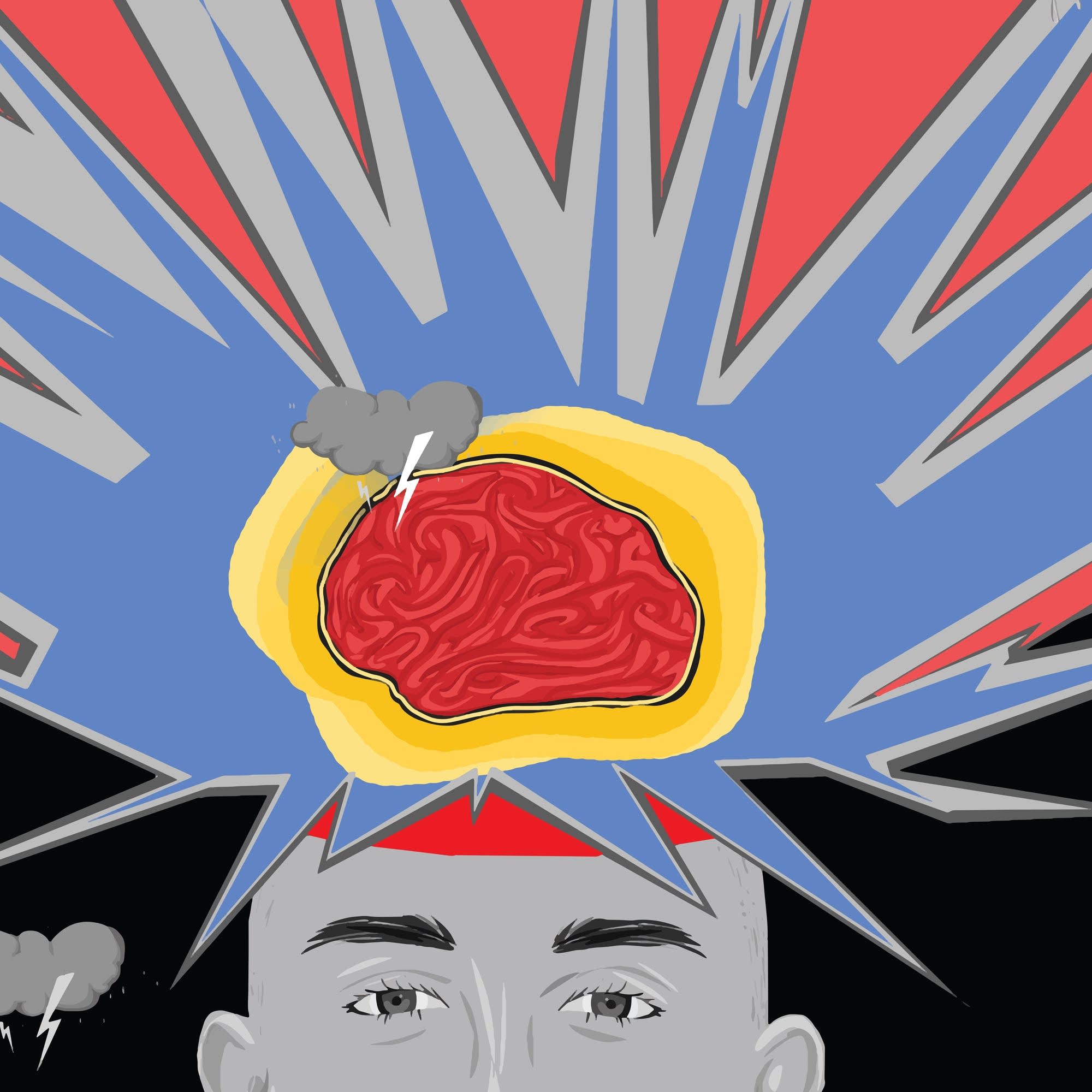
But managing the AI tools can be its own kind of work. A new study from the Boston Consulting Group found that when workers have to closely monitor and manage their AI tools can cause cognitive exhaustion, which they dubbed “AI brain fry.”
Marketplace’s Stephanie Hughes spoke with Matt Kropp, managing director and senior partner at BCG and one of the co-authors of this new study.
Get every episode summarized
Each time Marketplace Tech publishes, we email you a written briefing from the transcript — the topics, who appeared, and any specific claims, with the ad reads skipped.
Email me new episodesFree for 3 shows. No card needed.
Hosts & guests

Transcript ready
89 searchable segments. Every word is indexed and playable.
Full transcript
Marketplace Tech — Too much AI in the office is causing "brain fry". Machine-transcribed; use the interactive transcript above to jump the player to any line.
Is AI making us more efficient or just wearing down our brains? From American Public Media, this is Marketplace Tech, I'm Stephanie Hughes. The promise of artificial intelligence is it'll take on all the boring tasks we don't want to do, and free us up to do the fun, high-level thinky work. And managing the AI tools can be its own kind of work. A new study from the Boston Consulting Group found that when workers have to closely monitor and manage their AI tools, it can cause cognitive exhaustion. They dubbed this AI Brain Fry. Matt Crop is a managing director and senior partner at BCG. He's one of the co-authors of this new study. There's this sense of, I have to always be on. My brain is always on, and then after a number of hours working this way, it describes a buzzing feeling and this sense of just being overloaded that doesn't happen in normal
work. Yeah, you have this really evocative description in the study from one engineering manager who wrote, instead of moving faster, my brain just started to feel cluttered. It was like I had a dozen browser tabs open in my head, all fighting for attention. I got myself rereading the same stuff, second-guessing way more than usual and getting weirdly impatient. What do you think was happening to this person? Yeah, so we can only focus on one thing at a time and in normal work, we're really just interacting with one person or interacting with one task. What's happening here is I'm now starting to queue up a whole set of things that are happening at the same time that I'm having to pay attention to. We're just not equipped as a carbon-based species, I guess, to be able to manage that kind of multitasking. Yeah, I was thinking about this, managing humans is also challenging. What's different about managing AI agents?
Really the speed is what's different. If you think about software development where this is really happening the most right now, it's something that a human might take hours or days to do. These agents are doing in a matter of 10, 20 minutes. Just that compression of your huge amount of work into a much smaller period of time is what really makes this challenging. What is the cost of this? One of the things that we found in the study, this increases dissatisfaction with work, it decreases engagement, it actually increases the propensity for people to feel like they may quit. If you really have people working in this mode, it's going to affect retention, it's going to affect morale, and so we want to be very careful about how we put people into these kinds of ways of working so that we're not breading them out.
We'll be right back. Dell PCs with Intelli inside are built for the moments you plan and the ones you don't. There for those all night study sessions, the moment you're working from a cafe and realize every outlet's taken, the time you're deep in your flow and can't be interrupted by an auto update. That's why Dell builds tech that adapts to you. Build with long lasting battery so you're not scrambling for an outlet and built in intelligence that makes updates around your schedule, not in the middle of it. And technology built for the way you work at Dell.com slash Dell PCs built for you. You're listening to Marketplace tech, I'm Stephanie Hughes. We're back with Matt Crop, managing director and senior partner at Boston Consulting Group. Isn't this the opposite of the promise of AI, like how do we get to the future where the AI does all the boring stuff for us and not the one where our brains are exhausted? It's a great framing and in fact that's one of the things that we found was this brain
fry phenomenon happens when we're sort of excessively working on these high cognitive tasks. But we also found that people when they use AI to take care of sort of the mundane repetitive tasks, that actually improved morale, that made them feel better. I do think the promise of AI, as you said, is let's use it to do the things that don't bring us joy. We should focus on applying AI to the toil in our work and then actually we recommend making sure that we keep the joy in our work for the humans to do. Are the recommendations you have for employers to help their employees get rid of the toil up the joy? We do a lot of work with companies that are bringing AI into their workflows into their business. The first thing that we want them to do is really look at the work. How do you redesign the work end to end?
Not just how do I give you a tool, but how do I think about everything that you're doing? If we can go in and automate the repetitive toil to take out the things that people don't like doing, make sure that people bring the joy to their work. That's what they're focused on. We get a much better job. We still get the productivity that businesses want, but at the end of the day, the employee is left with a job that they enjoy doing. Have you ever felt it yourself, Matt? Oh, yes. I'm doing this myself, so I, in fact, was working on a project where I had multiple agents running at the same time, and I have to say I was totally wiped by the end of the day. Is there anything you do like to take yourself out of the fry? I think this, like any kind of really intense work, I think it's very important to take breaks. We need to be able to have that sort of mental reset, and in fact, some of the participants in the study talked about the need to walk away from their computer, walk outside, go
out in nature, be able to disconnect for a bit in order to recharge and reset. That's Matt Crop at BCG. Daniel Shin produced this episode, I'm Stephanie Hughes, and that's Marketplace Tech. This is APM.
More episodes
More from Marketplace Tech

Raising kids in an AI-driven world
Marketplace Tech

What AI can and can't do for you (for now)
Marketplace Tech

Amid Silicon Valley scramble for AI agent productivity, "token anxiety" takes ho...
Marketplace Tech

Anthropic’s new, powerful allies: Elon Musk and SpaceX
Marketplace Tech