About this episode
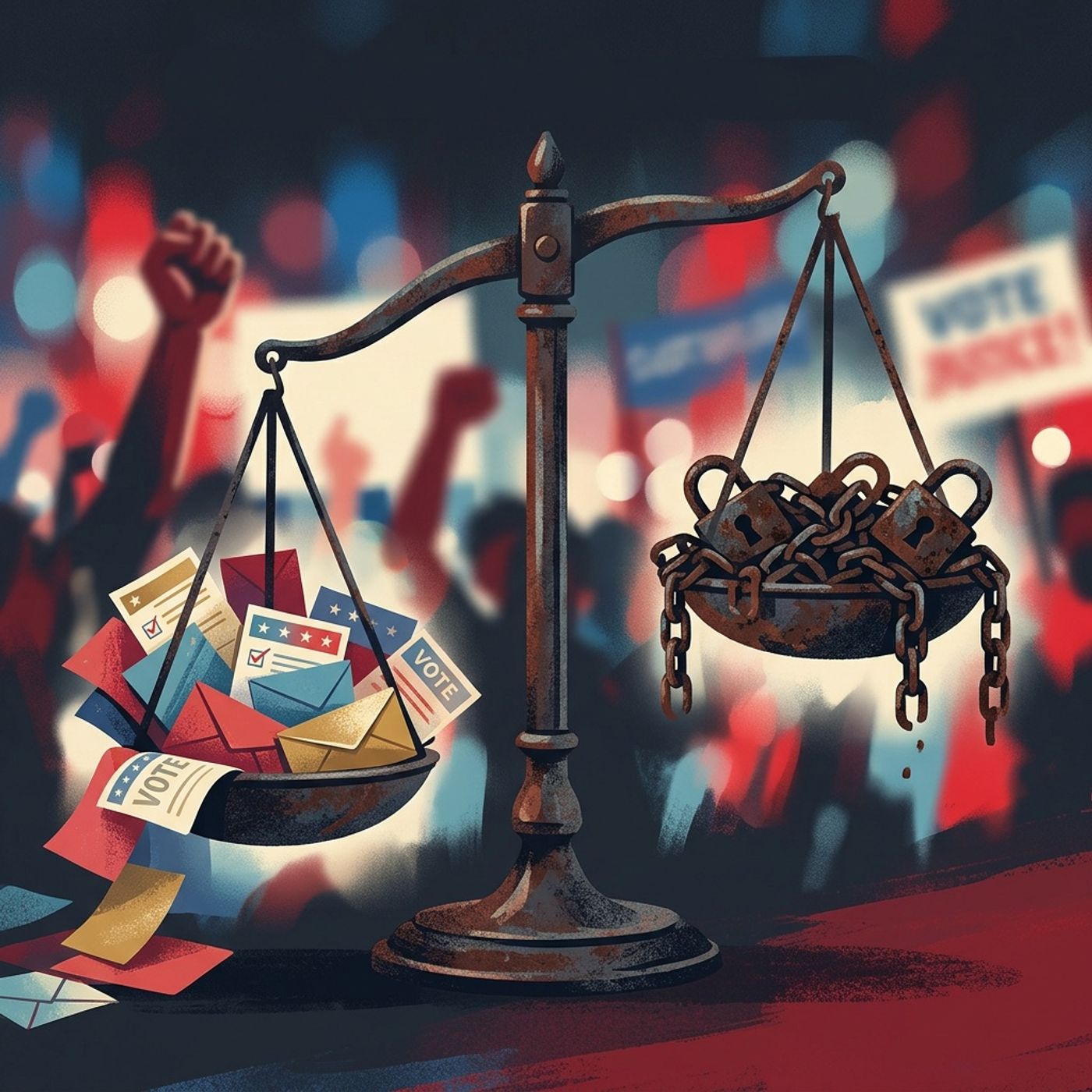
Let's break down what this means for voters. The requirement for documentary proof of citizenship raises concerns about disenfranchisement. Many eligible voters, especially those from marginalized communities, may not have immediate access to the documents required under this new rule.
Become a supporter of this podcast: https://www.spreaker.com/podcast/conspiracy-theories-exploring-the-unseen--5194379/support.
Get every episode summarized
Each time Conspiracy Theories Exploring The Unseen publishes, we email you a written briefing from the transcript — the topics, who appeared, and any specific claims, with the ad reads skipped.
Email me new episodesFree for 3 shows. No card needed.
Hosts & guests
Transcript ready
52 searchable segments. Every word is indexed and playable.
Full transcript
Conspiracy Theories Exploring The Unseen — The War on State Sovereignty". Machine-transcribed; use the interactive transcript above to jump the player to any line.
Today, we're wrapping up our exploration of the highly debated executive order 14248, signed by President Trump on March 25, 2025, titled Preserving and Protecting the Integrity of American Elections. This order requires proof of citizenship for voter registration, mandates that all mail-in ballots must be received by election day to be counted, and aims to tighten election security by sharing data across federal and state lines. While the intention is to strengthen the integrity of our elections, this order is stirring up significant controversy. Let's break down what this means for voters. The requirement for documentary proof of citizenship raises concerns about disenfranchisement. Many eligible voters, especially those from marginalized communities, may not have immediate access to the documents required under this new rule. Could potentially put millions at risk of losing their voting rights, an alarming consequence
for a democratic society that thrives on participation. Additionally, there are logistical challenges to consider. Election officials across the country are already overwhelmed, and this new order could complicate things further. There's a looming fear about administrative burdens, which may lead to mistakes. And delays, miscounted ballots, or even disenfranchisement through bureaucratic errors. We must remember that while the order aims for integrity, the execution could undermine the very process it seeks to protect. Not surprisingly, legal challenges have erupted. Numerous lawsuits have been filed, questioning the constitutionality of the executive order, arguing that it exceeds presidential authority and violates states' rights. A notable decision came from a federal judge in Massachusetts who blocked key provisions stating that imposing election regulations shouldn't be a unilateral decision by the president. In terms of political reactions, the response has been loud and clear.
Democratic officials and voting rights advocates are denouncing the order as an overreach of power. For example, Minnesota Secretary of State Steve Simon has raised concerns about how it could tip the scales, compromising the balance between secure elections and accessible voting for millions of Americans. It's important to highlight the spectrum of opinions here. Supporters of the executive order argue that it's a necessary step to ensure that elections are secure and that illegitimate votes are prevented. They believe that requiring proof of citizenship and enforcing strict deadlines for mail-in ballots will ultimately bolster public confidence in the electoral process. On the opposing side, advocates like the Campaign Legal Center and the Brennan Center for Justice are actively challenging the order. They claim it's a blatant attempt to change election laws without Congress's collaboration, which is a crucial aspect of our democratic checks and balances.
So what does this all mean for the future of U.S. elections? At its core, executive order 14248 represents a significant shift in federal election policy. Focus sharply on security. Yet it raises fundamental questions about our democracy. How far can executive power stretch in matters traditionally under state control? How do we protect electoral integrity without disenfranchising voters? This dialogue is far from over and will be crucial as we approach future elections. To sum up, executive order 42248 is more than just a policy change. It's a flashpoint for the ongoing debate about voting rights in America. Whether it's strengthens or weakens the electoral process remains to be seen. Thanks for joining the Fortune Factor podcast.
More episodes
More from Conspiracy Theories Exploring The Unseen

The Digital Mirage_ AI and the Death of Authentic Romance
Conspiracy Theories Exploring The Unseen

The Trust Trap_ AI and the Future of Romance
Conspiracy Theories Exploring The Unseen

The Ghost in the Machine_ Navigating AI Romance
Conspiracy Theories Exploring The Unseen

The Love Recession_ Why Digital Romance is Offline for Good
Conspiracy Theories Exploring The Unseen