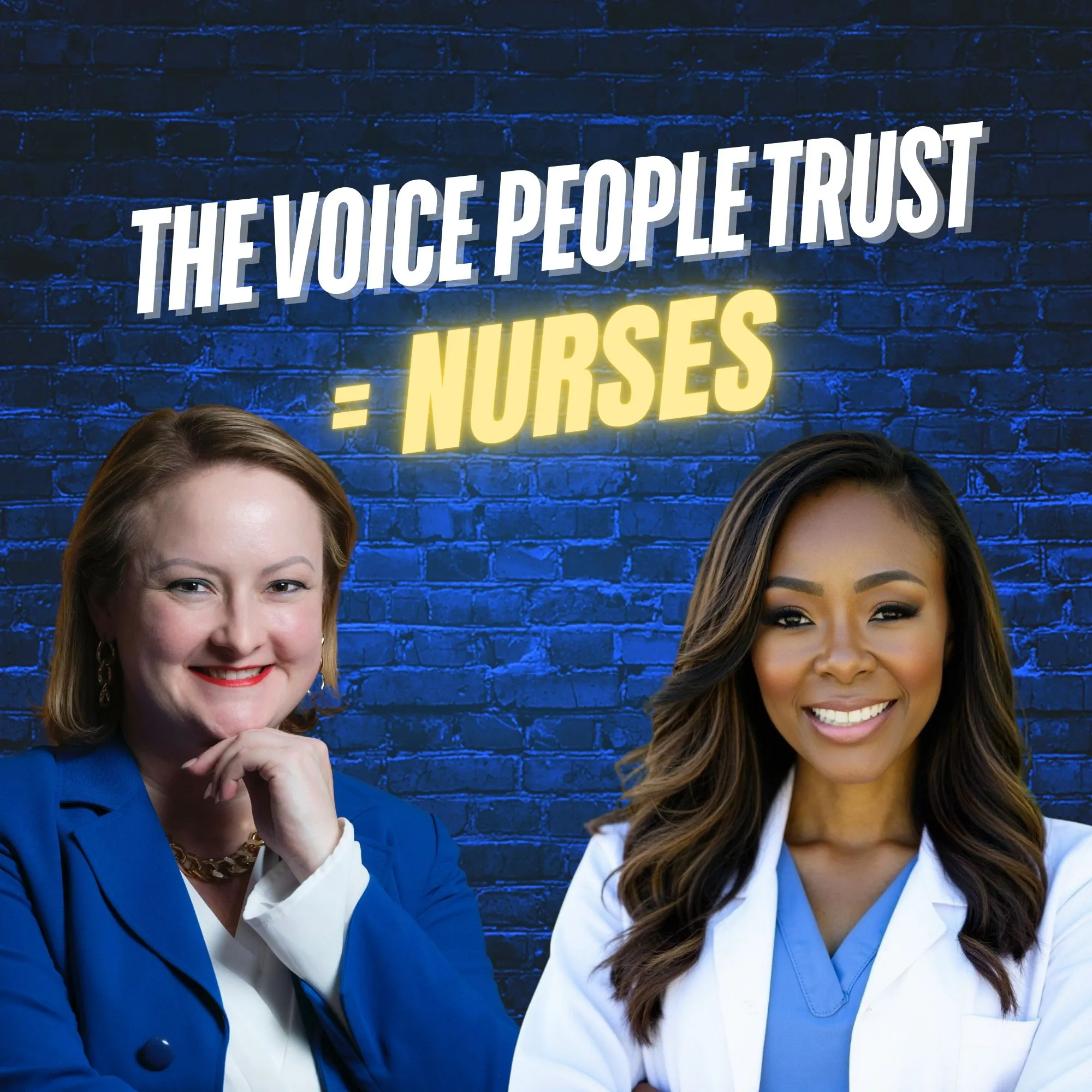
About this episode
Get every episode summarized
Each time Nurse Rosa's INsights publishes, we email you a written briefing from the transcript — the topics, who appeared, and any specific claims, with the ad reads skipped.
Email me new episodesFree for 3 shows. No card needed.
Hosts & guests
Transcript ready
620 searchable segments. Every word is indexed and playable.
Full transcript
Nurse Rosa's INsights — The Voice People Trust = Nurses, with Alice Benjamin. Machine-transcribed; use the interactive transcript above to jump the player to any line.
I want to talk to my fellow nurses for a moment, because this is important. I just finished reading Speak Up Start Now by Rosa Hart, RN, SCRN, and I'm telling you, for once someone said out loud what so many of us feel every day in health care, that we're waiting to feel ready, to feel confident enough to believe that our voices matter. This book shuts all of that down in the best possible way. Rosa doesn't just write from theory. She writes from lived experience at the bedside, in leadership, and in rooms where real decisions are made. And she reminds us, page after page, that imposter syndrome doesn't get the final say. We do. Speak Up Start Now gives you the tools to step into your voice with the confidence health care desperately needs from us. I'm recommending this book to every nurse, every new grad, every leader, and every person who's ever felt like their ideas weren't enough.
Because the truth is, health care can't wait, and neither can we. The change we want to see starts with our voice, your voice. Do yourself a favor, get this book, read it, and then go Speak Up and Start Now. Speak Up Start Now by Rosa Hart, RN, SCRN, available now. Hello, and welcome to the Nurse Rosa's Insights podcast. I'm your host Rosa Hart, and today I am joined by Nurse Alice Benjamin, America's favorite nurse, you guys. Thank you for being with me today. Oh, Rosa, thank you for having me. I'm delighted to finally get to be a guest on your show. Right? So you say that, but like, when did we meet, was it a year and a half ago, two years ago?
Almost, I'm going to say two years ago, almost now. Yeah, I think you're right, because, and I remember, I was just like so impressed with you. And I was like, oh, if only you would ever notice me. And now we like are on Zoom calls like every other week together, and I'm like, is this real life? Because you have gone from being like a practicing nurse practitioner or CNS and from bedside to working with like writing on the working with the writers for the resident, right? Mm-hmm. Rehearsing how we see nurses in the media. And then you've also been a nurse contributor. Do they call it commentator? What do they call it with NBC? Correspondent. Correspondent. Yeah. Correspondent with NBC. So yeah, share with us for people who don't know you and how impressive you are. Give us a little background of what you want everyone to know about where you've come
from. Sure. And thank you for that introduction. You know, and I sometimes smile and laugh at myself because I'm like, how did I get here? Because, you know, I said, I wanted to take care of patients. I wanted to be a nurse, right? And I've been in nursing for over 25 years now and I started with the bedside, actually, you know, climbed the ladder. CNA, LVN, aren't with the associate's degree, bachelor's degree, bachelor's degree and so on. I've spent a majority of my career in critical care, emergency medicine. And I currently practice as a family nurse practitioner. And but one of the very unique things that I do, and I actually considered an extension of what I already do. So in nursing, we do a lot of patient education to the actual patient and their families and their support system. And so I do that patient education, but I use, I've always used media as a platform to help amplify the message. And I think because, you know, I was always knee deep in doing research projects, evidence based projects and things like that, that it was just natural for me to want to take science
that could be very complex and break it down. So it's very simple, you know, more simple for the general public. And you know, that coupled with my advocacy work with American Heart Association ARP, it was like the perfect storm, if you will, that allowed me the platform and the opportunity to start doing media. Because I started, I have to say I start doing media with the American Heart Association and it's spilled out into other things. Next thing I know, I'm on Dr. Oz, I'm on Dr. Drew, I'm on the doctors, I'm doing all of these things and blogging and fast forward now. You know, as an NBC medical correspondence regularly and still having, you know, been able to set some national platforms still, it's just a really exciting journey. I just always kind of to think back like, hmm, how did I get there? Because I didn't set out to do it. But it did not happen by accident either. You definitely applied a whole lot of hustle and then I'm have learned how to work smarter
or not harder because it has been a lot of work you put into it as well. I think so too. And I also think, you know, nursing, you know, we do a lot of great things, but we're definitely underutilized in certain areas, for example, using media. And so I saw, like, I saw a space for us. I'm like, hey, we're the largest segment of the healthcare workforce. We are with patient 24-7. We have the intimate stories. We really know what happens with patients, what they feel, what they're going through, all of these things. And so that coupled along with the science and, you know, the art training, I thought, like, we're the perfect people to do this. So I tried, I was able to take my nursing knowledge and experience and translate it into the media world. It wasn't easy all the time, Rose, I'm going to say that. There were definitely a lot of challenges because you're not a doctor. You're not a physician. You know, with consistency and with just that, that the TLC that nurses provide, it was
just something that worked, you know, I was just able to work well for me. I'm able to connect with people because even though we're healthcare providers, we're still human. And I think that I, you know, not having to, not coming on camera with a white lab code and trying to say big words all the time, but rather be authentic, incorporate health literacy. And, you know, share a little bit about myself along the ways was what has made me successful in that area. Yeah, definitely. And do you think this isn't something that we've talked about before? I don't think, have you had more pushback from other nurses as you pursued this than you have from physicians? Because you said you were on, you know, doctors and the doctors and things like that. But when you came up against resistance of why are you doing this? Or not a doctor? Was it nurses thing that to you? Absolutely. It was actually nurses initially. I was asked, are you an actress? Do you want to be a model? Or like, and I'm like, well, thank you that you think that I could possibly fit in those,
you know, accomplish those type of things. Well, thank you. Oh, beautiful. So, thanks. But, but it was because it was something that we don't do, you know, nurses, and I actually had a chief nursing officer who, you know, and I have to say this was one of my most stellar weeks. I had, I was on Dr. Drew, Dr. Oz, the doctors, and I had been tapped on by Bravo for what they now know as a Mary to Medicine show. And I'm just, you know, I'm doing CNN in the morning, radio, and I was just doing a lot of stuff that week. And then so I thought that, you know, when the doctor Oz nurses nation episode aired, I got a call from the chief nursing officer. I was a little embarrassed. I didn't, you know, I did it all my day off, but I didn't expect to come into the her office and be told that our nurses aren't celebrities. We take care of celebrities. Nurses don't belong on television, physicians do. And I was very disheartened by that. And, you know, but I also will say, just like with social media, people who don't know how to embrace it, they're fearful of it, right?
Because the media can, you know, can the news spreads really quickly. So one wrong statements can go travel very quickly. So I think that, you know, at that time, healthcare systems were more afraid of the media than they are now trying to embrace it. But now we have lots of initiatives with, you know, nurses and media. I've worked, even when I was on the board of AA California, I did media trainings way back before they started their program. And now they have an annual annual virtual conference that they do called nurses and media. I've been a part of that every year. So I'm excited to see it now. But yes, nurses were, dare I say my biggest haters at first. And then once I started to become consistent at the time I was doing a lot of media as a clinical nurse specialist, you know, sometimes when you do something, people are like, oh, good job. But people like it when you do good, but never better than them. So when I started to do television more regularly, that's when some of the more regular physicians perhaps weren't as big a fan.
They wanted to give me the quote unquote nursing topics. And I'm just like, I'm a cardiomyologist, CNS. What do you mean I can't shouldn't be? I mean, this was, this is a heart month. This is February. I'm going to talk everything heart. And I think you and I had a lot of similar experiences in that, you know, in that journey, where, you know, I started as a nurse's aide as well and then worked my way up as associate greeners and then got a BSN while working full time in the ICU and had a lot of patient care experience where I got to benefit and learn from, you know, providers at the bedside as they're educating the patients. But how many times did they walk out of the room? And then the patient turns to you and say, okay, now what did they mean? Because I don't anything they just said exactly. We've been serving as translators the whole time. So assuming that a physician is going to be able to say something and someone in mainstream community is going to automatically understand it, they don't understand the lingo and things
like that. Absolutely. And I think there's also the trust, not saying that patients don't trust physicians, but, you know, for someone who's in and out 10 minutes, 15 minutes, very, you know, like they're waiting all day to see the doctor and then they're just there for such a short amount of time. And then the nurses are with patients. So for much longer periods of time, we developed trust, we learned the family, we learned all the things they like, they don't like what they're afraid of, what they'd like to do, their aspirations or goals. We know all of these things. And so we're able to take that and include that in our delivery of the information and in a language that they understand. And so, and they can come back to us over and over again and ask the same question over and over and over. And so I think there's a level of trust. And that's why, you know, nurses, we've been voted the most ethical profession for how many, 20 something plus years now from Gallup poll. And I think that plays a role in why nurses are, you know, well suited to amplify their voices through media, and especially with everything that's going on in the media today. So there's not, there's not a shortage of things to talk about. For sure.
And to circle back to what they were saying with you, nurses aren't celebrities. You don't need to be on the news. Have you seen how many celebrities with no kind of medical training are out here giving health advice? Does it, does, does being a celebrity mean that you have the authority to get health advice? Oh, no. And so, right. And I think that, you know, once upon a time celebrities, they, because it's very scarce. If you think about it before social media, all the things, there was just mainstream media. So the opportunities to be on television were very rare. Those that got the spotlight were people were enamored by them. But now that we've had social media, and now people can have their own platforms like here on your own podcasts, there's opportunities for true specialists, true experts to amplify their voice. And I will say now, even, you know, we don't have enough media trained health professionals doing it. And we have a lot of people who may be media trained, but they're not the health professionals that should be delivering these messages. So it's a mixture of, you know, being trusted, being experienced and knowledgeable, and then
just having the, the people skills, there's definitely some people skill that's like watching your favorite show, right? You tune in for your show because you like the person delivering the information. And so I think that's, and then really there's a connection, absolutely. For sure. And you have now built several of your own brands as well. You want to talk about some of those? Yes. So Ask Nurse Alice, that is my, you know, an initial platform. That's how I started, when I started doing some media stuff, and my friends were like, well, Ask Nurse Alice. Ask Nurse Alice. And I just, my friend was like, you should just, you should, you know, you should have a website Ask Nurse Alice. And so I created that and I started doing some blogging and some other things. But now on social media, you can find me everywhere as Ask Nurse Alice for myself as a health expert in delivering messages, health messages. And then, you know, obviously, because I'm so excited about everything. And I, you know, I, there were a lot of people who would ask me, well, how did you get to do that? How did, you know, and when I, I have to, you know, look back and, you know, how did
I learn all these tools and things to navigate the media space? Part of it was mentorship from other journalists, some formal media training. I did a UCLA journalism program. And then just being at conferences and opportunities and just learning the hard way. So I, I started the company MediaRx where I helped other healthcare professionals and healthcare brands amplify their voice using media, giving them the fundamental tools on how to use media, how to navigate, how to, you know, write those press releases, who to contact, how to pitch stories and those type of things. And then, but, you know, obviously, but I'm still, I'm still in the nurse at the end of the day. I love education. And so I have now grown my company nurse approved, which we are the number one nurse news and education platform for nurses. So I'm excited about that where we take trending news, hot topics, things that you're going to want to look at on television and the news and read about now and quickly convert those
into learning opportunities where you're able to get, get seas for them. So I'm excited about that. So three companies, who would have thought when I went to a nurse's school that I would be doing all this, right? And there's a lot of work that goes on behind the scenes that I've been able to be mentored by you, along with several others in the MediaRx group and learning all the legal things that go on behind the scene, oh yeah, emanating and learning about copyrights and trademarks and all that stuff that comes into play. And then now your new news website that's just going live. So is there a way that nurses who want to be more active in participating in media opportunities should get involved? Like how can they start? Yes, absolutely. So one of the things I've, because there's lots of options for nurses to consume.
There are news, there are media and things like that. And so we pride ourselves on being the number one nurse news and education network, where we operate as a true, full media company health journalism, medical journalism. So yes, we focus on content that is relevant and pertinent to nurses, but it's open for all healthcare professionals. And it's also an opportunity for nurses who have stories, particular specialties. This is their opportunity to contribute if they'd like. So for example, you know, on television, you know, the producers generally have another go to people who they go for special, you know, for different specialties and things like that. So now here's an opportunity for nurses who maybe, who maybe didn't have the opportunity who have been trying and haven't been successful. We're here. We want to hear your stories. We want to know what your expertise is. So when we're writing a story, when we need to interview someone, we know who we can call on. I know, I know for a fact, there are several thousands of nurses out there who have so much
to share and who haven't quite been given the opportunity to platform. And we want to be that platform and extend that opportunity. And this extends from everything from things that you would do in nursing, you know, think nursing news about things in nursing school are practiced. The larger healthcare landscape, how finance impacts, you know, insurance and those things impact nursing, the legal aspects of medical care. So I really want to invite and welcome people to, if you're interested, please let us know. Visit the website. There's an area where you can share your interests, if you're interested in being contributor and we'd be welcome to speak with you more to, to hear your stories. And that's I am nurseapproved.com, is that right? Correct. Yes, it is. That's so exciting. You always have so many ideas. It is. I'm so excited. And if I can just say, and this will, this latter part will unfold through the years but as I mentioned, number one, nurse news and education platform, we plan to operate as a network also and extend opportunities for shows, scripted and unscripted content
as well. So we've actually been working on a few things, really exciting to be able to mix nursing and a little bit of Hollywood together. And so there'll be shows that folks can watch exclusively on our website as well. So we're excited about that. I can agree out of your experience working with the resident and making sure it was as accurate as possible and things like that. Yes. So about that. So I was very involved, and this is when X was Twitter, but was engaged in a maternal health conversation online, and you know, I'm always extending myself to my expertise and contributing conversation and even asking questions when I don't know all the answers. And there was a woman on there who I was engaging with and I didn't know who she was. I didn't. I was just engaging with her on Twitter and her name was Amy Holden, and she was the creator of the show, the resident. And you know, she's like, Al, she's very knowledgeable. Thank you so much. And I just, you know, close mouths don't get fed. I said, listen, Amy, if you ever, if there's ever an opportunity to contribute to any of your shows from the nurse's perspective, be happy to do so.
She connected me right away to the, to the, the headwriters. And so I was in the writers room talking about nurses. I helped form a lot of the stories and the characters you saw on the show. And so it was a really exciting opportunity because, yeah, when you watch shows, some of it is, you know, Hollywood, they tap on experts, but, you know, who their experts are, we don't really know. So there's sometimes there's, there are things that I feel like, oh, that's not really realistic, right? I understand you got a sensationalized stuff for show, you got a short amount of time. But so my interest with having the network grew out of that experience and then also having been on set for, for different shows, my, my children were actually childhood actors and were on the show, ER, and no one really knows that. So I've been, I've been on the set of television shows and movies for a long time. And yeah, yeah, they were actually homeschooled one of my sons for like almost, for six months while he did a series of work, they weren't living on Disney, Nickelodeon, but anyways,
ER, that's where I was actually on set. And they liked me because each child has to have a parent. So when you have kids that are on the same age, look at the same age. So I brought my two sons at the time and I had one parent, they're like one less parent to deal with, but they loved it because there was one parent, two kids, and I was always on set. We were always available. I was easy to work with. So I learned a lot on set with them about what goes on. And so when other opportunities came on for me to be on television, it felt a little, it felt more natural because I've been on set. And then when I had the opportunity to write for, to contribute to the resident, I thought, wow, I could do this. So I, you know, I'm really excited and I can't wait to share the shows that we have everything from scripted to non scripted. And I think I know that it's going to be a lot of great content that people are going to want to see. Oh, my goodness. I'm so excited. I can't wait to see what comes of it. I can't believe your kid ran ER and I'm just now finding out. Oh, my God. They were little, little, yeah.
So like, what years was that? What years was that? So, yeah, well, kind of our tap into my age because ER has been off for a while. Let's see. How old were they? I want to say they were like 11 and 12. It was a, gosh, I don't even know how long ago that was around the time high school musical was out. Okay. Yeah. Because they were on high school musical too. What? Oh, my God. Yeah. So as well or like high school musical, the two, the second edition. They were on the second edition of high school musical too. Oh, man. So, yeah. At least we're really into that. I'm the oldest six. And so that the youngest, the younger ones were really into that. Yeah, during all that time, they were like on the Jonas Brothers had a show I Carly. They were on all those shows that they were on all those shows. Yeah. Awesome. Well, you're so beautiful. I haven't even seen your kids, but I imagine they're like, yes, but these beautiful people
on here, obviously. So I think that brings us though to the billion dollar question that I asked all of my guests on the Nurse Roses Insights podcast. So, Alice, if you were given a grant for one billion dollars to meet a need that you see in health care, how would you like to use strategically to have the most sustainable impact? One billion dollars. Now there's a lot that I'd like to do with it. So, but one of the things immediately that I would definitely like to do with that is to invest some of that in the education for health care professionals as well as the health consumers because I'm using media because this is where people are going. I mean, obviously, people go to their provider appointments, but there's never enough time. There needs to be ongoing, not obvious, right? A lot of people don't have access to see perfect.
That's true. That's true. For these answers, they can't get individually. Yes, they're going to Dr. Google and then with the changes in the current administration and making even health insurance affordable to even have someone to speak to and lines for free clinics are out. You're waiting months on in, but I think I know that because so many people are, they have their phones in their hands all the time with them and they're looking for help. They want to be healthy. What should I eat or how is this good for me? Is this bad for me? If I would like to take some of that money, invest in some quality health consumer and health provider education, but do it in a way where it's enjoyable, not just the boring videos that everyone's going to snooze through, but do it in a way that actually meets the needs of this generation and how we consume technology. And I think if we can do that, we can hopefully swing the pendulum because we spend so much of our US health care dollar on chronic care and it's going to take a while before we
can swing it to the preventative side. But if we can get, you know, educate more people because even programs are getting cut out of schools. Like, I don't even think they have health classes anymore. P classes are getting, they're now electives. So where are you getting your health and wellness information from even while you're still healthy so you can stay healthy? And then for those who are sick and maybe, you know, I think of people who are senior citizens on fixed incomes, you know, they can't pay for certain co-payees, they can't, their medicine has to stretch and it's torn between rent and food. You know, we need to, you know, cocoon people with a safety net of education and information and, you know, so they know, you know, what, try to make a dollar stretch, if you will, with what they can do for health habits. And then when absolutely they do need to come in and be seen because people think, you know, they try to say like, oh, I don't have money for the co-pay, but you don't pay the third dollar for the co-pay, you wait and you get sicker, then you end up in the emergency room and then you're in a hospital, long hospital stay, 30 dollars versus. And that's a great, e-time example of when people reach out to their trusted nurse friends
and they're like, oh, yeah, I'm dealing with this issue. Do I have the doctor right now or like, am I going to die if I don't go to the doctor right now? And nurses are the friends that get those calls a lot and yes, doctors get them too, but there are six million nurses and one million doctors, so there are more nurses getting those calls than doctors. Absolutely. And I think incorporating more of that information. They are. And I think empowering nurses to use their voice, because there's another thing. Hospitals organizations are very leery about, they tell the nurse, oh, don't do this, don't do that. Like, they don't want your voice on media. Well, the only way to flood the internet to get, you know, of the, to get rid of the misinformation and disinformation that's out there is to actually put in accurate information. So if more hospitals and providers got on board with this idea of, let's put out quality evidence-based information out there, that's, you know, entertaining, I'm going to go ahead and say it, right?
So we capture the audience, then perhaps we could make a bigger difference. People would, and people would trust us more, because I think when you, you know, some people don't even go to the, they don't see their doctor nurse for like a year, like one year at a time, like for their annual physical, if even that. Yeah. For sure. So, so I think education is one piece of it. There's so much more, but I would start with that and build the infrastructures. So people can feel supported and, you know, help get some help with navigating the healthcare system. When do I go to the ER? When do I go to the urgent care? When do I go to my primary care? How often do I go for my milestone checks and those type of things, because you can Google stuff and, but, you know, unless it's coming from a quality verified source, you know, if you're outdated, we have things like up to date and we get these lovely medical journals to reference like what is the latest and greatest and what are the new standards and thing guidelines which should be following and people who are not in that, our profession
are not even getting those updates, and they're not necessarily going out unless people like you are getting on the media relaying that information. Yeah. And that's why my mantra is I like to talk to people before they become my patients. My father, my father died in the emergency room and actually my mom passed away in the hospital too during a rapid response, which I jumped in to do. I mean, people, you know, people are looking like, who is she? Like the people in the meds are telling her like, who is she? Then the one that I see nurses came and they're like, oh, Alice is here. Okay, yeah, let's go. Whatever Alice says, let's go because I'd come to know the I see nurses. So there's lots of education. I want to empower people because when we as nurses don't have those access to those updated information or tools or we don't have time or, you know, when we do have time, we want to enjoy ourselves. So maybe there's an opportunity to make education more enjoyable. So we can, and you know, and along the way create community for nurses. So we all can support one another. Do you have a way to make education for nurses more enjoyable?
Absolutely. If you visit I am nurse approved calm, we're going to take the latest health news and stories and quickly convert them into CEs and our webinars are very engaging. We have some live, we have the rapid response tour, which will, more to come on that, that'll be coming to City to City. Need to get it for people from Kentucky. Come on. Yes, but it, so, so along the lines, it is, it's a C experience, it's the C experience nurses deserve. That's what we're causing. And so it's, it's really around the, the concept of early warning signs of clinical deterioration. It incorporates some theater, some comedy, some singing and some dance while you're getting to see ease. So we're excited about that too. Sign me up. That sounds like a party, a little karaoke in there too for our audience members. So yeah, you're wearing it. That's awesome.
We're going to karaoke sober. Watch out. Yeah, you go. I can't get you exactly, exactly. I'll go first and you know, and then is there anything else you think health care really needs to invest in, you know, a little, that's a hard question because obviously we need money and resources to make things change. We need people to make the changes for us in this political climate. And sometimes nurses are like, oh, you know, there's like this, I'm not, I don't want to get political. I just want to take care of patients, but it's really hard. I want people, I want to empower people to nurses. If we used our voices more collectively, I think we could bring about a lot more changes. You know, you have organizations like the AMA, you know, they're less, they're less physicians, but they are extremely powerful. There's, you know, I think there's like three to four nurses per everyone doctor.
So I think if we as nurses collectively used our voice. So you asked me like, what, uh, what, what was the question? What can we invest in? Or what could we, I would just say, and that's our voice. And voice, invest our, our voice collectively. We need to stop being caddy in our, running our separate circles, um, and just join forces. That's what I would love for us to do because there really is so much we can agree on. And yeah, politics is where policy gets made, for example. And you can agree on issues. We can agree on, yes, nurses are professionals and should be recognized as such and should get an absolutely just theologians and other non like, I don't know life-saving careers. There are issues, nurses at large can agree on. And I think we can join forces to get political about those issues and focus on
those instead of ones that we may disagree on, right? I think we think we have to agree with everybody about everything. Or we can't even talk to these people. That's where things fall apart. There is sometimes you have to, you know, do the, the enemy of my enemy is my friend on an issue by issue basis, you know, in order to get things done. Yeah, we have so much more, more in common than we do not common. We want it, we want to deliver a great patient care. We want people to be healthier, have healthier lives. And, you know, we want to make sure that we're just treated fairly in the process when we're trying to do our job and have what we need. We're not really asking for too much, we just, but we need to advocate for it. Instead of being in like in the break room where everyone's complaining, complaining, complaining, but no one's taking action. So I want to empower people that every single voice matters. And especially when we work collectively as a group, I think we can go so much further and our voice can be so much louder.
So this is the time I have to give my shameless plug for my book, Speak Up Start Now, because what it is about might have learned some of this from nurse Alice along the way in these couple of years. So we've been talking. So a credit where credit is due. But, you know, if you're wondering how and how to overcome that voice in your head that is saying, well, maybe I need, you know, four more degrees under my belt like nurse Alice before I would be qualified for such a thing. My book will tell you, no, you don't, you have your experience as a nurse or a physical therapist or respiratory therapist, whatever your experience is. You might think you just have common sense, but it's not common because it's actually expertise. And by sharing stories from your expertise and real lived experience, that can provide the context to speak to decision makers or become a decision
maker and change things. I heard Sam Altman say on an interview lately, um, he was talking about when he was little, he thought the grownups in the room had all the answers. And then he realized once he was an adult, oh, we are the grownups in the room. And we have to make decisions, even though we don't know what the answers are. We just got to try things. And I'm not saying we need to do everything. Sam Altman does, but if you think you know better, this is your time to say, I'm the grownup in the room and I'm going to decide that we're going to do better. Exactly. Well, I'm so happy to partner with you and all this Alice. And thank you for sharing about your great work here on the podcast. If people want to reach out to you, they'll, they can find you on I am nurseapproved.com or on social media at nurse, ask nurse Alice, right? Absolutely. Yes.
Any other places do you like people to reach out to you? No, I think we'll, we'll start there. And again, I want to invite people to, you know, if you have a story, a specialty, you know, you have a message you'd like delivered, um, and you feel it needs to be shared through media. Please let us know. We'd love to chat with you about your, you know, your story or your angle and really help amplify your voice as well. Because there's so many diverse voices out there and stories that need to be told from different lenses that we just, we want to welcome people to contribute. Thank you for providing that opportunity. I know you built something that you wish you had when you were starting. I know, right? Yeah, exactly. It's beautiful. Thank you for doing that. And then, um, for those of you listening, um, or if you're watching on YouTube and you can see that she and I are accidentally matching in our pink today. Please think alike. Exactly. Great ones. Think alike. So be sure to like and subscribe wherever you are listening or watching, uh, leave us, leave us a comment, let us know your thoughts.
And, um, if you know someone else who has an answer to the billion dollar question to transform healthcare and make it better, please reach out. Um, you can find me on LinkedIn or on all the social media platforms at nurse Rosa speaks and you can get the book speak up. Start now on audible or on Amazon Kindle. And then if you like a hard copy, invite me just come and speak and I can bring copies to sign in person. And I will see you all in the next episode. Bye. You
More episodes
More from Nurse Rosa's INsights

Ep 72: Noise-Cancelling Cancer: How One Kentucky Kid Is Rewriting the Rules of B...
Nurse Rosa's INsights

How One Neurosurgeon would Change the System ft. David Dornbos III
Nurse Rosa's INsights

Affordably Aging in Place with Pam Toto & David Eby
Nurse Rosa's INsights

Virtual Nursing Care Closing the Gap ft. Bonnie Sloma
Nurse Rosa's INsights