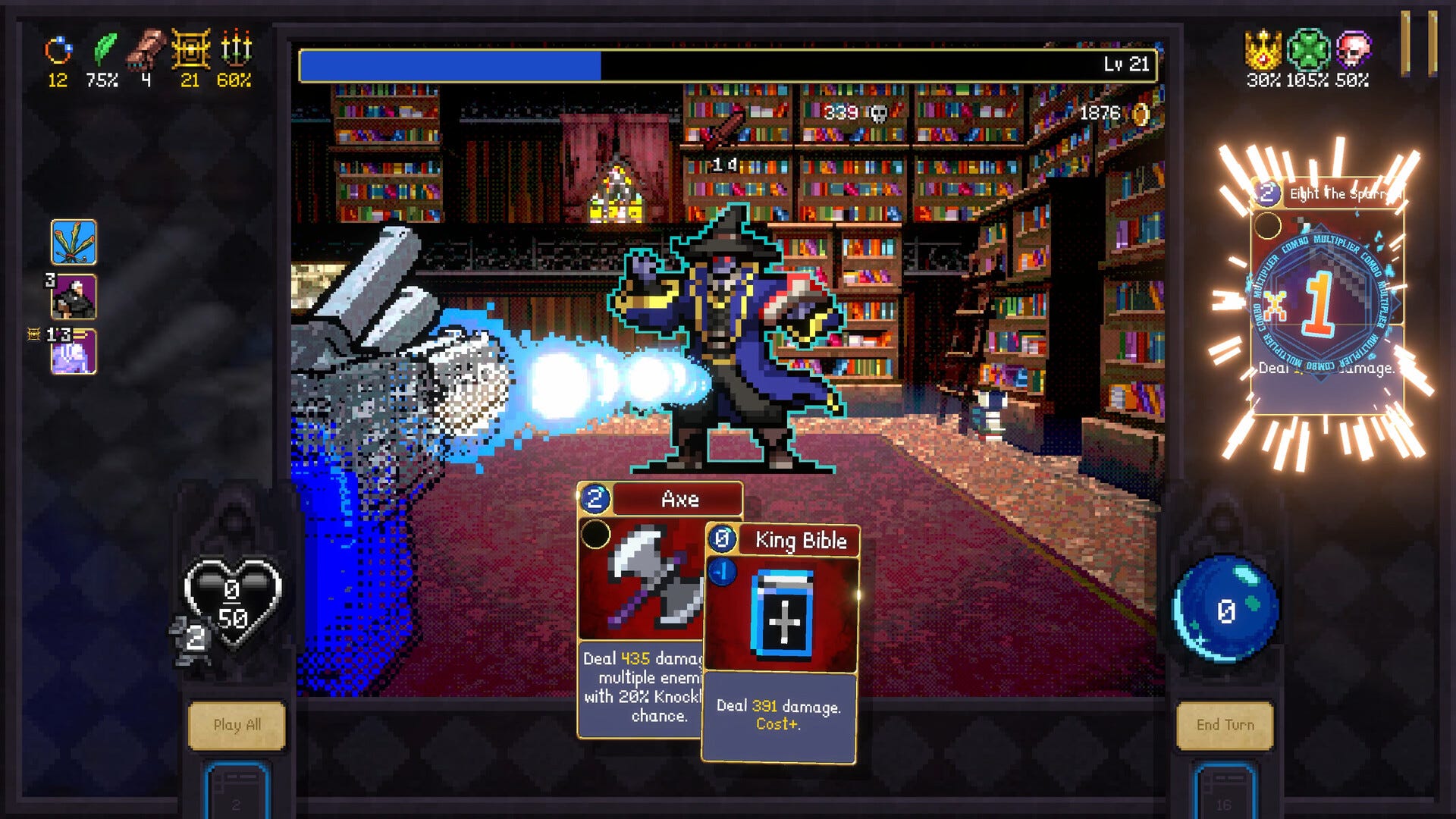
The Vampire Survivors developer is opening studios and making over 15 projects
About this episode
IIn today’s edition of The Game Business Show, we speak with Poncle, the developer behind Vampire Survivors. The studio’s Chief Strategy Officer Matteo Sapio reveals that the developer is working on over 15 games, opening studios in other countries, and working with external brands.
The interview was conducted on-stage at the Games Finance Market, which was part of London Games Festival.
This is a public episode. If you'd like to discuss this with other subscribers or get access to bonus episodes, visit www.thegamebusiness.com/subscribe
Interactive timestamps
Jump to segmentGet every episode summarized
Each time The Game Business Show publishes, we email you a written briefing from the transcript — the topics, who appeared, and any specific claims, with the ad reads skipped.
Email me new episodesFree for 3 shows. No card needed.
Transcript ready
848 searchable segments. Every word is indexed and playable.
Full transcript
The Game Business Show — The Vampire Survivors developer is opening studios and making over 15 projects. Machine-transcribed; use the interactive transcript above to jump the player to any line.
0:00So we started already to work from different places, and then we start to find people in other countries, for example in Italy and in Japan, where we are in the process to open in the studio. How many projects are you working on? In actual development, if you include even crores that are scanning out the next week, 15 projects? 15 projects. But like starting from like sketching up papers and various ways of talk, I think more than 20 at the moment. Hello and welcome to the game business show of me, Christopher During. I am here at the games finance market in London to interview Mateo Sapio, the Chief Strategy Officer at PONCOR, the developer behind BAMPIRE survivors. They're about a huge amount of success, and they've been reinvesting that success into the video game industry, into new projects and studios. And I'm here to find out all about it. Check this out. All right. Hello. Welcome to London, you're an Italian in Japan, is that right?
1:01Oh yes, yes, I live in Japan, I came home my way from Japan, very long flight. And when did you get in? Last Saturday, we had the time to recover a little bit. Well just go back to the start, BAMPIRE survivors has, I know it's been a huge hit, but I looked it up, I don't know how big a hit it has been. So just how big has it been? If you talk about numbers that we didn't share too much, if we think of players and we sum all the platforms and mobile, we are actually over 27 million players over the globe. But besides numbers, there are big concurrent players, still a lot of people playing BAMPIRE survivors. What amazed us is the love that we received everywhere. I was in Taipei a few months ago. And there was a lady that came there doing like a BAMPIRE survivor live event in Tai Chiung, but a joyful city in the south of Taiwan, with 5,000 people playing live BAMPIRE survivors. And this dude, I've had a really nice one game three years ago, but still we received a lot of all the time.
2:0627 million players, I'm going to assume it's a lot of money. But some developers choose to keep that money. And they may be stay small, don't expand, maybe buy a few fancy yachts. Ponko is decided to reinvest that success back into the industry. So talk us through that, what have you done that? So the thing is that first of all BAMPIRE survivors, maybe some of you know, came from a solo developer. It was Luca Garante, it was an industry that made a game for him, for his friends. So the thing is that Luca and the BAMPIRE survivor exploded in 23 months, they sold more than one million copies. He's yacht, our games. So for example, instead of buying a yacht watch, he made the emerald beyond the DLC with Spurrenics that we released for free, for example. So he came quite organically, let's say. You did try some third party publishing. Oh yes, how's that been? How's that experience? It was a very learning experience,
3:09because I want to say that we wanted, first of all, we did publishing because we wanted to give back to the community, somehow. We wanted to help our solo developers, being able, us, we own everything to make investment and to help the community, and try to release game that maybe no one else was able to release. For example, one of our first titles was called Berserkordi, and it's a game that you play with a keyboard. And it was very strange. But what happened is that we wanted to give these people help. We did the publisher stuff, we did money, QA. But at the end, we found that we weren't able to give the right support to this game. So we think that we didn't do the best for this game, so we passed a little bit. But we want absolutely to continue. One to add that at the moment, it's not profit first company.
4:09We're trying to build a community, it can be pushing the game, so that's why we are kind of free. And we will continue to do publishing in the future. Oh, I see. How are you doing it differently? Are you going to practice differently from what you've done? So we tried to don't care about the money. And first of all, what we need is a structure, publishing is a serious thing. And we thought a little bit naively that with love and money, we were able to support the project. That's the project is worth. And we'll be needing more, a little bit more structure. And this is exactly what we're trying to do in the last years. You've now moved into opening development offices in other countries. Yes. Tell us about that. What are you doing? So what happened is that, obviously, even if Vampire Survivors is out, whatever we had, a lot of possibilities to work with people. As you can imagine, Vampire Survivors was rehearse during COVID. So what happened is, first of all,
5:09we are a full remote company. So we started already to work from different places. And then we start to find people in other countries too. So, for example, in Italy and in Japan, where we are like the process to opening a studio. And so, why? Why? Why? So, for example, let's just talk about Japan. We are interested from Japanese companies. They wanted to work with us. And, you know, Japanese have quite like, they've been in the world and they like to deal with Japanese company. For example, in Japanese, with Japanese contract, that's one thing. The second thing is also a balance. And we found, obviously, for example, in Japan, there's some unique views and unique creativity. So, we find a nice talent over there. Maybe working with some Japanese idea or a piece. And then we thought that it was like efficient to have a base there.
6:11And that's why we are responding. Now, we will have a base in the UK. We'll be Italy and we'll be Japan. And then we'll see. It's interesting. Some stuff with Japanese IPs already, haven't you? Vampire survivors and Konami games? Yes, yes, yes. We did, there was two big collaboration. The one, obviously, was Emerald Björn. And it happens by chance, because when I was talking about the love, so, a saga team, as maybe, you know, you're familiar with, but the saga is a big series from Spironics, by Kodu Sensei. There is a nice artist. And they made the gift with the saga characters, from Emerald Björn, inspired by Vampire survivors. We noticed that. So, we reached out. We say, how have we saw your, like, a gift that you make a joke? Let's do a DLC. And that's how we started with, for example, Spironics. Konami, it was, obviously, finalizing this relationship
7:13because, obviously, Vampire survivors was made by Castlevania, inspired Masepac. So, obviously, there was this convergence between Konami people and especially Luca. So, we started with Contra, and we did Otto Castlevania that, at the moment, is the biggest DLC we ever made. Well, come back to talk about this. So, you're opening these different offices. Now, how are you going to look to maintain that sort of indie solo dev spirit when you've got multiple different offices? So, the thing is that we will not thinking at a gigantic studio remotely, but we were thinking, when we talk about punk like a Federation of Studios. So, our idea is to have little teams of people, five, ten, fifteen, working on different projects. So, the thing is that the structure will be, we will have, like, in the end, the genre Luca, different Lucas, bunch of people of producers, and this little team, a giant, that's flexible, work with the responsibility. And that's how we think that we will be able to maintain the spirit,
8:15because what's the spirit? The spirit in the spirit is, like, I guess, a merely freedom and taking it basically with ideas. And this is something that I think it's the, why we're here working all together, and this is what we consider the mission of punk. Yeah, so you talk about a Federation rather than one big, super remote studio with people around the world. Interesting. Well, let's talk about one of the, your next project, Vampire Coolers, which is your Vampire Survivors spin-off. Yes. How did that come about? First of all, we try to analyze what make, what better survivors love, and have everyone in the world. And before that, accessibility and fun, it's kind of the core essence of the game. So, what happened is that we started from that, and then there's another thing. Obviously, Vampire Survivors is a game, but it's not like the game they look and want you to do in your life.
9:16It's something that you wanted to play, because he loved the skill-up characters and the type of things, and they made this black box. But we also liked other genres, and card games, obviously, it was one of the genre. So, we want to make a new game. Obviously, we are little, with not so much people. So, what happened is that, using a very famous IP would allow us to be more present, because we don't have the power to launch a new IP and your game. So, we use obviously the Vampire Survivor to be very famous to experiment in your genre. And we love card games, but we are not too much good at card games, because they're complicated. So, we made the game that we wanted to play. And you partnered with another studio to help you on the project. Yes, exactly. So, what happened is that, obviously, punkle grew organically in a way that we were trying to catch up the success of Vampire Survivors.
10:16So, what happened is that, obviously, while developing Vampire Survivors that in these three years changed a lot. A lot of contents, whatever. That's why we don't have a sequel. We put all the ideas in the game. So, what happened is that we had this prototype for a card game, but we didn't have the resources to develop by ourselves. So, we have a card team. And we, like, team up, with our friend is Noss Bleed. And we're releasing the game next week. Hopefully, everyone will like it. Yes, wow. But Luca mentioned, I think, in an interview that he hopes to be the first in a series of spin-offs. Are you looking to create these yourselves or partner with people like Nose Bleed, like you've done? Of course. So, it's been awfully interesting, because, I mean, we try a lot of prototype and, again, to try a new genre, obviously, we could try to, like, capitalize of one-part survival success. But also, we also have, like, friends that came from other series, other games that would like to work with us, because they like the bumper survivors.
11:17They would like to add one-part survival elements in their games. And also, practically, on a business training point, obviously, they would like to access the community, because, at the end, bumper survivor is a really community-driven business. So, these people coming to you, they're getting people picked into you, I don't know my ideas. So, let's do this bumper survivor, for example, soon. So, the thing is that, I mean, the quality of the person that we need to be a little bit careful. Okay. But, yeah, this is exactly what's happening, and this is what, like, actually, make us having this enthusiasm, and the will to continue and to grow, because we will have, like, a very nice collaboration coming in the near future. Exciting. We've also, we talked about it a moment ago, you've been doing these IP collaborations. You've got some involvement in more hammer survivors, is that right? Yes. So, what happened with the IP collaboration? So, the thing is that a lot of people came to us and they say, oh, let's do our collaboration,
12:18let's do our survivors, because the survivor seems very simple, and simple graphics, but it's actually quite complicated in a machine. So, people came to us instead of copying it. A lot of people did, actually. They say, oh, let's do our survivors. So, what happened? If we have the knowledge of the IP, we do our selves. But, a lot of times, we don't know. If you have, like, an IP, for example, what happened for decaying this case? That has this, like, decades of story and big lore. We don't want to risk to disappoint the audience and the fun. So, what we did, we made an engine, called Vampire Survivor Engine, that is kind of template with all the Vampire Survivor Jews inside. Wow. That we give to people that we consider the IP guardians. So, they can do their best. And we have fun of survivors' game. Luca has 3,800 hours on steam. Vampire Survivors.
13:18So, we want to play the game. For example, with what happened for decay, with our doctor best, the guardian of the peace. So, we give them, and we look for what to play. Obviously, we are collaborative with them, giving them, obviously, all the help. They can... Wow. How significant are these IP collaborations to what punk was doing? So, well, a bit of myself. So, first of all, it's the knowledge of the IP. In a way, you really need to understand a bit of passion. So, what happens is that you start from that. You decide that we can do ourself, or we can give to someone else. And then, the IP stakeholder that I did, we're talking to, they're very big. So, the next thing is, they call their needs to trust you. Yeah. In a way that, okay, this is my opinion. You understand that? And then, you can have, obviously, they need to trust you and respect the gameplay. So, it's neutral to respect them, mainly listening. I want to make an example with Konami. So, we did this at Castlevania DLC, very big. Very nice.
14:18And they allow us to do everything and to use everything. And at the end, we were able to do a DLC that, actually, I want to say, made people cry, because you put easter eggs and stuff. But if you don't have the knowledge, obviously, we pass it on, or we give it the VS engine to develop it. So, it's not like my license, business, or business model in general. It's just to allow people to do the best survivors they can. We should expect then, sort of, an array of different survivors' games set in all different universes. Yeah. And more survivors. But I want to say, obviously, as you probably know, I mean, we have so many people. They love the game so much. They did help. We tried to close the virus so many times, but actually, people, they continue to play concentrates. They always want a lot of contents. And the seeds are still very young. I've spoken with a few big brands recently, and actually, specifically, you know, thinking like, cutlights of Disney and stuff.
15:19And they seem, they seem to really interested in independent developers and independent teams. Because, you know, they can take more risk. They can do innovative ideas, potentially drawing new audiences to their IP, you know, some of them, not necessarily need it. Is that your experience you've got? You've had loads of sort of bigger brands or something interesting. Yes, the thing that we found, obviously, is that, when you have big IPs, there's a lot of responsibility, because player expectation looked incredible. So, for example, when they do, if they do a one-piece game, a player is back to be Ruffy, a Granteft Auto. I mean, so there's so much money and so much expectation that creates tension. And we know, we do video games. I mean, anything can happen at any moment. It seems that now, within this, there's the possibility to steam off a little bit this kind of tension. So, they spend less money, they manage the risk better, and they can even, like, risk a little bit more. And when you have, like, a little reality,
16:20that is, like, empowered with an important IP, in this people will give their life to do their best. And at the end, if the game doesn't work, you will still have ideas and passion. And this is something that big IP stakeholders are, like, finally, I don't want to say finally, but, like, they take advantage of it. So, I think that would be more and more. And we have a nice conversation, which one of them is one example for. Is this part of the reason why you're having these offices in different locations? It's not just a cultural thing. I guess you want to work with an IP in Japan, and it makes sense to have people in Japan that lift the culture and understand that world. It is actually, yes. In the specific example of Japan is exactly right. So, we would like to be in here. The people that know the brand. We would like to be. And because, obviously, there's the need to list. And I would like to tell you, there's, especially, we work with Japan. There's this authority versus consensus. So, I mean, in Japan, I mean, do you use it at the table
17:22you can decide? In Japan, you have layer. You have process. You need to be a little bit slow. When I was at university, the first class is Japanese classes. My teacher said, democracy in the late 90s, democracy is a relative concept that we're like, what? So, if you have 10 people voting, 6CES for saying no, you can't ignore that minority. So, when you're on a table, talking with the biggest stakeholders you would like to decide, you would like to proceed, you need time. And this is something, obviously, that Western culture doesn't accept too much. So, when you have a lack of Japanese company, you have Japanese people. You speak Japanese. You hope people don't understand. In the mid-long term, it would be easier. And then, easier, I mean, more freedom. To do what you want to do. That's when you need a local office. I know it's still early days with your IP partnerships. You've done a few. But what do you think is the secret to getting the collaborations working
18:22and getting them right? Again, it's like, this is a knowledge of the P-passion. And actually, it's like, you start finding and that's the luck that we have with Vampire Survivor. You start with love and passion and common shared vision. And this is like, it seems silly, it's an industry in the world that is driven by money. But it's exactly that. When you have, like, knowledge of the P, a shared vision, you have passion. And, let me say, I don't want to sound banal. But you find the right people. I mean, you catch up, and you see that you can talk. And then you start to plan because we don't know, it's not an easy feature, whatever game is. You only need to stick with these people to years. And there's pressure everywhere. So I think patience and intellectual honoursing is the key to, I say, the collaborations? You know, go. So you've got Vampire Survivors spin-offs. We've got one spin-off, but possibly more. You've got IP collaborations going on. What about what else? What about original games? Original games?
19:22Yeah. So let's say that we're trying every jump, because basically, what we're doing with Pong Call, we want to make games. And that's starting with Lucas, and we also, the people that come, we want to make games. So we're trying almost every jump, let's say, but dating game. But if I can say, in actual fees of development, we have two original IP that we're working at the moment yet. How many projects are you working on? Like, in actual development, if you include even Corolla sort of scanning out the next week, 15 projects? 15 projects. Yeah. But like, starting from, like, sketching up papers and various ways of talk, I think more than 20 at the moment yet. Right. From there. Okay, we manage. I think. They even manage in the cost of all those projects. So are you able to keep all things under control? Oh, yeah. I mean, I mean, we said some numbers before. We were comfortable at the moment. But the thing is that, we manage it because, first of all,
20:24they're a little project. We don't want to do, like, AAA, AA. We want to have, like, a efficient cost machine. And we're quite efficient with costs. So we don't take, use less risk. We invest in people. And so when I was saying you, like, 15 projects, it's like, when you have many, many projects, one can fail, one can go good, and you balance with that. And I take it your work with loads of partners, then your partner with loads of different studios and teens. And these people that you already know, are you meeting people at events like this? Yes, we meet people as we meet people here. And there's people that we met, the friends that we start to work with. And this point, organic process at the moment. I mean, we are, but extremely lucky and privileged because we are, like, a bunch of very nice people, the best that we know. And we share the same vision. So we bring people from outside the industry. This is very important, because I think that, finally, between industry after 40 years,
21:24are able to open up a little bit. So you can go pick it up from, like, a poll, you can go to pick it up from every industry. So it's fun. As far as you find a nice people that share a vision, and luckily, again, Paul, working on a lot of projects, a lot of projects, and we can, like, commit on fun. Who come with us? Who will have fun? I mean, I'm really quite pleased, because I love seeing, when you have an independent developer that's had a lot of success, re-invest that into the business. We invest that into new studios, new partnerships, new games. I think that's what the industry needs a lot of. It's very easy. It's great. It's rise of independent studios who can self-publish and have a lot of success. But if the money doesn't come back into the industry, then it sort of goes out of it. So I think it's all wonderful. I don't really have a question there. There's a way, because obviously, if you say, oh, but if you're, like, honest on the expectation, and you're, like, strict on numbers, I mean, you can do a game
22:24that will sell 50,000 copies and make a studio alive. I mean, there's, like in cinema, I mean, you can look antimos and you also can't see Avengers in games, you can, like, lean more, and you don't have to play marathon. So there's a market for that. There's not any more on one billion people market. There's one billion, 50,000 people market. Obviously, there's a risk, all the time. It's a fact, but you can be considered and I'm sure that in this, there's a lot of publishers, friends here. I mean, there's no project now that will cost more than one million if you see recent pitches. People are pitching phrases for 200,000, 300,000. So if you make, like, the calculation, I mean, it's absolutely sustainable. And that's why in the, I'm trying, I guess, this is all going back, some of you were saying earlier about all these survivor games that you're making. Are you not worried, you might end up having a saturation and you're all just competing with each other? And then... No,
23:24because... So the thing is that we're survivors, right? Why we're doing collaboration? Because, okay, my parts are back. It is. I mean, we want to close the game. We try to, we would like time limit, but anyway, people want more. So what happens is that, with survivors, we will continue to invest in the genre with evolution of the genre. So, with true collaboration, we will have the genre survive with our ideas, with the look of ideas. So it would be something new. If you people get, like, bored to it, it's totally fine. But when you work with the people, for example, let's see what I'm, there's a lot of what I'm, people that never played my parts of the virus, because yes, I always speak. But it's still a niche. It's still indie. Yes. So, when you have, like, what I'm a survivor, and you see, we released the trailer, like the other day, we click 300,000 views in two days. There's a lot of people that doesn't know survivors. And it's actually a good kitten. So there's what I'm a fun. And that's how I think that there's an angle, and that's why they want to work with us. But I mean,
24:24if it would not work anymore, it's okay. I mean, we had a lot of fun, we made a lot of money. You're right. I guess 27 million is a lot, but there's a lot more people in the world. I'm going to ask the question that every game's journalist is obligated to ask anybody these days, is are you investing in AI as part of all these things? So, not at the moment, because I mean, but that's a rubber, for example, started with an asset pack, people and the human expertise. So even if at the moment, we can use a surely generative AI to do some of our assets, but at the moment, we prefer to work with people. And I would like to add on it, that if there's something that AI made obvious, if there's a little bit more on an image when you look at it, because when you look at an image, and you know that is, you feel kind of deceived. There's kind of an anti-balling. And our thought, my thought, is that, because when you see an image, what kind of thought,
25:24let's say, even if it's a ceiling, there's a person behind it. There's a feeling, there's a compelling need to do that. So what happened with that, with a specially generative AI, do you feel that there's a, there's not a creative, it's all behind it, it's kind of soulless. But I mean, there's no stigma, if we will have like a useful tool in the future, I don't want to sound hypocritical ethical. I mean, we surely consider, but at the moment, we have a non-it of it. It seems to match a lot of people. I'm conscious of the time, where I asked this question, it's a normal question asked at the end of my interviews, is where would you like to see Ponco, sometimes I say 10 years, but that's, that's lifetime in the video games industry. Where would you like to see Ponco in five years' time? Yeah. Forty project, apparently developing one time, everywhere in the world. But that's the thing that it would be a nice part, and it's because, I mentioned before, the Federation of Studios, if we will be able to have this beautiful machine
26:25that are able to have a so many projects that can go good, can fail, some of its collaboration, some of its for money, maybe some moonshop. That's where I want to see, we don't want to do, like a gigante studio, working off gigante game, we would like to maintain small, but if you have a lot, you can do more. That's what purpose. And that's what we're trying to do, for real. Actually, I've already asked the follow-up to that last question. What do you look for then, when you're looking for people to work with, when you're looking for partners? What is it? Who is a Ponco developer? Hello, first of all, like a passion of people, nice people, people that we can talk with. And when we talk about short vision, there's one thing about game that I mentioned at the beginning, and talking about spin-off. Accessibility and fun, it's all simple, maybe naive, but that's exactly what I want you to do. We would like to do fun game that everyone can play. So the thing is that, okay, we want to do games, profit is more worth, at the moment, not the priority. So when we find people that like
27:25are like, can make it through this, obviously we work. And I want to say, we are a little bit picky. We would try to find special, because there's a lot of special people in the industry. If we have that, I mean, we're really happy to, it can be, that's why I was telling you before we have a lot of projects going on, because we try to find, first of all, the right people, and then we will make a project together, because at our age, if you don't share a project with your friend, you would never meet. So you just want to discuss the work together, you know? Yeah. I tell you, we're short of time, but it's wonderful, I say it's very exciting to see what you're doing. It's really fascinating to see, the things you're trying to do with the survivors' brands, with your spit-off sand, with new games, and all sorts of things, and the license IP, good luck with it all. Oh, thank you very much. Thank you very much. So for coming in there for your time, and we'll see, we're doing our best, but hopefully we will be able to fall off some nice game I got. Brilliant. Thank you again for Mateo, and thank you all for listening.
28:30That's it for today's episode of the game business show. We'll be back with more news, analysis, insight, and interviews in the days and weeks to come to make sure you don't miss a thing, head to the gamebusiness.com so stick in your ear, maladress, and you'll get a newsletter every time we have a new episode out. But, until next time, thank you for tuning in. Thanks for watching.
More episodes
More from The Game Business Show

UK minister: It’s not a problem that Grand Theft Auto isn’t UK-owned
The Game Business Show

The Blood of the Dawnwalker studio: Everyone we spoke to wanted to invest
The Game Business Show

One of the world’s biggest game makers reveals ‘the uncomfortable truth’ about A...
The Game Business Show
Why aren’t more game developers using Kickstarter?
The Game Business Show