About this episode
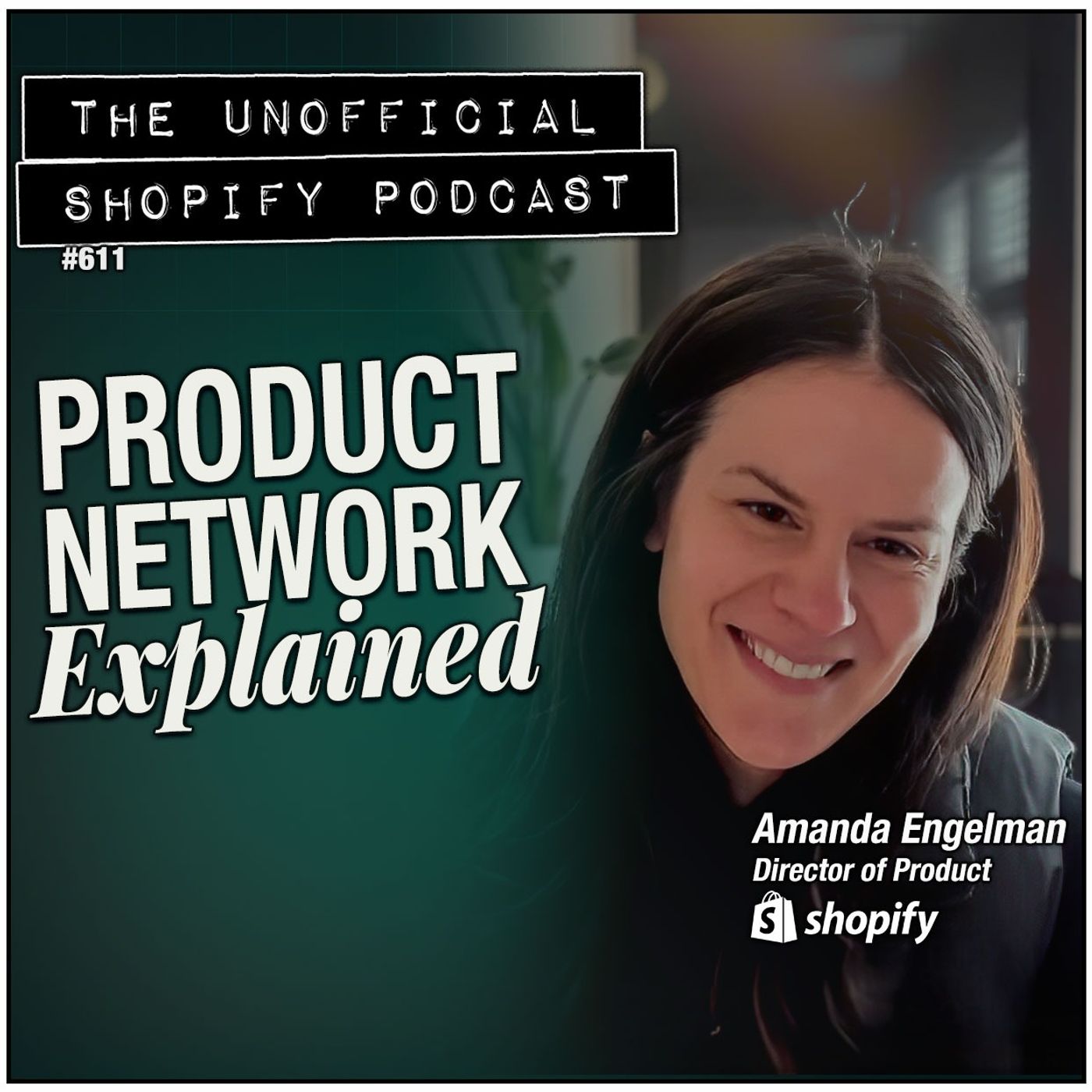
Amanda Engelman is the Director of Product at Shopify leading advertising and channel expansion. She built the Shopify Product Network, a free app that lets other Shopify merchants' products appear on your store. You earn commission on every sale, you keep the customer, and you get category expansion insights without carrying a single unit of inventory. One store earned over $3,000 in commissions in just two months.
We dig into how SPN decides what products to show (and how they're solving the "taste" problem), the checkout engineering that makes multi-merchant transactions seamless, and why this might be the lowest-risk growth lever available to Shopify merchants right now.
SPONSORS
Swym - Wishlists, Back in Stock alerts, & more
getswym.com/kurt
Cleverific - Smart order editing for Shopify
cleverific.com
Zipify - Build high-converting sales funnels
zipify.com/KURT
LINKS
- Shopify Product Network App: Shopify App Store
- Shop Campaigns: Shop Campaigns
- Amanda Engelman on LinkedIn: Amanda Engelman
WORK WITH KURT
Apply for Shopify Help
ethercycle.com/apply
See Our Results
ethercycle.com/work
Free Newsletter
kurtelster.com
The Unofficial Shopify Podcast is hosted by Kurt Elster and explores the stories behind successful Shopify stores. Get actionable insights, practical strategies, and proven tactics from entrepreneurs who've built thriving ecommerce businesses.
Interactive timestamps
Jump to segmentGet every episode summarized
Each time The Unofficial Shopify Podcast publishes, we email you a written briefing from the transcript — the topics, who appeared, and any specific claims, with the ad reads skipped.
Email me new episodesFree for 3 shows. No card needed.
Hosts & guests
Transcript ready
526 searchable segments. Every word is indexed and playable.
Full transcript
The Unofficial Shopify Podcast — The Shopify Product Network Explained. Machine-transcribed; use the interactive transcript above to jump the player to any line.
0:00This episode is brought to you in part by Swim. Here's the thing about wishlist apps. Most of them just sit there. A customer saves a product and then nothing happens. Swim actually activates that data. When someone wishlists a product, you can trigger price drop or back-and-stock alerts and feed that intent directly into Clavio or your CRM. You're not guessing what people want because they've told you. Plus, customers can share wishlist for gifts and your team can view them to offer personalized service online or in-store and unlike card abandonment, wishlist data is permission-based. These are people raising their hand saying, hey, I want this. Just not right now. Swim's been around for over a decade. It powers 45,000 stores and installs in about five minutes. You could try it for free today at getswim.com-slash-curt. That's g-e-t-s-w-y-m.com-slash-curt. It back at Shopify winter editions.
1:14They launched tons of new stuff as they do. But there was several items that stood out to me in my favorite. As I've said before, things that leverage Shopify as a network, as a large group of merchants, a flock of D to C stores, if you will. And they've got this thing that's called the Shopify product network, S-P-N, and this one, it's definitely a powerful, unusual, you may be shocked to hear. It lets other merchants advertise, maybe merchandise, include their products on your store. We're going to get the details here. We're joined by Amanda Engelman from Shopify, director of product, leading advertising in channel expansion. She's going to break down for us, tell it how it is. Of course, this is the unofficial Shopify podcast, and I'm your host, Kurt Elster. Amanda, thank you for joining me. Welcome. Thank you. I'm so glad to be here. Glad to have any minute to have a chat and walk everybody through this new product.
2:18So thank you for having me. For sure. Okay. So advertising in channel expansion. That's the sexiest phrase. What are we actually talking about here? What was the goal? What do we do here? Yeah, I mean, I think that if you just, like, back up for a minute, we look at the network as just any opportunity that we can provide for merchants to mutually grow, right? And I think typically we talk about the more of the actual demand side of it, so the advertiser side of the house. But the reality is there's a lot of opportunity that also exists on the other side, where, you know, of course, we have, you know, typically merchants are willing to monetize in the form of being a publisher, but we actually, we took an attempt at this. That looks a little bit different than that, which is what would happen, actually, if we gave these merchants a utility that also allowed them to dynamically merchandise. So not just slap a display add into their, into their actual online store,
3:19but to actually think about how this might feel much more native to where it is that they actually want to go and how they merchandise and how they think about meeting the demand of their buyers. I'm interested. Keep going. Okay, keep going. Yeah, so I think that, you know, in my area, I largely think about, again, like, what are those utilities, the levers that we can help a merchant pull to profitably grow. And I think what we, what we observe and what we see is that, again, sure, it's, you know, we talk a lot about bringing the demand to your site. So like, where am I going to go run my add on Google or even in your shop, out through shop campaigns. But the, also, the, the additional reality here is that like, there is also a lot of uncaptured, unmet demand, right? So categories you never thought about expanding to products that perhaps have intent,
4:22but you just never merchandise. And so I think what we, what we wanted to do here is, like, say, hey, like, we have, we actually have a huge catalog. And we have a lot of advertisers who want growth. And we also have a lot of merchants who, you know, own the site, own the presence, who have their opinion on how they want to brand. And if we can actually, like, capture that thing that exists in the middle, like, they're actually, I think, is a mutual growth opportunity between these merchants. All right, so I get the thinking. Yes. So we have a store we run, or help run, Penns and Aces, those golf successors in apparel, and listeners of the show will know Nick Mertz from a, for previous episodes. And they have used, been using the Shopify product network to fill out their catalog like you described. And so it sounds to me like the thinking here is, hey, Shopify has a group as a platform has a huge number of products.
5:22And say, you know, in the case of this example merchant, they sell golf accessories. Well, they can't sell possibly every golf accessory, right? You know, they don't sell golf balls of all things. Yeah. And so, you know, he, well, certainly someone else on Shopify might sell golf balls or other complimentary products. And the idea is let's, that's a merchandising gap that Shopify could solve. Yeah. That, am I getting the like the, the strategy here, correct? Yeah, that's right. I like to tell the story of like, you know, we have a lot, we have a lot of merchants who have success with like the one-year-old product. And, yeah. Right. And, and that's real. Like, you should, you should have the one-year-old product. And you should go sell, you know, the shit out of your old product and go put it everywhere. But, but like inevitably as, as you probably know, like what happens as you feel the urge, the need to expand. Because that's the additional way, of course, to grow your revenue.
6:26But like, sometimes you don't know how to expand. And maybe sometimes you just shouldn't be, you shouldn't feel that like you are responsible to deciding what that should be. Not responsible is a weird word. But like, there are, as you mentioned, like we have millions and millions of merchants. You have great products. Which actually may be a great match already for your buyer. And, you know, I think this is the opportunity, the like early stage opportunity to figure out, generally what it is that they want before you go in and commit. And so I think we see this as in some ways like a flywheel. Like, yes, go category expand. Go try it out. Go see the price point. Go see the range. Get a good understanding of it. Carry it if you want to. And we want to make that easy. And then go do more, right? So expand and I would say like a responsible early low lift way. The yes, yeah, easy, you know,
7:27responsible low, low lift. I heard I hear easy. I just I think so. That would have been the easy thing for me to say too. Yeah. All right, I get the strategy now like tactically in practice. Do what is what is this thing look like? What is the Shopify product that we're doing here? Yeah, so today we've started largely with how do we extend onto your existing collections and and to and to actually surface products in moments like in with high search and time, right? So we'd like to say like especially in the moments where you have and actually considered carrying that inventory. Like it's a really good answer to that. And that pulls all the way down into the thank you page and order status page. We had some opportunities there previously, but we've, you know, since then sort of revised that. So that everything remains on site on your storefront. We don't have buyers who are, you know, clicking on the products and navigating out.
8:27In many ways, we've redone our check out to actually accommodate the fact that one, you are not actually the responsible seller to these products right now. And that too, therefore, we've actually created a check out that does a multi-transaction check out and gives you the buyer. You know, you actually like have that now as a buyer in your arsenal to market to as well as the advertiser side same thing. Like that also is a customer now that they can use. Yeah, we're also, so we're, we're talking about this app, Shopify Product Network app. And I have it installed and running in this Pins and Asa store. It's very simple, you know, I log into Product Network and I can see like here's a dashboard of everything. And then my option is placements. And in placements, it's like, hey, choose where you want to show relevant products from other sellers. And these are other Shopify stores, right? Okay. And then so I could pick and it's like collections and search.
9:29That's on the store in the theme. So they don't have that checked and they just haven't tried it yet. The they have thank you and order status, though, checked. And that like that alone has been generating additional orders and commission, which is cool. And and like where we're going with this is also like how do we offer as rich as possible insights because I think like, you know, the way that I imagine this is like the insights can be used for any number of things, whether that's like, how do I target like there's there's some like actual richness and thinking about other products people are interested in. And especially on the thank you and order steps page work tends to be organized. And all the way until like how do I use this insight to think about where does I want to go and expand or what it is I actually should be caring in this particular category. And so if anything, it's like beyond just the fact that you make permission that you are earning a buyer as an example, it should also give you some like, you know, depth of business
10:36thinking like some actual like insights that can help you drive your next decision. So I could see the so I set up the placements and then it's going to offer products on its own automatically to folks. And then in the current version, I could see my category. It looks like what they purchased. And unsurprisingly, in our golf store, the top category is golf. So just knowing only that now, I know, oh, there are items, you know, or accessories in the space that my customers want to buy that I'm just not offering. I mean, that's a like, that's a real example in this case, but that seems to be kind of like the research component to this. Yeah, I, well, you know, that I like to give the example. There was a merchant I was chatting with who had decided that they wanted to expand like into the shoe category, but it took them a year. It actually took them a year to like develop the shoe. And it was really high, that's high risk, right? So you're, you're, you're sort of going off of like, we think there's a man, we think this is right. We're going to go and develop something. And Shopify product network
11:43allows them to think about how to flip that on the head, right? So what we're working on actually right now is like, how do you do like completely adjacent category expansion? So, you know, I think I want shoes. I think I want luggage. I think I want sunglasses. I think I want watches. But I'm not really sure the kinds of products. And again, I'm not sure of the price point. And what beyond what we're doing today, what we're going to be then offering you is like, the ability to basically direct to that expansion and to get insights on that and like, how do you want to move forward after this? So in, is there like, is there reporting that gets added in Shopify analytics from product network? Yeah. So today, today, we give you all of the product details, like if the product is purchased in the, in your order, uh, Emmon. So there's actually a drop down you can go to and see all of the products specifically that were so old, um, on site for you. Well, I see I didn't know this. I'm going after this call. I'm going to do
12:49that for this client, find out what they were and then see like, hey, are there insights here? Are there things that like we definitely should consider finding and selling? That's right. That's right. And then, uh, you know, we have some like high level impressions, engagement metrics there, but we're, you know, it's something that we're working on right now is like, how do we go even deeper there and give you more actionable insights? It's a, it's a very important thing. Yeah. No, that, okay. That's very cool. Um, I'm curious about how the, the placement with collections and search works. This dynamically injects these other products into my, my collection grid and my search results. Yeah, that's right. Um, so we dynamically insert and we decide what is right to insert based off of your collection and product context, um, everything from like the imagery to the product descriptions to the collection information itself. So we use, um, on the collections side in particular, reuse that as context to make sure that we aren't returning something
13:50that is so obviously not meant to be on your store. I guess is the way I would put it. Like, we wanted to actually feel like as brand aligned, um, as close, you know, as close as we can to, to get air to make it feel like something you would have actually selected on your own. Um, and then we also, uh, on top of that, look at more of like the personalization aspect of it. So yes, it has to be contextual. And then if we can also get it personalized, um, to the buyer, that's ideal. Um, and then on the search side, like this is much more about just like, you know, search relevancy, of course, we take into consideration the brand context as well. But we want to be, you know, returning something that is of course like relevant to the actual search for itself. Um, okay. That one's a bit more straightforward. I think the, yeah. All right. And I've seated in practice where like I have yet to see, and I thought for sure it would do this, but I was wrong. I have yet to see it come up. It returned something that's like genuinely weird. That seems like that shouldn't be there. You know, it's not like, hey,
14:54there's so a golf accessories and it offers an oil filter. Like it just, you know, that doesn't happen. Yeah. Um, so there is, whatever you're new, it seems to be working. It's my point. Now with other clients, I've been like, hey, there's this thing, you know, this new, this new feature, I really want to try it. And they're like, wait, my competitor, like immediately, they're like, you know, whoever their top competitor is, they're like, they're going to be on my site. And I'm like, actually, because I can see this in our example, there's a setting called exclusions. Tell me about this. Yeah. So we offer you the ability to exclude brands and categories, um, knowing very well that like that, I think every merchant has this the other world that there's, you know, a set of, a set of competitors for whom would be a hard now service in their product. Um, and, and category as well, though one of the things that I, I think, you know, that that we're working on right now is like, I think that people will use category exclusions to get to, um, specifically where they want us to be inserting and not
15:55inserting these types of products. And so we're working on, we've heard a lot of feedback on that. We're working on making that, um, significantly easier as well. So it's like, you should just be able to direct us, um, versus like sit and exclude things. Here's a word from our sponsor, Zipify. Hey, the holidays are over. Traffic's down, add costs are still up, and you're staring at Q1, wondering how to keep momentum going. Here's the move. Stop leaving money on the table with every order. One click upsell automatically increases average order value by up to 30% with AI powered upsells across your entire customer funnel, launch pre purchase and post purchase upsells for every product in your store in one click. Customers get personalized offers and spend more as a result. Unlike other apps, you only pay for those results, not views. It takes under two minutes to set up and it starts working immediately. Q1 doesn't have to be a slump. Make every order count. Well, you rebuild traffic. Go to zipify.com slash Kurt for your 30 day free trial that ZIP IFY.com
17:02slash KORT. And let's start the year profitable. And we're doing, you know, right now we're just doing the, um, brand exclusions and it works like, yeah, it works like tags doing Shopify. You just have the name. I'm good. Yes. Yeah. That's right. Yeah. So very simple. All right. Once I'm curious about how, how you, you mentioned it, but how you approach checkout here because it's, you know, it's different. It's unusual. It's different. You know, like in a marketplace, I probably understand that if I'm buying multiple items, they're from different vendors versus I'm on a store. I think everything is from that store. But oh, also there's these other items. But you know, drop shipping exists. I don't know. Tell me about it. What was the approach? Yeah. I think the approach. And it takes like actually kind of a similar paradigm to I like not to compare it in this way. I may eat it. But like marketplaces in many ways will sometimes work this way as well, where, um, you know, depending on who is the responsible party. And there are, there are situations where you
18:06actually do have multiple transactions, but the responsibility, you know, aligns to the actual seller itself. Um, and sort of thinking here was like, instead of having you go through a checkout where let's say you have, you know, one merchants products and then you have a couple that you've added from merchants we've inserted. So let's say you have like three stores that are in your cart. And instead of having to go and click, you know, check out with each individual, um, seller in that case, we're just going to make it possible to like single click but see multiple transactions. Still get the multiple confirmations from the appropriate sellers so that like, again, it's clear that not it's not always like the the actual, um, online store by which you are buying from that is responsible, but you're getting emails to confirm that. Um, and you know, I think the idea here is that we can streamline the multi transaction scenario, um, in the order
19:08status and the view page, we also make it clear. Let's just say that you've gone back to go check out your, you know, updated shipping, whatever that may be, you can actually see and be directed into like the responsible seller, um, order status page as well from there. But I think like, you know, here is one where I think we're definitely learning and I, and I think we want to make it as clear to buyers possible in order to, um, reduce like any cost to the person who is saying yes to product network. Like we don't want to go and push a load onto people from like a customer service perspective. Um, so I think we have like our first version of this, but I think, you know, there's more work to do and I'm sure to continue to make that clear for buyers. It is a novel approach. Yeah, well, yeah, you know, I haven't tried it myself. I'm the wrong person to be the one judging it, right? I'm just too familiar with everything here. Yeah. Um, but, yeah, honestly, it was,
20:09it's not high on my list of worries. Like I think of all things, you know, check out, it seems to be one that Shopify absolutely, you know, sets the standard on. For sure. I mean, it was an impressive feat. I, uh, I, the, this team managed to create something and, you know, effectively like two months. Um, and so I, I always say like if our checkout team took, can go and kind of do open heart surgery and checkout and checkout functions in a couple of months, like pretty much anything is possible quickly. Um, so yeah, I, it was impressive and the, and the flow was impressive and, um, and I won't go into a bunch of the technical details, but making checkout work on a store when the product in cart is not actually the responsibility of that particular online store is actually a, um, it's hard, it's hard work. So, um, the metaphor, like always is to illustrate how difficult this, you know, platform changes like this are, of course, is, uh, rebuilding the plane while it's in flight. That's right. That's right. So, um, so very impressive and, um, you know, we've, we've learned a lot, but I think
21:13our pursuit here and what we really, the outcome we really desired was that there is a world where the, you know, the person who says yes to product network that we call them the importer internally, that like it is possible that you don't carry the product, but the buyer can find it and the buyer can check out with it. And that is your buyer now. That is your customer and you're paid for it. So when you think about it from that context, it's like you're actually not paying an acquisition cost. We are actually giving you money to acquire a buyer, which is a complete, you know, flip of the narrative. Oh, yeah. Yeah. No, that, that is, uh, it's a reverse customer acquisition cost is excellent. That's right. Yeah. But yeah, commissions. Oh my gosh. If I sell it, someone else's product gets hold on my store. I get, is the store, who did that? I get the commission. That's right. We haven't discussed this. Yeah. That's the, uh, you know, the product, the store we have it on in November, December, over $3,000 in commissions
22:14got paid to them. Yeah. That's, I saw that was like, oh my gosh. You know, this works. Wow. So tell me about the, well, tell me about that. Tell me about the earning commissions portion of this. Yeah. Um, so effectively, like we pay a portion of the revenue to feed the importer, so to say, and that is actually based on what the, um, what the cat is or like what the actual advertiser set the cat got from their shop campaign. Um, so that's how these two things are connecting rate is like, you go, you build your campaign, you set your acquisition cost, we go look at, you know, all of these available products, we're looking at, you know, your contacts, what is likely to convert, what is like most likely to get you actually, like, the most revenue into your pocket as well. Um, and that's, you know, effectively how we order the actual products to be inserted. So, um, so yeah, that acquisition cost is shared
23:17with the importer on the, and any product, effectively, that actually converts on their site. And okay, that's the other half of this. Like, obviously, we've only talked about this from the experience of the importer, the store who is running the product network to display these products in their store. Obviously, on the other side of the table are other Shopify stores that are going to raise their hands and say, Hey, I want my products out there. This is an advertising surface then or, you know, walk me through that, tell me about it, you started it, but I want to go deeper. So, you know, folks may be familiar with shop campaigns, which, um, is what we like to call very much like risk fee, risk free advertising. We, um, we help merchants build campaigns that are based on, you know, order acquisition. Um, and, and they pay based on that. And we started this, um, mostly on shop app. We extended those, um, those particular placements out into some of,
24:18like, our third party tactics like Google and Meta, where we drive traffic into shop app. Um, and then when we decided to launch product network, um, it felt like a really natural extension of a merchant campaign to be able to extend into, you know, this available opportunity basically. Um, so to take those merchants, the available catalog to make sense of it again contextually in order to go and reach new buyers, um, and not just reach them, but to actually actually like drive the acquisition of them. And again, as a customer that you did to keep and remark it to later. So, it's a, the, the store, the importer store, the one that's surfacing this product, they get to keep the customer, it's their customer, the person who's doing the advertising that store, the exporter store on the other side of that. What, um, do they get to keep the customers as well? Yeah. Okay. We both get the customer. Um, and that was actually work done in
25:19checkout, right? So when you think about this, it's like, these little small nets that you have to go and change. When you think about the, the checkout experience itself is like, how do we actually communicate to buyer that it is like a, it is a shared, um, customer between these two stores. Um, and yes, that's right. So it's taking care of, and that's actually somebody now who exists, um, in your customer data. So this is, really, this is kind of a fun marriage between, uh, advertising and merchandising, but for you, which is it? How do you think of it? Okay. So I think about the fact that it's more like first principles of like everyone just wants to grow. And, um, and there are so many different ways to grow. And I, I think the opportunity we're tackling right now is like growth in the name of easy merchandising and sourcing. Um, and so I do look at it that way, but I, you know, I can see a world of how, you know,
26:22gradually I'm sure this is going to evolve over time as we learn more. And there's obviously like other opportunities to go and tackle in the name of throw. But I, I definitely, um, I view this and as we are prioritizing and thinking about the product and thinking about the value it provides, we look at it very much as like a sourcing and merchandising opportunity. Okay. Um, and I also just like comes with the second order benefit of like, um, you know, we could go build any ad product. And the, the outcome of doing that is optimizing as you know, like for as much revenue as possible. And I think when you're going down that path, you start to make a different set of decisions, less you create some guardrails that make sure that you're delivering like a, a truly like native and relevant experience. Um, and the best example I could give of this was like, I could slap any personalized product anywhere on a merchant store, but it wouldn't look good. Like, and, and, but if it makes revenue, we would say yes to it. And I think,
27:28like, that is the end to this is of like what we're building, which is that we want to make sure that like, this is growth, um, as outlined by how you see it for your store and how you want your buyers to experience it ultimately. So it's that, that lens and that context is really, that's what makes the difference. All right. I accept this. It is, you know, merchandising as a means to an end, um, for, you know, for growth. And for, in this case, like we're trying to have everybody win and rising tide lifts all boats. I think so. I accept it. Yeah. I believe it. Good. The okay, I, I want to know a little bit if you could share how to Shopify decide what to show. These, you know, I've heard context a lot here. Um, yeah, it's not, it's not like personalized, you know, it's not like remarketing. It sounds like it's based on what the store's catalog is. Um, so we look at multiple different, um, inputs. So one is the, like, let's just say the first layer
28:35is the input that, but, you know, each merchant has provided in the form of their exclusions. Things I don't want. Um, the other input is where and the where actually very much, um, dictates like how we then look at what is relevant. Um, so like I mentioned, we, we look at product and collection context and what that quite literally means as we go and look at things like, how does the product look like the image itself, the background, how, and, and what does the product say it is, whether that's the title or the description and what collection is it in? Is it in a woman's collection or a men's collection? Because you may not actually get that from the product information. Um, and all of that just creates a bunch of input that then we use to determine what matches in terms of relevancy. So we go to our, our catalog and we say, okay, have all the available catalog we have from campaigns that are running, what actually
29:35like fits into that particular box. Um, and then what, you know, it, um, has a probability of actually converting for this given buyer. Um, so, you know, we could, you know, in a, in a given world, like, there could be multiple products that we select from that actually fit the shape, the context itself. And we want to then end up in a place where we can select the thing that actually converts and also makes you money. Um, and so, you know, that ends up being like the end decision, uh, in this little hierarchy tree is like, it needs to look at and also needs to make you money. I've ever had a customer cancel in order because they were shopping while high or because they broke up with their significant other. Those are real reasons customers could cancel and there are a real headache for both you and your customers. Why should they have to email support to change, cancel, or update in order? Enter clever Rific with clever Rific your customers can edit their orders themselves through a self service portal. That means fewer support tickets faster shipping and fewer
30:41returns. Everybody wins. Peter Manning New York cut their order support by 99% with clever Rific. Now it's your turn. Listeners of the unofficial Shopify podcast get 50% off the pro plan. Just $49 a month go to cleverific.com slash unofficial and use promo code Kurt 50 at checkout. So let's hassle happier customers with clever Rific. You know, I had a moment of realizing the devil said the details. Yes. Like the idea behind, the core idea behind this product may seem simple. Hey, we're going to find products that are in this platform and show them in the right places. Okay. You know, on paper, that sounds easy, right? But that in practice, it's like, well, you've got to self check out and you've got to show the right thing to the right person. Having died essentially you had to develop a search algorithm here. That had to be hard. I'm like, no, the figure. I'm like, oh, man. What was the hardest part? What was the hardest thing we had to sell for here? Oh my gosh. I actually think the hardest part is the
31:44is the like what context to use to return the product. Like the most important thing I think is that a merchant feels great about this. And I think what is really hard is how you can programmatically define great. Because there's a lot of taste. Like the merchant starting their businesses and their stores and their branding and their audience, like that actually is just taste. And how to interpret taste in a way that like make sure that you can live up to the expectations. It's difficult. Right. And I think there are things that we can capture and can't capture. And and and we're working on that every day. But I think it you know, it speaks to just like the art form that we don't probably talk enough about. But I think is the most important thing, which is like how brand and taste actually drive the overarching business itself.
32:45Yeah, it's funny. Like how subjective and emotional and creative things are, especially the beginning, you know, in this space, everyone's like, well, you know, because the marketers are the ones you show up on the podcast. And I like, well, you know, data-driven decisions. But the reality is like a lot of that experience is just purely somewhat arbitrary, you know, and hopefully everything works out. But then, all right, now when you're trying to address that in this way, it seems like a very difficult problem. And now it makes so much sense, you know, why you have to look at the images, you know, like the, oh, you know, that's the aesthetic part of this. You know, the product could be relevant, but does it fit the look and feel very clever. Yes, hard though, right? And then it, you know, it creates like these second order questions of like, and if it doesn't, you know, how do we think about that product itself? Like if it's a great product, but the, and it's right for the buyer, and it could potentially fit. But maybe it's off in terms of the description or background. Should we actually think about how we, you know, adjust that part of
33:50it versus just like not selecting the product period? So, you know, those are, those are like the second order decision made. We're not there yet, right? But like that's, you can imagine how like, especially in this world of AI, how like maybe data is a place to consider going is like, how do we actually match that look and feel? And can we? So yeah. And I will say, you know, one of the things that surprised me because every day I stare, I stare at the merchants who are adopting this, I go look at their stores and it's, it's so easy to say this, but it's like obvious, but like the niches, like Shopify has powered so many niches. And to see like how people have built business on like Pokemon cards, right? Or on a, this is my, my favorite one was like, there's a bulldog, a bulldog apparel store. Like somebody just loved that animal so much that they made like a
34:56whole store based on it. I love it. It's so awesome to see. And I think that goes back into like the taste and branding. It's just like, we've given people like the opportunity just to chase their passions and to express that in the form of taste and branding. And now, you know, we have to go capture that as well. So yeah. That's cool. I, you know, I almost wish that in the documentation, you could include like, here's the hard, the really just tough, very detailed, nuanced questions we wrestled with or are still wrestling with because it gives it so much context, like appreciation. I suppose, you know, not everyone wouldn't would appreciate it, but it's just, it's very fun to hear that behind the scenes thinking from someone in your position. Thank you. Yeah. Yeah. Think about it a lot. We spend a lot of time thinking about this and discussing it, right? There's obviously trade-offs, but yeah, you know, like at the end of the day, it's all in the spirit of how we help people grow. And I think that's what's actually fun about thinking about ads in general when you're
36:01building it from the lens of Shopify, is you're building it in a way where you're mutually aligned to their business outcomes of the actual merchant itself and not necessarily of, you know, the revenue outcomes that I think people tend to optimize for when they aren't so tied to the actual operating system itself. 100%. No, you're right. Okay. Shopify product network, a fairly new idea, I think, for a lot of people in similar things exist out in, you know, the world on other marketplaces, perhaps, but, you know, this in its instances unique is when you have something that's, you know, new and unique like that. There's things that people are going to get wrong about it. Here is, here's our chance to hopefully correct that. You know, what's one or two things that you're like, all right, let's set the record straight here. You know, this is what Shopify product network does. Shopify product network is just another tool in the arsenal to help you grow
37:01and we do it by eliminating a bunch of the end between to get a product on tier, quote, digital shell. We are doing it as we've just talked about now in a way that is out of the box contextual to your store. And in that way, like we hope it's relevant to the fire and to the store and all in the name of, you know, getting you, yes, revenue growth, but also customers. And so, yes, commission, yes, we're going to give you some of that monetary benefit, but the other value here is in customer acquisition. And it's also the value of insights. As I mentioned, you may not see a ton of it quite yet, but like we are very invested in, you know, really providing deep insights that can drive value out of the gates right away. How we can use our data advantage to help you make good business decisions. That is really the goal. That's what I got. Did that help Kurt? Was that good?
38:03Yes. Okay. No, I'll take it. Man, product network, if I want to just install it and look at it, does it cost me anything? Can I just install it and try this? Install it, try it. It does not cost you anything. Say yes to as much as you can. Try not to, you know, the more exclusions you have, the harder it is, of course, for us to find the right product. That's actually one of the things to think about. As you go in and places this, it just is harder for us to actually insert the, you know, a quality thing. So we just don't. So it's, you know, the thing to think about is like, where is the right place in my store? You know, to really take advantage of this, but keep in mind that like the more breath you provide, the easier it is for us to actually get you those insights and monetary value. Yeah, I want to see this thing in action on more stores. It just, it seems like such a great opportunity. And then hearing like, oh, actually, this is a research tool as well. In practice, oh, that I like, you know, anything to get more, more insight into what our customers
39:04want, right? That's the hard part. That's right. And so seeing it here, it's like, okay, well, here's what they're buying from could be buying from you given the opportunity. Oh, you know, that's how I hear that report in my head. And that's exciting. The okay. So getting started with it, you know, I just have to install product network from the app store. Sure, I'll link to that in the show notes. And then if I want to start advertising with it, how do I do that? If you want to advertise with it, you can go and set up a shop campaign. And that's in the shop channel. And we can get you the link for that as well. But certainly, most people are both most people source, most people sell. And so I think it is a, again, in the name of growth, like beneficial to do bulk. And I do, I think, you know, both of these are great opportunities for this year, you know, product network really, this is new. When did this become available in wide release for people? That's right. And it actually became available in wide release in during winter edition, so in December. Okay. It's only available in the US right now.
40:06We are working on internationalization. So thought is to come in 2026. But if you're in the US, and you're ready to go, it's an easy, easy install and turn on. It's effectively three steps. Excellent. And all right, final question. If someone, if we, someone has feedback, are they able to provide it? Oh, please, yes. People can even reach out to me if they want. Yes, I would love feedback. And definitely want feedback. We've, we've gotten early feedback. We're working on a lot of it right now. And I'm very excited about 2026 and what it's going to bring. But yes, we want feedback. Absolutely. And then how do we leave it the feedback? Yeah. Twitter LinkedIn email. You know what? Love me. We can, you can LinkedIn. I can send you my profile. People can send, you know, direct feedback to me. They are. That's fine. Beautiful. Yeah. Very good. Amanda Angleman, Shopify product network. Thank you so much. Thanks for having me. I appreciate it. My pleasure. Hey, before you go, I was hoping you would check out our new app
41:11promo party pro. It is what I want to be the single best, easiest way to run a free gift with purchase promo on Shopify. We just put it live in the app store. We've got less than 50 users. We want your feedback. So if you need to run a free gift with purchase promo in the near future, install it, try it. There's a live chat. I check that all the time. And so if you have any issues at all, you know, or any suggestions on how we can make it even easier to use, let us know. We're happy to help. If you want to try it, search promo party in the app store, promo party pros the app. Give it a shot. It's got a free trial. Thanks.
More episodes
More from The Unofficial Shopify Podcast

He Had Zero Audio Experience. Then He Sold $300K in Turntables.
The Unofficial Shopify Podcast

7 Years to Profit: The Hamster Ball Reinvented
The Unofficial Shopify Podcast

AEO: Get ChatGPT to Recommend Your Brand
The Unofficial Shopify Podcast

We Built a Shopify App. Here's What Broke.
The Unofficial Shopify Podcast