About this episode
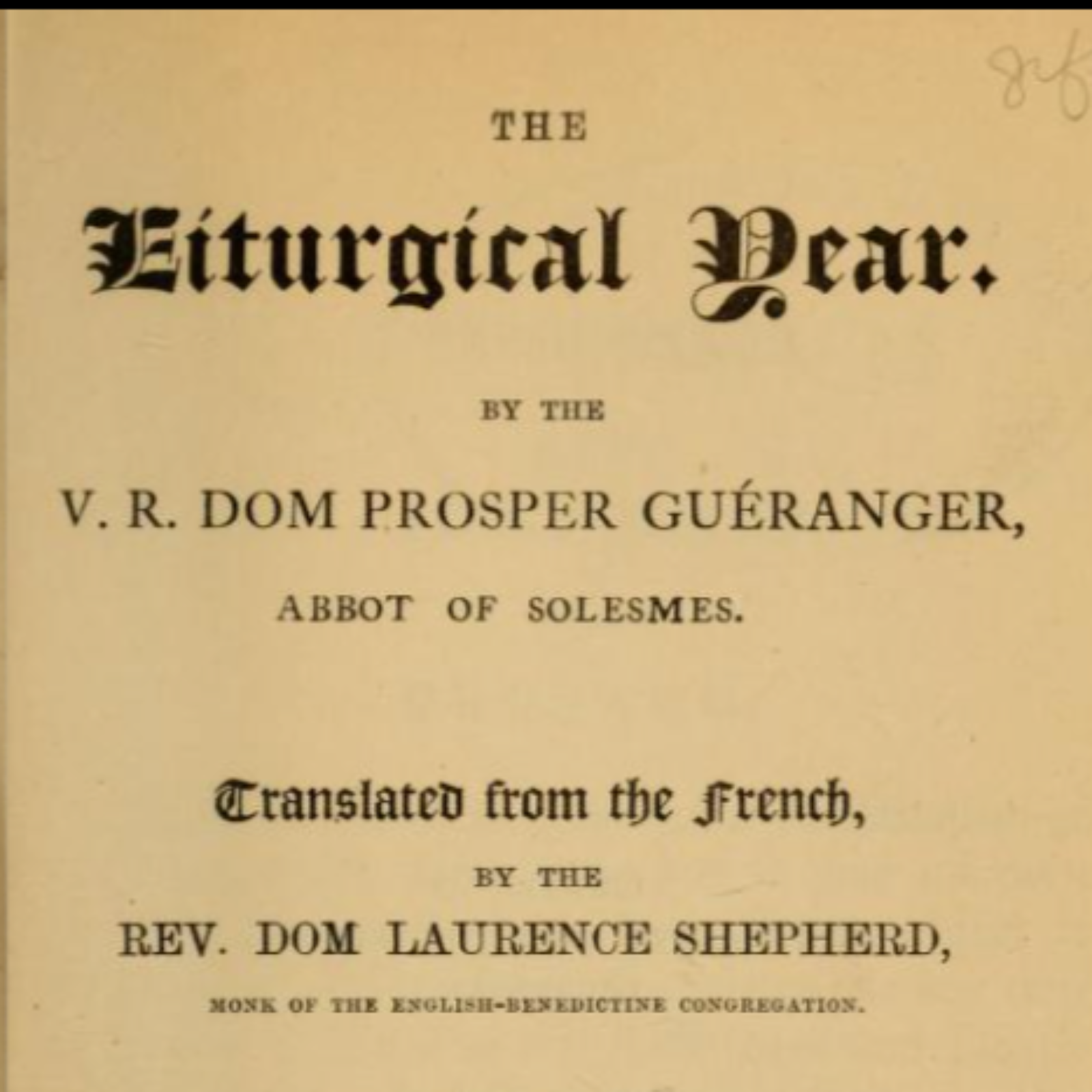
Excerpt from The Liturgical Year, a multi-volume work written between 1841 and 1875, by Dom Prosper Gueranger, abbot of the French Benedictine abbey of Solesmes. It is a rich theological reflection on the various feasts and seasons of the Church’s liturgical cycle.
Please consider donating to help keep this podcast going by going to buymeacoffee.com/catholicdailybrief Also, if you enjoy these episodes, please give a five star rating and share the podcast with your friends and family
Get every episode summarized
Each time Catholic Daily Brief publishes, we email you a written briefing from the transcript — the topics, who appeared, and any specific claims, with the ad reads skipped.
Email me new episodesFree for 3 shows. No card needed.
Hosts & guests

Transcript ready
51 searchable segments. Every word is indexed and playable.
Full transcript
Catholic Daily Brief — The Liturgical Year: Holy Thursday. Machine-transcribed; use the interactive transcript above to jump the player to any line.
Holy Thursday. This is the first day of the azimes or feast of the unleavened bread. At sunset the Jews must eat the past in Jerusalem. Jesus is still in Bethany, but he will return to the city before the hour for the Paschal supper. The law commands this, and until he has abrogated the law by the shedding of his blood, he wishes to observe its ordinances. He therefore sends two of his disciples to get everything ready for the Pasch, without however telling them the great mystery wherewith it is to terminate. We who know that at this last supper was instituted the sacrament of the Eucharist, can understand why he sends Peter and John, in preference to any of the other disciples, to prepare what is needed. Peter who was the first to confess the divinity of Jesus represents faith, and John who leaned upon the breast of the man God represents love. The mystery which is to be instituted at tonight's supper is revealed to love by faith.
It is this that Jesus would have us learn from his choice of the two apostles, but they themselves see not the intention of their master. Jesus, who knows all things, tells them by what sign they are to know the house which he intends to honor with his presence. They have but to follow a man whom they will see carrying a picture of water. The house to which this man is going belongs to a rich Jew who recognizes Jesus as the Messiah. The two apostles apprise him of their master's wishes, and immediately he puts at their disposal a large and richly furnished room. It was fitting that the place where the most august mystery was to be instituted should be something above the common. This room where the reality was to be substituted for all the ancient figures was far superior to the temple of Jerusalem. Then it was to be erected the first altar for the offering up of the clean oblation foretold by the prophet Malachi. In it was to commence the Christian priesthood. In it finally, fifty days later on, the Church of Christ collected together and visited by the Holy Ghost was to make herself known to the world and promulgate the new and universal
covenant of God with men. This favorite sanctuary of our faith is still venerated on Mount Zion. The infidels have profainted by their false worship for even they look on it as a sacred place. But as though divine providence which has mercifully preserved unto us so many traces of our Redeemer would give us an earnest of better days to come, this venerable sanctuary has recently been thrown open to several priests of the Church, and they have even been permitted to offer up the Holy Sacrifice in the very place where the Holy Eucharist was instituted. During the course of the day, Jesus has entered Jerusalem with the rest of his disciples. He has found all things prepared. The Paschal Lamb after being first presented in the temple has been brought to the house where Jesus is to celebrate the supper. It is prepared together with the wild lettuce and the unleavened bread. In a few hours, the divine master and his disciples will be standing around the table, their loins girt, and staves in their hands. And for the last time, they will observe the solemn right prescribed by God to his people when they first went forth from Egypt.
More episodes
More from Catholic Daily Brief

1962 Missal - Commentary on the Mass Readings: Sat, Aug 22 (Immaculate Heart of...
Catholic Daily Brief

Commentary on the Mass Readings: Sat, Aug 22 (Queenship of the Blessed Virgin Ma...
Catholic Daily Brief

Commentary on the Mass Readings: Fri, Aug 21 (Pope St. Pius X)
Catholic Daily Brief

1962 Missal - Commentary on the Mass Readings: Fri, Aug 21 (St. Jane Frances de...
Catholic Daily Brief