About this episode
Become a supporter of this podcast: https://www.spreaker.com/podcast/conspiracy-theories-exploring-the-unseen--5194379/support.
Get every episode summarized
Each time Conspiracy Theories Exploring The Unseen publishes, we email you a written briefing from the transcript — the topics, who appeared, and any specific claims, with the ad reads skipped.
Email me new episodesFree for 3 shows. No card needed.
Hosts & guests
Transcript ready
26 searchable segments. Every word is indexed and playable.
Full transcript
Conspiracy Theories Exploring The Unseen — The Guns and Butter Debate. Machine-transcribed; use the interactive transcript above to jump the player to any line.
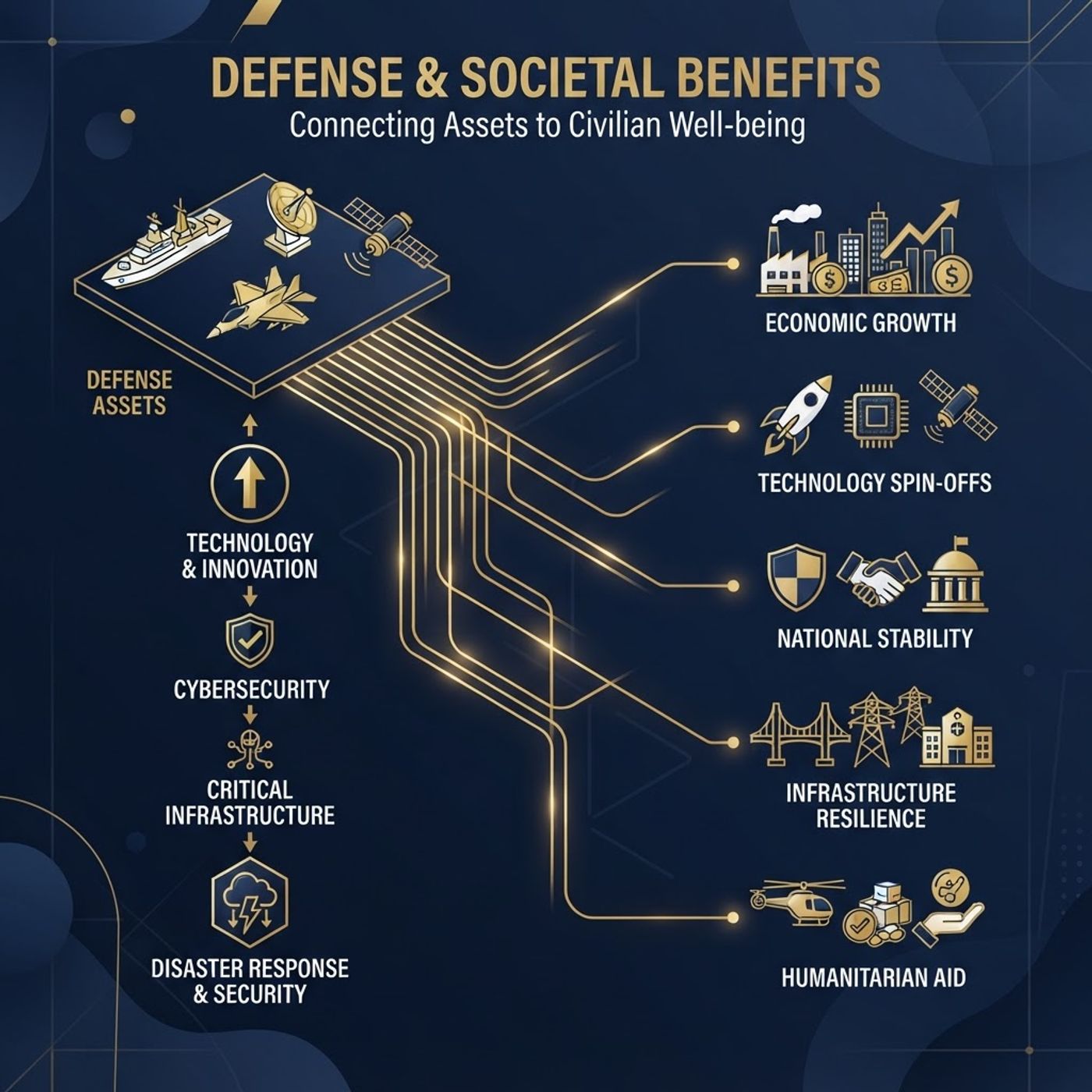
It's fall in Jeep country and during the driving to fall sales event get a great deal on 4x4s that refuse to be contained like Jeep Wrangler. Confidence built into every drive with the most awarded SUV ever, Jeep Grand Cherokee, and freedom that can't be denied with the open air freedom in Jeep Gladiator. After 85 years, it's no surprise that Jeep became America's SUV brand, get a great deal during the Jeep Driving to Fall Sales event. Jeep is one more awards over its lifetime than any other SUV brand, Jeep and the Jeep Grill or Registered trademarts of FCA US LLC. The relationship between military spending and the health of the American economy is one of those topics that sounds straightforward on the surface, but it is actually a massive puzzle with no single answer. When you look at the raw numbers, the scale is staggering. In 2026, the United States spent $954 billion on defense, a figure that dwarfs the combined spending of the next six nations on the list. For decades, economists have argued over whether this massive investment acts as a powerful stimulant or a silent drain on our long-term potential.
To understand why, we have to look at the historical context. During the height of World War II, defense spending hit nearly 38% of our entire GDP, effectively pulling the country out of the Great Depression through massive mobilization. Today, that number sits much closer to 3 or 4%, because that percentage is significantly lower, the direct economic impact is harder to trace. Proponents of military spending often point to the Keynesian view suggesting that defense contracts act as a fiscal stimulus, creating jobs and driving technological innovation that spills over into the private sector. However, neoclassical economists raise a red flag about opportunity costs. They argue that every dollar spent on a fighter jet is a dollar that cannot be spent on modernizing our electrical grid, improving public education or repairing crumbling infrastructure. This is the classic Guns vs. Butter dilemma, though many modern analysts now argue that this way of thinking is a bit too simple.
It is not just about where the money goes, but how it influences our national debt and fiscal balance. Beyond the standard economic models, a growing number of thinkers from institutionalists and social science backgrounds are pushing to redefine what national security actually means. They argue that true security isn't just about military might, but about social cohesion, environmental health, and individual well-being. If we measure security through that lens, does a massive defense budget actually make us safer, or does it leave us more vulnerable by ignoring the foundations of a stable society? Research also suggests that the political rhetoric surrounding defense cuts often exaggerates the threat to jobs. While the transition away from heavy defense spending would certainly be complex, the economy is often more resilient than politicians claim. Ultimately, there is no consensus on whether the defense budget is a net benefit or a drag. It remains a balancing act between our desire for global stability and our need for domestic prosperity.
As we look to the future, the challenge will be determining if those massive annual investments are truly the best way to secure our long-term wealth, or if it is time to pivot our priorities toward the sectors that build the next generation of American growth. Thanks for joining the Fortune Factor podcast. This is a great brand, even the cheap grille or registered trademarts of FCAUS LLC.
More episodes
More from Conspiracy Theories Exploring The Unseen

The Digital Mirage_ AI and the Death of Authentic Romance
Conspiracy Theories Exploring The Unseen

The Trust Trap_ AI and the Future of Romance
Conspiracy Theories Exploring The Unseen

The Ghost in the Machine_ Navigating AI Romance
Conspiracy Theories Exploring The Unseen

The Love Recession_ Why Digital Romance is Offline for Good
Conspiracy Theories Exploring The Unseen