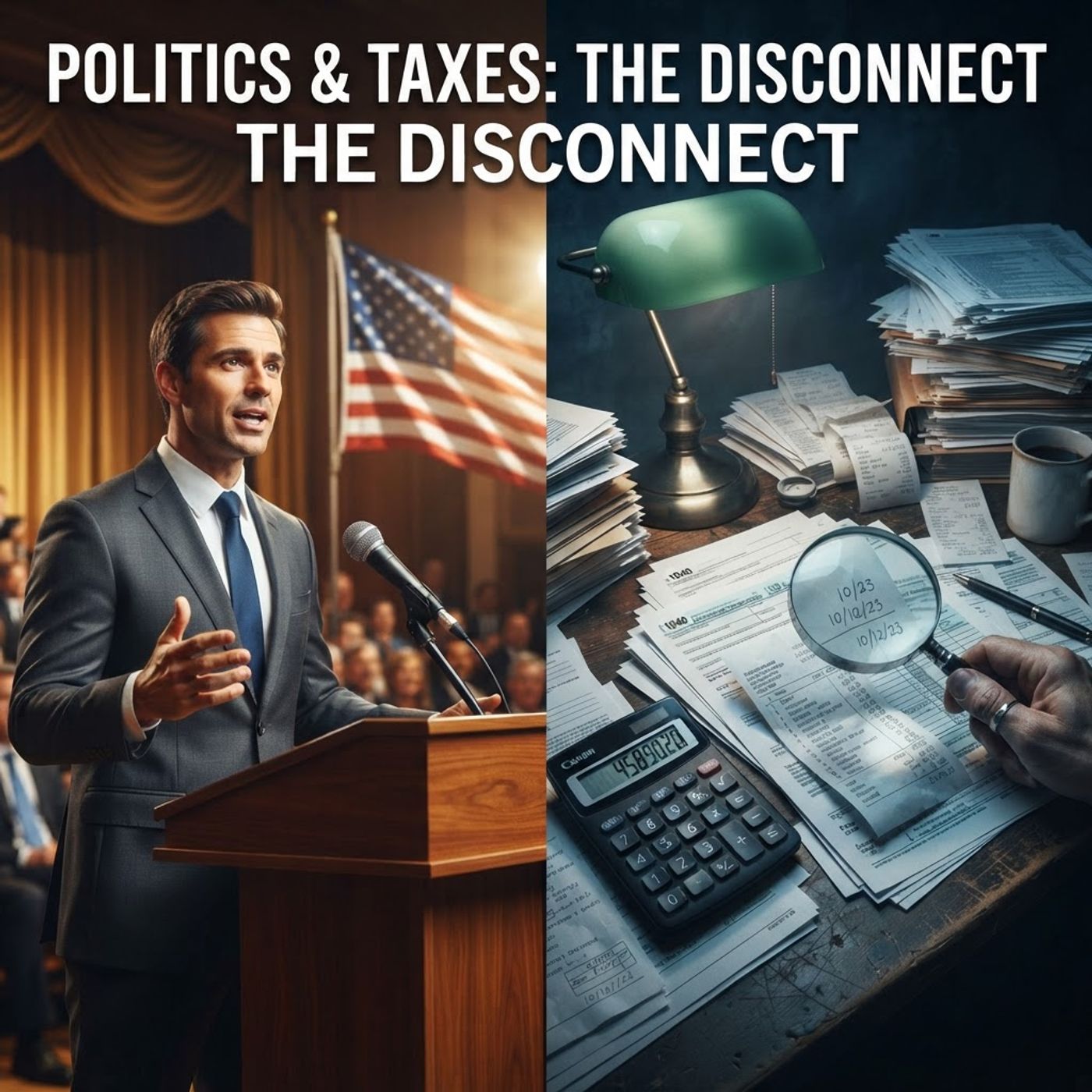
The Economic Mirage- Reality vs. Rhetoric
About this episode
Become a supporter of this podcast: https://www.spreaker.com/podcast/conspiracy-theories-exploring-the-unseen--5194379/support.
Get every episode summarized
Each time Conspiracy Theories Exploring The Unseen publishes, we email you a written briefing from the transcript — the topics, who appeared, and any specific claims, with the ad reads skipped.
Email me new episodesFree for 3 shows. No card needed.
Hosts & guests
Transcript ready
43 searchable segments. Every word is indexed and playable.
Full transcript
Conspiracy Theories Exploring The Unseen — The Economic Mirage- Reality vs. Rhetoric. Machine-transcribed; use the interactive transcript above to jump the player to any line.
When you hear the White House describe the current American economy, words like booming, golden age, and historic growth take center stage. The administration points to specific metrics, rising manufacturing output, new tariff revenues, and spikes in housing starts, to paint a picture of a nation charging ahead. But if you walk into a grocery store or look at your own bank statement, the narrative starts to feel a bit out of sync with those headlines. We are witnessing a massive divide between what the official data claims and the reality unfolding on the ground. Independent analysts are looking past the curated snapshots and finding a much more fragile story. For starters, look at the job market. We have seen hiring rates drop to levels we have not seen outside of a recession since 2002. It is a quiet, steady cooling that rarely makes it into the victory lap speeches. The concern here is that the very policies designed to protect American industry,
specifically universal tariffs and aggressive mass deportations, are actually creating the friction that slows growth down. By disrupting global supply chains and putting immense pressure on labor sectors that rely on foreign-born workers, these policies may be unintentionally fueling the very inflation that households are feeling. What makes this moment truly unique is how the government handles the messengers. When economic reports come back with discouraging numbers, the administration is not just debating the interpretation. They are questioning the integrity of the data itself. We have already seen the head of the Bureau of Labor Statistics fired following a disappointing jobs report. This shift toward politicizing economic data is a major red flag for economists who rely on these agencies to provide neutral, accurate information. When you start labeling inconvenience statistics as manipulated or fake, you stop being a policymaker and start becoming a spin doctor. And the public is catching on.
Despite the optimistic messaging, polling tells us that nearly 70% of Americans simply do not buy the idea that we are living in a golden age. For the average family, the cost of living remains the single biggest source of stress, and no amount of government rhetoric can paper over that reality. Is that we are in a tug of war between curated success stories and cold, hard data. While the administration points to isolated wins, the structural indicators, point to indicators, point to a potential downturn fueled by trade isolationism and a skeptical view of government transparency. Understanding this gap is crucial, because the health of the economy is not just about charts. It is about the confidence we have in the systems meant to measure our progress. Thanks for joining the Fortune Factor podcast.
More episodes
More from Conspiracy Theories Exploring The Unseen

The Digital Mirage_ AI and the Death of Authentic Romance
Conspiracy Theories Exploring The Unseen

The Trust Trap_ AI and the Future of Romance
Conspiracy Theories Exploring The Unseen

The Ghost in the Machine_ Navigating AI Romance
Conspiracy Theories Exploring The Unseen

The Love Recession_ Why Digital Romance is Offline for Good
Conspiracy Theories Exploring The Unseen