About this episode
No show notes were published with this episode.
Get every episode summarized
Each time Theatre Tales of the Techie publishes, we email you a written briefing from the transcript — the topics, who appeared, and any specific claims, with the ad reads skipped.
Email me new episodesFree for 3 shows. No card needed.
Hosts & guests
Transcript ready
489 searchable segments. Every word is indexed and playable.
Full transcript
Theatre Tales of the Techie — The Curtain Closes after 45 Years. Machine-transcribed; use the interactive transcript above to jump the player to any line.
Hey folks, it's Damon. This is Thereto, the techie. And the reason this podcast is called the curtain goes down after 45 years is because I'm leaving the industry. And I'm not retiring. I basically the best way to describe this folks is a once-in-lifetime opportunity came up. And it's karma. It's hard work. It's honestly, I think comes from being a theater person. The way we're wired to work unbelievably long hours and get things done. But you got to be careful folks, because right now I'm wearing a heart monitor. I almost blew my heart up over the last four months. So
life's been crazy. But so I want to cover a couple of things folks. One is answering kind of an email first about the industry. Secondly, I want to talk about some people that I met in my life. Three of them directly related to this industry that I just think are just beyond the coolest people in the world. And then I want to talk about where I'm going and the opportunity I have to do something really, really cool. And of course, I'm going to mix this all together into some kind of a miss, you know, miss mash of stuff because that's just the way my brain works because of my OCD. But first of all, folks, you know, I basically announced on my Facebook, you know, I was leaving the industry to go do an aviation thing. I haven't posted it on LinkedIn yet just because I haven't gotten there. And I don't start the new company until May 4th or start with the new company on until May 4th, whichever I says may the fourth be with you, which is a Star Wars
thing, which always cracks me up. So May 1st is the last day that I will be at Winger Corporation. And I've been there 11 years. And it's along as I've ever stayed with one company because I always get bored or somebody come and poaches me and says, Hey, look, we want you to come work with us. And that's kind of what happened with this aviation thing, though it was a mutual agreement that this would be a really cool thing to get together. What I want to do, folks, though, is last week, one of my friends who's been in the industry a long time reached out to me and say, Hey, if you're living, if you're living, if you're leaving the industry, can I always reach out to you for some tips and pointers? And I said, Absolutely. Now folks, I want to make it very clear. I'm giving up everything to go work for this startup. And what I mean by that is I used to do a lot of contract work on the side, like designing landing gear and different complex systems for my drone and UAV friends and all that stuff. I'm giving up all of it to dedicate 100% of my life to this
project because it's so cool. Okay. So all the side stuff I used to do is going to go away. So just be forewarned because I have some of my aviation pals actually listened to this podcast even though it's pretty much about my theater life. But my buddy, excuse me when I was talking to him last week, he said, you know, you did a podcast a long time ago about how, you know, in this industry, you can win and really have strong predictable wins. And what I do, a portion of a podcast about that. So folks, one of the things about the theater industry and this applies to a lot of different industries. Okay. But it doesn't apply to industries that are like centered you know, this isn't going to make sense probably it makes sense in my brain. But there's a lot of companies that are driven around sales and their training of salespeople and creating all
these systems and all of these processes for sales. And this would apply to that to a certain point. Okay. But then there's other companies that just have really great products and they kind of sell themselves and then they dedicate a lot of stuff to sales. And it's kind of like a teeter totter between the two. The theater industry doesn't have a single stakeholder. Okay. So let's imagine that you're going in to buy jewelry for your significant other. You're the decision maker. And how big your decision is going to be on how much money you have to spend. So you have to you know buy within your means. In the theater industry to win, you have to understand the ecosystem of the theater industry. Now there are two kind of silos. There's one where you've got the production
side, the touring side, the Taylor Swift side, the tape type companies, all of that huge stuff. Then you have the other side which is like the high school and university and even the what I would call the New York and Vegas type theaters. And these are theaters that are doing different performances or the same performance over and over. You know when you've got a production house or a touring like a kiss rigging or a tape, all of those people are putting stuff on the road or they're doing the big rentals for the car shows or the Grammys or the Emmys and all of that stuff. But on the side that I've pretty much lived in except for a little bit of film and television, I've lived in that world of theater systems for high schools and universities. Okay. Now I was lucky enough to work for an automation company one time where we supplied the hoist for the Grammys and I thought that was extremely scary, extremely stupid to do because the risk you take when you're doing live television, I hate that kind of risk.
But when I was talking to my friend last week about winning in our industry, if you're building what I call boutique things and you see this anywhere from special effects to controls, you are working with the end user normally. And the end user normally doesn't have a lot of money. So you have to figure out this balance on finding an end user that can find the funds to buy your product. Then you have what I call the bid spec world where bonds are passed, sometimes billion dollar bonds are passed for a city like LA, I think it was back 15 years ago or 20 years ago, had a billion dollar bond passed to do all their schools. That's easier to get to money. But you have to understand that ecosystem on how to get that money. And that's companies like ATC, Wenger, all these companies that are looking at the high school and the university world. Okay. Now look folks, I need to put a disclaimer out there. Everything I'm talking about is just my
personal opinion. I'm not talking on behalf of Wenger, ATC or Stray and very light or any of these people. This is just my humble opinion of being in this industry since 81. Okay, 45 years. And first 20 or 15 or ish, I've worked on stage, you know, as a TD and an LD and the rest of my life, I was dealers and manufacturers. But one of the really interesting things that in this sounds arrogant, myself and about 60 other people in this entire industry, I think there's only about 60 of us that really figured out that ecosystem. You know, folks, I have done a shit load of sales training. I have trained a lot of people how to sell. And I've always said the most important thing you've got to do is know how to build relationships and trust. Normally, if you build that, you are going to win. But in this theater ecosystem, you have to build that trust and relationship with many stakeholders, not one. You know, if you're, let's say you and your significant others going to go
out and buy a refrigerator, you guys are the stakeholders. Okay. Nowadays, you can buy a refrigerator from Home Depot because you're an educated buyer. You go on the internet and start reading all the reviews or you go to Amazon and you look at a refrigerator and you read the reviews and you're like, okay, I want that LG refrigerator that doesn't have that bullshit compressor. I want that other compressor because you figured out what you want. So then you go to Home Depot because you search the internet and find out Home Depot has the cheapest one. So Home Depot does not need a trained sales person selling your refrigerator. Most people don't get that that come into the theater industry until they've got 10 or 20 years of experience. When you learn who those stakeholders are in the theater industry, then you build relationships and then you can win. And I was lucky enough that myself in a team one time was winning an 87% of the time for one year and we had a 45% margin on everything we sold, which is unbelievably good, unbelievably good, before the kind of equipment we
were selling. Okay. I mean, there's some stuff you can sell and make 100% a markup on. There's other things you sell and it's much harder because it's it's like when you sell hoist, you know, some people will sell hoist to 20% margin. Other people try to hit that sweet spot of 40%. Myself, I like to see, you know, what is the project going to be able to offer toward your the services and what you're bringing to the project? You know, when I was in theater, I would pay more for a product knowing I'm going to have great customer service and they're always going to be there to support it. We do that in life. You know, if you're going to go out and buy a weed eater, you're going to do research and find out which weed eater is going to last the longest. We're becoming more educated buyers. But in this ecosystem, excuse me, you have the architect, the theater consultant, the acquisition, you might have an owner's rep, you might have a general contractor, you might have a construction manager, you might have the owner who's got some influence.
Keep in mind, the owner is not the technical director. The owner might be the superintendent, it might be the purchasing department. It might be whoever is releasing the bond, the money from the bonds to go to the architect who's going to the general contractor. You have to get to know all these people. And once you spend three or four years getting to know all these people and all these people trust you, then they use your specs and drawings. And then when the job hits the street, you don't have to bid just on price. You're the one they want to go to. You're the one that educated them why you are the best value. And that's how you win. That's how the ecosystem works. It's I know that people are like, well gosh, that sounds like a lot of work. It is a lot of work, but it's not hard. You don't have to have a 161 EQ. I'm EQ equalizer. You don't have to have a 161 IQ to have absolutely monstrous success in this industry. And folks, it's arrogant, but myself,
and about 60 other people, we figure this out. Now what's really scary is about 30 to 40 of those people are retired or dead. It's just what happens when we get older. You know, I'm 63 years old. And you know, where are the next demons? Where are the next robes? Where are the next Tonys? I mean, I know so many rips because I used to manage all of them. You know, as a desistia query and vortex, I managed about 100 people across the country. And they were the best of the best reps I've ever met in my life. And one thing about the industry, excuse me folks, one thing in the industry, I would warn you though, is there are people in this industry that make a lot of money. They're normally owners or their reps commissioned reps. I knew a manufacturer about 20 years ago that wanted to hire a rep away from his company.
And they said, you're just anything you touch turns a gold. We want to hire you. We want you to be our sales manager. Therapeco is great. Give me a million dollars and pay me 250 a year. And they looked at him and laughed and they're like, oh, give me a break. And I thought that was the stupidest thing they ever did. They should have given him a million dollars and they should have paid him 250 a year because he would have grown that company into something monstrously huge. Folks, when I worked for a manufacturer one time, I had the finance guy call me up and goes, do you know we're sending this rep $100,000 check? And I said, yeah, I said, what's the problem? He goes, we're sending him $100,000. I go, okay, that's his commission because he sold $1.4 million of equipment for us. What manufacturer? What CEO wouldn't be smart enough to say, well, hell yeah, I give somebody a hundred grand up. They're going to bring me $1.1 million. I'm going to make 45 to 50% margin on it. Now there's some people that don't get that in this industry. Some people just aren't wired that way.
Folks, I was a contract rep for a company one time that when they hired me, I told the owner, you know what this agreement, I'm going to make more money than you. He said, I hope you do, because that means you're selling $10 million worth of equipment. Now sure he's the owner. He's the one that gets the profit at the end of the year and he owns the company. He can sell it one year for $25 or $50 million. But what he was paying himself, I was going to make more than him. Sometimes almost by double, because I was a commission salesperson. This industry sometimes don't understand that when you find the right people and are willing to pay them, they can make you monstrous money. But sometimes that doesn't, that doesn't work into the ecosystem of that company. Because they're afraid, what if another employee finds out, oh my gosh, that guy's making 200,000 a year and everybody else is making 90? Well, what if that guy making $200,000 a year is bringing
10 to 20 million dollars into the company at 40 to 50 percent margin. And that's one of the complexities of the theater industry that people don't realize. None of the reps that are commission reps out there want to work for a manufacturer because a manufacturer can afford them. I mean, I know a rep that has a serious airplane, two houses and all this stuff. Most people working for a manufacturer will never make that kind of money. But if you want to win, you first have to understand the ecosystem. And that ecosystem is that architect, theater consultant, acquisition, you know, the owner's rep, the, I'm trying to remember, the dealer who might be involved. Okay. All those people and folks, I'm not going to get too deep into it in this podcast because you then have all the emotional industry around the specs and the drawings. There's a lot of emotional stakeholders in this industry that will say, well, I want only that light.
And there's eight other lights out there that do exactly what that light does. It's just they've been brainwashed that that's the only light that is good because the other seven people selling those other lights are shit at selling. I've seen a really bad light get specified because they have the greatest sales people in the world. So okay, I'm going to move on now. So I want to talk when I when I think about this the last 45 years folks, I think about people I met and there's three or four people I met that just absolutely stand out. And now look, I know that some of my other friends are going to be mad at me. Sorry for that really weird pause there folks. I just had a nuclear powered sneeze that come out of my head. Don't know where that came from. But folks, I'm just going to talk about four people that I knew in my life that changed my life
to a certain extent. Okay. The first one was Fred Brown. He was my boss at STTB Navy, one of the greatest guys in the world. Unfortunately got bit by cancer. He's not around anymore. But Fred is the one who taught me how to build those relationships with the end user with the architect, the consultant. He taught me that the greatest sales people in the world build relationships. They don't sell product. They are educating people on why the product is great while building that relationship, that trust. And folks, you know, when I decided to really study sales and started like reading Jeffrey Gutmer's book, Little Red Book of Sales and excuse me and all the other sales books. Well, I actually didn't read them because I'm so dyslexic. I listened to them unaudible. But the thing is folks, when I look back now, I think I've
done 18 different sales courses that I have PowerPoints on that I've trained sales teams with. I think it's 18 or 19 now. And one of them is called Hope is not a strategy, which is one of the most successful little mini seminar things I do. And it all goes back to Fred Brown. It all goes back to the way Fred basically taught me that the only way someone's going to buy something from you is to a like you and be trust you. If people don't like you, you don't have a chance. You can have the greatest product in the world. And if you come across as a complete ask bag, you were just not going to have any success. And Fred kind of taught me that. Um, he also taught me no matter what happens. Smile. I don't care if you're totally stressed out. Everything in life's going to shit. When you get with a customer, don't take that into that
conversation. They don't need to see you stressed. They don't need to see and don't ever talk about it. I've sat with salespeople where we walk into a room and everybody's like, how are you doing? Oh, my life, you know, my wife left me and my, my girlfriend's suing me and my dog left me and I'm sitting here thinking, why in the hell are you talking about this shit? Always be positive and always always stay focused on why you're there. Okay, us nerds get lonely. Us nerds get out into the field and start talking to people and we tend to want to talk about all the cool things we're doing. That person doesn't need to know all that shit. What you need to do is stay focused on why you're there. What is the task at hand? And my friend Fred taught me all of that stuff. The next person I want to talk about is a guy named Tobin. And Tobin and I are best friends today. I met Ted through a guy named Scott Spedic. Scott is a really good integrator. He's retired now.
Scott and I worked together at STTV for a while. In one day, he says, hey, Damon, you know everything about rigging. You want to help design a rigging system? I'm like, yeah, why not? Well, I got a friend Tobin. He came out at Indiana universities with a master in theater and everything. He's working for a company called Barbizon. And he's doing a theater called Starlight where the roof opens up night and all the patrons can look up and see stars. And I said, well, that sounds kind of cool. Well, Tobin and I worked together. I did the rigging. He did the lighting on the project. And for some reason, we just clicked. We probably text two or three times a week, talk every, at least every two weeks. One of the greatest times I've ever spent with him, whether the PF Changs in Las Vegas after the LDI show is him and myself, another dealers and reps and folks, this industry, you're going to meet really, really cool people that will change your life. They'll change your life. Next person I want to talk about is got him Darryl. He's a theater
consultant, well, retired one. There was something about Darryl that was different than most theater consultants. Now, folks, I know there's 46 or 50 theater consultants I used to call on. I always said about eight or 10 of them I really clicked with. Excuse me, one or two of them, I really call friends. And Darryl, without a doubt, is one of those. But there was something about Darryl because he had worked on stage. Before he became a theater consultant, he knew everything about working on multiple different stages and multiple different theaters. And it was always refreshing when I would be working with him on a project because he always kind of looked at things different, but he always wanted feedback. Some people you call up and say, hey, I got a question about this drawing and they get defensive. You could call him up and say, hey, I got a question about this drawing and he's immediately like, well, yeah, let's figure what it out because in his mind, either he made a mistake or I'm not understanding what's in that
drawing. Folks, one of the things about this theater industry that just pisses me off beyond all imagination. I mean, I'm talking like, well, I got to be careful. I don't want to say something politically incorrect. There are people that will bid jobs out there when we'll see really, really fucked up drawings and they'll say, well, that's not on me. That's on the designers. I'm going to bid it the way it's drawn and then I'll go back and get change orders and I'll make a lot more money. I think that's criminal. If you look at drawings and know something's wrong, call the designer up and say, hey, look, can you explain this to me? Because one or two things are going on. They made a mistake or you made a mistake, but wait a minute. There's a third. Maybe the architect fucked it all up. Okay. Somebody could have changed those drawings about the consultant even knowing. Okay. So the thing is, is that you always pick up the phone call and every time I would call him, he was eager to say, okay, let's figure this out. Or he would educate me.
That's another thing that you should always be so open to in our industry. If you're a theater person of any kind, always remember, you want to be around people smarter than you. That's how you learn. And I've learned so much from the derls and the tomans and the threads, unbelievable people. That's what got me to where I am today. But it's not going to get me where I'm going to go tomorrow because I'm going to be building airplanes, but I'll get to that in a minute. But I still think me being a theater person, even though I loved aviation at the age of five, I think with what I learned in this industry, as far as being involved with new product development, understanding, and the theater, we always have to open the curtain no matter what on time. We're always driven by timelines, which folks, I almost killed myself because of a timeline I just completed. I really screwed my heart up. And I'll talk about that at the very end. I think I'm going to be fine. We've got a plan. But folks, one thing about theater people is we will work ourselves into the ground.
And I took on working two full-time jobs for four months and it really screwed me up, but I'll talk a little bit more about that in a minute. I'm going to be fine though. So who's this fourth person? Now folks, I might get myself in trouble in my podcast talking about this fourth person because she is like an alien. She's one of the smartest people I've ever met in my life, one of the most creative people I have ever met in my life. A lot of my friends and even my wife called her my work wife for a while because we got along so good. Now, of course, there was no hanky-panky because I'm 7,000 years older than her. But here's the thing. You meet some people in your life, you know, like the Fred, the Tobins, the Daryls. And this girl, her name is Savannah, better what I call her savvy. And when I first met her, she made me crack up because she reminded me of this actress I knew a long time ago because this girl is very attractive. Okay, I used to joke with
her openly and folks, I know people will say politically correct, Damon, you're not supposed to do this. It's this if you work with somebody. Well, you know, folks, I've always gotten myself in trouble so I don't give a shit. But I always with joke with her, you better be careful walking into a basket robin because all 31 of those flavors are going to melt because you're so hot. And she would giggle and say, oh, oh, please stop, Damon, don't. And then she'd go, but keep going. There was something about her delivery. Now, her family did come from the theater industry. I don't remember if she acted or not. But there was always where somebody paid her a compliment, like, you know, that was really good. And she's like, oh, stop. And then she go, but keep going. And it was the way she delivered it, almost like a comedian that knows exactly how to deliver that moment. Perfect. But I want to tell you what blew me absolutely away about this gal. I was developed, I was leading a team developing a hoist called summit. And she became my marketing gal slash kind of like
project manager to help it keep going. And her creativity for the launch of this was something I had never seen before in my entire career in this industry. So what I want to do is I want to back up about 16 years ago, or 14 years ago when I was at the sissy. We hired the two most beautiful women as what we used to call booth baves. I know nowadays that's not a politically correct term. But it's where you hire two very attractive models. They hound out brochures in your booth. And it's to get what we used to call all the meat into the booth. Okay, all the guys that would notice those girls like, oh, shit, what's going on over there? Once now, keep in mind, we only did this at NAB National Associates and Broadcasters, which is film and television show. It's the biggest and Vegas. It takes like three different halls. It's one of the biggest trade shows in the world. I think I ES and the adult video one's bigger. Think about that porn's bigger. But the thing is is
it was really funny that we had those booth baves. But there was another booth next to us to actually have more traffic. And I'm like, what the fuck? Guess what was attracting people more than the two booth baves we have in our booth? Which by the way, guys and girls, I knew these girls. They were from Indiana. There are people I knew. And when I told the Italians that I knew them and show them pictures are like, absolutely, let's bring them to the show. So in the booth next to us, that was more packed than our booth was this five foot two gorgeous blonde that wrote a 10 foot unicycle almost naked juggling bowling pins. And I got deflated. I'm like, well, wait a minute. You know, we've got elegant, beautiful looking women. And this girl's on a 10 foot unicycle. Well, 90% of the people that go to that show are men. So it kind of showed you where the minds went, okay? But I was like pissed. But then they're savvy. And no savvy was not on a unicycle almost naked.
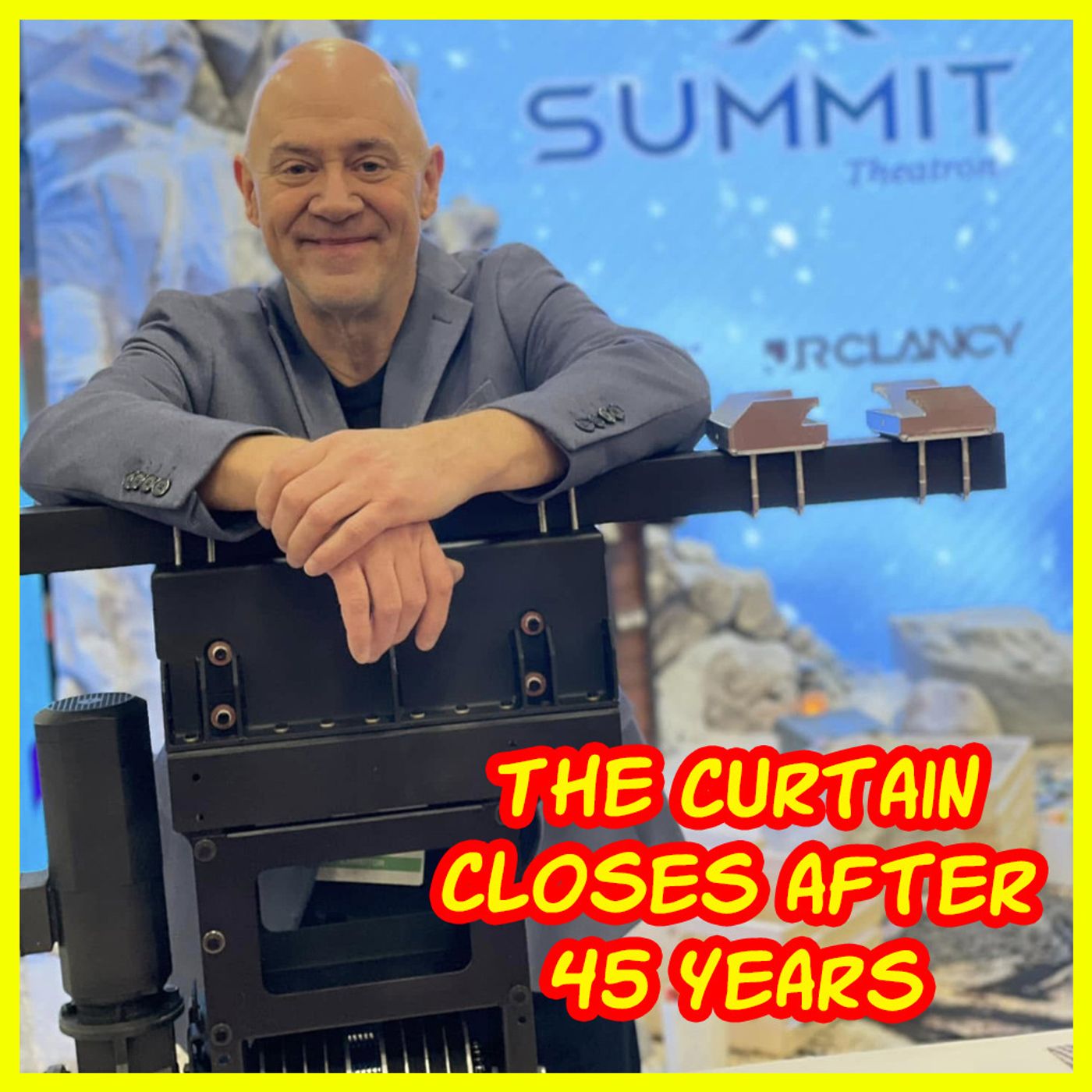
Though I think we probably would have gotten more traffic. But here's the thing. I mean, she created these little bitty. So in our booth, we had a mountain, okay? Because the hoist was called summit, you know, the summit of a mountain. We had a freaking mountain. We had fake snow. We had giveaways. Now this was for USITT, which is kind of a college so. And a lot of people say, oh, they're just college kids. That is so stupid when people say that. Because all these college kids are theater college kids. And all them one day are going to be buying equipment. So why not prime the pipeline when they're all 17, 18 all the way up to like 22? Excuse me. I used to have people make fun of me saying, why are you taking these people out to dinner and dropping 500 bucks on five of them? Because they'll never forget the company I'm working for took them out to dinner. And one day when somebody goes, hey, do you want to buy an orchestra shell? Oh, I remember that company. They took me out to dinner when I was 18 years old. It's all building those relationships, folks. Okay. But this is what savvy did that blew me away.
And in folks, I don't know if I can articulate or explain this properly. If you're a Taylor Swift fan, you know, she made those little beads and bracelets you put around your wrist that say love and, you know, your significant other's name or your kids names. You know, I made one that said like airplanes or jets or rockets. I'm kidding. But that's what I would do if I made a, if I, if I made a bracelet, that's what I would put on it. Or even my daughter, I got to be honest, I'd probably put my daughter in on there. My son back then I was mad at him. I'm not mad. So I would make a bracelet now with his name. But here's the thing, folks. Our booth was packed because of what savvy did. These bracelets, these giveaways. It was unbelievable. It was, it was more than having booth babes. And she was so pleasant to work with. She has such a beautiful soul. But the thing was, is that you don't meet many people like that in
your life. I mean, and, and you know, the thing is, is that the reason she's not with a company right now is because she's got this company where she makes young kids smarter or some shit. It's like left right brain curriculum or something. She is so far above all of us as far as IQ. It's just unbelievable. But I got to work with her. And it was one of the coolest things in my life, just to walk away her brain work. But I do got to tell you something that really pissed me off about her. And this was all my fault, though. As you know, I'm really, really OCE. Okay. I'm, folks, it's debilitating sometimes. So when you set up a trade show booth, you show up like three days before and you get, you know, the floor laid down, you get all your tables set up. And then there's these boxes. And every box had a bag of beads. And then every bag of beads was like 10.5 billion beads. So we had something like four and a half trillion. And I'm exaggerating, of course. We had so many beads and all these bags. And she's just ripping them open and dumping
in things. And these things are, these little fuckers are falling all over the floor. And I'm just like, alright, is there nothing about you that is organized? And she's like, oh, Damon, just take a chill pill. And you're going to have a heart attack and die. And I'm just like, I got to leave the booth. And I did. I walked away. I'm like, okay, but guess what? I came back the next day. And the booth is pristine. And I'm like, what happened to all the beads on the floor? And she looks at me and she's like, you know, Damon, you're a dipshit. We have sweepers. So you know, they just sweeped up all the extra beads because you had four and a half trillion of them, okay? But folks, these little beads, the kind you put a needle through the string and build these bracelets. Those beads drove me nuts, my OCD. Okay, I just, I want to be transparent with you. It drove me ape shit. But folks, I had never seen so many people in our booth that was smiling and exciting. I mean, excited. And it was just, and because it's a theater show, these were all theater kids. And they thought we were grooving cool people. Because keep in mind, most of us in that booth
are old ancient relics like me. Well, no, I shouldn't say that. We probably have, I don't know, 50% like my age. No, probably 40% my age, 30% that's like middle age. And then you had that age around savvy. And I don't know. She's one of these guys. You know how old she is. I don't know she's 22 or 33. I'm guessing 25. But um, and it really, you want to know it's really bad. I'm a talk to her in like a freaking year. And that's bad on me. Life gets so busy. I haven't even texted her or talked to her. So I need to go bug her. Um, but folks, if I ever got to work with her again with her marketing genius, holy shit. That, that would be the coolest thing in the world. I mean, it's like she just, it's like she sees beyond. I don't know how to explain it. Okay. Um, yeah, I don't know a single person that didn't absolutely enjoy working with her unless they were
just demonic or jealous of her. She was just awesome. So now what I want to do folks is I want to tell you what I'm going to do. But setting next to me here, um, folks, I have a plaque. And on this plaque, it's got signatures all over it. And the middle of it is a beautiful UAV. So folks, you know, like, listen to my podcast. I've always been a psycho scientist, developer, aviator, all of that shit. Okay. About four, four and a half months ago now, um, a guy reaches out to me through my YouTube says, Hey, I see you build these huge model airplanes and all this stuff. We need a prototype built ASAP. And folks, I can't really talk hardly about, much about this because of all the NDAs I've signed and stuff because this is an aviation startup. Um, I've told a few people the name of the company I'm going to, but I'm going to make it more public as I get closer to my true start date. Um, but folks, I ran into a group of people
that I don't even know how to describe it. It's a greatest group of people I've met in a long, long time in my life that are all moving in one direction, rarely in life. You know, a lot of people will work a nine to five job during the week so they can get to the weekend and they can party, drink, uh, go fishing. People have a job to get to the weekend. I've always had a job because I love the job. And sometimes when I get to the weekend, I'm depressed because I want to keep my job going. That's one reason I always did my aviation stuff on the weekend because folks, I don't know how to take a day off. I never have. And this company wanted a prototype. And I really nicely said, no, I don't have time. And they sweetened the pot and said, look, we really need this. Um, can you help me out? Got with the family and said basically for four months or three months, three and a half months, I'm going to work two full time jobs. So folks, every morning between one and two a.m. I got up and work until about seven, seven,
thirty. And then I did my day job. And then I would work another hour and a half to two hours for them. And then, um, watch wheel of fortune, jeopardy, uh, next level chef or survivor with the wife and then go to bed between eight thirty and nine. Some nights is early is eight. I never took all my PTO. Okay, I just never needed vacation, but I didn't want to rip off the company I'm working for. I didn't want to be working on this project when I should be working for my day job. That's just something morally and about karma. I just didn't want to do. I didn't want to feel like I'm flucking anybody over. So I took a lot of PTO. So I had some 16 to 18 hour days working on just this project. And folks, something happened that was so unbelievably cool. So there's an early morning, about three a.m. I'm loading my trailer with this prototype, which was one fifth
scale of the real airplane. They would only fit my garage diagonally. It was so big. And I drove to a UAV test site down in Tulsa, Oklahoma. And when I showed up, I met this really cool guy. He's like, you Damon. I'm like, I'm Damon. He's like, well, here's the keys and here's your code to the gates. And I'm like, okay, slow down. What does that mean? He's like, well, you guys are basically rented this whole airport to do your testing. And folks, I didn't know we were renting an entire airport for our testing, which means the taxiways, the runway, the FBO building, the hanger was essentially mine for the amount of time that we needed to do test flight operations. Who in the hell drops out of high school works in theater, plays with model airplanes, ends up with that. This is lottery level luck. Or as everybody keeps telling me, Damon, it's not luck. It's all that hard work you've done. I think luck's in there somewhere that these people
found me on my YouTube. And folks, I know this sounds really weird. But I remember one morning, I walked down the taxiway to the runway. I'm looking up and down the runway. And I look 360 degrees around me because I'm kind of like scoping out how I'm going to do these test flight operations. And I just felt like the luckiest person in the world. Because as a model aviator, to be working with all these pros. And folks, I can't mention any of those names. Some people work to the White House, some people flew air refueling tankers, some people flew helicopters. These people in this new company are all moving in the same direction to have success. Nobody's there just to get a paycheck. Everybody's 100% in. And here I am working with them. Now folks, if you've ever watched early like, I don't know if any of you will ever relate to this. But when they
test through the space shuttle first two or three times, you always saw chase planes chasing the airplane. And that's so that a pilot chasing the shuttle could tell the shuttle pilot what's going on. Well, the UAVs and model aircraft, we actually have a drone pilot do that. And one of my best friends is a guy named Aiman. Now, I'm Damon. He's Aiman. My nickname's DAG. So everybody kept calling me DAGs. They wouldn't yell Aiman. And I think they're yelling Damon. But I brought Aiman with me. I told him guys, we got to hire Aiman to be our chase pilot. So Aiman shows up. And I think he felt the same way kind of with me that we had our own airport. And he did phenomenal work, folks. I mean, the work he did with this group. And I know this group will use him again in the future. But to make a long story short is we all just kind of looked each other and greed. I should be a part of this group. And that's where I'm going. I'm joining them. We're going to be basically designing the first fully autonomous cargo planes. I mean, imagine like C-130s and C-5s and all
these big airplanes. The world is going to go to autonomous aircraft. I don't want to get into why and what our missions and all that shit will be because you know, I got NDA signed and I just don't want to spill any beans without realizing I'm spilling beans. Okay. But folks, some of these, I shouldn't say some, everybody I've met so far that's associated to this company is just absolutely rock stars at what they do. And to be a part of that, folks, I have so much imposter syndrome going on right now. And people keep getting mad at me saying, Damon, you deserve to be a part of this. You know, look at the aircraft you've built and designed. Look what you built and designed in four months in your house and your own shop and your garage. Yeah, yeah, folks, I am so happy and I'm so humbled and I'm so proud of that. But folks, there is a plaque sitting next to me right now. And if you've listened to my podcast, you know,
all the awards I get I throw away because folks, normally when you get an award, there's a team behind you that deserves that award more than you. For me, it's always about the team. It's not about the one person. Okay. Seriously, I have thrown away so many awards in my life because it just, it drives me nuts. We should be recognizing the team, everybody in the factory, everybody in the R&D, all these other people who do this shipping, all those people deserve praise and they rarely get it. But this plaque, folks, in the middle of it has a UAV and all around the perimeter are signatures of all the people that were there that day because they were so excited that I was able to pull this off in four months. But they basically, so folks, little background, me and Damon were done with the testing. We were in a hotel bar talking and the hotel is only like a four minute walk from this, this airport. And we get a text and this really cool operations guy.
I was like, Hey, can we come pick you up before you guys leave town and say bye? Because the next morning at 3 a.m., I was going to drop Damon off at the airport and then I was going to drive back to Indiana with my trailer and the UAV. And we go over the FBO building, which stands for flight base operations. It's basically a building with offices and stuff. Everybody's there because they brought in almost all the employees of this company to do, you know, the flight operations at wheat. And they had gone out and made these two plaques, one for Damon, one for me, and each of them wrote something about the project on it and then presented it to me and Damon. And folks, this is one of the most important things I've ever gotten in my life. So that's where I'm going folks. That's that's where I've headed. I'm going off into doing some really, really neat stuff. Now I have had several people ask me, what if it doesn't work? You know, what if down the road they don't like me or the company doesn't make it, what happens next? Well, if I do come back to the industry,
I'm only going to come back to one company and it would be where I'm at right now, Winger. I would not go back to any other part of this industry because quite frankly, folks, Winger is going to be the biggest company in this industry. It was a really hard decision for me to make because, you know, Winger, what 14, 15 years ago purchased J.R. Clancy, then they purchased Zicoah, then they purchased Creative Conners, then they purchased Texas Scenic. Winger will be the biggest performing arts company in the industry. I don't know who they're going to buy next. I bet there's more coming. But yeah, if I ever come back to the industry, which I doubt I will, it would only be to work for them. And that's another reason you never burned bridges. Okay, I don't know how many times I've tried to coach people and they're leaving a company. You know, they're like, oh, dammit, I want to write this. I'm like, you don't write that. You know, and another thing is folks, be sure you're ready to leave.
I had somebody reach out to me a couple of weeks ago that retired two years ago and they're wanting to come back into the industry. And I'm like, I mean, folks, I don't want to get myself in trouble at the end of my podcast. But don't retire thinking people are going to still want to contract with you if you don't have a company set up to do contracting with. Okay, I don't want to get too specific here. But somebody called me and said, I don't know why no one's contracting with me. I'm like, you retired. Well, yeah, I know. What the fuck? I mean, if you're retired, you're retired, right? I mean, so folks, if you leave the industry, don't burn any bridges and don't tell people, you know, I got to be careful. I'm getting fired up here. Yeah, folks, we were never, yeah, yeah, I can't say what I want to say because it would be misinterpreted. But no, folks, look, this, this decision was really hard to make because winger has been, I mean, I've been here
11 years folks and I normally only make it three to four years at a company before I get bored. Now, on the aviation side, I know I'll never get bored because I'm sure once we build one aircraft, we'll start on another aircraft and another. Oh, and just so you know what my job is, I'm going to be the guy that they put in the front of the UAV to test all the computers to make sure I'm kidding. I had somebody ask me, well, when they test fly a UAV that's totally autonomous, is there a pilot in the nose? And I'm like, normally not. Some have done it that way, but it's not real safe. No, basically folks, and this is going to make total sense to you. If you were at USITT last year, you saw two half scale prototypes of our summit hoys that were 3D printed and they, you could take them apart, look at the brakes, look at the drive, look at the motor, you could look at the drum, you could look all the stuff, the way the backbone worked and everything. And it was one of the most exciting things anybody had ever seen in a trade show seeing those half scale models or sub-scale prototypes as a lot of people call them or sub-scale models.
So the company I'm going to, I'm going to be building a lot of their sub-scale models, their sub-scale prototypes, and I'll be building basically flying hardware that's sub-scale. So I'll be building models and folks that's something I've loved to do my entire life, and now I get to do it with a really cool company that's going to be building real aircraft. And if you get a chance, if you use like the paid version of ChatGPT or any good AI, ask them about all the models that were built for NASA during the Apollo era. You know, like with all the different sub-contractors that NASA worked with, there were actually stipulations about their engineered models that they had to build to be able to show Kennedy, Werner Vombron, all these people. Sub-scale models have been an intricate part of all companies in the history of aerospace. And now I get to do that. Isn't that kind of
cool? So, people ask me if I'm going to move. Right now I'm going to be remote. I don't know if we're just going to use my shop here in my house or if I'm going to rent some space and build a shop here in the town I live in. I'm kind of anchored in Indiana because of family, but once that family expires hate to say it like that, then me and Melinda can go wherever we want. So who knows where I'm going to be, but right now I'm going to be anchored in Indiana. So that's it for this podcast, folks. Oh, and I was asking, I'm going to continue doing podcasts since it's called Theater Tales of the Techie. Well, folks, I originally did these because I thought I would never retire from the industry and be able to write my book about the industry. And when I first said that, I had a different mindset. I guess I've grown up because I wanted my book about this industry to have like a final chapter to talk about all the bullshit and all the problems and all of the
bad people, you know, people who say, I don't care if you like me, I demand respect, all those people. And as I've grown up, I'm like, none of that matter. That noise will happen at a lot of companies that might not just be the theater industry. So hang on, I got to take a drink. So folks, I'll probably never write the book. And I might do some more theater tales of the Techie if something comes up that I think is worth doing a podcast about the theater industry. I have had a lot of you say, you love it when I talk about engineering, you love it when I talk about aviation, you love it when I talk about outer space and why aliens haven't visited or why we've never heard signals from other planets and all of that junk. So I might still do some, I don't know. I'm just right now trying to kind of close my chapter with Winger and open my chapter with this new company. So that's it. Always be good to each other. And if you're a theater person,
don't ever, how do I say this? I have met so many theater people that end up in other fields. And I think it's because we're brainwashed back in school that no matter what, we have to open the curtain on time. No matter what, we have to figure out how to build with our hands, have to how to glue, screw, drill, weld, all of that I learned in the theater industry. And all of that I use in my aviation life too. So yeah, that's it folks. So rock on. And I might answer emails. You know, I get so many emails from listeners. So it might be fun to answer emails about the theater industry. But folks, once I think I'm going to be so busy, I mean, I don't even have time. So that's it. Rock on. Take care of yourself. And, yeah, that's it folks. I want to say something, but I know I don't want to blow up my podcast at the very end. Yeah. So be good to each other later. Bye.
More episodes
More from Theatre Tales of the Techie

Why you must NEVER give up!
Theatre Tales of the Techie

Networking-Reps-Prep
Theatre Tales of the Techie

Failing Forward Fast/Public Speaking/Why we Fail
Theatre Tales of the Techie

Where is the Talent going?
Theatre Tales of the Techie