The Billion-Dollar Shield_ Deconstructing the Military-Industrial Complex
About this episode
Become a supporter of this podcast: https://www.spreaker.com/podcast/conspiracy-theories-exploring-the-unseen--5194379/support.
Get every episode summarized
Each time Conspiracy Theories Exploring The Unseen publishes, we email you a written briefing from the transcript — the topics, who appeared, and any specific claims, with the ad reads skipped.
Email me new episodesFree for 3 shows. No card needed.
Hosts & guests
Transcript ready
23 searchable segments. Every word is indexed and playable.
Full transcript
Conspiracy Theories Exploring The Unseen — The Billion-Dollar Shield_ Deconstructing the Military-Industrial Complex. Machine-transcribed; use the interactive transcript above to jump the player to any line.
It's fall in Jeep country and during the driving to fall sales event get a great deal on 4x4s that refuse to be contained like Jeep Wrangler. Confidence built into every drive with the most awarded SUV ever, Jeep Grand Cherokee, and freedom that can't be denied with the open air freedom in Jeep Gladiator. After 85 years, it's no surprise that Jeep became America's SUV brand, get a great deal during the Jeep Driving to Fall Sales event. Jeep is one more awards over its lifetime than any other SUV brand, Jeep and the Jeep Grill Registered trademarts of FCA US LLC. It's fall in America, make it count, at the Ram Drive into Fall Sales event, make it powerful with our strongest Ram 1500 ever, make it move with the Ram Heavy Duty with an available Cummins Diesel, and make it go to the distance with a 10 year or 100,000 mile powertrain limited warranty. When Dwight D. Eisenhower stepped down as president in 1961, he left the nation with a haunting warning.
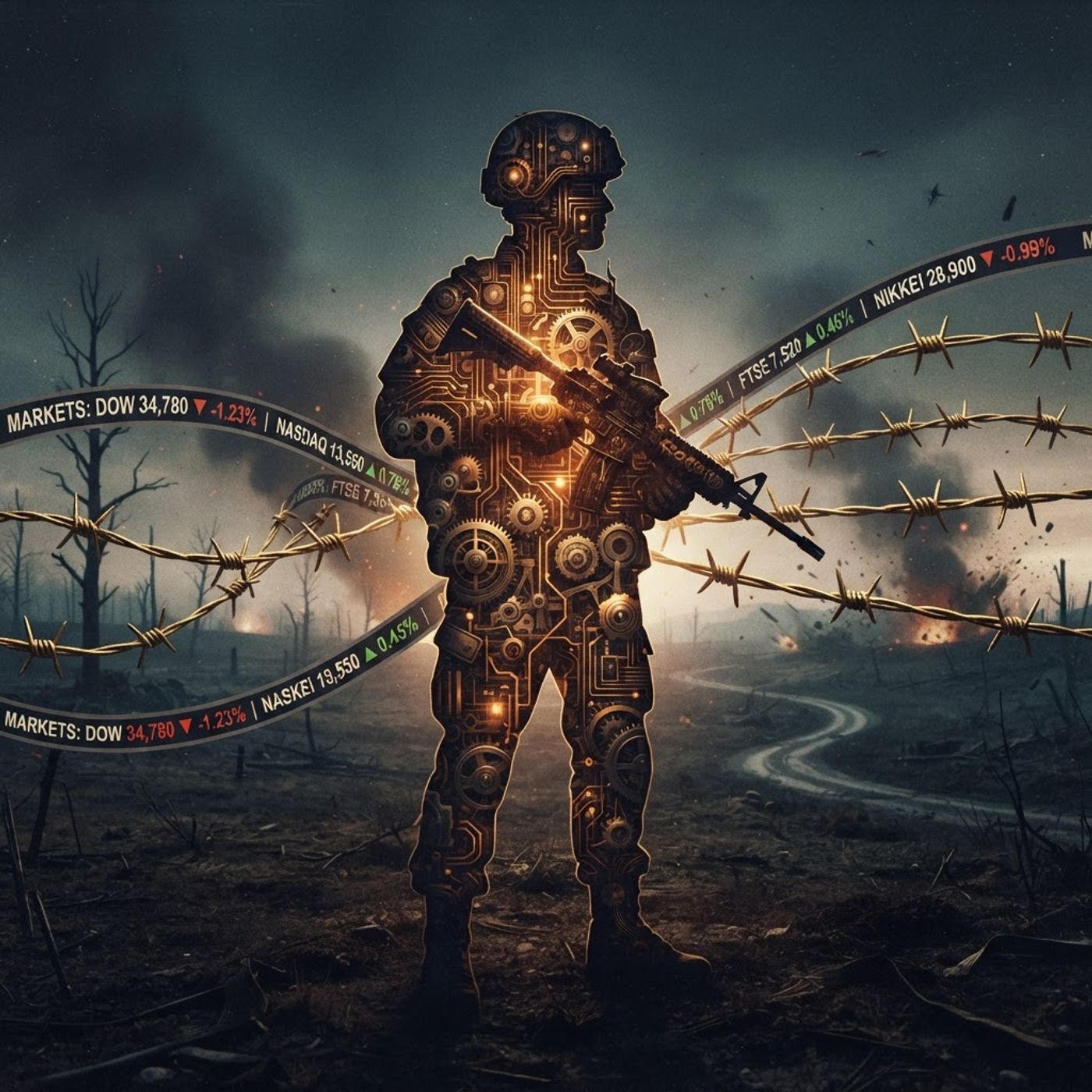
He spoke of an emerging relationship between the military, the defense industry, and the government calling it the military industrial complex. He worried that the influence of this massive union could eventually override the interests of the public. Fast forward to today, and that complex has grown into a titan that defines the modern global economy. We are currently seeing military budgets topping $1 trillion a year, a figure that dwarfs Cold War spending even after adjusting for inflation. But here's the paradox, while the money flowing into this machine is at an all-time high, the actual number of people it employs has plummeted. We have moved from a labor-heavy era of mass manufacturing to a capital intensive world of automation and high-tech software. In the mid-80s, this sector employed over 3 million people. By 2020, that number had dropped to just over 1 million. This shift also tracks with a massive decline in union strength, as firms like Northrop Grumman and Lockheed Martin have seen their organized labor presence dwindle to a fraction of what it once was.
This is no longer just about building tanks or fighter jets. The machine has expanded into the intelligence sector, digital surveillance, and even a military entertainment complex that saturates our media. Critics argue that this creates a cycle driven by a revolving door of lobbyists and political appointees, where the focus shifts from actual national security to maintaining corporate profits and expensive, overly complex weapon systems. Instead of simple effective tools, we often see massive investments in systems that are difficult to maintain and rarely suited for the realities of modern, decentralized combat. Some experts are now calling for a shift in strategy, suggesting that we repurpose this incredible industrial capacity towards civilian goals, like green energy infrastructure or large-scale climate mitigation projects. The takeaway here is clear. The system Eisenhower warned us about has transformed into an invisible infrastructure that impacts everything from our tax dollars to our pop culture.
Understanding the military industrial complex isn't just about history or politics. It is about recognizing who pulls the levers in our modern economy and asking whether we should be steering those resources toward a different future. Thanks for joining the Fortune Factor podcast. We're encheeving the Jeep Gorilla Registered Trademarks of FCAUS LLC.
More episodes
More from Conspiracy Theories Exploring The Unseen

The Digital Mirage_ AI and the Death of Authentic Romance
Conspiracy Theories Exploring The Unseen

The Trust Trap_ AI and the Future of Romance
Conspiracy Theories Exploring The Unseen

The Ghost in the Machine_ Navigating AI Romance
Conspiracy Theories Exploring The Unseen

The Love Recession_ Why Digital Romance is Offline for Good
Conspiracy Theories Exploring The Unseen