About this episode
No show notes were published with this episode.
Get every episode summarized
Each time Daily Tanya with R' Yossi Paltiel publishes, we email you a written briefing from the transcript — the topics, who appeared, and any specific claims, with the ad reads skipped.
Email me new episodesFree for 3 shows. No card needed.
Transcript ready
269 searchable segments. Every word is indexed and playable.
Full transcript
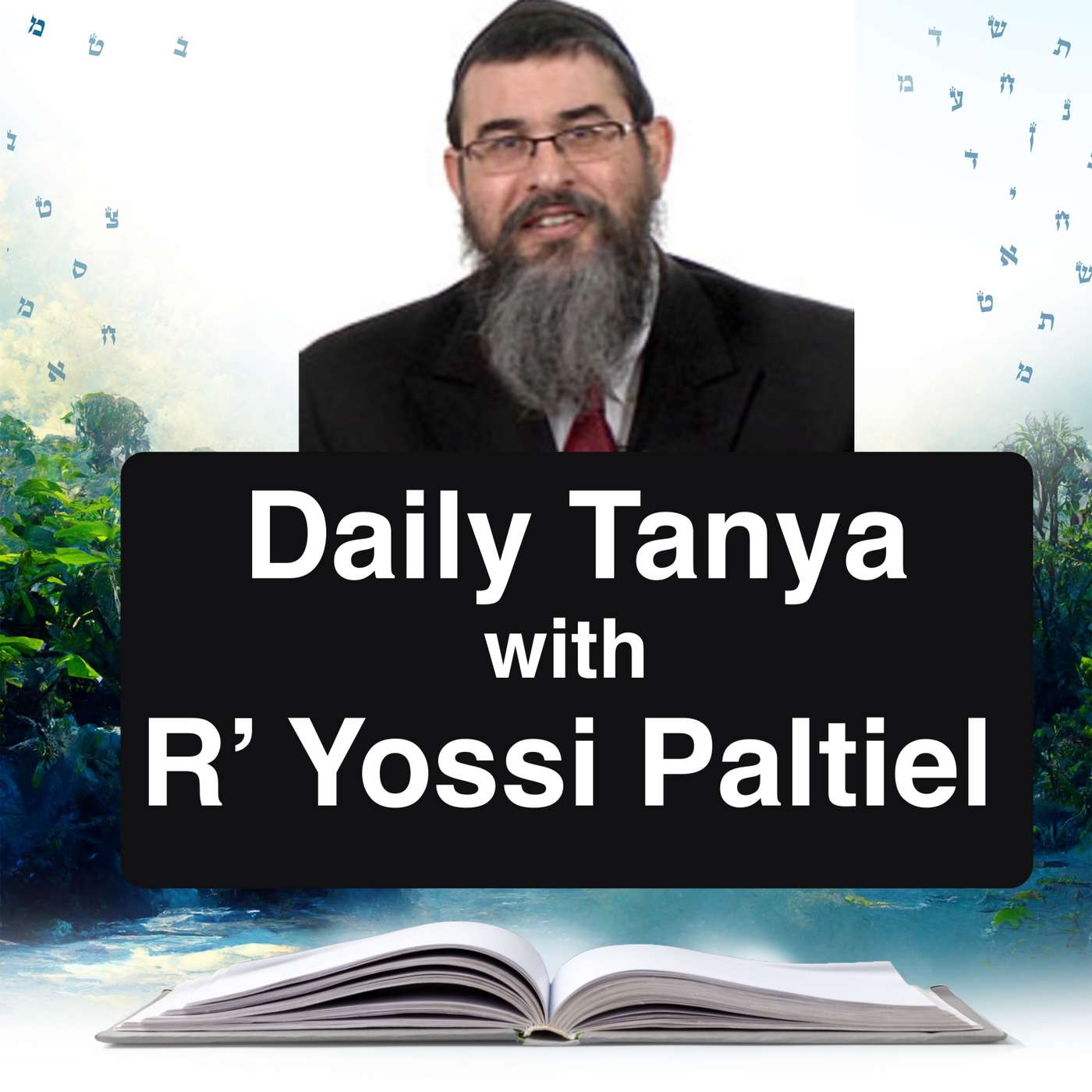
Daily Tanya with R' Yossi Paltiel — Tanya - 24 Adar 5786. Machine-transcribed; use the interactive transcript above to jump the player to any line.
What's the good boy? What's the build of this paedic Ramadan? We're in a new paragraph on the bottom of him, Zain-a-Malala, okay? The build of this paedic is that we talked before about when you have battle, your Mamshah, the Schrinner. This is the discussion that we were having. And we had different battles. The Battle of Theta is Mamshah, the Schrinner of the Yomoyah, the Nefshah, the Kiss and the Lavush. The Battle of Midswis is Mamshah, the Schrinner of the Yomoyah. And the paedic Ramadan, he adds the Battle of Midswis is not only Mamshah, the Schrinner in the Yomoyah, but it's Mamshah, the Gashmi is the Khenachas. But then they have to go back to Theta and say, hey, wait, don't forget about Theta. Even though I said to you before, the paedic Ramadan, hey, the Theta is the battle only of the Mayach. And if it's Mamshah, only the Schrinner, the Nefshah, the Kiss and the Lavush. Mamshah, the Kiss, I'll change my mind. Because Theta has a Kimaswaso. Theta has Dibur.
And the Dibur of Theta, Khaymalon, the Kimaswaso of Midswis. This is yesterday's year. And because Khaymalon, the Kimaswaso of Midswis, I say something different. I'm saying that in Theta also, the battle associated with the Dibur of Theta is Mamshah, the Schrinner. Not just two. You're Nefshah, the Kiss and the Yomayach. We're also the Nefshah Bahamas, dear Goof. And Al-Tarab and Al-Kentinus, Zayz for Eida Khayr. Now I'm going to say the third thing. In other words, just like in Midswis, the battle is Nefshah, the Nefshah, the Kiss. Number one. The battle is Nefshah, the Nefshah Bahamas, into the Goof. Number two. The battle is Nefshah, to the Eilum. As he said in the first half of yesterday's year. So now he's revisiting Theta and saying all the same things about Theta. Number one. Look, is that in Peter's calamity, your Mamshah, Schrinner, the Nefshah, the Kiss. Number two, your Mamshah, the Goof Nefshah Bahamas. Zayz, Eida Khayr. And there's a third in you and also in Theta as well. And that is that you're K. Agnefah, Shakyunis, Amaslabashis, Beisis, Zayz, Dibur, Batamut, Theta, Twil. The power of the animal soul, which is invested in the words that you speak when you learn
and when you dive, and you create it by yourself. As well as, O Midswis, Mises, and you behave your Midswis. Hadeh. Hadeh means emphasis, yeah? Doh. Kol Gidolibhah you say, the entire growth and the entire vitality, the entire life, is Mehadam. It's Neblant. What's Blant? Shall we click this Negal Mamsh? Blant comes from Clip of Negal Mamsh. How does Blant come to give us Negal Mamsh? It's very budget. It's a collection of Mamshkin. It's all the food and drink. Shahar is Shahar, so that you ate and you drank. Vena su dam. That because you ate them and you metabolized them, you properly digested them we hope. They became blood. Before you ate them, Shahar you took us Mamshahar, they were underneath the domain of Clip of Negal. Biankel, you some, me men, no. And they got gyism, Clip of Negal, for ate and now, because you are learning to do Midswis. He misaperchasmir ala teiv is changed off of Mivalin to God, Venaiglele is Bigadusha,
Becomes Holy. Aideke, Achnevasha, Gheunus, through the intermediate of the power of the Nevasha Bahamis which gives life. Haghadli, man, the Nevasha Bahamis is living from the food that you ate, that is now shannislabish, B-A-C-A-S-A-L, that's manifesting in the Lise letters, or even more about C-A-Zoo in this act of doing Midswis. So the Nevasha has just like in Midswis, you affect your Nevasha of the Kis, you affect Nevasha Bahamis and your Gov, you affect the Galgibah, and the same is true in Tehreda. Staste? There is one Gylik. What's the one Gylik? One Gylik is that in Tehreda, the effect that you have on the world is only with the world that you take into yourself. The food that you eat, right? The food that you eat, nourishes your limit, that Tehreda theme, so you attack a bringing schina, not just your Gov, but the Galgibah, but only Galgibah, but it's been ingested in Tehreda. As opposed to when you're doing a Midswah, you're doing a Midswah with Ghafeid, some guys with physical things that are outside of you, you follow what I'm saying.
But it seems to me that this is the Al-Trebis intent, Al-Trebis wants to show that even through Tehreda you have the same three Bittles, that Tehreda and Midswis, as you're Hain, Hain, that Tehreda and Midswis, Arpnimius, Retainee is Barach, the inner will of the Abish, the inner will is Shumas, the upon him, without any concern to the divine face, whatsoever. And therefore, the Ghajusan, the vitality of Yiddish-Kait, is automatically and constantly nichol, included Ghamkin as well, but in Tehreda, in the line of the Abish-Kait, Shura Tehne is Barach, which is the will of Hashem, or the Ghajusan, and then the vitality of Yiddish-Kait is nichol, the aile, the sands, and it rises up Ghamkin also, Keiach, Nehvush, Yun is the power of the animal soul of Yidd, and is Guf, and Khalki Baeilum, stop, Atkan. This is the end of the first Nukudh of Pentech-Lamudzain, the way I read it, I mean, I don't pretend to be an expert at anything, but the way I learn Tanya, this is the end of the first Nukudh of Tanya Pentech-Lamudzain, that he's adding that you're not only Mamshakh
Shrinat to your nefis of the kiss and to your Guf in the Abish-Kait, you're Mamshakh to the Gashmiz around yourself, and to rotate it through the food you read. Now goes another Nukudh, and the other Nukudh is called Gham Masa-eilum-Nasim-Balimum. The whole world is in Kali-Isra, the 16 million Jews, let's say for argument's sake. The world is divided into 16 million pieces, E.G. it has a Gaelic, and when E.G. it does his avidah, he affects his nefis of the kiss, he affects Nhamis of Mamsh and Guf, he affects his Gashmiz, and he affects his Gaelic in the world, so that Eben now says when he doesn't get the rack together, they change the whole planet. In other words, they're bittling the whole planet in the Abish-Kait, and they're Mamshakh to the Shrinat of the whole world. This is the next issue. In other words, it's a fourth point. It's not just minus shaman, my Guf, my Khafeitsim, it's the Gansavelt. So, there by day and then, as a result of all of this, Tala Gham-Kain, we can uplift and also close Klippas-Negh, Klippas-Negh as a whole. It's the vitality in the life of this world, bechlaal, that Kha-Shair, when, and if,
call on a shaman, if all you do, then ever shall the kiss of a call you shaman, and the divine shaman, which is in the collective due, Hhamis-Khalekas, which is divided by practice and detail, the Shishamri, which is ten thousand parts. Now, notice the language. When he says shaman, call you shaman, what does he mean with the words of a call you shaman? Literally, Kha-Shaman means all Jews, right? But over here, the words call you shaman, as Jews are a cow, as Jews are one. The point we didn't know one, they encompassed the whole, they're an essence, they encompassed the whole world. And when you didn't have the oneness, do battle, in tada, and in mischievous, and in bidurum of Ghashmim, they bring in Aliyah, and they bring down Shrinah to Kla-Laseh-Lamazir. That's the idea of Kla-L, you should know a peasant-tanya a few times. I say the place where it's much pronounced is in Tanya Pentele-Gmawalov. With Al-Tada, the shaymi-Khal, the shaymi-Khal, the shaymi-Khal, you throw. I have no business in the shaymi-Khal, no mukubu. But the shaymi-Khal, you throw, Kla-Laseh-Lamazir shaykhas to everything.
We had it also earlier when we get to Ah-Vemus-Tedis, Tanya Pentele-Gatges. Every time we talk about Pentele-Yid, doesn't say you're Pentele-Yid, you're Pentele-Yid, he says Ah-Vemus-Tedis, Shabbat-Tavak-Kwollafis-Tarou. The idea of Pentele-Yid is part of us, not as we are individuals, part of Khal. It's a very sadistic in Tanya, the power of Yidna is a collective. And you should know, you know, Khasidim translates this. Hannasi, huak-Khal, if the connection, you see them in the Rebbe. Whenever it comes to you, heda-things, when it comes to atmirs-de-ke-things, we say we get the Kla-Yachum-De-Rebbe, because the Rebbe is the Kail. This word, Shabbat-Kwoll-Yus-Tro, could be the Nossi. A Nossi, huak-Khal, Shabbat-Kwoll-Yus-Tro. Right? Khasid-Khal, on the shalma of a never-shallokist. Shabbat-Kwoll-Yus-Tro, when every nishalm-shallokist, of Yidna-De-Yar-Nama-Dregov, Khal-Yus-Tro, right? And if you were a fanatic, you would say a Nossi, huak-Khal, that later on Taken, hummus-Khalek is its sub-divide, the practice and detail is shish-midee, which is 600,000 Jews. And in Kabbalah, it says each one of the 600,000 Jews
has 600,000 sparks, sparks, right? That's how many nishalm-shallokists they are. And each one of us does our peace as parts of the Kla-O, as opposed to individuals. Tekayim-Konef-Hash-Protest, each individual in the Shama will do. Khal-Tayag-Mitsat-Tayda, all the 615-Mitsat-Tayda, and he starts off with the negative. Number one. Shasala ita said, the 365-Negative Commandments. Bahafir-Shasag-Gidim, to separate the 365 nerves and veins and sinews and arteries. Sheldam-Nef-Shah-Kha-Yuh-Nesha-Baguf, of the blood of the animal soul, which is in the valley. Shall'a-Yinq-Ubi-Yikab-Lukhah-Tes, they shouldn't nourish and receive life. Bahved-Azoo, by doing-an-Aveda. Me'ach-Az-Mishol-Az-Kli-Pis, atme-Az-Lagami, by doing one of the severe, in Yodam, the three-severe-Kli-Pis. And I guess, in a unique way, when you eat-take, it becomes you, but it's true of all Avedis. Shamehenish-Pis, which is the flow of life, to Shasala ita said, the right of the Van-Faim, the 365-Negative Commandments, and the biblical Avedis, and their branches, Shaymi-Dirabana-Mudirabana.
And as a result, we should so no more, therefore, like Tuchal-Nef-Shah-Kha-Yuh-Nesha-Baguf, if the Yid would do Avedis, it would be impossible for the animal soul, La-Az-Sala, they shamed the rise-up today, you see. Because in Nithma, the tumours are shown, let's keep it at least, if the Yid's Nish-Shah-Meh, and Nef-Shah-Baham is, it becomes tumm-Yuh-Shah, it's called Shamehenish-Lagami. Through Avedis, so then, Aliyah, Aliyah, has no aliyah, the key in Bidl-Wavar-Lagami has to be destroyed and removed, like we hadn't done your paid exam, how much it cost for the post-excess, let's re-wakhat-tum-a-Ave-Mina-Aaz, the shaman's removing the land. So if we do an Avedi, it becomes Shah-Sala-Sala-Sala-Sala-Gami. It becomes Shah-Sala-Sala-Sala-Sala-Gami, you can't blow up anymore, unless you do two of them in Avedis. So don't do any Avedis. So you have no shaykh, it's Shah-Sala-Sala-Sala-Sala-Sala-Gami. So you free-to-rise, and then, of course, when I'm a Maksa-Sala-Sala-Sala-Sala-Gami, you do the Midswers with Bidl. And as a result, your Bidl is laham-Jah-e-Nin-Tay-Baghul-A-Mata. It brings down the schina, which is called Aid-Nin-Taf-Dan here. Lahale is flight to Gupta de Aibis, Tidol-Lakash-e-D, and to Tai, Uliya-Khid, and the Unified Bay,
into Aid-Nin-Taf, Klaulos. Hanev-e-Zah-e-Yunas, the general, Nev-e-Zah-e-Yunas-e-Bada-Mah-e-Bid-A-Goo for the 240th limbs of the body, with Yuh-e-Dummer, in a perfect union, Liyas-e-Nakhada-Mammesh, to be one Mammesh. Kamesh-e-Allah-Be-Tain-e-Yas-Badach, which fulfills the will of Asham. What is the will of Asham? Liyas-e-Lay, and, of course, did I ever add, Yis-Badach-Did-E-Badach-Tain-e-Mashem, wants to home in the lowest realm. A home in the lowest realm means to bring on it in self, to be mashing the schina through the Bidl, and when Yid have no avatis, and Yid use Gash-mi-e-Zika things, to do the 248th Gash-mi-e-Zika midfests, they're bringing the schina down, not just to their Nishogga, and their mind, not just to the Guf-e-Nesha-Bahamis, not just to the Gash-mi-e-Zika-Kha-Fatim, and to their food, but to their peace of the world. And when we do it collectively, we lift up the whole world, they hang lay them and come back to our office, and then a Yid, and ultimately, the whole world becomes a child, they wish to like the office themselves. Stop. We're in the middle of something. This point that we're currently learning is going to continue until page 96, where he speaks about Siddhaka,
which is sort of, to speak the home stretch of this Sugi. We're going to be speaking more. This four, I see this as a fourth-time mention. The first-time mention is Yid Nishogga and Yid Ma'ach. Second-time mention is Yid Guf-e-Nesha-Bahamis. Two-time mention is Yid Gash-mi-e-Zika-Kha-Fatim. The fourth-time mention, you can't do this by yourself. You're personal possessions, you're home, you're, you have a Khalkibah, maybe in China, you don't know where it is but Khlau. Your Gash-mi-e-Zika means what you know you are. The fourth-time mention is to lift up the whole Gash-mi-e-Zika world and you can't get together. Each year does his peace, doesn't do aivators and does the battle. Say, lift up his Khalkibah, and wherever it may be, there's going to be one more point mentioned tomorrow. In the middle of the scheme of Khalkibah, and that is that if we do this, Shal'l-ish clippus-up-me-is-legamari dies. Because Shal'l-ish clippus-me-is-legamari needs clippus-nega. And if we lift up-clikus-nega, we cut off its lifeline. And this becomes like a fifth insight into this whole scheme. I'm trying to present to you these three problems,
so you should see the development of the idea. First, the battle of the Nisham and the Mayakh, and the Gufn of Shabah-hamis, then your Gash-mi-is, then Khalkibah-e-Lum, and it kills Shal'l-ish clippus-nega. And this will do a mission tomorrow.
More episodes
More from Daily Tanya with R' Yossi Paltiel

Tanya - 2 Iyar 5786
Daily Tanya with R' Yossi Paltiel
Tanya - 30 Nissan 5786
Daily Tanya with R' Yossi Paltiel
Tanya (Shabbos) - 1 Iyar 5786
Daily Tanya with R' Yossi Paltiel
Tanya - 29 Nissan 5786
Daily Tanya with R' Yossi Paltiel