About this episode
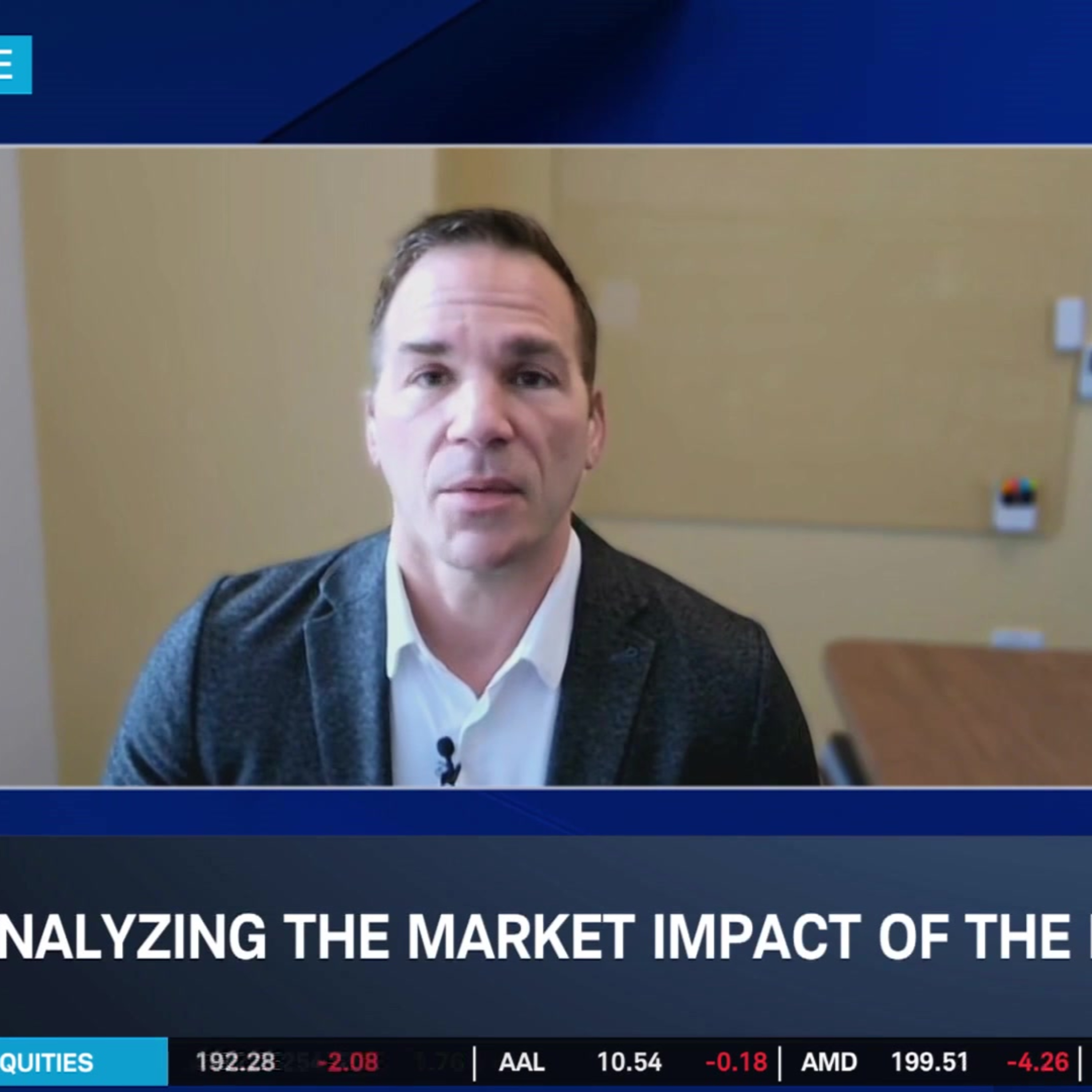
"Bounce levels" in the S&P 500 (SPX) will depend on where markets close Friday, says @CharlesSchwab's Joe Mazzola. Market breadth isn't helping push back U.S.-Iran volatility, as Joe points to less than 50% of SPX stocks trading above their 200-day SMA. He's waiting for a market "flush" before fear can truly begin to trickle out of markets. "It's hard for investors to place where they can hide," says Joe, noting headline-by-headline volatility constantly shifting market direction.
======== Schwab Network ========
Empowering every investor and trader, every market day.
Subscribe to the Market Minute newsletter - https://schwabnetwork.com/subscribe
Download the iOS app - https://apps.apple.com/us/app/schwab-network/id1460719185
Download the Amazon Fire Tv App - https://www.amazon.com/TD-Ameritrade-Network/dp/B07KRD76C7
Watch on Sling - https://watch.sling.com/1/asset/191928615bd8d47686f94682aefaa007/watch
Watch on Vizio - https://www.vizio.com/en/watchfreeplus-explore
Watch on DistroTV - https://www.distro.tv/live/schwab-network/
Follow us on X – / schwabnetwork
Follow us on Facebook – / schwabnetwork
Follow us on LinkedIn - / schwab-network
About Schwab Network - https://schwabnetwork.com/about
Get every episode summarized
Each time Schwab Network publishes, we email you a written briefing from the transcript — the topics, who appeared, and any specific claims, with the ad reads skipped.
Email me new episodesFree for 3 shows. No card needed.
Transcript ready
85 searchable segments. Every word is indexed and playable.
Full transcript
Schwab Network — SPX Market Breadth Sours as U.S.-Iran War Continues. Machine-transcribed; use the interactive transcript above to jump the player to any line.
Straight live, it's time for the big picture. So let's all welcome in the one and only Joe Mussola, head trading and derivative strategist over at Charles Schwab. Joe, we've distanced ourselves from that 200 day. We've distanced ourselves now from 6,500 even. I'm just wondering, you know, what the technical shelf is here that you're looking at? Ooh, it's interesting. I mean, we had this conversation on Monday or Tuesday. I would have said, hey, keep an eye on that Monday low that print that we put. I think it was on 6473, right? Well, we broke through that today. And I think if you look at potential bounce levels from here, I think it really depends on, you know, kind of where we close today. We can get back above that great. But if not, I think, you know, same, I think 6,200 is really in focus because there's a couple of things that happen there that's that is the August low. And that's also kind of the intersection of some Fibonacci levels that some traders might be looking at for a short-term bounce. But yeah, I mean, it's
crazy to think we've basically kind of given up seven months and seven percent of gains just in the matter of the last couple of weeks. So, yeah, investors are frustrated. I get that. I think that, you know, from what we're seeing in terms of equity trading, we haven't seen a ton of outflows or, you know, we have seen a little bit more kind of a buildup in, you know, maybe some of the unloved stocks before we're seeing buying, in Nvidia, we seen, we're seeing some buying in Microsoft. And we're actually seeing some selling, which is interesting in some of maybe the oil names where the services companies right now, they're moving out of those. They're seeing a little bit more ETF binds, a little bit more diversification from investors. And I think what's interesting about that is that kind of brings that correlation trade back into play because for the longest time, we've been talking about, hey, there's a small group of winners. And what happens a lot of times is during sell-offs, you see those correlations start to go up as investors look for more diversified-take products.
Yeah, I mean, I was just looking at that chart that we had up alongside you. And it looks like we've just been taking the stairs slowly down this week, Joe. I'm just wondering, you know, as we're on track for a fifth-weekly loss here, in correction territory now in the S&P, you've got financials, discretionary, communication services, and tech, utilities and energy obviously continue to our perform here as far as a sector performance is concerned, is breadth deteriorating? Yeah, no, it's, you have less than 50% of the S&P 500 above the 200 day moving average. So yeah, it's deteriorating, it's lost a good percentage in terms of, you know, kind of where we were just, like I said, just a couple of months ago. You know, it was probably about six weeks ago, we were saying that there's more than 60% of the S&P above the 50 day moving average. And so you're right, Sam, it's been this kind of slow stair-step approach down, it may not feel that way, but it's kind of been that way, which is interesting to kind of see that we haven't had a flush. I look at that two ways, right? You know, the
bearish side of that is you don't really get capitulation until you see that flush. Now, from a technical standpoint, the RSI is down around 30 right now. So we're, you know, we're definitely getting close to that oversolder, you know, maybe at that oversold territory in terms of maybe how some technicians would look at it. But we just haven't seen that one day, you know, multi-percentage flush where traders just kind of throw their hands up in the air and say, I've had it, or, you know, you start seeing just a massive amount of margin calls and people are selling, maybe not what they want to sell, but selling what they have to sell. It hasn't really felt that way yet. It's not to say that it can't happen. But, you know, right now, oil is driving the market. And a couple of things that you need to pay attention to is WTI, hasn't shown any sign of slowing down. I mean, right now we're at the highs of the day. And you get the news coming out of the Middle East that, you know, bombing of the steel factory occurred and kind of what that could mean. And then here we go, we just got the University of Michigan consumer sentiment numbers that,
hey, you know, yeah, I'm sure that they were down. And what was interesting in my mind about that data was it was the one year inflation expectations have gone up. Now remember, these are, you know, these are still kind of old data. So, you know, the next one will get, we'll have some of the more current the last couple of weeks as we've seen energy prices go up. But honestly, what I thought was really interesting beyond the one year inflation was that the five to seven hasn't really moved that much. So, yes, investors are still kind of pricing in that this is maybe a shorter term conflict. I think we all hope that that's the case, but time will tell. Yeah, I mean, people aren't feeling particularly great about the state of things right now, because there's just so much uncertainty. But as far as these markets, I'm looking at the flow of funds for the week, equity, fund seeing the biggest outflow in 13 weeks, a lot of that driven by the US $23.6 billion materials, the biggest outflow ever. Long-term bonds, biggest ever outflows since March 2020. What does it all tell you right now?
A particular year as we see this de-risking going into the weekend once again. Well, it tells you that it's hard for investors to find a place where they can hide, right? I mean, traditionally, if you were to see just type of equity outflows, you would have seen it move into fixed income and actually see fixed income do better. But, you know, there's really a couple of things that are hitting the markets right now, you know, uncertainty around oil and the Middle East, which is hurting kind of higher beta names as your previous guest was talking about. I agree with that 100%. But then also, what does that mean for inflation? So, if we're not pricing in any type of fed rate cut right now, and you're now you're looking at bond yields continuing to go up. So, now bonds aren't doing well. And now you're seeing central banks start to sell gold. So, now that's pulling back. Now, I think part of that is just that parabolic move that it had to the upside. I think that's the same reason that you saw the move in a lot of the memory in the flash names over the last couple of weeks, moving 20, 25% in some of these names even after stellar earnings was just people are selling on their winners are selling the parabolic
moves that they've seen. And they're looking for some opportunities. I don't know, you know, when when that buying is going to start. But, you know, we've seen some of that transition. And, like I said, we're definitely seeing some of the diversified ETF buying. But in terms of taking shots on some of the names that have pulled back, I think that might take a little bit of time before you really start seeing those big flows come back in. Yeah, and it's interesting that we're actually seeing traders scooping up a little bit of memory and also EWY today. So, South Korean exposure, which is interesting where we know a lot of that memory is. Joe, really appreciate it. Thanks so much for joining us. Have a great Friday and weekend. Joe Missola, head trading and derivative strategist over at Charles Schwamm.
More episodes
More from Schwab Network

JNJ Balances Growth, Patent Transitions, and Legal Overhangs
Schwab Network

nCino (NCNO) CEO on Earnings, AI in Banking & Overcoming "SaaS-pocalypse"
Schwab Network

The Big 3: NET, TWLO, ASTS
Schwab Network

Tie Lasater on Inflation Floors, Energy Risk, and Private Credit Stress
Schwab Network