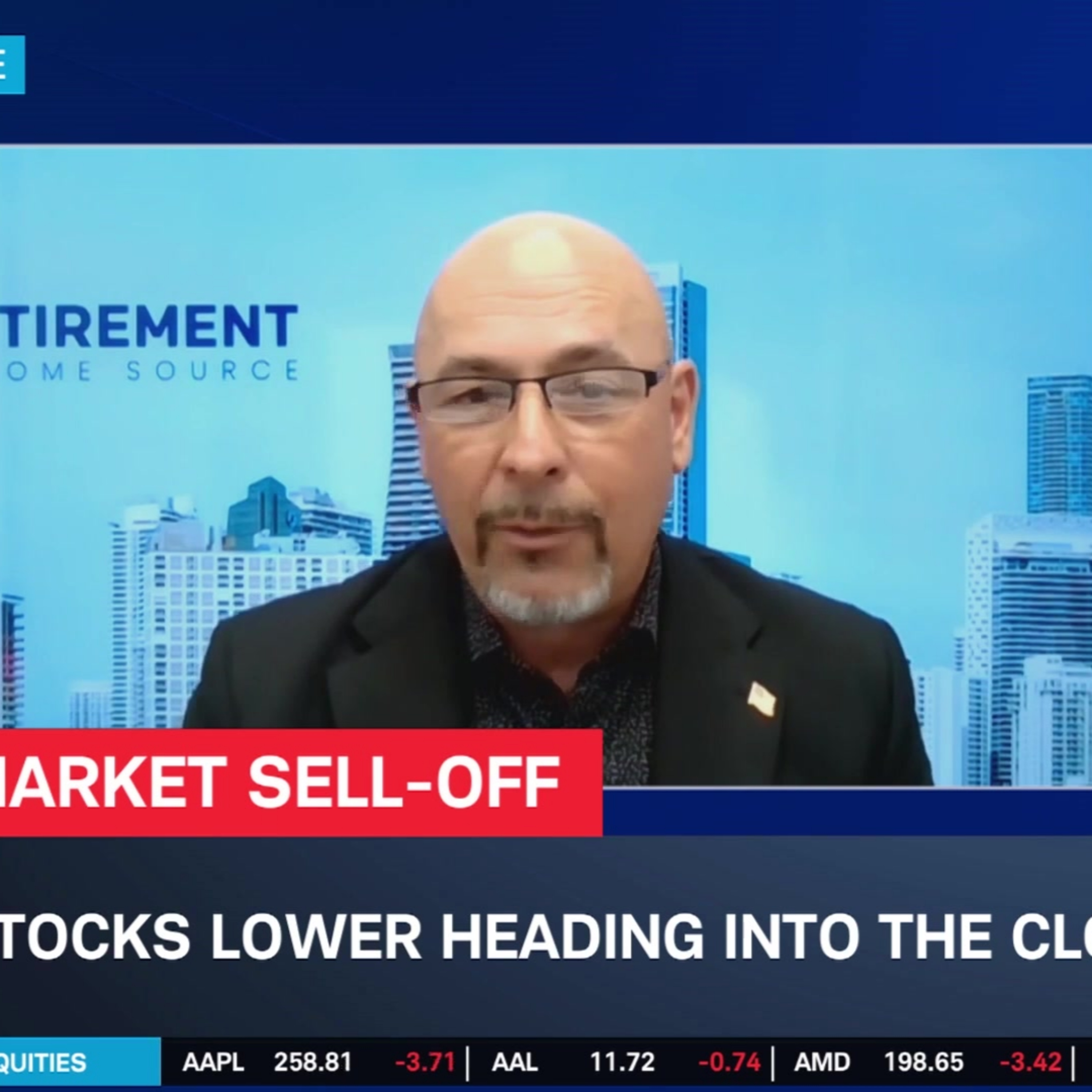
About this episode
Jeffrey Small describes a “three-way pressure point” in the markets. The “key support” is in earnings strength, providing a floor as the market is roiled by geopolitically-driven volatility. He argues that valuations were stretched before the conflict began, and it “only takes a tiny little thing” to set off a sell-off. He expects energy prices to keep rising until Iran capitulates, and explains how the jobs report tomorrow could impact the Fed rate cut path.
======== Schwab Network ========
Empowering every investor and trader, every market day.
Options involve risks and are not suitable for all investors. Before trading, read the Options Disclosure Document. http://bit.ly/2v9tH6D
Subscribe to the Market Minute newsletter - https://schwabnetwork.com/subscribe
Download the iOS app - https://apps.apple.com/us/app/schwab-network/id1460719185
Download the Amazon Fire Tv App - https://www.amazon.com/TD-Ameritrade-Network/dp/B07KRD76C7
Watch on Sling - https://watch.sling.com/1/asset/191928615bd8d47686f94682aefaa007/watch
Watch on Vizio - https://www.vizio.com/en/watchfreeplus-explore
Watch on DistroTV - https://www.distro.tv/live/schwab-network/
Follow us on X – https://twitter.com/schwabnetwork
Follow us on Facebook – https://www.facebook.com/schwabnetwork
Follow us on LinkedIn - https://www.linkedin.com/company/schwab-network/
About Schwab Network - https://schwabnetwork.com/about
Interactive timestamps
Jump to segmentGet every episode summarized
Each time Schwab Network publishes, we email you a written briefing from the transcript — the topics, who appeared, and any specific claims, with the ad reads skipped.
Email me new episodesFree for 3 shows. No card needed.
Transcript ready
261 searchable segments. Every word is indexed and playable.
Full transcript
Schwab Network — Small: Energy Prices Will Keep Rising Until Iran Capitulates. Machine-transcribed; use the interactive transcript above to jump the player to any line.
0:00bring Sam back into our conversation. Welcome our next guest joining us now Jeffrey Small, the managing partner at the retirement income source. Jeffrey great to have you back on this show you know on a day of a pretty significant sell off. We are coming back a little bit from where we were when we started the show about a half hour ago, but still pretty firmly in the red here. You know, what are your thoughts on this action we're seeing? Well, I think we're dealing really with a much greater concern as we're watching the 10 years spike. And of course rising geopolitical tensions and of course rising energy prices are all putting pressure on the market today. And so we see a lot of high factor volatility. It's been a crazy year for the market this year. 20 to 25% of the S&P stocks have either gone up 20% or down 20% and now we're seeing tech and software come back when they were selling off for the entire month of February. So I mean this is a a young and young thing based on all of these various issues. On top of that it's the midterms coming up and we all know what happens in the first part of the year in the midterms. The market is dicey like it is now.
1:01It's got a lot of issues that make it even more dicey here. Yeah, it's really is dicey. And it feels like traders are just really on the edge of their seats, particularly when you have these very fluid headlines coming out of Iran. I mean, the difference a day has made in these markets just from Monday to Tuesday to today. I'm just wondering, Jeffrey, just a throw it in the mix there. Obviously we've had these sort of negative macro headlines as well with respect to Morgan Stanley laying off people now oracle coming out today talking about layoffs there as well. How are you putting it all together? When actually the backwards looking data we're getting from say 80 p the jobless claims and things like that. And obviously we'll get jobs Friday tomorrow. It seems to be holding up okay as far as low higher low fire. Yeah, I mean there's there's good and there's bad, right? There's good news there. The key support right now really is in the earning strength, particularly from large energy and AI related companies. That continues to provide a floor for the market as we've seen today, you know,
2:01but going forward that trajectory of inflation and interest rates will likely determine what happens in the market. Are we going to be able to extend gains or whether volatility continues to rise? And the kind of swings that we're seeing really highlights how spooked the markets are right now, even though corporate earnings remain solid in some sectors and macroeconomic concerns are dominating, like you said, today's news. The more than 20% of the S&P stocks move more than 20% this year, you know, some of that some of the spooking that we're seeing and it's not just limited to one conversation. AI is usually a part of it, but different pockets of AI spooking different areas of the market here. What does that level of dispersion tell you about the market and investors becoming more selective and the legs this rally might have? Well, valuations are stretched before all of this. That's really what we're at. It only takes one little pinprick for a particular sector to have a bubble, whether it's a rumor from Jamie Diamond talking about the cockroaches and private credit or it's a software is going to be
3:01replaced by AI. It only takes one little tiny thing to set off. All utilities we're seeing because valuations are stretched. But, you know, safe havens right now where people are gravitating towards with oil up, geopolitical risks are elevated, flows into bonds and defensive assets are picking up right now and they're underscoring mounting caution among traders at this time. And so that's the reality that we're in. And, you know, we've got to get out of the situation and see more stability across the globe. And with energy. Yeah, and obviously if the direction of travel is going to be largely dependent on how these energy markets go, I'm just, you know, wondering where, what signs are you looking at in this market to suggest that we're in the all clear, you know, as far as how long oil prices, prices stay high, you know, as far as some of the developments we're hearing about, some of the headlines we're getting. And some of the reactions we've seen in stocks. Well, obviously the stocks that have sold off today,
4:01the ones are the most interest rate sensitive and energy sensitive. And that's really what caused today's 800 point mail down on the Dow. Until we see stability in the Middle East, I think we're going to see energy keep rising. And the same pressure points in the market are going to keep reactivating until we see more stability geopolitically. And what is it going to take for that to happen? Iran has to capitulate and ask for peace talks and hold up the white flag instead of being proactively and trying to mount some terrible defense that they can never really accomplish anything with at this point other than making themselves create more instability in the globe. And so there's no gains for them at this point. So we need energy prices to level off first. We need to see the data points in the economy, not indicate that we're going to be a chance for no rate cuts this year as PPI rises and potentially then CPI will rise even though they've been doing the opposite the last couple of prints. And so we need things to come into line. And right now things are not aligned for the market to really act any differently than how it's acting right now. And Jeffrey, inflation obviously top of mind
5:01for everyone with these high oil prices that we're seeing concerns that it'll creep in there. It'll keep it sticky. The Fed may then have to keep rates higher as you just mentioned there. What does that mean for the already stretched valuations that you brought up? And also on the other side of the ledger you and Sam were talking about how the economy looks somewhat resilient. Our backwards looking data is looking pretty decent here. How long can we continue to keep the pressure off if we have to maintain these higher rates? Well, that's a good question. The higher factor volatility was what's impacting all of these sectors and the yin and yang and the beta swings that are occurring. We have to wait and see what's going to materialize into the data. Nobody really has any idea what's going to happen not even the Fed. But we know the Fed's new governor wants to be more hawkish than dovish at this point based on what he's saying. And they want to offload the balance sheet. And so for now that's helping longer term rates not doing anything for shorter term rates.
6:01But we need the data to come in to show that they have a reason to adjust interest rates downward with geopolitical stability going forward. So for now the economic backdrop is holding up and the corporate earnings seem to be holding up as well. I'm just wondering within the portfolio where you sort of hedge all of this and you sort of try to find areas that are somewhat immune to some of the shocks that we're seeing as far as the potential for higher rates and higher inflation. Well, there was some strength in the market today despite all the gyrations. And so we're going to have some kind of economic and economic strength because they're in demand. Expedia was up 12%. Chemicals sector were bouncing and commodity prices moving up software came back strong today's Salesforce and into it. So there are some bright spots. There's some consumer defensive stuff that did well too like Greg Kroger. And so you have to look for the areas of strength. But I think you don't invest in things that don't have good earnings at this time. That are not going to be geopolitically centric
7:01to market reactions. And so that brings us back to tech. And so that's one of the reasons why tech has done well today and software is catching back up. And Jeffrey, you mentioned the data and the importance of the data in terms of keeping some legs on any of these the safety and moves to the upside that we've seen here. But how sensitive are we right now to the data? I mean, are we so sensitive that every CPI print and the jobs report that we're getting tomorrow could be now a potential sharp move catalyst or are we going to see more of these tepid responses, these sort of knee jerk responses that by the end of the day have given back most of what we've seen? I think that it's hypersensitive to the data. It's beyond, it's reactive at a much larger rate than it is historically. And so if we get a positive jobs print tomorrow, it's not going to be good for rates. And we're going to see more volatility come into play. But we're not seeing wholesale selling in a massive need for liquidity generation because we think there's going to be a collapse. And so what we're seeing is rotational shifts in the market.
8:01And that's going to keep happening depending upon what the data says. There's nothing we can do about that unfortunately. It's going to take more than just earnings. Okay. And so one day is like this then Jeffrey. I mean, do you look at that red on the screen and buy the dip? Or do you sort of wait it out? Well, sometimes you buy the dip. It all depends on how much risk you want to be exposed to and what's the downside potential maximum for the holdings that you're going after. And the sectors that you're going into. So I think that you want to focus on the sectors that have the best earnings growth right now that are going to keep growing, that aren't going to be so hypercentred around the data and the geopolitical issues. And it all comes back to the same thing over and over again. And so buying the dip is not a bad thing. We do see bullish next the next six to 12 months. But it is a midterm year. And so generally in a midterm election year when the Congress has a shift change in the house, we end up seeing the first seven or eight months we have volatility like this. And in the back half of the year, we generally cover.
9:01So we're expecting a year somewhat similar to what we went through in 2025. Maybe not a 17 percent return on the S&P. Maybe a seven to 10 percent return on the S&Ps. But we can expect based on our current earnings guidance and trajectory. If we can get through everything else we've discussed on the show. And there's a lot here to chew through. Jeffrey, thanks so much for taking the time to be with us today. A great broad look there. We were able to touch on a lot of different topics. We really appreciate your insight. Jeffrey Small, The Retirement Income Source.
More episodes
More from Schwab Network

JNJ Balances Growth, Patent Transitions, and Legal Overhangs
Schwab Network

nCino (NCNO) CEO on Earnings, AI in Banking & Overcoming "SaaS-pocalypse"
Schwab Network

The Big 3: NET, TWLO, ASTS
Schwab Network

Tie Lasater on Inflation Floors, Energy Risk, and Private Credit Stress
Schwab Network