Shadow Intelligence: How Russia Directed Iran’s Attacks
About this episode
Become a supporter of this podcast: https://www.spreaker.com/podcast/conspiracy-theories-exploring-the-unseen--5194379/support.
Interactive timestamps
Jump to segmentGet every episode summarized
Each time Conspiracy Theories Exploring The Unseen publishes, we email you a written briefing from the transcript — the topics, who appeared, and any specific claims, with the ad reads skipped.
Email me new episodesFree for 3 shows. No card needed.
Hosts & guests
Transcript ready
48 searchable segments. Every word is indexed and playable.
Full transcript
Conspiracy Theories Exploring The Unseen — Shadow Intelligence: How Russia Directed Iran’s Attacks. Machine-transcribed; use the interactive transcript above to jump the player to any line.
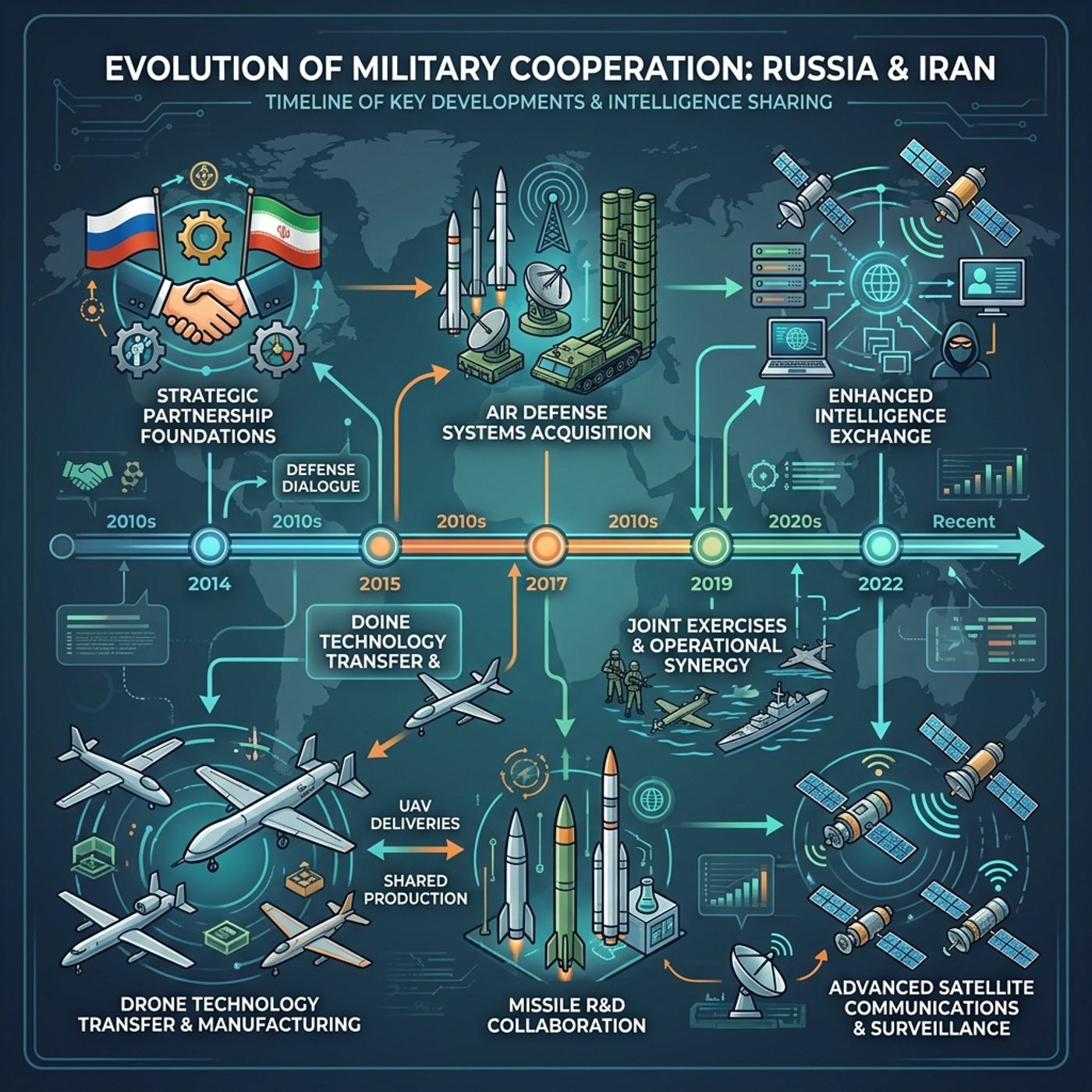
0:00As tensions rise in the Middle East, a crucial partnership between Russia and Iran is drastically shifting the landscape for U.S. military operations. Reports are surfacing that Russia is actively supplying Iran with vital intelligence, including the precise locations of American warships and aircraft. This kind of intelligence sharing is not just casual information, it's a strategic maneuver that has enabled Iran to conduct attacks with unsettling accuracy, resulting in dire consequences for American forces. Consider the implications. Just this past March, an Iranian drone strike in Kuwait tragically claimed the lives of seven U.S. service members. This wasn't an isolated incident, it reflects a disturbing trend where the precision of Iranian strikes has noticeably improved and analysts attribute this to Russian support. Since the escalation of the conflict, Iranian forces have launched over 2,000 drones aimed at U.S. military installations and their regional allies.
1:02While many of these attacks have been intercepted, the successful strikes have inflicted significant damage to military infrastructure and alarmingly human lives. The collaboration between these two nations isn't stopping at intelligence. They are also working together in drone technology, where Iran provides its Shahed 136 drones, which Russia has modified and repurposed into guarantor variants. These drones are no longer just a dream, but a physical embodiment of cooperative military innovation, boasting features like anti-jamming systems that make them even harder to counter. As they innovate together, their military capabilities become more advanced, which creates a new set of threats for U.S. forces in the area. The Kremlin has remained tight-lipped on these intelligence-sharing claims, deflecting questions by insisting that they seek an end to what they term an unprovoked act of armed aggression. However, this partnership reveals a different narrative.
2:03One of a calculated alliance formed out of mutual interest encountering U.S. influence in the region. Experts, like Demetri Shapiro from the Foundation for Defense of Democracies, emphasize the grave risks posed by this cooperation, as it not only puts U.S. military personnel in jeopardy, but also threatens to escalate tensions even further. The U.S. government, while acknowledging the intelligence-sharing arrangement, has tried to downplay its impact, assuring the public that military operations are continuing effectively. However, the rising casualty numbers tell a different story that cannot be ignored. As the situation unfolds, it's clear that the evolving capabilities of Iranian forces enhanced by Russian assistance present a growing challenge for U.S. military strategy in the region. So as we wrap up our discussion today, it's essential to understand that the partnership between Russia and Iran is not simply a strategic footnote. It's a significant realignment in the geopolitical fabric of the Middle East, with enhanced drone
3:08capabilities and precise targeting due to Russian intelligence, U.S. forces are facing escalating threats that could lead to broader regional implications. With great power comes great responsibility, and this heightened collaboration suggests that both nations are willing to challenge U.S. presence and interests in the area. The consequences of this alliance could shape international relations and security dynamics for years to come. Thanks for joining the Fortune Factor podcast.
More episodes
More from Conspiracy Theories Exploring The Unseen

The Digital Mirage_ AI and the Death of Authentic Romance
Conspiracy Theories Exploring The Unseen

The Trust Trap_ AI and the Future of Romance
Conspiracy Theories Exploring The Unseen

The Ghost in the Machine_ Navigating AI Romance
Conspiracy Theories Exploring The Unseen

The Love Recession_ Why Digital Romance is Offline for Good
Conspiracy Theories Exploring The Unseen