About this episode
If I told you I’m a friend of Bill W’s, requesting a visit from Doctor Brown after a violent Operation Bright Star, you’d probably think I’d finally lost my mind. However, all the mumbo jumbo I just said is full of coded information, that’s easily understandable for those in the know. In fact, the world is full of secret codes, hidden in airplanes, jewelry, dating profiles and bank notes, and today I’m decoding them for you. Let’s explore a whole load of secret codes you aren’t meant to know!
Our Sponsors:
* Check out BetterHelp: https://www.betterhelp.com
Advertising Inquiries: https://redcircle.com/brands
Privacy & Opt-Out: https://redcircle.com/privacy
Get every episode summarized
Each time Be Amazed publishes, we email you a written briefing from the transcript — the topics, who appeared, and any specific claims, with the ad reads skipped.
Email me new episodesFree for 3 shows. No card needed.
Hosts & guests
Transcript ready
410 searchable segments. Every word is indexed and playable.
Full transcript
Be Amazed — Secret Codes You Aren't Meant To Know. Machine-transcribed; use the interactive transcript above to jump the player to any line.
I made the transition out of the military, but I didn't want to stop pushing my limits or protecting the nation. So I joined the CIA. Now I conduct strategic operations and intelligence activities globally. It's a career that draws on my significant military and leadership experience. Keep serving our nation's interests. Join the CIA's Directorate of Operations. Visit CIA.gov slash careers to learn more and apply. Ring Central's AI receptionist uses voice AI to answer on the first ring, so you'll never miss a call again. In just a few minutes, you can personalize your own AI receptionist to answer questions, route calls, schedule appointments, and even send texts in multiple languages. Plus it's easy to scale. Create unlimited AI receptionists across any phone system. It's all powered by one reliable platform for effortless AI communications. Visit for yourself at ringcentral.com. Ring Central. Voice of your business.
If I told you I'm a friend of Bill W's requesting a visit from Dr. Brown after a violent operation bright star, he'd probably think I'd finally lost my mind. However, all the mumbo jumbo I just said is full of coded information that's easily understandable for those in the know. In fact, the world is full of secret codes hidden in airplanes, jewelry dating profiles and banknotes, and today I'm decoding them for your leisure. Let's explore a whole load of secret codes you aren't meant to know. During a flight, pilots are constantly communicating with the flight attendants and air traffic control to give them updates about the journey. These messages are usually pretty innocent, however, if there's an emergency, they'll use secret codes to communicate so they don't alert the passengers. A squat code is a four-digit number that a pilot can type into a transponder radio device
in the cockpit that will instantly relay it to air traffic control below. The different number combinations can be used to pass information about the flight and while different countries use different squat codes, there are three main emergency codes that are used all over the world. These universal numbers are code 7600 for radio failure, code 7700 for any general emergency and code 7500 for a hijacking. Code 7500 is arguably the most serious code as pilots will only use it if the aircraft is being forcibly taken over by aggressors. The input design of the transponder means the pilots don't actually say the codes out loud to send the information to air traffic controls so you won't hear a pilot reporting a code 7500 over the plane's intercom. However, if you overhear two flight attendants say the number 7500 on your flight and they look worried, they're probably discussing the possibility of being hijacked.
This is pretty scary, but some of the codes used on a plane are a bit less serious. For example, if you hear a flight attendant mention blue juice, you should know that they aren't talking about the plane's drink options, and this is actually a code name for the chemical-filled water used in airplane toilets. As a result, if a flight attendant says there's a blue juice emergency, it means the toilet could be malfunctioning or a passenger made a mess in there. Yeah, I think I'll stick to orange juice. While secret aircraft codes may warn about criminal activity taking place on board, way down on the ground other codes are actually used by criminals themselves. In the UK, there have been several reports of artistic burglars using chalk to mark homes with secret coded symbols. These drawings are either marked on the house's walls or the sidewalk outside and they're used to pass information to other criminals without alerting the homeowner. According to police investigators, these symbols can include an axe for a good burglary target, a capital D for a house that's too risky to rub, and a flower to mark a home
that's owned by wealthy people. Some of the markings also have more sinister meetings like an open book that suggests that the homeowner is a vulnerable female. In 2015, the police and Lanarkshire Scotland warned locals that these symbols were being used to mark homes as burglary targets, and the police in Surrey, England gave a similar warning back in 2009. While the evidence that these symbols are used regularly today is shaky, especially outside of Great Britain, better to be safe than sorry. So the next time you see a kid drawing on the sidewalk with some chalk, take him down without mercy in a citizen's arrest, just in case he's a burglary scoping out his next target. Let's check out another group of people who have secretly communicated through street drawings now. In the 1930s, America went through the Great Depression, an economic crash that pushed millions of people into poverty. During this period, there were over 2 million homeless people in the United States and some of them embraced a transient lifestyle deciding to drift across America in search of work.
Lots of these displaced people traveled across the country by stowing away on freight trains and hitchhiking, and they often left coded symbols to communicate with other drifters traveling on the same routes. These so-called hobo-cliffs were often drawn or carved onto train stations, mailboxes, and street signs, and they were used to specifically pass information that was useful to drifters. For example, two interlinked circles meant that the police in the area didn't like homeless people, whereas a carving of a cat on the side of a house meant that a kind lady lived there. A carved crucifix meanwhile indicated that claiming to be Christian and talking about the bible would get you fed at that location while this four-pronged shape inside a box warned about a vicious dog nearby. These markings allowed drifters to stay safe, healthy, and free while traveling, and whenever they entered a new town, they could use them to head for the house owned by the nice old cat lady, while avoiding the one owned by the trigger-happy farmer who wants people to stay off his land. The next stop on our code-breaking door leads us straight to the most popular amusement park
on the planet, Disney World. Disney World strives to be the happiest place on earth, so it's important that their guests don't know when something goes wrong. As a result, the park employees will use coded language to communicate with each other, allowing them to share bad news and secret. For example, if you're strolling down Main Street USA and you hear a staff member report a code-v over the radio, it means they've seen someone throw up in the park. Kids eat a lot of candy at Disney so this code is heard pretty frequently, although some staff members will opt to call vomit a protein spell instead. Similarly if you hear a staff member shout code-winning, it means they've witnessed someone peeing in one of the resort's pools. The code being named after Winnie the Pooh's Marigallo Fur. Some of the other codes are much stranger. Lots of people are obsessed with Disney World and incredibly some of them want their ashes to be scattered at the park when they pass away. Disney strictly prohibits this, but reportedly family still had to Disney World on a monthly
basis to attempt to discreetly scatter the remains of their loved ones somewhere in the park. As a result, if you overhear Snow White talking about a white powder alert, it doesn't mean somebody's having a raven Cinderella's castle. In reality, it means they've seen somebody spreading ashes on a ride or a traction and they need somebody to go and clean it up. It's company policy for all the staff members to learn these codes and use them at all times. After all, there's nothing less magical than a guest overhearing a discussion about vomit, peor, grandma's powder remains being swept up into a dustpan. They sleep Disney World and had somewhere a bit less magical, the London Underground. The iconic Metro Tubes colorful map and strange station names can be pretty confusing for tourists, but even genuine Londoners don't know all the secrets of the underground, and the network uses a lot of codes to share secret information amongst the staff. For example, if you're standing on a two platform, you might hear a strange request on the PA system, the staff will ask for inspectors' sands to report to a specific board of the
station. However, they aren't talking about a real policeman. In fact, inspector sands is the code word used when there's a minor fire on the London Underground, or if a civilian pulls a fire alarm on a platform. In these situations, the staff member working in the area needs to make the rest of the staff aware of the potential fire while they assess the situation and the code word allows them to do so without alerting the public. They'll then determine whether there's a real emergency and if there is, they'll set off all the main fire alarms and the station will be evacuated. Interestingly, the London Underground didn't invent this code word and it was first used in theaters in the late 19th century. Before that, if a fire broke out during a play, the theater staff would just shout the word fire to the audience. However, this practice would cause people to panic. In 1849, there was a small fire in Glasgow's theater royal that was extinguished quickly. However, when the audience heard a staff member shouting about the incident, they thought the fire was still raging. This caused them to stand peed out of the theater, resulting in a crush that took the
lives of 65 people. Several similar incidents occurred during the same time period, so theaters decided they needed a code word that allowed them to signal a fire without panicking the audience. At the time, they would extinguish small fires by pouring a bucket of sand over the flame, so theaters all over the UK started using the code word Inspector Sands. This tradition lives on in the London Underground where the Nero corridors and stairways wouldn't present a real danger in the event of a stampede. And although modern firefighters will usually opt for a fire extinguisher or hose over a sand bucket, if you pull a fire alarm on a two platform, you can bet that Inspector Sands will still come to investigate. Fires don't break out on the two very often, so Inspector Sands isn't a particularly busy policeman. However, the London Underground has a long list of code words that are used on a daily basis. This includes a series of spillage codes that are used to send the janitors to a certain platform when something needs to be cleaned up. There are seven numbered codes, and each one refers to the specific substance that's been
spilled. For example, code one is blood, code three is vomit, and code five is broken glass. These codes effectively let the janitors know in advance what equipment to bring to the spill location and a typical PA message would be, we have a code three on platform two. Yuck! Someone call over Mickey the janitor, we got a code V protein spill. Let's head into the medical industry now and check out the secret codes that are used by doctors. Hospitals generally have a PA system that allows the staff to send messages around the building and occasionally they'll use code words to relay sensitive information without alarming the patients. For example, if a nurse uses the intercom to ask Dr. Brown to come to a specific ward, they aren't really asking for a doctor. In fact, the request really means that a patient is being violent in that area and the staff needs security to come and help. Similarly, if there's a request for a doctor firestone to attend a certain ward, it means that there's a fire in that area and they need the staff to be aware that they might have
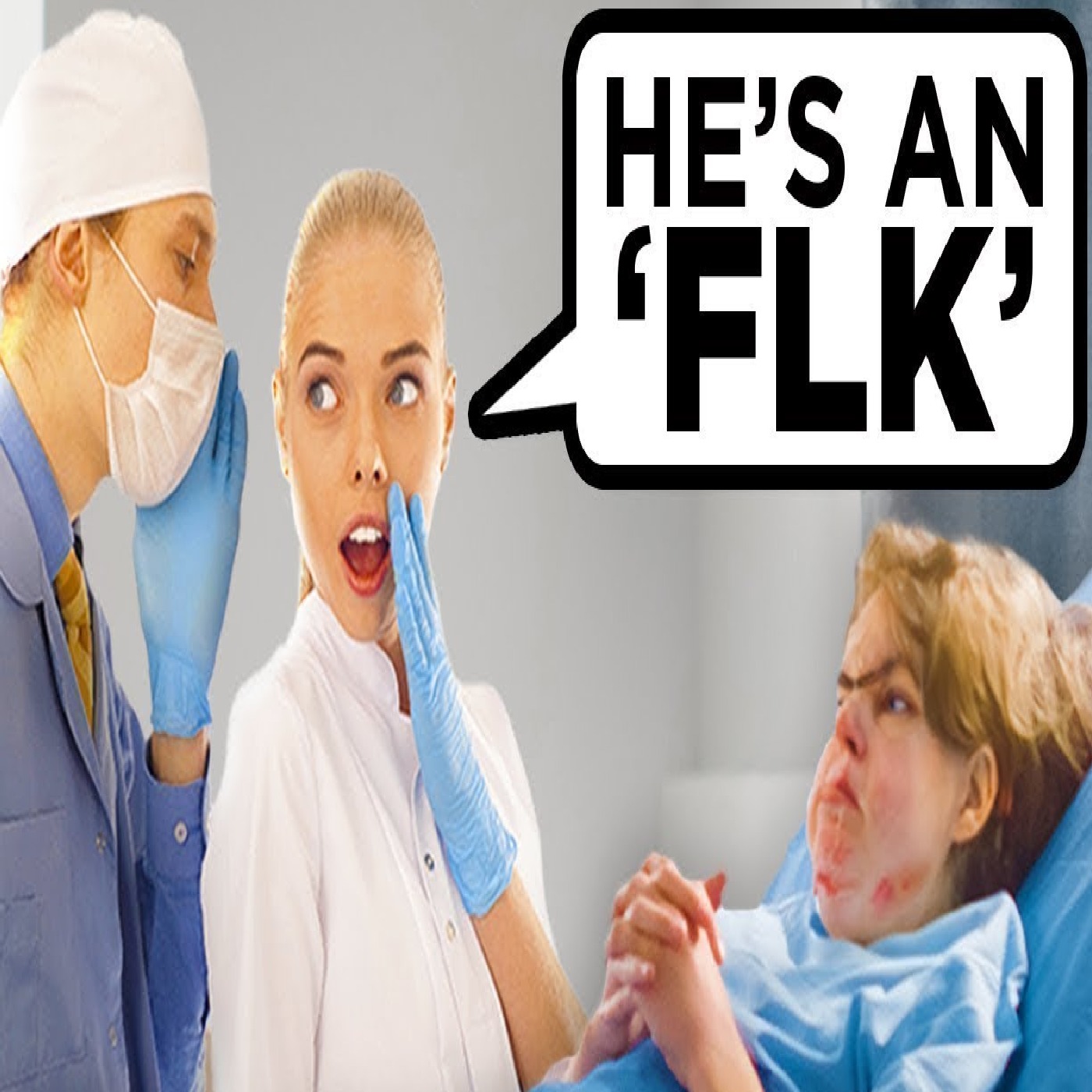
to evacuate the hospital. These intercom codes discreetly pass emergency information through the entire hospital. However, according to anonymous reports shared with media outlets, doctors will also use coded language to talk about patients while standing right in front of them. Hilariously and a little worryingly, one hospital worker revealed that if a particularly ugly child is admitted to hospital, the doctors will describe them as an FLK, which is an abbreviation for a funny looking kid. Less funny and more practical though, is the fact that they'll also use this abbreviation when a baby is born that visibly has an undiagnosed genetic condition. This lets the other doctors know that they need to test the baby for some conditions without panicking the new mother. Alongside using that particular code, other doctors have confessed that they also use the abbreviation RHM to stand for a really hot mom. One doctor claimed online that staff would refer to attractive mothers of patients at the hospital in this way and they'd observed their colleagues stating that they just treated
an RHM with an FLK, while standing in front of the family. That kid's going to need some treatment for that burn. Thank god they're already in the hospital, right? Doctors may use a secret language to insult their patients, but it isn't the only profession where people use code words to guess up at work. If you've ever gone tech support to help fix a problem with your computer, they often use a range of technical language that's completely meaningless to the average person. However, you might not know that some of these complicated words are directed at you, not the PC. CIT technicians know that a lot of people don't know what they're talking about, and they'll occasionally use that lack of knowledge to insult you straight to your face. For example, when somebody's computer isn't working, tech support may say that the problem is a PEDCAC. This sounds like a complicated computer term, however, the code is actually an acronym and means that the problem exists between keyboard and chair.
In other words, there's nothing wrong with the PC, the problem is being caused by a user who can't use a computer properly. Similarly, an IT technician may say that they're dealing with an ID10T problem. When this is set out loud, it sounds like technical jargon, however, when it's spouted out, the meaning becomes more clear. Now, there's no doubt in helping the technologically illiterate as a frustrating job, but whether that gives IT guys the right to insult people they're supposed to be helping, I'll let you decide. But if you hear the term PEDCAC, and the next time you get your computer fixed, feel free to call the technician an ID10T and take your business elsewhere. Ring Central's AI receptionist uses voice AI to answer on the first ring, so you'll never miss a call again. In just a few minutes, you can personalize your own AI receptionist to answer questions, route calls, schedule appointments, and even send texts in multiple languages. Plus, it's easy to scale. Create unlimited AI receptionists across any phone system. It's all powered by one reliable platform for effortless AI communications.
See for yourself at ringcentral.com. Ring Central, voice of your business. Let me paint a scene. I'm set at a bar enjoying a glass of water when a stranger approaches me and asks, are you a friend of Bill W? Now you might think that's a terrible pickup line or the stranger mistook me for somebody else. However, they're really using coded language to ask if I'm a member of Alcoholics Anonymous. AA is a recovery program for alcoholics with a strong focus on privacy. Members of the same AA group will know each other's first names, but they're supposed to keep them a secret, and you should never reveal the identity of another member of the program. As a result, they need to use coded language when talking about AA in public. And if you want to find out whether somebody is a member, you're supposed to ask them if they're a friend of Bill W. The name was chosen as a reference to AA's co-founder Bill Wilson, and it essentially allows fellow members of the program to meet without forcing them to publicly reveal their alcoholism to non-members.
The code can be used in the opposite way too. AA members have explained that if a recovering alcoholic is at an airport and they think they're going to relapse, they can ask the gate agent to ask if a friend of Bill W. can come to their gate on the intercom. In theory, if an AA member hears this announcement, they'll head to your gate and offer support while steering you away from the airport's bar. Wow, Bill W. has some great friends. According to my tender profile, I'm a six-foot tall model who likes astrology and long walks on the beach. However, the truth is a bit more disappointing. People put all sorts of crazy things on their dating profiles, and it turns out some lonely hearts use secret codes to send information to their potential lovers. If you swipe through tender for a while, you might come across someone with the numbers 4-3-7-7-3-7 listed in their profile. These digits seem random, however the code actually has a secret meaning, and it signals that the person behind the dating profile has herpes. See there's no cure for herpes, so if you contract the virus, it will remain in your
body for the rest of your life. Most of the time, the dormant virus won't be contagious, however, it can occasionally reactivate and flare up for a few weeks at a time, and for this period, it can be passed out of their people. This has made a lot of people scared of catching herpes, and the resulting stigma makes dating pretty complicated for herpes' positive people. So when dating websites were first introduced in the 1990s, herpes infected people wanted a way to discreetly find other people with herpes without revealing their diagnosis to everyone who saw their profile. They settled on this sequence of numbers because when you typed them into an old-fashioned telephone keypad, the corresponding letters on the numbers being pressed spell out the word herpes. This code has been used on dating sites ever since, allowing people with herpes to avoid awkward conversations about their infection while making their diagnosis clear to people in the know. For those who don't already know, with Google, simply searching the numbers will provide you the info too. A clever solution to a pretty uncomfortable dilemma.
When it comes to jewelry, most people wear rings and necklaces as a simple accessory. However, some pieces of jewelry can be used to send coded information to other people. A plain gold ring is often used to show that somebody's married. A diamond chain shows that somebody wants to be seen as rich, all pretty obvious stuff. Did you know if somebody wears a black ring on their right hand, they could be suggesting that they're a swinger in an open marriage who wants to hug other people than their spouse? These rings are sometimes worn by non-monogamous folks who want to find other promiscuous people and let them know that they have the same interests. Swingers will wear the ring on any finger on their right hand apart from their middle finger. That's because wearing a black ring on your middle finger has a completely different meaning and it usually suggests that you're a member of the asexual community. Being asexual means that you don't feel any sexual attraction to anyone, so the community obviously doesn't have much in common with swingers. Of course, black rings are also worn by people who don't belong to either of these groups
and they may wear the jewelry without realizing it's symbolic meaning. As a result, if you wear a black ring as a fashion choice, I'd suggest wearing it on your left hand and keeping it off your middle finger. Otherwise, couples might approach you thinking you're looking for fun or your crush might assume you're asexual and ignore you. A win-win or a lose-lose depending on your preferences. Cruise is or supposed to be relaxing, however a lot can go wrong out at sea and when there's an emergency, the staff will use coded language so they don't worry the passengers. For example, if you're on a cruise and hear a staff member announce Operation Brightstar over the PA system, it signals that there's a medical emergency onboard. With the staff announced in Operation Rising Star, it means that a passenger has passed away. These scenarios aren't as unlikely as you might think. Cruise ships carry thousands of elderly passengers on long voyages that largely involve overeating, learning how to salsa and fighting over deck chairs. And as a result, around 200 passengers kick the bucket on cruise ships every year.
When tragedy strikes, Operation Rising Star is announced and it signals the staff to retrieve the expired passenger and secretly move them to a small morgue on board before unloading them at the next port. The cruise ships won't tell any of the other passengers that this has happened as they don't want to disrupt their holidays. So as these passengers lounge in the pool and eat their dinner, they have no idea that their luxury holiday has turned into a ghost cruise. When I worked as a cashier as a teenager, people used to assume my job was easy. However, working at a grocery store isn't all about stacking shelves and flirting with old ladies. And cashiers in large retail operations often have to learn a list of code words so they can deal with problems without startling customers. When it comes to emergencies, it doesn't get much more serious than a bomb threat. And lots of stores deal with them with the same secret code word. See if you're shopping and you hear the store announce time check, time check, over the intercom, you should probably drop your bags and run because it's a code that's commonly used when somebody tells a store they've planted a bomb or when a bomb has been found.
This allows the staff to follow bomb threat procedures without causing panic and evacuate the customers without revealing the real reason for the emergency. Apparently Ikea is one of the many stores that use this code and if they discover it's a false alarm, they'll perform an announcement that says, following the recent check all clocks have been reset. This gives the staff the all clear while allowing the customers to go back in and enjoy their meatballs, blissfully unaware that they were briefly at risk of blowing up. Bringing an emergency code like time check and inspector sands would be pretty scary, but bomb threats and fires are quite rare, so there's a good chance that you'll never encounter them in real life. However, some secret ciphers are far more common and you might just find these next ones hiding in your wallet. It might surprise you to hear, but in most cases, if you try to photocopy a banknote, photocopiers will display an error message preventing you from reproducing money. Or if it does print a copy, it'll be glitched out. Your errors occur if you try to edit a banknote on a Adobe Photoshop. It's pretty clever and back in 2002, a security researcher called Marcus Cune tried to determine
how these devices and pieces of software know that they're dealing with genuine currency and prevent counterfeiting. He started by examining several banknotes from different countries and he soon discovered that they all contained a pattern of circles arranged in a very specific manner. He found that this pattern appears on banknotes all over the world, although some of them incorporated in discrete ways. On the Australian $5 note, the pattern is integrated into some flowers in the top right. Similarly, the back of the US $20 note features the number 20 all over the design and the zeros are arranged in the distinctive shape. Marcus Cune named the pattern the Urian Constellation after its similarities to the astronomical Orian Constellation and its appearance on the Euro currency banknotes. Nobody went public with his discovery, other people started finding the Constellation everywhere, although the usage of the pattern has never been officially acknowledged by any government or corporation. Technical details surrounding the pattern are kept secret and it isn't clear if it even
has an official name. However, the pattern definitely exists because it has been repeatedly proven that most photocopiers automatically register it when scanning images of cash. Now after Marcus Cune's discovery, people assume that photo editing software like Photoshop scan for the Urian Constellation too. But in 2003 a professor called Stephen James Murdoch discovered that these apps can detect currency even when the Urian pattern is covered. Turns out apps like Photoshop actually scan for a completely different set of hidden codes. Banknotes are covered in tiny complex line patterns which image editing software scans like a barcode on food packaging. This alerts the software as to whether the note in the image is a genuine piece of currency. If it's an image of a real bank note, the software blocks any modification, replication, or printing, preventing users from reproducing money and getting rich. Oh, should I say reproducing money and getting their door busted down by the FBI? Let's move from a secret code implemented by international governments to a code that
the world's best government codebreakers have tried and failed to solve. Cryptos is a sculpture in the George Bush Center for Intelligence, the headquarters of the CIA. The CIA is the most secretive branch of America's government so it isn't surprising that Cryptos is a pretty cryptic statue. See the sculpture consists of four large copper plates that display encrypted messages made up of jumbled letters. Three of the four plates have been solved by ingenious codebreakers who were able to deduce patterns in the seemingly random jumble of letters utilizing various deciphering methods to draw out the messages. And encrypted messages involve GPS coordinates, references to tune commons, tomb, and quotes from famous books. However, nobody has solved the final code, making it one of the most famous unsolved puzzles on the planet. Even though the sculpture is located at the CIA's headquarters, the agency has tried and failed to solve it, and the only people who know Cryptos' solution are the people who designed it.
The sculpture was built as a collaboration between the artist Jim Sandborn and Ed Shite, an X CIA officer who served as the director of their cryptographic center from 1963 to 1989. Sandborn designed the sculpture while Shite developed the code that it would display, and they finished the design and constructed cryptos back in 1990. At first, the world's best cryptographers made good progress to coding the statue and they solved the first three messages by 1998. However, since then, nobody's made any real progress to coding the final copper plate, and after nearly 40 years of trial and error, it looks like cryptos may never be solved, making it the ultimate secret code. Well, with that, it's time to wrap up our code breaking mission for today, but which secret code shot you the most? Thanks for listening to the podcast, we'll see you again next time you'll want to be amazed. Ring Central's AI receptionist uses voice AI to answer on the first ring, so you'll
never miss a call again. In just a few minutes, you can personalize your own AI receptionist to answer questions, route calls, schedule appointments, and even send texts in multiple languages. Plus, it's easy to scale. Create unlimited AI receptionists across any phone system. It's all powered by one reliable platform for effortless AI communications. See for yourself at ringcentral.com. Ring Central, voice of your business. The average cost of a D.Y. in Virginia is $11,352.47, drinking and driving costs more than your drinks. Learn more at what's the damage.org brought to you by Virginia DMV.
More episodes


