Loading...
sportswildernessleisure
S8, Ep 37: Big Water, Big Fish: Ellis Ward's Strategies for Streamer Fishing Success
About this Episode
Episode Overview
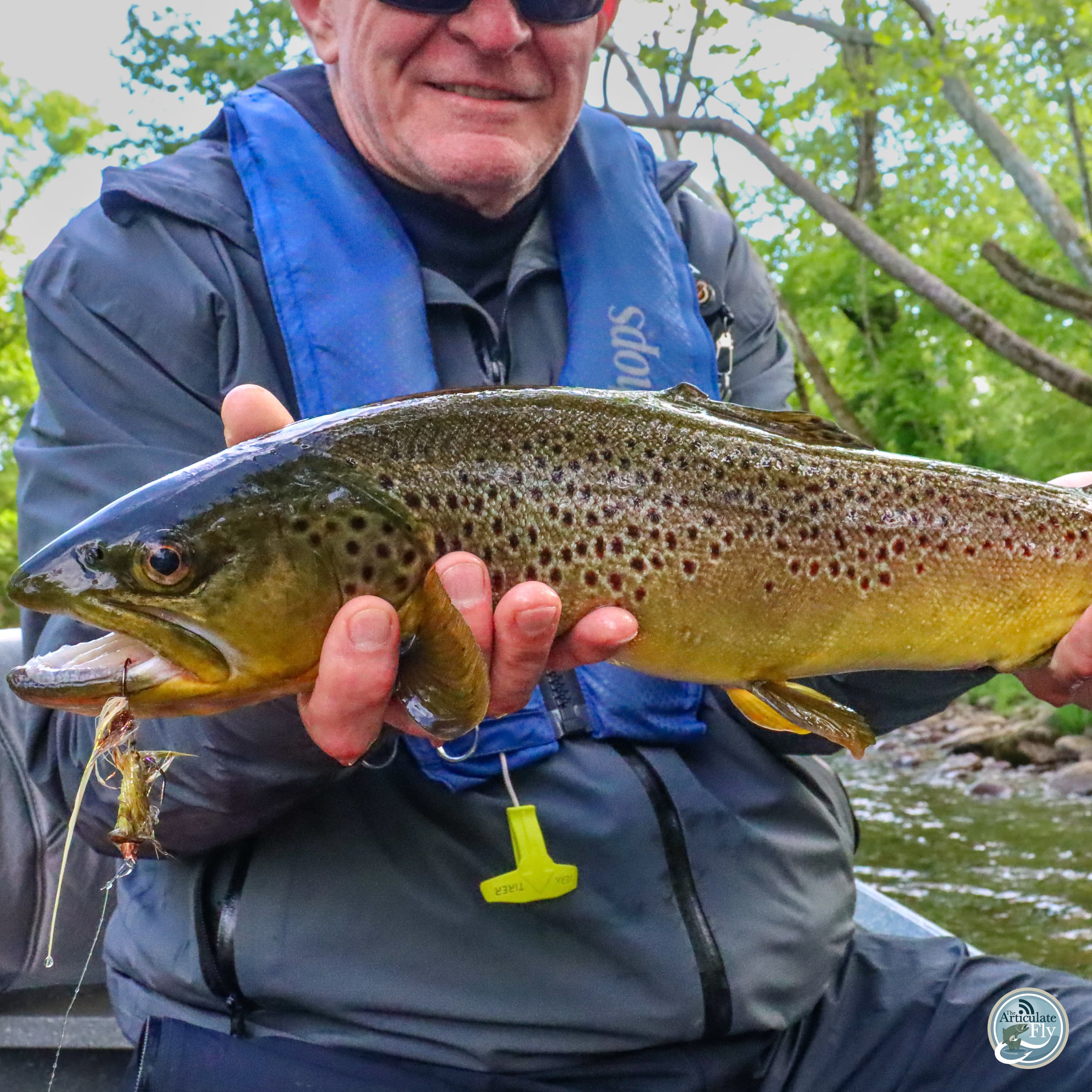
In this East Tennessee Fishing Report on The Articulate Fly, host Marvin Cash checks in with guide Ellis Ward for an early-summer conditions update focused on the Watauga River tailwater. After a dry spring that kept anglers grinding through tough conditions, a stretch of rain and rising water has Ellis bullish on what's ahead: bigger flows, off-color water, and the full slate of techniques that make East Tennessee tailwaters unique. He covers the current Watauga generation schedule (six days a week, five hours of afternoon generation), how that release window shapes a full-day float, and why the combination of streamers, dry fly fishing to rising trout, and mousing after dark makes summer his favorite time of year to be on the water. Ellis also discusses the browns that have been showing up even through the tough conditions — fish in the 24-inch range with a handful over two feet — and a striper in the 34–35 inch class that made it to the boat. The deeper thread of the conversation is mindset: Ellis draws a direct parallel between hunting big brown trout on streamers and musky fishing, emphasizing patience, sustained focus, team mechanics in the boat, and the discipline of forming good habits before a big fish shows. His approach to dry flies gets equal attention, with a nuanced breakdown of how he thinks about hackle, CDC, and the meniscus — treating dry flies as micro topwater rather than fixed imitations.
Key Takeaways
- How the Watauga River's afternoon generation schedule structures a productive full-day float that can include streamers, dry fly fishing to risers, and mousing after dark.
- Why approaching big brown trout on streamers through the lens of musky fishing — managing expectations, maintaining focus, and working as a team — produces fish that pure numbers-chasing won't.
- How to distinguish the post-spawn streamer fishery (low-feedback, high-consequence encounters with giant fish) from the early-summer streamer bite when 20 or more fish in the boat per day becomes realistic.
- Why the visual feedback of rising trout makes dry fly fishing a productive mental reset within a streamer-focused float, keeping anglers sharp throughout the day.
- How to think about dry fly construction in terms of water contact — CDC touch points versus hackle touch points, emerger versus floating presentations — rather than vise aesthetics.
- When moon selection matters for night mousing on tailwaters and why the hook set on a mousing fish is a fundamentally different skill than a streamer or dry fly hook set.
Techniques & Gear Covered
This episode covers a multi-technique summer tailwater program built around the Watauga River generation schedule. Ellis describes the float structure in detail: streamer fishing for the first several hours, pausing for risers whenever the dry fly opportunity presents itself, then transitioning to mousing as light fades — a full-day arc that demands different focus and mechanics at each stage. On streamers, Ellis fishes seven-weight setups with smaller trout flies rather than musky-scale patterns, emphasizing presentation discipline (getting the fly three inches from the bank when necessary), sustained team focus, and strip-set timing over fly size or flash. His dry fly breakdown centers on how materials actually sit on the water: he favors CDC for its hundreds of micro touch points holding the fly at the meniscus, contrasting it with the louder, fewer contact points of rooster hackle, and notes that many flies riding low in the surface are effectively fishing as emergers regardless of how they look in the vise. Mousing is treated as a patience game similar to streamer fishing, with moon phase factoring into session planning and requiring a hook set distinct from both streamers and dry flies. Ellis also notes bucktail availability through his website, elliswardflies.com, as musky conditions improve with returning rain.
Locations & Species
The primary fishery discussed is the Watauga River tailwater in East Tennessee, based out of Johnson City. Ellis also guides on the South Holston River, referenced briefly in the context of his broader East Tennessee tailwater program. Both systems are classic Tennessee tailwaters — dam-controlled flows with temperature-stabilized water that supports year-round trout fishing distinct from freestone or western tailwater fisheries. The main target species are brown trout, with multiple fish in the 24-inch range mentioned and a handful over two feet even through a difficult low-water spring. The episode also notes a 34–35 inch striper landed a couple weeks prior. Ellis mentions returning to musky fishing once water conditions improve following recent rain — a species he has been sidelined from during the spawn and low-water period. The early-summer window discussed (late May through July) is framed as some of the most consistent streamer action of the year, with the post-spawn bite giving way to days where 20 or more fish in the boat on streamers is achievable.
FAQ / Key Questions Answered
How does the Watauga River generation schedule affect how you structure a full day of guided fishing?
Ellis builds the float around the generation window: five hours of afternoon generation, six days a week. This gives the boat several hours of fishable water in the morning before generation kicks in, a streamer window as levels rise and off-color water comes through, and then the opportunity to stay on the water into darkness for mousing as levels drop back out. The generation schedule effectively writes the day's agenda, and Ellis treats each phase as a distinct technique opportunity rather than fighting the releases.
How is hunting big brown trout on streamers similar to musky fishing, and why does that mindset matter?
Ellis draws a direct parallel: big browns on streamers require the same patience, sustained focus, and expectation management that musky fishing demands. Unlike an indicator rig where the feedback is constant, streamer fishing can go hours between meaningful encounters, and the moment your concentration lapses is typically when a fish shows. He treats large browns the way he would treat a musky — working the boat as a team, identifying specific water to target, maintaining good habits throughout the day rather than only when a fish is behind the fly.
What is the difference between the post-spawn streamer bite and the early-summer streamer bite in East Tennessee?
Post-spawn (January–February) is a low-feedback, high-consequence game: you may go four or five hours without a follow, but the fish you do see could be jaw-dropping in size, and its appearance has nothing to do with the overall bite. Early summer shifts that dynamic significantly — fish are active, untargeted, and on a good day Ellis is putting 20 or more in the boat on streamers, with the realistic chance that a 26 or 27-inch brown shows up in a session where you've already seen a lot of fish. The two windows require similar discipline but very different expectation-setting.
How does Ellis think about dry fly construction for tailwater fishing?
Rather than tying for appearance in the vise, Ellis focuses on how each material interacts with the surface. He favors CDC for its density of micro touch points — potentially hundreds or thousands of tiny fibers holding the fly at the meniscus — compared to the louder but fewer contact points of rooster hackle. He notes that many "dry flies" are functionally fishing as emergers, sitting partly in the surface film, and that understanding where the fly actually sits (and what happens when you skate or move it) is more valuable than visual realism at the vise. He treats dry flies as micro topwater, with the same attention to presentation and action he applies to streamers.
When does mousing become a priority in Ellis's summer guiding program, and what makes it different from streamer fishing?
Ellis starts mousing as water drops and light fades at the end of a float, and he selects sessions in part around moon phase, particularly when dedicating a multi-hour block to it. The technique shares streamer fishing's grind-and-patience arc — long stretches without action punctuated by high-consequence eats — but the hook set is fundamentally different and requires practice to execute correctly. He describes August and September as the window when he becomes "chirpier" about mousing specifically, though the summer program already incorporates mousing as the third act of a streamer-and-dry-fly day.
Related Content
S7, Ep 32: Swim Flies and Trout Tactics: An East Tennessee Fishing Report with Ellis Ward
S7, Ep 45: Navigating the Waters: Streamers and Strategies in East Tennessee with Ellis Ward
S6, Ep 98: Navigating Late Summer Waters and Mousing Tactics with Ellis...
Hosts & Guests
No transcript available for this episode.
More from The Articulate Fly
View all episodes →
S8, Ep 63: Seasonal Shifts: Brian Shumaker's Smallmouth Strategies for Late Summ...
The Articulate Fly
Aug 30, 20268:19pending

S8, Ep 62: Late Summer Secrets: George Costa's Central PA Fishing Report
The Articulate Fly
Aug 28, 20264:04pending

