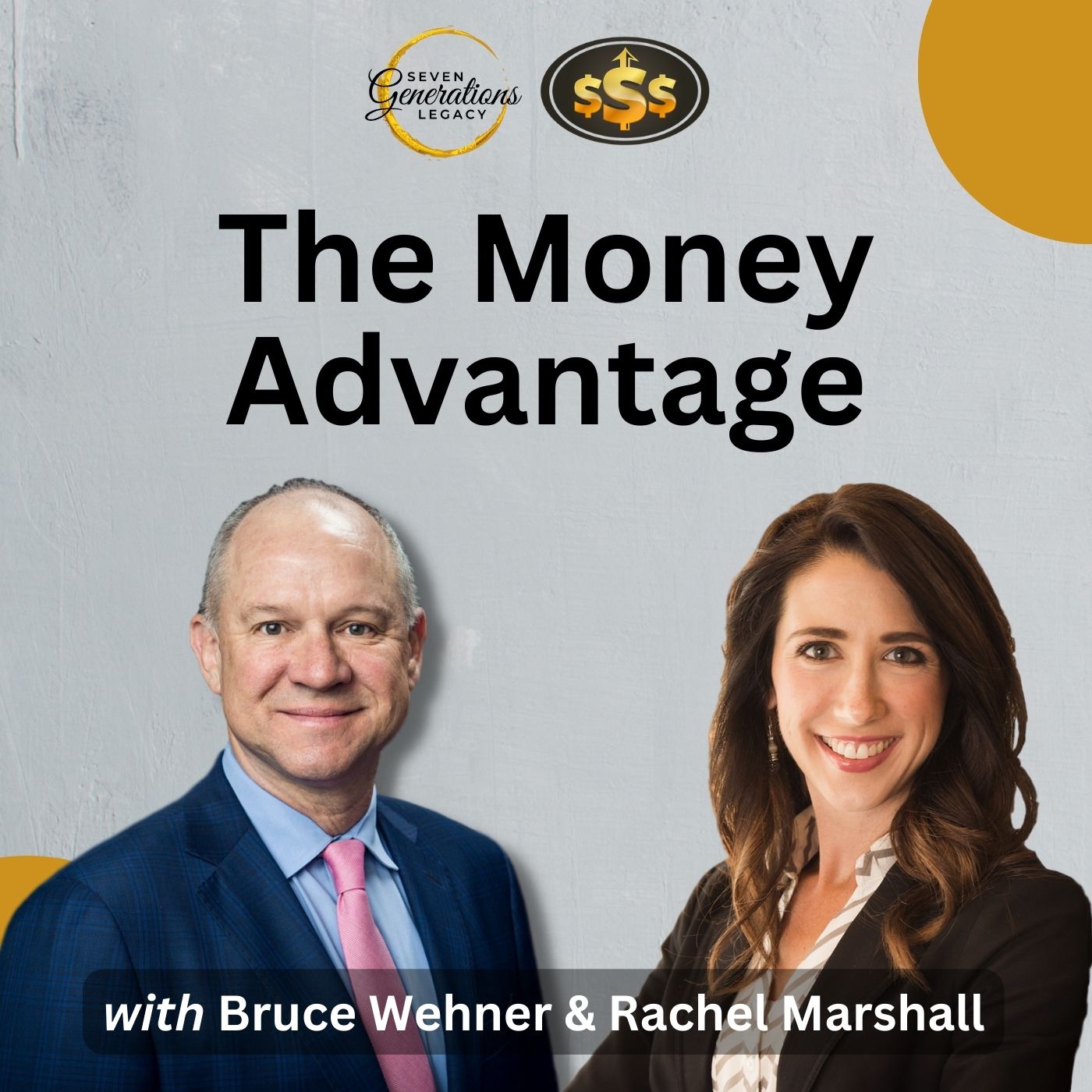
Roth Conversion Strategy: When It Makes Sense, What to Watch For, and How It Affects Your Heirs
About this episode
Get every episode summarized
Each time The Money Advantage Podcast publishes, we email you a written briefing from the transcript — the topics, who appeared, and any specific claims, with the ad reads skipped.
Email me new episodesFree for 3 shows. No card needed.
Hosts & guests
Transcript ready
545 searchable segments. Every word is indexed and playable.
Full transcript
The Money Advantage Podcast — Roth Conversion Strategy: When It Makes Sense, What to Watch For, and How It Affects Your Heirs. Machine-transcribed; use the interactive transcript above to jump the player to any line.
Welcome to the Money Advantage Podcast, empowering business owners with the permission to think differently about money so that you can consciously choose to live a meaningful and fulfilled life now. Our passion is making money simple, fun, and doable, helping you feel great about your money and getting your money working for you so you can thrive. All right, good afternoon and welcome back to the Money Advantage Podcast. Bruce, I'm excited to be talking with you again today and this conversation is something that I know is coming up as as really top of mind for a lot of people. Is there looking at taxes strategically and really trying to make ideal decisions? Is this idea of Roth conversions? I know you've been working on a lot of these. You've got a lot of people who are asking you about them. We've got a lot of people who really are in a situation right now of saying I'm I've put them away money in tax deferred accounts. I'm a little concerned about future
taxes. I want to convert these over to a Roth and they're they're wanting to make sure that they're making the best decisions and they're not hitting any of these blind spots or any challenges along the way. They're wanting to make sure they're doing things correctly. And so Bruce, just kind of in the the true form of how we embrace everything on this podcast, we are going to be talking today about strategy, not just about a one-size-fits-all. You should always do this. We're really going to unpack what is a Roth conversion, why you would do it, who it makes sense for, maybe some pitfalls to be aware of, some situations that maybe you maybe you have to strategically connect additional strategies to make it really do what you need it to do and really just have a really holistic pro and con type of conversation around Roth conversions today. So when does it actually make sense to go ahead and do that? Bruce, I would love to hear your just high level perspective as we're coming into this conversation. Well, at high level, we first we want to have a disclosure here.
You know, none of this is what we're saying is an advice to anybody that's listening. It's just for educational purposes because anybody that mentions about Roth conversion cannot give any advice unless they have the complete financial picture. And what's interesting, it's not even the complete financial picture of generation one, it's also the complete financial picture of generation two. And we'll dive into that even more deeply as we get going in the program. But so none of this is should be constituted as any kind of advice. You're probably going to see a lot of this going on right now in social media and what I would call clickbait phrasing where people will say always do a Roth conversion. Oh, they were saying 10 reasons why you should never do a Roth conversion. You know, so it's it's both ends of the spectrum because all they're trying to do is get you to click on it. And so they're going to give you
these wild analysis of why you should do it or why you should not do it. But I hope we're going to do today is kind of walk through why you consider doing it. Now Rachel, I would say that the number one reason why a person would even consider doing it is if they're trying to do a strategic analysis of paying the least amount of taxes over not just this year, but over their lifetime and the next generation's lifetime. And we'll talk about that. It'll be a lot easier and I say this jokingly, but it is actually 100% true. It would a lot a lot easier to do that analysis if you could tell me when you're going to die. It's it's just a lot easier because you're you're trying to fit all these numbers in and the biggest variable of the number that comes in is when a person's going to die
because not only are you spreading out the amortization of the taxes over that person's lifetime, but then how is it going to affect generation two's required minimum distributions? So just keep that in mind as we go through this. And as always, you know, we're going to I hope we get some questions. But the questions I think should keep in mind that there is not one size fits all. Bruce, I love how you started that. Bigger conversation, a bigger lens than maybe even most people who are doing Roth conversions because usually somebody is thinking, what about me? What about my lifetime? What about my future taxation? And you're saying look, the conversation is longer than just your lifetime. It really is your lifetime and your children. So let's go ahead and start at ground zero. What is a Roth conversion? And before we really talk about what a Roth conversion is, we have to say, well, what are we converting from? And what is the implications of
that? So Bruce, can you kind of lay out what would somebody convert into a Roth from? Why would they be in that tax deferred vehicle first? And really what is the, let's just start there. Yeah. And for second simplicity, I would like to just keep this into what we call a traditional IRA and not get into other types of qualified money, qualified money in the financial world is what's called tax deferred money. So let's just focus on IRA right now. Okay. And the IRA came about in 1974. And with this idea that people should get an incentive. Remember, we talk about, we talk about the tax code is being a series of incentives to put money away. And the incentive would be is you get to take it off your taxes this year, the amount that you can put away. And you don't have to pay taxes into the future. So that's when it all started. This then came about from 74 to 1999. And it was
just chugging along. And then 1999, Congress and their infinite wisdom said, Hey, we said this tax deferred thing was the greatest thing ever. But now we're going to let you actually pay the taxes now and let your retirement income actually grow tax free. And you can access the tax free. And Nelson Nash, one of the mentors said about that is, don't you feel a little bit manipulated because they first said to you, tax free growth or excuse me, tax deferred growth is the greatest thing in the world. Pay the taxes later. And now they're saying, pay the taxes now and have tax free growth. So you so you don't have to pay the taxes later. And most Americans don't even think about things like that. So what you're actually looking at is you're always going to have to pay the taxes on that particular account. So you either pay them at the beginning and then put into a Roth,
which means it's going to grow tax free. And you can access a tax free or you don't pay them at the beginning and you pay them at the end. So you're all always paying it. Now if you decide it, it was really quick before you go there. I think when you're saying, wouldn't you feel manipulated? I mean, the challenge is if you just take any idea in a microcosm, it can be made to sound really good, which is, Oh, why wouldn't you want to keep as much of your income today, not pay the tax today, worry about that in the future. Well, if you are made to believe that that's really good to think about today and today's situation is going to be better, if we just handle this later, then that's going to sound great to defer taxes. But then the inquiring mind is going to say, okay, what, what, what about the future? What, what are tax rates going to be in the future? What, what tax thresholds will there be in the future? What kind of tax am I going to pay? Are there going to be
tax deductions that I'll be able to take advantage of? What is that future tax going to be? Oh, I don't actually know because there's a lot of unknowns around that future tax. And so the person who's in that position might have been using that strategy because maybe the initial reason to do so seemed really good. And then here's the other side of the coin saying, oh, you should pay the tax now and not have any tax in the future. Either one of those could sound good, depending on your lens, if you're just looking at the short term. Yeah, I think what happened in we had Ted Beno, who's considered the father of the 401K on the podcast years ago. And I think we, I feel privileged to have him on the podcast. And 401K could then be turned into an IRA when you left the particular corporation. And the reason that Ted actually did the 401K, he was actually from a human resources point of view. And he said,
I have highly compensated employees that do do have a lot of taxes now, but they think they're going to be in a lower tax bracket in the future. So why don't we take some of that compensation now and tax deferring to the future when they're going to be in a lower tax bracket? So the whole premise is you're going to be in a higher tax bracket today and you're going to be in a lower tax bracket in the future. And I've said this on the show before, I've only seen it maybe a dozen times in my career where that it was actually the case. Now, it's more likely to be the case if you're a highly compensated employee, correct? Because you were highly compensated up here. You were living a really good life. You tax deferred some of that money out of the highly compensated and you lived in a lower tax bracket. But I'm going to tell you what Rachel, I've even the highly compensated people are highly the night worth people I've seen don't fall in that category most of the time because one, they were really, really good with all
aspects of their money. And so they continue to make a lot of money even in retirement because they have cash flowing investments and they also tend to be a lot entrepreneurial minded. So retirement doesn't mean the same thing to them as it does to other people. They're going to continue to work and make money. So now they have this tax burden and they're still making money. So in many cases, they actually go up in a tax bracket. So that's kind of the premise of everything. I love that you're bringing that to light because I think it's not necessarily a false assumption that taxes will be lower in the future. It's that maybe your lifestyle is going to contribute towards lower taxes in the future. Maybe someone else's lifestyle is going to contribute towards higher taxes in the future. And so you're in a position where you have to understand not just your current situation, but you need to understand what the ramifications of that
are in the future. And then there's the whole component as well that we... I mean, Bruce, I'm sure you're going to go here, but looking at the national deficit and you look at the amount of money that the US government is in debt, where are they going to get that from? Usually it's taxation. Well, in the future, are they going to go, are they going to raise taxes or lower them? I've never seen a day where they said, oh, let's actually lower true taxes. I mean, maybe they lowered a tax rate, but then they're going to tax more people or maybe they lowered income taxes, but they raised the estate tax. Ultimately, if you have a deficit, the need to replace that or to fill that up, to be back whole again, is taxation is one of the primary ways that they're going to overcome that challenge. And so, Bruce, is there anything else you want to say about that before? Absolutely. I want to say something because this is another situation where people don't realize they're being manipulated. So, even if you lower tax rates, what often happens is now people pay less taxes and it goes into the economy. When it goes into the economy, we have more money into the economy
and that causes inflation. Inflation then causes wages to rise. Then wages rise. And so, even though the tax brackets were brought down, the real money that goes into the economy causes wages to rise. And so, you still go up into a higher tax bracket. It's actually a strategy that they use. Causing inflation, you will actually get more tax revenue. And that's counterintuitive to a lot of people unless you study economics, but it's what I just said. Less money into the pockets of the United States government right now or even a local government or state government right now, but they know then that money will go into the pockets of people. People will then, they will spend more. Spending more means there's more activity. More activity means you need more workers to attract more workers. Means you have to give higher pay. Higher pay means you're up in a tax bracket.
It's so interesting how from the perspective of somebody who just says, oh, I want higher wages, they're not looking at that whole cycle. From the person who says, I'll be in a lower tax bracket in the future. That's usually not looking at the big picture. And Bruce, it's so fascinating to look at the not just the domino effect of the next unintended consequence or the repercussion of a decision, but then the full cycle of what all of that can cause, which ultimately lands in a position of even if you're paying a lower tax today, ultimately because of what you just said, you're going to end up in a position where you're paying higher tax potentially in the future because of the inflationary cycle and the higher wages. What it really comes down to Rachel, I talk to people all the time about this is that we can try to mathematically figure it all out, but ultimately it comes down to control. You control when you pay the taxes. So if you if you are
in control, then you can make changes more readily and more easily. So it's really about control. So if you just defer your taxes, you're giving control into the future. And that control is not only about the rate of the tax, but how big the tax brackets are before you go into the next taxable income bracket. So we can talk all we want about tax rates, but we haven't talked about how big the tax brackets are or we haven't talked about the deductions that allow you to have taxable income. All of those can be manipulated. So I'm going to end on this final thought before we go into the next part is what is the goal? What is the goal of any government with how they set their taxation policies? It's a good revenue. Yeah. And to get
reelected to make it sound like it's most attractive to the people who are their constituency. Right. Now, you can either get revenue now or you can get into the future. And what you just said to get elected, certain administrations might say, hey, I'm going to lower taxes because that is going to be one of my selling points. Look, I have lower taxes, vote for me. Other administrations might say, I'm raising taxes so I can take care of more people. So vote for me. So the manipulation of the tax revenue is the same. It's the good votes. One says, okay, I'm going to raise taxes, get more tax revenue. But what I'm going to do now is I'm going to immediately add to the debt and we're going to have to deal with it in the future. Other ones say, I'm going to lower taxes. I'm going to bring in less revenue, but we're going to spend the same amount and we're going to then increase the debt and we're going to deal with that
in the future. So we're always dealing with future debt because we have a spending issue. And if you don't believe it, all you have to do is look at the debt clock and you're seeing that we're crossing $38 trillion in the United States. We've crossed the threshold of over 100 percent GDP to debt ratio. But the thing that's the most troubling, absolutely the most troubling is $38 trillion seems troublesome. But the unfunded liabilities, federal liabilities into the future of Social Security, Medicare, and public pensions is $222 plus trillion. That is the most troubling thing. Now, the Keynesian economists say that's not a problem. That's not a problem because as we increase the GDP, we will be able to keep paying those and the way we'll pay it is we'll
just print more money because we owe it to ourselves and it'll never be a problem. The problem with that is you're going to have to increase the money supply over and over and over to have inflation. And every country that has had hyperinflation has not made it all the way back to the Roman times. When the Romans, the way they increased the money supply, they had true money, not fiat money. That wasn't backed by anything. They had true money, silver, and gold coins, with the way they increased it as they clipped off the edges of the coin, melted it down and made more coins. So those coins weren't worth as much. They just put more of those coins in smaller amounts into the system. What's the same way now, we have the same money, supposedly face value on the outside, but we have more of them in the system so they're not worth as much. Bruce, I feel like that was an entire master class on monetary policy and the implications of
all of our taxation and spending decisions. So let's come back to the IRA was put in place 1974 to 1999. This ability to defer tax on the premise that taxes are high today. In the future, you're going to have lower income, lower taxes make sense to then defer tax to the future and then we have 1999. The IRA is put in place or the Roth IRA that says actually if you go ahead and pay the tax today, you won't have to pay the tax in the future at all ever, meaning this is now going to become a true tax free asset and everyone is looking at that and saying, okay, if my income is now going to be higher in the future or the tax rates could be higher or the tax or I could fall in a different tax threshold that makes my taxes increase or any number of taxes, not just federal income tax. If any taxes, if all the taxes are going to be higher, I want to be in a situation where now I'm
not maybe I open the wrong can of worms, maybe does this really only apply to federal income tax or is this all other taxes? It depends on the state tax code, so I would just leave that out. Okay, so we're looking at this situation where we're in a position of saying, now I can pay the tax today and that would be equivalent to saying let's pay the tax on the seed, grow a harvest as large as that harvest grows, not have to pay tax on that again. The tax deferral camp is don't pay tax today, kick the can down the road, maybe in the future taxes are going to be less and I will have to pay less tax. But you're saying if the position is control, if you want to be in a position of control deciding when to pay the tax, Bruce, how is this decision now from tax deferral generally as a wide public popular opinion being becoming move over to the Roth camp, move over
towards the pay the tax now. Great question. So basically you're asking why all of a sudden this proliferation of people saying you need to look at Roth conversions. I think that's what you're saying. Yes, yes. And Roth conversions were always on the table, but now because of the increased debt and increase inflation, people are starting to think, well maybe I should go ahead and Roth convert the most important reason that changed was the secure act. Of 2020, I don't have exact, I think it was 2022 or 2023, 2.0. And what it now says that if you have to have RMDs, require minimum distributions, maybe we should make clear this up real quickly. So before the secure act,
if you had money in a tax deferred position like an IRA, when you turned 70 and a half, you had to start taking what they call require minimum distributions, whether you needed them or not, you needed to take a certain amount of money out of your tax deferred money. And it kept getting larger and larger until you turned 115 and then it had to be depleted. The secure act actually said, you don't have to take any money out now 70 and a half, they stair-stepped it up and basically anybody after 1960 now is age 75. So they increased it by four and a half years. And everybody celebrated, everybody celebrated, they were like, yes, I can defer my taxes some more to them 75. But what they also put in, which was very, very clever in my mind, is they deferred
it for another four and a half years, which means all you're doing is blowing the bubble up even greater for more taxes in the future. But they also added that if it becomes what's called a beneficiary IRA, now not a spousal IRA. According to the IRS tax code, if you're married and you have an IRA and your spouse is the beneficiary, now don't get disconfused, the spouse is the beneficiary, when you pass that money actually becomes your spouse's money. According to his or hers, Social Security number, IRA money has to be remained with the Social Security number. And you might say, well, why is that? There's no such thing as joint IRAs because they have to know how old you are for the required minimum distributions. That's why you can...
Bruce, let me make sure I understand. In what case does the money become your spouses? When you die. Which kind of money, the IRA money? We're only talking about IRA money. Okay. Right now. Okay. You can have joint money that's after tax money like in a brokerage account or in a bank account. That's joint money. Okay. But that's okay because there's no required minimum distribution. So IRA money can only be IRA individual retirement accounts. It's not it's not JRA a joint retirement account. It's IRA individual retirement account. And the reasons individual is because of the required minimum distributions. They have to they have to have a social security number that's tied to your birth date. So they know when you require you must take money out with requirement minimum distributions. Okay. So with an IRA you die. What happens to your spouse?
If you if your spouse is the beneficiary of the IRA. Now I know that sounds weird because it's like why wouldn't they be? Well, there are some times where you you would be. It's a second marriage and you decided you wanted you wanted to go to your line. Okay. All right. Okay. You know, it goes somewhere else. A charity somewhere else. But if your spouse is the beneficiary, now it goes to your spouse and your spouse can distribute it under their birthday for required minimum distributions. Yes. So basically in the United States, most people are relatively close to age. Other spouse. Not everybody, but most people. I think what you and are you in Lucas seven years apart? We're six years apart. Yeah. And we see people, you know, more than that. But generally, yeah, within 10 years or so. Now I'm going to give a quick caveat. Well, no, let me finish this one first and then I'll explain. If that spouse is
died or if it goes to the spouse and then the spouse dies and it goes to the next generation, it's now no longer a spousal IRA, right? Because that wasn't your spouse. It's now a beneficiary IRA. When it goes to the beneficiary, this is where all the rules changed. The beneficiary used to be able to spread it out over their lifetime. And so let's say they took it at 46. Now they had to take RMDs right away. But now they could spread it out from 46 to 115. And it was really small payments. However, the Secure Act said, we're going to let you now bump it up to 75 for the first generation. But when it goes to second generation, all bets are off. You have to now take out it over
only 10 years. So example, used to be if a million dollars went to a beneficiary, and I'm making these numbers up. So don't know anybody hold to me, but they're pretty close. The beneficiary that was stretching it, they might only need to take out $30,000. Okay? But now if they're trying to and they must empty it out after 10 years, they take 10% of 10 years and we're not even talking about any growth there. No growth. So we're going to presume a million dollars doesn't grow over 10 years. So the first year, you take 100,000 of money out. So now you're at 30,000 that used to be. Now you're at 100,000. Now 30,000 can get you in a higher tax bracket. And I don't know if 100,000 will even get you in a
higher tax bracket, but I can tell you it's three and three times more likely it's going to get you in a higher tax bracket. So shorter time window beneficiary has to take out the RMDs from the IRA shorter time window, which means bigger chunk each year, which you could without the eye towards tax. You could say, what's the problem with that? They're going to get more money per year. The main problem is now the tax burden is much higher or could push them up into a higher tax bracket causing an even greater tax burden. 100,000 is greater than 30,000. It's very likely it's going to happen. And if it grows, then that RMD just gets bigger and bigger and bigger. There are some specific rules that I don't want to get into, but in all practical cases, that's the way it works in most practical cases. Okay, there are some specific rules that I don't
want to get into because they get very specific and it might confuse people in the podcast. So don't, I hope there's nobody screaming at the podcast right now says that doesn't that's not how it works in every case. I know, but I don't want to get into it right now because it'll it'll get confusing. I will say no one's screaming, but Roth is saying or Roth Fritz is saying inflation, Rothen's, Ross Rothen's money. He then said, and if they cannot control inflation, the interest rate is going to have to be sky high. He said, and don't they don't want that because the sky rocket's the debt more. And now he just commented between a rock and a hard place. And that's right. I mean, Fritz is, Fritz understands basic economics. I mean, Fritz is a better friend to show for years. I've talked to him. I've talked to him personally. And what he's saying there is in order to print money, you have to and you have to entice people to buy bonds from the United States government. Well, if people are think that they're not going to get their bond
repaid, then you're going to have to have a premium on the interest so that people can get their money back quickly before they default on the debt. That's exactly what Fritz is talking about. Okay, so let's go back. Let's go back to another concept, why people that's the same about the Secure Act for the Beneficiary IRA, but I want people to think about. Let's say normal mortality is about 30. I'm sorry. It's about 80. Bruce, that's really young. And people have babies later in life now. So they're having babies at 30. So that means when your parent dies at 80, you're 50 years old. You're in the prime money years
of your life earning years. So now you have a hundred grand stacked on the prime earning years of your life. So you're up in higher tax bracket. Do you think maybe Congress figured this out so that they can get more revenue rather than less revenue? I'm sure it's, I mean, it's just the same classic situation of those that are in control are able to make the rules and no matter what the message is that's shared to get people to adopt that. Ultimately, they can spin the message any way they want to make it in their favor. And ultimately, maybe it sounded great. You can, you know, push back your RMDs for four and a half years. Wonderful. The brain just kind of can stop there and be like, okay, well, let's just celebrate. This is a good thing. And then you can throw in all this extra stuff that we don't have to think about today, but our kids certainly will have to think about. And that's why you said you need to understand
your financial picture and the financial picture of the second generation in order to really be able to make wise decisions surrounding the idea of Roth converting in your lifetime with your tax deferred money and moving it from tax deferred over to currently paying the tax. So there's all kinds of things. If you understand conceptually what I did just said and I said to you, in most cases, your spouse is the beneficiary of your IRA. So it's a spouse of IRA. There is like, there is a strategies that you would say, well, if your child is eventually going to get part of that IRA anyway, because you figured, hey, I'm not spending it now. I'm just going to pass it on. Then when the first spouse dies, you could actually make it so 50% goes to the spouse and 50% goes to the second generation. Now, the second generation will have to
start taking RMDs right away over 10 years, but it's much smaller and they're getting it younger when maybe their earning years aren't as great. So that's one strategy that you can use. Another strategy you can use is you can, and we don't have time nor the ability for disclosures on this, is you can go ahead and Roth convert and your taxes will go up, but then you can use tax mitigation strategies to actually have them come back down right away. So you can actually get the tax Roth conversion in a discount or with no taxes at all. So Bruce, that's the key because if you're going to look again at any one tool, one strategy, one play, if you will, in a microcosm, it's really difficult to make decisions to say does this make sense? Does this not make sense? When should I do it? When should I not do it? Should I do it when the market is down? So I
don't have to pay as many taxes now. I do a need to time that effectively in my life or do I need to think, well, my kids probably aren't going to be in a high income bracket anyways. Maybe they could just use the money. There's a lot of things that you're really having to sort through and sift through if you don't have the big picture and you are talking about Bruce, this is the big picture. This is the generational component. This is the implications of lower or higher taxes where the government is in a position of being able to collect and extract that tax revenue and then be in a position of if we're going to lower the taxes, well, then you're going to keep more money, circulate that and that's going to cause more dollars to be in circulation, which is going to cause ultimately inflation and higher wages, which is going to circle back to more taxes. So you're looking at this big landscape, which is what is necessary in order to really make effective decisions. So Bruce, there's a couple of places we could go here, but one, if somebody converts to a Roth, there's no more RMDs, correct? No, that's not true. Let's talk about this.
Okay, great, great segue. So even if you convert all of your money to a Roth IRA and it goes to the next generation, the next generation must still empty at over a 10 year period. Really? Yes, and people might find out to be interesting. Well, wait a minute, the government's not getting any taxes because it's in a rough position. That's true, but now it's no longer growing tax-free. And if you take it out, you must reposition it somewhere unless you're just going to put it in your house in a mattress. Yeah, well, I guess it's repositioned. Right, or spend it. They want you to spend an economy. They want you to put it in a bank and lease our interest and then you've got to pay the interest or take taxes on the interest or put into brokerage accounts or put into another investment where you build up capital gains. So even a Roth IRA that a beneficiary Roth IRA
must be liquidated over a 10 year period. Fascinating. Okay, so again, understanding the tax landscape allows you then to be able to make decisions because ultimately, if you're aware of the erosive effects of taxes on wealth, you want to be in a position to minimize the tax. And there is an entire game. I mean, maybe that's the best way to say this. There's an entire game where there's a game board of taxation. And if you do this, you have this much tax. If you do this, you have tax in this way. And there's all of these different levers that a good tax strategist or good strategist can help you look at and really understand not just do I Roth convert? Yes or no, it's not really that simple. The question is, how are you going to Roth convert? When are you going to Roth convert? What are you going to do in that second generation once they're having to take that income and how are they going to reposition it? This is a not just a more strategic
conversation, but it's a more strategic conversation over a longer period of time to truly play the game effectively and win generationally. I'll give you an example. This is not a static strategy. It has to be a dynamic strategy. Now, you want to try to figure out like over a time period, we're going to look at it and we're going to Roth convert over a time period, five years, ten years, fifteen years, twenty years even. And what does it look like for the first generation and the second generation? However, things change and then you have to dynamically change the strategy again. I'll give you an example. We had a client that had a couple million dollars in a 401k and they were retired at 860. We put together that they were going to Roth convert over a five year period before they turned 65. Significant Roth conversion. Now, I won't get into
we were going to do some tax mitigation strategies to minimize the taxes. But in year two, that particular person was in retirement and they said to him, hey, would you like somebody said to him, would you like to consult on this project? So, they paid him several hundred thousand dollars and he came out of retirement to consult. So, now we had to change the strategy because we were going to take five hundred thousand dollars a year out of the Roth. I'm just giving out the IRA to change the Roth, but now he's making a couple hundred thousand. So, we had to change the strategy along the way. You might be thinking, why were we trying to do it from 60 to 65? I know from our preparation, you wanted to also talk about how this affects Medicare premiums.
That has to be fixed and that could be a whole another, but the Affordable Health Care Act actually put in that the more money you make, the more you have to pay for your Medicare part B and part D premiums. We don't have enough time to go over the specifics here in the podcast, but it just just know the more taxable income that you have. I'm sorry, the more adjusted gross income you have, the more you're going to pay for your part B and your part D, part D is drugs, part B is your doctor's visits for Medicare and it's called the Irma brackets, income related monthly adjusted amount, Irma income related monthly adjusted amount, and what's sad about this, this has been going on, I think since 2000 and I can't remember exactly when that came in,
but it was in the 2010-12 area and there are literally maybe 10% of the people that I run into that know about these Irma brackets and a lot of financial people don't even know about these Irma brackets because they're looking at their own little window, they're not worried about taxes, they're not worried about Irma, they're not worried about how things affect your estate, because they're just doing, they're just trying to grow your money. We had a client just the other night said, she was trying to decide if she was going to work with us instead of her person, because she had to pay a whole bunch of taxes last year and the response from her financial advisor was, well, you should be happy you're paying taxes because I'm making you a lot of money. That was the response and she was not happy with that response. So you have to take all these things in the consideration. So you don't want to Roth convert necessarily, if now all of a sudden you pay
you're paying $200 for part B a month, but the Roth conversion causes you to pay $600 a month, for your part B. And by the way, that's per person, so that's 400, 400, that's 800, per person per month, plus the part D might go up another 100, so that's another 200, so that's $1,000 a month that you're trying, that you increase the taxes on the Irma because you're trying to decrease the taxes over here. Now, it still might make sense, you just got to run the math on it. Once you stop the Roth conversion, there's a two year lookback period for Irma, they look, they look at your tax return from the two previous, from two years previous to determine your Medicare part B and part D premiums. However, there's an appeals process. I'm telling you all this
information, Rachel, to tell you that this is why you have to have a network of people working together to try to help you through all these things, not one person necessarily can know all these things, but you can have a network of people working together to integrate all these things into the strategy. Bruce, I mean, it makes me go back to the idea of a game board even because if you are trying to play the game, you have to first of all know what game you're playing and what you're saying is often a financial advisor's game that they're having a client inadvertently play is maximum net worth or most amount of money or highest return. And if that's the game, then you're missing opportunities for being strategic with the current taxation and the future taxation to ultimately end up in a better situation at the end with the best estate transfer process
from your generation to the next. And I think when I first wrote the book Seven Generations Legacy, I kind of inadvertently kind of stumbled into this phrase that I've said a lot and it's the person with the longest range view wins. But this is just another place where that plays out because if you are looking really just at the next high return or the highest return tomorrow or next year or on a statement a year from now or you're looking at the five year window and trying to get to a certain net worth for a retirement age, you're still not looking long range. Whereas Bruce you're saying over your generation and the next and I mean, Bruce, this actually brings me all the way to full circle. If somebody is right now at the beginning of their financial journey and they're hearing us talk about this and I know this is not even who this podcast is intended for but somebody at the very beginning who's saying, you know, I'm being presented options for
tax deferral strategies today. And I'm also considering things like putting my money in a Roth because obviously if people are converting to Roths, why would I ever go through the tax deferral first to then have to solve the problem later to convert over into a Roth and they're saying, how do I skip the problems and just get to the benefit. And Bruce, I want you to talk to this for a minute because I'm also seeing the answer to that person who's trying to avoid the pitfalls isn't just skip tax deferral and go straight to a Roth because you're still in that position where next generation has to take that money over that 10 year window and redeploy that into something. So that's still not quite as full of a lens as we could look. Let me say that better. That's still not as long term as strategic long term as we could think. What is the best position to be in rather than just to avoid having to do a Roth conversion later? What is the best first step? And then I do want
to go back to who does a Roth conversion make sense for and who can we help maybe have a conversation through this. But Bruce, what would you tell somebody who's not even yet getting started and they're saying, how do I avoid all the problems and just get to the best thing possible? Well, I'd rather say things to consider because without looking at their full financial picture, without looking at their career goals or family goals, it'd be very difficult to give even some things some guidelines. I'd rather just things to consider. First of all, let's say you're just starting your career. You're just starting your career and you're trying to decide should I put money in my 401k? Should I put money into an IRA? Should I put money into a Roth IRA? What should I do? Well, the first thing to consider is when you put money in a tax deferred position, like an IRA or 401k and you're just starting your career, you're more than likely going to be in a
very low tax bracket because you're not coming out making the highest money that you are in your career. So, now logically speaking, let's say you're saving in the 12 or 10 percent tax bracket. In other words, that money is saving you 12 or 10 percent because it's lowering your taxable income into a 12 or 10 percent. And let's even say it's lowering it into a 22 percent tax bracket. But then you grow your career, your money, your income grows. And so, now you're saying, well, I'm going to be in a high tax bracket while I'm working, but I'm going to be in a lower tax bracket when I retire. Well, even if you're in a lower tax bracket, your retire, it's going to be higher than what you were at your beginning of your career. So, now you're taking all that money, you're saving at the 12 percent and you're going to retire into a 22 percent tax bracket. Conceptually, that doesn't make much sense. And you're starting at
22 and you can't touch that money until 59 and a half. So, then you might consider, can I put some place where I have more control of it? So, you know, what is more control? Maybe an aftertax brokerage account, but then you pay your paying taxes on that growth. You're going up and down. You put just in a bank, but then you're going backwards as far as inflation. So, then, you know, if you would put it into specially designed whole life insurance contracts, then you have access to it. And it's growing tax deferred and you can access it tax-free. And it has a death benefit. So, that's when somebody's first starting out. Now, somebody at the end of their career, and we show this all the time, if you like to, if you like to characteristics of a Roth, and a lot of times Rachel, people do Roth conversions because they don't need the money. I mean, I just had a conversation with another colleague referred somebody to me,
and that person had $1.7 million in Roth, and they had $4.7 million in IRAs. They don't live off of either one of them because they own commercial real estate and money's coming in from the commercial real estate, so on and so forth. So, this is a high net worth person problem. With their commercial real estate, probably somewhere in the neighborhood of $25 to $30 million. So, I said to them, well, why would you want to put it into the Roth? He said, well, and I asked him a question. He said, because I wanted to be tax-deferred, so I can give it to my two boys. And I said, tax-deferred? You mean tax-free? Well, it's tax-deferred and access-tax-free. And yeah, I'm sorry, thank you for correcting me on that. And I said, well, that's great. But now your boys have to empty that out in 10 years. If you would do a life insurance policy, you could do the same thing. You're going to pay the taxes either way, and we can still take
due tax mitigation, but now you're putting it to a life insurance policy. And the Roth would grow, but we know the death benefit is going to be leveraged up, and it's going to come to your boys tax-free, and they don't have to take anything out if they don't want to, and reposition it. They thought that was a great idea. And one of your legacy clients is doing that strategy right now, and with her, she's a high-network person, and she's putting it into a trust to manage their land when she's gone, because her kids don't want to manage the land. So for the high-network people that are listening, you know, you have to have these conversation with the second generation and say, well, I can leave you a Roth, and then you use it to manage the land. Well, they got to take it out over 10 years, or I can leave you a big death benefit in a trust,
and then you just hire somebody to go, and that's their goal, and the trust it says, you know, hire the trustee will hire a person to manage the land. So there's all kinds of Roth conversion strategies that fit really, really well into specially designed life insurance and trust. Bruce, I think this is a really helpful conversation, again, for anyone who is in a position to say, I want to minimize the tax by considering a Roth conversion now, or I want to consider making sure that the money that my kids get will not impact their income tax. It won't be added to their income and push them up in the tax brackets, because you mentioned this, but I want to highlight it, the death benefit of a life insurance policy that gets paid into a trust, or even to your kids directly, does not increase their taxable income, which is a huge benefit. So the taxes are the tax game is played really well with life insurance when you look at it
on a generational basis. Do you want to add anything to that first? Yeah, the only thing it wouldn't in a Roth either, but when you do strategically with life insurance and trust, and this is for another, we could have Andrew on again, you can do an irrevocable trust, which now gets it out of your state for a high net worth person. Irrevocable life insurance trust gets it out of your state, can pay the estate taxes if there are some, but then the remaining can be controlled by the beneficiaries. So there's all kinds of things we could bring into this strategy, and that's once again why you need a team of people, you can't just rely on one person that does one job. 100%. Okay, right before we close, Bruce, if there's somebody who's saying, I like this idea, I want to do the Roth conversion, but I'm concerned about converting a Roth when the markets are up,
when my net worth in those accounts is the highest possible, and I'm trying to time the market for the conversion strategy. Can you just talk to that for a minute? Yeah, so I'm glad you brought this up because we had the same conversation the other day, because the person said, well, it's up right now, so I don't want to, they said I don't want to sell it because they actually thought it was going to go up higher. And they said, well, we'll have to have money to pay the taxes, and so we have to figure out the money that I would have made on the tax, the money that I was paying the taxes with, and all that can be figured into the calculation. So really strategically, you don't know when the market's going to correct, it would be ideal is if the market wasn't a down cycle that you would Roth converted that time, there's no doubt about it. But Rachel, we've been talking with our clients for 15 years about a
market correction, and we had a couple of small ones during COVID, and we had, and we had one in like 2022, 2023 market correction. Being proactive, remember, even if there's a correction to Roth, you're also going to take advantage of that going forward too, right? So whether, no matter where the money is, you can take advantage of the correction. So we always tell clients, we have no magic, we have no magic ball that we can look into and see these things. We just want to control the things that we can control. And obviously if the market goes down, we had, I won't say his name, but we had somebody on the show that's a client of mine, and he actually had a holding that went really far down, and he said, oh, I just want to sell it. And I said, well, let's not sell it.
It's still a strong holding. The analyst still think it's going to be good. Let's just Roth convert that holding at a lower point, and then we'll put in a Roth and get the upside later on. You could also say, well, I'm not going to sell it now, but what if it does come down? Well, the Roth conversion would be great, but if either way, if it's in the Roth or in the traditional IRA. So really, the moral of the story is, don't try to time the markets, but just do the best tax strategies you can actually have. And that's where you can gain the most wealth from the tax strategies rather than from time in the market. So that's what we tell people. That's awesome. And sometimes it requires layering on an additional tax strategy on top to be able to mitigate the taxes. So Bruce, what you said earlier, control the things that you can,
it reminds me of that serenity prayer. It's part of a song I know too, but Lord grant me the serenity to accept the things I can't change, the courage to do what I can and the wisdom to know the difference. And I think, I mean, honestly, that is so helpful even in making these financial decisions, because you can't know the future. There's a lot of things out of your control. But if you can have the right team on your side of the game and the people who understand the game the best, they can help you play the long-term game with all of the factors to end up with the best outcome. So if that's you and you want to do that, you can book a call with the money advantage team. You can go over to themoneyadvantage.com. There's a yellow button I believe it is on the right beneath the top line on the left hand side. You can go ahead and book a call there. And we'd be happy to start the conversation of talking through this with you to put you in a position to take advantage of your landscape, your financial picture, and make the best decisions for yourself and the generations that follow. Bruce, thanks for being with me on this conversation today. It looks like
we've got about three other additional conversations that we are going to have as follow-ups of this one. And we'd love your questions as well. So put those in the comments. And in closing, please remember success leaves clues. So model the successful few, not the crowd. And build a life in business you love. We'll see you next time. Discover the secret of how to earn a return on the same money in two places at the same time so that you can strengthen your investment returns. We've created a free guide for you that explains the top three things every investor needs their privatized banking system to do. Go to themoneyadvantage.com slash banking. Put in your name and primary email address. Click the send my free guide button right now and we'll see you on the inside.
More episodes
More from The Money Advantage Podcast

Boost Investment Returns with Infinite Banking
The Money Advantage Podcast
Using IUL for Retirement: Smart Strategy or Costly Mistake?
The Money Advantage Podcast
What Is Limited Pay Life Insurance?
The Money Advantage Podcast
What Is an Indexed Universal Life (IUL) Policy?
The Money Advantage Podcast