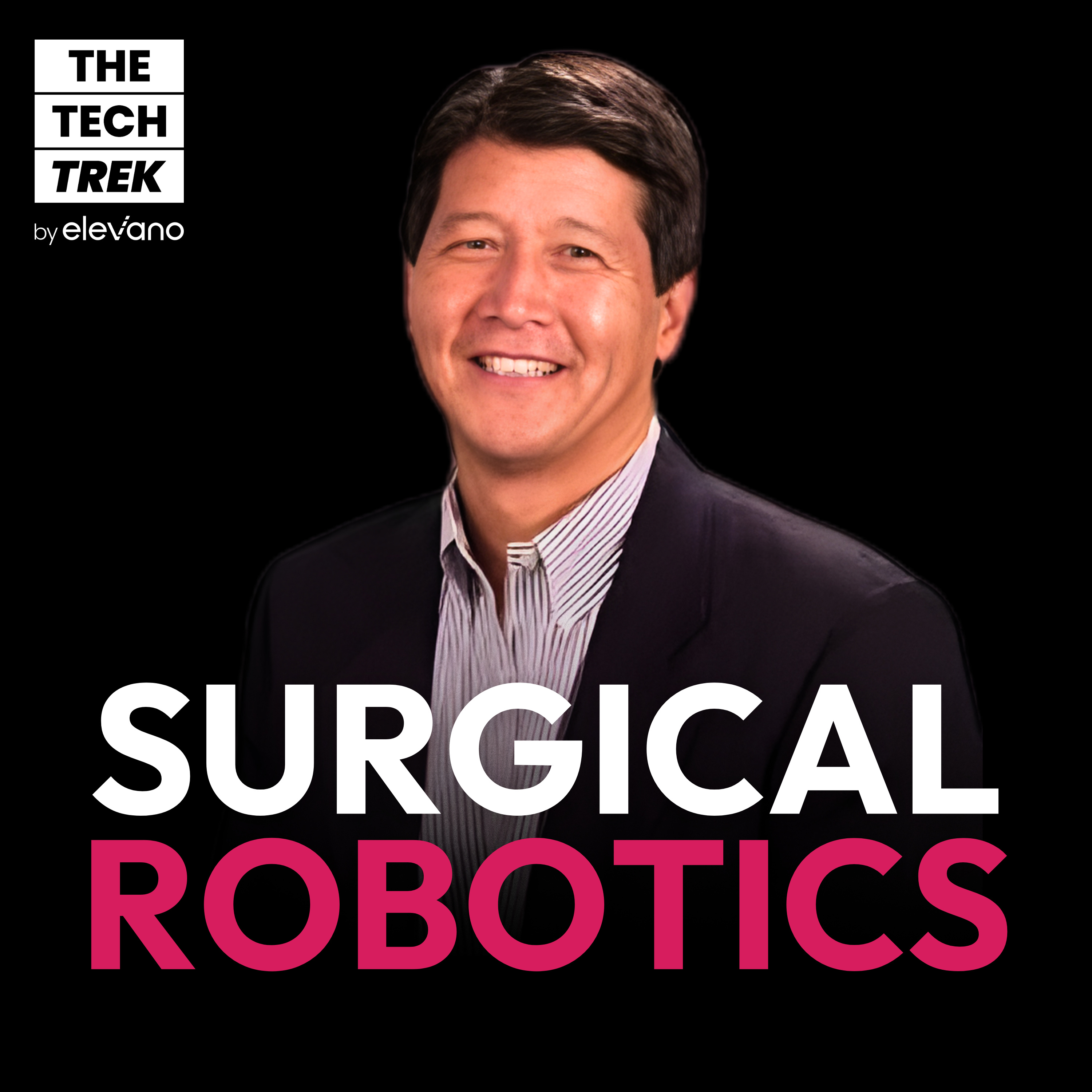
Remote Surgical Robotics Is Coming Faster Than You Think
About this episode
Yulun Wang, executive chairman and co founder at Sovato Health, joins Amir Bormand to unpack the next wave after telemedicine, procedural care at a distance. If you have ever wondered what it would take for a top surgeon to operate without being in the same room, this conversation gets practical fast, from the real bottlenecks inside operating rooms to the health system changes required to make remote robotics mainstream.
Key takeaways
• Better care can actually cost less when the right expertise reaches the right patient at the right time
• Telemedicine is already normalized, which sets the stage for faster adoption of remote procedures once infrastructure and workflows catch up
• Surgical robots already have two sides, the surgeon console and the patient side, today connected by a short cable, the leap is making that connection work reliably across hundreds or thousands of miles
• Volume drives proficiency, the outcomes gap between high volume specialists and low volume settings is one of the biggest reasons access matters
• Operating rooms spend more than half their time on steps around surgery, which creates room to dramatically increase surgeon throughput when workflows are redesigned
Timestamped highlights
• 00:42 What Sovato Health is building, bringing procedural expertise to patients without requiring travel
• 02:10 The early days of surgical robotics and the transatlantic gallbladder surgery on September 7, 2001
• 05:30 The counterintuitive idea, higher quality care can reduce total cost in healthcare
• 10:27 What actually changes for patients, local hospitals stay the destination, expertise becomes the thing that travels
• 14:57 Why repetition matters, the first question patients ask is still the right one
• 17:53 Inside the operating room schedule, where time is really spent and why productivity can jump
A line that sticks
“Healthcare is different, higher quality, if done right, costs less.”
Practical angles you can steal
• If you are building in regulated industries, adoption is rarely about the tech alone, it is about trust, workflows, and incentives
• If you sell into health systems, position the value around system level outcomes, access, quality, and margin improvement, not just novelty
• If you are designing new workflows, look for the hidden capacity, the biggest gains often sit outside the core task
Call to action
If you want more conversations like this at the intersection of tech, systems, and real world impact, follow The Tech Trek on Apple Podcasts and Spotify.
Get every episode summarized
Each time The Tech Trek publishes, we email you a written briefing from the transcript — the topics, who appeared, and any specific claims, with the ad reads skipped.
Email me new episodesFree for 3 shows. No card needed.
Hosts & guests
No transcript yet
This episode has not been transcribed. Request it and it moves to the front of the queue.
More episodes
More from The Tech Trek

How AI Is Changing Engineering Workflows and Software Teams
The Tech Trek

How AI Agents Are Changing Who Can Build Software
The Tech Trek

How to Build a Data Team Ready for AI
The Tech Trek

How AI Startups Can Challenge the Enterprise Services Model
The Tech Trek