About this episode
Get every episode summarized
Each time News at One publishes, we email you a written briefing from the transcript — the topics, who appeared, and any specific claims, with the ad reads skipped.
Email me new episodesFree for 3 shows. No card needed.
Hosts & guests
Transcript ready
53 searchable segments. Every word is indexed and playable.
Full transcript
News at One — Post- mortem into how Ireland handled the pandemic. Machine-transcribed; use the interactive transcript above to jump the player to any line.
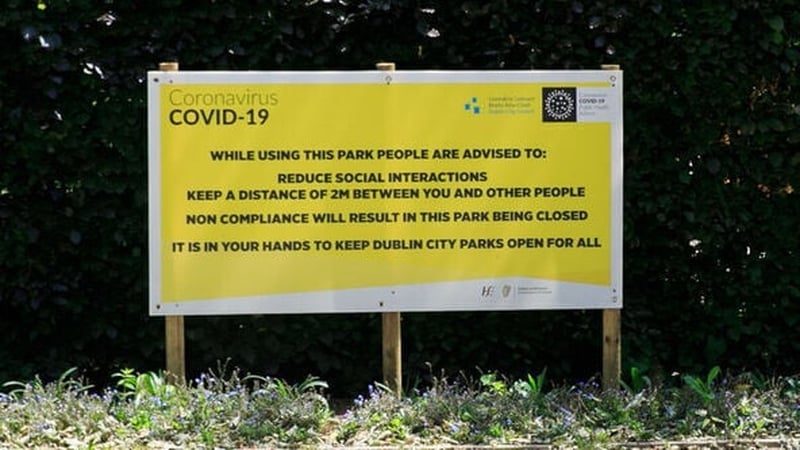
Six years ago, at this time, we were adjusting to the fact that we were in the grip of a pandemic and that COVID would be with us for some time to come. Today, the independent evaluation of Ireland's response to COVID has been holding a roundtable discussion with Irish and international experts. They've been focusing on the public health response and on the lessons for future emergencies. Our health correspondent, Fergel Bowers, was listening in. Fergel, will you give us the background to this session today because it's some time since this evaluation process was set up. Yes, this sentiment COVID-19 evaluation inquiry was set up by the government in late 2024 and it opened a public consultation in May last year and it got about 7,000 submissions. But today was the first live online broadcast of a roundtable debate of Irish and international experts on the public health response to the pandemic. We're going to hear a couple of excerpts from this
session. Now, one contributor stated that Nefert, while we all remember Nefert and we all remember those nightly meetings, that it wasn't a good model for a pandemic. Will you explain? Yes, so this is Anthony Stain's professor of health systems and School of Nursing at Dublin City University and he said Nefert really wasn't a good model for a pandemic. He said it would be good a dealing with, for example, a chemical spill but not something of disnature. Here you hear he's speaking at the at the today's meeting. The most disturbing thing right now was that from early on there was no one on it with serious epidemiological experience and in particular there was no one on it with infectious disease epidemiology experience. So people were on Nefert were receiving models which they didn't really understand and they were doing their best. I mean no one on Nefert that I know worked flat out with the pandemic. We got large parts of
our response to the right. We also got parts for response wrong and that was one of the reasons. Finally the question of what happens from the other pandemic? Are we ready? And the answer that is absolutely not. We are not ready. And we also heard from professor Steve Thomas, a professor of health policy at Trinity College Dublin. He said the health system wasn't prepared and in particular we didn't have enough beds. So I think the first point to make is we weren't ready, we were not prepared. And the two different aspects to that, our health system was stretched and actually haven't fully recovered from the austerity years. Our bed numbers were low. The third lowest in Europe in terms of proportion to population. Our bed occupancy was very high. 90% we had fewer community primary care and community staff in 2019 than we had in 2008. And we had
high numbers on waiting lists which meant that we didn't have much flexibility. I think then when it comes down to actual COVID and our preparedness for that, our ICU bed capacity was low PPE was in short supply. We hadn't really done scenario testing around the COVID pandemic. We went into a lockdown really to protect our health services from the kind of catastrophe that we were seeing in Italy and in China. Having said all that, having said that we weren't prepared, we moved quickly and we got a lot of things right. And this is where I actually contest with Professor Perry that we underperformed. I actually think we did perform well, even though we weren't very well prepared. What else did you hear at this morning, Fargl? I mean, how would you describe the overall tone of this session? It was a very interesting session, and especially obviously in public online. The start of the pandemic was characterized by confusion and blame we heard from Professor David Hayman. He's a member of this evaluation panel and also from the London School of Hygiene and
Tropical Medicine. And what he said was that at the start of the pandemic, there were lots of armchair experts who all of a sudden developed out of nowhere who were telling the rest of the world how they could deal with an infection which nobody really understood. And also there were a lot of bogus scientists who were promoting drugs that weren't effective. And also there were some political leaders, he said, who were saying they're trying to show that they were in charge rather than public health, very interesting point. You also have some reaction, I think, to what was said this morning. Yes, the Advocacy Group Care Champions, who particularly would represent families of loved ones who died in nursing homes or who were unable to see their loved ones who were dying in nursing homes during the pandemic because of restrictions. They said that today's proceedings have strengthened its demand for a full statutory inquiry. And they say the testimonies from the experts exposed fatal systemic gaps. And it says that without statutory powers, disevaluation can't compel the evidence or demand a whole truth.
Furgle, thank you, that was our health correspondent, Furgle Bowers.
More episodes
More from News at One

Roscommon defeated Galway in the Nestor Cup becoming Connacht Champions for the...
News at One
Medical Board at UHL said it needs emergency funding to deal with patient safety...
News at One

Humanitarian assistance to be provided to all affected by the fire at the Tycor...
News at One

Director of the National Ambulance Service on the impact of industrial action on...
News at One