About this episode
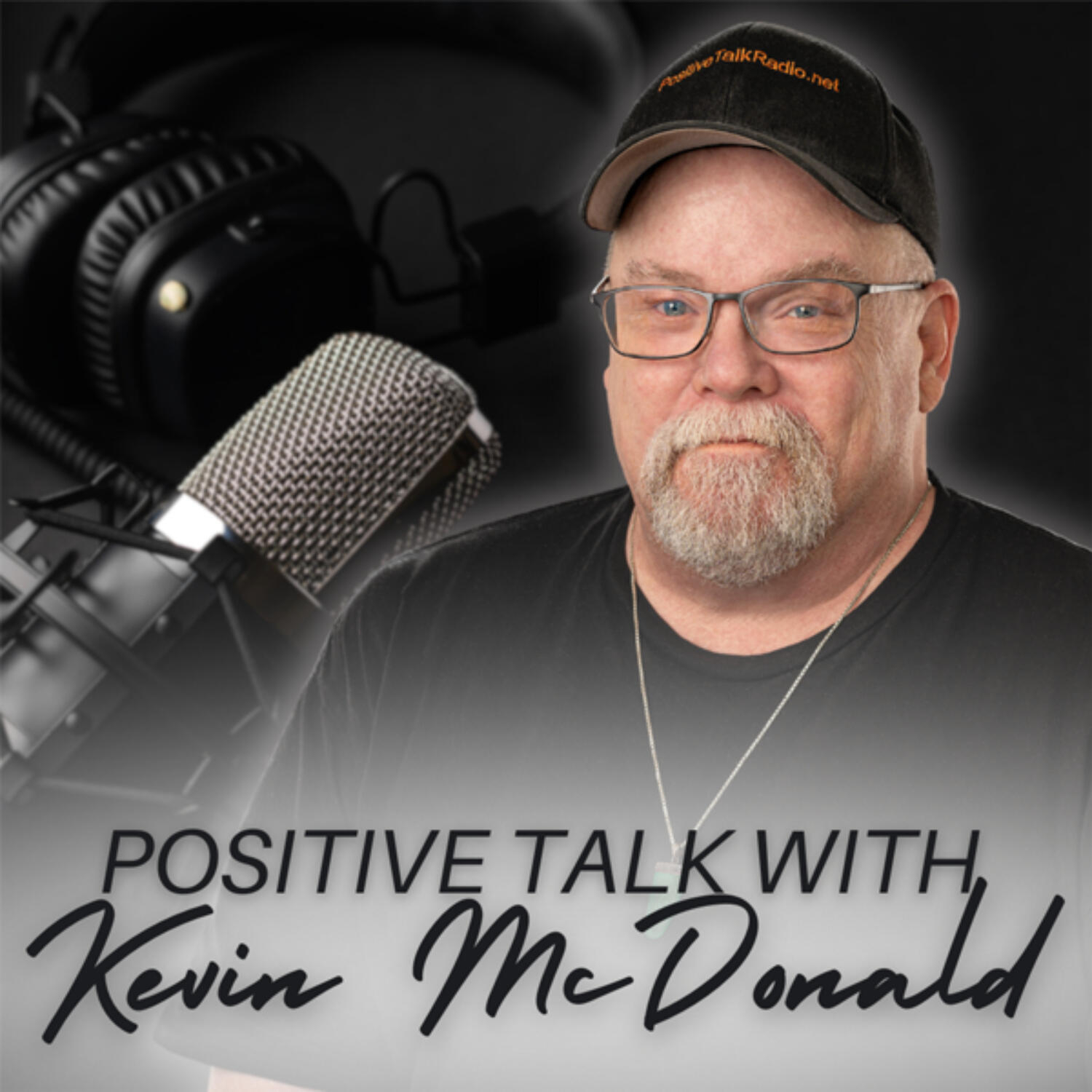
Positive Talk with Kevin McDonald and Nancy Parson
Get every episode summarized
Each time Brushwood Media Network publishes, we email you a written briefing from the transcript — the topics, who appeared, and any specific claims, with the ad reads skipped.
Email me new episodesFree for 3 shows. No card needed.
Transcript ready
599 searchable segments. Every word is indexed and playable.
Full transcript
Brushwood Media Network — Positive Talk with Kevin McDonald and Nancy Parson. Machine-transcribed; use the interactive transcript above to jump the player to any line.
There is a moment in every life when you decide to rise, to stand taller than your fear, to speak louder than your doubt, to chase the vision that sets your soul on fire. This is that moment and here. We walk it together with stories that awaken voices that inspire and truce that set you free. This is positive talk with Kevin MacDonald where hope has a voice, and that voice is yours. And welcome to the show, everybody. We've got a great show for you today because we're going to delve into modern times and the new way of doing things that that has been certainly is beyond me and Michelle's younger and she gets it better. So, Michelle, how are you? I'm doing good. Today I have very high energy and you know, as much as I should know about all the of data technology, I kind of don't. So, maybe we could both learn a thing or two and we have our
guest here who's going to teach us, Miss Nancy Parsons. She has a website if you want to go visit it called cdrassessmentgroup.com. So welcome Nancy, how are you and tell us about CDR? Yes, thank you. I'm delighted to be here. And CDR, we founded back in 1998, my business partner and I came leverage and she's an IO psychologist. And back in those days, we developed our assessments and we've used them globally with executives and leaders and with organizations and we measure, you know, character risks for development as well as intrinsic motivation for job fit and develop people in the right ways. And we also have a 360 tool. But anyway, so we've been around a long time. We certify internal and external coaches and we work directly with HR teams as well. So, a lot of fun. I love the work. Well, I got to tell you, one time way back in the distant past, I was working for the double
tree plaza hotel in Seattle. And they wanted to put me in a management. And so they decided to give me a test and aptitude test to see and I was amazed because it turned out to really be true. Now this goes way back even before computers. And so it was a written test and I took it and they came back and they said, well, you're in the top 50% of sales people. And I said, wow, that's probably accurate. But they also said, but on the management side, we've never had somebody get all the questions, all the best answers right before. And I said, well, I guess that means I guess good. They didn't think that was so funny. But so, but that's how they used to do aptitude and assessment tests years ago. And now it's evolved into really a state-of-the-art process, isn't it? Yeah. And actually, what we're doing is personality and motivation, not aptitude. Okay. So it's a little different. But this tells us one's inherent capabilities to succeed in
different types of jobs. So similar, similar goal is the test you took. And we still had people take it online, but now we have other technical services that we offer for feedback for clients, obviously, that's exciting. So this way, so here's the thing, our model for all these years, for most of the years, we would be coaching the top of the house, seeing your leaders see sweet, they're only going to pay for live coaching for maybe the top 10 or 15% of leaders, right? But interestingly, during all those 20-some years, those folks are in the last third or 25% of their career, right? Now they do have big impact on the business, but people need to coaching in the self-awareness earlier. So we've flipped the paradigm with our new digital avatar coaching system. So now everyone can get coaching. And it really makes sense because people derail or stall along the way or never reach their true potential because they don't know what it is, right? So, it's hard to get left or the right role if you really are kind of clueless as to what you're
capable of. So that's where we come in and say, this is your true potential. Now here's some risks you have to manage so you don't derail stall or get fired. And then also we help them align with what is it that they love? Where's their passion? What excites them, energizes them? Versus doing work that you find tedious, boring, and just awful, right? So that's what we do. And now, like I said, with technology, and you know, the funny thing is I can't even take credit for it. It was one of our customers asked us to develop this technology. It was the Chief Learning Officer at the US Army, Civilian University. They were using our assessments for coaching at the top of the house, senior leaders, and Leslie McDade Morrison said to me, Nancy, we need to be able to coach 10,000 employees below this level. Can you come up with some kind of avatar or digital thing? She had the strong Southern accent. It was really... So I said, sure, Leslie, let us get on that. And here you go. So we were kind of ahead at the times and launched our new product in 2020. So she had a
real Southern accent, I don't know what that is. She was so fun. She was really... She was a PhD, obviously, and we worked with her previously at the Pentagon. She was the Chief Learning Officer at the Pentagon. Then she moved to this Civilian University at the Army. Why do you think it is? The top 2% or top 10% of executives and stuff get coaching. But there isn't a lot of coaching or wasn't until you came along. There wasn't a lot of coaching for entry-level management so that they could build their sale or their careers from the very beginning. And doesn't that help productivity and make the business work better? Yeah, but it was budgets. There's not the budget to coach everyone. When you're coaching live with human beings, it's very costly, okay? And it's not time-efficient either. Plus, I'll still say today most organizations, even if they're doing coaching, many and most, are not using good assessment tools. So people are still largely not self-aware, making lots of
mistakes. For example, when we started CDR in 1998, the studies show that 50 to 75% of leaders were ineffective. Can you imagine starting a business and buying a piece of equipment you knew would only work 25 to 50% of the time? Let's go to today. Guess what the numbers are today? The same. They haven't moved. 50 to 75% of leaders are ineffective. So we haven't had the reach we'd like to have. We're still small. Even though we have some great clients that are global, we haven't grown. A long time probably, we didn't invest enough early on in marketing. Both of us were working moms, that sort of thing for many years. But I'm just saying the study. So what's happening is, and Deloitte put out a study saying, 46 billion dollars was invested in leadership development. Guess how much the increase in productivity was because of that investment? I read your website. It's too perstand. I mean, so there's like three problems. Companies are
making all these decisions around people and promotions and all these and they're getting them wrong. They're not moving the right people in the right direction. And then people themselves are not self-aware. So they don't really know what they should be developing in, where they should go. And sometimes a lot of the money spent on training and development just doesn't hit what they need. It's not personalized. And then thirdly, the reason I say the third reason is risk factors. These are ineffective coping strategies and effective behaviors are just run and wild. Everyone has them. But if you don't know what they are and they show up under stress pressure when you're tired, all this kind of thing. They're showing up all the time in business and they're not being addressed. People aren't developing and they're not being held accountable. So these bad behaviors, and there's three types of behaviors that are ineffective. We all know the toxic ones, right? The aggressive ones, that's ones we think about, the abrasive stuff. But detaching hiding can be just as harmful to the business. So if you shut down and don't communicate under stress and pressure of conflict, that can damage your bottom line just as much, right? And then thirdly, there's people who seek affection. They want to smooth everything over and make everybody happy. Well, that doesn't work either.
So anyway, so we want people to understand that so they can then develop ways to stop doing those things that interfere with effectiveness of their leadership, of their teams, and that kind of thing. You know, I got to tell you, every company I've ever worked with or for promotes people for all the wrong reasons. Exactly. I'm working on another book with all that. It's true. It's the person who looks the part, talks the part, goes the right school, checks the right box. This has the right golf score. You know, it's in the right club. Seems to have a financial track record. It's worthy. But you don't know how they got those results. It's all those things and more. I agree with you. Yeah. Well, I've worked in sales organizations where when they had an opening for like a district sales manager, they would say, well, who shall we promote? And they would always promote the best salesman. Well, sales and leadership are two completely different skills. Absolutely. You're correct. And so when they picked the sales guy, he assumed that everybody would be as good
as he, because he was a gifted salesman. But he didn't understand how a good leader takes the worst sales guy on his team and works to make him the best, because then the whole team will grow. So this is, this is really advantageous for a company that is looking at promoting the right guy or the right gal. And you know, it might even, it might be a woman who is more qualified than the guys and, but she's not part of the good old boy. It's a club. Correct. Actually, performance studies indicate that that women are better leaders when they're given the opportunity. So, you know, there's a bunch of groups in my, in my two books that I've cited, which do those performance studies. And women leaders tend to be better at leading teams and coaching people, and all the rest get more out of people. The problem, but the other problem is their risks hold them back so they're not promoted as often. They tend to be barriers, so they avoid conflict and
go inside their head and overanalyze. Meanwhile, the men candidates are aggressive. They're ego-tist upstages and rule-breakers. So they're, yeah, yeah, yeah, I got it, I got it, and all this. So they seem leader-like, albeit they're not effective in a lot of ways. So they get the promotions because they're noisy and they're aggressive. And nobody thinks if somebody's going quiet, they're not, you know, she's losing visibility, even though she is the better leader. Does that make sense? Oh, absolutely. And I've been in organizations where, because the guys had a wife at home taking care of the kids and stuff, that they could go out and drink with the boss and rub elbows with these guys and really develop their social skills with these leaders, but they, because they had support at home, where a woman may say, not got kids at home, I'm going to go home instead of stay out till one o'clock and drink my head off. And they had stuff. Well, you know, I used to do labor relations many years ago. And so my
predecessor used to do just that. Take all the union guys out to the bars and this and that. So when I came in, I took them out to the baseball game, but we went bowling. I wasn't taking them out. Well, they actually liked it. They liked it better. They actually said they really liked it better. It was more fun, more relaxing than going out and getting drunk with, you know, the company reps or whatever. You know, yeah, a lot of a lot of guys and they do it because they feel like they have to. But Michelle, what do you think? I think that's just great. And especially what you said, Nancy, because I bet they wake up the next day and they think themselves even more. Exactly. They're fully functioning and feel good. And yeah, a good game at that, a good day at the Triple I ball field. Yes. And it's still, it's still something entertaining, but it's healthy for you. And I think I'm thinking in the space of what it's like for people trying to find jobs
from the age of what 15 now, the higher you at 14, 15 years old, and then you go, go up to being 30 years old and you still are like, what am I doing? Why am I doing this? And having something provided like this, because I could tell you that I'm not the only one, but I ran through jobs. This is me and Kevin Joe, because this is my longest job I've been with him for almost two years. And I never had one single other job for even one, because of some reason where I was disrespected, or I can see that this is creating negative space in my personal life or whatever it was. And I would always walk away from it. But then I thought to myself, I found this because I was prepared and said, yes, and sometimes it's not just that simple either, because I had already figured out I kind of knew the path I wanted to take. But how helpful it is for somebody that's that can be in a space that's right for them, because when they're not in that space, right? It's not just affecting where they're at, but it's affecting their personality, it's affecting their home life. You know, the mentality part of it is unhealthy for that person.
So do you kind of work on focusing on that as well? Yes. And the other thing we've done, like over the years, I've coached a lot of college kids to find their way. As early as possible, like parents would put them through, now they can take the true talent coach. But before that, you know, I had one, and I talked to, and he had a STEM profile. Of course, he was getting a business degree at a state university. So why are you going for business? Because well, I'm good at business. You know, I've had some jobs and I'm good. I'm good at sales. I said, well, you've got a STEM profile. You could be an engineer or something like that. And we talked about it, and I said, now look, and I explained him what an engineer does. It's really problem-solving analytical skills. I said, and if you go as an undergrad into that, go into that major, you can always get your MBA or some other advanced, you know, degree afterwards. But you are not going to go back for an engineer or a technical degree, typically, right? So he changed majors. And oh, and the other thing I said to him, because he got money, he understood money. And I said, look, you can come out making about, you know, 40, 50,000 maybe, and this was a couple of years back,
or you can come out making six digits. Why don't you make that business case? What works for you? So he changed his major. Yeah. And he's doing great work. And that's happened so many times. What I have found when I look at these college kids and work with them, they always undersell themselves. They have no idea what they're capable of, or they might be heading in the wrong, you know, even parents and teachers, all well-meaning counselors, they don't really know the inherent capability, the way we can look at it. So we really help them find to a nuanced level where they're going to shine, where their potential is. And then, you know, and then eventually we do the risks. If they're really young, we don't do the risks, so they're like in the workplace, I prefer to do that. But and when we come back from this break Nancy, I have to ask you based off of that, how people respond to learning that maybe what they thought they wanted to do their whole life is completely different. And if you see more of fear kicking or if you see more of motivation. So I'll let you
have an take us to break up. I'll let you talk about that. And and Nancy, I've got a little piece I'm going to play here. I love your opinion on it. It's about leadership. Here are some points to ponder from positive talk radio. You know, some say leadership is about getting the work done, about pushing forward, no matter the cost, or what's the cost of the team with no purpose. What if a single act of support, a single moment of genuine grit could change everything? What if leadership was a catalyst because true leadership isn't about being in control. It's about empowering others to find their purpose. It's about leading with passion and igniting the fire and everyone creating a culture of teamwork and common purpose. A true leader finds this culture by enthusiastic purpose and team development making each team member feel empowered to create, improve and execute their tasks with genuine passion and a strong belief in the company's
mission and focus in other words, lead with purpose. And welcome back to positive talk. Michelle is right there. My name is Kevin and Nancy Parsons is with us and she's the head bottle washer and CEO for like for a long time. And you know, first of all, Nancy, what do you think of that piece? I liked it. It's true. You know, it is about purpose of developing people, finding what they're good at helping them and being their coach and supporter. You know, it's all about respect, support and helping them, you know, perform their best. That's the role of a leader. I loved it. It was very good. I thought it was spot on. Thank you. And by the way, I was just thinking while you and Michelle were talking, I think that an assessment test to find your gifts would be great when kids are going into the university rather than coming out to the university with something that they may,
it may be their peers or their parents or somebody else has said, oh, you should do this because you can make a lot, but that's not their passion. And so they're not going to be as good at it. But they don't even know what they're going to eat. No, but their brains aren't even developed at 18, 19, 20. Yeah. And it's hard to know anyway, even if you are, you know, super smart and gifted, you don't always know what you're going to be best at. So that's where it is so important, like you say, like we can take high school seniors and that kind of thing and run them through to make sure they're heading into the right major or vocation. Maybe they go to a community college and, you know, become an electrician. I mean, there's all kinds of things. So that's what we, that's what we do. And we can find for organizations, we find hidden talent. So we find people to upskill and re-skill that are sitting in their own jobs, right? Like, I mean, it really is amazing. And to your earlier question, Michelle, about how do they respond if it's not, they thought they
wanted to do this. And now we're saying, oh, no, you're wet. You've got this, these gifts over here, you know, normally they get it. I mean, they get the light bulb going off and they get those aha moments. So I would say 98% of the time, they're right on it. I had one time that I can remember where a gal stayed and she had a STEM profile too, but she stayed in more of a financial track. She could have been full-stem with science and everything, but she decided to stay in finance and economics, which is still analytical. But that's the only one that didn't like kind of move to, to, you know, embrace it because she already felt comfortable where she was at. And they still fit to some degree, but it didn't tap into everything, but she could have then moved into technology or something too with finance. I mean, a lot of things you can do there. But honestly, people love, I'll tell you, they love their own data because it's all about them and it's an accurate snapshot. And it helps them look at themselves in a way they've never seen before, like all together. Does that make sense? One other case study, we did a lot of work for years with veterans returning
veterans. We were doing volunteer work, coaching veterans, training veterans. And what we learned in their data was 55% of them. And this was of 70 that we worked with had low what we call career focus. And when you have low career focus, that means you don't know what you want to be when you grow up, your career ambivalent. So that's really hard to find the right career or educational path. So so what we said is they went in the military because they didn't know what they wanted to do with their life. But guess what? They come out of the military. They don't know what they want to do with their life. Exactly. We help them. Here's your strengths. Here's what you're driven to do, what you love. Here's your passion. Well, can I tell you a story about that involving my son? Yes. Um, he went into the Air Force because he worked out a lot and he wanted to be a tough guy. And so he wanted to become a seer. What a seer is is special forces and they each pilots how to survive behind enemy lines. Well, in order to do that, he had to go through
the whole program and he just wasn't capable of doing that because they're very, very specific. So now he's in the military now he's in the Air Force. And so he had to pick a career that he maybe thought maybe didn't, but now so now he's going to do 20 and he's going to get out when he 42 or 43. And you're right. He's not going to have any idea what he wants to do with his life. Yeah. And it's hard because they're also transferring to civilian life, which is very different. And the reason we did this endeavor and we worked with five different veterans organization nonprofit at the time was we don't want veterans coming out who served us to waste their GI bill or go in a job that they're unhappy with. I mean, for us, it's really important. So to your son, too, he needs to go through and take the assessments and make sure he gets in the right track. Then if he goes and uses his GI bill or anything, he'll know he's in the right place. And he's not wasting his wasting money. I mean, look how much it costs to go to the university today.
Oh, yeah. Well, and the other thing that I think Nancy is really important for everybody. And first of all, thank you for working with the military because a lot of those guys come back and they're just lost. They have no idea. And if we can, if we can give them a sense of purpose, but a lot of times, like in my case, I enjoyed working in restaurants and in sales and all of that. But that wasn't my calling. This is my calling, but it took me until I was 42 to begin to figure out what that was. And then I started asking, why am I here and what am I here to do? And I'd wasted 20 years that I could have been doing this and developing my broadcasting career rather than doing what I was doing. But you know, also, I would say the broadcasting has been evolving, too. So, you know, sometimes when we're, it wasn't like it is today or five, 10 years ago, right? Even myself, you know, I started in HR. So I kind of worked my, but the one thing I loved about
my HR career though, I was learning every day and problem solving able to, you know, and that's what I loved the most. So I just felt like it was like better than any classroom you could get. Does that make sense? Oh, absolutely. And that's how with you, even in sales and all that, you're still gaining a lot of skills, right? Yes, I did. And a lot of them are helping me today do what I'm doing. But it would be great. Of course, now, Michelle's working with me. And so this is, I don't want her to take this. I've been in case somebody I want to stay where she is. Don't you know what I mean? Well, it doesn't make everyone up and leave. In fact, you know, a lot of people go, yeah, reaffirms. And then it helps them perform even better where they're at and making sure that they're doing some of those things that they really enjoy. The other thing that we do too, job descriptions should not be, you know, they should be able to be molded and changed. You shouldn't have likes because if you have a team of say 10 people and they're all doing
the same thing, there's going to be some people that are better at certain certain, you know, tasks than others. And you can do some switching because you want to tap into what people are good at and what they love, you know. So, so we can build more flexibility in how we design job descriptions for people because you want to maximize what people are good at and not what makes them like, if you made me do the accounting work for the business, I know somebody asked me to be an account of the financial officer for this coaching group I belong to. I said not unless you want me to poke my eye with a fork. No. I mean, I'll do membership, I'll do programs that I've done membership before, but I cannot. I said, you know, to be honest with you, I haven't even bounced my own checkbook in 30 years. I don't think you want me. It's just the point. Just squand. I mean, I took all this practice. I get it cognitively. I know how to do it, but discipline wise and interest wise is very difficult for me because I don't have that that type of attention on those sorts of things, you know, it's just tough. But I took
here if I had to, if that makes sense. Wait, a lot of us could do stuff if we had to, but we're not going to be happy about it. We're going to go. So I had to assert myself and say no, and I know I upset some people, but I'm like, they just assume because I've been running the business all this year, so that I would be a natural. I'm like, you have assumed wrong. Well, and Michelle, I know you have a question. Well, yes, kind of because I'm thinking about how important this is because I was one of those kids who, thank God, I had the motivation to try to find what was right for me, but everybody just crammed me down into the ground because they said, are you going to college? I said, no, I'm not going to college. I'm being entrepreneur. I'm going to get other jobs and I'm going to get experience and then I'm going to find and figure out what's right for me and I'm going to start my own business doing it. And it was like, it was such, I didn't get good feedback. It wasn't motivation. Like, you go girl, you've got it, you know, anything is possible except for my dad. He thinks anything is possible. But there was a point to where I started
to question myself and I was like, wait, am I doing the wrong thing by not following everybody else? And I've heard and talked to so many people who went through college systems or programs or spent money on something that, and then they said, you know, I hate that I had to go through all of that and waste all this time and money to learn that. And I love that you made something possible so that we can maybe cut some of those things out for people. Right. And it is good in other situations too. And I love that we shared that all good things come in the right timing too. So if we can get this out and it can touch just that one person and let them know, hey, wait, let's stop you in your tracks. Why do you live the way you do? And what are you doing? And because they did some psychology fact and it came down to 96% of people, that did this entire thing out of like 100,000 people, everything that they felt passion in doing was helping another person. And we don't see each other doing that. We're just
know, I got to focus on myself. I got to keep myself safe. And one thing you said Nancy is where they sat is where they were comfortable. And so a lot of times you have to go outside of your comfort zone. You have to learn new things. You have to be willing and you have to have somebody on your side to say, hey, you can do this. And it's possible even if you don't know yet. So thank you for creating this. And I'd like to hear of maybe a few stories when we come back. Things that you've experienced while doing this and things you've learned that have helped you along the way as well. And by the way, everybody, we're talking with Nancy and Nancy Parsons. And I got to tell you Nancy, you can tell just by how you are coming across that you are so passionate about this. And you've seen such great results happen. And you've been doing this for you. You know, I don't know a little while. Because yeah, you've been doing this longer than that one's been alive. Pretty much. I'll go back a few years. That's fine. We need to take a real quick break.
And when we come back, we want to go back in addition to Michelle's question into the midst of time to see where your passion came from and why you're so passionate about what you do. Which is great fun because that gives you the ability to do so much more because you love what you do on a daily basis. So again, we're talking with Nancy Parsons. And Michelle, her website is. Yes, visit her website, which is cdrassessmentgroup.com. And don't visit too long, because we'll be back to talk more. Okay, well, I hope you're right back. You're listening to Brushwood Media Network. The best and syndicated talk. News and entertainment shows. Are you looking for your daily dose of inspiration? They connected to all your favorite shows, music and news with a brushwood media network app from positive talk radio to greatest vibes unplugged and so many more uplifting voices around the
world. Everything you need is right in one place. It's easy to use too. Always available and designed to keep you inspired 24 hours a day. Go to brushwoodmedianetwork.com and download the app and you will always have brushwood media available on your smartphone. Download it now and make inspiration and music and conversation part of your every day. And welcome back to positive talk. My name is Kevin MacDonald. Michelle is right there and Nancy Parsons is right there. And Michelle, can you remind certainly me because I think I've forgotten what your question was. Yeah, just maybe share with us what started this whole thing and where your passion came from and some of the experiences you had that changed your trajectory of what was happening. Yeah, I mean, as I told you, I was in HR
and I worked first at a shift yard, which is no longer there. And then I worked at a coal mine in Wyoming and then moved to pipelines in Oklahoma. And what I found was I got tired of fighter firefighting and labor relations and all those things you have to do in HR as a general. And I really gravitated to leadership and talent development and developing employees from top to bottom. So it became passion, passion for me. And we even had a career enrichment program where everyone got at least a week of training a year no matter what your job was. So I implemented that kind of thing along with succession planning way back when before you were born. Okay. So then I started learning more about assessments, developed some 360s and other assessments and learn from one of the best that was mentored by a man named Bob Hogan, people in my industry know who he is. And then went on and with Kim leverage informed CDR because our goal, believe it or not, what drew us in was that number I gave you earlier. We wanted to revolutionize leadership. We wanted to turn that 50 to 75% effectiveness number around. That's
why we started CDR. So that's where my passion was. But also for Shell, I like you. I'm the first college graduate and the only in my family. It took me 10 years at night to get my bachelor's degree, while I was working these jobs at the shipyard and the coal mine. So it wasn't easy and I was a parent, you know, working parent and all that. So but again, I love the work and the way I look at it, whether you have a degree or don't or you have an associate, whatever it is, it's how you do the work and how you problem solve, how you face it. So when I'm talking to young, I am not one of these, it's like everybody has to go to college. In fact, in our business in all these years, like a lot of the college graduates, I wouldn't hire them if you paid me. They lack critical thinking skills and problem solving skills and the ability to really, you know, take good care of our customers, you know, we want our customers to have the best experience, you know, and so for us, you can call that picky or whatever. But it's almost, it's a little too rare these days and I'd love to see young people get in. I think when they find the right job path and they do something
they really love, they can be, it'll be easier for them to give more and to be more involved and say, wait, I see a problem over there. Can I, can I look at that and see if it needs fixing? You know, not always just waiting for people to give you stuff, right? To be. So that, that's kind of, that was my claim to fame, you know, was looking at stuff and saying, some's wrong about this. When I was really young, I saw that our pensions were being denied to people who should have had them according to the law. But it wasn't an intentional mistake, but it was a mistake on how we interpreted what was called a risk of investing, years of investing. You only have to work six months to be vested under this law. Well, we were making people be a year to get vesting. So we were not giving out pensions to a lot of people who should have had. So it was like here, I was like, I think 19 and had did the study to make them go back and pay all those people, which deserve the retirement that they never got it. But I was the one, like you found that mistake, you know? And nobody told me to do that. I mean, I obviously probably they wished I had no, no, they
were good about fixing it. They were, they were, they were wonderful about fixing it. They truly did not know. But you know what I'm saying? So go outside of what just the standard is sometimes. I mean, do your work, obviously, and then get that up a couple notches. And I think if young people would do that, they'll have a wonderful, much better career. And then find out, of course, what makes you tick, you know, definitely. You know, studies show that only 10 to 15% of people are self-aware. And they may be self-aware, but I'm sure they still don't even know what their risks are. So you're looking at the population who's walking around, I mean, when you don't know your risks, you're doing them. And you know, they're just, they're subconscious. They just happen, you know, we measure 11 risks. And so, you know, whether you're a warrior or perfectionist or a rule breaker or whatever you are, etc. These things are showing up and it can be hurting your business or your own career. So, yeah, we want people to know that too. So, yeah, go ahead, I'm sorry. Well, I was going to say, you know, Nancy, I agree with you that not everybody should go to college.
Trade school can be a wonderful career for somebody that loves to be a mechanic or something. As as a matter of fact, I tell people, I started in the restaurant business as a graveyard dishwasher at Denny's over time. I became a general manager of a three million dollar property, a couple of them. And I, I worked, and I had four or five hotel motel graduates, hoity-toity guys from Oregon State University and Washington State University. And they worked for me. I never worked for one because they didn't have, I did every job in the restaurant that there was to do. And so, they didn't have the fundamental understanding of the employees of what they do because they were coming from the college world, not from the world of hard knocks where you're a waitress or you're a cook and stuff like that. So, it's a, it's a, it's a big deal and to change that way. So,
I'm glad that you feel that way because yeah, because not everybody should be investing in a business degree and get a bachelor of business degree because they're, they're never going to use it at the time. Right. And can I tell you Nancy and Kevin a story real quick? It's making me think about this. So, there is a fast food chain restaurant that is around the corner from my house. It's the closest thing. And of course, it's Wendy's. Everybody loves Wendy's, right? It's got to be better than McDonald somehow. And I loved going there, but they got new management and they hired a whole new team. And they have people that are amazing. When you first pull up and you talk to somebody, the experience is awesome. But then not only me, but many people who live around me have had this experience where you get to the window and there's this young woman who they hired who is working a lot. You can tell she's very young and she's, she's beautiful. You can see that she's, she's got Gil and she's not fit for where she's supposed to be. She will put you in a bad mood the moment she
opens her mouth. I'm so serious. And then I think about, you know, because at first, I'm like, I'm going to go to the manager and I'm going to do this. And you know, she is like messing up the neighborhood of wanting to go to Wendy's because we just don't want to deal with her and hearing the thing she's saying she's on the phone while she's working saying crazy things about drinking the night before and, you know, has got long nails and hair that's not pulled up. But I thought how messed up of it is that somebody's allowing her to portray herself that way because she hasn't been taught any better. And our standards for so many places of where we're hiring people to work, especially young young people, the standards are so low and it's easy for anybody to get the job, but to be a good employee and to be a good person within themselves and the way that they're viewed is massive. And it makes their life harder. And I just think what where is the starting point in that? And it's exactly what you're saying with, with helping, helping teach leadership alongside
people who are where they need to be. Because if you have people teaching that are not supposed to be leaders, as we mentioned, it has a ripple effect. And I mean, I come home and I'm upset with my family because of the experience I just had just trying to get a junior bacon cheeseburger. And I thought, you know, it, rather than be angry, it's sad to me because that is, that's kind of become our normal and our reality and the way we just have to put up with things. Especially when we're in, I will say the airlines too, they're good at that. I want to give you one example too to your point. Over the years, too, with it called in on what's called interventions. When a leader is actually failing, we'll call us in to do the assessments. We'll do our assessments in a 360. And I'll go in for like a two day intensive coaching discussion in this. Every time I'm brought in to do that, the person was never fit to the job in the first place, told him this fit. You know, I had one at a university and it was an African-American gentleman at a predominantly white
college. And he was just horrible in this director role. And he would yell at people and everybody tippy-toed around him and everything else. He'd been in that job for seven years. And what they did was they isolated him. They tried to isolate him because they didn't know how to deal with him and they didn't want to, you know, talk to him like, like, your window down. So they just let him get out of control. And, you know, he was screaming at somebody because she took off for her mother's funeral. I mean, this guy was way out of control. But when we assessed him and I met with him, you know, nobody'd even talk to him in seven years. I was like the first person that actually really talked to him and we, whatever the results. On leadership energy, which is the first hurdle to be in a leadership role. And you need at least a mid-range, which is 35 or above to be considered. He scored under five percentile on leadership energy. And then he was, he was very, he had low confidence and he was always perspiring for God. He was so out of his element. Now he was a very brilliant guy. He had his PhD. So as soon as you have a PhD, they think you can do anything. Well, that's not the truth either. So what we ended up in that case was helped him. I helped him
figure out where this is where you're really good. What jobs here could we come up with or develop a new job that you would be good for? That's what we spent our time doing. So then we pitched to the university a new role for him where he'd be out of supervision and doing the work that he loved to do and that he was actually good at. So anyway, and that's sometimes more often than not. They're the people, the person leaves the organization when that happens. But it's eyes wide open. You know, they're being, if they do leave, they usually get a package when that happens. But the company's tolerate a lot of bad behaviors because there's something good about the, one time I was in with a TV broadcaster. She gave me a headache in two days. I'm telling you why. And and don't give me wrong. She was a lovely person. But I could see where if she's, if she's impacted me that way, how she impacted cohort. She just like covered and everything had to be her way. And anyway, same thing where we figured out a better path for her in that organization, because she was valuable. But she was sad. Because a lot of people, I've heard so many people,
so many even young ages now, they're like, well, I'm just going to get a job here. And if I stay with this company for five years, then I'll get here. And it's like, but you don't even want to be there in the first place. Why do you think the next five years? And they have no idea where here is. Yeah, they just, I like it. I said earlier for sure. Why be miserable? Why work at a place that you're unhappy? Yeah. Like if you're in a job and it's making you, it's impacting your family life, your personal life, your stress, you're not sleeping. I mean, and when somebody's in a bad job fit, what do you think shows up the most? If I'm in a job that I don't fit, what do you seeing more of for me? My attitude, all my, all my risk behaviors are shown up. So if I'm an upstage or you got this rule breaker synagogue, that's what you're seeing. You're not seeing my strengths because I'm operating in stressful. So yeah, snarky on this. Okay, I'm not really snarky, but I'm just saying. And Nancy, I can just picture that the manager or the franchisee at
that Wendy's going, you know, sales are down. This is why your sales going down. They should be going up because they haven't analyzed why the person who is in the front of the organization, right there at the drive-through is making people go, I don't want to come here anymore. Yeah. And I thought, you know, how can I, I can change that in a positive way, though, rather than going in and acting like some snob and being upset and letting my ego show, going in with concern because really, I want to help her be somewhere where she doesn't feel like she needs to act that way. And, and she can be who she actually is because I can see that she's young. It's just a front. She has really maybe no other option. And she doesn't know any better, but we've got to change. You don't have to assume all that, though. You don't have to take all that on as a customer, to be honest with you. As a customer, I think you do have the right to come in and just be frank, I'm concerned. She's treating us poorly. Other people in the neighborhood
are complaining. And I want you to know because I care about your business. Yeah. Of course, you don't have to climb it down inside between us, too. I do actually care because I am able to understand. And I think, you know, I recognize when I used to act that way because I didn't, I didn't know any better. I was so mean all the time. I'm just saying don't get yourself too caught up in her lane. But the feedback for the employer is very important. I believe that when we have a situation that's difficult and you've got somebody that's not a fit or really acting out, companies need to know. And they don't always know all of it because they're busy and they're caught up in other things. So anyway, I'm just saying, but you don't have to take her problems on. You know, that's why that's why customers or companies have got secret shoppers and folks who come in to judge how how the operation is running because that's the only way that sometimes that they can figure it out. And so by the way, we're talking with Nancy Parsons and Michelle, her website
again is. Yes, visit that website, which is cdrassessmentgroup.com. She's got all the information and all of the links to LinkedIn YouTube and a phone number, also an email to transform your talent strategy for the future. So go check that out. And when we come back, I want to ask Nancy, because this is always perplexing to me. Why does a company not invest in the training and leadership skills and making sure people in the right position because productivity will go up, turnover will go down, and they will find even though they're spending more money on the front end, I think they'll make more money in the bottom line in the long run. I'd love your opinion about that. Nancy, when we come back. And this is a book. We'll be right back in no 42 seconds. They gave her crowns, but never freedom. They gave her titles, but never peace. The girl of many crowns is the story of Judith of Francia, a woman born into power yet bound by
duty in an age ruled by kings and scarred by war. She found her strength not in her throne, but in her heart. This is a story of courage, love, and the fight to be free when the world told her she couldn't be. Step into her journey, feel her fire, and see how one woman's choices change the course of history. The girl of many crowns available now on Amazon books, Kindle, Amazon audio books, Barnes and Noble, Kobo, and Book Baby Bookshop. Order your copy today. And welcome back to Positive Talk. I'm having a really good time talking with Nancy because and I know Michelle is too. And she's, she doesn't like that girl. It's a drive through a window. But I want to ask you because, you know, it seems to me that if you have our running a company
and you invest in your people and get the right parts and the right people and the jobs that they love and can do well, your turnover is going to go down. Your productivity is going to go up. Your service level is going to go up. All of those are good things. Why don't more companies do this? Well, because historically there's two reasons I would say. Assessments and the type we do, the scientifically validated assessments have gotten a bad rap over the years, you know, because there were like tests that weren't very good or this and that. So, so that's been part of it. So people kind of stayed away and they don't and they tend to think that they're good decision makers about people and so forth. And then the other thing I'm going to, I'm going to say the HR organizations are really, they're not strong. They're not change agents. They tend to be what we call high prudence, high operations and administrative, but they're not problem solvers. So they're not getting in front of it. I have data on them. I've written a lot of articles about the HR, you know, senior leaders and staff and their barriers. So they, they, they do kind of what they're told,
if you will, or built implement and the other problem is when you consultants and even in academics, we're not selling the right solutions. These people are making bank and many large organizations are making bank. I give you a one quick story. For the Wall Street Journal years ago, I coached a guy, he wrote an article about backstabbing. So I sent him a, I sent him a note saying we measure this and more. So he said, well, let me take your assessments. So he did that, took two other companies' assessments. Both of those other companies told him he had leadership capability and skill. It just needed to be developed. And one is a large one that sponsors golf tournaments, let's just say, very big company, right? I won't give their name here, but you could read the article and see who it is. So they both tell me as leadership capability. And I tell him, when I coach him with his assessments, he has none. Don't even think about a leadership job. You're a great investigative journalist. You've got two masters, your smarts can be. And you know what he said to me? He goes, you know, I think you're right, because my dog won't even listen to me, you know. So point being, people, you've heard it before, anybody can be trained to lead. No,
you still have to have some inherent hardwiring, okay? Now, if you have some capacity, great, then we can help you. But if you score six percentile out of a hundred on leadership energy, do not be in a leadership role, period. So we're willing to be honest and frank, but I'm telling you, all these companies and consultants and the academics are making, making billions of dollars, selling stuff, repeat stuff, repurpose stuff that doesn't work. And that's the truth. So how, you know, when you're small, it's hard to compete with some of the big boys and girls, you know, that are putting out stuff that's just regurgitating things that don't work. So that's my pet peeve, if you will. And a good pet peeve it is too. And by the way, Nancy, you've also written a couple of books that I'd like to, I'd like to do it for people to have an opportunity to look at those and maybe pick one up. I know they're on your website. Are they at Amazon and everywhere else? Yeah, except for the one, we just put out a free ebook and it's called, everyone has personality
risks. What are yours? And it's a hundred and twenty page book free on our website. So if you go to that CDR assessment group.com, go to the books tab and you can download it for free. And it goes into all 11 risks. And also what I love about it, it gives you ideas on what to do if you have that risk. How can you manage it? How can you prevent it from hurting you? So that's, that's kind of a gift to your listeners and viewers there that they can download that free book. And then my other books, research based books are on women in leadership. And my, my last one was called, women are creating the glass ceiling and have the power to end it because they're worrying behaviors take them out of the running. So they're kind of doing it to themselves, but they can stop doing that once they realize that the way they cope is shutting down or going inside their head. So anyway. And then, you know, I've got another, another book up there too on Amazon. So, oh, and I think I'm and I also have a, my first children's book too, but that's all this subject. Yeah. What's the children's book about? Because you know, if we start with our kids and we can teach them good
things, they, you know, they might even remember it. Well, this one's not about the work. It's about a dog. One of my dogs. Oh, it's about, it's written in his voice. I wrote it from his point of view, his perspective, his adventures. So I put that out in May. I'd never done anything like that. So that was a lot of fun. Where I'm at right now, I don't have, I like to paint as one of my hobbies, one of my drivers, right? And so I can't paint where we're living temporarily at a place. So I, so I worked on the child's children's book. Congratulations on everything that you're doing. And, and I highly suggest that people go to your website, find out more about you. And if you are somebody who has the power, you need to assess your people to make sure that because they may be in a job that they don't like and they, and it becomes apparent to you, I've had more than
probably five or six people that have worked for me. And I've let them go. And three of them, I met like at a convenience store or something later on. And they said, you know, I got to tell you, thank you so much for doing that because I hated that job. But I couldn't let it go. And now I'm doing a job that I really like a whole lot better. Yeah. And I would say too, if anyone wants to try the true talent coach where they take the assessment and get the digital avatar feedback and career development plan, you know, get in touch with us. We're happy that we don't only sell to business as a work, we work with individuals to, that we would be happy to do that. Individuals would be, it's because everybody has got their own set of gifts. And if you don't, but, but Michelle keeps telling me the kids today don't really know what gifts they have because they don't have a lot of the, the stuff that we used to have like drama departments are really not there anymore. Music
departments aren't there. Well, the things that have become available are almost so overflowed. Like, I remember in high school, I wanted to go into beauty and my mom's like, oh, no, you're not going to make my any money doing that. Look what the beauty industry is now. If I wanted to go into that, it would almost be overflowed. And a lot of the teenagers I'm around, it's almost like they have no interest in, in much of anything. And so we need to spark those interests. We need to find what they are. You're exactly right. It's a measure 10, 10 different. Yeah. Well, you've got to give them experience. Or they're not really ever going to know, right? And if you're listening to this also right now and you follow along with us, she's not lying about the free book. I just went on her website, which is cdrassessmentgroup.com. And I downloaded the book myself. It is just that simple and that easy. And thank you Nancy for coming up with this and making it possible, which is a whole other thing. I would love to tell more people about this
in schools and other places where it is so much in need. But as we run out of time, I would love to give you a moment, Kevin, if you don't have anything more to say, to give Nancy just tell me. I just wanted to give you the moment to have the floor to share anything to cover up what we've talked about for somebody that's going to hear your message. To me, thank you for this. I enjoyed the discussion today. We want to help people find their true talent, be self-aware, so that they're not wasting time in the wrong careers or spending their tuition on something that's really not going to serve them very well. So we're here to help people really shine to reach their potential and not go into dead-end jobs or jobs that make them unhappy. So we're here to help and I'm so happy we have the technology now that the price point is something anyone can afford. It's not something way out there like executive coaching. So we'd love to hear from your listeners and people who are viewing this
because we're here to help. That's our job. You know, Nancy, one thing that we haven't talked about that we should is that with student loans, there are lots and lots of kids that have gone through school thinking they're going to do one thing. They spend $100,000 in a student loan that they may never, ever, ever be able to pay it back. And they're now $100,000 in debt and they're not even doing what they went to school for. Right. No, it was three months going and then that's usually what I've seen for people that are my age who went high school or college after me who didn't have a dedicated path. They went for about a month up to three and never went back and still have the debt and they almost kind of just forced themselves to forget about it because they know they cannot pay it. They're horrible. Yeah. No, we definitely can help people find the right path. Like I said, we find hidden talent and we have companies that send people for redeployment training. It's only 10 or 12 weeks
in this new field and they come out and they're an IT professional or they're this and that. And they started as a secretary and we find them and pluck them out of that. I have a story of a woman we did that with. So there's no reason to suffer and there's no reason to spend all that money or take on all that debt unless you know for sure. And I, you know, I know you don't want prices at all, but I can guarantee you if anybody's thinking about taking on these big loans, this is such a small expense compared to what you're getting yourself into. You really need to know what you're good at or your potentialize. Well, and I have a friend who's got a son who went to Arizona State University not because of any particular program, but he heard that it was a great party school. Oh, you got that. Well, we also measure amusement and hedonism. What's your name? Hi, good. After after spending 25 grand on his education and then the kid got thrown out of school, it would have been a lot better for him if he had that assessment done. I could pay it out right now. Correct. You are. Yeah. You are wonderful Nancy and her, uh, her, uh,
Michelle, her website again is. Yes, visit her website. Get the free book and all the information at cdrassessmentgroup.com and thank you again, Nancy. It has been such a pleasure talking with you. Thank you. I've enjoyed it. Thank you very much. You are awesome. Thank you for being part of positive talk with Kevin McDonald, where stories inspire and voices remind us of what truly matters. May today's conversation give you hope, courage and a reason to keep moving forward and just remember. Till next time, be kind to one another because each other is all we've got.
More episodes
More from Brushwood Media Network

Awaken Hope PM Edition with Ben Lemans talking about his book Between the Tines
Brushwood Media Network

Awaken Hope with Patrick Sangimino on Patrick Sangimino
Brushwood Media Network

Never Hand Over the Blank Page | Your Biz Needs a Book with Chris Fenning #2
Brushwood Media Network

Stacy Lee - Storyteller of Resilience and Strength of Family
Brushwood Media Network