"One Step Forward, Two Steps Back": Frustration Mounts in Oil & Gold Volatility
About this episode
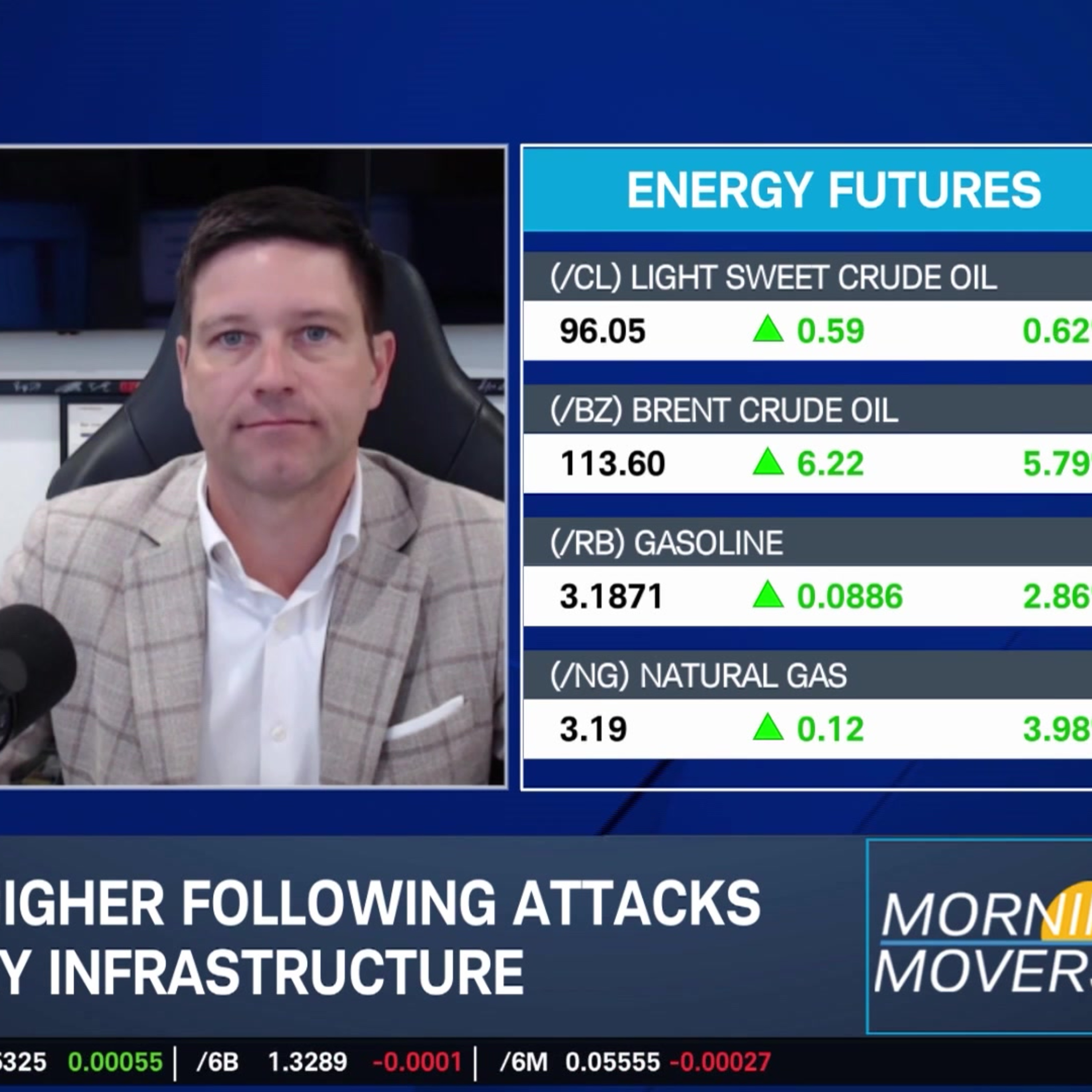
Uncertainty builds surrounding the future of the U.S.-Iran War and crude oil prices, says Phil Streible. Until there's clarity on a timeline to the end of the conflict, he says crude oil will dominate the commodity trade, fuel price spikes at the gas pump, and limit upside in equities. Phil explains how crude oil volatility expands into the Fed's interest rate cutting cycle, or lack thereof if the conflict continues. He later turns to the gold trade as prices for the yellow metal plunge ahead of Thursday's session.
======== Schwab Network ========
Empowering every investor and trader, every market day.
Subscribe to the Market Minute newsletter - https://schwabnetwork.com/subscribe
Download the iOS app - https://apps.apple.com/us/app/schwab-network/id1460719185
Download the Amazon Fire Tv App - https://www.amazon.com/TD-Ameritrade-Network/dp/B07KRD76C7
Watch on Sling - https://watch.sling.com/1/asset/191928615bd8d47686f94682aefaa007/watch
Watch on Vizio - https://www.vizio.com/en/watchfreeplus-explore
Watch on DistroTV - https://www.distro.tv/live/schwab-network/
Follow us on X – / schwabnetwork
Follow us on Facebook – / schwabnetwork
Follow us on LinkedIn - / schwab-network
About Schwab Network - https://schwabnetwork.com/about
Get every episode summarized
Each time Schwab Network publishes, we email you a written briefing from the transcript — the topics, who appeared, and any specific claims, with the ad reads skipped.
Email me new episodesFree for 3 shows. No card needed.
Transcript ready
156 searchable segments. Every word is indexed and playable.
Full transcript
Schwab Network — "One Step Forward, Two Steps Back": Frustration Mounts in Oil & Gold Volatility. Machine-transcribed; use the interactive transcript above to jump the player to any line.
Joining me now to dive into the latest in the world of commodities. We want to welcome in our next guest, that's Phil Strebel, chief market strategist at Blue Line in the futures. Phil, it is great to have you back with us. Haven't talked to you in a while, but I've wanted to hear your insight and perspective on the gyrations that we're seeing in oil markets. We've got oil higher once again today. Brent higher off the highs that we saw earlier when it was around $119 a barrel. We've got West Texas Intermediate also higher today after the strikes on critical infrastructure in the Middle East. Take us through what you're watching here at these elevated levels, Phil. It's really that the US oil is hanging in right at this 95 mark right between $95 and $100. It's Brent crude, where all the volatility is at. It seems over in the Middle East to really scramble and get their supplies locked down as well as get any supplies back online. It's like one step forward, two steps back. We were here in no progress really on the straights of our moves. I discussed how it came down as single digits as far as
ship traffic coming through when we're normally seeing 150. It'll ultimately be the rate of change on ships passing through that. If one day it's only two, next day it's five, then 10, then 50. Then you'll start to see that work with an inverse correlation to the energy markets. Things will start to come down. Futures can get some kind of relief rally as far as risk gas. It's our concern. But really, the drive higher in oil and securing energy, infrastructure, and products is what is derailing many of these other commodities out there. And so with crude oil not sitting at triple digits for West Texas intermediate, this divergence between WTI and Brent crude, does that mean that the US is more protected when you think about supplies? Oh, yeah. I think so. But the reality is, is that every $1 move in WTI is going to cost Diane to an half more sense at the pump when she fills up. So when you see it go from 67 on up to 90, Diane's not a happy camper over there, so that's
the problem. And then it becomes what happens is it becomes a tax on everybody out there. And then it becomes, you start looking at the trickle effect like groceries, like agricultural prices, all ticking higher, many of the other commodities out there pushing higher. And it just people really tighten things up. And that's where you start to see the growth concerns come into place. You see that sticky inflation. It reaffirms what Jerome Powell is saying. And then the economy, we start to see all these different growth-related commodities start to come down like copper and silver and et cetera like that. No, you're absolutely right. I do not like those higher gas prices. And then that's when households start making decisions about how much and setting a certain amount that they're going to fill up instead of just fill it up when they request the gas fill up at the station or fill it up themselves. Let's talk about, you mentioned two ships passing through, for instance. So for the Strait of Hormuz, it's effectively closed. The normal amount of ships that navigate that key straight is much more than that, right?
Though how many usually are traveling through the Strait of Hormuz? It's 150. It's about 20% of the oil, the global energy needs. So that really coming off, you know, you're going to see a lot of countries go forward and start to make other deals like we saw Iraq with Turkey where they were shifting some of that energy through. The problem is it's this is retaliatory mentality that we're seeing out of Iran where they're attacking specific energy infrastructures with one of the largest LNG regions being produced here or being attacked overnight, and that's what caused another price shock to the upside. So you get Federal Reserve, you get bankers not looking at cutting rates anymore, they're tightening things up, and then you get this rising energy prices, and there's just no telling how long this conflict's going to last. That's where you get a lot of liquidation and a lot of sell off going on right now. I got to imagine you weren't surprised by the Fed's decision on rates given where things down with the war with Iran. Now, I mean, you can't, there's just no way they can cut a rate.
So the only way, so two things will happen, if you start to see oil prices come down, you see Brent, you see WTI crude oil prices come down, then what'll happen is is that we must be making some kind of progress, and then you'll start to see the inflation expectations, they'll start to really come down as well. Interest rate cuts will start to slide back in, the dollar will come off 10-year treasure yields will come off, you know, gold and other commodities will start to rise again from the growth standpoint. But the other factor that could play out is if this higher for longer shock takes in a way, and you start to see equities really hemorrhage, that's where you get the concerns about supporting the economy and you start to see recessionary type of percentages start to be priced back in, and that could also lead to some interest rate cut, the expectations coming back where we get greater than two cuts because of global growth concerns. And you know, those are really the two driving factors right now, but it's quite disappointing to see many of these commodities additionally selling off that have been doing well previously. One of the things that Fed Chair did not say this time around was like using that analogy
of driving in a fog, right? But you know, it's unclear exactly how long this conflict will last. If the inflation risk is going to be higher for longer there, we didn't hear the word transitory that I recall throughout as much of the conferences or the presser. And you think about, but one thing he did say is he didn't like the commentary around stackflation and the worries about stackflation risk. What's your thought on that, Phil? He takes growth like so seriously, so he takes like a personal attack and I mean, it's kind of like, he's also very frustrated because it's like, and I told you just so type of thing. I mean, you can't cut rates with, with energy prices that high and inflation this high, it's just, it's just, you just can't do it. You're going to fuel more inflation and that's the problem. So really stuck between, you know, Iraq and a hard place as far as Powell's concern. You know, one of the things that a lot of people and a lot of questions I get with the gold market, it's down about $330 as it is, you know, as of this recording that we're
doing right now. But gold futures continue in a sell-off and its central banks are really concerned about this inflation securing energy needs. China has been a large buyer of gold and other, you know, different countries out there like India and they really got to look at this and go, hey, should we continue in a sack away gold or should we try to boost our strategic, you know, petroleum reserves and they're trying to walk down any supplies they can so you're going to see that they're going to be buying less gold in the future and more energy and energy infrastructure. I was wondering why gold wasn't behaving like a classic safe haven this time around. What would it take to reignite that? What do you see as a potential catalyst? It's got to be, it's turned into this growth story and it's just the extra money that people have on, they don't want to stick it back into their currencies and they don't want to stick it into bonds so they've been sticking in the gold. But the problem is is once you get these large participants that shift their focus to buying their defense needs and their energy and supporting their economy from a central
bank or standpoint, that's one big structural element that was supporting the gold market, supporting gold or silver, copper and things like that. So that's really come out of the equation right now. And then a lot of the clients and a lot of people out there, they've been holding things like GLD for a long period of time or gold futures for a long period of time and are watching their profits slip away so they're selling that off. One of the worst environments in this type of environment with higher energy costs is going to be the gold miners. So those are getting sold off as well and it's because of the fact that you look at a gold mine, what's its biggest cost? Besides labor, it's going to be fuel costs and with fuel costs like heating while running up like this. It's going to be problematic for those. You're just seeing that gold, gold miners, silver miners all being sold off at the same time. Phil, I was talking earlier with Jay Candley of two CREUM and he said one of the things is that yes, there's a hyper focus on energy markets right now but we can't ignore what's happening with regard to grains and fertilizer crisis given the trade flows through the
straight of Hormuz. What should we be paying attention to there Phil? The wheat market, the corn market, those are the key elements and the key drivers of, you know, the, at least the best performers in my opinion, sugar is another one that works off of that and all that's starting to break out to the upside. We saw cotton as an early riser and the last couple trading sessions, soybeans. The problem with soybeans is that, you know, it's too dependent on China, Chinese demand and we saw that just the discussion that Trump had to focus on the conflict right now, delay anything with, you know, with Xi Jinping, we saw a soybean prices go limit down and they are rebounding a bit but it's going to be tough for the farmer to get the planning all done and everything given the costs of energy and energy needs and everything else at the moment. All right, well, they have a meeting set with White House officials next week. Thank you Phil. That's Phil Strevel, Chief of Market Strategy at Blue Line Futures. We appreciate you joining us today Phil.
More episodes
More from Schwab Network

JNJ Balances Growth, Patent Transitions, and Legal Overhangs
Schwab Network

nCino (NCNO) CEO on Earnings, AI in Banking & Overcoming "SaaS-pocalypse"
Schwab Network

The Big 3: NET, TWLO, ASTS
Schwab Network

Tie Lasater on Inflation Floors, Energy Risk, and Private Credit Stress
Schwab Network