About this episode
What A Day is made possible by:
Here at What A Day, we’re keeping an eye on the midterms — which are likely to hinge on which party can tackle the skyrocketing cost of living. On today’s show, Jane speaks with The Atlantic’s Annie Lowrey about why it's so damn expensive and complicated to be low-income in America.
Show Notes:
- Check out Annie's book - The Time Tax
- Call Congress – 202-224-3121
- Subscribe to the What A Day Newsletter – https://tinyurl.com/y4y2e9jy
- What A Day – YouTube – https://www.youtube.com/@whatadaypodcast
- Follow us on Instagram – https://www.instagram.com/crookedmedia/
- For a transcript of this episode, please email [email protected]
Get every episode summarized
Each time What A Day publishes, we email you a written briefing from the transcript — the topics, who appeared, and any specific claims, with the ad reads skipped.
Email me new episodesFree for 3 shows. No card needed.
Hosts & guests
Transcript ready
451 searchable segments. Every word is indexed and playable.
Full transcript
What A Day — No One Can Escape The Time Tax. Machine-transcribed; use the interactive transcript above to jump the player to any line.
And we know that these big participatory programs that people like, like Social Security, Medicare, they can increase voting rates, they increase people's sense of how the government is working right. But these really burdensome programs, they sour people on the government and there's actually new research showing that even if you don't have to comply with this, even if you're not a Medicaid user, welfare user, beneficiary of those initiatives, it actually unmask, reduces political trust. It's Thursday, September 3rd, I'm Jane Kostin and this is what today. The midterms are likely to hinge on which party can tackle the skyrocketing cost of living. Today, I'm speaking with the Atlantic's Annie Lowry about why it is so damn expensive and complicated to be poor in America. Annie Lowry, welcome to what a day. Thank you for having me. So let's start off the top.
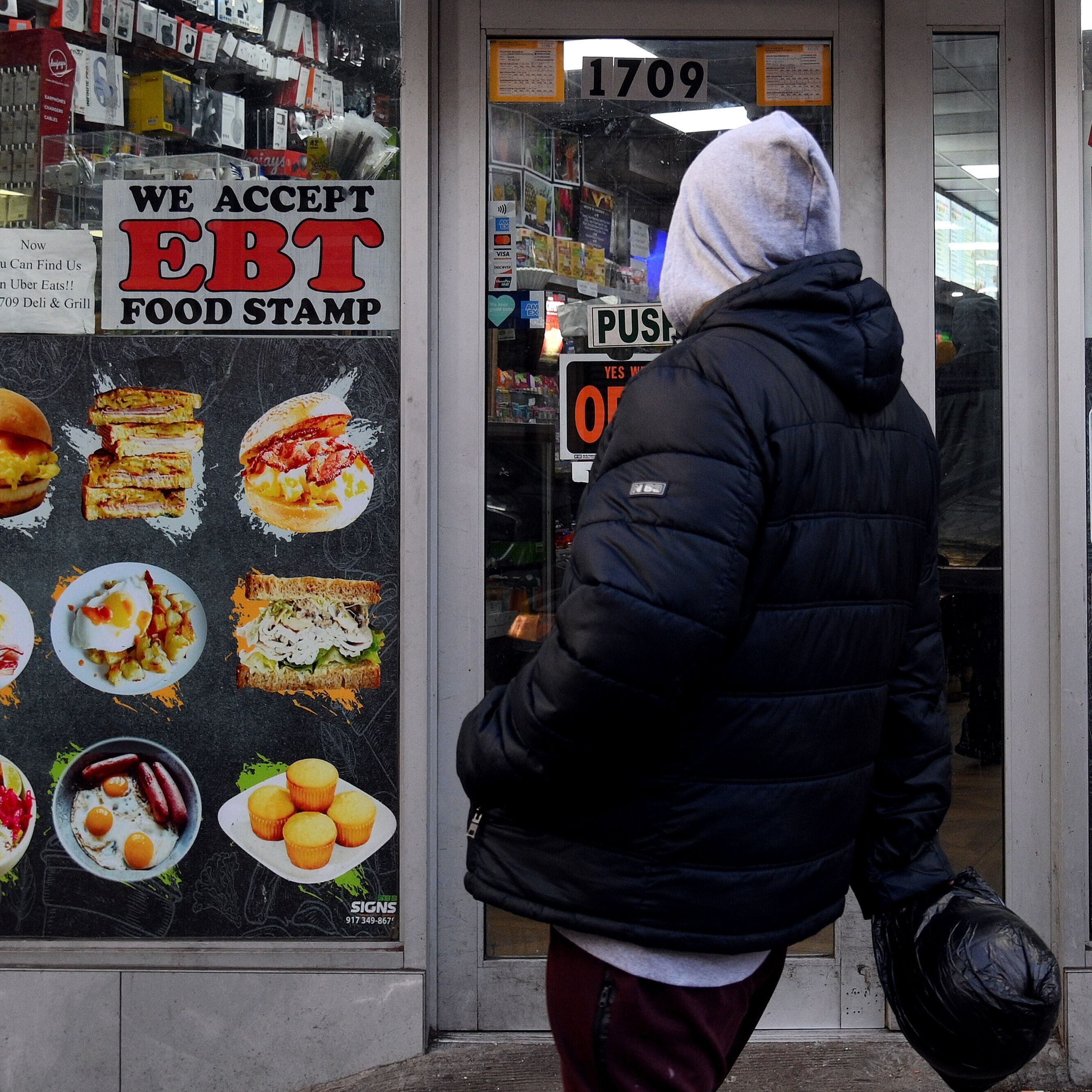
What is the time tax? So the time tax is the experience of bureaucracy on the person being bureaucratized. So we think about like bureaucracies as being like businesses, right? And instead we're thinking about the consumer, the consumer experience. And it can be the amount of time you spend on something, the effort, you know, sometimes it's monetary, right? We need you to pay a fee or something. And it's also the emotional psychological experience of it. And my book is really focusing on this vis-a-vis the government. So what is the citizen experience of government? Yeah, I mean, I'm in the midst of a long-running conflict because my internet doesn't work and the entity that controls my internet doesn't seem to want to help me. So I totally know what you're talking about with the time tax as I sit on a phone with an AI agent that keeps saying, I can help you. You don't need a person. I'm like, no, I don't think so. But you're talking about the government. And I think that you talk a lot in the book about poor Americans. You go to Utah and a host of other places to talk to folks and what they've endured.
But for Americans of all stripes, the time tax impacts all of us. Can you talk a little bit about what it does to gesture every day, average middle-class citizen? Absolutely. Because I think service delivery is terrible for everybody. So lower income people tend to have to interact with the government more. But it's not like high-income Americans are getting the best of class service either, right? Like, we're all standing in line together at the DMV, despite giving the government $8 trillion a year. Service delivery is bad. So for higher-income Americans, it might be, right, like, why do you have to do your own taxes? In our peer countries, mostly people don't have to do anything, or the government will send them some pre-fill forms, and so you just have to check it and send it back or sign it or whatever it is. It's generally like a couple minutes that your average person will spend. So here, a high-income person might have to pay an accountant to do their taxes for them, but that's still a tax. And so in terms of, yeah, actual services, right? We all have to stand in line to vote.
You're not getting out of that. And so the book does focus on lower-income Americans, people who have immigrated here, also people with any interaction with the criminal justice system, tends to be lower Americans too. But I really do think it's a universal thing. Yeah, and I wanted to focus on lower-income Americans, and I want to quote from an excerpt from your book that was in the Atlantic, talking about a woman who is just trying to get assistance to get back on her feet. She talks about how the state was asking her for data on, quote, a nearly weekly basis, and requiring her to re-enroll in each program every month or two. She did not own a computer and struggled to use the government website on her cell phone, meaning she would have to go to the library, attend a circles meeting which you explain, and the book is about helping people basically go through this process or call someone for help. It takes me hours, she said, sometimes if I submit an application to one program, it messes up the whole entire other set. Then I have to go back and fix all of it.
This is someone who is really in need of assistance from the government. She's doing everything right to try to get back on her feet, try to get support. It seems like the government doesn't want her to be able to do any of this. Why? No, it's absurd, right? This is a low-income mom. A lot of the state's interest in this person, Marcella, is in her kids. We don't want her kids to be hungry. We want her kids to be able to get to school, right? What had happened was that she had screwed something up on her taxes. She claims that the salon that she was working at, like nine years ago, eight years ago, basically said that it had paid her more than she had actually received. That changed her eligibility. She gets labeled internally as a fraud risk, despite the fact that she has never, ever been tried for or actually charged with fraud, right? They've just labeled her as a risk. She maintains that the problem was with the salon, not with her, but she doesn't have the money to hire an accountant or a tax person to help her with this or a lawyer.
She's a manicurist with three kids. What was she supposed to do? She had to take out a loan to pay this restitution. Again, this was all over a couple hundred dollars. Marcella has never made more than $30,000 a year, so the sums are really small. Ever since then, despite the fact that there's never been another problem between her and the state with all of the information that they're giving them, they've said that she has to reapply for these programs constantly. They're harassing her. It's the way that I see it. I don't think she would describe it that way. Even the intervention of a Republican state official didn't stop this from happening. It just keeps on happening. She's been picked off one program or another more than 120 times. It's interesting because I feel like there are so many parents of this situation. I keep thinking about the time when I was living in Washington, DC. When I first moved to DC, I had very briefly lived in Maryland for a couple of months with family while I looked for work in DC and then moved to DC and I thought everything
was fine. About seven years later, I got a letter from the state of Maryland saying that I owed them taxes for living in Maryland this entire time, which I had not been living in Maryland. It took what a very kind woman who happened to be a tax attorney and happened to enjoy my work who responded to a message I put out on Twitter, like Twitter in the before times, who was like, I can help you. She did. She is an American hero. But genuinely, it took someone being like, I can help you with this process. This is just a mistake. If that wouldn't have happened, I would have needed to pay the state of Maryland thousands of dollars or fight the state of Maryland based on the belief that I lived somewhere I did not live. I'm a person whose employed has been employed this whole time. I cannot imagine how difficult this is for someone who's not. When you go into how you write in the introduction of your book, the country's libertarian politics and racial diversity have also continued to spur a lot of policy makers to create contingent
limited initiatives. So, we don't have universal healthcare, no universal child allowance, no universal retirement benefits, no mandatory voting with easy access polling sites. So yes, there's kind of general incompetence and the confusion of federalism, but you argue that it's our politics and our racial diversity that has created the situation. How so? Absolutely. I think this is just as an aside, I see you on your tax issue. I am currently, as I'm rolling this book out, I had a California driver's license and I lost it, but I live in New York now. And California will only send a replacement license to the address that is on your license, but I don't live there. And so I'm trying to get in touch with the family that lives in that house now or that apartment now, because if I can't turn in the physical license here in New York, I will need to get a learner's permit and go through like driving school and take the test, like the written amit and it's like going to take months, which means I can't drive a car, not that I don't have one in the city.
I can't drive a car, but I also can't rent a car. And I'm a little bit like, what am I going to do with that anyway? So I see you on it. And it's just absolutely constant. Again, the time tax, I'm so glad you wrote this book because it's something where it's like people think like, oh, this is just about poor people or just about people who are kind of having to deal with the system a lot. But I'm like, if you think about it for long enough, everybody has a story about like, you know, I tried to change my address and there was like a misspelling in the last name. And now I can't get any mail or something like that. Everybody has a story like that. But I do want to talk about like the politics and the diversity. Yeah. So our peer countries that send up set up these kind of bureaucratically elegant systems. And we don't. We have everything being contingent, right? And non-universal. There's like basically no benefit that I can think of in the United States that's actually universal. Social security comes close, but it's not. You have to pay in, right? A lot of people don't qualify for social security. Medicare?
Yeah. There's, you know, that's might be, might be close to the only one, I think. And I don't know if there's some exclusions. I think it's like 99% of seniors get it. But anyway, why don't why don't we do this, right? Like why do we make everything? So contingent and it's straightforwardly because of race, right? You can go back and there's a historian, Ira Katz Nelson really specializes in this period of time when we're setting these big programs up during the New Deal. Race is a gigantic issue because you still have Jim Crow in the South. We're not actually a participatory democracy until 1965, right? With like, you know, with all adults of all groups being able to vote. And so, you know, there's some technical reasons. There's also just the federalist reason, right? Like the federal government can't do things. It has to send them to the States. The States have these incentives to kind of keep people off of programs. But no, and you know, even when you're thinking about kind of the issue that I'm most worried about currently is we're applying starting next year work requirement, work reporting
requirement and Medicaid. We came up with work requirements. That was a Jim Crow policy. It was invented in 1944 in Louisiana in order to get women and kids harvesting crops during the harvest season. So they basically said, the state said, you can't get your cash welfare payment unless you go work. But also if you're working, you won't get cash welfare. They were just disenrolling thousands and thousands of people. So you know, it's not the only thing, but it is a major thing. And I think it's also why we have this kind of obsession with fraud and welfare queens, which leads to a lot of the bureaucratic burdens. But yeah, no, this is a catastrophe with a lot of fathers. And it's just that's one of them. We'll get back to my conversation with Annie Lowry in a moment. What a day is brought to you by ACORNs. A lot of people are worried about where their money is today. ACORNs is a financial one-o-sap that cares about where your money is going tomorrow. And with the ACORN's potential screen, you can find out what your money is capable of. ACORNs is a smart way to give your money a chance to grow.
It's super easy. You can sign up in a few minutes and start automatically investing your spare money, even if all you've got is spare change. And ACORNs can grow with you. Whether you're just starting out or thinking about settling down, buying a house, you've got a big goal. ACORNs can support that across every life stage. Sign up and join over 14 million people already investing in ACORNs. New customers get a $20 bonus investment just for signing up. It takes about two minutes and it could be the easiest $20 you'll ever earn. Head to acorns.com slash wad. That's acorns.com slash wad to claim your $20 bonus today. acorns.com slash wad, limited time offer, terms to conditions apply. See acorns.com slash terms for details. Pay non-client endorsement. Compensation provides incentive to positively promote acorns. Tier two compensation provided. Potential subject to various factors such as customers accounts, age and investment settings. Does not include acorns fees. Results do not predict or represent the performance of any acorns portfolio.
Investment results will vary, investing involves risk. Acorns advisors LLC and SEC registered investment advisor. View important disclosures at acorns.com slash wad. What today is brought to you by Casper. There are a few things in life you should never cheap out on. And the thing you spend eight to nine hours a night on is definitely one of them because your bed isn't just where you sleep. It's where every new day is created. Casper makes reliable high quality mattresses designed to deliver a consistent, comfortable sleep night after night. That's why out of 99 mattresses, consumer reports named Casper's The One mattress, their top all rated all foam mattress of 2026. Out of 99 mattresses, that's a big deal. mattresses are built to be durable and long lasting so you're not replacing your mattress every few years. Their products are designed to withstand the test of time. They maintain their support and comfort over the long haul. And there is no sponsor of this podcast whose product I use more than Casper. My mattress mixture, I'm always getting the quality sleep I need to win the day, even when the day involves a lot of talking about the news.
The day always ends well with Casper. Right now save up to 30% on mattresses and up to 35% on everything else when you go to Casper.com. One last time that C-A-S-P-E-R.com and save up to 30% on the mattress you deserve. Let's get back to my conversation with Annie Lowry. Yeah, I do want to mention, because you talk about this, the One Big Beautiful Bill Act, which has created that nationwide work requirement for Medicaid and expanded work requirements for SNAP. House Speaker Mike Johnson argued, quote, that the policies are, quote, not some onerous burdensome thing, but they seem real onerous and burdensome, but that seems like kind of part of the point. Oh, absolutely. And, you know, Republicans have been able to say that they aren't cutting the program. We're not cutting it. They're taking $1.2 trillion out of those two initiatives over 10 years. How could that not be a cut? And it's because people have to comply with the work requirement. And if they can't, either because they can't work or because they can't effectively report
what they're doing to the government on these horrible systems, right? Like the number of people who are going to get disenrolled, basically not because they aren't in compliance with the work requirement because they're working or they're volunteering or doing something, but merely because they can't tell the state they're doing it, because it's annoying because these systems are terrible because like, what if it's down? What if you don't have a computer? What if you don't understand? And you know, these work reporting requirements are applying to people who have like medical conditions, right? Who, you know, are living in tents who are homeless. And so yeah, it's a really cruel way to do it. And I think it's a really low integrity way to do it because you're just making work for people. Either they're not going to be able to perform the work so they're not going to get insurance or the SNAP benefit that they need or you're just making that and busy work to their lives. And notably, particularly in Medicaid, they're not expected to increase employment. We know that work requirements in the Medicaid program, especially don't get people to work.
So I think that the best case argument you get for the aspect of the time tax that impacts poor Americans, that you get from conservatives, especially the hoops for people have to jump through. You mentioned one example, a old law in Michigan that required people to know not when their child was born, but when their child was conceived, which is like, as you make the point that OBGYNs don't ask you that, is that like, you know, they don't want people to be seeking government assistance. In the best case scenario, they want people to pull themselves up by their bootstraps. But as you write, that's not what happens when people lose access to these kinds of services. What does they just get poorer, right? You know that they get poorer, they probably get sicker in some cases. Their children have worse outcomes, right? And also, they come not to trust the government. This erodes social trust and it erodes trust in government.
And we know that these big participatory programs that people like, like Social Security and Medicare, they can increase voting rates, they increase people's sense of, you know, how the government is working, right? But these really burdensome programs, they sour people on the government. And there's actually new research showing that even if you don't have to comply with this, even if you're not a Medicaid user, welfare user, beneficiary of those initiatives, it actually, on mass, reduces, you know, political trust, people just don't like it, I think. And I think that this is something where, you know, 50 years ago, perhaps, or 30 years ago, perhaps, there was this feeling that, you know, you needed these burdens in the programs to get sort of mass support for them. But I don't think that's true because Americans' perception of why people are impoverished just changed a lot. It used to be very much a personal responsibility thing, but particularly among Democrats now, there's much more of a sense of, you know, race, institutional precarity, low wages, right? This is a systemic issue, not a personal issue.
So this is a giant problem. And I think we've both mentioned a couple of states that are, you know, you're dealing with California, a blue state. I deal with Maryland, a blue state while living in another blue city that should be a state DC. I live in California now. You were in Utah. So this is a bipartisan issue. Everybody has to pay the time tax and the time tax applies to pretty much everybody and it has many fathers. So getting rid of it seems like it's going to be very challenging, especially because I think when we look at other countries that have less of a time tax, you mentioned in the book. I believe Estonia, which has the lowest time tax, which is also a much smaller country. I'm thinking about countries where it is extraordinarily easy to vote or get a marriage license, even though as you mentioned in Estonia, you still have to get divorced in person. So they just changed that actually. Oh, fantastic. For Estonia. For Estonia. And 100% they can get divorced online. Fantastic. But I think that, you know, there's a lot of promises of bipartisan issue.
You know, we've had federalism. Also we're very, very large and very, very racially diverse country in comparison to a lot of countries where processes are much easier, but they're all much smaller. So with all of that known, how do you think we can start to get rid of the time tax? Look, I actually think the fact that this is kind of like a problem with a thousand knots that you can untie is in some ways I think actually means that, yeah, we can do this, right? There's a lot of problems to solve and we know how to do this. And there have been efforts that have really, really helped, you know, during the pandemic, for instance, we lengthened, reenrollment periods, we got rid of in-person mandatory interviews. And, you know, it really worked and it reduced the burden that we were putting on people. So yeah, I think that there's some really, really great ways to do this. And I don't think it'll be worth it. But I think that HR1, the one big, beautiful bill act, is going to be so catastrophic in so many communities that there might be an opening to do this.
I also think that the, you know, people were really excited about Doge, which Doge did not, you know, center of the citizen experience. It was completely ineffective if anything. I think it made the problem worse. But there was a lot of excitement about that, about making the government less bureaucratic and improving service delivery. You've even seen, you know, Mayor Mom Donnie in New York has his version of Doge. And it's, you know, it's really, I think that people are really into it. And so I see that there's like actually a lot of things that we could do. Let the IRS do people's taxes for them. You don't have to do that, right? If you still want to do your taxes by hand, yeah, go ahead, right? Just harmonize the income standards between programs and make it so that if you're getting snap and Medicaid, you know, that those two programs are talking to each other, it's fairly simple thing to do. Get rid of asset testing, which we still have in some programs and we know doesn't like actually. But asset testing is to make sure that somebody doesn't have low income, but actually has like some giant bank account hidden somewhere with tons of money.
And you end up making everybody who's applying to these programs comply with the asset test. And it's really hard to prove a negative and it's really annoying to do. And they kick people off for like, you know, having a small amount of money set away for their own funeral costs, for instance. You just get rid of asset testing. And so I see that there's like actually a lot of ways to do this. And I do think that Democrats have moved to this place of like, we should no longer have just a series of like really, really arcane, refundable tax credits for everything. Like maybe we can be the people who are like competent and make government simple and improve service delivery. Annie, I think my question here would be that we hear so much simultaneously about the onerous requirements and regulations our government asks of us. And then I think that, you know, I see all the time that there are people who, I mean, often it's extraordinarily wealthy people who are able to get away with massive fraud on the government. Is there a way to combat the kind of fraud in which people are basically stealing, stealing
from their fellow citizens like with, you know, COVID funds, for example, while also reducing the onerous requirements on middle income and poor people? Oh, absolutely. I think that if we had agile, modern administrative systems in place that would be cheaper for the government to run, there would be less fraud and fewer improper payments. So fraud and improper payments are kind of two distinct concepts, right? Fraud is intentional. It is almost, you know, the most, it is mostly, it is mostly perpetrated by businesses and individuals. So if you look at like the Medicaid and Medicare programs, the fraud is coming from like nursing homes or providers that are basically lying to the government about the services that they're giving to defraud the government, right? And then there's improper payments. So what share of payments are improper, either they're too high or they're too low, that's different. But both of these issues, we could bring down improper payments and eliminate fraud by actually having less rickety, crappy government systems and having more straightforward rules.
So bizarrely, I think everybody's incentives are really aligned here. And we can have a smaller government like less bureaucratic overhead. And we actually just had kind of like, you know, the sort of nice digital systems that other countries have. And I do think that you're right, right? Like we're not going to turn into Estonia. It is a tiny, tiny, tiny country, but you know, improving government contracting, like we can do that. We can do that. The bar, the bar is on the floor here, right? Like, nowhere to go, but up. Yeah, exactly. We do this in the stupidest way possible. And there's a lot of problems where we could really, and as you point out, yeah, stop people from stealing tax pay or money. It's terrible problem. Annie, thank you so much for joining me. Thank you for having me. That was my conversation with Annie Lowry, staff writer at The Atlantic. She's the author of the new book, The Time Tax, how the government wastes our time and how to fix it. Before we go, if the global news cycle feels like it's spinning out, Pod Save the World has expert analysis and knowledge to help you make sense of it.
They have a big picture understanding of how topics from this week intersect and how they relate to history. This week, Tommy and Ben break down the last six months of war in Iran, the Venezuelan oil deal, and the Paul floods. Plus they get into US-Canada relations in an interview with Premier of British Columbia, David E.B. Listen to Pod Save the World wherever you get your podcasts or watch on YouTube. That's all for today. If you like the show, make sure you subscribe. Leave a review. Contemplate how no one wants to go to Trump's midterm convention in Dallas next week. And if you're into reading, I'm not just about how according to Politicoke, dozens of Republican representatives are all somehow super busy and just can't make it to spend time with an increasingly unpopular president, like me, what a day is also a nightly newsletter. Check it out and subscribe at Crooked.com slash subscribe. I'm Jane Kostin and could it be that even members of Congress have to pay $25,000 to go? Maybe. But hey, maybe they all do have weddings. Family events. Warp stuff.
Or other big commitments. What a day is a production of Crooked Media. Our show is produced by Emily Fork, Erica Morrison, and Adrian Helm. Our team includes Hayley Jones, Greg Walters, Matt Burg, Adam Lipperk, Johanna Case, and Desmond Taylor. Our music is by Kyle Murdock and Jordan Cantor. We had helped today from the Associated Press. Our production staff is proudly unionized with the writer's skillet of America East.
More episodes