scienceAug 14, 202517:54pending
NISAR Launch: Unveiling Earth's Secrets Through Radar
About this episode
In this episode of SpaceTime, we journey through the latest advancements in space exploration and cosmology, featuring a groundbreaking radar mission, a new hypothesis on the universe's origins, and updates on the International Space Station.
NISAR: A New Era in Earth Observation
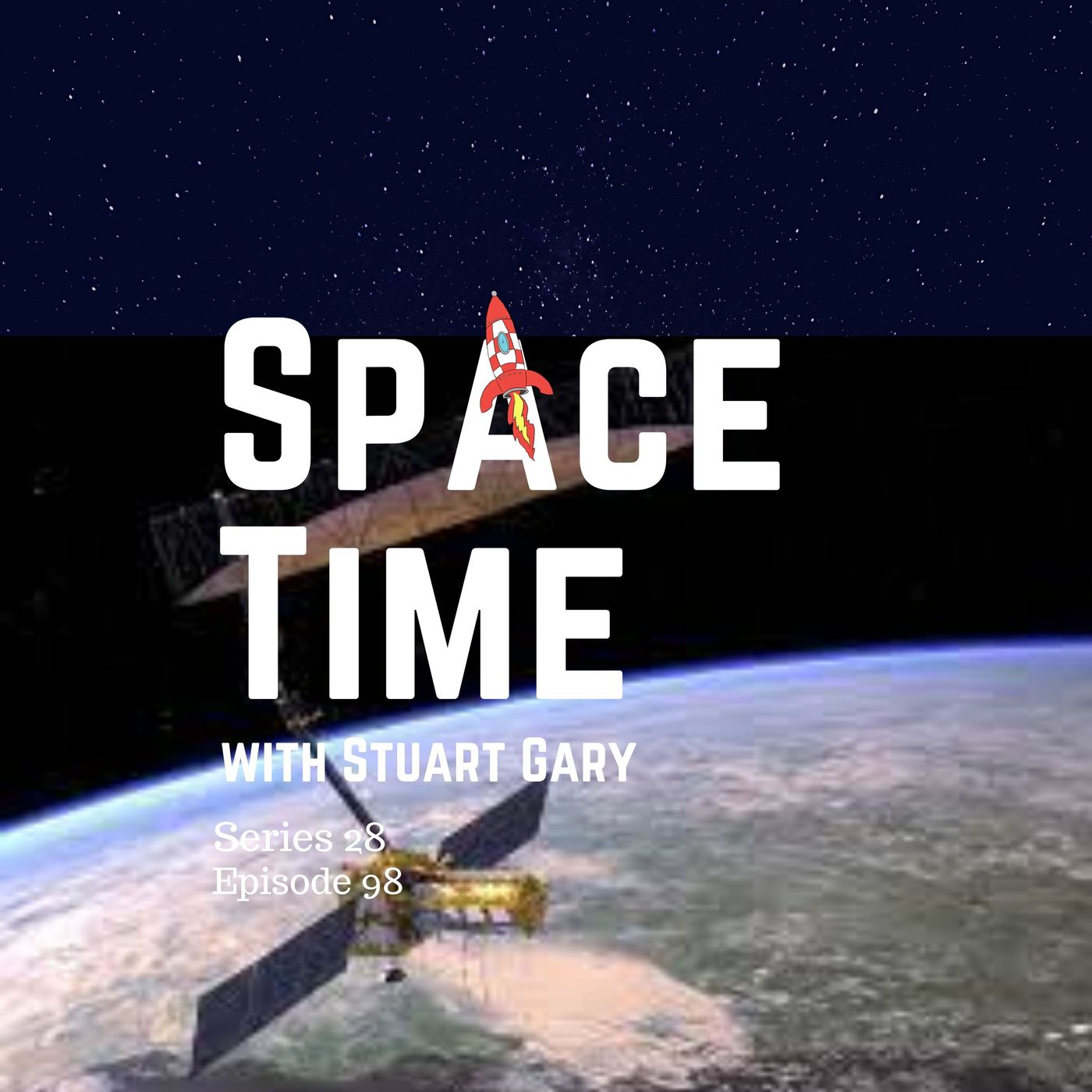
The Indian Space Research Organisation (ISRO) has successfully launched the NISAR satellite, a joint mission with NASA that promises to revolutionise our understanding of Earth's dynamic systems. This advanced synthetic aperture radar satellite will monitor changes in forests, wetlands, and ice-covered surfaces with unprecedented detail, providing crucial data for disaster response, infrastructure management, and climate change studies. With its ability to see through clouds and operate day and night, NISAR will deliver vital insights into the planet's movements and environmental changes every 12 days, enhancing our preparedness for natural hazards.
A New Hypothesis on the Universe's Origins
In a significant shift in cosmological theory, scientists have proposed a new model that explains the universe's early moments without relying on speculative elements. This revolutionary hypothesis, reported in the journal Physical Review Research, suggests that natural quantum fluctuations in a state known as de Sitter space could account for the density differences that led to the formation of galaxies and stars. By eliminating arbitrary parameters, this model offers a clearer understanding of the cosmos and poses fundamental questions about our existence and origins.
Russia's Commitment to the International Space Station
In a surprising announcement, Russia has confirmed its intention to remain a partner in the International Space Station (ISS) project until at least 2028, despite previous threats to withdraw. This decision comes amid ongoing geopolitical tensions and technical challenges within the Russian segment of the ISS. As the global space community continues to evolve, Russia's commitment ensures continued collaboration in low Earth orbit, even as plans for an independent Russian space station progress.
www.spacetimewithstuartgary.com
✍️ Episode References
Physical Review Research
https://journals.aps.org/prresearch/
NASA NISAR Mission
https://www.nasa.gov/nisar
Become a supporter of this podcast: https://www.spreaker.com/podcast/spacetime-space-astronomy--2458531/support.
NISAR: A New Era in Earth Observation
The Indian Space Research Organisation (ISRO) has successfully launched the NISAR satellite, a joint mission with NASA that promises to revolutionise our understanding of Earth's dynamic systems. This advanced synthetic aperture radar satellite will monitor changes in forests, wetlands, and ice-covered surfaces with unprecedented detail, providing crucial data for disaster response, infrastructure management, and climate change studies. With its ability to see through clouds and operate day and night, NISAR will deliver vital insights into the planet's movements and environmental changes every 12 days, enhancing our preparedness for natural hazards.
A New Hypothesis on the Universe's Origins
In a significant shift in cosmological theory, scientists have proposed a new model that explains the universe's early moments without relying on speculative elements. This revolutionary hypothesis, reported in the journal Physical Review Research, suggests that natural quantum fluctuations in a state known as de Sitter space could account for the density differences that led to the formation of galaxies and stars. By eliminating arbitrary parameters, this model offers a clearer understanding of the cosmos and poses fundamental questions about our existence and origins.
Russia's Commitment to the International Space Station
In a surprising announcement, Russia has confirmed its intention to remain a partner in the International Space Station (ISS) project until at least 2028, despite previous threats to withdraw. This decision comes amid ongoing geopolitical tensions and technical challenges within the Russian segment of the ISS. As the global space community continues to evolve, Russia's commitment ensures continued collaboration in low Earth orbit, even as plans for an independent Russian space station progress.
www.spacetimewithstuartgary.com
✍️ Episode References
Physical Review Research
https://journals.aps.org/prresearch/
NASA NISAR Mission
https://www.nasa.gov/nisar
Become a supporter of this podcast: https://www.spreaker.com/podcast/spacetime-space-astronomy--2458531/support.
Get every episode summarized
Each time SpaceTime with Stuart Gary publishes, we email you a written briefing from the transcript — the topics, who appeared, and any specific claims, with the ad reads skipped.
Email me new episodesFree for 3 shows. No card needed.
Hosts & guests
No transcript yet
This episode has not been transcribed. Request it and it moves to the front of the queue.
More episodes
More from SpaceTime with Stuart Gary

Tatooine's New Neighbours, Mars Rover's Drilling Quest, and Soyuz 5's Maiden Voy...
SpaceTime with Stuart Gary
May 11, 202627:18pending

Venus's Hazy Secrets, Planetary Collision Insights, and Lunar Gateway Corrosion...
SpaceTime with Stuart Gary
May 8, 202636:49pending

Uranus' Ring Revelations, Africa's Rapid Rift, and Eris Rocket Mishap
SpaceTime with Stuart Gary
May 6, 202621:45pending

Milky Way's Black Hole Secrets, Solar Flare Spectacles, and Mars Rover Discoveri...
SpaceTime with Stuart Gary
May 4, 202627:19pending