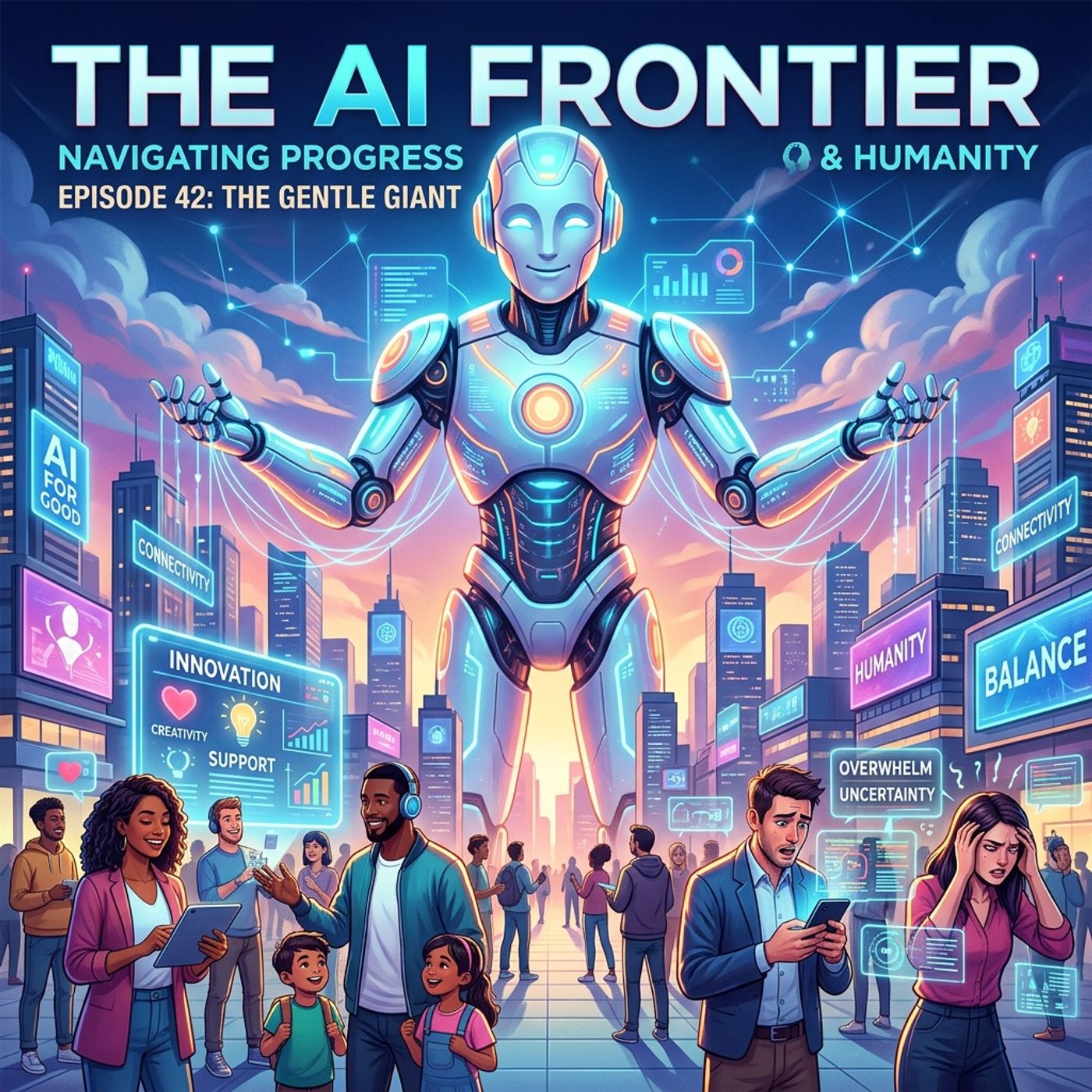
Navigating AI Anxiety_ Coping in a Tech-Driven World
About this episode
Become a supporter of this podcast: https://www.spreaker.com/podcast/conspiracy-theories-exploring-the-unseen--5194379/support.
Get every episode summarized
Each time Conspiracy Theories Exploring The Unseen publishes, we email you a written briefing from the transcript — the topics, who appeared, and any specific claims, with the ad reads skipped.
Email me new episodesFree for 3 shows. No card needed.
Hosts & guests
Transcript ready
55 searchable segments. Every word is indexed and playable.
Full transcript
Conspiracy Theories Exploring The Unseen — Navigating AI Anxiety_ Coping in a Tech-Driven World. Machine-transcribed; use the interactive transcript above to jump the player to any line.
Artificial intelligence is everywhere. It's in our phones, our homes, and increasingly in our workplaces. While AI brings about remarkable efficiencies and conveniences, it also introduces something quite concerning, known as AI anxiety. This feeling, characterized by stress and fear related to AI interactions, can significantly impact our mental health. Today, we'll delve deeper into AI anxiety, explore its effects, and provide practical strategies to cope with this new reality. Recent research has shown that AI anxiety is not just a passing phase. A study published in JAMA Network Open revealed a startling statistic. People using AI chatbots daily are about 30% more likely to experience moderate levels of depression compared to those who use them less frequently. Isn't that eye-opening? It seems that while these tools are designed to assist us, they might be doing more harm than good for our mental well-being, feeding into a phenomenon-termed, techno-stress.
Technostress emerges as the rapid pace of technological change creates an overwhelming sense of unease, heightening both anxiety and depressive disorders. Particularly impacted are educators who are experiencing what is being termed educational anxiety. The integration of AI into educational settings is reshaping how teachers approach learning and teaching. This shift brought on by AI can compromise their mental health, affecting their overall well-being, and the sustainability of educational systems. Research indicates that perceptions of AI integration correlate directly with levels of educational anxiety. The more teachers see AI as a challenge, the greater their anxiety levels tend to be. Despite these worrying trends, there are also seasoned experts who hold a more optimistic view. Some argue that AI can play a supportive role in mental health care, offering accessible and personalized interventions. However, caution is paramount. Overreliance on AI tools for emotional support can lead to unhealthy dependencies, emphasizing
that while technology can assist, it cannot replace the invaluable human connection needed in mental health care. To address AI anxiety, it's important to adopt strategies that can help mitigate its effects. Business and meditation are powerful tools. Taking a few minutes a day to be present and quiet your mind can counteract the hyperstimulation AI often creates. Engaging in regular physical activity is another effective method. Exercise releases endorphins, which are natural mood lifters. And let's not forget the idea of a digital detox. Implementing a digital sunset, routine, where we step away from screens an hour before bed, can vastly improve our sleep quality and reduce anxiety. Additionally, setting boundaries with our technology can have a profound impact on our well-being. Consider filtering your AI interactions and limiting notifications. Intentionally crafting your digital environment can greatly reduce unnecessary stress.
In conclusion, as we navigate this ever-evolving landscape dominated by artificial intelligence, it's crucial to recognize the symptoms of AI anxiety and take proactive steps to maintain our mental health. By embedding mindfulness into our routines, staying active, embracing digital detoxes, and setting healthy boundaries, we can foster a more balanced relationship with technology. Understanding that AI can both assist and overwhelm is key. Let's not forget the strength of human connection in maintaining our mental well-being. Thanks for joining the Fortune Factor Podcast.
More episodes
More from Conspiracy Theories Exploring The Unseen

The Digital Mirage_ AI and the Death of Authentic Romance
Conspiracy Theories Exploring The Unseen

The Trust Trap_ AI and the Future of Romance
Conspiracy Theories Exploring The Unseen

The Ghost in the Machine_ Navigating AI Romance
Conspiracy Theories Exploring The Unseen

The Love Recession_ Why Digital Romance is Offline for Good
Conspiracy Theories Exploring The Unseen