About this episode
Millicent Ficken spent her career studying bird behavior and communication. The first woman to earn a PhD in Ecology and Evolutionary Biology from Cornell in 1960, Ficken authored over 100 scientific papers. She discovered that male hummingbirds have a whole repertoire of songs rather than just one, outlined the linguistic differences between penguin species, and showed that chickadees take turns singing in the morning. She was especially fascinated by how birds play, showing that bird play almost always has a pressing purpose — they're practicing a skill they need to survive.
This episode is brought to you by Wild Delight Bird Food, which aims to support wild bird populations with clean, nutritious ingredients in every blend. Available at Chewy.com.
More info and transcript at BirdNote.org.
Want more BirdNote? Subscribe to our weekly newsletter. Sign up for BirdNote+ to get ad-free listening and other perks.
BirdNote is a nonprofit. Your tax-deductible gift makes these shows possible.
Hosted by Simplecast, an AdsWizz company. See pcm.adswizz.com for information about our collection and use of personal data for advertising.
Interactive timestamps
Jump to segmentGet every episode summarized
Each time BirdNote Daily publishes, we email you a written briefing from the transcript — the topics, who appeared, and any specific claims, with the ad reads skipped.
Email me new episodesFree for 3 shows. No card needed.
Hosts & guests
Transcript ready
23 searchable segments. Every word is indexed and playable.
Full transcript
BirdNote Daily — Millicent Ficken Studied How Birds Play. Machine-transcribed; use the interactive transcript above to jump the player to any line.
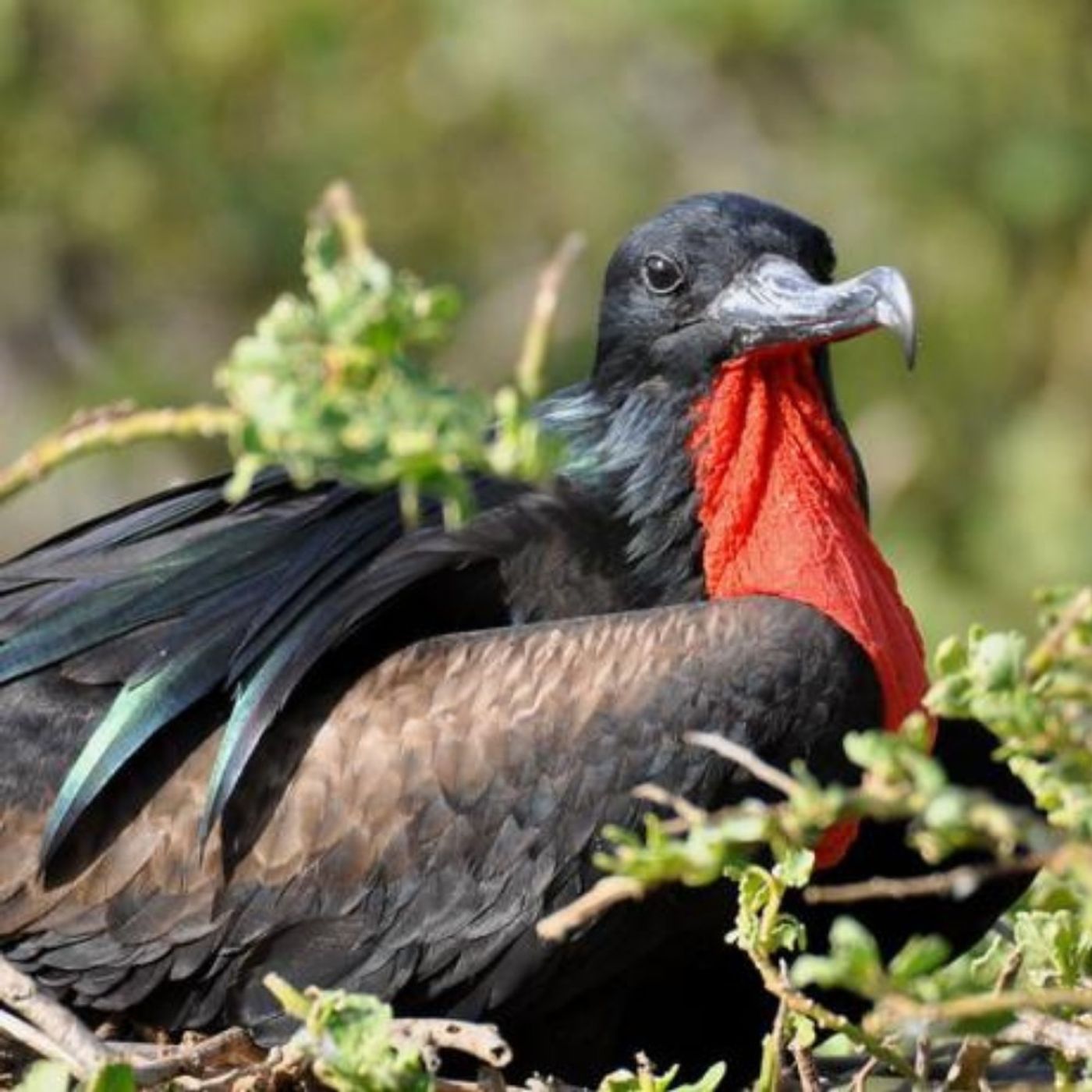
0:00This is Bird Note. Millicent Fickin spent her career studying bird behavior and communication. The first woman to earn a PhD in Ecology and Evolutionary Biology from Cornell in 1960, Fickin authored over 100 scientific papers. She discovered that male hummingbirds have a whole repertoire of songs rather than just one, outlined the linguistic differences between penguin species, and showed that chickadees take turns singing in the morning. She was also fascinated by how birds play together. Play is one of the most mysterious activities of animals, Fickin wrote. Her seminal 1997 article, Avian Play, was an exhaustive attempt to categorize these behaviors. One example was the Great Frigid Bird, a black sea bird with a prominent red throat pouch. Fickin noted that young, great frigate birds swoop, pick up, and then drop leaves or other floating objects.
1:01She compared it to a kitten playing with a ball of yard, and suggested it might help fledgling learn to catch jumping fish and even steal food from other birds. Fickin found lots of evidence for Avian Play, but unlike mammals who sometimes play purely for fun or social bonding, she showed that bird play almost always has a more pressing purpose. After practicing a skill, they need to survive. For bird note, I'm Arianna Rimmel. This episode is brought to you by Wild Delight Bird Food, which aims to support wild bird populations with clean, nutritious ingredients in every blend, available at chuey.com.
More episodes


