About this episode
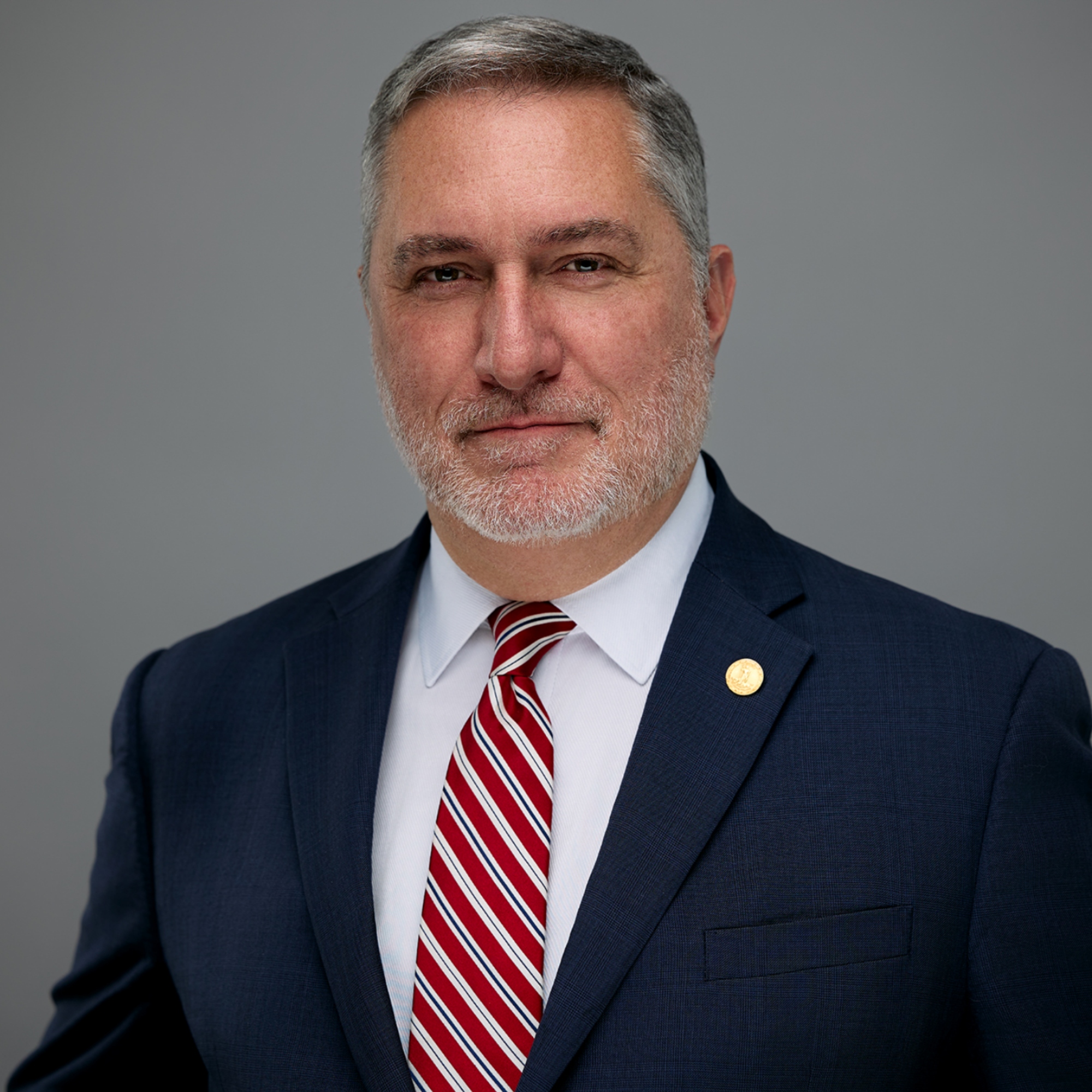
Penultimately today, John talks to Mike Shires of the America First Policy Institute; together, they discuss the concerning decline of civics and history education in this country, on the eve of America's 250th birthday.
Interactive timestamps
Jump to segmentGet every episode summarized
Each time The Reid Revolution with John Reid publishes, we email you a written briefing from the transcript — the topics, who appeared, and any specific claims, with the ad reads skipped.
Email me new episodesFree for 3 shows. No card needed.
Hosts & guests
Transcript ready
250 searchable segments. Every word is indexed and playable.
Full transcript
The Reid Revolution with John Reid — Mike Shires. Machine-transcribed; use the interactive transcript above to jump the player to any line.
0:00We're back on the read revolution, I'm John Reed, and this weekend, because it's the 250th celebration anniversary of the signing of the Declaration of Independence, I'm trying to go every week to a different historic site in Virginia. A couple of weeks so far I've missed it, but this weekend I had the chance to go with Jim Haring, who some of you have been following on Facebook, he's got this really interesting thing where he shows the most popular memes in the country every day. Hundreds of thousands of people are watching this thing, every day, very interesting. But anyway, Jim and I went out to George Washington's birthplace near Wakefield, and then we drove over to Fredericksburg and saw Ferry Farm, where George Washington was a boy. And I thought it was interesting. I went across the street and didn't get to go in to Mary Washington's home, George Washington's mother's home, but went to her tomb. Yesterday was really interesting, and I grew up in a family where we did those kinds
1:03of trips on a regular basis. That was just kind of one of the things. My parents were both from Virginia, so visiting Virginia attractions was a part of our family tradition. And we always talked about why it was so important that we had a leader like George Washington who didn't make himself king. The principles of American representative democracy, a republic. And I'm just not sure that that's a part of the formal education that young people get today. And I question, in most families, is that what you all do? Is that what you used to do? Is that what your children and grandchildren are doing today, where you go on a family trip and you have a little picnic at it, George Washington's farm? Dr. Michael Shires is with the American First Policy Institute, and he's talking about civics education formally, and I appreciate you joining us. What's your assessment of that? Do you think that's under estimating how many people still have that as a part of their
2:07family tradition to appreciate the United States and the history of their home state? And good morning to you. Well, good morning, and it's great to be with you. I mean, the reality is, and I love hearing your stories about your family doing it. But so many Americans today, I think, trust the schools to do it. And we've done some work. The Secretary of Education, Secretary McMahon and President Trump have used the occasion of our 250th anniversary to kind of launch this national conversation on what it means to be an American and what our responsibilities are as Americans. And so as part of our work here at the America First Policy Institute, to lead a coalition of folks looking at this question. And we went out and looked at the data, and the data are not good. If you look at the National Assessment of Educational Progress, which is the closest we have to a national test on civics, the last time they administered it was four years ago now. But what we found out was only 23% of eighth graders were what we would call proficient,
3:09that they understood how the American system worked at a great appropriate level. They knew how to get involved. They knew what the President did. They knew what Congress did. And so the data are not great. When you're talking about less than one in four, basically knowing that. And it has a lot of consequences down the line. But I mean, the key is in Ronald Reagan's famous line that we don't pass what it means to be an American in our bloodstream. Freedom is not something that you inherit biologically, but it has to be taught. So many young people in America today are not growing up. Not only not being taught those great stories about George Washington, even the story about the cherry tree, and why honest is important, right? They're not being taught those things. And in fact, in a lot of our schools, they're actually being taught quite the opposite, right? That America was this horrible colonizer that came and really wreaked havoc on the land. And there is a push, I think, to make everything into mythology that this is a nice myth, but
4:12it's not true. And the reality is really ugly and nasty. And it's almost a way to demoralize anyone who does have confidence in faith and hope in their own society to give up on it. And surprise, surprise, the communists are waiting in the wings to take over for you if you let that happen. Yeah. I mean, America's an aspiration. We're not perfect. No government's going to be perfect. It's an aspiration. It's about trying to serve your fellow man. It's about trying to put others before yourself. It's about trying to do the right thing. And there are times we fall short of that. And so much of the curriculum today is focused on that. And not as we saw in the State of the Union last week, right? Not on our heroes. I mean, there is nobody that I can imagine that grew up at least the way you and I did, I think. I would not say, wow, we owe those folks a debt of gratitude and should say special things. But apparently, it's perfectly acceptable in today's political environment to do that.
5:13And that says a lot about where our society's kind of gotten to. And these narratives are difficult. And you're right when you talk about sort of why would half of 18 to 24-year-olds don't think their vote matters. About one and four are going to vote. I mean, think about that. That means three and four are expecting not to vote. I mean, that's just kind of terrifying. It'll be surprised when they're overtaken at the ballot box and the end result is pretty negative. How do you fix that? We've got Hillsdale College, which I think has a pro-Western viewpoint, what truth and beauty. One of the things that they, you know, the search for absolute truth, eternal truths. That used to be, if you go back to ancient Greece, used to be the mindset of academics and intellectuals was to find things like mining for a little nugget of gold, something that they could say this is truth. And that seems to have been lost.
6:15I, you know, the curriculum seems to have been overtaken by people who hate the United States. Is there a solution in the next few years while we've got President Trump in office to fix this? Well, there's certainly a big conversation going on, AFPI, where I am an American First Policy Institute, it's leading a coalition of over 57 organizations that are putting together materials and resources and we're kind of thinking about four levels of conversation. I mean, there is a, there is a national level. That's clearly what's unfolding now, but the States have to play an important role. The school districts themselves, parents are the most important actors. And then, you know, especially as school choice starts to take hold when you build new schools, how do you build these things? So we're putting together materials for kind of all four of those groups, but it's really about a national conversation. The best part is the next four months are the perfect window to have it, because I mean, I still remember the bicentennial, I'm old enough to remember growing up, collecting my little bicentennial coins.
7:15I still have a collection of quarters, you know, yeah, a lot going on then. We were kind of mired in a lack of self confidence under President Carter at that time as well. We were. We were. And, but here's the thing, there are new stories every day of American heroes. I mean, we saw that in the State of the Union, we see that every time somebody goes and takes a chance to build a business in your community and then pays that back by helping the school. Right. I mean, these heroes happen every day. We need to, we need to focus on the stories that tell the wins of being American in so many ways. And I mean, it's kind of incumbent on all of us who've lived the American dream and get to live the freedom that America is to constantly be telling that story and constantly living that story so that we could be an example for the rest of the world. And so, you know, we're working with Hillsdale and turning point USA and like I said, 57 other coalition partners on this as part of the, of the initiative out of the Secretary's office. But the same time every one of us needs to be one of those folks that's constantly reminding
8:19our friends and our families, I mean, we used to have a tradition, we still have a tradition that I carried on with my sons. We read the Declaration of Independence on July 4th as a family. Yeah, well, much of the document is kind of mired in the history of the time. Just those opening three or four paragraphs really kind of transform how you think about the holiday. Well, if you read it today, I think there'll be some echoes where you're going, wait a minute, we're tolerating, we're tolerating this in 2026 and they went to war over that in 1776. Maybe we've become a little too passive about what we're willing to accept from government reaching into our lives. There's a lot of that, I think, going on. And especially in our educational system, I mean, the whole purpose of public schools was to raise up, you know, was the educated electorate. It was Jefferson's ideal that every citizen would know what they need to know to help hold their elected officials accountable.
9:19But more importantly, to have the civic virtues, that commitment to community service, to following the laws, to serving in the military, if there's a need, right, all of those kind of civic virtues were a key part of the vision behind public schools. And our public schools have really dropped the ball on this in so many ways. That's an important part of why school choice, you know, as we create more schools, we want to make sure that that narrative continues in those new schools. School choice is really important. It was one of the things that the lady who ran against me beat up on me about was that she is 100% committed, not to the public school student, but to the public school unions and, you know, making sure that those jobs are untouchable and that the left continues to run the curriculum that is used in those schools. I mean, speaking of the books that these students are taught and are forced to read, I think
10:22it's different. You know, I kept all of my books and they're sitting in the attic and occasionally I go up there and move stuff around. And the narrative in those books is very different from what I see with family members who are in school today. Is there a new collection of books and curriculum aids that do tell a story that results in 18 years when the person hits 18 that they are, that informed citizen who actually loves the country instead of hating it, they want to make it better, whatever that means, instead of wanting to just trash the system? Absolutely. And I mean, you know, I mean, books are, you know, there's a lot more digital resources today. But the good news about that is the incremental cost of getting another digital resource is zero, right? I mean, literally these things are widely available. Hillsdale's put together an amazing curriculum.
11:24One part of those resource kids that I was talking about that were putting together are actually roadmaps for the things that you would need to help create the kind of learning environment that you're talking about. Well, in the next couple of weeks, we're going to announce the Read Revolution tour of Virginia for the 250 and will include some of the places that I've already been like the George Washington sites in Virginia that I went to yesterday with the hope that we can help guide families that want to take this opportunity this year to visit those sites and then offer a little bit of a narrative. One of the things, the guy who walked us through at Ferry Farm yesterday was obviously very enthusiastic about the site. And I think he comes from an archeological background so it shouldn't be surprising that he talked about the things that had been found at the archeological site, matching the pottery with, you know, we found this piece of pottery and look, we have gone to an antique dealer and this is the exact same set it was here when George Washington was a child.
12:28And I'm appreciative of that. But I do think there's almost a self-sensorship that is happening today. Then instead of telling the story about the cherry tree chopping down the cherry tree and I cannot tell a lie who knows whether that's true or not, but without even bringing that type of narrative up, those things seem to have gone by the wayside. I joke with people because so many wokesters have taken over Monticello, Thomas Jefferson's in Virginia, that you feel like you've gone to Sally Heming's house and you're hearing about the rumor unsubstantiated about a love child with Sally Heming's instead of about the third president of the United States who wrote the Declaration of Independence and was very important person in crafting the mindset of the American theology, if you will. You just don't get that when you go to visit these sites anymore. You don't. I mean, I took a tour of Civil War sites in Virginia actually a couple years ago,
13:31same kind of experience. And I did it with my sons who were actually, I guess, 10 years ago now, who were 16 and 18 at the time. And it's so amazing. It's so fun to watch the next generation, just connect the place with the stories and the history. And I mean, a big part of what we need to do as a nation is rediscover, not rediscover, but continue to tell. I mean, the immigrants that come to this country interestingly enough are some of the biggest storytellers, you know, in terms of telling what it means to be an American and appreciating it. Jorge Galicia, I spoke at an event with him who came from Venezuela. It was telling the horrors of what happened in Venezuela and how appreciative he was of being here. And I mean, I think that these are the stories that are kids that we need to get into the conversation. And it's interesting because, you know, under the umbrella of diversity, we've, oh, well, this history doesn't matter anymore. It's like, no,
14:33these people put every single thing on the line. They put their lives, they put their fortunes, they put their lives, their livelihoods, they put their families at risk to launch this country. And every generation since then has taken similar risks. And all of those stories, I mean, the story of Valley Forge and the suffering that happened for those troops. I mean, 250 years ago today, the Revolutionary War was happening. You know, North Carolina was just there last weekend, had this great story about a battle at the Edmonds Bridge, you know, and how they stopped a regiment of British soldiers from, you know, accepting reinforcements in the city nearby. You know, it's, they were, people were putting their lives on the line, you know, 250 years ago to create this opportunity that we get to take for granted today. Yeah. Well, I hope that everyone who's inclined to join the Democrat Party and the leftist movement will pause and think about what, what am I a part of? If you join a revolution, they don't have a very good track record around the
15:34world. And, and even if, even if something good does come from it, there's a lot of destruction in the interim and you lose a generation or two or more of prosperity and peace for the people. And you need to think long and hard before you join in something that is that damaging, especially when you're, when you're tweeting about the revolution on an expensive piece of equipment that the rest of the world would love to have, but you have, and you're driving in a car on a road that's paved in a society like this, I would think twice before you, you know, overturn that. Well, and you don't have to go very far back in history. And I will say our history scores were worse than our civic scores, but you don't have to go very, I mean, you've got Cuba today. The lights are out. You've got Venezuela. I mean, you don't have to go back very many years to see how these alternative systems just don't work. And I mean, I, I suspect we'll get some great evidence out of New York City. We have California today. I mean, there are lots of
16:38examples of how these big government socialistic programs just don't provide the answers. Yeah. Well, we're paying attention. Where can we go to follow your work, Dr. Shires? So AmericaFirstPolicy.com, all one word. Our website is there. We have links on civics education. We call it the Freedom 250 Project. And so you can look for that on Google as well. And you will find that quickly. Well, I appreciate your work. And I will be one of the people tracking you. Dr. Mike Shires, the AmericaFirstPolicy Institute. And forgive me for keeping you holding for a couple of minutes. I appreciate you being willing to wait. Thank you. Oh, no worries. Thank you for having me. Yes, sir. All right. We're going to take a quick break. We'll come back, producer Dan, where you join us. We've got the best and the worst of the Internet in segment four, in just a moment on the read revolution.
More episodes
