About this episode
John Maher of Grass 10 and dairy farmer, Mike Bermingham, join Stuart Childs to discuss the challenges of grazing in 2026 and how to overcome them.
John explains how February has been wet and people have been holding off grazing in the hope of dry weather, however, the forecast is middling at best for the next few weeks so people will have to make a start for the good of the grass and the good of the cow.
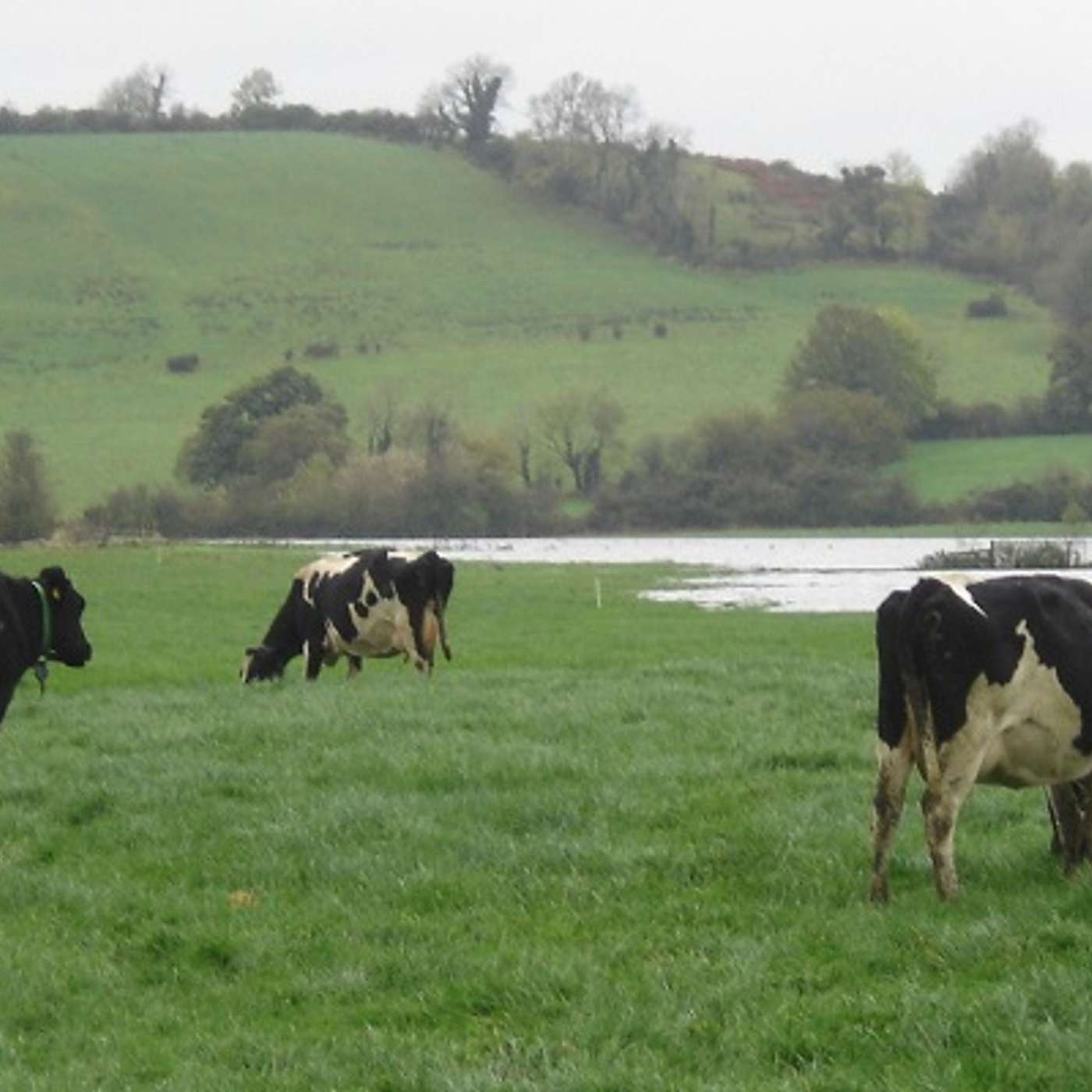
Mike Bermingham is on a high north facing farm just outside Fermoy. He has experienced plenty of rain in the last few weeks like many others, but he is getting cows to grass most days and even some evenings now too.
Mike explains how he feels the effort to get the cows out is less for him than the work in the yard and this drives him on to get cows to grass at every opportunity.
Mike outlines how he is doing this and explains that the thought of what he will be paid on April 22nd for his March milk is a further incentive to get grass in every day if possible.
Mike finishes by saying that grass is the best feed available and nothing you can buy in the yard can compare to it.
For more episodes from the Dairy Edge podcast go to the show page at:
https://www.teagasc.ie/animals/dairy/the-dairy-edge-podcast/
The Dairy Edge is a co-production with LastCastMedia.com
Get every episode summarized
Each time The Dairy Edge publishes, we email you a written briefing from the transcript — the topics, who appeared, and any specific claims, with the ad reads skipped.
Email me new episodesFree for 3 shows. No card needed.
Hosts & guests
Transcript ready
514 searchable segments. Every word is indexed and playable.
Full transcript
The Dairy Edge — March Management Tips with John Maher and Mike Bermingham. Machine-transcribed; use the interactive transcript above to jump the player to any line.
All I'm thinking of at the moment is, what am I going to get under 22nd of April? And that check as you know what leds is going to be well done on what was this time last year. So how can I set myself up to maximize the amount of money I can keep out of that Apple check? There's no way I'll solve it. I don't care what they'll say, there's no beat me as a 19W compare to getting grass into that coal. Our management tips for my actual focus on grass. Very little grazing done and more farms, no majorly settled spell under horizon, we're getting to the point where grazing will have to get going for both good of the grass plant and the coal. Today, I'm joined by Jan Mahar and dairy farmer Mike Birmingham to discuss the challenges and how to overcome them. I started by asking Jan to give us a bit of background to the grazing season of 2026 software. February's gone by short, it has come wet, you know, the growth rate has been behind but that's that's explainable really, but I understand well, but you know, we're the
first to march now and a lot of people haven't got going and this was the case of having to get going. However, we're playing a bit against the wind here now, right? We've had to look at this and see where things are going as best you can with wetter models, which are all as a challenge. But you know, the situation is that I suppose people were expecting all of it to dry weeks from around the way, not to be very bad news, but the weather forecast are predictions suggest that we're going to be mild, but there is not no apparent dry week coming for the foreseeable future. You have this back of weather of, you know, the western front versus the eastern front, but we are known Ireland that journey to western front normally wins and that looks to case, right? So for the foreseeable few weeks, we are looking at mild, but we are going to have, you know, what rainfall that's normal for March are above, not below for the foreseeable future.
So what that tells me then is we have to get into a better place in terms of planning to get grass into the animals. So John Duckle, dealing to this increasing, obviously at the end of the month, I will bring change in clocks and so forth, but like, so that helps a little bit in terms of grown conditions and drying out and so forth, but like, it's going to be tacky for a lot of merit effectively so it is, we've like, February has been wished and, you know, where the volumes are above normal is the fact that it's wet every day, there's no drying there and that looks to situations going to continue. So therefore, you put more effort into trying to get grass into the animals, right? We know the rewards rewards are high, there's a win for the animals, there's a win for the farmer, there's a win for the grass plant in terms of recovering all that, but, you know, there's a bit of planning now required to try and get this right, there's a level of flexibility required to make this work, if you're going to do it, that's why we're doing this this morning and I suppose the other piece then, if you're going to do this requires commitment. Now, there's just tricks to the trade and planning and getting yourself ready and offer
this fight that you have to, you know, put in place, but as we say, the rewards are high here if we can get it right. Yeah, so Mike, we come to you, so many people will have been under fire on the summer last year with the IJ, like it was a smash and dead at the, so a picture of like a beautiful view, everything was good, once the fog lifts, it's the kind of world that wants to kill covenants. Yeah, yeah. So, you've been doing well, though, at the same time, like, so I suppose, maybe go back a little bit, I suppose, and tell us what have you done in terms of slowly fertilizers off our, and the stack to graze, and when did you stack graze, and you didn't stack haven to live in February, which is kind of to suit in your, yes, it is at the moment. So, yeah, so we were lucky enough for slurry, we went to a day or two just after it opened, we were lucky enough, and we were able to cover, I'd say we got, I have to found covers, sure, we got into pipes, it was kind of dilutey slurry, we were lucky, the weather was just
okay, we used the pipes because the land was actually very travelable, but if we went to the tankers, we destroyed the gap, so, so we've, we've, we've, we've, we'd have to found cold water dilute story, around, oh, I'd say it's 16 or 17 days ago, no, I just looked it up and passed the base before I came in. The other half of the farm, it was a nice, it was a nice friday, let's say, and Saturday morning was good as well, so I was bald and I put on the spinner, and I went out with 18 young, it's a protected Julia, but I didn't get all of the farm, let's say I got, I think I had only built 10 acres left to spread, and I thought I had put on the spinner again Sunday, but there was a reencoming Monday evening, so I didn't bother, and I actually didn't get that straight since, no, 90% of it, 90% of the platform covered, yeah, yeah, yeah, yeah, and to be honest, no, there was a significant difference, let's say the ground, I got the
slurry earlier on, was tipping away nicely, and the stuff that didn't get any fertiliser, let's say until 17 days ago, I was looking hungry and yellow, let's say there was decay coming in, but Jesus, there was a, we're after getting, I think we got a good optik, because it's, let's say any patches I didn't spread, let's say I obviously didn't drive through the wet spots and things like that, they're extremely yellow, and the rest of the field is extremely green. So the priming effect that we've been up for years there, yeah, so I think it worked out well, no, the bit that didn't get any fertiliser is very hungry, very hungry, and didn't grow, we measured it didn't, to be honest, I think it went back, you know, I don't know what it meant. Yeah, completely, yeah, but look, I suppose today's focus is on ungrazing the weather forecast for the foreseeable future, we'll bring chance in terms of getting the story of fertiliser, but there will be windows, but the most important thing is, sorry, you have to be ready. And for sport call, it's on the fertiliser side, it had fertiliser in the yard, so as was
we'll move on on that one. But anyway, yeah. Right, so I'm like, um, started on the 8th of February, it's done the 8th of February, we probably had two coals cared before the 8th of February's short, we, uh, our juliet was the 8th of February, we probably kicked off properly then on the 10th of February. So, um, we calved away, when I 10 coals calved in, I, I left them all by deer and, um, they were all, it was all clear, like I said, they were, they were all, they were all more said it is, to be honest, you know, like I didn't have to bring them in particularly early or anything, they were, they were, they were managed away, they were probably brought in a 2 or 3 clock, melted 4 clock, um, silage at night, and left out by deer. I wasn't pushing them too hard, let's say, because they were all very freshly calved coals. So, um, when I got up to about 24 coals, then I went old for a bit of a break in the evening. Maybe, let's say, let them all fit 5 at a clock, let's have them melt around 5, they tip
away, oh, bring them in, I'd be coming back up to check the coals at 9 or 10, bring them in then, um, let's say, let's say, we probably missed one day, let's say, we went out on a torsero, remember I count from them, but the day it's over, we went out on a torsero for a step, we didn't go out on Friday, because it was, it was raining nicely in the morning, and I said they were very freshly calved coals, they'd be doing more walking than anything else, so I left them alone, put them back in, went out, settled, I walked away, probably the following choose their winds there, went out in the evening for a few hours, um, yes, having missed only one that day, we'd go for a few hours, um, they did, I'd say, one or two evenings then, they kind of did a small bit of damn, let's say the last evening in a particular paddock, they did a bit of, I thought they did a bit of damage to be honest, so what we did then was we changed paddocks, so there was two grazing left in the paddocks,
I just left it there, went on to new paddock, better accesses, better gaps, better everything, and um, we cut, since last Sunday, let's say last Sunday, we went up by night full time, and we brought them in on Wednesday night, um, around 10 at Lakhari, because it got a heavy issue off our show, I was happy to be in the air, and I'd say what happened otherwise, I was driving, I was pushing in silence, they had the tractor cars, and I, I went down to make sure they were okay before I went home, and they were standing the gaps, so I left to me, but that's where, we're parking away, like, um, today is Friday, they're just top-tier cows, let's say fully, we call them, as much as, weather allows, you know, and the classroom cows are right, are, are, they're indoors, they're indoors for the four days, okay, right, so just, I suppose, give us the, they're on down in the day, so how
are you doing this like this? Yes, so, um, so, um, so what we're doing, so, what we're doing is, um, at, at the moment, um, we're, uh, let's say, we've been the hour around seven, subtle, subtle, let's say, freshly-caved cows, put the calf into the pin, spray the calf, so on, put the cows, the, let's say, the cows that, um, will be joining the herd, put them into the collecting out, to be milked with the main, with the main herd, brought in the cow, well, to smile, I noticed, brought in the cows, I left them out last night, moved the wire, built them, straight back out again, because today is good, okay, today's a nice day, today's good, so the roads are, I have my top-to-fifty cows, I haven't fed, cleaned, loymed, slowly spread, while they walked up the passage. That's the passage of, not. So, so I suppose you've, like, channeled, channeled, see about, um, joy, the benefit spot is there,
it's the work-benefit is, that's why I'm letting them out, to be honest, because you're lazy, getting old and tired, no, but it's, it's, it's just so much easier to get them out, I know what's tricky with the weather, I know what the weather was tricky and it's difficult, but geez, we are, we can, we can walk around this, we can walk around this. Just, just to follow on, like, you know, this morning is good, we didn't have much, we didn't have much rain, but let's, let's, let's go back to a, a more trickier day, that's all right for a minute, yes, so, you know, um, you might get to go out at nine o'clock in the morning, so just explain how you work this then, and, and the allocation, so just go through, you know, they get me, they get me, you're, you're, you're on four kilos in the power, yes, two in the morning, two in the evening. Yeah, so let's say, okay, we'll take yesterday morning, you know, it's damp, so go back to the night before then, like, were they out at night? They actually were, but it didn't start raining heavy, luckily enough until about seven o'clock in the morning when I brought them in, okay, so they were in the air, so they were
looking around, we had them in the air, and it started, and I knew the forecast was bad for tors there, so luckily enough, I, um, didn't do, um, Jordi are, morning, like, they have the paddock cleaned out, I don't think you could graze any better in any, in, in the conditions, and even it's good for, it's very good for the conditions that it is, I think, to be honest, might be a bit, the grass might look a bit muddy afterwards, but a day or two, because we are getting the rain, it will wash off, right, so I'm not worried about that, they're not going down, do you know, do you know, there's, it's only a bit of morning, okay, so, so they're out of the paddock, yesterday morning, um, let's say they were, they were half seven in the air, it started in the parallel, but it's having everything was sorted out, um, belting it don't know, noise heavy rain, what will we do, so, milk to coat, milk to the main, the, the, the, the clothes that are outside
or milked, held in the collecting out in, okay, we've tried to make up our mind, what will we doing, but while I was bringing them up, obviously I set up the toy in from the, because in my own head, they're going back out, right, so I set up the toy and I probably, I give them, I give them, I give them an ordinary allocation yesterday because the cover was only about 900, 800, 900, let's say, right, so I give them an ordinary allocation, I said to myself, I'd hauled them in the out, while I was doing this now, I said to myself, I'd haul them in the out of the calves, I fed around half nine, around 10 o'clock, I'd make up my mind, I'd go on back out from that, so, came up, milk to coat, milked the classroom coat, fed the calves, cleaned the cubicles for the, um, classroom coat, given soilage, happens 10, what are we going to do, it just happened to draw you for a few minutes,
I'm the bad fellow to have on this podcast now to be fair, right, oh, what kind of year have gone, started running as they were walking out draw, but for the days, they were gone too far, that's it, they were down the road, you tried to run after them, I did, so they were gone, so I said, fine, that's great, head meaty, they're important to clear tarts, head meaty, came up lying the cubicles where the cows were, were going to be, I was going to, I said to myself, will I put out silage on that, because if I was going to put out silage now, they weren't going out in the evening, okay, if I do that, they're not going out because they're only going to be, they're going to be full, you know, and another thing though, I hit, they're not hungry, they're not stabbed, they're not holding them up, we're just, we just hold them up, so the rein passed off and there's a bit of an edge in them, so we don't want them hungry, because we want these holes to perform, we're feeding them, we want them to do their best, right, so
12 o'clock here, it was raining, no, he spit no, so I shut up, I sat up in the bite, they were good bit away from the out, went down and brought them in, they were just stabbed and to go alone, I felt, you know, coming out, they were just stabbed and to go alone, so I was happy enough, and now he spit a grass left over, no, he ran, I'm going to grass much more often, okay, so then yesterday evening then, so I brought him into the hour 12 o'clock, I had an appointment at one o'clock, and I said to myself, if I give him silage now, they're going to stay in tonight, so I said no, I'll be back at, I'll be back at happens too, I'll be back at happens too, we'll make up our mind then, if it's, if it's still let in at home, we'll put out the silage, and if not, we'll milk them out, let them out, and thankfully it was dry when I came back at 12 o'clock, it looked nice for the evening to be honest, now if it was going to be dark evening, I had to give him the silage, because it might have been
too much, you know, they had a house there, you know, they didn't get their intake in the morning, grazing, so I don't like, you know, so I gave him a good allocation last night, and in fairness when I came down to smile, I was surprised they had a very lit, so they went back to the same paddock, I do I recognize, everything is I recognize. So just to get a few things right here, right, are they going to a different paddock or back to the same paddock in the, and why are you, because I checked the, I checked the, and the app and the phone has halved enough to follow to be honest with you, but I do make it into watch the weather forecast in the evenings or after the news. So what are you just using metayons app? So you're just watching the rain fall. I'm just watching the rain fall. I'm watching the rain fall. It should have rain, I'll tell you. But I'm watching the point how many mills, like if of course, if it's, if it's two mills, it's not going to be the end of it. There was two mills between two o'clock, between 11 o'clock, yes, so would you believe, and I have to stay at the smile because I emptied the gears to smile, there was only two mills in it.
But it's damp, you know, it feels like there could have been ten mills, you know. Right, let's go back down to the grass, you had to put up the wire. Right, right, you're probably I'm guessing you're working off a number of steaks. I'm working off a number of steaks at the moment. So how would you know her as five steaks, four steaks, seven steaks to get? It's a little questional. Look, I roughly know what's in the paddock channel, like I love worktops. There's 900,000, there's top does, fatigue holes going out. So what, what do you mean for five or six kilos of rice? I'm aiming for, I'm aiming for six, six or seven, morning, evening, yeah. Plus the bar killers. Yeah, that's the four kilos. I'm up on about 16 to 16 to 18 mills. That's where you're more honest. And I know there's going to be four grazings in the paddock, like the paddock, they went into now. So just 24 steaks, you're given six. People get complicated with all sorts of abs and. No, no, no, no. This is, this is, I, it doesn't appear. No, no, it has, it has to be
steaks. I think it's probably actually for this paddock now, right, that we went into, you will give all to me, right? But there's a gap, it's dead center on the middle of the paddock, right? So I went wronged in this, in I went a quarter, a quarter, a quarter, I'd be hands up the yellows, tighten this out to the two boys, they'll laugh at me. And another quarter. So that, I don't like to cause walking overgrown to get to the new grass, because I think they're molding it too much. So I want them to walk into new grass. So that's why I went with the and it worked, it worked handy during today's, it was only three acre paddock, they got two days out of it. It worked, it worked all handy enough. Yeah. And good, good, clean. Let's say, obviously yesterday's clean out wouldn't be hectic, but I'm sure they'll share that near, you know. So I'm now, right? And then Mike, I'm not dressed back fancy. I should be better. I did, I did a bit, I am doing back fencing where I can, but it's the water truck. Is it pretty special?
Do you understand? Oh, the whole time. Yes, yes, yes. But they're not, she fear now, we all don't want to go back on graze ground. They don't tend to go back. No, because there's actually a bit dirty from the day before, in order fresh grasses, and they get used to these. I find that they don't really, I, I, I like to get them in clean, let's say, that they come in after the passage onto the thing. And it doesn't matter if they have to walk back to the water truck, they're not are going to be helping through to get to the water, let's say, do you know, they'll walk up to the water in dribs and drives, and they'll walk back. And they might go out the one gap, let's say, but I try to get them in a clean gap with the car, it's so that they don't suddenly lie on the grass. Do you know, like, obviously, the cows are going to keep walking until they hit the wire. So if they can come in by the wire of clean, you know, they'll, they'll mop up everything. Is it fair to say then, you know, when they would walk to the wire? No, if the, if the park is square, they'll try and do it, do the circuit as in the circuit of the clock. That's the way they like to graze all of them, but if it's narrow, then they'll just keep going up down. So you're, you're
walking off square. I'm trying to go on squares, John. Yeah, I'm trying to go on squares. No, wait, the stats. Let's say he walked out very well at the start of one paddock there. And I, it was all he was wrong. No, I should have set up the paddock better. And I'd good access in after everything, but the back of the, let's say it was, it was going out like you or something or a boy, George was just getting worried on moider as we were going along. And what I should have done really was ran on wire. I should have squared the paddock and walked off it. And then you could have left him in on a dry day to the, to finish it off. Very handy. But obviously, is it? So we'll, we'll follow true. You know, you walk off six takes, we'll say the first day. If it goes wrong, you know, either too much too little, then it's easy just for next day. That's the way you're working. Right. Let's follow on. So the cows, the cows went out that night. Let's say the cows have to come in at night. Right. Okay. In the evening, six or seven or eight a night o'clock, you go up to the yard and things, and explain then how we go from seven, eight nine o'clock at night, and the diaries and silage and your allocation and how you're working this.
Now you're, you're out of bills. I'm all the bills. Yeah. Just explain how that works. Good bills. No, I'm all the bills. I'm full stop, but we have very good pit silage. Okay. Yeah, but just explain how you're working that. Yeah. So a lot of people don't like feeding bills. Yeah. I actually felt the bills. I know you haven't those now. So you haven't always have to go over the piece, but it's very hard to put a smile among the silage in front of the cows. Do you know, like, they don't need, like, tock the cows or factory cows, might only need a grab of silage for the night. I just take very small pieces of the grab. Let's say, instead of taking mine, proper sheer grab, I'm taking four or five pieces and try to shake it all. I don't like using the, like, teach the columns, just putting a piece in front of them, like, you know, I wouldn't like to let them without silage for the night. Now, when I'd bring them in a tent like, I'd like to have something in front of them to be honest with you. But that's all of this true, the way you're doing it. Yeah. By seven o'clock in the morning, as all guns are correct, are out of the reach monitor. How's the reach? Yeah. Yeah. Yeah. Yeah. Also, there might be tiny little bit left, but it'd be over reach. Just be absolutely clear, just because we're going to
enter into the arena now. Yeah. Like this gets harder as more cowscaved every cow, every cow can feed correctly. Yes. They can all line up together, which is important. Yeah. No point in putting outside the. No, I know. I know, no, no, no, no. I have, I'm going to use it. No, they can all, they can all line up together on old tea to silage. That's why it takes so long. It's an awful job because you're, you have to go and sprinkle like a wheelbarrow per column, nearly, you know, you're nearly, maybe we we should wheelbarrow, you know, but it's just a bit more the wheelbarrow, I'm like, I know, I have, but like it seems like that, I don't know, but like it's just as best you can, you know, this is easy for myself, it's true, but like hard to get in one or two kilos of dry matter. I feel I take, you know, just to just to tick him over from tenet locked, you know, sure, if they are coming in to be honest with you, they probably are a bit hungry because they didn't get, they didn't eat their correct allocation outside if they're, you know, because I know you say they're hungry, but like, they're not roaring no, they're not, we all know
when they go out for a few boats, I'm not a size decent, nice and small now, nothing, but you're only bringing them in because the weather's gone against each other, I'm not eating it, I'm like, so they have gotten fully fed, or they probably, yeah, they probably should they probably had their, so they're grassy anywhere in three hours, like so, but you're just giving them something, just giving them a snack, and just keep some, keep, keep, keep, you happy, keep them happy. Yeah, well I suppose it's more like, to be honest with you, they probably shouldn't be getting something, but I'd feel bad that they weren't, that they're heading something, like I'd like it, I'd like a biscuit before I got a beer, I'll have a cup of tea in a biscuit, so I give a dip to them, they are, all right, but then, you know, then they get milk in the morning and we start talking again, and then they have this appetite already, they have the appetite to it. What else has been started? No, they're not, they're not roaring or they're not, you know, if you don't see them charging, they're on the passage to get to the grass, so, yeah, so they're not content, everything is happy, you know, content, they're going out, they're putting their heads down, they're not messing around, like yesterday morning, no, let's say I should have added a boat here for, cause to the main held, let's say, you know, the classroom
cause, and I said, no, it was too late, they'd be upset, they weren't used to the routine, I left them in, I left them with the classroom up from the little deer, the cause of the use to this, like, obviously, they were added in to Smarling, today is a good ishtair, nice there, they'll be fine, yeah, they'll be fine. From our perspective, the problem we see is there are people, and we're putting up the videos, and we will be able to develop the videos of people trying to get out and do the tricks that we do, which we'll go through with you in the middle, sport role, and things like that. But it's not unusual for people like me, or my stuff, and Stuart, to see cows go out, and after an hour, hour and a half, they're lying down, so that means they're, you know, they were full before they went down, yeah, so it's just getting this whole thing right, and that's why we're walking you through this, if that makes sense, might just to follow on a small bit, the, like, you know, sometimes you, if it's fair to say, you will go to one part of the farm during the day, which is the easy piece, and then go to another part of the farm at night, yes, right, and that's to try and get over, well, when I was at night
in the dark, um, everything has to be easy for you to get them in like, and them to get in. So the idea of having six allocations in the paddock and going to number four or five at the back of the paddock at night, and then have to bring them in like that, so no, you need, no, you can't do that. You need easy. You've two parts of the farm operating on the field, you could, you could, it's, it's all about giant, it's all about, it depends, like some nights you can go, if you know on your hat and soul, there's going to be no cow coming in tonight, well, obviously you can continue with the, the normal runner, the middle stuff, but obviously, if it's, if it's at five o'clock and you know what I say, we ran coming in at nine o'clock or ten o'clock or whatever, you're going to have them with din before that, your planning is different. So you have to go to a different paddock din, you could be going to a different cover, you need some more door, yes, you need somewhere where you can just basically drop the gap handle and they'll walk in. You don't want them, you don't want them, you don't want to drive the quiet into the field as well, here's, here's the good one, you don't want to drive the quiet into the
field to get them out, they need to be, you know, you need to pull up, they hear the quiet coming, they're walking to the gap, open the gap and they're centering. And you have our silage already out. Exactly. That would have, and that takes longer than the worst job is put note the silage, that takes an hour, whereas when in the cause, it takes five minutes, you know, right, sometimes life doesn't always land rice with paddocks as you will know, and you've summed her very friendly, we've summed her friendly paddocks, and you have maybe four or five entrances and any of the other ones that are longer, yeah, yeah, yeah, yeah, they're not the right cheer. Are you a spore road where a person or not, I should have more, I should have a lot more I laugh, when you make a spore down yourself down the side with a, no, where you don't tend to get away, yes, yes, it's probably only four or five paddocks gone back to the road on the left, yeah, the long deep ones that are awkward, but you know what, you
know what, I did the audition, I was on the show, my Christmas hall is, I went down long and I should have more of a done, I went away, caught all the wire, put a gap handle at every stake, I've only one pad, I've only two paddocks don't know, let's, that's it, in want to go, but like we've long roadways, we've long roadways in our farms, before you even stepped on the spore roadways, can we not put a gap handle on the main passage up and down the, up and down the farm roadway, surely that would save us, you know, it's not a, it's not about getting, and the water truck says the trick eating alright, because you obviously, if someone could invent something, no, for the quiet, that you could just pull to the next section and back, I backfenced in, but at least you're getting them in, I think if you can get them in clean, if they can come in, where the grass is, they don't do as much well, like if they have to walk through the, imagine, let's say they have to walk out alright, and they have to walk to the wash truck, okay, so they're going to come out at
the nearest corner, right, but at least they're only coming out there, but if you have to walk them in and out, that's more like, because if you can, even if you drop the gap handle, just where they're coming in, if you can get them in clean, I don't know, maybe I'm wrong no, but I think that's a great job, and there's less damage as well, like because if they're trips, you can imagine, no, no, six or eight grazings in a five acre paddock, which you, which you would have, and you have six to seventy cows, tipping in on, for the bigger health obviously, you just multiply the soap, but like you can imagine the motor traffic in and out there for, for three or four days, that's why there should be also, in principle, a different entrance, yes, yeah, yeah, yeah, yeah, and the flexibility that will give you then as well, Michael, because in terms of flexibility, we're actually since after a year or two, yeah, that's because that's what you know last week, and you wouldn't believe the regrots, because they've done that, like let's say, you know, a small number
of cows, they were in a four acre paddock for a couple of days, like because the numbers were small, like, but we were able to back fence, you know, they weren't going back over, normally they would have tracked the haul up, but with the new gap handles in, I was able to let them in, no different capster whole time, you know, and it was a rough old week, you know, when we were in this paddock, it is a droid paddock, to be fair, it is a droid paddock, to be fair. We need to be clear that you have a droid paddock. We have a droid paddock. No, I know it's patched, but the forest you're dense. Pockets with. Yeah, yeah. Pockets with. In general, you have a droid paddock. Yeah, yeah, yeah, yeah, yeah, yeah, yeah, yeah, yeah, yeah, yeah, and there's a couple of things. Hands rise, blow, but you don't, you know, by enables as well, like, so does, does pockets of a weight push, which leads to the next piece. Yeah, you're a good man to walk and look. Yeah, where to go with the cows? Oh, yeah, you know, yeah, sure, you kind of know
where you can go. Yeah, like, sure, I was just, I was thinking about that because when you write about, about this, no, today, but like, should she is a, a family of other lives, we should, you know, we have to go like, you know, like, there's some spots I, I obviously know where we can go here. So they are eliminated. So check the rest of the places. I know, but like, I'm, I'm going to quote my friend, Tom and Gary down and Claire here. If that's all right, like, you know, he said you're standing in the air. No, we won't go today. And he said, what do you can't make that decision in the air? No, so he could not walk and he, he, he, he, one place with surprise, you're going to go, God, that's wearing a tot and you go to an surplus. God, that's better than a tot. Even, even to the fence could be beside one another. Exactly. So this way, go talk about it, exploring. Yeah, actually, I actually, in the, like, if the cows were in by noise, no, right? Before I go, I'm making the cows. I'll sit up my bike and I'll go down and see where I can put them. So if I brought in the cows on with ten o'clock, that, that morning, I'm going to hop up on the bike before I go, I'm making
the cows are before anything, let's, let's start out a couple of cows or whatever, check the cows that I've had. And I'll shoot off in the bike for two, ten minutes. And do we need to change the allocation? Do, you know, because obviously, you see, when I bring them in at night, I can't see where I'm putting the twine. So I have to go down and move the twine anywhere, maybe. All right, you have to get them into a different paddock or something. So that decision is made before the cows are meet. And if it's even if it's lashing, you know, if people who laugh at me, don't for this, I still change the wire because it could be drier than it luck. So when we talk about planning and flexibility earlier on, this is what this is, a lot of these is like, yeah, you know, you just have to, I'm going to have to move the wire at some stage. You're going to have to move the wire. So have it set up that you can, you know, between the showers. Because you don't feel good then yourself, you know, but I'm like, if you put your ones, it's not teaming down on top of them overhead while they're grazing. They don't tend to like, it's not that bad. Like,
I've done troll D or short, you know, you were just like, we've done a lot more damage than I feel that we're getting better at this every year. I don't think we're going down as deep as we are. It's just a couple of years ago, like, you know, just to follow on then, right? We know parts of the farmer are damper, but the forest, we know parts of the farmer are drier, right? And this wind can get to certain parts and not all the parts. Oh, you know, that going on, but yeah, yeah, of course. Right. So the lowest cover you've grazed so far and the highest cover you've grazed so far. Now, you had a very good farm cover, like you were almost at, when you're 1000 at today, you close it over 800. So you would plan this. But let's be clear here, the highest cover you've grazed so far is, have you got to a 14 or 15 or 15? No, no, no, no, no, no, at the moment in graze between 800 and 1200. Okay. For sign of good weather, you will go after high cover. Yeah. Yeah. Yeah. Yeah. You're going to have an over road here. Yes. We run over road, like, and if I get even, let's say, not next week now, let's say, but we'll be up to 70 or 80 cows maybe a week after, okay? 70 cows a week after. Then we'll be, then we'll be
hammering the day of your covers, couple of dry days together or, you know, we, so far, it's been relatively medium-sized covers and a good area and dry paddocks and good access. Right. I'll ask this question. You know what we're going next now. Go ahead. You're planning to recede this year. Yeah. I was just going to get to that actually. Yeah. Well, let's go there now. So yeah. So I'm saving them from the really special occasions. Well, we, you know, I'm saving them paddocks now for the special occasions where, you know, a normal, a normal sort of would say, would say no and here we go. Here we go. Right. When you have larger numbers, when you have larger numbers, and you need that, you just need to keep going. Keep going, like, you know, and you know, the weather's going to be good after. Yeah. Yeah. Yeah. Yeah. Yeah. Yeah. Yeah. Yeah. Yeah. Yeah. Like, like, we, we've kind of, like, we've planned for this, like, we've delayed the calving specifically to get more grass into the coast. Okay. We don't like feeding soil as they pointed out. Okay. Clearly. So we have to take every opportunity we can to fill up the cold
with grass. So like, it's the label, but it's, I go back to it again. It's the label at the moment. I had all my calls after those while they came up the passage to the right. In a couple of weeks time, there'll be more like everyone has a sick call. Everyone has a lot of care to be feeding. Everyone has a lot of jobs to be doing. Like, how long would it take it to look after those calls if they were inside? It's more like, and then we'll get into, when we're going to see the benefit, so I'm seeing the label benefit at the moment by letting them all for the, even for a couple of hours, John, are sure that I'm all for a couple of hours. It gives you a chance to get the outside of those and Royce. Right. Just a big win for you. That's the big win. That's the number one win. I said, I'm sure if you didn't left out here. Oh, sorry. So Stuart wants a cow win. I want a grass win. It doesn't look like a door's wins. Well, I'll give you the cut. I'll give you a, I keep Stuart happy now, right? Okay, sure. I'll do better now because we have to keep the whole set in old too, right? We need a financial win. Yep. So you can write love the numbers,
but this is, this is how I'm thinking of us. All I'm thinking of at the moment is, what am I going to get at the 22nd of April? And that check, as you know, let's it's going to be well done on what was this time last year. So how can I set myself up to maximize the amount of money I can keep out of that airport check by feeding, like if I had to keep the cows and so you, you know better about the diets than I do. Six kilos with a quarter, six kilos a meal. And here's another one. And here's the next one for you now, right? The summertime where where he put droughts, the more silage I say of no, that means next, if we get tipped by drought next June or July, right? I can breathe my second cut. So I won't have to, the dreaded silage, I won't have to make it or feed, I'll have, I'll still have a result. So if I can get the grass into them, cut back into silage, keep the notes at four kilos,
look, we might have to up the notes if we see how that goes, that'll be budgetated, right? But at the moment, you know, I have a good farm cover, I've never had such a good farm cover. You're actually ahead of your budget, yes. So, so there's the other things I much know. Right, in terms of performance, the animals, milk, fat, protein, just, just, just at the moment, never had it so five point five point four, five fish and four over four protein, just over four protein, and they're doing about 25 liters. Okay, you were telling us before we went on this podcast, like, that couldn't the cows go out by day, the evening milking. The evening milking? Well, if you can keep them out for the 24 hours, like it's it's phenomenal, it's phenomenal. The amount of milk, it's the silage overnight, it's the silage overnight. And it doesn't kill at that morning, it's the evening after you see the slack, whereas if they had grass, if you tore three days grass in a row inside them, you would not believe the performance it was cause. I think they went
from now, I know, they went from 21 to 24 liters in the three day collection. So like, you know, because they had continuous grass for the three days. Stuart's got his win, you got your win, give me something here for grass plant for grazing, for grass plant for grazing, recovery, recovery, and the recovery is at the moment, they are very good. They're surprised us now to be honest with you, like, you know, they're surprised us, and the farm is, you're getting the farm growing again, like, you know, just could be actively growing, like, you know, and like, like, you're on about, you know, we'll, I'll have 10 or 12% to recede, like, like, we could, like, they are sacred for you, know, sure, let's say if you ruffle them up now in the next week or two, even if you were getting going, you know, let's say the four, you know, if you're like, no cows, no, maybe, maybe let them to that peddic, they might do a great job. You can get another whippardist born it off,
didn't get another whippard in there, but they won't be much of a cover on it. Whippard born it off and recede us. It's nothing, it's nothing last for the year, like, you know, but, I don't know, we're supposed to just have to get going. And why are you quite surplained in in terms of finishes, a second or step, a half to say around the budget, we're going to watch the budget a lot more closely or the issue, we're afraid to throw them down the farm cover. How you don't floor, you don't floor up. No, but you push the limits. We still live it. So pushing the limits now is, you know, going to 600, yes, yes, yes, yes, you want to be more like 650, 650, yeah, you would, you would just grow more grass. So just to help people out like this, this people have a regular grazing done. I'd say a nice proportion will have 10 percent done. Yeah, we're about, I'd say, you're going to be hot, 15, 20, 15, 20, I'd say we're about, we probably have two more grazing things than we'll be up and 14 percent. But that puts your expected and I stress that I expected
start a second round, 10, 12, 12, I was aiming for both the tint. Yeah, yeah, at this stage. And that's the budget says as well. Yes, yes, yes. But tracking the budget will tell you whether you go faster or slower. Yes, yes, yes, yes, you know, I would say my, my priorities, you know, this week is to fertilize ground to cut the story. Yeah, well, if we go by the weather forecast, it is going to Monday. Yeah, there's supposed to be a better day is next week. But look, if I go back to last weekend, yeah, you wouldn't do much and then it turned out to be another week after that. That's just the nature of spring weather. Yeah, yeah, yeah. So it's for summer up, Mike, maybe or no. How do you say for people that are out there that have not done yet, like will say, like is there a bit of a just go have a go have a go. I have a go because have a go because like we're very like it's like you, you know, you can outline all the financial
stuff and co welfare stuff and it's it's more you welfare, I'm already able to get them out, take a bit of pressure off yourself, you know, most people know we'll have over 50% of the cause care that they say at this stage are are even 60 to 70% like you're actually letting all the big group of cause. So you can let you know the accesses out like they'll go through a paddock a bit faster, won't they? Especially a low medium cover, a low medium cover and so a couple of accesses just be clever about the wire, the water. And we don't need to have a lawnmower, no, no, no, no, no, no, let's get like it'll take a week or two to prime the coast to our cockpit, that even a week or two, it's a four days and there'll be fairly tuned in. No, but the advantage of going into the lower cover is that if they don't do that, they can work that out. No, and if they do leave a bit of grass behind, while the ball is still excellent and if it is, it is, yeah, that's the idea. Yeah, so from for your own sex, it's then whatever board anything
else, it's getting old and take the pressure off the air, like the tanks are filling up again. You know, the soilage is getting lower, like, you know, it's, it's all extra work, like it's all it's all extra work. For many farmers, there's just an average, the average dairy farmer has two bills of run-bale silage sitting on the farm in grass at the moment for every. Every cow. And that's that's true. Well, the milking herd is three bills ago. That's three. That tree bear, there's no, I can tell you. There's no bearless silage. Or there's no, I don't care what they'll say. There's no beat, me, or anything that will compare to getting grass into that cow. I think that's a good way of finishing up, Stuart. I leave it at that, Jan. Thanks. That's all for this week's episode of the Dairy Age podcast and my thanks to Jan Mahar and my Birmingham for joining me on this week's show. Don't forget to raise review and subscribe to the podcast. You can listen to an Apple and Google podcast as well as Spotify. And for more information, go to the CHUGS website at CHUGS.re. I'm Stuart Chiles, and join us next time for your Dairy Age.
More episodes


