About this episode
Get every episode summarized
Each time Linux in the Ham Shack publishes, we email you a written briefing from the transcript — the topics, who appeared, and any specific claims, with the ad reads skipped.
Email me new episodesFree for 3 shows. No card needed.
Transcript ready
443 searchable segments. Every word is indexed and playable.
Full transcript
Linux in the Ham Shack — LHS Episode #607: Fastest Digital Mode Ever. Machine-transcribed; use the interactive transcript above to jump the player to any line.
Welcome to the Black Sparrow video. You are here in broadcast and that one. You are listening to Linux in the hamshack. LHS is a podcast about Linux, open source, and amateur radio for everyone. Now here are your hosts, Cheryl, W5M00, and Bill, NE4RD. Good evening everyone and welcome to LHS podcast number 607. The most terrific way amateur radio podcast on the internet. I am Cheryl, W5M00. And I'm Bill, NE4RD. And tonight we're covering short topics again since last week was a very quick and long three episode. So tonight we'll let Bill talk about a little bit of the things at the top of our list, like things he's done.
And then we'll get on to our regular topics. Yeah, so I threw in a couple of things here, figure we kind of give a little bit of shack updates and stuff like that as we start the podcast every time. So I did attend yesterday the community meeting for the ARDC. And it was interesting. It was nice to get some updates from the 44 net. They're getting a lot of traction on that cloud version of 44 net, which funny enough is what I said they should do years ago instead of getting everybody BGP ass numbers and stuff like that. But anyway, it's very good that that seems to be getting a lot of traction. They got a lot of users on that a lot of people in that community helping to manage that project as well. So good, just good news all around grants are open for I believe the April timeframe right now. So if you're looking for a nonprofit grant, that's probably somewhere to go.
They say they're about, I believe they said they approve around 30% of the projects that request. So it's not a not a horrible number by any means. And basically they do help you refine your request and refine your project to better meet the needs of the granting committee and stuff like that. So yeah, it's just really good really good information. If you're if you're looking at getting a grant coming up here, you probably want to kind of pay attention to these meetings because they do kind of kind of tell you how everything works. They're going to they're going to be putting out their annual report as well pretty soon. So that'll probably could be coming forth. Fourth with what else that I did here. I cleaned up my shack a little bit. I wouldn't say clean is like, you know, air quote clean. I put some radios away because I had. You straightened. Yeah, I kind of straight. I had all my HF radios on the desk. And I was like, I don't really need all these plugged in because they're all HF.
And I only have one HF antenna. So I was like, I think I'm just going to plug in the IC7100 back into the loop. Mainly because you have that IC7100 that we know works. And it's like, I need to familiarize myself back with this radio a little bit. And it was kind of a fun little project kind of getting it working because that that sits on my, my Linux Mint box, which I'm not terribly proud of. But you know, it's a shack computer so I don't really care too much about it. I mainly use it as an editor for videos and stuff like that that I record for the community theater. So anyway, I got everything cleaned up, put it in a box and then I got the 7100 out from my last trip that I used it on. And plugged it in, got it all hooked up and I was trying to use FL rig. And yeah, for some reason, FL rig was taking forever, forever to get the transmit and receive off. So basically it would transmit and then it would delay a bit and then it finally throw audio out.
And then it would stop throwing audio out and then eventually stop transmitting, which would totally screw up the cycling on, you know, FTA. Because like that's the only mode in amateur radio. So, you know, I kind of went down the trail of trying to troubleshoot that stupid FL rig. And then I was like, well, you know, I should really just kind of go to the ham lib solution, which is the rig control D. But then I was like, I really want to use WF view because we're going to use it this summer for for jamboree national jamboree. So, I decided to use that and then I got that hooked up. I got my wave log hooked up with the connector again through that because that provides the rig control D interface. And then I got my JTDX hooked up to that and then all of a sudden everything's working. Everything's not timing out. It's like it's supposed to work. So I think I may have retired FL rig out of my stack here at the shack.
So that was kind of like the major change that I needed to do in order to kind of move that stuff forward. So if you happen to have that same problem and you've actually fixed it with FL rig, I might still be interested in hearing what that fix is. So please, please hit us up and discord or, you know, or the good old fashioned emails info at LHSpodcast.info. And I see Cheryl, you said you tried to power on the radio or you just looked at the power button. No, I just stared at the powered off radio for about five minutes trying to work up the nerve to turn it on didn't happen. So I just left. Well, turning it on is not a commitment. Well, no, that's true. Yeah. Mine is on all the times. I literally never turn it off. And since we don't really get lightning storms up here, I don't really have to worry about that too much either. Well, that's true, but we did have a really bad storms Friday afternoon through the 10 o'clock or so yesterday morning.
So it's probably best that it was off. Yeah, there was the great bunny massacre at your house, too. Oh, yeah. And then there was a great bunny massacre. Yeah. For those that don't know and haven't listened to the last podcast, but are listening to this one for some reason. Russ became a silent key on January 14th. Russ's job in the house is to clean up any critters that our dogs brought into us. Russ missed out on the lovely journey earlier this week. So yeah, I was not amused with that point. But yeah, the blood and guts and gore have all been cleaned up except now we have a sick dog because apparently rabbits carry some sort of disease that has given her a gut infection. So yeah, she's currently piled up in the bed sick. So yeah, whatever. I hope she gets better soon. Oh, yeah. Yeah. Yeah. If not in a box carpenter to Uncle Bill. She's well, let's let's go ahead and get into the topics and to begin with here.
We have some amateur radio topics. So why don't you go ahead and hit that first one. All right. Next one is the MFJ documentary or documentary on the horizon. Martin F. Jew Life and Legacy, a documentary about MFJ Enterprises, Ingenuity, Legacy and Community. Martin Jew K5FLU founded MFJ Enterprises or MFJ, excuse me. Enterprises and help shape modern amateur radio. This documentary explores his life, his work, and the people who built MFJ alongside him, preserving a uniquely American story of ingenuity, labor and community. The project appears to still be seeking funding but has a trailer released already. And this came from Preston Booth and the website will be in the showroom. Yeah. So it's coming. Fourth coming at some point in the future. I didn't see an actual release date for this. But it looks pretty interesting. So having watched Tom W5KUB over the years with several, you know, actually probably many times that Martin was on the show and chatting.
It was always interesting to kind of hear Martin sort of chew the fat and talk about the old days and stuff like that. So I can imagine that this particular documentary will be very at least interesting from that aspect. As Martin was a, as a, as a pretty interesting, pretty interesting dude. And even though most people make fun of the, the initials of his company, you know, the MFJ might define junk. There's, there's a lot of that might define junk in my house. And I like it. I like it very much. Anyway, the next, the next story, and I apologize for my cold. So you can probably tell I have a little bit of head cold. A, a D star beacon by OK, one CHP. So this is a simple D star transceiver for the TTG0 or TTGO TV and ESP32 SX1278 written in written with the platform IO platform you.
The technical details of this little kit is it's, it's uses the SX1278 for continuous direct mode, preamble direct and sync address on a decent. Well, that's a lot of letters and stuff like that. Jesus, it's a basic. This is, this is like a little pre configured Wi-Fi D star radio to, I guess, simplify it. The project is on GitHub. And I saw this featured on Hackaday. And I thought maybe like that it was an old story, but this is a very recent story. Because I did talk about the other product that has D star and everything else from Shark RF. And that's the M1 KE, which I believe would be, you know, this would, you know, the M1 KE would be the big brother that is also ESP32 based. That has all the extra modes. And this is basically just for D star and DPRS and stuff like that. So I don't know, it was kind of interesting read on the article. You know, we've always said that Hackaday is more of a, you know, kind of like an advertisement.
Source instead of actual new source, but it doesn't have a GitHub project. So check it out. It seems, seems pretty interesting if you want to get into D star and kind of want to build your own little kit. This would be definitely something to look at. Alrighty, then. It looks like it would be fun. You know, it has a pre configured Wi-Fi SSID and eventually starts its own hotspot. So it looks like it'd be cold. Yeah, just like the Shark RF. Yeah, exactly, you know. I mean, using the web interface on those things is actually so much easier to program it. Because like, I think that's the thing that's turned me off about having a radio with all those bells and whistles in it. Because I didn't want to learn how to program it. And then you still have to use probably software too to plug in all those code plugs and everything else for all other kind of configurations. And yeah, it just hurts my head. It's easier to have a web page and say, okay, switch to D star or switch to DMR talk group. You know, five, three, eight, zero or something like that. Well, yeah, but, you know, who said you didn't want to spend six weeks programming your radio?
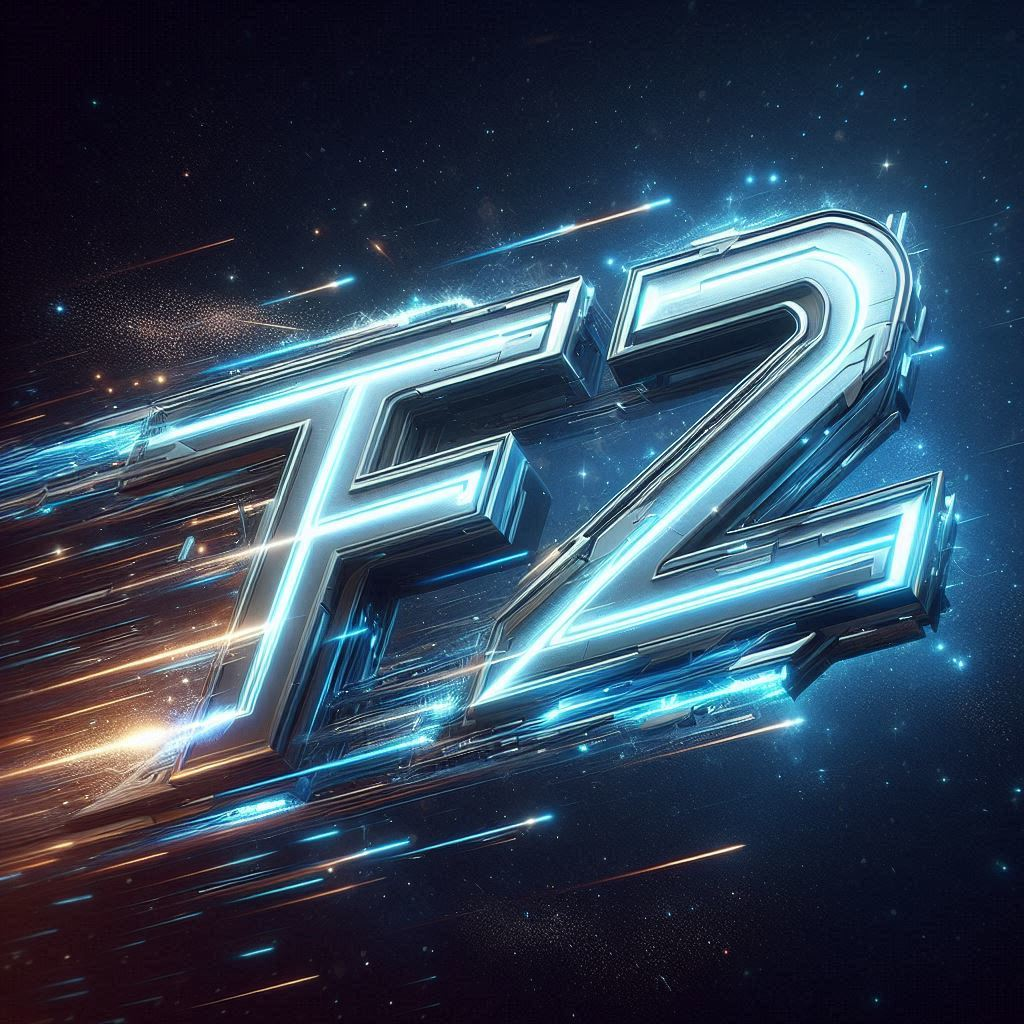
Yeah, that's where the fun is, right? You're right, exactly. Yeah, slaving over a hundred years. So our next story is the fastest digital mode ever created. FT2 is a little revolutionary digital mode for amateur radio developed by the IU-8 LMC with the support of Ari Kesserta. It uses the same codec as FT8 and FT4 with a 77-bit payload LDPC17491 to EFSK modulation. But compresses the transmission cycle to just 3.8 seconds. Software required for this is currently a decodium version 3.0 FT2 Raptor. Is it optimized week signal FT2 client within a hand? Excuse me, enhanced sensitivity extended frequency range and real-time NT in TPDTV back. Based on WSJ or WSJTX3.0.0 RC1 focused exclusively on FT2 mode.
And in license is the GPLV version three windows macOS and Linux. And this information came from FT2.it. Yeah, that's their main site. And I was just noticing too that they have they have the ADIF certification confirmed for FT2. So that means that you'll soon be able to upload to the AWRL contacts to get confirmed via FT2. Normally it takes a couple of weeks or so to get that through certification in the process and stuff like that. So that was just announced on the 25th of February. So it might be, might be real soon. I did load up that piece of software, the decodium on my computer. But I had some weird problems with it. I don't know if it was related to the problems I was having with FL rig or not. So I kind of just walked away from it. So I'm going to circle back probably in our in the next couple of episodes. And we'll take a deeper dive into FT2 and whether it's worth it and where people are active on it.
Because I didn't get that clarity through using the software whatsoever. But it did look cool. It was a really cool looking colored version or dark mode colored version of WSJTX. So if you just want to see that, it actually is a pretty cool color wise. So yeah. And is it the fastest digital mode ever created? I don't know. It's definitely interesting with the quick turnaround time. I know on my little jump today, I think I've got in like 85 contacts today with the FTA. So that's a lot of contacts in one day. I don't know if I had 160 here, maybe 200 contacts with FT2. Maybe. Anyway, the next story here is. Oh, yeah. Indiana Prohibits homeowners associations from restricting amateur radio antennas. Oh, this is good news, right? House bill 1152 was just signed into law and prohibits homeowners from adopting or enforcing any rule
that restricts amateur radio equipment, including antennas, towers and feed lines. According to Hunter Reed, KD9, a YLQ, the ham who wrote the amendment for the state senator, Alexander, quote, the bill would require that once a homeowner association updates its governing documents, then they will have to comply with the law. There's nothing in a law that would require an HOA to change or not enforce their existing rules unless the rules were adopted to amend, adopted or amended after June 30th, 2026. So yeah, basically, yeah, if you live in a HOA place that has certain rules about antennas, this does not apply to you in Montana, not in Indiana, not Montana. In Indiana, until the homeowners association actually redo their governing documents, or this could be even a new homeowners association that has some new governing documents that are being added after June 30th. So I would expect probably some homeowners associations to delay any kind of updates
to their governing documents for a while in order to sidestep the change that they're going to have to include language that is, well, not very ham-friendly. So yeah, if you're in Indiana, and it affects you, give us some news and updates whether your homeowners association is going to update in June. We'll see, right? Yeah. Well, this brings us on over into our open source topics. And the first one is kind of as a response from a topic we had last week about the age gating. So Cheryl, why don't you go and take this one? Yeah, Carl Richell, the CEO of System76, responds to age verification. He's issued a very strong critique of the new U.S. state laws requiring operating systems to implement age verification, particularly California's Assembly Bill 1043 and Colorado Senate Bill 26.051. While acknowledging the legal obligation to comply,
Richell argues that these laws are ineffective and threaten user privacy and digital freedom. He highlights New York's proposed bill as being more dangerous. New York's proposed Senate Bill S8102A requires adults to prove their adults to use a computer, exercise bike, smartwatch, or car if the device is internet-enabled with app ecosystems. The bill explicitly forbids self-reporting and leaves the allowed methods to regulations written by the Attorney General. Practical methods for a bill of such extreme breadth would require, in many instances, providing private information to a third party just to use a computer at all. The challenges we face are neither technical nor legal. The only solution is to educate our children about life with digital abundance. Throwing them into the deep when there are 16 or 17 is too late. It's a wonderful and weird world. Yes, there are dark corners. There always will be. We have to teach our children what to do when they encounter them and that we have to trust them. Despite concerns, System 76 plans to implement a minimal privacy-preserving age prompt
to comply with the law while continuing to advocate for its repeal or constitutional challenge. And this information came from the System 76 blog. Yeah, so I think there's a lot of pushback, but there's still a level of compliance that's needed by players that are commercially available. Our commercial in the business of Linux and open source here. The reason why System 76 sort of falls in this category is they sell their PCs with pop OS on it. So they have technically become a commercial vendor, even if they give the software away free with it because they bundle it together with the hardware. It's kind of puts them in the same category as having like an enterprise type customer or a commercial division of your product where you basically sell it. So yeah, this is a big concern. I've been listening to London Journal 2 on this and he's been talking about that there's already a law on the books in Brazil
that supposedly goes into the effect sometime this month. So if you do business abroad and stuff like that, you might have already seen this coming if you have an international division of your office. But yeah, so it's definitely moving forward, regardless of the pushback at this point. But we'll see if we'll see if there are any court cases and stuff like that that kind of pop up out of this. I'm not sure there has to be some that have already started. Yeah, so the next topic is podman 5.8.0 released and podman, the pod manager, as a tool for managing containers and images, volumes mounted into these containers and the pods that pods made from the groups of containers. Podman runs containers on Linux but can also be used on Mac and Windows using a podman of virtualized pod, podman managed virtual machine. Podman is based on lib pod a library for container lifecycle management that is also contained in this repository.
The lib pod library provides APIs for managing containers, pods, container images and volumes. Podman releases a new major or minor release four times a year and this is obviously one of those times. This is February. The next one will be a May, August and November. Patch releases are more frequent. The reason why I included this as a topic, just because I was also interested in podman, I've actually used it many times in the past. I actually use it at work all the time. It's a Docker kind of sit in replacement too. If you use Docker for like doing Docker compose and stuff like that, you can docker compose podman pods. And they work just very similarly with almost no differences, except for I did run into a slight issue with the SE Linux on one of my servers. But yeah, I've been using this. I'm running our current test version of etherpad on it right now. So I really haven't used it for myself or anything. And then I noticed that in Fedora, they have the Fedora, the cockpit, which is basically on the servers,
but you can also install it on desktops if you want. But on my server, I have the cockpit where basically you can log into the box via WebUI. And on that WebUI, you can also create podman containers and manage them in there. So I've done both creating the containers within side of the cockpit, which is kind of cool. And then I've also done it from the other side, having a Docker compose file and a Docker compose up the instance. And then you can still manage those containers, start and stop them from within the cockpit for podman on Fedora. So yeah, it's kind of cool. Probably be using it more and more as I try to continue to bring all the missing services that Russ had running up. And I'm still in the process of that. I did back up the two, I had the two Minecraft instances that I had to back up more locally just because the files are so huge on those things.
So I'm going to have to move those next and this will probably be running under podman as well. Probably from the crafty, the crafty controller, which is a controller for virtual environments for Minecraft. So yeah, so that's why I included podman. I'm sure Cheryl, you have any comments on podman. It just sounds cool, right? podman. Well, yeah, it sounds cool. Yeah, no, I know absolutely nothing about podman, except for what you just said. Podman is the bomb. All right. So our next story is the Nvidia R595 Linux driver beta brings new Vulkan support and DRI3 version 1.2. Exciting for Linux users with the Nvidia 595 driver series is adding some long sought Vulkan capabilities plus also enabling DRI3 version 1.2 support. Nvidia 595.45.04 beta driver for Linux brings support for the descriptor heap. VK underscore EXT underscore descriptor underscore heap and present timing VK underscore EXT underscore present underscore timing extensions.
As some great additions to now see with the Nvidia driver to enhance the Linux gaming experience. The Nvidia 595.45.04 Linux driver now also now enables the mode setting parameter by default for the Nvidia DRN kernel river and proved a GPU reset handling a new application profile for CUDA apps to reach POP-state and raising the minimum wayland version to version 1.2.0. Plus, there are various bug fixes, including hang fixes. That's always nice. And this came from for products. Yeah, those hang fixes. For those of you that watch LTT, Linus' tech tips on YouTube, you've probably seen his Linux experiments lately, including his last one. But I always like the one that where the Nvidia box starts doing the flicker and flash on the UI. I won't say what other Nvidia boxes done that recently, but this is why I run AMD in Linux boxes.
I try to avoid an Nvidia with a passion when it comes to that. I do carry keep one one Nvidia box for Windows gaming, and that's it. But yeah, yeah, good ol Nvidia. And our last topic in this section is Gentoo on Codeberg. Gentoo is now has a presence on Codeberg and contributions can be committed for the Gentoo repository mirror there as an alternative to GitHub. Eventually, also other Git repositories will become available under the Codeberg a Gentoo organization. This is part of a gradual mirror migration away from GitHub. I already mentioned in the 2022 2025 end of year review. Codeberg is a site based on Ford Joe, forge Joe, forge Joe. Okay, forge Joe. Sure. Or forge Joe, forge Joe. There you go. We'll do that. I maintain my dedicated nonprofit organization and located in Berlin and Germany. Thanks to everyone who has helped make this move possible. These mirrors are for convenience, for contribution.
And we continue to host our own repositories, just like we did while using the GitHub mirrors for ease of contribution to. And this came directly from Gentoo's news page and the eyes and wheeze and stuff like that. We're obviously from the author, which doesn't even say who authored it. But I've noticed a lot of a lot of groups are going over to Codeberg. I had a logging program queued up to review and look at a dragon log. And I noticed that they had closed their GitHub. And I was like, oh, maybe the project's dead and then I realized, oh no, they just moved over to Codeberg. So yeah, Codeberg. I guess people are using it and moving over to it. I guess it's fine. I actually, because I hadn't heard of Codeberg before, so I started doing some googling about it. Yeah, it looks like a lot of people are kind of done with GitHub. And they're like, nope, we're going to Codeberg. Like, okay, whatever. I wonder if that's all from the, you know, trying to walk away from Microsoft or the Copilot or, you know, perhaps the insidification of software in general.
I don't know. Could be any of those things. Could be anything. All righty. So now we're going to move over to the Linux and the ham shack where we try to blend some amateur radio and open source altogether. And I found a couple of projects here that I kind of wanted to talk about. The first one. I'm actually going to do second. I'll do the second one first, because I mentioned it in the last podcast about the other project for the open, the ham clock, open backend project. That what you talked about last week. And this was the project that I tried in the meantime, and it's called open ham clock. I'm sure all these will be very confusing at some point, since they all sort of share the same names and stuff like that. But open ham clock is a real time amateur radio dashboard for the modern operator. Open ham clock brings DX cluster spots, space weather, propagation predictions, poda activities or poda activation, soda activations, WWF activations, WWBoda activations, PSK reporter satellite tracking, WSJTX integration, direct rig control and more into a single browser based interface.
Run it locally on a Raspberry Pi on your desktop or access it from anywhere via cloud deployment. They have also a live site that you can kind of check it out on that's at openham clock.com. And it looks pretty pretty sexy. I do have it running locally here on actually the machine I have sit in my office right now. It's not the one that's here right now. And it looks really good. It's from the very first instance that I got from them to where it is now has been pretty rapidly developed. Kind of does smell a little bit of the AI, but so far so good on at least the quality I can tell. I know when I've done the NPM audit that I think they only had like one or two packages that had already fallen back in version, but upgrading those at least locally, which I always try to do running the audit fix didn't break anything. So that was good.
And this is something you can run on your machine. It runs via node. Just like a standard get it updated NPM install and NPM run or believe yeah, I think it's just NPM run or start or something like that. And then you'll have a local address that you can go to I haven't done any of the hook in it up to the local rig or anything else like that. I basically just kind of tried it out and looked at it on a very low powered device. I have a couple of these low powered I don't even know what processor they have them. Very slow. I was using them for some scanner location boxes and stuff like that and that project went away. So now they are just spare spare things and I have I'm running a marchy on it of all things. And I install the open ham clock on it and it runs fine under oh marchy so there you go for all the people that have weird things to say about oh marchy it runs fine. And this open ham clock is pretty cool. We've linked in the show notes linked to the GitHub page and also to the open ham clock a website.
Take a look at it. It's kind of neat and definitely looks a little bit cleaner and more upgraded looking than the regular ham clock or I guess we've called the legacy ham clock version. Okay, so what else did I have here? Oh intercept this project looks really cool. I want to try it and I have not yet. But I just want to quickly speak about it because it looks cool intercept. It's a free and open source platform that unites the best signal intelligence tools into a single and accessible interface. And that was the compelling the compelling opening for me. So some of the features that this project has this is all web driven. So you can just drive all this through the web browser. Pageer decoding 433 megahertz sensors, weather stations, TPMS, IOT devices, you know, obviously with the right SDR cards hooked to this is primarily made for an RTL SDR, but I do also have some mentioning of hack RF in here as well.
So sub gigahertz analyzer RF capture and protocol decoding for the 328 megahertz ISM bands via hack RF aircraft tracking a DSB via dump 1090 with real time map and radar vessel tracking AIS ship tracking with VHF DSC distressed monitoring. ACARs messages VDL to VHF DIA data link to mode also does let's see weather satellites web SDR so you can remotely listen to HF shortwave via the Kiwi SDR network as well. You have slow scan TV so you can pull slow scan TV from the ISS HF APRS satellite tracking utility meters a Wi-Fi scanning ADS B history Bluetooth scanning Bluetooth locate GPS tax on our TSCM counter surveillance with the RF baseline comparison and threat detection. You also have mesh tastic in there so you can pick up on the lower mesh network integration stuff space weather spy stations.
Remote agents and also has an offline mode bundled assets for air gapped field deployments as well. So it looks like a really cool kind of collection of stuff here. There's a GitHub page linked in the show notes I will I will be installing this and I will be trying it out. So if you try it out so give me some feedback to on that and we can chat about it or maybe we'll do a deep dive into intercept. This might be a nice little thing to throw on that old dragon OS right because it has everything else for per signal tracking and detection and stuff like that. Maybe this is sort of like the dashboard for plugging all that stuff together in real time. Well, I think that's all the Linux and the hamshack stuff there was what we got for announcements and feedback. Well, let's hear we got a couple obviously we we can always use your support through Patreon PayPal merch, sharing it, writing as whatever.
You'll see us at hand mentioned, which is May 15 through 17th 2026 will be in booth 2206, which is in what hollows that in I don't know building to. Yeah, there we go. There's the buildings have names too. I don't know. I think they might. I'm not sure, but we're we're across from like Bengali keys, right? Yeah, Bengali keys is right there and then also icons, caddy, Wampus to us and. Flex radios also on the other side of us. So yeah, right. Yeah, a lot of us are there. Yeah, you can you can find us when you start looking for the big people. Yeah, and bills slowly working on the website, getting getting new things added every day. We originally had the website on WordPress and they'll went back. We should not do that, which he and Russ had already discussed that anyway. So that was that was going to be something that we I guess worked on over Christmas break, but that didn't happen.
The hardest part about it is adding search just because of being statically generated. That means our search sort of already sort of statically generated as well. So we have to use a library, a JavaScript library to kind of do that. I haven't plugged it in or tested it yet. So that will be coming. I know I always use the search a lot during the show also when we were trying to reference back to podcast numbers and show numbers and stuff like that. So so yeah, I realize how important having the ability to search our website is with all the content that's up there. So I'm working on it. Yeah, that's all we can ask for. Yeah. Yeah, and I'll let you handle the next one. Sure. Yeah. So we had a YouTube comment on our LHS episode. This is over on YouTube. 585 the SDR plus plus brown SDR plus plus brown deep dive. And this was from pump tracker, Pavel. He says how to install on Dragon OS. Could you please help? Well, it's downloadable as a deb.
So the deb file you can download and you can just do an app to install and then then pointed out the deb file or you can do a deep package. If you're a deep package person or you might even be able to double click it and automatically bring up the installer and should install it. Either those three methods should work fine for installing SDR plus plus brown deep dive or not deep dive but the brown edition. I haven't checked in on that project in a while. So I don't know where it's at. 585, even though it's not a lot of numbers ago, it's definitely a while ago, probably sometime mid year, which, you know, I have had a search on the website. I'd be able to tell you that. But I don't. I know I'm already feeling the pain and suffering. So anyway, yeah, one of those three ways can do that. And I appreciate the comments on all of our all of our social medias, which Cheryl's going to go over right now for our subscribers and supporters section. Yes, I shall.
So for our subscribers and supporters for Patreon, we have William Collins. I will warn you that several people have said that apparently some sort of glitch in the last year or two. If you were a Patreon subscriber, you might want to check because over the last year or two, apparently several people. Patreon can process payments or whatever so they just got dropped off of the LHS stuff. So I want to check if you continue on to support us and make sure that you are supporting us or can get back on to supporting us. Paypal since January, Fred Cole, Dylan Angle, Michael Jopling, John Clark, Robert Black, Ronald Ike, Robert Yurkey, Thomas Foy, Alan Wilson, and Kevin Long. For Facebook, we heard, we heard, we heard, excuse me, Curtis Cheney and Matthew Obachowski. No one on Instagram, no one on Twitter, no one on mastodon, and no one on Blue Sky. Not necessarily true, though, because we're still trying to get into those accounts because Russ handled all of those.
And our live show participants are Steve, KJ5T, Mike, K6GTE, and Tony, K4XSS. Yeah, so with that, if we don't have anything else from the chat room here, I'm just going to go on over a few of the comments. Steve, KJ5T mentioned that one factor will be the sensitivity with the FT2. FT4 is less popular for really weak signal stuff, and if your signals are good enough for FT2, just use CW or even SSB. That's pretty true. They do have a interesting sensitivity chart that they published there for the FT2 to show how it sort of sandwiches itself in between FT8 and FT4, at least with the four period average. So I'm assuming that that requires some retransmissions and stuff like that, so that might not be your perfect 3.8 second FT2 transmission that those numbers were achieved on. But your mileage may vary until people get completely bored of FT8.
People probably won't switch over unless it's a contest, and then, yeah, they might switch to the faster modes and then switch to the other ones as the contest progresses. And then Steve also says that he and KJ5, and then we'll be there to see us at the booth. So very good. We're looking forward to seeing you there. And I can't think of anything else we need to throw in this episode number 607. Cheryl, do you want to close us out? Sure. So I'd like to thank everybody for tuning in, and we will see you next time. I'm Kate, or excuse me, can you really call it? Well, I'll do that to you. For the silent key, K5 2X, I'm Cheryl W5MO. And I am Bill, any 4RD, 73. Thank you for listening to this episode of Linux in the handshack. LHS is a community-sponsored podcast. Live recordings are Sunday nights at 8 o'clock central time.
Our homepage can be found at LHSpodcast.info. You can support the podcast via Patreon at patreon.com Stroke LHSpodcast. We're also on Discord, Facebook, Instagram, YouTube and Mastodon. Contact us via email at infoatlHSpodcast.info or via voice mail at 1909-547-469. That's 1909-LHS Show. We also have merch. So until next we meet, remember to always heed, your hedonism. See you next time.
More episodes
More from Linux in the Ham Shack
LHS Episode #612: The Weekender CXXXVIII
Linux in the Ham Shack
LHS Episode #611: iNTERCEPT Deep Dive
Linux in the Ham Shack
LHS Episode #610: YOLO
Linux in the Ham Shack

LHS Episode #609: The Weekender CXXXVII
Linux in the Ham Shack