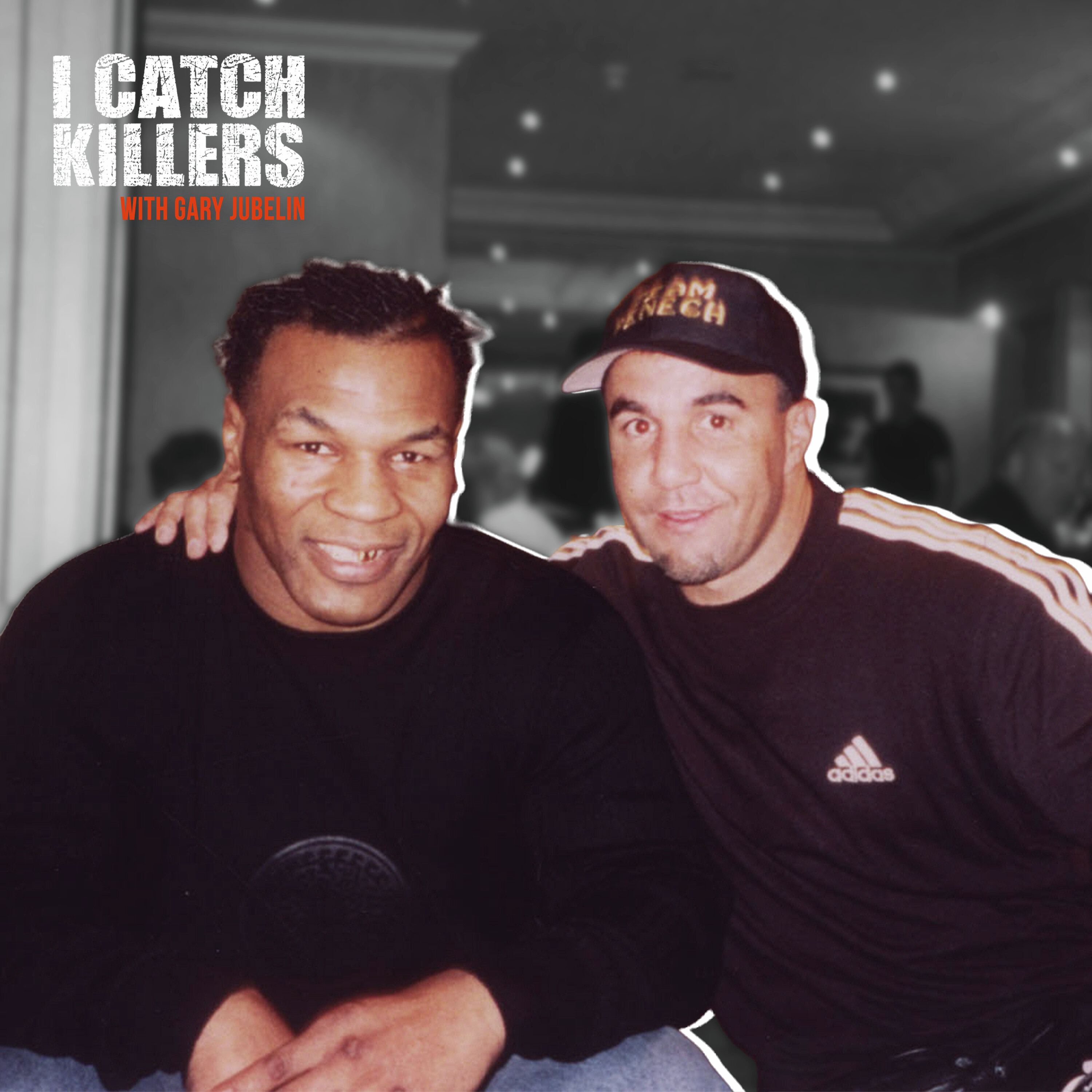
Lessons, not life sentences: Jeff Fenech Pt. 1
About this episode
For Jeff Fenech, the Newtown Police Boys Club wasn't a place to find a career - it was a place to find a fight. By age 13, Jeff was a "troublesome teenager" already hardened by street gangs and stints in youth detention centres. Everything changed when he met legendary trainer Johnny Lewis, a man who would become his father figure and steer him toward the discipline of the ring.
The rise of the "Marrickville Mauler" was nothing short of a boxing miracle. From the 1984 Olympics to winning a world title in only his seventh professional fight, this is the story of how a kid from the streets became an Aussie icon.
See omnystudio.com/listener for privacy information.
Get every episode summarized
Each time I Catch Killers with Gary Jubelin publishes, we email you a written briefing from the transcript — the topics, who appeared, and any specific claims, with the ad reads skipped.
Email me new episodesFree for 3 shows. No card needed.
Hosts & guests

Transcript ready
2,005 searchable segments. Every word is indexed and playable.
Full transcript
I Catch Killers with Gary Jubelin — Lessons, not life sentences: Jeff Fenech Pt. 1. Machine-transcribed; use the interactive transcript above to jump the player to any line.
The public has had a long held fascination with detectives. Detectives see a side of life the average person is never exposed to. I spent 34 years as a cop. For 25 of those years I was catching killers. That's what I did for a living. I was a homicide detective. I'm no longer just interviewing bad guys. Instead I'm taking the public into the world in which I operated. The guests I talk to each week have amazing stories from all sides of the law. The interviews are raw and honest, just like the people I talk to. Some of the content and language might be confronting. That's because no one who comes in the contact of crime is left unchanged. Join me now as I take you into this world. He went from a youth detention centre to become the four times world boxing champion. Today I'm at the home of Aussie icon Jeff Fennick. We're talking about the moment, the troublesome teenager, walked into the new town police boys club and changed boxing history forever.
Jeff Fennick, welcome to I Catch Killers. Thank you. Well, on a true crime podcast. We're always a pleasure and I love doing this stuff. I love being able to share my stories and hopefully the stories that I share make people a bit of people. Yeah, well, I think the fact that the life that you've lived in boxing, like in the hurting game as they say, a professional fighter, there's a lot of lessons that can be learnt. I see a lot of people's lives have been turned around by pursuing, like you did, going, becoming a professional boxer, turning away from a life of crime. There's a lot of lessons that can be learnt in the boxing ring, isn't it? Yeah, well, I certainly wouldn't be here without boxing, but the reason why boxing, because Johnny Lewis said, if I didn't meet Johnny and there's not a chance the world would have been back to the gym the next day, I didn't want to go back to the gym the next day. I got beat up by somebody on the sheet and he's telling me I can fight. I'm not stupid, I'm not going back to get beat up. It was Johnny Lewis who I don't know had this magnetic force that made people fall in love with him
to this day, I love him. We'll try and work that out. I know, I've come into the orbit of Johnny Lewis and he has got some magic, hasn't he? To me, he brings out the best in people. Yeah, he makes you want, he's very, very smart. He doesn't tell you going to go to the Olympics in the first time it's easier, but he tells you if you keep working hard and you prepared it all, his sleeves up, things will happen. And he's very, very smart in the way that he will set you goals that are achievable. And then when you start achieving them, then he'll put you on that next level and then, is anybody better than him at that? Yeah, it's fascinating, the influence that Johnny has and the amount of respect he's got. In regards to you, it's not a fast stretch of the imagination on a podcast that if you didn't find boxing, I could have been talking about your time inside and all the crimes you've committed because you were heading down the path as a young fella. Yeah, it wouldn't be, you wouldn't be talking about... Yeah, I don't know where I'd be.
Well, most of all, I'd still be in jail or I'd be dead today, so I'm just, yeah, I'm blessed that I found the sport that I was born to be involved in. I mean, I never boxed in my life. I was 17 and a half, I never watched anybody. Of course, I'd heard in my home, but I'll leave it. Yeah, I'd never dream of being a fighter, I want to be a first grade footballer. That's all I wanted to do. That was your passion. I actually saw you play at Cumberland either when you had your break from boxing and you saw him with the NRL Paramatter and I think it was reserve grade. Well, I'll go see what happens when you took the field. So that was an experience. We'll talk about that later. I just want to ask upfront, like you are... And I think the 80s when you start having your success in boxing. Australia was devoid of sporting heroes and we're a sporting nation and your success in the 80s, the mid 80s when you won the world title. You became virtually an icon. You know, everyone knew who you were. How was that being Jeff Feneck at that stage?
Again, it was pretty strange because I... I don't think I was really ready for it and I don't think even to this day there were a lot of people that aren't really ready to cope with that stuff. Although, you know, we had managers and back then we had nobody. I joined Lewis, you know. And you know, I made money and I spent it and I have no doubts. I could have had millions and millions more. If I was managed properly, if I had somebody who knew what the numbers were. But like I said, I'm throwing a look at who I am and what I've got. You know, I didn't do that. I'm happy to have what I've got. I feel very, very blessed to have found this for like I said, I believe that everybody has a gift and sometimes you find it, sometimes you don't. Well, it's virtually become folklore and we'll dive into the netty gritty of it about how you got in the boxing. But having the profile that you do, it must come with a weight. There's a good in the bad of having a profile. But do you feel the responsibility as a role model? Yeah, definitely so.
I've made some mistakes. But my mistakes or the more mistakes I've made just been guilty by association. I got charged with having a fight with a green grocer. I didn't even throw a punch. I'm just standing. I've been pulled over for different things and maybe back in the day, they were the good things because the police would talk to you. You know, obviously because of my name, most of the times I'd get off. But some of the things, like I said, my wife and I were in the Gold Coast. Valentine's Day, we end up having an argument because I was pouring as a special guest. I was pouring some girls, she ain't paying that. And she's standing on her own. So we go downstairs in the back of a car park. We stand there to talk and she was pretty ready. You know, all of a sudden the police car comes and we explain that to my wife. We have an argument that nothing's happened. As I could see, my wife was, you know, normal. We go outside, we stand back up and then three police cars come and I end up getting arrested.
Like I said, I knew I'd done nothing. So I'm going to stand up for myself. So like I said, there's good and bad. But like I think the thing that I like the most, I forget what comes with it. But I have an opportunity now to give back. And I mean, like this beautiful house going, I credit that to the people who follow me. You know, you don't own anything if you're not popular. So I credit this to, yeah, thanking the people for what I've done. But you know, my main aim is just to give back. And like I said, if I have to give back from experiences that I've had and made mistakes and hopefully people won't make the same ones. I'm happy to have gone through that role, Costa. Yeah, well, you're very forthright in your opinions too. And that sort of polarises people and steers people. The first time I saw you, you were actually helping the cops. I had just joined the police and they had the dial, a drug dealer. The photos on the wall of me and Garf, were there just? Yeah, if you look, do you see where me, McGaddle, behind bars?
Yes, yeah. One below it. There's the commissioners here. Okay. Well, that's, I was answering the phone. Do you know what happened to me for that? What happened? My house was aged every day. What? The drug dealer's got the shit to do. Yeah. Well, I don't want to do it because I'm very into drugs. I've never had a drug in my life. I've never had a coffee in my life. After I spoke with them, just telling people about not doing drugs. It said dobbin' a drug dealer. So I was the enemy. Yeah. That's funny. Well, it's not funny. It's terrible. It wasn't funny at all. Did you want to come every morning, clean the eggs and shells from the house? Well, for what? It's where if I was excited, senior. It's been following your career and senior there. So I was excited. The last time I was here at your place, down here, standing in front of this wall. And Michael Frances, the New York Mafia capo, we'd been out for dinner and we came back here. I think we were shaping up a newer referee or whatever. But like Michael Frances, he's been on the podcast.
And I know him fairly well. And he was a big deal Mafia dude before he saw the light and got out of the Mafia. But the respect for someone like Michael Frances, he shows you. And I've seen that. We're talking about the function down in Melbourne for Barry Michael. And there was a lot of colorful characters there. There was some bikies and business of people. And I was watching you mix between the two worlds quite easily. Why does it seem to attract people? Like I said, respect isn't given at all. I've had knocked some of my doors and some of the biggest bikies and other people back in the day stands. Smith and all that. They're my friends. My outlook and my way of life is like this and show that everybody shake their hands. And that's it. Like I said, I don't know if I'm lucky or run lucky. But like I said, because of I'm the fighter, everybody wants to be around. And when I was the fight, all those guys from the good old days were there supporting me and stuff.
So I was never going to turn my back on anybody. Like I said, to this day, if something happens to you while I'm with you Gary, I'm going to jar with you mother. Somebody bashes you or hits you. They've got to hit me as well. I'm with you. My father told me one thing. When you go out with your friend, you go home with him. And I didn't care who I am or who you are or where I am. If somebody's got the audacity to say something to me, they're copying it back. And the old Bible said an eye for an eye. Forget about this new bullshit world we live in. Yeah. I go by the old testimony where it says, yeah, if somebody is good enough to say something would do something, you give it back. And I'll give it back a lot harder than they can because they're cowards. They're just, you know, people who get on key pads and they think they're worried. Because they're tough. I said something to Jeff Ernie. But I put my address on the phone number and they can say to my face. Well, I think loyalty is something that's that's lost. And being a stand-up guy is almost frowned upon these days. But I haven't got a problem with those values. And, you know, it's a funny world now and you can get shouted down for those values.
You know, Gary, some people say, Jeff, what did you write that on Facebook? What would you say? Listen, if they're good enough to say something about my family, I'm going to give it back. And if they don't like it all, you see this thing will shut your mouth up and don't say anything about me at the start. Don't listen. The reason why I was such a great fighter is because I got that switch. And when the switch goes off, I'm unbeatable. Well, I'm much as unbeatable. I'm not scared of anybody in the world. So don't turn that switch on and then, yeah, you'll find that I started with me. Yeah. Well, I think loyalty is a strong value that's underestimated the importance of it these days. And I saw it in the police. So, yeah, I had a lot of mates in the police. But when things weren't bad for me in the police, couldn't believe how quickly the rats scurried. And people that I thought would, you know, back me up to the hill that I would have been prepared to back up to the hill. I couldn't see him. So they just disappeared. It's the same when you win a loser fight. You, Johnny Losters famous to say saying when you win, you walk in the dressing room, you can't move.
When you lose, you can get a dog by the tail and when there's plenty of room in there, nobody comes in there. But like I said, and that's part of the sport I mean. But the great thing is because you're talking about loyalty and I don't think there's anybody more loyalty to people than Johnny. Johnny was somebody who instilled that in me. Like I said, I talked to Johnny about the good old days, the Terry Balls and all these friends that he had Lupin, all those guys. And if anything happened to anybody, they'd be the first person there. I'll never forget when I was at you down at Arras Silver. And Johnny stopped the fight a little early with obviously with his influence. And some people scream, they're Johnny calling me. I jump down the next step, I've got a gun, put to my head. I jump down because I swear at my China. You know, if Johnny walked down the street in front of any of us and our turn over there, we're all jumping there and take a bullet for you. Yeah, and I think that's the character reading that he instills at, that you feel it. You definitely feel it. And I consider myself very lucky having an association with him now and lessons that I'm learning.
I'm learning the late in life and just, he saw the re-enforcing. Let me think of this Gary. Kangaroo Tools, they took him away then, but he wasn't. And it wasn't for boxing. It was just for that company. It was for that band that he could sit down with somebody and make them, you know, the happiest guys in the world. He could sit down and if you were third best, he'd make you feel that you were the best in the world. Yeah. He had that ability, you know, it's always great. That's one of those people around you. Yeah, the most, most definitely. You're early, early days. So you told us about your childhood growing up before you discovered boxing. What was, what were you like then? I played football every afternoon and soon as school was done, I'd, first of all, have a paper. I'd go and sell my papers to have some money and then I'd go to the park and play football with my friends. But then I was one of the smart guys. I got out of school 10 minutes early every day. So because I had this lettuce and because my father was so sick. Yeah. They had to be the paper shop first. I'm going to get the paper shop. You know, the guys who had 70 or 80 papers of each, I'd take five or 10 out of each of their borrow.
Putting them on because I worked on the highway down in the southern cross hotel. And I saw papers when I saw it make a good extra four or ten dollars every day just from there. Yeah. So that's where you always had that street smart, the rat cunning and the starlers of paper boy. And how to play the game. And then I said, my father was so strict. When my friends would go out and do things and rob things. I never went with them, but after they would bring them back and hide them, everybody in the US would go and get them and I would sell them and do whatever I had to do. Yeah. So you're heading for a path of trouble because you did some time in that. Yeah. I went to a boy family. And then I went out for a couple of months and I went to all, uh, all Monday. Up at Thornley. Yeah. And I got out of there in a month because it would be over. Yeah. We went and played football over there and there. Yeah. I mean, I was in a street gang that used to go back and have fights. And at that time, and the street violence was really, really bad.
I was 12, 13 years old and I made an example out of me. Nobody said it was actually me. I was just in the gang. Yeah. They locked up quite a few of us and then me and my brother. Yeah. We both got locked up. And like I said, for me, it was a great lesson. The only thing that I regret, the nicer thing, ah, you were tough going. You just did this, you know, did a little bit of time or whatever reason. You went into these boys' arms. You're fighting everybody. I didn't realize. I didn't realize, um, the hurt that I put on my family, you know, it's not just a little tough going. I didn't realize how, um, how hard I, um, made it for Mum and Dad. My dad couldn't even travel to see my brother because he was in there. He was in Gosford and, um, Mum and Dad threw a hill and, um, to any kid out there, um, that we all think we're tough and stuff at a young age. And we think we can do this. Don't think about you. Think about the pain and hurt you. Put your Mum and Dad in your family through if I thought about that when I was young. I never would have gotten along with him. I still would have been a little shifty guy that would try to live a normal life.
But I would never put my Mum and Dad through what I've put them through. Yeah, it's a good message, Jeff, because I think at that age you don't even consider that. You think, ah, you're tough, you're around your mates. And the world revolves around you. Yeah, yeah. And then you don't realize the hurt and the pain you put your family through them. I was, I was seeing that later on in life. I was seeing that as I was older and some of those things that happened to me, that I wasn't even, I didn't do anything. And seeing my Mum cry and that as I was, um, you know, in my 20s and stuff was, was really, really hurtful to me. Well, you talk boys home and there's an interesting side story. I think we've made a hamden. You know him, real well, he's made a mine. But he was talking about, former professional boxer and a genuine tough guy, isn't he? He was one of the toughest guys ever came out of nowhere. There is something, there's something about NATO. He and his group, the legends, and did a lot of damage to a lot of different people. Even the police. Yeah, yeah. Well, that's why he was in the boys home.
And he got three years and he was up at Gosford. And he told me the story that, you know, he was going down the path that would have inevitably ended up in prison. And he read your book and that, he said he stole your book. But anyway, I don't think he can get charged with stealing a library book. But he read that book and then he started telling the other, the other inmates or the people in custody and the guards that this life's not for me. I'm going to become a professional boxer and that turned his life around. Yeah, I'll never forget the first day he turned up in the gym. And everybody was talking about this guy. And I think he learns the same way I did. He was part of the guy named Pierre Carram. He was pretty good. He can be the toughest guy in the world with a few, and have never been punch before. If you never know how to throw a proper puncher, he was tough. So NATO had a tough first bar, but he just got better and better and he got more and more dedicated. And like I said, he was in the same position as me. He got a built in his first bar. He went back because he knew the discipline and everything.
He also took to become a good person. And being around Johnny Lewis was just, again, a drug. Yeah, that's the magic of boxing butt too, isn't it? Because you can be, you think you're the toughest guy in the world, and you step into a boxing ring and you can get lit up by someone that looks like an accountant, knows how to fight. Yeah, and that's the discipline that you've got to put into. And we'll delve into that because I think there's a lot of lessons that can be learnt and the importance of police boys clubs and encouraging that. I think we can make a huge difference. Forget police boys clubs. School, every school in the world should have a lesson every day or whatever day it is three times a week, where they teach kids self-defense today. So they don't get bullied, so they don't go, you know what upsets me the most? Are the parents today? My daughter came home in the mean hour and told me, I'm not letting nobody bully my children or try to say the wrong things about our family. And I mean, if they do, if my kids don't think of themselves,
then they're going to cop at worst from me. And they've got to learn today that, yeah, we've got to teach all our kids some, you know, form of self-defense. The most powerful tool we've got is this. Just by talking, I mean, I've been with plenty of scream that's where you want to fight them. I've been with police to say, come on, and it's the easiest thing in the world. But like I said, if you are confident, you know what you're doing, what you need to do is talk. And then it goes the next stage, and you've got no choice. Yeah, at least you know what you're doing. Well, Jeff, I've tried to make this point because when people think it's counter-intuitive, that a kid like yourself, you get in the street fights, you've been put in a boys' home for fighting, and then teach the boxing, how's that going to change? And the naysayers will say, well, you're just teaching him how to beat up people. But my observation of people that have the confidence that they've learned through learning how to fight and look after themselves, is that they don't have to prove themselves all the time. Like the bullies invariably.
The bullies know them. They know them. They don't know who to pick on. And once you know how to look after yourself, you can walk away from a situation if you have to. You can back yourself up if you need to, but you can walk away from a situation. Gary, I'll never forget one of the things that Johnny Lewis told me. He said, I've taught him to do this in the ring, not to be able to do it outside. And I've got some boys that I try, and I say, my own kids, who were bullied and they're a little autistic, but they leave this house, they're happiest kids in the world, knowing that they can look after themselves. Now I love when they walk out. That's maybe the greatest thing I've ever done, every day when these boys walk out of my house, and I see the smile on their face. And when they leave, they can't wait to get back. For me, it's infectious, so I love it. I mean, I'll, if I had a million kids walk through this house, they made them leave and not, they couldn't wait to get back. I've done my job. Yeah, yeah. Well, the fact that a referencing back to neither, the fact that, yeah, just by the words that you had on that, in your book, inspired him enough to turn his life around.
And that's, you know, if you can change one person, it's something positive. And from neither, come be son and pass. Yeah, pass. I'll try and pass. It's an amazing talent, and I think, and I'm sure Nader, is this kind of father, Nader, fourth for the World title, and everyone I think has, I think has come in the World title, so it's, yeah, it's going to be interesting. Well, the synergy of you having an influence in Nader, then training with him, and then, now you're looking after his son. It's exciting for me, like I said, I've been around, has, and his family, since he was born, so I'm, you know, they're an amazing family. The mother of the father and the brothers are all, very, very close, and it's, well, it's kind of, pleasure being around that family. Oh, rock solid human being, Nader from what I've seen, and he's doing some work with kids, troubled kids, and all that, and I think it's so important. Yeah, Nader, is this kind of guy, but he, Nader has to learn that, even in this day and age, if it's black, it's black to Nader, but I've got to tell,
Nader, you can't just say it, as if it's black, you've got to shade a little bit, you've got to let it come out, because some of these kids just, yeah, they're going home, and they're family, like, go until the school teacher, somebody said something, and you're not there any longer. But they're the guys we need, we need the Naders. Jeff, you might, I'm laughing, because you're probably, we're probably talking about the same story, but we weren't that, yeah, he gave someone, someone some advice, and it was very good advice. It was the key that appreciated the advice, but the teacher didn't, the woke world. Yeah. Oh, you can't say that, where it was the best thing for them. 100%. But, yeah, that's the world that we live in. 100%. How did you end up in the new town boxing gym? What, what, what you there to start with? I went to the youth club with some friends that we were, or we wanted to beat up some, some guys that were being, a little smart, downstairs we walked through, we went through the, there was a weight room, downstairs, the shelves, the soon room, we're looking through there, then we went upstairs, there was a wrestling room, and there was a judo room,
and the last one was boxing, and they had a little glass window on there, and said boxing has, I looked through, we're looking for these people, because the door was closed. I've seen a kid from my school, I've also played football with me, his name was Mark Krueb, and I went, there's nowhere else to go, so I went and sat down, I wanted to watch him box, and I thought I could beat everybody anyway, but I heard Johnny Lewis saying to him about, it would be great to get some sparring for him and stuff, and I said, now I'm sparring, you know? Yeah, we ended up being the best decision, but not at that time. Yeah, we ended up good, I was winded and stuff, and Johnny's telling me how great I was after I'm thinking, excuse me, this old bastard thing, some stupid thing, you know, might you got to come back tomorrow? Yeah, I'll come back, because with my friends, I'm not going to pretend I was, oh, not, you thought Johnny's just lining up for a run? Yeah, I was, I'm not, yeah, I said, you know, I didn't want to, in front of my friends, might get that I was a coward and say, no, I'm not coming back. So, I said, yeah, I'm coming back,
we're not going home that night, I'm trying to share, and stuff, I was winded and everything else, and I said, no, I don't know, next day, for some reason, that magnet, Johnny Lewis. And, I know, and I've heard you say countless times, and I fully get it, that you're success in part, or a big part of it was driven by, not letting Johnny down. Ah, no, no, you wouldn't, I don't know, maybe more than, anything else, when I've seen Johnny at the end of the, at the end of the fight, jumping in the air with, I knew I'd done my job, you know, that's, I don't know how to say this, but it was, for him more than, for myself, for my family, it was, for him more than anything, it was, everything else came after that, when, when I've seen him, and then, the rest of the crowd, and stuff, first of my, first football, to, to cuddle Johnny before rounding else, and then, the crowd, everything else, were there, and I love that more than anything, to,
to be this little kid rooting for, he was, really, really important there. It's funny with Johnny, because he's such a quietly spoken person, and you see, some of the toughest, and most notorious people in the, in the town, because I, get around with him a bit, all pay homage and respect to him, and then, the, the hard-ass, you know, sportsman, he just has a way, a way about him, like bringing, probably bringing the best out of people. Oh, without doubt, and, met some of the, and whatever you want to call them, in Australian history, that, all, have the utmost respect for Johnny's. Yes. And that, that speaks for itself. That's him. He's just, an amazing man. Johnny's here. I'll never forget, we were, in Dubbo, and, we went to the fights, and, in the fights, there was a bit of an argument, and stuff, and Peter Matresky fought, and, I'm walking down the street, and I've got my hands are busted, and stuff, because I had a fight, and,
and, and, I feel these, people were, swearing at us, and stuff. And, Johnny said, Jeff, don't, just ignore, I'm not ignoring them, Johnny. Jeff, just ignore them. There's going to be 50 of them, you know, we're in Dubbo. There's going to be 50, I said, Johnny, I'm not worried, you know. So, I turn around, I argue, all of a sudden, this 50 will start chasing us, anyway, we'll get to the one, we'll start fighting, and, the first thing that I see out, from fighting this guy, this guy has a bottle, and he's just about the smushed over, Johnny's in. So, I run straight in front of him, I get the bottle cracked right over my head, my head's all split open, I'm bleeding. Anyway, the fight ended, and, with a few of, them getting injured, and, I was pretty injured, and, we went back to our hotel, and Johnny says, Jeff, they're going to come back here tonight with more people, and they're going to, you know, I said, I don't worry about, just fix my head, so he fixed the head,
and he made it, I'll drive away at the time, drive away, drive straight back to the city, that night, I had to play for the next morning, so, yeah, it was, we've been through some exciting times, but I'll never forget that time, Johnny, Johnny had them, these boots on, so he couldn't really run too fast, so it was, yeah, we've been through a lot together, and, yeah, would I change anything? No, I wouldn't, I mean, of course, there were things that you'd like to think that you could change, but listen, and what I went through at the time, has made me the person named today Gary, and I'm very, very proud of him, I get these wankers saying this, that I stole a watch, and I never stole a watch on my life, just still something you've got to walk out of a shop, and I've never done that in my life, but I got charged with it, and again, that's, you know, and my name is Jeff Phoenix, so... You got to, the Olympic level, in the Amateurs, tell us a little bit about your amateur career, in boxing. No, it's not really much a till, I... It was short and sharp. Yeah, I had 28 fights, and I represent Australia, the World Cup, I went to Indonesia,
I went to the Kings Cup in Thailand, I went to the World Cup in Rome, and it was all, like, within 25, so it was just... Like I said, I don't know, I don't know, I don't know if it's ever been down or if it'll ever be done, when you think of... how quick everything happened for me, I'll go to the Olympics after 24 or 25 fights, so win my first fight, win my second fight, win my third, but it gets over termed by the jury for the first time in Olympic boxing history, there was a jury, and I come home, no medal, but I'll never forget the authority Australian boxing authority, who didn't stick after me, wanted a beat, didn't complain that he wins the fight and that one's a judge. Yeah, just the people that is not as familiar with boxing, that was in the Olympics, so it's an amateur boxing, you won the first two fights, and I think it was a quarter final or whatever. Over three rounds, it was three rounds, and the judges scored a score that you won the fight, which most people observe.
Well, the judges, the judges, the judges, and it's never been a jury before, then they bought in a jury, and the jury overturned it. Yeah, they went with the stronger country, you know what I'm like, I said, no, you should speak to Arthur Tundsthal, or any of those guys, but they didn't even say a word, I just got another ring, and of course, I was greatly upset. I got, you know, you know, this is what people would know about Jeff Ernie. We talked about Michael Jordan's and those kind of people. And I got to say mindset, let me tell you why, I went to the Olympics for one reason, and I went to win the Gohan Battle for Australia. Nobody gave me a chance, I had 24 fights. Our food guys had 300, 200, 190 fights. When I got there, I could have marched, but if I marched, it was the, you know, I have to go out in the heat. Yeah. And the biggest thing is, when you march out of the Australian team, you recognize, we're all of Australia, I never done it, Gary, because I wanted to fight. I wanted to have my energy to fight at the fight that night, so I didn't want to go on march, and then after the fight, I had to lose weight. The second thing is,
when you go to the Olympics, you compete, you know? And I only went to, like I said, to win. When, when that didn't happen to me, I didn't, the days that I won, I never went out, and I just, I just kept thinking, I'm going to be the first Australian ever to win the Gohan Battle. When that didn't, when that doesn't happen, your next, brain thing with the Olympics is, you can't wait now to the Olympic show, because there's the biggest party ever, there's the biggest party in the world, it's going to happen, you're going to go out, you're going to do this, you're going to do it. As soon as I lost, I wanted to get on a plane to go home. If I was going, you're going to miss the party, I didn't go there for a party, you know, I went to the win of Gohan Battle. That says a lot, doesn't it, Jeff, about your mindset? And I've gone playing the next day, and went home. What separated you? Because, yeah, going to the Olympics, a lot of people of the day, that's their highlight, that you've gone there, no, winning gold. Well, most people who lose the Olympics, the highlight's not them competing, it's the Olympic party, it's, you know, it's walking in front of your whole nation, I couldn't walk in front of the nation, because if I, it was stinking harder than the LA, I was going to be, be weak from a fight.
I thought, I went there to win a medal, at the end of this, or when they see me, put a medal around my neck, then they can understand why I couldn't march. But, yeah, and then, like I said, well, my friend, you can't miss the party, Jeff, I'm going to have all these, it's just going to happen, that's going to happen. I said, yeah, I'm going home, and I'll never forget that, and my interview, just before I got on the plane, was I said this, if I don't let me win a gold medal, I'm going to go home and become a world champion. And the reason why I said that was, because while I was there, I asked Arthur Tunston, and stuff that, I'm going to go home, I'm going to stay and meet you again. I'll win in four years, in four years' time, me doing what I've done, in 28 fights, in 100 fights. What are you doing? I'm going to be gone, I'm going to be gone, but I asked him one thing, I asked him, then I want to make sure that, it's a guarantee, that Johnny Lewis would be in my corner. They said, we can't go into that, so we came home, we weighed a little bit, we asked one more time, with my sponsors, they said, we can't go into that. So I turned professional. Yeah. 190, six days later, I was a world champion. Well, let's talk about that.
Just explain the people that might and be for me, with boxing, the difference between amateur boxing and professional boxing. Well, there's a lot of difference. We're back in the day, it's completely different now, the amateur style today, to what I was back in the day. Well, all those great Americans that won medals at, in 84, all went onto, you know, signed huge contracts, because the amateur, and the system was, was an apprenticeship for you, as a pro, for the pro. Now, you can be the greatest amateur in the world, and get down the, the professional boxing, nothing like it. Yeah. Although it's changed a little, but, me, I was always, I was always, distance to be professional. I'd like, I was fighting three rounds as the amateur, but I was still fighting 12, I was sparring 12, 15 rounds as an amateur, I was sparring, every Australian champion that there was, when I was like 51, 52 kilos, and I was always competitive with all of them. So when I got home, and I did turn professional, and went from fighting three rounds to,
you know, you know, when I was fighting, it was 15 rounds for the world champion. 15, 15, three minute rounds. Yes. I think fighting, I appreciate that. Yeah, no, yes. That's huge. So in my seventh fight, I fought 15 rounds. Four more times, I fought 15 rounds. They didn't all go 15 rounds, but one of them went 14 rounds, one went 15 rounds. And, you know, most of those fights I wanted to be around, there weren't fights where I went to a split decision, or I'd go, it was close, every fight after I'd finished, I went straight over and cut off Johnny, because I knew I'd won, you know. So, you know, when you went from, it was 84, the Olympics, wasn't it? Yeah. So, 85. You churned professional late 84, and you're fighting for a world title in April. April 85, yeah. I remember it, Jeff. You know why I remember it, because I had passed out of the Academy two days before, and my biggest concern getting out of the police academy was whether I was going to be roasted when you were fighting. So, I wanted to watch it. So, it was on the 26th of April,
I think it was. Yes, it was. Yeah, two days after, I got out of the Academy, and it was on night shift. So, I was wrapped. Tell us about that, because people didn't think you were, well, they say as we're saying, hey, yeah, we had limited amateur fights. You've had seven or six professional fights. Yeah. There is no way you can fight for a world title. They didn't just think there was no way to fight for a world title. They didn't just think there was no way to fight for a world title. And let me tell you, I'm the first to put my hand up, and say, the OBF was a new organisation at the time. Satoshi Shingaki was in the greatest fighter in the world at the time. But he was a world champion. And I took that with both hands. I stopped him in the ninth round. Then he got to realise, I fought the Olympic gold medalist with a broken hand. I went 14 rounds. The one that won the Olympic gold medal. Yes, Steve McCruey, who won the Olympic gold medal. I fought him. And of course, he was with the greater Magnus Chul. They all thought they were going to beat me. I knocked him out in the fourth round. Prior to that, I fought a guy who was 26 and 0, who was one of the America's biggest names named Jerome Coffee. That went 15 rounds,
and I beat him. And the only reason I went 15 rounds, was to push the referee was a cheat. He never let me fight my fight. He kept, every time I'd getting, stop, clean fire. Yeah. I mean, when I later on in my career, when I looked at a few videos of him, it was the same referee, rifed him on quite a few occasions. So, yeah, things in boxing were corrupting. And they're still corrupt now. They didn't want me. When they never thought I could win. You know, when he came here, he was this cocky guy walking through with a big master blaster thing and saying, oh, he's going to knock me out. I can't do this. Yeah, and I am. Even when I had my first one, we'll go back to what you asked me. And nobody thought I could win on that. Yeah. But I said, seven fights and he's never went 15 rounds before. Gary, do you want me to just put me through 15 rounds and a hundred occasions prior to that. He knew exactly what I could do. He wouldn't, he wouldn't have let me fight if he didn't think I could win. Tell us your mind, Sir Jeff, because there's different levels in boxing. And I'm always fascinated by people that, okay, I'm going to be the world champion.
Do you put him in front of me? I'm going to beat this person. Seven fights in. You got people, yeah, the naysayers in your money, telling you you can't do it. Was there any self doubt that you have? What was the mindset you've got going? I can do this. You remember what I told you a little bit of people say something about me. It just makes me want to be harder until I'm going proven wrong. Yeah. I want to show them, you know, you got to think of this two after seven fights and 28 amateur fights. I was nowhere near the fight I was when I fought Victor Collages. I was learning every fight. So that, for me, as well as being a world title, which made me feel really, really good. It just made me get better and better every fight. If you look at, that was my seventh fight. Look at my eighth fight. Look at my ninth. Every fight I've got better and better. People, again, don't realise that telling me another fight I was being away champion of the world. I defended three times and moved up. I won the fifth away championship of the world.
I defended three times. I defended three times. I defended three times. I defended every division. And then I fought for the Junior lightweight title. They gave me the title 30 years later. But I won it again. Hey, I saw it. We're going to talk about that. There's no boxer in history that, back then, that one four world title. There's never one three. And I defended it. There was the first boxer in history to be three-time world champion. I defended it. There was the first boxer in history to be four-time world champion and be I defended it. And I fought the great as it ever lead. Take us into the, because I find this a fascinating part of boxing too. What goes on in the change room before someone walks out into the arena. When you won the world title, Horton Pavillion, you're in there warming up. What's going through your mind? Take people into the mind of a boxing family. Yeah, you know, to be honest, I'm this guy. I hate to national hear them being sung. I hate the introduction. I just want to fight and I was in there thinking, I can't wait to get out there and I'll never forget that that is the only fight that I've been tired and
Gary, you know why? Because I was in there thinking I was rocking us punch of the walls. I couldn't wait to get out there and I used up all this nervous energy and I'll never forget Johnny's telling me to settle down some keep all that energy for the fight but I couldn't. I was punching the wall. I was thinking, this is my time and I'm, yeah, during that fight, I got a little tired and, you know, every other fight I've ever completed. And I got it. That comes in with the experience too. Of course it is. It's comfortable to walk. Yeah, it's staged like that. Not burning yourself. And the training leading up to it that you don't cook yourself before. Yeah. That's what people don't realize. That's where Johnny was great. Johnny was his guy who just knew how to, you know, maneuver you into the right position right at the right time. I'll never forget when I thought it was even though it was my first fight and the draw, I wasn't willing. A couple days prior to the fight because I went on a run and my tights in them were there. So I stayed and doubled in my what I done. And I'm going up and down these hills just showing him how, how fitting how strong I was. Man, I lost a lot of energy and stuff. And I'll never forget how Johnny didn't even ask me.
He could tell him my training and then he just, he cut back on my work and I'm thinking, why has he done this? And instead of asking, we're just done what he said because I knew what he had done because he might mind on you. Yeah. So, yeah, there's more to it than just, you know, trying hard every day. Like I said, I tell everybody, if you go out there now, you're in your car and you burn the engine out every day. When you need that engine to show you, it's not there. I mean, Johnny was a professional and hopefully I've learnt that from him that, yeah, you need to, you need to pick on the day. You need to pick on the day. There's a science to it, isn't it? And people are starting to wake up to the science. And now, yeah, it's changed. And it's not just the science but there are science as well. Yeah. There are science, if you're smart enough, if you know what you're doing, you know that the person that you're, you're associated with, like Johnny and I were like, father, some best friends. We were everything. He would pick up on your energy or anything like that. Yeah, straightaway. Whether it was in the gym, whether we're having dinner. Yeah. Yeah. Whether we're, while we're talking, Johnny knew exactly who I wasn't, what turned me off, and what turned me on. Yeah.
That must have given you a lot of, a lot of comfort as, as you're progressing your way through the boxing world, having someone that you could trust. How, how, you know, the funny thing is Gary, like we're talking about this now, and I am, trying to look at my fighters and I think, that guy's going to be hard for him. If we can get this guy, well, Johnny didn't have to do that. You know what, we had a matchmaker who put me in against Daniel Zaragoza, who, yeah, who just lost the World title, who wins the World title, years are from Remains, World Champion, who's in the Hall of Fame today. I fought in my 12th fight or something like that. Yeah, you meant the lose at one, too. Yeah, that's what I was going to lose. But, I don't know. Johnny just thought I could be anybody. Now, you know, if you know the story of that, to the, to the lead up, I must have had the worst lead in my life because I, I'd, we'd have problems with my, private life in them, the day we had to get on the plane, I'd turn up in my partner, doesn't, so I don't sleep all night, come whatever, whatever,
and yeah, I still won the fight and I, I'll never forget, in my boxing gear, I went to the airport to get on a, I got on the red eye to come home to, see what happened. But, yeah, everything happens for a reason. But, like I said, some of the guys are forward at that stage in my career. And, I say it's, it's remarkable. I mean, like nobody, like I said, nobody in the sport has ever done what I've done. I mean, I don't care who they say, what they've done, Floyd mate, he might be undefeated. But, let him, let him do what I've done at, at the, at the stage with the experience I had, nobody's done it, Gary. Well, I, I think people now looking back of, yeah, acknowledge and accept what you were achieving. And, at the time, people probably didn't really appreciate it, because there was always that, oh, he's fighting this bloat, wait till he starts fighting the American fighters. And then, okay, well, he's beaten them, wait till he fights some Mexican fighters. Gary, when we talk about Angus, there goes a, seven years later, the great Marco and Tonya Barere and, and,
Barere and Morales. Morales fights him. Yeah, stops him in the 10th round, when he's, eight years old, when I, the 940, you know, I mean, and I want every single round against him, when they ask him, when they ask him, who the hardest fighters have had, he says, Jeff Phoenix straightaway. You know, and, you know, when I fought him, I had 12 fights. What was, what was the discipline you had to keep to keep progressing, or maintain, to keep progressing through, through that? Because I would imagine you become world champion, there's, there's pitfalls and trappings that come. You could be, So, let me tell you, when you, you can be out and about, and everyone's buying you a drink. Hey, I never, I never went out, when you, trying to win the world title, you're the hunter. When you win it, you're, you're the one that's giving a hunter, so your hunter name, I was, I was blessed at, and, I must not, lots of my friends, at that time, because, I was a recluse, so I, ran in the morning, I rested, I watched stage of my lives, I went and trained every afternoon,
I rested, I had dinner, I went home, and a lot of my friends say, you know, come out with us anymore, and I try to explain them, look, I always look at my, rewards for not doing it, I just, done the, now, and again, I've done that, more than for myself, for Johnny, because I knew, that were the things that Johnny told me, I had to do, be successful, so I, everything that he told me, you know, I've done it, there was never a day, that I went to the gym, that Johnny said, did you run this morning, did you eat properly, because he, he just knew I was disciplined, and done it. It's a trap part, isn't it? And friends, I've seen it, so I'm every day of my life. Friends, so-called friends, some time, I try and drag it down, they just put the words out of my mouth, because they don't want you to be with me just like for everyone. I think people that I thought my friends, they were, they, yeah, they were, they were Raptor, I won and gave him things, but they didn't want me there, you know. I believe it makes them feel bad about themselves, because I can, that's almost like, let's keep this person down. Man,
or let's try to bring him down. let's see, can I, you get it? Come out. Like I said, all my boxes today, I explain and listen, these guys that you think of your best friends that are asked to go out, they're not your best friends. These guys that you think of your best friends that know you wanna die and they take you out and they're reading and drinking, they're not your best friends. They wouldn't do that to you. But that's life, I mean, listen, the greatest disease in the world is not cancer. It's not in the hills, it's jealousy. You know, that's the greatest disease in the world. It's called jealousy, I mean, and with that you get all this stress and all this other bullshit that leads you to other things. But like I said, when you can sit down and know that you're around somebody that just wants you to have success, then you're very, very lucky. And I can only say without any doubt that Johnny Lewis was that man. I mean, some of the guys I trained with today are kind of now that I've grown up and I look at it and I think of what happened. I question it tremendously. And like I said, I don't bring up names, but I know the people who I helped
in every way, shape or form, I had to be, they were jealous. They were jealous of my success. They were living behind me instead of being equal in front of me and everybody, I mean, as an athlete, you all want to be the best and that was just lucky that I was. Just on that issue of friendship, like I think true friendship is that I would enjoy your success as much as if it was my success. That's what a real mate of the real friendship is. Yeah, there aren't many of them going. I think we've learned that in your experiences, the same as I've learned it. Yeah, definitely, definitely. But it's a quality that I think, yeah, we really should try and hang on to it because I see too many people get dragged back into a world because their friends, so-called friends are even family for that matter. Yeah. They've got the wrong family. Drag you back. I'm happy you brought up family. I'll tell people this is a solution. Everybody talks about blood. Blood's nothing to me. Your brother was sister, your father, something done something longer to my family. They're not blood, I'm going to, they're going to, that's blood, but they're going to be bleeding.
I mean, I'm, yeah, none of that, I don't believe in any of that, you know what? There's just the one word you said. It's lost in me being able to show you that I'm wrong and you've been able to accept and show me that in return. That's when you know you've got a friend or that's when you know your family member loves you and stuff. Well, I've seen you mum talk about it and she's like any loyal mum and she supports you, but it must have been a great joy for her seeing you steer your life in the right direction. Oh, yeah, my mum was, yeah, and my dad, like I said, you lost your dad earlier. Yeah, 57. He was sick with the same problems that I had with my valves. My dad had valves put into his heart when he was in his 20s, you know, and he lived in 57. And I'll never forget just before a full Victor Colleges and Johnny and I, we had to go to the hospital because they said my dad's going to be dead and my brother's with their cleaning, shaving him and the family were there and the priest came in and my dad held my hand, I said, I'm not going to fight, dad was going to, it was for my third Voltoly,
I just, you're going to fight, I said, I can't fight. I don't want to, you know, you know, he said, son, I'm going to be there. The priest was saying, my dad a week later, watched me fight and do it after I fought. And my dad was dressed in a suit and looked like there was nothing wrong with him. Yeah, I had a hospital watch me fight. So like I said, I don't know, and the world's a puzzle as far as I'm concerned. You know, just trying to put that puzzle together is really, really difficult. And like I said, when I think of these people who I thought were my best friends in the world today, I sit down and I, I cried in the house, stupid, I wasn't, how wrong I was. Yeah, but life is a journey isn't it? And like I, I, I, they're all lessons, I've learned so much from it. I take some of the pieces from sometimes people in your life for a period of time, for a reason. You get, you get some reward from it, you give a little bit back and then you, you move on that, so. Yeah, Gary, people always ask me, I'm sure if you were going to ask me this question, what was my favorite fight or what was the highlight? Favorite fight without doubt.
Nothing compares to the fight that I got knocked out and I lost in. I love that fight because of who I am today. I wouldn't be talking if I didn't do that. I'll be over in America, I've had millions more dollars. I wouldn't be the person I am. That fight taught me everything about myself, everything about the world I live in. And yeah, yeah, I just, you know, it, that's interesting to say that, Jeff, that like the, you don't learn from me, you know what I mean? No, well, there's nothing to learn when you win. You just want to keep winning. But when you lose, there's a lot to learn. And then you learn about just the roundings, who you, who you're real friends are, you learn about, yeah, you know, and I mean, that is without doubt. I love his women also for that. He not, you know, and the reason why he knocked me out, was because I thought I was going to just go back out there and was just going to be round 1340. I thought I was going to kill that guy in the second fight. And he went home, he studied me, he studied everything he had to do. And I just, you know, I just became a big hit. I don't even like the person I was back then. I don't like that guy. That was three time wheelchair being undefeated.
I got privileges and stuff that, man, we got poor people really out in the streets, give them the privileges that taxi drivers and restaurants gave me. Yeah, that in the world, that's when the world would be a better place. When we put an emphasis on people who need it, my people that can buy, can buy your restaurant, I go to restaurants, I go to bars, they give me a drink cart, I can drink all night for free. There are people in the street that can't even afford it. You know, a bottle of water, let's go and give it to them, instead of giving it to the rich people. It's interesting. All the celebrities I should say. Yeah, but it's interesting that that loss was sort of wake up call. And I've heard you say this before that it could have, if you didn't lose, you would have all the bright lights, you'd believe your own publicity, that was sort of wake up call. And you had to look internally. I'd really believe, though, like I said, I don't know, I can see it, man. And when I was young, I was able to do what I wanted to do and then the best and the worst thing happened,
and I had two daughters, and I thought, if anybody done what I'd done, and I don't mean I'd done it a bad way, but I mean, I was free to pick and choose at that time. To mind you, I'd be discreet. I'd be, you know, I'd want to kill people, and I think for myself today, just to have a rest of us. And the great thing that I can say, I was never a beauty, if I was, no, like I said, I took all the advantages I could with, you know, the titles that I had, but every person I've ever gone out with is still my friends, they every sponsor I've ever had, that's still my best friends. But like I said, I've done things that I'm not proud of, but like we all have the world's changes in there. I think, wow, I've got two daughters, I've got two granddaughters, I just hope that they can learn from the experience I've given my children as well. It came to you at a relatively early age, but you look at the footballers that get in the trouble. When are you looking at that young footballers that get in the trouble?
But these are hard well. If I had all the fame and trimmings that they get as a national sporting star in the NRL, it was 19 or 20-year-old, I'd be a dickhead. I've got to interrupt them. This is what we need to know, this is what people don't realize. At the start of the year, they have these people who, the world leads more of you, and they need more of Johnny Lewis, that people who have been there and done that know about it. I mean, this is what happens. So at the start of the year, we're going to football team down, and we're going to tell them, you can't do this, you can't do that, you can't listen. Two games later with a round of having a drink, that's all forgotten. Every game, after every game, you know, they need that person here, that Johnny Lewis, or that Gary Julian, or that Jeff Fanny, does it down, say, listen, I know we've just been amazing, successful today. You want to go and celebrate? Please be careful what you're going to do. Go out there, be conscious that, yeah, if you had one drink, after two drinks, you're going to have three, four, five, and you're going to put yourself in position. They've got to be reminded every week.
This is not a one thing a year thing. They're going to be reminded every week, they're going to have somebody there at the end of the game. Yeah, we all want to celebrate, but the world's changed today. We can't celebrate, we used to celebrate. And you got my mobile phones everywhere. Yeah, yeah, yeah. And look at it in the old days. Social media. The foodie plays used to go out and... Oh, some of the stories that you've been using. I've been around it. I've been around it. Today, man, I feel sorry for the plays of today, and, you know, like I said, now they drop a kid on the floor and then the front page of the paper. These guys, yes, a year. And I was a, yes, a year as well, so I don't want to say... But, man, we've got to weigh with a lot. Oh, 100% the stories. I've not just in the sporting field, like the placing world, like there's an accountability for the cops now that certainly wasn't there when I first joined the cops, but it is a change world. We might take a break here, Jeff. I'm enjoying the chat. We haven't even scratched the surface.
I haven't even referred to my notes yet. I did all this preparation, and I was just having a chat. I'm this guy, like I said, I just love the... Like I said, about me learning from everything that I've gone through is, means a real lot to me. Kevin, I'll go to restaurants and every week, my wife and I'll be sitting down because we are at every single night. And I will see two people there, they'll look at me, so their bills pay for it at the end of the night. Not that I want to, but I've paid for what I've gone. And I just want them to know that I appreciate that they're older people. Like, well, I'll see somebody drink and I'll bottle a wine. That's 20 years. I'll send them a beautiful bottle of wine. Oh, no, it's just here. And I love doing what they carry on. It's, for me, giving back today is the most important thing I could ever dream of doing to this amazing country that made me the person I am. Well, and like giving and giving back, there's rewards that you get from that, isn't it? Well, you would hate to go through life and go. You could have had 10 times more money. I honestly believe I'm still alive today
because of the person I am on me. That's a karma. Yeah, yeah, that's what I believe. And I believe in, I believe in karma. I believe that all the great things that I mean, great things I've done through different people have changed people's lives. I've, you know, I've helped people. I think that God has said, it's not my time yet, you know? Yeah. Yeah, I think, yeah. Well, when it's done, it's done for me. But like I said, I've had two major heart operations. If I fell asleep, the first novel would have been the year if I went to bed that night in the second one. If I didn't feel that I had some lump in my wrist and in my, I would have went to bed that night and I wouldn't have worked up. You've had some close calls, haven't you? Yeah, I've had some close calls, you know? So, you know, might make you look at life a little bit, a little bit wiser. Yeah, it does, yeah. Yeah, it opened your eyes. And like I said, I'm this guy now, I just believe when I went with a time's right, it's right, when it's time for me to go, that was time for me to go. So, yeah, I just, I'm blessed. I'm blessed to still be able to go out and enjoy myself.
Like I said, my wife, my beautiful wife and I in my life is the way it is though, because my wife Susie, you know? If I didn't meet Susie, how long you've been with Susie? It's a long time. This year's 30 years married, and my wedding, James Packer and all the boys, man, they had a board walk around saying, three, six and nine months, no, had odds. Yeah, and maybe they only shouldn't last them, but I'm blessed that I have it. An amazing wife, that's got an amazing family. And yeah, who though I said a strong woman, putting up with you, just... Well, she's got a big strong family, but I'm there. Yeah, like I said, it's so hard to break away from all those things that I've done all those years with Johnny and all the team. We were a different kettle of fish than the world is the day. But yeah, I try my best, and you know, I just try to make sure that, like I said, I explain. And I've said, I've been example, my daughters, you know, when they had boyfriends, Dan, I'm going out, I said, bring your boyfriend home. Dan, I said, bring your boyfriend out. So rather my daughter would be here with a boyfriend,
then be out in the car or be somewhere else where I can't, I've got no control at all. People think I'm crazy, and my daughters had a few boyfriends. But now, all of a sudden through that experience is, you know, they learn, and my young daughter, Kayla, has the most amazing husband to be in Bradman Best, you know, who's a football player. I'll never forget, when she first told me, she's going to go with Bradman, I said, you're going to go with the football player, you know, as soon as he finishes trying to, he walks out there, there's a hundred girls waiting for him, my daughter said, Dad, Bradman talked to me about that, and he said, just like your dad, now I'm going to prove him wrong, and how's he prove him you're wrong? He's like, you know, yeah, there's always, there's somebody that wants to change things, and like I said, you know, like I said, my daughter's had boyfriends and stuff, but now she's got the perfect one. She's got the granddaughter, Kaylaire, and now, yeah, I'm so proud of her, and yeah, I'm just so proud of where she is today. Good stuff. I'm just thinking about the ball guy that walks in, do you bring him down to this room with all your world ties and belts laid out, and yeah, what's your intention?
Like my daughter brings someone home, I just sit there cleaning my gun. Give me a hug. I can only get the water pistol out. Yeah, yeah. All right, we'll take a break, and we'll be back for part two shortly. I'm gonna go get the gun. I'm gonna go get the gun. I'm gonna go get the gun.
More episodes
More from I Catch Killers with Gary Jubelin

Face to face with John Wayne Gacy: Dr. Jeff Smalldon Pt.1
I Catch Killers with Gary Jubelin

Escaping the sovereign citizen movement: Brodie Finegan Forbes Pt. 2
I Catch Killers with Gary Jubelin

Life as a sovereign citizen: Brodie Finegan Forbes Pt. 1
I Catch Killers with Gary Jubelin

Murder in slow motion: Claude Robinson & Vince Hurley Pt.2
I Catch Killers with Gary Jubelin