About this episode
Interactive timestamps
Jump to segmentGet every episode summarized
Each time News at One publishes, we email you a written briefing from the transcript — the topics, who appeared, and any specific claims, with the ad reads skipped.
Email me new episodesFree for 3 shows. No card needed.
Hosts & guests
Transcript ready
55 searchable segments. Every word is indexed and playable.
Full transcript
News at One — Latest developments as blasts continue across the Middle East. Machine-transcribed; use the interactive transcript above to jump the player to any line.
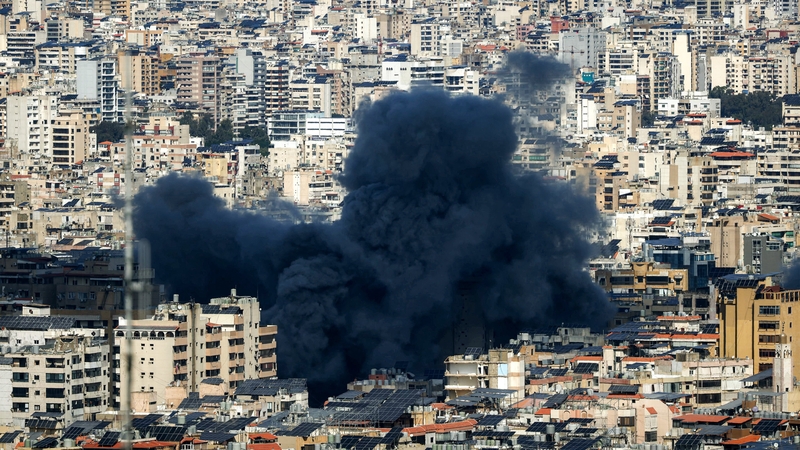
0:00Day 10 of the U.S.-Israeli assault on Iran and the son of the former Supreme Leader has assumed control. Mosh Taba Hamane's father was killed at the start of the war. Israel's defense forces said it carried out a further wave of attacks on Iran this morning, while at least 32 people were injured by an Iranian drone attack on Bahrain. Turkey set a ballistic missile launched from Iran was destroyed by a NATO defense system. Qatar also said it had intercepted a missile attack, meanwhile the cost of living implications are becoming painfully clear. At one point the price of a barrel of oil was at its highest level since the early days of Russia's invasion of Ukraine. We can get an overview of developments now from Greg Karlstrom, whose middle-east correspondent with the economist he's in Dubai. Greg, will you tell us first of all about Iran's new supreme leader? How much is known about him? Not much. He's a very reclusive figure who you could say
1:06never had a proper job in his life. He worked for a long time in his father's office. He was a sort of back room player in Iranian politics. What we do know about him is that he's considered very close to the revolutionary guard. The regime's most powerful security forces. He obviously has a lot of other connections within the Iranian political system because of his work with his father. The consensus view, I would say, is that the choice of Moshe de Bahramani signals continuity. It signals that we shouldn't expect any political change in Iran. We shouldn't expect any openness to negotiations with the U.S. or to some sort of deal. I think it's a signal from the regime that they want to keep on the same course that the previous leader pursued for many, many years. On the ground, what's been happening today both in Iran and across the Middle East? In Iran, we've seen, as you mentioned, another wave of both American and Israeli
2:12strikes across the country, the Israelis saying they've been bombing in Tehran, in the city of Esfahan, and then in the south of Iran at a broad range of targets, both military and things of economic significance. And then in the Gulf, we've seen continued missile and drone attacks from Iran. The Qataris just put out a statement in the past few minutes saying they've been targeted with 17 missiles and six drones over the course of the day, similar figures in the UAE. Today, the volume of fire is less than it was at the beginning of the war, but Iran continuing to strike at high-value targets. A drone hit an oil refinery in Bahrain earlier today, which forced it to suspend operations. It produces around 250,000 barrels of oil per day, but because of damage from this drone strike, it has suspended output. And there is increasing concern about the impact of all of this on oil supply. Can you explain what's been happening?
3:16Right, we've had a week, ten days now, where the Strait of Hormuz, the waterway that leads out of the Persian Gulf, has been effectively closed. The Nutsal Waterway, through which one-third of seaborne crude oil travels and also large quantities of liquefied natural gas produced in Qatar and elsewhere in the Gulf. And so that has sent energy prices soaring. How high they will go, how long they will remain elevated? I think that depends on two things. One is whether Gulf states are able to implement some workarounds that they have. Saudi Arabia, for example, has a pipeline that runs across the country. And so instead of loading oil on the Persian Gulf, they can pipe some of their oil output to the Red Sea and load it onto tankers there. So if that pipeline continues to work, if that pipeline isn't attacked successfully by Iran, then countries like Saudi Arabia can continue to export some oil, they're not all of their pre-war production. And then I think the other
4:18question is just how long does this go on? How long do we see these disruptions? The longer oil companies in the Gulf are not able to export. The more likely it is that they'll have to do what's called shutting in their fields, cutting off production. Once they shut in, it can be hard sometimes to bring oil fields back online. And so the consequences of this could linger long after the war stops. Donald Trump said last night that a rise in the price of oil was a price worth paying for greater global security, but it's kind of hard to see how many members of the American public will agree with that. The war is not playing well in America at all. Every poll that's come out over the past few days has found between a quarter and a third of Americans in favor of it, which is remarkable because usually American presidents see a bump in the polls at the beginning of the war. Somewhere, Trump has not received any. The war is not popular and his approval rating is stuck
5:20around 38%. It is doing well so far with Republicans and particularly with his self-identified mega base where majorities say they support the war. But again, if this goes on for a period of time, if people are stuck paying higher petrol prices in America, if this starts to pass through into inflation in other parts of the economy, then I think it's possible that that popular support will evaporate quickly. Greg Carlström in Dubai. Thank you for joining us this afternoon.
More episodes
More from News at One

Roscommon defeated Galway in the Nestor Cup becoming Connacht Champions for the...
News at One

Medical Board at UHL said it needs emergency funding to deal with patient safety...
News at One

Humanitarian assistance to be provided to all affected by the fire at the Tycor...
News at One

Director of the National Ambulance Service on the impact of industrial action on...
News at One