Loading...
educationbusinesssociety
Jordan Klepper: How Mob Thinking Takes Over | PT. 2
About this Episode
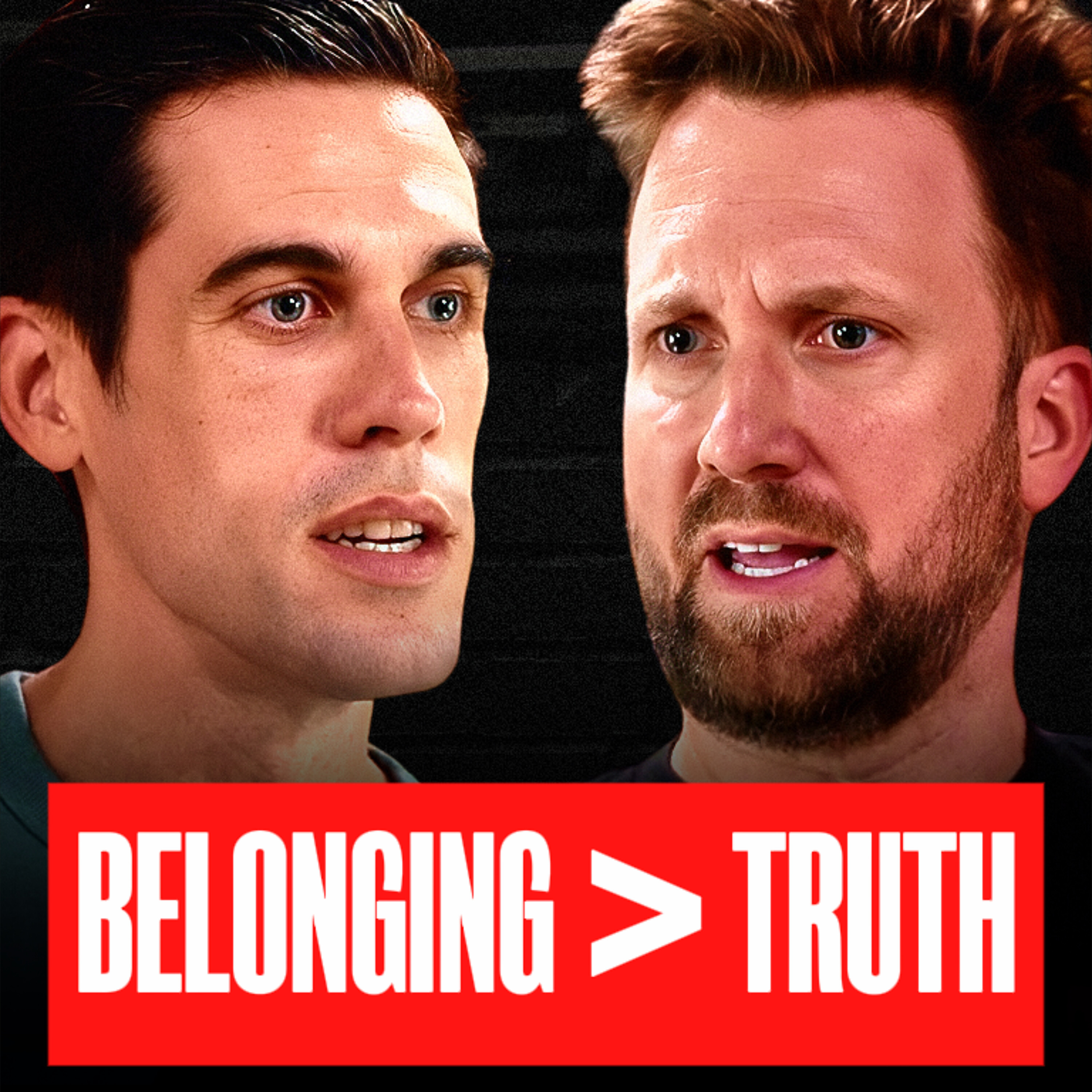
When does belonging start to matter more than being right? In Part 2 of Ryan’s conversation with Jordan Klepper, they dive into how mob thinking takes over, how cultural permission shifts what feels acceptable, why people double down even when the facts are clear, and how leaders shape the tone of an entire country.
Jordan Klepper is a comedian, writer, and correspondent on The Daily Show. You can follow him on Instagram @JordanKlepper and check out his upcoming live show dates on his website https://www.officialjordanklepper.com/
💡 Go to dailystoic.com/spring and enter code DSPOD20 at checkout to get 20% off the Spring Forward Challenge! Challenge yourself to spring forward and become the person you aspire to be. The Spring Forward Challenge starts March 20, 2026.
👉 Support the podcast and go deeper into Stoicism by subscribing to The Daily Stoic Premium - unlock ad-free listening, early access, and bonus content: https://dailystoic.supercast.com/
🎥 Watch the video episodes on The Daily Stoic YouTube channel: https://www.youtube.com/@DailyStoic/videos
🎙️ Follow The Daily Stoic Podcast on Instagram: https://www.instagram.com/dailystoicpodcast
✉️ Want Stoic wisdom delivered to your inbox daily? Sign up for the FREE Daily Stoic email at https://dailystoic.com/dailyemail
🏛 Get Stoic inspired books, medallions, and prints to remember these lessons at the Daily Stoic Store: https://store.dailystoic.com/
📱 Follow us: Instagram, Twitter, YouTube, TikTok, and Facebook
See Privacy Policy at https://art19.com/privacy and California Privacy Notice at https://art19.com/privacy#do-not-sell-my-info.
Hosts & Guests
Transcript
Welcome to the Daily Stoic podcast designed to help bring those four key Stoic virtues courage discipline justice and wisdom into the real world.
Hey, it's Ryan. Welcome to another episode of the Daily Stoic podcast.
You just never know how stuff's gonna work out. You never know if you're gonna get the break if you're not gonna get the break.
I remember back in April of 23. I was putting out the daily debt and I was supposed to do CBS this morning, which is a huge win. I was so excited.
You know, I thought, that's as good as it's going to get. It's amazing. And then we got this call from the Daily Show. The Daily Show wanted to have me on Jordan Klepper was the guest.
I brought you part one of his episode earlier in the week. They wanted to have me on. And so you might go, Oh, that's amazing.
But there was a conflict, which is CBS this morning, basically had the exclusive on the book like we had to run any other appearances by them for approval.
And naturally, they don't want you to go on another show first and then go do their show. And my wonderful publicists and the wonderful producers of the Daily Show managed to work it out. They made an exception.
So I got to go do the Daily Show to talk about stoicism. And then a few days later, got to go on CBS this morning to talk about parenting. But like the Daily Show, I remember the first time I watched the Daily Show John Stewart was the host, and I watched it.
I was home sick one day. I think in middle school, and I watched it on TV. And I just thought, what is this? This is amazing. And I watched it sporadically in high school. I would watch it every night in college.
Actually, I went and saw a taping of the Daily Show. This would have been like the summer of 2005. So for me to come full circle and be able to be on the Daily Show, it was amazing. Let me bring you a little clip of that.
But I've been a fan of yours for quite some time. You're a popular man. 12 best selling books. That's a lot of books. That's almost more books than I've read.
But you have a lot of fans out there from very successful comedians like myself to folks in the NFL, to senators, sort of what you speak to goes across many aisles, if you will.
And I will say I've taken a lot from some of the ideas you have. I will also say that you kind of, you talk about philosophy and it helps me work through life.
And then a byproduct is then I go home and I tell my wife how she should work through life. That's a great idea.
And I'm just before we get started, I wonder if it's possible for you to apologize to my wife for me.
People ask my wife what it's like living with the stoic philosopher and she usually answers, I don't know.
That feels so critic, but mostly maybe it's just passive aggressive.
Yes.
One of us writes about it and then the other is sort of naturally it.
It kind of lives it, yes.
For those who don't know a stoic philosopher, what are the tenets of stoicism?
Stoicism, if I had to summarize in one sentence, I would say it's this idea that we don't control what happens to us in life,
but we control how we respond to what happens in life.
And the stoic say that basically every situation, big ones, small ones, ones you wanted, ones you didn't want,
it's all an opportunity to respond with these four virtues.
The virtues are courage, discipline, justice, and wisdom.
So the idea is that that is what life is asking from you one or all of those virtues and some kind of a combination.
That's what it's demanding of you and what's cool about the stoics is,
like I think when people hear philosopher, they think like a tweed jacket or an old white guy in a toga or whatever.
Sure, but the stoics were philosophers, they were thinkers, but they were also doers.
The most well-known stoic is Marcus Realis, who's the emperor of Rome, the philosopher king,
but there were stoics who were slaves, who were soldiers, who were artists, there were men and women.
There were people trying to do what we're all trying to do, which is make sense of the crazy world that we live in.
Okay, and so the person interviewing me there was not John Stewart, it was Jordan Klepper, who is today's guest.
He was in town for a live show. He was doing it at the Paramount Theatre in Austin.
I was very grateful that he was able to squeeze that in.
I know what it is to sort of do press the same day you're doing a performance.
So that was really cool.
And then we got to nerd out about some books at the bookstore.
In this episode, Jordan shares what it's like to do what he does,
what it was like being at the Capitol on January 6th.
We talked about the First Amendment and his message to young people.
I think you're really going to like this part.
One was really great too.
And I'm excited to bring you part two of this episode now.
Jordan is a writer, a comedian, a correspondent for the Daily Show.
You can follow him on Instagram at Jordan Klepper.
You can check out his upcoming live show dates.
He is amazing, very, very funny at officialjordanklepper.com.
We all experience injuries, pain,
there's physical obstacles, things we can't do that hold us back.
That is a part of life.
But what we have ultimately is a choice about how we respond to those setbacks.
And built from broken is an award-winning book from a corrective exercise specialist
named Scott Hogan that helps you heal painful joints and rebuild your body stronger.
Built from broken arms you with knowledge and gives you practical recommendations
for rebuilding your joints.
One of the things they talk about in the book is how important movement
variety is.
It's one of the most critical aspects of healthy aging that just not enough people
talk about, let alone implement.
And just by varying what you do, you can create healthy stressors that reinforce your joint
integrity rather than eroding it.
And to celebrate the launch of built from broken in storage nation,
why listeners get access to a couple of exclusive offers.
If you visit saltwrap.com slash DailyStoic to get your copy and download the full exercise
video library for free.
And you also get free access to the built from broken guide to regenerative therapies
that Scott wrote in partnership with a clinical advisory board of physical therapists
and regenerative medicine practitioners.
Second, use the code DailyStoic at saltwrap.com to say 20% off your first order
of therapeutic nutrition formulas.
This book and these tools are references that you can turn to for the rest of your life
to make your setbacks into comebacks.
If you're selling online or out of a storefront full-time or a side hustle,
you know it's a challenge.
People got to find you, you got to wait for them to walk in.
Well, today's sponsor what not flips that.
On what not you go live and sell directly to people in real time.
They see what you got, they ask questions and they buy.
And you know what, they keep coming back.
What not is the largest dedicated live shopping platform,
whether it's beauty, collectibles, electronics, luxury fashion,
even cookies, sellers are building real thriving businesses on what not.
What not buyers spend more than an hour a day on the app.
And they're not just browsing, they're bidding and buying and coming back.
So you can go live, show off your projects and turn that into real income.
People selling on what not sell 10 times more than on other major marketplaces.
And that's because you're not just listing products,
you're building real connections with buyers.
For a limited time, what not will match your first $150 sold in the first month.
You just have to visit whatnot.com slash sell the start selling.
WHATNOT.com slash sell whatnot.com slash sell.
When you do those interviews, the other thing I think about
it's always remarkable to me is when you have what seems like a nice person
nicely saying a horrendous thing, you know, like chatting with them,
you get them to be like, yeah, maybe the Civil War was a mistake or, you know,
or maybe we should just throw them all in jail or, you know, I can't tell what that is.
What is your feeling about it?
Like, are they disconnected?
Are they putting a smile on a horrible thing?
What do they think has happened?
I think a few different things are happening.
What I noticed originally, first ran in 2015 and we went out there.
Like, birtherism was a taboo.
Yeah.
It was widely considered, at least among the masses and on television,
and I think culturally like a racist theory.
Yeah. Not that people didn't believe it,
that there were people who had these feelings,
but people weren't going on television and saying it.
So if I were to go to a rally and talk to people,
which I did when that was coming down,
nobody would admit to the idea that Barack Obama wasn't born in America.
So I would, I went to an early Trump rally and would ask, go down that path,
and nobody, maybe one out of ten would allude to birtherism.
And Trump started then talking about birtherism very openly and how he thought,
Obama was born in Kenya, yada, yada, yada, a couple months later,
we were at like seven out of ten people talking about birtherism.
And at that point, I don't think he changed that many people's minds,
but I do think he completely changed the discourse of what was acceptable.
Yes.
What people would keep to themselves and what they would feel comfortable saying out loud.
He is like this baseline of culture that gives permission for cruelty.
He gives permission for some of your innermost thoughts that are,
perhaps, thought about without reflection that have unkindness and perhaps hate behind it,
or even ignorance behind it.
I think those were suddenly elevated in a way that if he is talking about this,
if the culture is talking about this, then I will be open about this.
Now, I don't think everybody thought that was true.
Again, I think there's another pocket of people that we're talking to
who are just trying to be a part of the conversation and are catching up.
And this apparently is the thing that people are talking about.
Now, when I see that, that is that, that mob mentality.
Like, I've seen that at January 6th, all different places where it's not everybody who believes
this thing, but suddenly when you're a group of people who are all talking about this thing,
and such a powerful, famous person tells you this thing, you go along with this thing.
We're seeing so many people going along with it.
So, I see it as a mix of Donald Trump raising their or lowering the bar of what is socially
acceptable to reveal in public company and on television, as well as a mob mentality.
This is the thing I must talk about now because this is culturally where we're moving.
Is that an argument you think for political correctness?
Like, there's been this backlash against political correctness,
but I think we might be throwing the baby out with the bath water.
Like, it serves a purpose to be like, hey, we draw some lines about what we do and say in public.
I think it definitely, it's an argument for integrity and for people in position to power.
Yeah. I mean, you and I both know we hold very little power.
But we have microphones in front of us.
Sure.
And so, even when pushed on more extreme topics and doing interviews elsewhere,
I was like, I'm sure you have an idea of like, well, these are the types of ideas that I want to
push out into public and the ones I'm choosing not to.
There's a carefulness.
There's a carefulness that even at your most, I don't want to say unhinged, but open.
Sure.
You're still aware that there's a microphone that other people are listening to and take into account.
I think most respectable people have that awareness.
Yeah.
And it does make me look back on American history and say what you will about many of the
presidents and people in charge of our country, but there was an understanding, a belief in the
institution of the president of the United States, that even in times of public distress,
you're talking about people coming together.
I think looking at what happened with the Charlie Kirk shooting, what became so frightening is,
is I think Trump's response afterwards, just fanning those flames.
And I hadn't fully put it together.
You're like, oh, right, when things like this normally happen, even if you don't buy it,
yeah, the president comes on television and he sets the bar.
Yes, and the bar is, these are difficult times.
Violence is never acceptable and we need to tone down the rhetoric and come together as a country.
Yeah, there's things the queen doesn't do or the king doesn't do and it's this sort of performance
role and that you're trained in understanding, this is what I do.
I'm realizing, I think Americans have always been partially shitheads.
But we've also believed in this idea of better angels, that we can
ascribe to something more.
Yeah, and I think that's mostly performative from people in charge.
Yeah, some people are closer to actually believing that.
Yeah, but the baseline has always been, you got to still perform that shit.
Yeah, you got to still pretend like we are better than this, that we can achieve greatness in
these types of ways, that we can come together and we hold ourselves in high regard.
That was at the very least an empty performance, but it was still a necessary
performance, and now you have this bar dropped to the point where the guy there has no problem
being a dickhead, but he feels no compulsion to pretend like he's better than that.
Well, yeah, even if you had 200 million Twitter followers in Elon Musk, you would think about
the things that you say before you say them because you would think about what would happen
if even 1% of people took this seriously or it was misinterpreted, you would be careful.
Just like you guys are, you have people, there's no law mandating that the daily show
have certain kinds of fact checkers or standards and prep.
All of this is kind of voluntary, responsible behavior that you engage with because you're a
business, you're owned by a corporate, there's just like these layers of like,
and some people rightly push back on it as bureaucracy and frustrating, and it has some
minor consequences, but it also prevents, you know, you're not giving unqualified medical advice
or whatever because you know that's dangerous.
There's a baseline responsibility.
Yeah, I think adults have.
Yeah, and we are so far away from that at times that I think you and I are trying to wrap
our heads around that, which yeah, if you had 200 million followers of baseline responsibility,
it's not a crazy thing to assume that you would have in this conversation.
But that baseline responsibility has been replaced with like the possibility or the idea of
like, edge-lord politics isn't of itself like more redeemable equality than basic responsibility.
So that like, success in being, in nagging, being outrageous crossing that line,
like that, it's always funny because comedy gets looped into this about like, what can you say,
and woke and all these kinds of things.
But more often, the people that I know who go out there and do and have that baseline
responsibility and choose to step over the line through a tactical nature because it's something
they believe and they want to provoke it a very specific way.
I think those who don't understand the baseline responsibility, just I think are removing
something that is not a creative choice, but more of a basic human quality that all adults
should be expected to have.
Well, the first amendment debate is really interesting because we tend to focus on whether stuff
should be legal or not.
And it's like, it should definitely be legal, but you fucking suck if you say certain things,
you know?
It's been weird that we've kind of lost track of that.
Like, obviously a whole bunch of abhorrent things are allowed under the first amendment,
because if you make them illegal, a bunch of good things would also become illegal.
But we should have no problem being only an asshole would do this or say this or think this.
And so it's weird too, obviously there's been this reaction against cancel culture,
but there should be social consequences for saying and doing shitty, but not outright illegal things.
Yeah, 100%.
We should still have a basic morality or an understanding of like, oh, you're being irresponsible,
you're being a dick, we can call you out for being a dick.
And there can be, yes, there should be consequences for that.
Yeah.
I think like what has gotten so interesting as of now is like that loose idea of cancel culture
has suddenly been like again, we have so little both understanding publicly and
respect for what government does that in that equation, people have gotten confused as to what
a government can and should do.
And so the fact that like the Trump administration is weighing in, leaning on the FCC and doing all
these things, you're like, we're not talking about what culturally we're doing.
We're talking about what like an elected government is now imposing.
Yes.
But we're all just lost in this mix of conversation that all just feels like it's part of the same,
same stew.
But I agree, like there's something, there's something that's shifted in the culture about what we
accept or allow, like political assassinations are very, very bad.
And you cannot have a civil society where people murder other people.
Like George Wallace shouldn't have been shot.
John F. Kennedy shouldn't have been shot.
RFcation, no one should be shot, right?
Charlie Kirk, it was weird to watch people struggle to wrap their heads around the fact that he
said a lot of horrible things about people.
Like if you tweet that when you get on a plane, you're suspicious of black pilots,
you're a bigot.
Like that's the definition of what being a bigot is.
Now should you be murdered for that?
No, of course not.
But that's a shitty thing to say.
It's a shitty thing to think.
And just because you said a lot of other things that people like doesn't mean
that that doesn't really suck.
And so like I think they call it the overton window,
but just generally the things that we've not held people accountable for for saying has gotten
so bad that it all, I think it's all just kind of swirling around.
When those are the kinds of things, remember they got rid of a Republican,
was it the House Majority Leader, who just complemented a segregationist?
Which that seems like a good punishment.
That you should not be in elected office if you think segregationists were good.
Like that seems like a society that's getting better would swiftly deal with something like that.
But like our ability to handle people who have
abhorrent ideas shouldn't just be like, oh, just say whatever you want.
You're cool.
Like again, you shouldn't go to jail.
You shouldn't be murdered for them.
But like I don't feel any compunction about going like, you suck, dude.
Yeah, we should be open to be critical of the things you say.
Everybody who has a microphone in front of them is pushing out ideas and thoughts
that people should be critical of those.
They should have consequences for it.
Obviously, not consequences that are violent in any kind of a nature.
But it speaks to like our culture.
So it's such a hard time having an earnest conversation around this.
Like that whole incident, it just became a tool for the culture war,
where people who didn't weren't even aware of who that person was.
Now it just becomes a thing that they can use to try to cancel somebody else for it and tighten
speech.
And then you also feel because that happens, seeing people on the left shy away from being
being critical of the things that were said in a way that that that double spooked me.
Yeah, we're suddenly we're putting up these boundaries here where we're right.
We're now using the words that somebody said in the conversation about who this person was
is now being deemed something you could be canceled for.
It's not how a republic should be working.
No, it's also just not how like a moral society.
It's like, okay, there's a video of Dana White hating his wife.
He's going to put on a fight on the lawn of the White House.
Yeah, that's insane.
First of all, we don't need to be like,
Boxing's been a sport for a long time.
They never even Theodore Roosevelt wasn't like, let's have
who loved Boxing bears could wrestle on the White House lawn,
but people let's not have that happen.
Even he was like, yeah, this is this is something we do in the dark.
But like if there was ever a thing to be canceled for,
that seems like one of the thing.
Again, they shouldn't take all of his money,
although if it was a crime, you know, whatever it's a crime.
But it's interesting that we're just like, okay,
yeah, you can still have your polite society card.
But then somebody else over here, like some 20-year-old kid that does something stupid
has gone forever.
This is where I get worried when we talk about these people who I talk to on the road,
who say stuff that feels abhorrent and you wouldn't expect it to come from them.
Like I look at these conversations and
you point to the actions of the most powerful person on the planet,
the pardoning of J-Sixers, like all of these actions suddenly.
I don't think if I talk one-to-one, and I do talk one-to-one with a lot of these folks at
Mageralys off camera when I have you.
Kind people, I think your moral line is very similar to what yours or mine would be,
but there's such a nihilism that comes with Donald Trump's view of the world.
The fact that he's looking to pardon J-Sixers,
because they supported him, but also because it would piss off Democrats.
Like so much of this has to do with pissing off people.
He's talking about pardoning P. Diddy.
And people are like, well, why would he do that?
I think only just because it would piss people off.
The Dana White of it all is there to piss people off.
It's edge-lord politics.
And I don't think mom and pop in the middle of America give a shit about that.
But in the last two years, this seems to be what the competition is.
And so if you bought the hat, you're a Mager fan, and this is your guy.
And now this is the world of it all.
You root for the actions of that.
And these actions are so amoral and edge-lord in a way that now you have 65-year-olds who are like,
yeah, I guess I want people to beat each other up on the lawn.
They're talking about Conor McGregor being the person who does it also.
He's in here, right, Pess?
Yeah, yeah.
And he was brought into the White House, Trump shook his hand,
talked like he's flaunting that.
And I think these actions, again, baseline responsibility.
In the old, I'm not saying we didn't have terrible people at Oval Office,
but they knew not to perform better.
And we are performing worse as an attempt to own half of the population.
Yeah, there would be a system where a press or communications secretary would go,
okay, here's a list of 10 bucks or 10 MMA fighters that we might have do this thing.
Okay, well, this one's a rapist, so he's out.
And this one did this, and this one did this.
Hey, these three are just as good as that one.
So this is the safer political pick.
And again, I think people took that as somehow false or inauthentic,
but it turns out that it's actually essential to a moral society
that you make some judgments and that there's some kind of like,
yeah, just mechanism by which you go, look,
I'm not saying he has to go into exile,
but he's not who we're going to, like we each have this little bit of platform,
this little bit of say, and how do we use that say?
Who are we endorsing and spending time with and who are we not?
That just seems they will have that list now.
Yeah, and I don't doubt that they will articulate
if they articulate who is a rapist and who is not.
And I think instead of saying that that person shouldn't be a part of this,
I think I think they really likes me.
He likes me.
Yes, and this will piss people off.
Yes, they indulge in the cruelty.
And that's that Adam Surwerer article,
the cruelty is the point.
I think that is such a big part of it.
It's not all of it, but it's such a big part of it in these decisions
when this pissed these people off.
They want the images of these ice raids in Chicago.
They want little kids zipped hide.
And you get people one-on-one, I don't think they want that.
But you get them in that gosh darn group,
and this person just froths at the mouth for that cruelty.
And lowers that bar.
It would such a scary, despicable place to be.
Well, the fundamental insight of the civil rights movement,
we don't give them enough credit for their media savvy.
They were like, we are going to force confrontations
that are going to create an overreaction.
And then that cruelty will be documented by reporters with cameras.
And then that will shock and stun the conscience of ordinary Americans.
Gandhi did the same thing.
Gandhi actually understood that fundamentally,
the British people were moral people.
They just didn't fully understand what running India as a colony
looked like because it was obscured from them.
That's the whole point.
It would do it far away, so it's not bad.
And so he said, if I can reflect this back to you,
you'll have to choose between the policy and your conscience.
And there is something profoundly alarming about the exact opposite of that strategy
being put into play and it working.
Like we went from virtue signaling to like,
the cruelty is the point or the corruption is the point.
And it's not as repugnant as you would hope it would be.
Exactly.
I think we've reached that point where if we can't give you success and joy,
we can show somebody has a worse, they will pay.
Yeah.
And that seems to be the thing that excites.
Nonviolence is not, it's going to be, I mean, the one different, many different.
Just one of the differences between the 60s is those images were being shot out on three channels.
Yeah.
And now they're being shot out on a thousand devices and being warped in all these different ways.
So it's like, how does that message get out?
How do you distill it to just what one image is?
And you are right.
Like if suddenly the images of cruelty is not enough to like sicken us,
then what are the images that could change a point of view?
Or is this more reflective of what this nation actually wants?
Well, yeah.
And maybe this goes back to what we're talking about with the monoculture.
So if the same unfiltered image is getting out to everyone,
there is this sort of shared revulsion.
But if part of the population is getting the revolting thing,
and then the other part of the population is getting it filtered or edited
flipped on its head in some way, you're not getting the shared consensus.
I really don't know how you find that shared consensus.
I do think J6 was such a, it was the most...
Well, you were there.
I was there.
I was there.
I was hanging out working.
I was working.
But that was the most documented crime of all time.
Yes.
And human history, you've never seen a crime from so many different angles.
And I remember J6, but I remember going and talking to people after J6.
And there was that little dip of like shared consensus of a reality and of a story.
It's almost mind-boggling to watch members on the House and Senate floor the day after.
On January 7th, talk about it.
Lindy Graham and all of these Republican senators were very much sharing a reality of
this is not who we are.
Yeah.
What we saw was terrible.
We were running for our lives.
This can't stand.
Let's move forward.
Yeah.
There was that little moment.
We were like, all right.
We all saw that.
Of course we all saw that.
And then two months later, three months later, going to events again and just seeing how
without even a consistent narrative of what was different about what happened.
People couldn't decide if like it didn't happen, if it was low-key.
People couldn't decide if it did happen, but it was all FBI agents.
It was Antifa.
Some people were telling me it was ISIS.
There was not a coherent narrative.
There still isn't a coherent narrative as to what didn't happen on January 6th.
But there was such a need to divert from the shared consensus that we got there so quickly.
And now we live in it now where there are political heroes.
It's kind of amazing.
Yeah.
And those early days afterwards where you saw the workshopping of ways to excuse it or whatever.
And how in the moment with the memory being fresh, it was preposterous and obviously untrue
and transparent, I don't think, as cynical as I can sometimes be, if you told me,
hey, flash forward five years, actually many, if not most people will have absorbed one
or more of those ideas as a way of not having to carry the weight of what they obviously
saw and what it meant.
And if it wasn't so important and tragic, it would really be a pretty incredible case study
in how cognitive dissonance works and how sort of propaganda and conspiracy theories sort
of use that human tendency to accomplish what they want to accomplish.
Well, here we are well into a new year.
And it's worth taking some stock.
Who do you want to be this year?
What changes do you want to make?
How could you be better?
That's where today's sponsor comes in and it's where something I have been doing myself now.
I guess since college, which is working on myself with a therapist.
And although I used to when I lived in LA drive an hour in traffic to sit down in someone's
office for an hour, now I do it on the phone.
I do it while I'm walking.
I do it in the car.
I do my therapy online and better help is the world's largest online therapy platform.
And I'm not the only one more than six million people have gotten help through better help.
It's just easier to keep the appointment.
It's less of an imposition cheaper.
It's more efficient and I honestly find it easier to just get into the stuff you're there to get
into when I do it remotely better help will match you with a therapist based on your preferences.
You can easily switch at any time at no extra cost.
You can click the link in the description below or you can just go to betterhelp.com slash
daily stoke to get 10% off your first month of therapy.
Who likes bugs?
Not me.
I guess my wife does.
My kids sometimes like bugs but I don't like bugs in my house, right?
I don't like them around my food.
I don't like them crawling on me.
I don't like bugs and the problem is you see one bug and then you ignore it and all of a sudden
you got hundreds of bugs and you got an infestation.
If you are looking for DIY pest control, check out today's sponsor.
That's Pestee.
They're making protecting your home from unwanted pests super simple.
With Pestee you can get started at 35 bucks of treatment and get a customized plan based on
your location, bugs and climate.
They send you everything you need, pro grade pesticide that's the same stuff the pros use.
They give you a spray or they give you a mixing bag gloves and instructions and you can
complete the whole thing in less than 10 minutes.
My wife loves bugs which she also loves our animals and so she's always worried that killing
the bugs will kill the animals.
Well, Pestee pesticides are fully registered and have been used in hospitals and schools
all over the country and you can try Pestee totally risk-free with their 100% bug-free
guarantee or your money back.
If the bugs don't go away, you get a free refund.
Bugs hate to see you coming with Pestee.
Just go to Pestee.com slash dog for an extra 10% off your order.
That's P-E-S-T-I-E dot com slash dog for an extra 10% off.
I interviewed a guy who you wrote a book.
He drove down from, I forget where, maybe Pennsylvania down to Washington, DC, day of January
6th, met up with some people, tailgated, shotguns and beers, went to the Capitol, got with
them guys, fought with cops.
There's video he punched a cop in the face and then he climbs inside a window, goes inside
the Capitol.
He's arrested.
They have all the video of punching of the cop, all this kind of stuff.
He goes in, he pleads guilty, spends time in prison, has prison tattoos of the Capitol
on it.
He showed it to me all.
This is a man who drove to January 6th, punched a cop in the face, pled guilty.
When I asked him who did January 6th, he was like Antifa and I was like, you did January
6th.
You did.
You drove there.
You punched that cop.
You stood up and said, I am guilty.
Then when I press you, you're like, well, I was coerced to do this.
He had an ego that wouldn't allow him to say, I was completely manipulated.
He acted up his own volition to do all these things and would tell you to your face that,
of course, he did, but still in his own head, he can't even comprehend that he was pulled
into the mob to do these things, making all of these decisions.
I couldn't get past.
This was an action that you took very openly and repeatedly you copped to this being an
action.
There's videos.
That's why it was so clearly guilty and admitted to it all and yet you can't even
sit with the uncomfortable reality that you found yourself here and therefore reach
for whatever conspiracy that gives you a chance to move on with your life.
That's where the modeling from leaders is so important, right?
Because there is a performance development and most of our politicians are hypocritical
in some way or another and sometimes I actually really shitty people.
But there is the ideal that, hey, I take responsibility for my actions or I try to be consistent
in some way or but when you have the most powerful person in the world, sort of reveling
in contradiction and hypocrisy and never owning what they say or do, it, I think that's
where it trickles down and I'm actually, I'm not that worried about like what the president
is going to do to me.
I'm worried about what people who are cosplaying as the president's, as a guy like the president,
what they're going to do.
Because like for most of us, given the American system, the president doesn't have that much
day-to-day power over individuals, but the county sheriff does.
And the local prosecutor does and the governor does.
And you know what I mean?
That's where like going back to the ancients, like the founders knew these sort of monstrous
characters from history, Catalans and various demagogues and they sort of held them up as
these cautionary tales and then they held up these other characters that they were, like
George Washington is cosplaying his whole life as this probably fictional Roman named
Cincinnati.
Do you know about Cincinnati?
No.
So, so Cincinnati's, the movie gladiators also based on this, Cincinnati is made dictator
of Rome when Rome is about to be defeated.
He defeats the enemy and then 17 days later resigns as dictator.
So he could have become a Roman king and he doesn't.
And so when Washington resigns his commission from the Continental Congress, he is cosplaying
as Cincinnati.
And then when he walks away after two terms as president, he's doing it again.
Right.
So Washington is not a perfect player.
He is a tyrannical man in the sense that he is owns these human beings who he puts out
newspaper ads for and whips and things.
But he is cosplaying as this character of like what a leader is supposed to do and we get
closer to it and better at it as we go.
But I think what happens when you go from cosplaying virtue to cosplaying like mob boss, it
gets real bad, real quick.
Yeah.
I think that is it in a nutshell right there.
Yeah.
Yeah.
There doesn't seem to be a large question that we're asking like is there a thirst for
the cosplaying virtue anymore?
I still think there is.
I hope there is.
I really hope there is.
I think when you're looking for other potential candidates or people on the horizon who
speak to that, but there's such an American thirst to follow this person who is this mob
boss.
I wonder how much of American seeing this tough guy pretending to be even tougher than
he is.
How much of that is them enjoying the mob boss and how much of that is enjoying just the
fame of somebody like that.
I think like the success of Donald Trump is in his part of his success is his just him
being famous and a part of people's life as this idea of success for so long that they
will follow any choice that he makes less because of the choice that he makes and more
because he is just this epitome of what success looks like from a middle class perspective
looking at the rich guy in New York.
The hope is that it's a singular thing and no that it's not replaceable.
No one else could inherit that because it's such a historical and immediate fluke.
If we're cynical about it, I feel like going back to the media literacy, the McCluein,
the medium is the message.
I think all of that what I worry about is virtue doesn't play on these very well a little
bit.
It obviously pulls us towards our worst instincts.
There's no spaces for the conversations to sort of elevate beyond that in these places.
You can do it in literature, but that feels like the current events conversation is only
happening on these short form spaces.
That's where I worry.
I'm like cruelty travels, anger travels.
Charlie Kirk traveled and became popular in his life because he had beat down videos
of the ways in which he shamed other people or set out rages things about black pilots.
These things travel.
These are the things that college kids see as like how do I find success when I become
an influencer?
How do I become an influencer?
I say things like this.
Where are those virtuous influencers?
Whether I had interviewed Terry Vertz who's running for Senate in Texas is an astronaut.
And I was like, my kids don't want to be astronauts, they want to be YouTubers.
How do we get back to that?
That used to be the highest, noblest, coolest thing you could do.
Yeah.
Like the only thing my kids are impressed by is that YouTube plaque, but they don't give
a shit about any of my other things.
Yeah.
And when their friends come, they're like, oh my god.
Is that right?
Because it's the only part of my world that intersects and has currency in their world.
You know, you know, it was, I don't think I talked to you about this.
The last special I did was looking at this new right MAGA movement.
And I talked to like a son Piker, I went to a turning points event and was talking to
a lot of like 18 to 22 year olds.
And the conversation got into their algorithmic feeds, TikTok and what TikTok is feeding
them.
We talked a lot about how like men are being feeding like and your tape videos kind
of pulled into this uber masculinity world.
There was even a, I think it was an Australian study that kind of talked about if you
started neutral on these algorithms within like 12 minutes, they would get pulled into
these.
You are trying to learn Peterson video and you are all that.
That's going to be the best one that you saw.
Yes, exactly.
It's dark.
It's dark, but there's a little bit of a buckling vibe in there that maybe isn't quite
as hateful of some of these other ones.
But it also, there was also pulling to your videos and talked about Ryan Holiday videos.
Really?
Yes.
And so study did the Australian study talked about the things that it pulled towards were
these.
And it was talking mostly about like men what they came to and I thought that was fascinating
and exciting.
I immediately distanced myself from you.
I was like, I don't know who this guy is.
And that's one of the reasons I make this stuff is that I like, I would love young men
to be like, all I do is read books.
That's what I did when I was 20, but that's not representative or they're mostly consuming
stuff on social media and on YouTube and podcasts.
And so, I think one of the big problems is that responsible, decent, productive sort
of voices have just seeded that field.
Like they took self by looking down their nose at self help and sports and these other
things and comedy, they just seeded it to people who don't have any, not all of them,
but to a lot of them, they just seeded it to people who don't share the same notions
of responsibility or morality or whatever.
Yeah, I think I talked to Hassan Piker out there and it was really curious seeing the fan
base he has.
He's very political, but he outside of the traditional left norm, he's, he post workout videos and all
of these like typically masculine videos, sports videos like that interest, fashion videos,
and so many people on the left don't know what to do with that.
But he articulated, I don't want to misuse his words, but in a sense just sort of how
like these are younger people who want to learn more about the world, feel, he said something
that, they feel like they can't change the world because it's so chaotic and moving
out without them.
It's not going to give them a house, not going to give them a job.
So the least they can do is change themselves and better themselves and they're looking for
answers there.
And so if that means working out physically getting better, it's diet.
I think it's philosophy and finding ways in which like, oh, stoicism can actually give
you space for that.
I thought that was, I think you're right, a lot of people, a lot of people seceded that
space and that lane on these mediums where it actually is the stuff that does seem to
get through.
And when I talked to a lot of those 18-year-olds, I saw that.
I didn't see the cruelty that I assumed I would see and I see the older people at these
rallies.
I saw a lot of people who are looking for ways in which to shape their life, understand
the world, get some power within it, but also to figure things out.
And that like thirst for curiosity, that did give me a little bit of hope and see that
it is heading in these directions.
Well, I saw this interview with Ruben Gaiego, and is that the same, and he was saying
that the male constituents, he's like, they want a big-ass truck, he's like, that's
what they want.
He's like, you're not going to get elected telling them that having a big-ass truck
is dumb.
And it's not dumb if that's what they want.
That's what they want.
Right.
I have a truck.
Is it big-ass?
I would describe it as a big-ass truck, but I like it because it has leg room and I can
fit my car seats in it.
Do you know what I like?
You got to go to that brand and call it a big-ass truck if you want those clicks.
It's a regular car.
Here's the funny thing.
A Ford F-150 and a Chevy Silverado are the number one and the number two best-selling car
in the country.
So it's, you're not the normal one by thinking they're dumb.
Do you know what I mean?
That's the normal thing.
And so what do people like?
What do they want?
And how do you meet them where they are?
It's a politician's job is not to tell you that your truck is dumb.
You know?
It's to solve some of your problems, right?
And so there was this kind of snootiness and condescension.
Like I remember when my books first started working, there was some article.
I'll never forget the headline.
It was like, ancient philosophy designed for Greek slaves popular with Silicon Valley.
And it was like, it was saying that it was so dumb that these people were interested
in, and it's like, okay, first off, that's a preposterous misreading of the philosophy.
But second, tech bros reading about ancient philosophy is a good thing, you know?
You're making them feel stupid for liking this.
And so they're either going to go like something worse to spite you or they're just not going
to see the other things that you think are important.
And so there was, I think, a driving away of people into these different communities.
And now you want them back and they're not going to come back.
Like when I was in college, we watched the Daily Show and we watched South Park and we
thought Republicans were dumb because they wanted to tell us what we could do.
And somehow they managed to flip that.
They managed to flip that by making fun of the other things that a normal average dude
would be into.
Yeah.
That's really bad.
Democrats, if you're out there, talk about the trucks, people like trucks, they like truck
nuts.
Yeah.
Don't be negative.
I'm still going to make jokes about truck nuts, but understand there's a desire out
there.
I do think that is often forgotten.
And how it is also connected to like people wanting to feel a sense of control, wanting
to feel a sense of like a path towards betterment.
There's very few paths towards like intellectual curiosity for young men.
I feel like I feel like such a, sometimes in the New York bubble, you know, people have
quite a lot of like at least a couple of years ago, there was such a question about like
this desire, like why young men were listening to so much Rogan or Manosphere podcast kind
of stuff.
And you know, I was talking to this really interesting guy who was a bartender and he was paying for
a podcast that gave him unbiased look on the left and the right and presented things
that way.
And I was like, you pay for this podcast.
He's like, I totally pay for this podcast.
He's like, I'm tired of all of the noise.
I want these things to.
And he also listened to Rogan all the time when I talked to him, I was like, well, what
draws you to Rogan?
He's just like, he's a guy who works at a bar, shows up early, has to set up the bar for
a couple hours.
He's just like, I'm just, I like that he's interesting people on this week.
He had an expert on bees on it.
I thought it was fascinating.
I was just like, right, there's so many people out there who desperately curious.
Yes.
And it's just a desert of interesting things that are out there and finding people who can
point them towards curious thinkers, things that expand their mindset beyond what a normal
22 year old might think about, like, it's very exciting to both people.
And there's very few on ramps for something like that.
Yeah.
No, no, you have to, you have to meet people where they are and bring them in.
Yeah.
And then tell them books.
Right, that's why I was always, it was like, I'm selling them books.
We're on the same team here, guys.
Guys, let's not get mad at him for the books.
Yeah.
This is good.
This is a good thing for God's sake.
They're reading.
They're reflecting.
They're sitting in their thoughts.
It's a nice thing.
You want to go check out some books?
I would love to check out some books.
All right.
Let's do it.
Thanks so much for listening.
If you could rate this podcast and leave a review on iTunes, that would mean so much
to us and it would really help the show.
We appreciate it.
And I'll see you next episode.
Before we had AT&T business wireless coverage, our delivery GPS wasn't the most reliable.
Once our driver had to do a 14 point turn to get back on route,
a 14 point turn and influencer even live streamed the whole thing.
Not good for business.
Now with AT&T business wireless, routes are updating on the fly and deliveries are on
time.
And the influencer did get us 53 new followers though.
AT&T business wireless, connecting changes everything.
When you run a business, there are a lot of boxes to check.
Let's see.
Payroll, check.
Inventory, check.
Insurance.
Ah.
Good thing simply business makes getting small business insurance fast and easy.
Just answer a few questions, review your quotes, and get covered in under 10 minutes.
All online.
It's that simple.
Check insurance off your list at simplybusiness.com.

