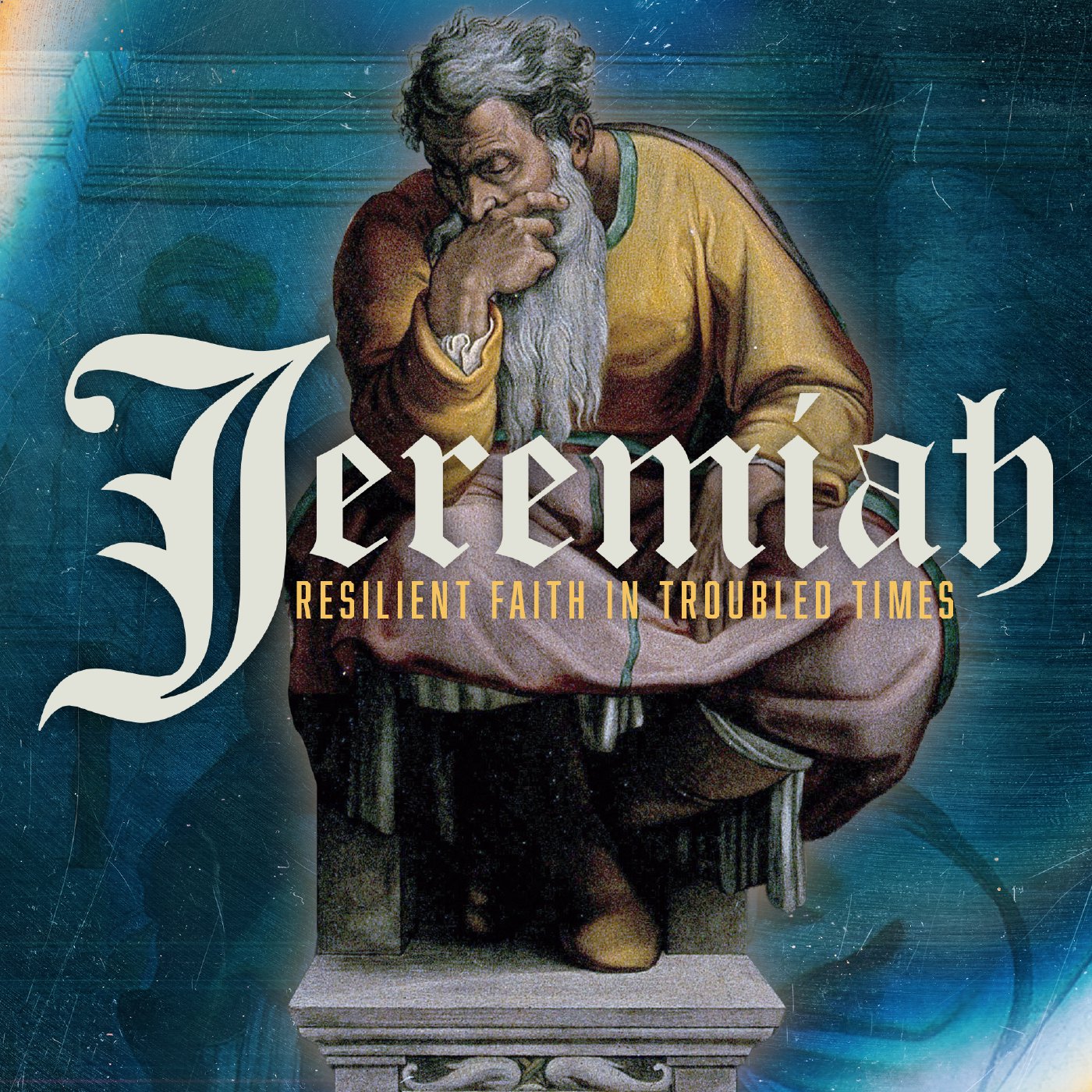
About this episode
Speaker: Matt Beattie
Get every episode summarized
Each time Crossway Downtown Sermon Podcast publishes, we email you a written briefing from the transcript — the topics, who appeared, and any specific claims, with the ad reads skipped.
Email me new episodesFree for 3 shows. No card needed.
Hosts & guests
Transcript ready
494 searchable segments. Every word is indexed and playable.
Full transcript
Crossway Downtown Sermon Podcast — Jeremiah - Jeremiah Buys a Field. Machine-transcribed; use the interactive transcript above to jump the player to any line.
Hey everyone, I'm Matt Beatty, Missional Ministry in downtown campus pastor at Crossway Christian Church in National Hampshire. Where our mission is to practice the way of Jesus together. Our downtown church community is located in the urban heart of Nashua, surrounded by sober houses, homeless shelters, and folks hungry for the hope of Jesus. I pray that this message will help you to experience the love of Jesus today. Well, it is great to see you this morning. Missed you the last couple of weeks. May or may not have been unlike the greatest family vacation ever. Sorry not, sorry. I'm just kidding. But I had to go out for some ministry work out in California and it happened to land on school vacation weekend last year.
I went solo and it was a little dicey when I got home after the kids being home. So Michelle's like, how about if that happens again? We all go and so we did and had a wonderful time. You know, it is, the culture we're in, resists rest. I'll just go ahead and put that out there. And so it's kind of like grind, grind, you know. But we need rest. We need to receive. We need to receive from God. And so I kind of unabashedly, I'm like, yeah, I was away. I was receiving and I came back feeling very filled and ready for spring, by the way. But here we are. If we haven't met, I'm Matt, the downtown campus pastor and it's just a joy to be together today. So I have a question for you. Are you, I want to invite you to show your hands.
Are you an optimist or a pessimist? How many optimists in this room? All right. There's a pretty even dispersion. So that's good. How many pessimists? Yeah. Okay, like it. You guys are like, absolutely me. I fear it is me. Or there's a third option. Are you like a realist or pragmatist? Yeah. I would put myself in that category more so, but that's kind of a self-serving. Like actually, I'm neither of those bad options. There is this huge market out there, especially online, for improving one's mindset. I don't know if you know this. I'm not holy against it. But there's this idea that we should look for optimism. My daughter had a speaker at her school recently and she came home and she was like,
yeah, she was telling us to manifest. And I was like, manifest. So like, all right, you know, positive growth mindset, right? And I'm going to get a picture of a Lamborghini and I'm going to put it on my wall. And I'm going to be like, that is mine. That is mine. It hasn't worked yet. I don't know why. And so, you know, I just saw this stuff. Growth mindset, manifesting positive self-talk. And I'll say, I'd rather positive self-talk than negative self-talk, right? So these things are not all bad. In fact, they can be really good. But the reality is, I'm a New Englander. So I'm like, I know that's not true. Like, I know what's going to happen is I'm going to come home for vacation and there's going to be another validity, even though it's March. And so, in some ways, I just sound like, I don't know. But one of my favorite quotes, I have no idea who said it.
Is this. I'm not an optimist or a pessimist. I'm a kingdom realist. And that's the kingdom of God. I think the call for us, and what we're going to dive into from Jeremiah, is this call to be responsive and focused on the way that God moves. Not just thinking like, maybe everything will just work out or everything's awful. Because it's kind of both, right? We're like, we don't want to ignore the reality of life. But we don't want to be like naively hopeful that things will just turn. Except when we look at the kingdom of God, we can stand on God's promises. I think specifically about Ephesians 3.20, which says that God can do abundantly more than all we ask or imagine. Well, that's the kind of promise I want.
And I don't think it's optimism. Do you know that the word hope in its various forms appears 83 times in the New Testament? It's in almost every book of the New Testament. Over 150, I mean, it was 130 to 180 times in the entire Bible. The message of Jesus is filled with hope and not some optimistic version, but a grounded and rooted hope. And so I want to share this idea with you today. Hope is not optimism. It's obedient action when circumstances scream it's over. When you are in the thick of it, when things feel like they're a mess, hope is saying, I'm going to stick with what God has called me to do. I'm going to be obedient. I'm going to keep putting one foot in front of the other. I'm going to believe that you have something good planned on the other side of this.
So this week we're going to talk about Jeremiah's amazing act of hope in the midst of a very tough time. I want to give a special thank you to Nolan and Brian for preaching the last couple of weeks. And yeah, huge thanks to them. And I want to jump in with our anchor verse from Jeremiah 17, which is kind of carrying us through this entire series. This is our hope for ourselves as we dig into this scripture. So read this with me. But blessed is the one who trusts in the Lord, whose confidence is in him. They will be like a tree planted by the water that sends out its roots by the stream. It does not fear when heat comes. Its leaves are always green. It has no worries in a year of drought and never fails to bear fruit. Amen. So last week we talked about Israel in exile.
We talked about this reality, this historical reality that Babylon, which was this empire, came and just routed Israel. Judah, really. At this point Israel has split into two countries. Israel and the North and Judah and the South. Israel had already fallen, but Judah was kind of standing strong, but not standing strong in how they were pursuing God. And so Brian preached on one of our most famous scriptures. You're my 29, right? And just that God's in the midst of all this, I'm asking you to be faithful and I have a good plan for you. And so a whole lot of people are carried away to exile, but there was a small, a small remnant left. And it makes sense.
You think about it. You're like, okay, we have all this land, we have all this space. We need someone to manage this. And you all live here and understand it. So they took the king out, they put in a new king. In fact, his name is Zedakaya, but that was not his actual name. It was like Matt something. I was like, yeah, of course it was, of course it was. And they were like, you're going to change your name, you know, because you serve us now. And he did for a little while, but then he got stirred up once like, we're rebelling against you too. And so that's where we find ourselves. Is this king Zedakaya rebels against Babylon, and now the city is surrounded by Babylonian troops. They're surrounded, they're under siege. They have no food. And for Jeremiah, it gets even worse. Because not only is the city under siege
and they're experiencing a famine, but he has locked Jeremiah up. Zedakaya has, because he's prophesying that Jerusalem will fall again. And the people need to turn to God. Now, in this environment, that is not a politically correct message, right? So he's like, no, we're going to be strong. We need to keep the people going. Jeremiah is like, you have continued not to be faithful. And so they lock him up in the courtyard of the guard. And this is where we find Jeremiah. Layers deep into this whole situation. Things aren't good for them as a people, as a nation. Things aren't good for him. And so he, you know, I just like, think of it like you just keep digging. And he just gets further and further down. But in Jeremiah 32, we find this fascinating story. And so I want to read this. It's a little bit long. It's in Jeremiah 32, 1 to 15. Feel free to follow along or just on the screens. So this is the word that came to Jeremiah from the Lord.
In the 10th year of Zedakaya, King of Judah. So 10 years, this guy's been king. Which was the 18th year of Nebuchadnezzar, who was the king of Babylon. The army of the king of Babylon was then besieging Jerusalem. And Jeremiah, the prophet, was confined in the courtyard of the guard in the royal palace of Judah. Now, Zedakaya, King of Judah, had imprisoned him there saying, why do you prophesy as you do? You say, this is what the Lord says. I'm about to give this city into the hands of the king of Babylon. And he will capture it. Zedakaya, King of Judah, will not escape the Babylonians, but will certainly be given into the hands of the king of Babylon. And will speak with him face to face and see him with his own eyes. He will take Zedakaya to Babylon, where he will remain until I deal with him to clear the Lord. If you fight against the Babylonians, you will not succeed. So you get an idea of why he's locked up.
Not only are we going to get pummeled, but you're going to, you're specifically going to get pummeled. Jeremiah said, the word of the Lord came to me. Hanimal, son of Shalom, your uncle, is going to come to you and say, buy my field at Anathoth, because as nearest relative, it is your right and duty to buy it. Then, just as the Lord had said, my cousin Hanimal came to me in the courtyard of the garden, said, buy my field at Anathoth in the territory of Benjamin, since it is your right to redeem it and possess it, buy it for yourself. I knew that this was the word of the Lord, so I bought the field at Anathoth from my cousin Hanimal and weighed out for him 17 shekels of silver. I signed and sealed the deed, had it witnessed and weighed out the silver on the scales, I took the deed of purchase, sealed copying, attaining the terms and conditions, as well as the unsealed copy, and I gave this deed to Baruch,
son of Nariah, the son of Mahasaya, in the presence of my cousin Hanimal and of the witnesses who had signed the deed, and of all the Jews sitting in the courtyard of their garden. In their presence, I gave Baruch these instructions. This is what the Lord Almighty, the God of Israel, says, take these documents, both the sealed and unsealed copies of the deed of purchase and put them in a clay jar so they will last a long time. For this is what the Lord Almighty, the God of Israel, says, houses, fields, and vineyards will again be bought in this land. So you're following along what's happening here. He's locked up and just out of nowhere, it's like God's like, hey, your cousin's going to come, he's going to offer to sell you this land. What we don't read directly in this scripture but is true is that land was currently inhabited by a large army. They were camped out on his land, Hanimal's land,
and so this looks like a terrible investment, right? And it's like a lawyer wrote this because it's like, and so then I signed the deed, I weighed out the silver, and I took the sealed copy and the unsealed copy. All of this happens and is detailed out. Why? It's this tangible, like, you know, it's like, who wants to talk about paperwork, right? We are in the midst of a siege. And God's like, Jeremiah, this is what I want you to do. Follow it to the letter of the law because I want you to live as though this is actually a really good investment. And then put this thing in a clay pot and bury it. And so Jeremiah does it. It is the worst timing for this to happen for Jeremiah.
So he's like, seriously, I'm locked up, and people haven't been listening to me for like decades. And I don't, and we're, we're, we're have no food, we're about to get beaten by Babylon, and you're telling me to go ahead and do a real estate transaction here. It's like, all right. And so it seems totally crazy. We're rarely challenged to live out our faith when circumstances are perfect. I think we have this idea often of what we believe, but what we really believe comes out in how we live when things are not great. And so in this circumstance, Jeremiah is like, this is bad timing. I got other stuff to do, namely be imprisoned. And in fact, yeah, this is where God shows up
in this very weird way. It reminds me of 2 Corinthians 12. The Apostle Paul says this, speaking of God, he had been asking him to take away a thorn in his side, and he says, but he, God, said to me, my grace is sufficient for you, for my power is made perfect in weakness. Therefore, Paul says, I will boast all the more gladly about my weaknesses so that Christ's power may rest on me. That is why, for Christ's sake, I delight in weaknesses, in insults, in hardships, and persecutions, and difficulties, for when I am weak, then I am strong. Paul says elsewhere in Romans 5, that trials produce perseverance, perseverance, character, character, hope, and hope does not let us down or lead us astray. It's so interesting. I feel like, you know, so often we want to believe
that God's going to show up in these affective ways, these ways that feel very holy or sacred or something. And so, even like when we come to church, it's like we could like rage our way in here, and then it's like, okay, no. I am here, Lord. And yet, God shows up so often in these mundane ways. It's really interesting. And I mean, I have a lot of affect, you know, that like I cry at the drop of a hat. But sometimes God has spoken more powerfully to me through these mundane things where I'm just like, oh, I did that, God moved, and I can see it. And I think that's kind of what is happening here. This purchase, this land purchase, is actually a prophetic act, saying what God has said
will happen, I believe. When Jeremiah purchases the land, he does it publicly, he doesn't hide it. He's not simply obeying God, he's living it out prophetically for all the people to see, so that they go, oh. So you're not only preaching this, but you're practicing what you're preaching. Essentially, his message is much more positive and optimistic in a way than the kings. The king is saying like, don't talk bad, we're going to beat the Babylonians, it'll be great. And that does not look like the case. Jeremiah is like, I'm investing. You know, I'm all in on this. And, you know, I was like, if like 20 years ago, you were like, yes, I'm just going to double down on Enron. This is going to be great.
It seems totally crazy. And yet the people are watching it. I heard this week that God not only hears how we pray, but he sees how we pray. He sees how we pray. So he calls us to pray in private. So, you know, sometimes I think people assume, if I can say an eloquent prayer from the stage, that that means it's somehow holier. And Jesus is like, actually, hold up when you go into your room and you shut the door and you don't tell anyone. God sees what is done in secret and rewards it. That matters more. And so God sees and the people see here that Jeremiah is acting out of this belief. What I want to encourage us is that in our world,
we tend to vacillate between naive optimism and despairing pessimism. We tend to be like, I'm sure there'll be different this time. And then it's the same. We go, oh, they're the worst. And I just can't believe this. And I can't trust anyone. And yet the invitation is to look to God who says, actually, I want to give you a hope that is deeper. I want to show you a kingdom reality. I want you to have a holy hope, a prophetic hope. I want you to be a kingdom realist. And remember what we see all the time. But God, all throughout Scripture. And then they failed and they failed again. But God in his great mercy showed up. What's amazing about this particular story is this is the second time in like, I'm pretty sure 11 years that Judah's routed by Babylon.
So they just get utterly destroyed. And they're like, you know what? Let's go back for round two. And so some of these people, I'm sure, are just like, this is hopeless. And then Jeremiah steps in and he says, but God, no. I'm going to buy this field because it will be lived on. It will be farmed again. What happens right after God speaks this is Jeremiah praise. In this time, when God calls on Jeremiah, Jeremiah's response is honest, both in remembering God's goodness and living the reality that's in front of him. I want to read this together. Well, you just follow along. And it's again, it's kind of long. But I think it gets across so beautifully Jeremiah's heart. Ah, this is his response.
Sovereign Lord, you have made the heavens in the earth by your great power and outstretched arm. Nothing's too hard for you. You shall love to thousands, but bring the punishment for the parents' sins into the laps of their children after them. And I'll just read it. You don't have to say it a lot. Some of you guys may recognize this, though, there's a song. I'll sing it after. Great and mighty God whose name is the Lord Almighty. Great are your purposes and mighty are your deeds. Your eyes are open to the ways of all mankind. You reward each person according to their conduct and as their deeds deserve. You perform signs and wonders in Egypt. And if you continue them to this day, so he's harkening back to Israel's history. In Israel and among all mankind and have gained the renown that is still yours. You brought your people Israel out of Egypt with signs and wonders by a mighty hand
and an outstretched arm with great terror. You gave them this land and you had sworn to give their ancestors a land flowing with milk and honey they came in and took possession of it, but they did not obey you or follow your law. They did not do what you commanded them to do. So you brought all this disaster on them. See how the siege ramps are built up to take the city. Because of the sword, famine and plague, the city will be given into the hands of the Babylonians who are attacking it. What you said has happened as you now see. And though the city will be given into the hands of the Babylonians, you sovereign, Lord, say to me, buy the field with silver and have the transaction witnessed. It's really a beautiful prayer. Oh, Lord God, thou hast made the heavens and the earth by thy great power. You guys know that song? Oh, Lord God, thou hast made the heavens and the earth by thy great power.
It's a good one, holds up. I'm just kidding, it really doesn't. Nothing is impossible for thee. That's the beautiful part. The chorus of this cheesy chorus, as we used to call them back in the day. Nothing is impossible for thee. Great in mighty God. Great in power in mighty indeed. Nothing, nothing. Absolutely nothing. Nothing is impossible for thee. This prayer is saying that. He's like, you know what, in the midst of all of the stuff you did, God, showing up so powerfully for us throughout our history, we weren't faithful. And you continue to be faithful. He's basically voicing to God here. This is what you're like. This is what you're seeing. And you're telling me to buy a field. Okay. It's wild.
So what is God's promise here? It's a promise of restoration and future hope, future grace. Hope around the bend, around the corner. The beautiful thing that I think this story reveals for us is that God is actively at work when conditions are imperfect. God is actively at work when we think we need to be scrambling, when we think we need to be fixing everything and warning people, the ship's going down, this looks really bad. This is the place of invitation for you and for me. I don't know if any of you have felt like that recently. I mean, literally this morning, I was telling Holly, I prepared this sermon, wrote it all down. And then as I was getting ready, I opened my news app and I started reading and I was just like, everything's so bad in our world.
I was like, wow, how quickly we turn away. How quickly we forget. Because I believe this. I believe it, but God helped my unbelief. Help my focus when it goes somewhere else. That needs to maybe be our prayer. The place of things going awry and feeling like, God here, because I got stuff I got to do and things are really bad. That is the place of getting down on our knees and prayer. That is the place where hope has a cost, where it matters. That is the place of remembering what he has done in the past and asking him to move again. Jeremiah 32, it's just a fascinating scripture. It's a fascinating story. What I love though, God speaks again to Jeremiah,
the beginning of chapter 33. And this is one of my favorite scriptures recently. While Jeremiah was still confined in the courtyard of the guard, the word of the Lord came to him a second time. So we're like, all right, let's replay this. This is what the Lord says. He who made the earth, the Lord who formed it and established it, the Lord is his name. Call to me and I will answer you and tell you great and unsurchable things. You do not know. I love that, right? I love that in the midst of this trial. While he is locked up, still confined. God says, call to me and I will answer you. Well, that should be enough, right? But it's even more. I will tell you great and unsurchable things you do not know.
God speaks in the midst of these trials. He shows up to spur us on to live our lives, with hope and to act as those who have hope. Kingdom, hope. So I want to ask you this morning as you're kind of reflecting on your own life. And maybe it's the thing that you released earlier. But what is the inconvenient or confined place that you find yourself in? Where are you currently finding it very difficult to be free? And what is your field at Anathoth? What is the thing that God may be inviting you into to take that step of hope? You know, everything feels not quite. Maybe once these things are done, I will. You think maybe God's inviting you into that now.
What's the place in your life where living and acting out of hope is the call? Because I think that's the place where so often we experience God's faithfulness in a more overt and powerful way. So I want to invite you just to, if you're comfortable just to close your eyes for just a minute, think about what that is. If there's anything in there, if there's anything that's coming to mind, they're like, yeah, I know what this is. And I just want to pray over you, the Lord's words, the Jeremiah. As you hold that challenge, this is what the Lord says. He who made the earth, the Lord who formed it and established it.
The Lord is His name. Call to me and I will answer you and tell you great and unsearchable things. You do not know. God, we are daily tempted to just either naive hope or despair and we tend to just bounce back and forth. But God, we want to be people who place our hope in you. So I pray that you would teach us today through this scripture, that you would teach us through your spirit. That God, these things in our lives that we feel confined, we feel maybe stuck. God, would you give us the right, next, faithful step as we seek to honor you with these things?
So we bless you and we look to you and we just invite you. I invite you, God, to speak to each of us over the course of today and even moving forward. What are these places that you're inviting us into, you know, hope? Not a growth mindset, but a kingdom mindset. So we look to you, God. We pray this in Jesus' name. Amen. Thanks for listening to the Crossway Christian Church downtown campus sermon podcast. We're so glad you could join us. If you'd like to plug into the life of our community or have any questions that we might be able to answer, visit our website crosswaycc.org slash downtown to connect with us. Until next time, we can be with you. May the Lord bless you and keep you.
More episodes
More from Crossway Downtown Sermon Podcast

Rediscovering Christmas - Wrap Up (Low Quality)
Crossway Downtown Sermon Podcast

Easter 2026 - Garment of Praise
Crossway Downtown Sermon Podcast

Palm Sunday - A True Procession
Crossway Downtown Sermon Podcast

Jeremiah - Faithful to the End
Crossway Downtown Sermon Podcast