About this episode
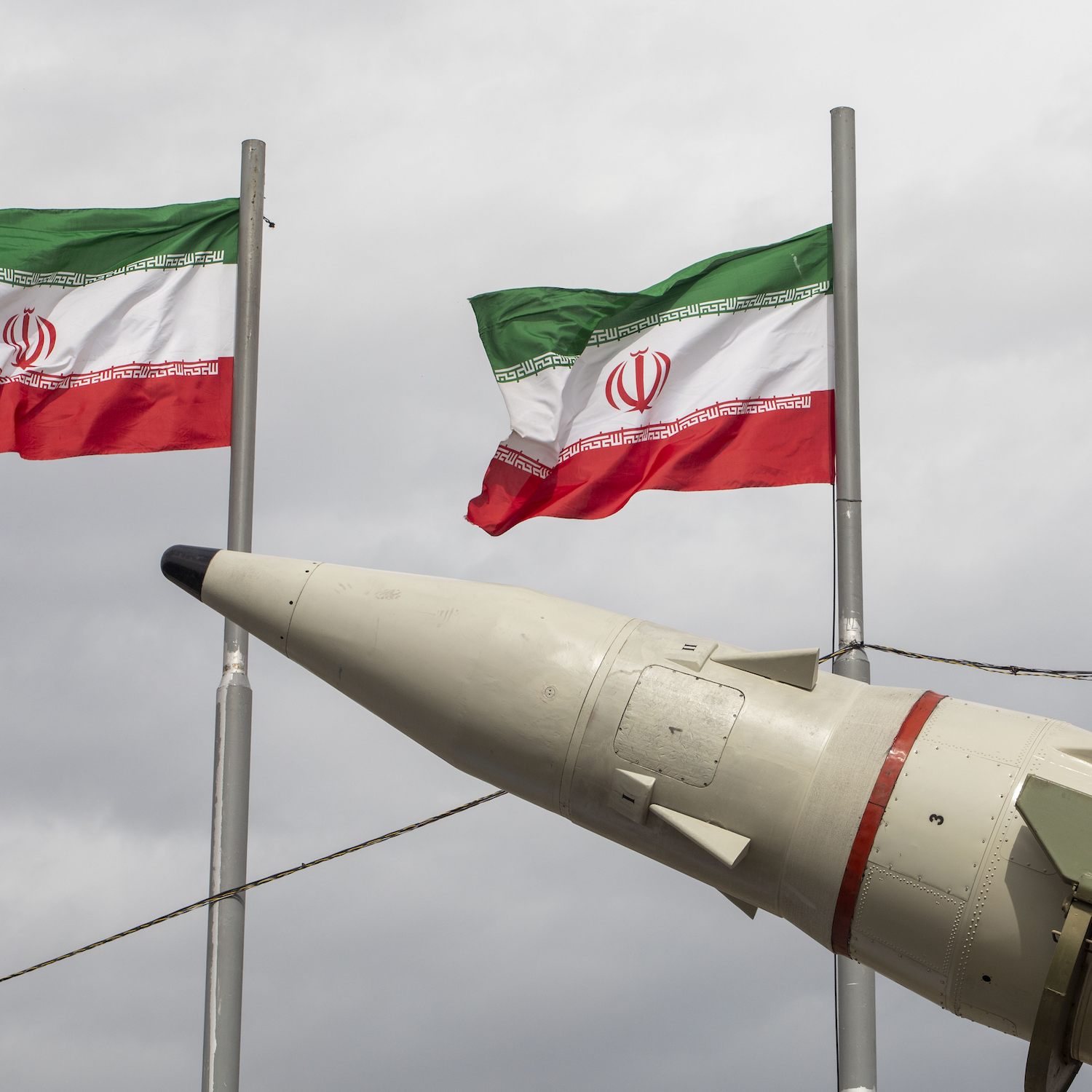
Iran buried its missile stockpiles deep underground in order to protect them. The Wall Street Journal’s David S. Cloud explains why that may have been a big mistake.
Australia granted asylum to five members of the Iranian women’s soccer team over concerns for their safety upon returning to Iran. Nassim Khadem of the Australian Broadcasting Corporation breaks down the act of resistance that led the team to seek protection.
The Trump administration wants to keep several coal plants operational despite some having reached their intended retirement dates. NPR’s Sam Brasch joins to discuss how utilities are pushing back.
Plus, authorities in New York filed charges against two suspects in a planned attack outside the NYC mayor’s residence, ticket-selling giant Live Nation and the DOJ reached an antitrust settlement, and how alcohol consumption among chimps could provide a clue as to why humans love booze.
Get every episode summarized
Each time Apple News Today publishes, we email you a written briefing from the transcript — the topics, who appeared, and any specific claims, with the ad reads skipped.
Email me new episodesFree for 3 shows. No card needed.
Hosts & guests

Transcript ready
194 searchable segments. Every word is indexed and playable.
Full transcript
Apple News Today — Iran’s missile attacks are slowing down. Is this why?. Machine-transcribed; use the interactive transcript above to jump the player to any line.
Good morning. As economic uncertainty intensifies, Trump boasts military successes in the war. The Wall Street Journal explains how Iran was caught off guard. The evidence we have right now is that they are suffering severe losses in their stockpile, and that's really hampering their ability to continue to fire missiles. What to know about the attempted terrorist attack in New York City? And how Iran's women's soccer players stood up to the regime and won asylum in Australia. It's Tuesday, March 10th. I'm Cecilia Lai, and this is Apple News today. President Trump told CBS News on Monday that the war with Iran is, quote, very complete, pretty much, stocks climbed at those words. But then, just a couple of hours later, he amended his previous statement, saying instead that the U.S. hadn't, quote, won enough.
At a press conference last night, he cautioned that the conflict wouldn't be over this week, but did reiterate that the U.S. had made major strides. We could call it a tremendous success right now, as we leave here. I could call it, or we could go further, and we're going to go further. But the big risk on that war has been over for three days. We wiped them out in the first two days. Since the war began, Trump and his Defense Secretary Pete Hegseth have struck a triumphant tone in their updates on the battleground. And so far, at least, the damage and the death tolls appear to be mostly on one side, though it's hard to know exactly what remains of Iran's capabilities. So far, this has been a war fought in the skies. One tactic from Iran has been to utilize cheap drones. The BBC estimates that Iran has launched around 2,000 of them since the war started. It's also fired out hundreds of ballistic missiles, but as David Cloud from the Wall Street
journal told us, that rate has declined sharply. In the early days, there were hundreds of missiles fired in a day, often in sort of large salvos. That has dropped off the table as the U.S. and Israeli attacks on their missile launching sites have continued. And so now you're just seeing sporadic firing. Cloud reports that Iran has now turned to deep underground bunkers for the remaining stockpile. In order to protect themselves, they started digging deep bunkers to both store the missiles and potentially to fire them in order to make sure that they were as much as possible protected from airstrikes from the U.S. and Israel. But that may have been a tactical mistake. These deep bunkers haven't offered the kind of security the Iranians hoped for. Instead, they're a precise target. The U.S. and Israel have been pouring over satellite shots for years to try to identify where these places are. And since the war started, they've been hitting them heavily, both on the surface, but
also as the campaign has gone along, you know, to try to get underneath the surface to destroy the bunkers by collapsing them. Trump alluded to this in his address last night, suggesting that they had seen a 90% decline in Iranian missile launches. As soon as they sent a missile up from a launcher, we were able to knock out that launcher within a period of five minutes or less accurately right on the noggin. It's possible that the regime is now rationing supplies. One research analyst told Cloud that because no one can fully count Iran's arsenal, it's hard to predict how long they could last in a conflict. It began with an act of political defiance on a soccer field. Last week, Iran's women's soccer team walked out to play their first game in the Asia Cup, held in Australia.
That was the Iranian National Anthem, but what you can't hear is any singing. That's because the players refused, an act that was seen as a protest against Iran's regime. Nassim Kadam is a correspondent for the Australian Broadcasting Corporation based in Melbourne. Now, this might not seem like a very big deal to us, but it's really a strong act of resistance that can get them and their families into a lot of trouble. Kadam says the reaction from Iranian officials was swift and severe, with some labeling the players as traders. Iranian State TV broadcasts saying that these women should basically face punishment when they come back for what they did and that they should face a revolutionary court. And of course, we know that can lead to arrests, that can lead to potentially even as far as execution. In the team's next two matches, players did sing the National Anthem and gave a military salute, though it's not clear if this was the result of pressure from above.
Kadam says, by that point, it was apparent that they were under a watchful eye, and Australian officials expressed concerns that the team's shaperones from the Iranian regime were controlling the women's ability to move and speak freely. After their elimination from the tournament, they were due to go back to Iran, and public pressure on the Australian government to protect the women started to build. In a chaotic scene from last Sunday night, dozens of protesters surrounded the Iranian women's soccer team bus as it left Gold Coast Stadium. At least one team member could reportedly be seen comming SOS signals with her hands. Since then, a family member of one player said they had sought asylum, and Kadam told us that the Iranian diaspora had come together to support their cause. The Iranian Australian community here has been just so incredible rallying behind these women. We've seen a lot of support for regime change here in the diaspora, and a lot of protests
standing in solidarity with protesters in Iran, with the people of Iran. Yesterday, Australian Prime Minister Anthony Albanisi confirmed they had offered humanitarian visas to five of the players, and the government said the others were welcome to stay. Australians have been moved by the plight of these brave women. They're safe here, and they should feel at home here. We're willing to provide assistance to other women in the team, noting that this is a very delicate situation, and it is up to them. But we say to them, if you want our help, help is here. As the Middle East conflict drives at prices and strains global production, the Trump administration is pursuing its own agenda for U.S. energy at home. It's one focus on saving the coal industry.
Just last month, Trump signed an executive order directing the Department of Defense to buy more electricity from coal plants. We're going to be buying a lot of coal through the military now, and it's going to be less expensive and actually much more effective than what we have been using for many, many years. The administration has argued that closing coal plants would raise power bills and threaten grid stability. So to counter the closures, the White House has issued emergency orders to keep them open past their planned retirement dates. According to NPR, those orders have impacted eight coal units so far, but some utilities that operate these plants have been asking themselves, is this worth it? We've seen utilities again and again decide these facilities aren't worth maintaining. We don't want to remodel and revitalize them because it's often cheaper to switch to other resources like solar, wind and natural gas. So we've seen hundreds of coal-fired power plants close since 2005 or so, according
to federal government data. Sam Brash is a climate and environment reporter at Colorado Public Radio. In his state, the federal government push has actually been met with some resistance. The first unit, the oldest unit is Craig I and that first open in 1980. They resolved way back in September 2016 that they wanted to shut this down by the end of last year. So December 31, 2025 and they were planning to do that and then the US Department of Energy intervened with an emergency order forcing them to continue to keep it available to generate power for 90 days. In response, the owners of the plant filed a petition asking the Department of Energy to reconsider. They said that they've built sufficient solar and wind farms and that keeping it open would be a constitutional violation and raise their bills. What's really interesting about the dispute over Craig I is that it's the first time utilities have actually stood up to the federal government and said, we don't think that this is necessary.
We don't think that there should be an emergency order forcing us to keep this open. Their specific argument is that the federal government's intervention forcing us to keep this coal plant open amounts to an unconstitutional taking of our private property. The Department of Energy declined NPR's request for an interview but sent over a statement that commended President Trump's leadership on American energy saying the US needs a lot more electricity generation to support domestic manufacturing and the AI boom. The owners of the utility also declined an interview. The Trump administration has intervened in power plant operations using a law called the Federal Power Act. A report authored by the Congressional Research Service looks back and was like, when have these orders been used in the past and it's pretty much always for two circumstances, either during wars like World War II or extreme weather disasters. So cold snaps, hurricanes, times when the weather is making it hard to produce power in one place. So the federal government intervenes and says we need you to produce power at this power
plant. One expert told Brash that courts could soon weigh in on whether the recent actions to keep plants open are within the confines of this law. In the meantime, environmental groups in several states are pushing back. Last week, Colorado's Attorney General also filed a federal lawsuit to resist other efforts from the administration to keep cold-fired power plants running in the state. And finally, a few other stories were following. Two men have been charged with terror offenses. After police said they attempted to bomb a protest outside the New York City Mayor's home. The two men reportedly told police they were inspired by ISIS. A mere balot and Ibrahim Qayumi were accused of traveling from Pennsylvania with explosive devices and targeting a small group of far-right anti-Muslim protesters whose presence had also drawn counter-protesters.
Videos of the incident show failed attempts to detonate the explosives. New York City Mayor Zoran Mamjani criticized the nature of the event that was targeted, but he defended their right to express themselves without fear of violence. While I found this protest appalling, I will not waver in my belief that it should be allowed to happen. Hours is a free society where the right to peaceful protest is sacred. It does not belong only to those we agree with. It belongs to everyone. The two suspects ages 18 and 19 are in custody and face five federal counts each. A long-awaited trial that was going to determine the future of the live entertainment industry giant Live Nation has come to an abrupt end. On Monday, a settlement was announced between the company and the Justice Department in an antitrust case that threatened to separate it from Ticketmaster. The federal government in many states had sued Live Nation in 2024, alleging that the company, along with Ticketmaster, had monopolies on parts of the live music industry, including
promotions and venue operations. Depending approval from the court, Live Nation will have to pay $280 million in damages to suing states, cap service fees at 15 percent, and allow competitors to sell tickets on its platform. But some argue that the offer doesn't go far enough to address monopoly, including New York's Attorney General Latisha James, who said she and other states will continue their lawsuit. And finally, chimpanzees, it turns out love alcohol, and it could provide a clue as to why humans like booze too. Popular science reports on a new study that revealed chimps consume quite a bit of alcohol in the form of fermented fruit and will even seek it out. Since we are descendants of apes ourselves, the research hints that our tendency could have links to that same habit. When a researcher told NPR, it's possible when chimps smell sugar, it means they have found a more densely caloric food.
That habit of associating sugars with reward may be where humans attraction to liquor comes from. It's been dubbed the Drunken Monkey Theory. Researchers say, despite ingesting a fair amount of the fruit, it's likely not enough for the monkey to get drunk, which illustrates, according to the author, a profound mismatch between the way we live today and the way we've evolved. You can find all these stories and more in the Apple News app, and if you're already listening in the news app right now, we've got a narrated article coming up next. Box reports on daycare facilities for older adults and how centers are helping family members navigate the challenge of caring for an aging loved one. If you're listening in the podcast app, follow Apple News Plus narrated to find that story, and I'll be back with the news tomorrow.
More episodes
More from Apple News Today

The race for the Senate has become a toss-up. Here’s why.
Apple News Today

The far right wins a historic victory in Germany
Apple News Today

He vanished at Ground Zero saving 9/11 victims. His sons went looking for him.
Apple News Today

Forever chemicals are hiding everywhere. These five habits can help you avoid th...
Apple News Today