About this episode
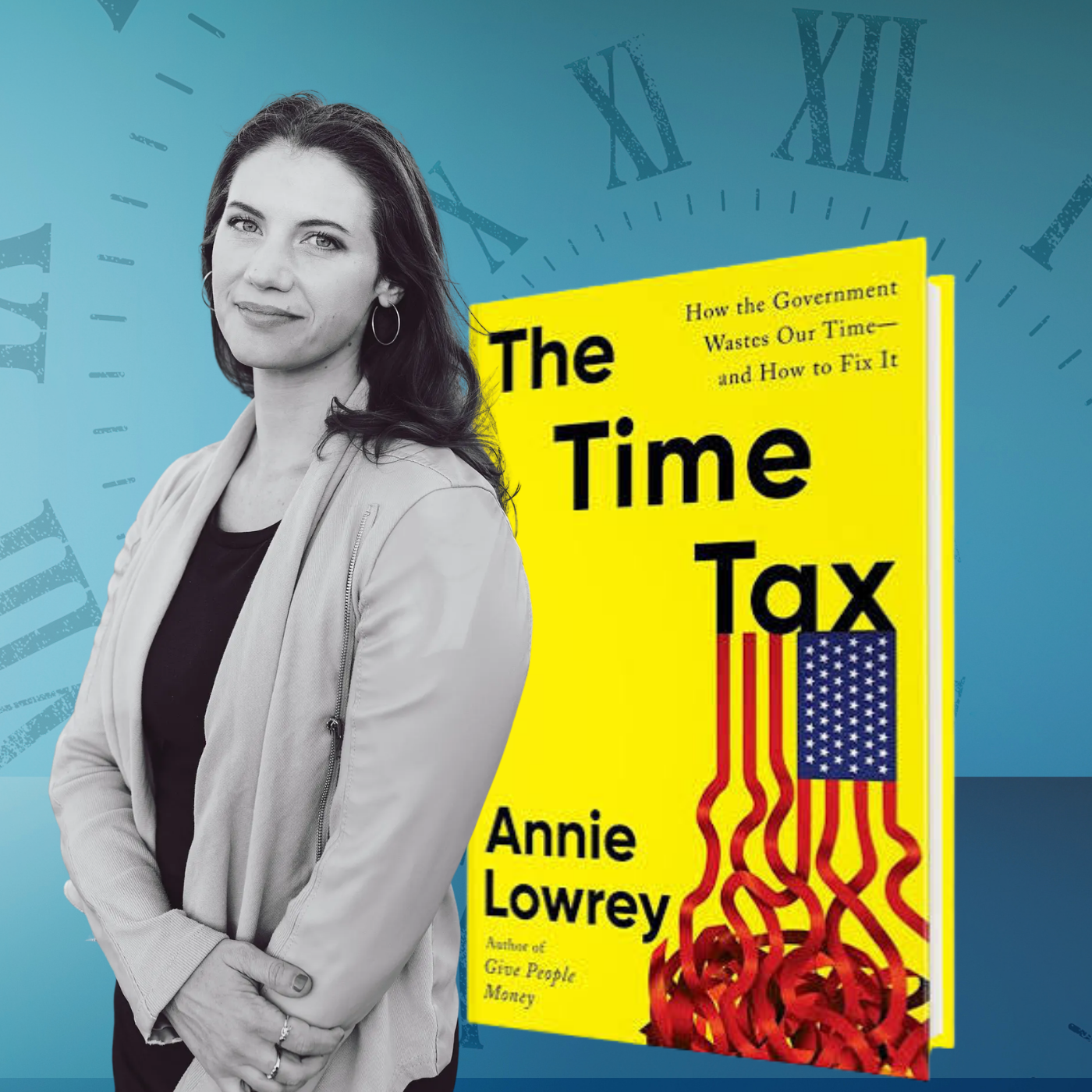
Have you ever stopped to consider just how much time you spend participating in government bureaucracy? Annie Lowrey is a staff writer at The Atlantic, and she joins us to talk about just how much the government makes us work for the services it provides and how those systems could become more efficient. Her book is “The Time Tax: How the Government Wastes Our Time―and How to Fix It.”
Learn about your ad choices: dovetail.prx.org/ad-choicesGet every episode summarized
Each time Think from KERA publishes, we email you a written briefing from the transcript — the topics, who appeared, and any specific claims, with the ad reads skipped.
Email me new episodesFree for 3 shows. No card needed.
Hosts & guests
Transcript ready
911 searchable segments. Every word is indexed and playable.
Full transcript
Think from KERA — How the government wastes your time. Machine-transcribed; use the interactive transcript above to jump the player to any line.
GEO OSC OIG we have an alphabet soup of federal departments set up to root out wasteful spending. Pretty much everyone agrees this is a good idea because really it is our money that funds government programs. But what about the time it takes to interact with local state or federal agencies? The hours on hold, the stacks of forms to fill out, the documents we have to gather and even submit to pay our taxes. From KERA edalus, this is think. I'm Chris Boyd. We pay so much attention to wasted dollars that we might fail to even register all the hours of our lives eaten up by red tape and onerous requirements to demonstrate eligibility. Journalist Annie Lowry has been digging into this and she thinks it is high time we start demanding better. She's a staff writer at the Atlantic and author of the new book The Time Tax, how the
government wastes our time and how to fix it. Annie, welcome to think. Thank you for having me. Early in the book you suggest that pretty much all of us will have a time tax story of our own. Maybe just share an example or two from the people you interviewed researching this book. Absolutely. I really do think that all of us have a story like this to share. Maybe that's the miserable time that we spent dealing, trying to get a fishing game permit or getting permission to renovate our basement or something like that. Early on in the book there's a story of an entrepreneur who wants to open an ice cream shop, like a dessert shop in San Francisco. One of his neighbors, one of the neighboring businesses, objects to his permit application on environmental grounds. Despite the fact that the person is trying to open an ice cream shop, trying to be an entrepreneur, and aborted up to storefront, and what possible environmental issue could
that shop pose. He ends up spending I think more than $100,000 and months and months attempting to answer this complaint. Another example from the book is a woman named Marcella. I met who lives in Salt Lake City, and she has to reapply for her government programs. She's a low income mom, so she gets food stamps, she gets Medicaid coverage, but she has additional paperwork burdens and she's been kicked off a program one time or another, more than 120 times, not because she isn't eligible, but merely because her paperwork burden is so high. I think that probably all of us have some version of this story with some business or some part of the state. You write that for much of your earlier reporting career, you saw all of this government-mandated red tape and paperwork and line-weighting, and the work it takes to get them done as just a fact of life. What should we understand that you came to understand about the difference between administrative
procedures and administrative burdens? I think that there's this idea, right? If you're trying to get a safety net benefit, for instance, you're going to have to show to the government that you are falling below some income level, and a lot of programs also have a work requirement. They say, you know, we don't want you to be on the dole for forever, so can you just demonstrate that you are working, you're volunteering, you're in school? This seems pretty reasonable. But then you step back and you realize, wait, why does everything work so poorly? Why does so many government agencies not have that customer service orientation of saying, we're going to make you do some paperwork because we have to, but what about all these excessive pieces? Why did none of the programs talk to each other? Why in some cases do these applications have a thousand questions on them? And it's really that excess that I think has come to me and make me think that we're giving the government $8 trillion a year in tax revenue, and they're really not treating
us with any respect for our time and our effort. We should be clear, you do not set out here to skewer civil servants. You have met countless people employed by governments who seem to genuinely want to help their communities. How does it happen that well-meeting government workers are cut off at the knees by the rules around how their agencies are supposed to work? Absolutely. And look, I think that there are certainly some government employees or civil servants out there that are just not terribly effective at their job, or you know, might have some ulterior motive. I'm not saying that. However, I meet so many civil servants that would love, love to take their knowledge and their expertise and really work for their citizens, their neighbors that they see as their clients, but they can't because the rules that they have to follow within their job involve ticking a thousand boxes and running through multiple duplicative procedures and working on these systems that, you know, like they honestly, like these mainframes come out of
literally the 1970s, if not earlier in some points. And so we're tying them up in red tape often as well. And very often, governments don't see these civil servants as being the source of a lot of great information and ingenuity, real experts in the issue that they're working on. One reason any that you came to the conclusion this is not inevitable is that there are some government agencies generally able to sort of get their business with the public taken care of without a whole lot of work required of citizens. Give us a couple examples of that. Absolutely. So there are some DMVs that are measurable. Well, the last time I was in a DMV, I was there for three hours and I was not happy about it. A lot of DMVs in our actually pretty great. They let you go ahead and do services online or they set up an appointment where you really don't have to wait. So you know, you'll hear about people say like, wow, I went in expecting absolute hell.
And that was actually, you know, that was pretty wonderful. Sort of similarly, some people have a great experience voting. You know, they get their ballot in the mail. They send it in or they go to early voting and they're like, yeah, wow, that was actually really great. There's a person in the book who waits in line for 11 hours to vote in a presidential election. That's not good public policy. And we're looking at broad programs. I think social security, its retirement program. Again, I am not saying it's perfect. Some people have real problems with it. Its overhead is less than 1% of its budget. So 99% of the money is going to America's valued seniors who have worked and put into the system. The error rate is extremely low. They're very good at calculating and getting benefits out. And a lot of folks all you have to do is tell them, hey, I'm 62, I'm 65, I'm 67, I'm ready and I'm retiring. That's it. So similarly, Medicare, if you're just using the regular Medicare program, not Medicare advantage, it's very lean. It can be very effective.
There are obviously there are issues where it isn't. And the card just shows up in the mail at your 65th birthday. They work with the social security system to get it out. You don't really have to do much. So there are some great examples in American life of, again, not perfect agencies, but really pretty good ones in a lot of cases. On the other side of things, to demonstrate the scope of the time tax, you bring up some things that I think I had never even thought to question that do take up a ton of time. Like parents having to enroll their children in elementary school, this seems like something that of course we have to do. It could theoretically happen automatically. Oh, absolutely. Or it could just be a lot easier. And I get it, right? The state does not have tabs on exactly where everybody is living at every moment. And you know, our wonderful public schools, they're based on residency zones. So maybe you have to go, you have to prove your residency. But I recently did this for my kids.
And I'm not saying that the New York City public school system was trying to make it hard, but you know, I have a nice, really fancy white collar job. I'm kind of on top of things as a person or at least, you know, my husband is to be completely honest with you. It was still really hard. And then I had to do after school. I had to figure out, you know, summer programs. This can be really, really tough. And I think that for some parents interacting with the school system, right? Like, oh, do I have to go through a lottery? Do I have to get a voucher? Just like what is going on with these charter schools? Like it can actually be really, really tough. And places do it in really different fashions. There's a lot of regional variation there. A regressive tax, by definition, is one that takes a larger share from people with low incomes than higher incomes. Typically, we're talking about taxes, you know, involving money. Is the time tax regressive in that same way? Yes, absolutely.
It is highly regressive. And I think that this makes sense because lower income people, they're going to have access to more public programs, right? We might want them to get chip, which is health coverage for their kids. If they're nutrition insecure, we want them to be able to get snap, you know, better known as food stamps. On top of that, they might have access to some tax benefits, like the child tax credit, the earned income tax credit. We have programs to help families with the cost of childcare, for instance. We have a number of housing programs, right? So you're just going to have to do more. And because those programs don't talk to each other, they don't have cross enrollment. If you are, say, a single parent who's pretty low income and you're really trying to, you know, get your family to that middle class point of stability. And you just need a little help getting there. You might have to enroll in a lot, but, but high income folks are just as likely to use government programs. They just don't think of them as being government programs because they're administered through
the tax code. And so something like a 529 college savings plan, which is a tax advantage savings account you can have for your kids. This is mostly high income people using it, or something like the home mortgage interest deduction, which lowers the cost functionally. If you're mortgage and the bigger your house is, the bigger your mortgage is, the more money you get, we don't think of those as being benefit programs. Even if you talk to an economist, those are benefit programs, but they're invisible. They're in the tax code. And if you're higher income American, you're probably not doing your own taxes. You probably hired somebody to do it for you. So you might not even realize it. And again, those programs for higher income Americans, they're not coming with the worst and most humiliating time taxes. Things like urine testing for drug use, which shows up in other programs. Can you imagine if you were getting the home mortgage interest deduction and they're like, okay, you can have it, but you know, every six months you're going to have to go pee in a cup. Like, you know, maybe it's, there's a real difference there.
I mean, what sort of time and effort does it take to sign up for a program like food aid, food stamps, and then just stay enrolled year after year? It can be really quick and easy. And there's a tremendous amount of variability in state programs, just in terms of you and who's eligible and what they're asking for you from you and the orientation of the state. So some people it can be really fast, but for some people, it isn't. And one of the things that the one big beautiful bill acts or HR one, which was passed last year and is now being implemented across the country dead. For instance, in the food stamp program, it extended a series of work requirements. So Americans, a low income American who's 63 years old, who needs a little nutrition assistance, they're going to have to comply with a work requirement. So they're going to have to show that they are either volunteering in school or working 80 hours a week. And not only they're going to have to do it, they have to prove it to the state on these
really clunky systems once a month. And then the full reenrollment instead of happening once a year, it happens once every six months. And we know that this isn't getting people to work who are just sitting at home being idle. We know that it's just this paperwork burden that people can't comply with. And so oftentimes the programs that are aimed at the most at risk Americans. So there's a special social security program that is aimed at very low income seniors with significant disabilities, many of whom are blind. It's called SSI. It's not that big of a program, but it's really important because we want to keep our seniors housed. We want to make sure that they're fed. The paperwork for this thing is miserable or TANF cash welfare, which is often going to the very young at risk parents of infants, right? Teen moms is the archetypal people using it. These are people who are enormously vulnerable.
And we want to invest in for their good and the good of their children. And the application is so humiliating that many of these people don't want anything to do with it. And so I think actually if you are a person who has more resources, more capacity, you're healthy, you're working, you have spare income, you're being asked to do way less than people who are homeless or teetering on the edge. Those are the people that I'm really worried about and often their burden is very high. Annie, you talked a minute ago about variability from like one DMV to the next. You remind us in this book that what we call government in the United States is actually a collection of something like 91,000 different entities when we total up like federal, state and local, every single entity generally will have its own set of rules. Exactly. There are more than 10,000 voting jurisdictions alone.
And look, I don't think that this is bad. I think local government is great, right? Like I'm not here to criticize the notion that we have a mayor and we have city councils depending on where you're living. But I do think a lot of programs that we think of as sort of being national actually get administered down at this hyper local level in ways that don't make a lot of sense. So one example of this is unemployment insurance. And so this is when you have been paying into an insurance system. This is not a safety net benefit, right? This is insurance. You pay. It gets taken out of your paycheck. And if you lose your job through no fault of your own, you know, it helps you with some money until you get your next job, right, for a period of time. And the amount of money is capped, you know, in the number of weeks it's capped just to make sure that people are getting back to work. And because in this country, we move so frequently, doesn't totally make a lot of sense to have it administered at the state level because what if you lose your job in Rhode Island,
but there's a really great job in Connecticut or Massachusetts that might be right next story. You know, I recognize Texas being a big state perhaps because less of an issue, but we have a national job market. So why is it that we are running this program at the state level, especially when states have balanced budget requirements? So it's really hard for them to invest in the state capacity and the technological systems that would make this work. So that's just one example of the way that this can become a line. Yes, we have thousands of governments. They're collecting different data. They have different rules. They have different state capacity. And often they are not talking to each other in the way that we wish. So we have all these different entities. You know, a lot of government agencies in this country are required to offer services to citizens, not to provide those services to absolutely everyone who is eligible. Explain that difference to us. Yes. So there are a set of programs or benefits that if you can prove you should be doing it,
you get it. Right? So voting is a great example of this. If you appropriately register your eligible to vote and you show up in vote, they're counting your vote. There's no question about that, right? How hard it is to get there is a different question. So to summary, a lot of tax programs, right? If you qualify for the home mortgage interest deduction, you're getting it. There's no question about it. You're not going to be put on a wait list. You know, that's just it. However, there's a lot of programs that do not work that way. So for instance, there's like some child care benefits that go to lower income families. We're looking for a bit of help with the cost of child care, which as I am sure a lot of your listeners know, can be absolutely brutal. It can be more than rent in some places. And if you want to stay working, that could be really, really necessary. Or if you have other caretaking responsibilities, it might be a necessary thing.
You could meet the program standards and not get it. That's true for cash welfare. That's absolutely true for housing support. Where in some cases people will be on a waiting list for 10 years. Can you imagine 10 years? Are you even likely to be living in the same place? The whole world will have changed in 10 years. And I think that this is something that, you know, it's not always obvious to people, but it's a way in which the system introduces uncertainty in the lives of a lot of folks. Should we suspect that the government wants to discourage all eligible citizens from benefiting? Like would these agencies even have the resources necessary to provide services automatically to everyone who is eligible for them by law? I think it's a really great question. And I've gotten asked this a lot. And the way I think about it is this. Let's say that we have a system where we are spending $100 on a set of benefits. And the way that we are controlling who's getting that $100,
it's not just by setting the eligibility such that, you know, it comes out to roughly $100 of spending. We are saying that we are going to make it so hard for some people through administrative burdens. That's how we're going to get to $100. And I think of that as being kind of a low integrity and illegitimate way to do it. Right? So I think that you're right that if we made the rules easier, made the applications easier, created cross enrollment, enrollment would go up. But we are in the system where instead, we are determining whether you can get something on the basis of how good you are at playing these little stupid games. How much time and effort you might have to put into it? That strikes me as anti-democratic. That strikes me as bad policy. I think I would rather you say, okay, like we're not going to cover as many people. We're going to lower the income limits. But at least we're going to make it easy. And at least we're going to make the government bureaucracy smaller
and give people more confidence that they can actually get something if it's out there. You know, that's a hard, I'm not saying that there's not a trade off there. But I think it would be a better way to do it. So what accounts for the exceptions? Why would programs like Medicare and Social Security generally be very easy for people to benefit from once they reach the age of eligibility? I would note that it was not a given thing when we were setting up these programs back in the new deal in the case of Social Security, that we would end up with this really pretty elegant, pretty efficient system. So the systems of pension benefits that were in place in our peer countries in Europe, they were amazing. They were called stamp books. So workers would get these like literal little passports and you would get a stamp showing that you had contributed. And then at the end of your career, you were supposed to take your collection of stamps and go show that you could actually access the benefit.
Can you imagine? Right? Like who's going to keep their stamp book? This is a tough system. And so the US, despite the fact that we are in the midst of a horrifying life-destroying recession in the Great Depression, says, we're going to do it a little different. We are going to make the government responsible for tracking people's incomes and taking that payroll benefit, that payroll payment, and we are going to keep track of it for everybody. And this is when we establish Social Security numbers. And the system gets bigger over time. So at first, we're not including farm workers. We're not including domestic workers. In time, they later get added to the program. And now we have this great system. And what are some of the things that I think that make it, that make it such that so many of us are excited about Social Security, want those benefits, can trust those benefits, for the most part, appreciate that agency. One is that that's seniors, right? I think we collectively as a society say, we want to take care of our seniors.
Our moms, our dads, our grandparents who have given so much, we don't want them to be impoverished, poor, not capable of eating enough homeless in their 70s and 80s. We want them to have that security at the end of their life. The second is that it's a contributory benefit. So Social Security is not actually universal. If you don't work and put into the system, you're not going to get those payments when you're 62 or 65 or 67. And the third is that there is a constituency that fights for Social Security, whether through organizations like the AARP, labor groups, like unions, and just in general, seniors vote. They're very, very civic. They show up at meetings. They show up and they listen to what politicians are saying. And I think this is actually a great thing about seniors is that they're very civically engaged. And so we've seen a lot of proposals to cut Social Security benefits. And seniors come out and they say, hey, I worked my whole life. I paid those taxes. This was the deal. Don't take it away.
And so I think those are some of the elements versus some of these more well-farish programs to say nothing of some of the burdens we put on people who might have a record with the criminal justice system or might be immigrants to this country, where there's more legitimate political concerns about the worthiness and let alone also lower-income Americans and pro-wrest Americans. Yeah, there is a long history of the government setting up programs, not only to provide assistance, but also to provide what some moral correction and oversight of people's private lives. Absolutely. There's a very long history of this. And if you go back to the founding of our beautiful country, there's no government safety net at all for a very long time. The federal government is really tiny. And so the way this aid happens, it happens at the hyper-local level. We can think of really just small communities of people.
We have these town overseers of the poor. And people will get sent to Alms houses. The government will literally contract people out and send them to farms to work as indentured servants. And we separate, like England did, the undeserving and the deserving. And we try to instill some morality in people and make them work. And so I think really since before the United States, the United States, when we are colonies of England, there is this orientation that poverty is a problem, mostly for the person who is impoverished to solve. And that maybe they need to get to a little bit of work. And I think that that's why we still have work requirements in so many programs today. But I do think that our understanding of poverty has changed. We've become a much wealthier country. Right now, we see that the issue is much more that low-income people, if they can work, they work. They're just not making enough.
And that is because I think of low minimum wages, a lack of worker, bargaining power, wage stagnation, inequality, all of these other much thornier problems that I think that we are facing societally. All right, let's talk about everybody's favorite subject, income taxes, the complications of filing and the fear of making a mistake that gets us into big trouble. It has fueled a whole industry of professional tax for pairs and consumer software that we might choose to pay for to help us file on our own. But does the government already broadly know how much money most of us are earning? Absolutely. This is one of these things where I think if people knew how this worked in other countries, they'd be a little teed off. So, nine out of 10 American households, roughly, don't really have a complicated tax situation. They don't itemize. So they're not saying, oh, here's this charitable receipt.
Here's the money I gave to my church. Here's this, that they take something called the standard deduction. So you're not itemizing anymore. And the government buy and large knows exactly how much you're making. So they have information from your employer. They have payroll data. And then they also have financial data from, say your retirement fund, your bank. They have records of real estate transactions. That's kind of thing. The IRS could do your taxes for you. And this is how it works in really most wealthy countries. So in Japan, for instance, if you are a salary employee, a wage employee, you don't have to do anything. You literally do not have to fill out a tax return. The government will send you a notification. You can make a correction if you need. But if you just do nothing, great. In a number of European countries, this is how it works. They might fill out your tax form for you and then mail it to you. And you can make correction if you want. The IRS would love, there are civil servants
at the IRS that would love to do this. Legally, they are not allowed to do so. And the opposition has sort of said that this is a government intrusion into some of the forms of opposition. So first of all, companies like those roadside tax preparers and the makers of TurboTax, they lobby to stop politicians from letting the IRS do this. So this is literally big business saying, yeah, we would prefer this situation in which the average American spends 12 hours on the 1040 every year. And I think roughly $300 on tax preparation services completely, unnecessarily. And the other argument is that this is kind of socialist. This is an intrusion into your life. But the IRS already has all of the information. And if you wanted to do your own taxes, you would be perfectly willing to, or perfectly able to, nobody is saying that you would have to use the system. It's simply an option.
And can you imagine how nice it would be if instead of having to get all of these forms, these documents, this, that and the other, something just showed up your house and you could make a couple corrections if you felt like it. I think, again, then just the check comes, how nice would that be? And again, it's just the option. It's not forcing you to do anything. You cite this report that found three different forms of administrative costs that the government imposes on citizens, explain learning or research costs. So there is a really great program that maybe some of your listeners know about. And it's run by the Department of Energy and it's a weatherization initiative. So if you have out of date, doors and windows, it can mean that your energy bills, which everybody, they're so high right now, it can really, really cause your house to use a lot more energy and it can raise your energy bills, right? Use more electricity, whatever system it is that you're on. And so this program helps you with the cost of new doors and windows.
And I think that this is especially important in rural areas, right? Where people's energy costs will be really high. A number of people who have no idea this program exists. It is so under-subscribed in some cases because people don't know it's out there. So learning costs, which are there's two great scholars named Don Moynihan and Pamela Hurd, who have written really authoritative work on this, is just the kind of figuring out what is out there. Because there's no person, no agency, no navigator. You can call it to say, hey, this is what's going on. Does the government have anything to help me with? Or what are my rights here? Or even just like, what do I need to do if I want to get a permit for this? Or I'm thinking about doing that. Or I want to do this on my property. It doesn't exist. So you have to do a lot of research just to figure out what's out there. So in other words, the government can set up these programs, but they may not be required to do any outreach to let people know they qualify.
And there's so many programs administered. So many different levels, those 91,000 different little governments, you might know. Because a lot of the programs are for very specific needs. And a lot of them are aimed at very specific populations, veterans, mothers or pregnant people, members of Native American tribes, people who are experiencing homelessness, or who might be the victims of crime, for instance. So it's just, I think it's a legitimately tough thing to know. What is out there? How do I get it? And even some programs, right? There's really great tax benefits that we should kind of think of as welfare benefits, but nobody thinks of them that way. The earned income tax credit. Nobody is ever like, hey, are you making sure that you're getting that every year? And if you went to a state social worker, they probably wouldn't even mention it. I was thinking in terms of outreach and needing to know that something exists before you can ask for it about social security survivor benefits for children.
Many people know this is a program to help us when we retire. A child can have a bread-winning parent die, be eligible for monthly financial support based on that parent's work record until they reach adulthood. But if whoever is caring for them now doesn't know those benefits exist or cannot get all the documents together to apply, those children just receive nothing. Absolutely. This is a huge problem. And it reminds me of, I tell the story in the book of what happened in September 11th, right? We have this absolutely horrible terrorist incident in New York at the Pentagon in Pennsylvania. And the social security agency, they basically create an emergency team to try to go and find every single family to make sure if there are widows and widowers and orphans, they realize that they might be eligible for social security benefits and they want to get them to them as fast as possible.
And so they send agents out to these locations where families are talking, where are gathering to see, oh my goodness, was my husband in that building, was my wife on that plane, they send them there. And they put advertisements on English and Spanish language radio stations and television stations. And they suspend certain rules. So normally you would need a death certificate, but they say, okay, if you can give us a plane ticket showing that a family member might have been on the plane or an employment record showing that, your family member might have been working in the World Trade Center. We'll take that, we'll take that because we want you to get your benefits, right? And it's this moment of just, oh gosh, it's like the hair is standing up on end just thinking about how horrible this was, but what a service orientation. But this is an unusual moment in American life. And now, right, if you are a child who perhaps you have a non-castodial parent,
perhaps you've been living with a number of different family members, do people have any idea this is out there? And then in fact, this is an agency that would really like to help you. Do we know that the public school where you might be enrolled? Do they know that they should be helping you get social security as well? Because those are two very different systems. It's really tough. And I think that you're right to identify this because I think for all of us, as community members, as Americans, we could say, wow, that really vulnerable kid, I want them to get that help. This is not a controversial thing, a child. But still, we're not, we're not, we don't have, there's not like a page that you can go to that says, okay, have you had a parent die? Here's what we have for you. That research that you cite also talks about compliance costs for citizens dealing with bureaucratic structures and agencies, wasn't the Paperwork Reduction Act, which I think was passed way back in 1980, supposed to make all that better? The Paperwork Reduction Act,
there's like a very kind of funny, oh gosh, like it catched 22, a Kafka thing going on, the Paperwork Reduction Act does not reduce Paperwork at all. And in fact, there is a rule that if there's a, so think about laws become regulations, right? And regulations determine how policies actually get applied. That if you are a business that has to comply with a new regulation, the government does a cost-benefit analysis and it says, okay, let's say that we are making this regulation that's determining how we're using that land or that forest, the business is doing this thing. What's the cost to the business versus the benefit to the taxpayer? For Paperwork that applies to people, there is no cost-benefit test. They are not adding up the hours, unless it is a specific type of federal form. So no, we have no idea how many hours the government is asking us, the Paperwork Reduction Act,
there's, I've actually joked with a bunch of civil servants in Washington about this, that we need a Paperwork Reduction Act Reduction Act that actually reduces the Paperwork at some point. The Paperwork Reduction Act also slows the government itself down, because for instance, a civil servant working in some agency might have to get like 50 permissions before they actually go and do something. It just makes the bureaucracy of the government more bureaucratic. It's very, very frustrating. And actually, I think somewhat humorous if it weren't so annoying. Yeah, I mean, this might all just seem like a set of unfortunate but intractable problems because look, the government is large, has many millions of people to deal with. You were implying to, though, of all the ways the tech industry has simplified very complicated transactions in the commercial space. If I need a VRBO in Sweden for next fall, I could get that booked in about five minutes. I think that it's actually really great to think about businesses, because businesses are so good at making it easy to buy things, but then they use these administrative burdens,
these Paperwork Choules to make it hard to actually get something to stop spending. Insurance companies do this all the time. Hospitals, too. There's studies that show that roughly half of hospital bills are incorrect. They're just wrong. They're made up. But still, you might be responsible for it, and it might be on you to figure out, did they actually count the band-aid's right? Did they unbundle something that they were supposed to bundle? Is this, if you've ever looked at a medical bill, it's totally gobbledygook, right? Who is supposed to understand that? So yes, this is one of the ways that I think that thinking about businesses can be really great in thinking about the government. The government could have agile procurement processes. The government has some systems that work pretty well, but it's not like the government is, you know, it's spending, again, trillions of dollars of our money. And we're getting terrible services for it. Come on, if a private business can do it, I'm not saying that we should be holding
the government necessarily to the same standards, but it should be better than this. So it would seem as if the Trump administration saw this, right? They created something called the Department of Government Efficiency to what extent does that name turn out to be kind of an oxymoron? Yeah, this is another paperwork reduction act type thing. This was a great idea. This really was a great idea. I was pretty excited. And I thought that Doge really tapped into a vein of anger that normal people have for everything, from like, wait, why is my car registration or what am I constantly dealing with my mom and her long-term care plan? But Doge didn't come in and look at all of those reports from inspectors general and government accountability office. We have so many reports published by so many great people saying like, hey, here's where we're wasting money. Here's where the fraud is. Here's where the abuse is. Here's where we could be more efficient. Didn't follow those.
It didn't went go and look at citizens complaints about the government and then figure out how to solve them. They took a slash and burn approach to getting rid of civil servants, which often made the government less efficient for individuals. Because all of a sudden there was nobody you could call on the phone. And they had this sort of like, you know, just random approach to laying people off. Instead of laying off the poor performers, they were laying off people who were really linchpin to services. They got rid of the USDS, the United States Digital Service, which was an agency that they would take technologists, often from like Silicon Valley, and have them go swoop in and actually make processes better. And they were limited on what they could do because they could only do it within the confines of budget and laws as they were. Right? So they can't do root-to-stem reform, but they were really effective. And they were really effective at agencies that really needed the upgrading like the VA. And, you know, doge ultimately might not even save money
because they disregarded the law. And so they've caused all of these lawsuits and guess who's paying those lawsuits, taxpayers. So, you know, it is a great idea. And I really hope that other administrations, whether democratic, whether republican, whether something else will take this idea and actually deliver for all of us. We are very big on local control in this country. And we leave a lot of discretion up to state and local governments and setting up policies that work for them and the people they serve. It doesn't sound like a bad idea. What does the effect though of having different like welfare and unemployment and Medicaid programs in every state? Things that are broadly funded by the federal government, but administered by state governments? It's a great question. And there's a constitutional issue here, right? We hold that the federal government should be limited to very certain activities and everything else should be the states and local governments. And I am not a constitutional scholar, I'm not a lawyer, so I'm not an expert on this, but this has been used to block prior federal policies
and basically say, hey, that's not your job. You gotta be leaving us to the state. But it does create an issue. There are 56 Medicaid programs. So let's imagine that we're a business that wants to be running insurance, right? And we want to operate in the entire country, all of the United States and its territories, all of the areas. Would we set up one program or would we set up 56 virtually identical programs with 56 offices, right? It's just not as efficient to do it in the way that we're doing it. Medicare is federal. It's just one program. Medicaid is a state program. So 56 times, you know, I'm not a paperwork. And it produces that variability and it adds to the cost of administrating. It would be better if we had something federal instead of something local. That doesn't necessarily mean that we need to eliminate the local agency and make the program federal, which could be hard. But like let's consider cash welfare, a TANF program,
which is money that gets distributed from the federal government to the state, to the local area, and it's very clunky and very expensive to run. Instead of we beefed up the child tax credit, which is administered by the IRS, I think that that would accomplish the same goal. And it would be just much more efficient. We would save a lot of money as the taxpayer. It would be easier for people to use. So I think there's a lot of ways to think about this. Or, you know, just getting the states to work more closely with the federal government and each other. One example of this is that states, when they are setting up their programs, they often have to buy payroll information from private companies to check to make sure that people are employed and check how much they're earning. But the states don't ban together to buy it from the companies. They have hundreds of redundant contracts about this. I think there's just like, we could think of a lot of ways that we could start to make some operational simplicity here, start to make things thinner in terms of the government itself.
You tell us that you wrote this book to make us angry about all the time and effort required of us by the government. I would say you have met that goal nicely done. What would you have us do with that anger? I think that we have not always had a way of objecting to public programs because of the administrative burdens, because of the time taxes. And it's not always clear who's fault it is by design. So let's say that you are having some issue with the Disability Insurance Program in your state. Is that like a local issue? Is that something where you need to talk to your governor? Is that where you got to go to Washington? Who do you blame? I think merely for all of us to say, hey, why are you setting that up as a semi-refundable tax credit that I'm going to have to fill out for forms for? I think that saying that would be great.
Some of the reasons that these DMVs have gotten better is because people go and they complain. And I really encourage people to go and complain. And if there's a policy local to you or in your state that's driving you nuts, say, hey, this is absolutely driving me nuts. And I think that we need to demand more. Go call your state insurance administrator, right? Go call your inspector general. Go to your taxpayer advocate. Make sure that people know how angry you are about this. And I also think that for both parties going forward, they should be asked to answer for the administrative burdens that they're imposing. And I think unfortunately with the rollout of HR1, we're really going to be having a lot of conversations about this in the coming year. I just want to leave with this. What did you learn about how the time tax tends to affect the likelihood that people will vote? There is some great political scientists
and political science research that has shown that generally programs that are easy, that automatic, they make people feel like citizens. They increase their willingness to get out and vote to join a community group. And they create more social trust. And I really worry that the clunkyness of government reduces our trust in the government in ourselves in a way that becomes almost like a self-fulfilling prophecy, right? Becomes this like negative feedback loop. And I think that making the government work better would increase trust in a way that then we could demand more. We might trust in each other more. And there used to be this idea that we would need to have these administrative hurdles in order to convince the mass public that these programs weren't fraudulent and to get them to support them, right? To say, okay, if you're going to be on welfare benefits or if you're going to be voting, we need to do this. And there's actually some new political science research
that suggests that people don't like it when the government treats us this way. So even if you are not the person who's being subjected to that time tax, even if it's your neighbor's not you, then it turns you off to the government. And I wish that we all knew that. It's something I think about a lot. Annie Lowry is a staff writer at the Atlanta her new book is called The Time Tax. How the government wastes our time and how to fix it. Annie, thank you for the conversation. Thank you so, so, so much. I appreciate it. Think is distributed by PRX, the public radio exchange. Find us on Instagram, Facebook, anywhere you get podcasts and at think.kla.org. Again, I'm Chris Boyd. Thanks for listening. Have a great day.
More episodes


