How Experts Recommend Using Ketogenic Therapy In Psychiatry (New Consensus)
About this episode
Ketogenic therapy for schizophrenia, bipolar disorder, and depression is gaining attention, but how can it be safely implemented into clinical practice?
A newly published expert consensus provides practical recommendations to help clinicians thoughtfully apply ketogenic metabolic therapy (KMT) for serious mental illnesses.
In this in-depth conversation, Dr. Matt Bernstein and Dr. Georgia Ede, both members of the expert committee, discuss how this Delphi consensus was developed, what it includes, and how it can be responsibly integrated into psychiatric practice.
In this interview, they discuss:
- What a Delphi process is and why it was used
- The results of the Delphi process (33 consensus statements and 10 clinical recommendations)
- Who may be appropriate candidates for KMT
- Absolute and relative contraindications
- Recommended laboratory screening and monitoring
- How long a trial should last before assessing efficacy
- How clinicians can personalize implementation safely
Importantly, the authors emphasize that ketogenic metabolic therapy is not a replacement for standard psychiatric treatment. Rather, it may be considered alongside first-line therapies, particularly for individuals who have not responded adequately, cannot tolerate medications, or are seeking additional options.
Reflecting on the value of this work, Dr. Bernstein shares:
“I would have loved to have read this six years ago when I was starting to think about implementing these types of practices. It would have given me confidence to charge forward… I probably would have been further along now than I am.”
With randomized controlled trials ongoing and more research expected in the coming years, this consensus provides a thoughtful, experience-informed framework for clinicians who are seeing growing interest in metabolic approaches.
If you are a clinician, we encourage you to read the full publication.
If you are a patient or family member, consider sharing this interview and the paper with your care team to support an informed discussion about whether metabolic strategies may be appropriate in your individual case.
As always, clinical decisions should be made in partnership with qualified healthcare professionals.
📚 Read the Paper: Published in Frontiers in Nutrition: https://doi.org/10.3389/fnut.2026.1749406
🔎 Have questions about how to apply metabolic therapies effectively? Submit them at metabolicmind.org/questions to be featured in a future Metabolic Mailbag episode.
Expert Featured:
Dr. Georgia Ede
- Harvard-Trained Psychiatrist
- https://www.diagnosisdiet.com/
Dr. Matthew Bernstein
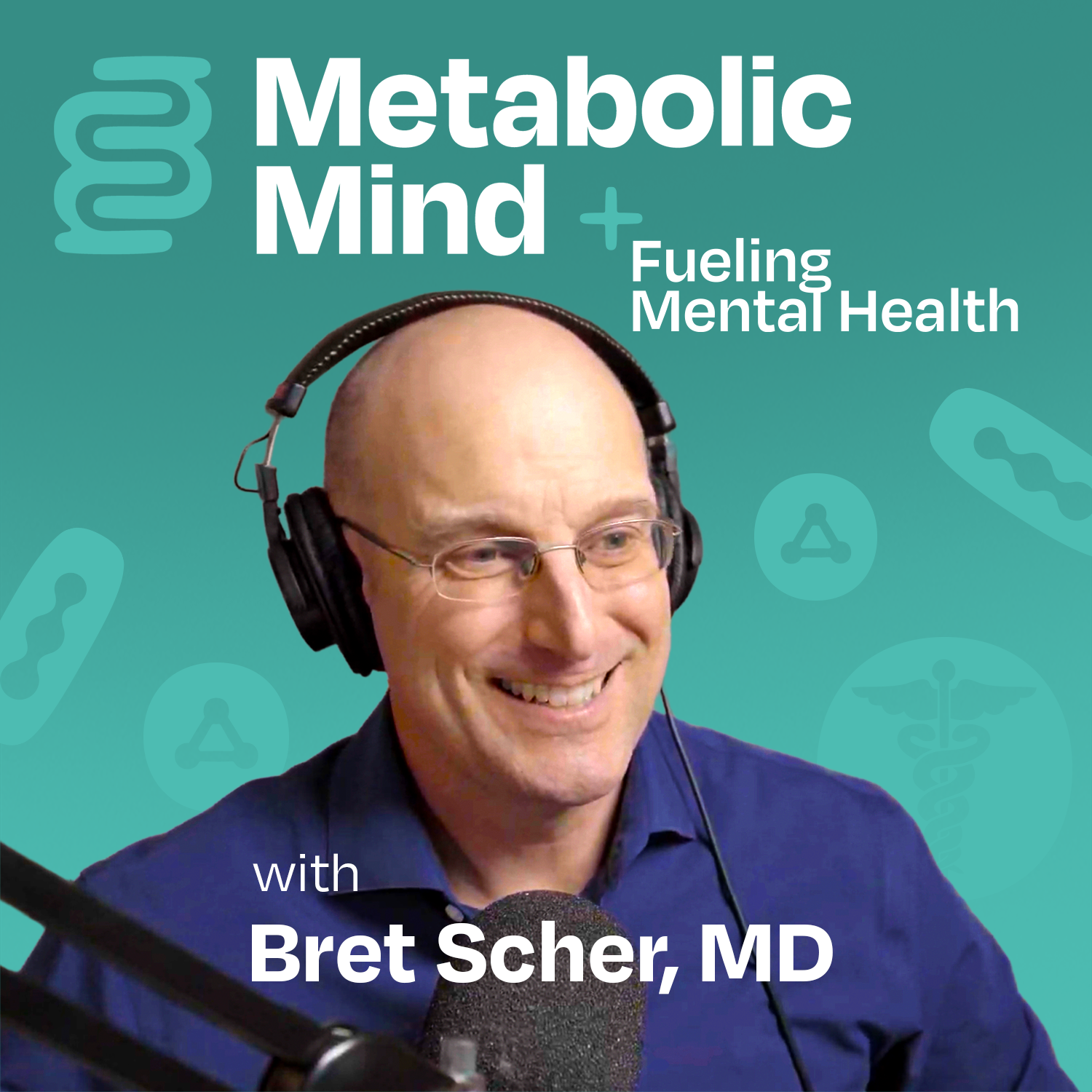
Dr. Bret Scher
- Baszucki Group Medical Director
- https://x.com/bschermd
Resources Mentioned:
Awareness and Best Practices in using Ketogenic Therapy to Treat Serious Mental Illness: A Modified Delphi Consensus
Ketogenic Diets for Mental Health Clinician Training Course
Free CME Clinician Trainings:
Are you a clinician who would like to learn more about the science behind these therapies and how to implement them in practice? Earn CME with our growing library of courses from some of the top experts in the field including Dr. Chris Palmer, Dr. Georgia Ede, Dr. Matthew Bernstein, Dr. Mariela Glandt, Dr. Deanna Kelly, Dr. Julie Milder, Dr. Zoltan Sarnyai, and Dr. Bret Scher with more coming soon.
Our courses have been made FREE by grants from Baszucki Group, so we can spread these powerful therapies as widely as possible. Earn CME/CNE credits: https://www.metabolicmind.org/for-clinicians/trainings-courses/?utm_medium=organic-social&utm_source=youtube&utm_campaign=cme-yt
Follow our channel for more information and education from Bret Scher, MD, FACC, including interviews with leading experts in Metabolic Psychiatry.
Learn more about metabolic psychiatry and find helpful resources at https://metabolicmind.org/
About us:
Metabolic Mind is a non-profit initiative of Baszucki Group working to transform the study and treatment of mental disorders by exploring the connection between metabolism and brain health. We leverage the science of metabolic psychiatry and personal stories to offer education, community, and hope to people struggling with mental health challenges and those who care for them.
Our channel is for informational purposes only. We are not providing individual or group medical or healthcare advice nor establishing a provider-patient relationship. Many of the interventions we discuss can have dramatic or potentially dangerous effects if done without proper supervision. Consult your healthcare provider before changing your lifestyle or medications.
Get every episode summarized
Each time Metabolic Mind publishes, we email you a written briefing from the transcript — the topics, who appeared, and any specific claims, with the ad reads skipped.
Email me new episodesFree for 3 shows. No card needed.
Hosts & guests

Transcript ready
318 searchable segments. Every word is indexed and playable.
Full transcript
Metabolic Mind — How Experts Recommend Using Ketogenic Therapy In Psychiatry (New Consensus). Machine-transcribed; use the interactive transcript above to jump the player to any line.
There are a lot of patients who can't afford to wait for those randomized control for that randomized trial level evidence to be available. Meanwhile, people are suffering and they need help and they've tried lots of other approaches. And so it's really about kind of democratizing and making accessible these tools and this information. Welcome to the Metabolic Mind Podcast. I'm your host, Dr. Brett Sherr. Metabolic Mind is a non-profit initiative of Bazooki Group where we're providing information about the intersection of metabolic health and mental health and metabolic therapies such as nutritional ketosis as therapies for mental illness. Thank you for joining us. Although our podcast is for informational purposes only and we aren't giving medical advice, we hope you will learn from our content and it will help facilitate discussions with your healthcare providers to see if you could benefit from exploring the connection between metabolic
and mental health. A new consensus statement for the use of ketogenic therapy for treating serious mental illness was just published in frontiers in nutrition. And what this is is the Delphi process. So what's the Delphi process? Who's it for? What's in it? Well, I'm glad you ask because today I'm joined by Dr. Matt Bernstein and Dr. Georgia Ead who are instrumental in this process to help us understand what this document is and what information it has that's going to benefit clinicians looking to treat individuals with metabolic and ketogenic therapies and how it can help individuals who themselves want to get treated but maybe their doctor or their clinician doesn't know about it. So this interview is like I said with Dr. Matt Bernstein who's a Harvard trained psychiatrist and the medical director at Ellen Horne and at Accord Health who has been using ketogenic therapy for years within his practice for treating serious mental illness. And Dr. Georgia Ead, a Harvard trained psychiatrist who for decades has been practicing nutritional psychiatry and really focusing on ketogenic therapy and metabolic therapies as well.
And together they were part of this expert group that came together to formulate this consensus guidelines. So I hope you enjoy this interview learning about this Delphi process, about this consensus guideline and what we can learn from it. Before we start the interview, I have to give an apology Dr. Ead, Dr. Bernstein and myself, we use the term guidelines quite a lot in this discussion but really that's inaccurate. What this publication is is a consensus statement and not treatment guidelines. Those are very different things. So we just want to be upfront about that to make sure there's no confusion. So anytime you hear us say guidelines, please in your brain, substitute a consensus statement. All right, sorry about that but sometimes the words we use matter and we're not always perfect. Thanks a lot and here's the interview. Many of the interventions we discuss can have potentially dangerous effects have done without proper supervision. Consult your health care provider before changing your lifestyle or medications. In addition, it's important to note that people may respond differently to ketosis and there isn't one recognized universal response.
Dr. Matt Bernstein and Dr. Georgie Ead, thanks so much for joining me today at metabolic mind. Great to be here. Thanks. Good to be here. I'm excited to have you both here to talk about this Delphi process or this consensus guidelines for ketogenic therapy and serious mental illness and you are both very much involved in this process for writing this paper and there's so much to talk about about what it means for the field of metabolic psychiatry. What doctors can learn from this? Every day people who are looking for other treatments for their mental illness can learn from this but I want to take a step back and first talk about what is this? What is the consensus guidelines? What is a Delphi process? So, Georgie, why don't you give us just a little bit of the background about how this all started and what exactly a Delphi process is? So a Delphi process is an established method for generating consensus in a field where the research, the clinical
research isn't yet robust enough for people to be able to draw conclusions about how they should apply a particular therapy in clinical practice. Yeah, so Matt, I mean we have research that is coming out but not enough research to say this is clearly what the top quality research shows. So instead let's publish a paper that gives a consensus of some of the expert clinicians in this field. So, what was it like for you to be part of this process? Oh, it was really fun and interesting and sometimes challenging in terms of getting it published. But yeah, we had a great steering group of people with so much experience doing this kind of work and then it was great to be part of that coming up with these questions that we then sent to the Bardo group. And we had some lively debate but I think mostly all had, you know, somewhat, you know, pretty good agreement on what we wanted to say and what we were we wanted to go with this. And I think it looks really great.
I mean, I hope people will spend some time checking it out and I know that clinicians will really benefit the people who are out there thinking this is interesting. They have patients and families coming to them asking for this and yet they don't have the experience and they don't have the ability to get fully trained right now. But this gives them a guidelines of some like a blueprint of what to do and what not to do. And I think that gives people a lot of confidence to move forward in an area where there's so much potential gain. Yeah. And I mean, I guess you preempted my next question, which was, how is this going to help people in practicing clinicians? And that's a really good point. And a lot of people would push back and say, well, you know, I'll be interested when there's research, right? This isn't based on research. And we have to be honest that sometimes clinical practice moves faster than research. So it seems like this is sort of the perfect setting for this type of document where clinical practice and demand from patients is outpacing the research.
So instead, how are we going to learn about it? How's the average person who doesn't know anything about it going to learn about it? Well, from this group of experts. So Georgia, who were some of the experts who were involved in this panel? So there were eight of us on this steering group. So so obviously, Dr. Bernstein and I were part of the steering group, but also Dr. Lori Calabrese, Dr. Ian Campbell, and Nicole Laurent, Dr. Chris Palmer, Dr. Shabani Sethi, and expert registered dietician Beth Zupetcania. So it's a mixture of a gathering of clinicians, both prescribing clinicians, also researchers and nutrition specialists. So we had different types of perspectives. And I think one of the most, you know, as Matt was saying, there was there was a agreement, really broad agreement around these about these 33 statements. We were able to come to really good agreement about 33 different statements regarding ketogenic metabolic therapy,
the practice of ketogenic metabolic theory, and the the thing that surprised me was that none of us work together really. And so we all work either independently or in other groups. And so I was actually surprised that there was such broad agreement. And that really gave me confidence in publishing, you know, writing, writing this up and publishing these guidelines, because it's not there was no real, there were no real areas of controversy. All of us have independently come to understand how this therapy works and what some of the best ways to apply it are. Yeah. That makes a lot of sense. And so Matt, is this a document saying that everybody needs to be given a ketogenic diet to treat their mental illness? I mean, that obviously asking to silly question. But one of you to frame it is how you see like this document impacting physicians and what it says. Yeah. Yeah. Of course, we're not saying everyone needs to do this. But I think we're giving guidelines for people who want to do this. And we identify the types of people who
would most benefit from it. Some of the definitions about how to define what it is. Some of the things that need to be measured. Some of the things that need to be thought about and monitored throughout the process. So I think we're we're really giving a blueprint for people who are thinking about doing this, but don't know quite know how or who to do it with. But we're certainly not saying everyone needs to do it. And I think we're very clear in these guidelines to say that this is mostly an adjunctive treatment at this time. We're not saying this is going to replace all psychiatric care or that it's meant to do that. We're being very careful. And I think conservative about the types of statements that we're making here. And I think that that's appropriate, given the state of the research. This is a published guidelines. This is not necessarily what everyone's doing in their practice all the time. People have more experience might differ a little bit. But this is this is where anyone could start when they're thinking about doing this kind of treatment.
Yeah, and that's such an important point that it's not to replace standard of care. And so someone who has a traditional psychiatry practice can bring this in to augment the care that they're already giving or you know family practice or internal medicine who are also treating patients with serious mental illness. Now Georgia, you mentioned there are 33 statements. So read them all. No, just kidding. I'm not going to make you read them all. But let's talk about some of the sort of the ones that stand out to you that you think are maybe the more impactful statements or the ones that people are going to resonate with most. Well, you know, the 33 the we what we did was we took these 33 statements and we summarized them in a shorter set of recommendations so that sort of takeaways clinical takeaways. And you know, as Matt was saying before that there are a lot of clinicians out there who might be interested in learning about this or they might patients coming to them interested in exploring this as a therapy and they may not have the time to go through all of the research and look at all of the clinical studies that there are
and you know, try to understand what the different contraindications are and indications for using this therapy and what kinds of laboratory tests and so forth you might. So what we did was we we put all of that together. We took these 33 statements and then we formed 10 recommendations for clinicians. And the first two I think are really a really nice two emphasize. So the first is ketogenic metabolic therapy should be considered as adjunct therapy to first line treatments for major depressive disorder by polar disorder and schizophrenia. We we focused on those three major serious mental illnesses. We limited our our review and our discussions to the application of kichang met about therapy to those three diagnoses. And then the second point, the second recommendation is that individuals with major depressive disorder by polar disorder or schizophrenia who decline cannot access do not tolerate or have not sufficiently benefited from first line treatments
should also be considered for a trial of ketogenic metabolic therapy if they qualify. So essentially what we're saying is this really deserves this really has earned a place in conventional mental health care as an adjunctive therapy to be considered in serious mental illness. Yeah. So now if you can think back before you had heard of you know, metabolic therapy and ketogenic therapies, if you had seen a document like this, would it have made you feel more comfortable or would it influence you in any way? Oh, absolutely. Yeah. I mean, I think you know, for pretty much all of us who are on this panel, you know, we kind of figured this out somehow through a process of trying things out and reading literature and trying other things out. And so that's a that's a you know, that's challenging process. So to be given some guidelines like this and some strong ideas from people with all this experience, it's it's really helpful for any clinician. And I think I would have loved to have read this, you know, six years ago when I was starting to
think about implementing these types of practices, this would have been incredibly valuable to to have read this. It would have given me confidence to charge forward in a way that I didn't have the confidence. And I think I would have, you know, I probably would have been further along now than I than I am. Yeah. Now when you described the process, it was about, you know, people agreeing to these statements, although I'm sure there were some disagreement as well. Now you mentioned there was mostly agreement, but where there's some more controversial statements where there was more of a disagreement about, you know, what they were saying. I think we had a little bit of a disagreement about a few things. One, I remember in Georgia, you can help refresh my memory if I don't, if I don't quite get this right, but I think we had a little bit of a disagreement about how long people should be trying therapy before considering it not working. So I think we ended up with about a three month trial, at least for people. I think there was some disagreement there. I remember there was a little bit of a disagreement about who needed to be part of a teen taking care of someone. Does there need to be a registered
dietician? Can it be someone else who's trained in nutrition or has studied and understands nutrition that doesn't have that certification? So I think we had a little bit of some lively debate about some of those things, but those are actually pretty peripheral points compared to the main points that the two leading points that Georgia just read about who's a candidate and whether the context for which this should be used. The third one is also a companion to that, which I really like as well, which is the absence of observable signs of metabolic dysfunction should not preclude individuals with schizophrenia, bipolar, or major depressive disorder from a trial of ketogenic metabolic therapy. And I think that one's really important as well, but as we know how effective this will be, if someone has metabolic dysfunction, we're going to be definitely improving their metabolic dysfunction, but even when someone doesn't have those observable... What if mental health treatment looked completely different? I'm Dr. Brett Schur, host of
metabolic mind, a show where we dive into the cutting edge science connecting your brain and your body. Did you know that your metabolism could hold the key to better mental health from bipolar disorder and depression to schizophrenia? Researchers and doctors are exploring powerful new treatments that go beyond medication like ketogenic therapy. Whether you're struggling yourself or supporting someone who is, metabolic mind brings you real stories, expert insights, and the hope of a new path forward. Find metabolic mind on YouTube or anywhere you listen to podcasts because what fuels your body, fuels your mental health. Global signs, we sometimes see absolutely miraculous responses in their mental health, and so that shouldn't be a reason not to think about trying this. Yeah, it's a great point just because systemic blood tests don't show any metabolic dysfunction, doesn't mean ketones in the brain and shifting from glucose, from primarily glucose to primarily ketones, still can have a tremendous benefit. But I want to circle back to that statement
about how long someone should be on ketogenic therapy before seeing it doesn't work. And I think this is kind of the a perfect example of how this Delphi process works. We don't have studies showing that if you don't, if you don't improve in three months, that you're not going to improve it all. Or if you don't improve in six months, you're not going to improve it all, right? Those don't exist simply because they haven't been done and it's too new. So how is someone going to know how long you need to treat somebody? Well, you talk to the people who've done it before. And I actually like that there was some disagreement because it shows people have different practice patterns and different experiences. So I think some were saying three months and some were saying up to six months as well, right? So how is that reconciled among the group? And how did you feel actually both of you about this sort of discrepancy of well, we don't really know, is it three months or six months and how do we come to an agreement? Like how do you feel about that process? Well, there was really, I mean, most of us did agree. And so, you know, most of us agreed. We have basically 90% of more agreement to most of these statements. And so I think that it just reflects
the fact that any therapy, including ketogenic metabolic therapy, it's really going to depend to some extent on the patient and the patient, all of the different variables that can occur with any particular clinical case. And just like any other, any other aspect of practicing clinical psychiatry, for to a large extent, you do have to kind of feel your way through it. You might have to feel your way through prescribing a medication or deep prescribing a medication or trying different kinds of psychotherapy. If you try to, if you try to make your guidelines too rigid, then you're going to, you're not going to, they're not going to be flexible enough for the outliers. And so I do think there are people who are going to need to wait a little longer before they, before they see the results or benefits. And there may be some people who don't see benefits at all, and so how long do you wait? And so it's all, I think it's nice to air on the side of, you know,
going a little bit longer and making sure that you're not, that you're not able to, you know, see benefits with a particular person, but that could be decided between the clinician and the patient, right? I think it allows for some personalization, but also it, you know, another area where where there was a little bit of disagreement was, you know, how high the ketone levels need to be, and how consistently and for how long do you need to keep the ketones in a particular range? There was a little disagreement about that, but again, these were, I think there's really all three of these points that have come up. We're really kind of minor and the big picture, you know, we all are seeing that, you know, people, most people can benefit if they get into good consistent ketosis for at least three months. And you will often see people improve earlier than that, but you don't want to give up before then, you know, in case, in case somebody's taking a little
bit longer to respond. And that's a great point because we hear and see so many testimonials of people saying like within two days or within a week, like everything changed, and that is incredible. And the fact that people can experience is that is phenomenal, but with this statement reflects is that not everybody's going to do that. In fact, maybe that's a minority and not the majority of people. And so in these experts, clinical practice, giving at least three months seems more appropriate. So I think that's a critical point. And you brought up medication management. So was there a statement about medication management or tapering or getting off medications? Was that addressed in this document? Not formally. It's mentioned in the manuscript, but it's not part of the final recommendations because it's a very complicated process. And so we didn't want to sort of get ahead of our skis in terms of making those kinds of recommendations. We really just
wanted to begin with giving clinicians the most important information that we have available to us from our collective clinical experience to help support their practice. And as Matt was saying, we're very conservative about it. You know, so we really were cautious and careful and responsible about what we said so that because we want, we want everybody to practice safely. And we want to make sure that the information that we're putting out there is clinically sound. And Matt, was there information or statements about who should or maybe who should not be considered for ketogenic therapy? Yeah, I mean, that, you know, that we have some lists of some absolute contraindications. And so I think our main statement is that this should be considered at anyone who has one of these illnesses who hasn't had an adequate response, especially people who are having metabolic dysfunction along with their treatment, especially people who are not tolerating medications well, don't want to be on medications for people who refuse to be on medications as other
people to especially consider. And then we also have a list of people who have absolute and relative contraindications that, you know, clinicians need to pay attention to. And I think that was, those are fairly easy things to agree to from from the group. There's there's not a huge list, in fact. And I think that's that's helpful. So this is not so complicated for people. Yeah, so what are some examples from that list, Georgia? Yeah, so one of the one of the resources that's included in this document is maybe I can even just kind of give you a sense of what it looks like is there if there's a table in in the paper where where we've listed what some authoritative publications consider to be absolute contraindications at or relative contraindications where you're going to need additional monitoring, you might need to be more cautious or think twice about using ketogenic diet. And so and so we've we've worked together the opinions that have been published by
other authoritative groups and and and represented those in the paper. And and even even among these published guidelines, for example, from the world of epilepsy, you don't you don't always see 100 percent consensus. There are even some conditions, for example, like pregnancy where there really is no consensus, where some people think it's perfectly fine if you if you're cautious to move forward the ketogenic diet, whereas other clinicians, you know, view it as a relative contraindication or even in some cases, an absolute contraindication. So this document can be very helpful as people can look and see, you know, which kinds of conditions. So under the absolute contraindications, for example, where you see a lot of where you see a lot of agreement in terms of absolute contraindications are rare inborn errors of metabolism, you know, genetically inherited conditions that interfere with the body's ability to burn fat for energy. And that makes a lot of sense, of course, right. And and then there are a couple of guidelines, for example, that view SGLT2 inhibitors
as absolute contraindications, although that's that already is changing in clinical practice, people with more experience do feel comfortable, cautiously proceeding, combining SGLT2 inhibitors with ketogenic diets. So those are just a couple of, but that makes sense. If someone's new to this and they're reading this document, they've never done this before, they read that and they see their patients on guardians or for seagulls, you know, with the SGLT2 inhibitors, they need to that needs to set off a little bit of an alarm bell in their brain to say I need to treat this differently and seek out some more information about this. So that makes a lot of sense. All right. And then so you talked about contraindications and relative contraindications and kind of who's a good candidate. And what about the workup? A lot of people ask like, you know, what tests do I need and what should be done? And physicians may not know. So was that included as well? Right. So one of the 10 recommendations at the end of the paper has to do with monitoring guidelines. And so recommendations about which kinds of laboratory tests you should obtain before. You
begin a ketogenic diet and which might need to be monitored along the way. And so for example, this recommendation says prior to initiating ketogenic metabolic therapy, a baseline assessment that includes a CDC, CMP, fasting lipid profile, vitamin D level, vitamin B12 level, and carnitine panel is recommended. And in the paper, we talk more about why these particular why these particular labs are recommended. But as you can see, it's a relatively straightforward set of lab lab. There aren't a lot of specialized labs that need to be or expensive labs that need to be obtained. So most of these labs are accessible for most practices. Yeah. Most doctors probably haven't checked a carnitine level, but it's certainly easy enough to do once you're aware of it. So it's good that that's mentioned. But otherwise, the list, as you're saying, is very simple, very simple. Well, I mean, I really think this is going to help a lot of people kind of learn the basics and hopefully feel more comfortable with it. And Matt, how about any final thoughts from you?
Yeah. I just wanted to bring up a metaphor, which is, you know, the idea of let's think of a clinician who has some experience as a really, really good cook. Now, this this guideline could be seen as like a recipe for them. And but we know that a really good cook is going to individualize the recipe to their kitchen, their style, the ingredients that are most fresh that they have, and a really good clinician will do the same. They're going to take these guidelines and they're going to apply it to the clinical situation that they're in and be creative and work together with that individual to really come up with together with the best plan for that person. And our goal is not to constrain that that process and that creativity. It's just to give, you know, the basics for people. And and hopefully people will start practicing this and getting some confidence and expertise to solve those situations for that individual person in front of them in the way that is best. Great. Well, people can find this in frontiers and nutrition. And and sort of like you're saying, Matt, I like how you said that, that it's it's not an absolute,
this is how you do it. But but more of a guideline or guidance on how to do it. And then you know, there's so much other information out there, whether it's, you know, videos that we've done at MetaBalkMind or free CME. So so Georgia, what do you hope someone will do? And if they read this and want to learn more like where would you want them to go to to further their knowledge and experience? Well, they should first and foremost go to the MetaBalkMind website. And I mean, because they're real, it's just a really rich resource, free resources, clinical resources, scientific resources, you know, research, lived experience, teachings, law and all the latest science, you know, that's something that I think you do such a good job with. Brett is just as soon as there's any new development in the field, it's you've covered it here on MetaBalkMind website. So I really think that that's that's a great place to go. Matt, do you have any other recommendations? Well, I would recommend your course. You know, I learned so much from Dr. Georgia Eads incredible
ketogenic MetaBalk therapy training program. And so someone who's really starting to, you know, get interested in this and starting to practice that way, I think that's absolutely invaluable training. So I will put a plug in for my colleagues training program for sure. Yeah. Thank you. Thank you very much. That's nice. Yeah. The idea behind the training is very much the same idea as behind the paper is to really put this information in the hands of clinicians who need it now. Even though the randomized control trial evidence has a ways to go, although it's coming soon, there'll be some really incredible research being published in the next year or two. There are a lot of patients who can't afford to wait for those randomized control trial for that random trial level evidence to be available. I mean, what people are suffering and they need help and they've tried lots of other approaches. And so I it's really about kind of democratizing and making accessible on these
these tools and this information. Yeah, that's well said. And then I would throw the last plug for my CME where we have a lot of free CME activities that you have both been very involved in. So so thank you both for doing that. And that's another great place for them to learn more. So well, wonderful. Thank you for joining me. Thank you for all your work on this paper. This is I think this is going to help a lot of clinicians and therefore help a lot of individuals with metabolic and ketogenic therapies. So I look forward to more coming out with all the research and all the work that you're doing. So thank you again. Thank you. Thank you. Thank you for watching. If you want to see more, check out these recommended videos. Also, if you haven't already, don't forget to subscribe to our channel to stay up to date with our content and help us expand the movement. And if you want to sign up for our newsletter, access our resources, read the latest research, or check out the ThinkSmart framework, click here to visit our website. See you on the next video. Thanks for listening to the metabolic mind podcast. If you found this episode helpful, please leave a rating and comment as we'd love to hear from you. And please click the subscribe button so you won't miss any of our future episodes. And you can see full video
episodes on our YouTube page at Metabolic Mind. Lastly, if you know someone who may benefit from this information, please share it as our goal is to spread this information to help as many people as possible. Thanks again for listening and we'll see you here next time at the Metabolic Mind
More episodes
More from Metabolic Mind
The Problem With One-Size-Fits-All Nutrition
Metabolic Mind
Q&A: Keto Sleep Issues, Carnitine Levels, Brain Insulin Resistance & More
Metabolic Mind
ApoB Explained: What Your LDL Test Doesn’t Tell You
Metabolic Mind
Keto 101: Everything You Need to Get Started
Metabolic Mind