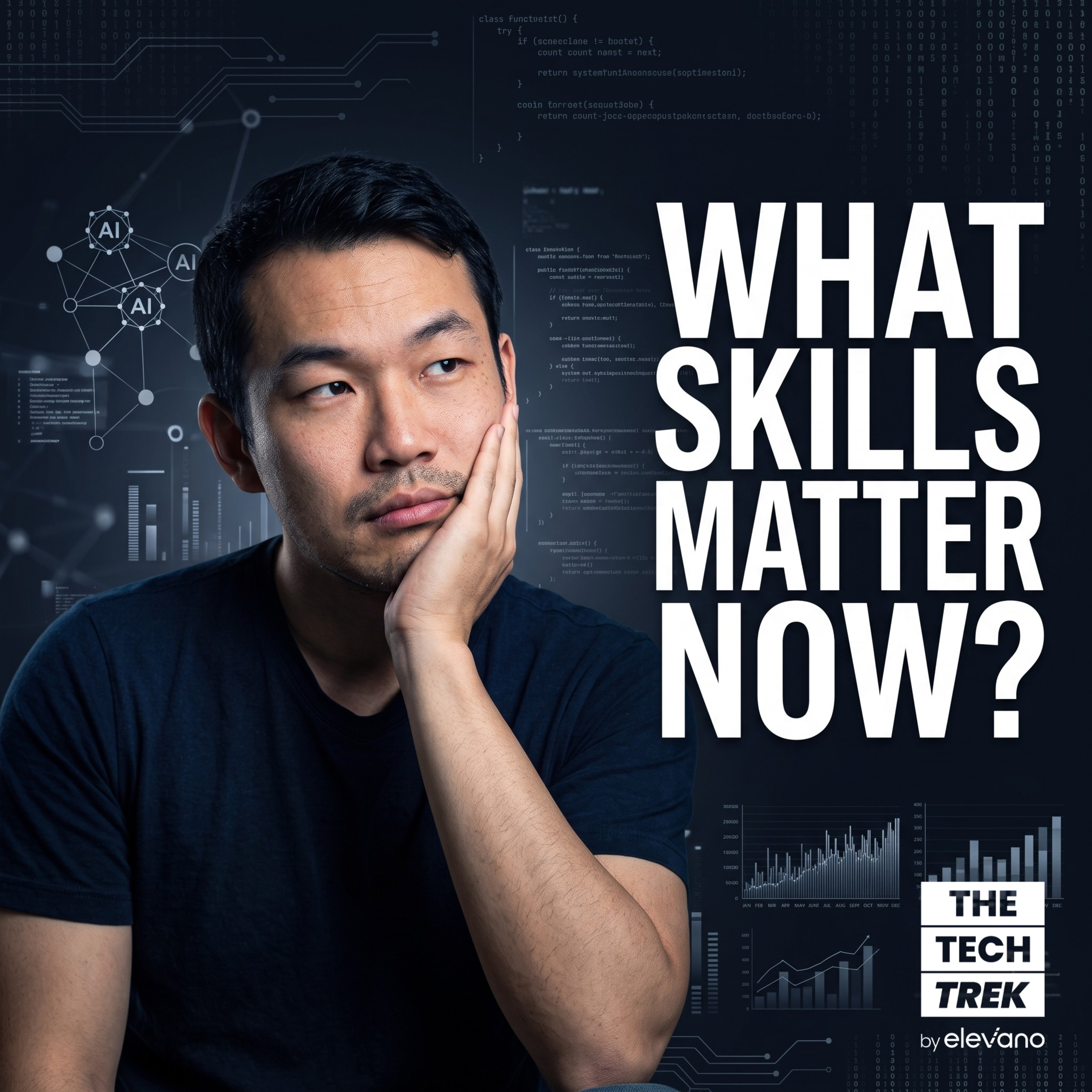
About this episode
AI is changing more than how engineers write code. It is changing what leaders hire for, how candidates are assessed, and which engineering skills may matter most.
Raymond Wang, CTO and cofounder at Ease Health, joins Amir to discuss how an engineering team using agentic coding tools thinks about hiring, productivity, code review, token costs, and the future of software engineering.
Raymond argues that syntax knowledge and familiarity with a specific language matter less than they once did. His team puts more weight on product instincts, engineering judgment, passion, drive, and the ability to break down problems and guide AI agents when they go in the wrong direction.
The conversation also examines a growing interview challenge. Watching a candidate prompt an AI tool can introduce subjectivity, especially when different prompting styles produce equally strong results. Raymond recommends making interviews resemble the actual work and evaluating the quality of the output rather than whether the candidate used the same process as the interviewer.
Practical Takeaways
• Hire for product judgment, engineering instincts, and problem solving, not only language precision.
• Design interviews around realistic work and evaluate results more than prompting style.
• Use the strongest models for expensive mistakes, such as code review, and cheaper models for lower risk internal tasks.
• Build an internal AI harness that engineers use and improve as part of their daily workflow.
Episode Highlights
02:05 What Ease Health now values when hiring engineers
05:30 Why grading prompts can make interviews more subjective
08:40 The challenge of keeping coding interviews ahead of rapidly improving models
12:10 Why Raymond sees code review as one of AI’s strongest engineering use cases
14:40 How Ease Health compares token spend with engineering output
26:45 Why software engineering may split between elite generalists, narrower roles, and highly specialized experts
One Line That Stuck
“Evaluate the output more than the subjective input.”
Follow The Tech Trek for more conversations on AI, engineering, product, data, and technical leadership.
Get every episode summarized
Each time The Tech Trek publishes, we email you a written briefing from the transcript — the topics, who appeared, and any specific claims, with the ad reads skipped.
Email me new episodesFree for 3 shows. No card needed.
Hosts & guests
No transcript yet
This episode has not been transcribed. Request it and it moves to the front of the queue.
More episodes
More from The Tech Trek

How AI Is Changing Engineering Workflows and Software Teams
The Tech Trek

How AI Agents Are Changing Who Can Build Software
The Tech Trek

How to Build a Data Team Ready for AI
The Tech Trek

How AI Startups Can Challenge the Enterprise Services Model
The Tech Trek