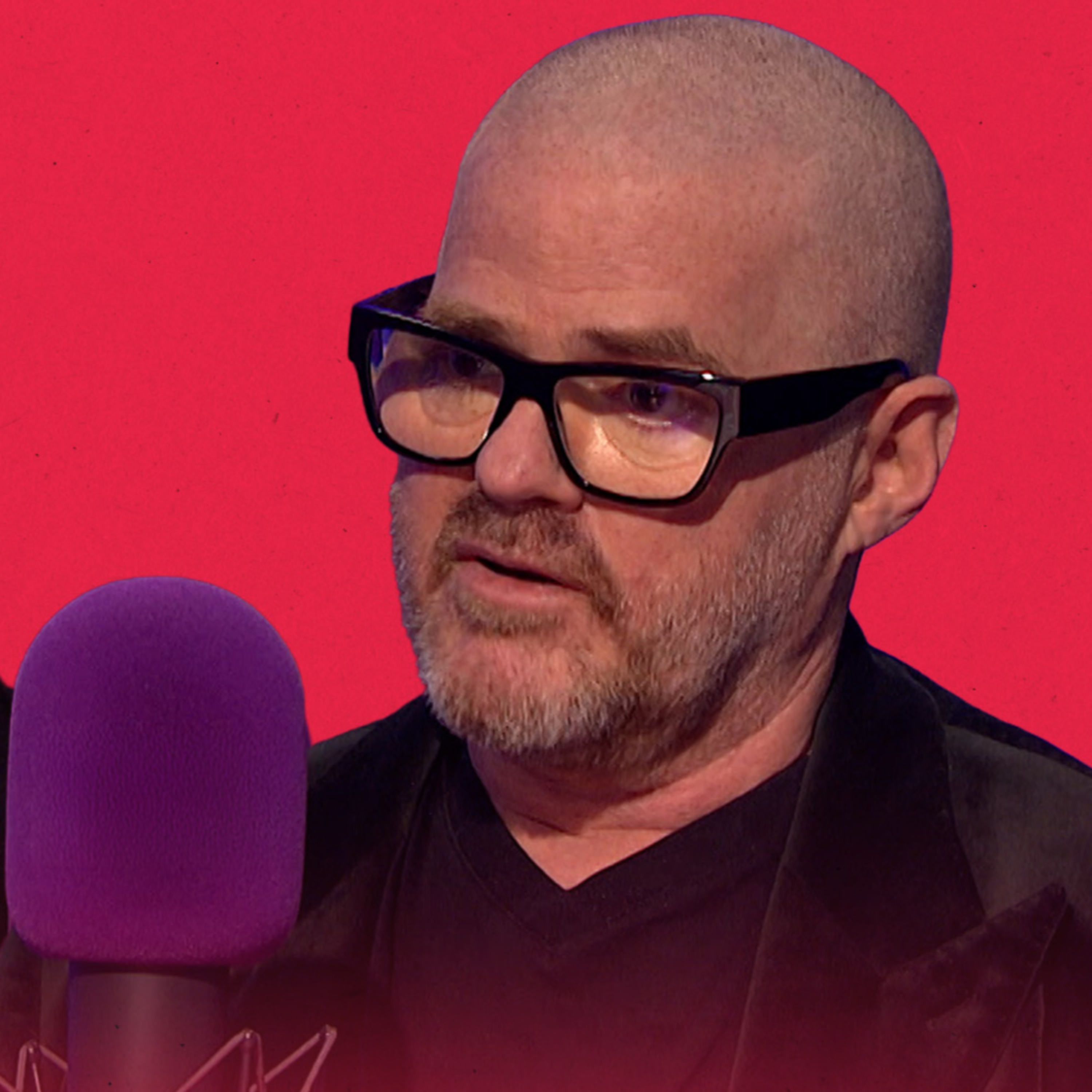
How bipolar and ADHD shaped Heston Blumenthal’s creative genius
About this episode
Heston Blumenthal is one of the world’s most innovative chefs, known for transforming the way we think about food, flavour and the dining experience. From his self-taught beginnings to building one of the most celebrated restaurants in the world, his career has been defined by curiosity, experimentation and a refusal to follow convention. But beyond the kitchen, Blumenthal has also been navigating deeply personal mental health challenges that almost led him to death at one point.
In 2023, Heston was sectioned after his wife called medical professionals following a severe manic episode and bipolar diagnosis.
On this episode of Ways to Change the World, Krishnan Guru-Murthy speaks to Heston Blumenthal about his approach to mindful and sustainable eating, living with ADHD and bipolar disorder, and why he is determined to challenge stigma.
Get every episode summarized
Each time Ways to Change the World with Krishnan Guru-Murthy publishes, we email you a written briefing from the transcript — the topics, who appeared, and any specific claims, with the ad reads skipped.
Email me new episodesFree for 3 shows. No card needed.
Hosts & guests

Transcript ready
675 searchable segments. Every word is indexed and playable.
Full transcript
Ways to Change the World with Krishnan Guru-Murthy — How bipolar and ADHD shaped Heston Blumenthal’s creative genius. Machine-transcribed; use the interactive transcript above to jump the player to any line.
Someone asked me, if you had a button, so if you could turn off your bipolar, would you use it? I said, only if I could turn on again. Because there's a bit, a bit of bipolar, fantastic. Do you have a sense of how you've influenced only since? When I came out of the hospital for the bipolar, and I realised that I did change the world of cooking, but I didn't realise I was doing it. Had I known how hard it was going to be before I did it, would I have done it? I don't know. Hello, and welcome to Ways to Change the World. I'm Krishnan Garry Murphy, and this is the podcast where we talk to extraordinary people about the big ideas in their lives and the events that have helped shape them. My guest today is Heston Blumenthal, one of the world's most influential chefs, known for combining cooking with science to transform the modern dining experience.
The self-taught chef rose to international fame with the fat duck, his experimental restaurant in Barkshire, that went on to earn three Michelin stars and was named number one on the planet in 2005 by the world's 50 best restaurants. Renowned for imaginative dishes, like snail porridge and bacon and egg ice cream, Heston has built a reputation for pushing culinary boundaries, exploring how memory, psychology, and the senses shape the way we taste food. He has also spoken about his own mental health. In 2017, he was diagnosed with ADHD, and in 2023, with bipolar disorder, after being sectioned and spending two months in hospital. He's now an ambassador for the charity bipolar UK, Heston, welcome. Thank you. If you could change the world in any way, how would you change it? Ooh. Well, one way would be, I think that everyone on this planet should have access to free drinking water, clean drinking water,
because the same amount of water exists now, as it always has done on our planet. It's just the distribution has changed because of water companies selling, selling water. And to give water back, one other ways I thought of doing this was eating mindfully. So, the more a mouthful of food you can value, you eat slower, and you get more enjoyment out of food. So, that means less food is produced, and that means less water is produced, and that water can then be used to feed the world, so to speak. So, eating mindfully is quite difficult to get your head around sometimes. Yes. What is it? Well, it's being aware of what the food looks like, what it smells like, what your expectation is when you put it in your mouth, maybe there's a story behind where the food comes from,
that you can make the story up, really. The classic one is a mindful raisin, super one raisin. I've done that. Have you done it? Yeah. And one raisin then feels like, instead of eating a whole handful of raisins in one go, you save a one. For ten minutes. Have you done it? And the taste changes as you do it. Yeah. It changes why you're chewing the texture changes, and you discover more about yourself in the process. But it's a hard thing to do, to ask people to eat mindfully all the time. I forget it at some time. It is really difficult. I mean, it's really interesting you bring this up straight away, because I went on one of these, you know, healthy, healthy eating retreats, where they talk about eating slowly and savoring your food, and how much more enjoyment you get out of it. Yes. You do it for a bit. I've just had lunch and I bolted it again. You very, very quickly get back.
I eat really, really quickly. Yes. And I don't really know why, because when you do actually do the experiment, and I've done that raisin thing, where it totally changes its intensity as you eat it. And you come away thinking, yes, I should definitely do this with all my food. Yes. But it's not as simple as that. No, I forget quite a lot. And I realized after I bolted it down, I realized I bolted it down. And it's almost if you need an alarm clock to trigger before you start eating. But it doesn't make a difference. I suppose I, when you mentioned about my bipolar, when I came out of hospital, I was on the medication. I put on a lot of weight. And down to the meds I was taking, which is quite common apparently. I've started to lose it, which is good. But that's when I applied mine for eating more,
more than I've done before. And have you, I don't know, I don't know if you don't mind me asking. I mean, are you using the jabs? Yes. I'm using the jabs. Which also help. But I realized that there could be very damaging to the restaurant business. Yes. Well, I mean, you got a sort of a mindful menu. Yes. At the fat dark. Yes. Do you think that really works? Because it isn't the whole point of the jabs that it stops you wanting to eat. You eat less. And I think it affects different people in different ways. Has it taken away your enjoyment of food? That's what a lot of people fear. No, I picked less. I mean, chefs are classic pickers. It's because they're used to working on their feet. So they're just rather than sitting down eating, they'll pick. So it stops, well, from my experience, it stops me picking.
But you still eat a full meal. Less. Less so now. But for a full meal at home and a full meal out, the trouble is if you go out sometimes, very lovely people in the restaurant send out extra food. And I feel I sort of guilty to it because I don't want to offend them. But you don't want it. I don't want it. But I mean, so much of your food experience is about all the senses and all the feelings that you get with food. Do you still have all of that? Yes. You are on weight loss drugs? Yes. Still have the sense of smell, the sense of taste, the sense of sight, the sense of sound, and pleasure and enjoyment. I prefer, if I can share some of my wife and I often share a starter. So there's less food on the plate. Yeah. And then I can enjoy it more. And how are you?
You've been very frank and open about what happened a couple of years ago. Yes. You know, you effectively had a breakdown with sections. Yes. How are you now? A lot calmer. I made a documentary for the BBC, my bipolar. And they showed me a clip of a BBC program called BBC Click. And the presenter asked me a question, how are you? And I gave him 45 minutes of diatribe, basically, 45 minutes of how we learn to speak, how our ability to control our vocal chords was influenced heavily by cooking. When you look back at the rest of the new work. Yes. That clip. Yes. What do you think? Oh, my God. Well, I couldn't believe I thought that quickly. I got so much information in my body movements.
Everything was chaotic, chaotic. But what I was saying. I still meant it's just the rate. I was saying it. How, how linked to. You know, what you now know is ADHD and bipolar. Yes, disorder. Was all of that to the brilliance of your creativity? I think, as I've thought about this before, I think it's a mixture of things. It's a mixture of bipolar, ADHD. Also, I was in a tiny kitchen, which made me look more at the science of cooking. How I could control the precision and the consistency of things in such a small space. I was working 20 hours a day. So I was exhausted. I think all of these things together have made a difference.
But I don't know if you look at particularly ADHD and bipolar. I do remember once. Licing a blowtorch going to light a blowtorch to camera light element art. So lemon tart, sprinkle sugar on the top. You light the blowtorch and you camera eyes to sugar. So I sprinkled the sugar on the top. And then I went to get the blowtorch. I turned the gas on. And I went to the tap sink. And I turned on the hot tap. And I remember thinking I can't possibly light the blowtorch with cold water. It has to be hot water. And then realized what was I doing? It's like a proper Alice in Wonderland moment. Pretty much scrambled. Yes, scrambled. So, but what I mean is like, do you think. Your brain had to be running at 110 miles an hour. For you to think about the things that you thought about. Yes. Yes. I think so. So, so, so there's a positivity to it.
Definitely. And your life has benefited hugely from that neurodiversity. Yes. Someone asked me, if you had a button. That you can turn on and turn off. So, if you could turn off your bipolar. Would you use it? I said, only if I could turn on again. Because there's a bit, a bit, a bit, a bipolar, a fantastic. And other bits are dangerous to, to, to me. And they can't be to people around me. And the other side of it is, is, is, is. It's also dangerous to, when you get through that, the end, you've got to understand the different phases. But the middle bit. Is fantastic. Did, did you always have that, you know, the classic. Shape of bipolar, which is manic periods and depressive periods. Because, obviously, you've had a very high-public profile. Yes. And, um, you've been on TV. And, you know, no one would have known if you were in some sort of
nowhere. It's only now looking back over the years. I can see I had, I had, there's more and more examples of symptoms of bipolar when I look back over the years. I remember. I just, I had the depressive periods of time when I looked back at them, but I didn't, I didn't look back at them as being depressive before I was hospitalised. And it might be because, because I've changed, my, my, I speak slower. I can sit longer in silence. It's given me more time to contemplate. And that contemplation has led me to realise there were, I had depressive periods when I,
when I was a teenager, late, late teens, let's say. So you weren't actively covering it up. It's just because you weren't aware of it. I was, I wasn't aware of it. Can we go back then to sort of early days? You know, what, what do you remember about that first sort of first of knowledge, first full knowledge around cookery wanting to learn, wanting to create? We used to go as a family, we used to go to Cornwall for some of the holidays. And one year my dad, his company made, made a bit of money and it will go broad. So my sister, myself, my parents went to France. And he'd read about this three mission style restaurant. They, they'd never been to one mission style restaurant, they'd learn three. Of course, my sister, I didn't even know what it, what that meant. So I had this experience in this restaurant in
Provence, which sent me down the rabbit hole of inclusiveness regarding food. And I remember sitting outside, there was the noise, soft noise of the crunching gravel under the feet of the waiters, intoxicating smell of lavender, the sound of the crickets, there was a cheese trolling the size of a chariot, wireless like a size of a billboard, they're pouring sources into souffles, carbon leaks, the lamb at the table. And that's it. I was hooked. So how did you decide to pursue it? Well, after then, I was about 18 then, 17, something like that. And I bought a couple of French cookbooks, the great chest of France, but I couldn't speak French. So I translated the word, word for word with the French English dictionary. And then I started cooking out of them. And every year, go to France and I'll save up
save up money and blow it on say three restaurants, six months of saving. And then I'd have more books and I would do more cooking and I would take one dish like a vanilla ice cream and have in my mind the most enjoyable vanilla ice cream I've eaten one of these restaurants and try and replicate it. And at the same time, there was a book out by an American guy called Harold McGee, which was about the food and cooking, science and publication. So I bought that. And in that book, he said, Browning meat doesn't keep me in the juices, which flew in the face of everything. Every chef that I'd heard speak or write down, you seal the meat, but you can't seal the juices in because when you put a steak in a hot pan, it sizzles. That's water coming out. And a world down piece of steak shrinks. Water has come out. So once I had read that, it's a bit like finding out
if Father Christmas isn't real. I absolutely thought, my God, if this isn't true, how many other things that I've read aren't true? And that's where I've got my sort of life motto from, which is crushing everything. And why didn't you decide to go to down the normal route of either formal cookery school or going to work for the list of restaurants that chefs normally do? I did one week at the Manuwa with Raymond Blanc and decided that what I wanted to do is make money first and then get myself a restaurant. But as the years went by, I did various jobs from selling photocopies to working for my old man on accounts, basically, bookkeeping.
And then it became evident that I wasn't driven by money. So rather than having the restaurant I could imagine I wanted and looked for, we sold our cottage, moved in with my parents and started looking for a site and found this old rundown pub in Bray. For us to money from our old man, then got a mortgage from the bank. My friends helped me do the refit of painting the walls and just polishing up the floor. And then that was it. In fact, that was open 1995. And why did you feel you didn't need to learn from the grades? Were you already convinced by that stage that you wanted to do something different? Yes, but I still learnt from the grades from their cookbooks and going and eating in their restaurants. And I think that was a really
big thing for me, being able to go and eat and observe. And then you then read the book. How do you feel about the sort of the elitism around food? I mean, you say you had to save up a six months to go to three great restaurants in France. Top restaurants are the preserve of people with money to burn these days. You're talking to three, four hundred pounds I had in a lot of places. I mean, it's just kind of absurd money. Is it necessary? Is it worth it? And is it right? Well, firstly, it depends on the restaurant. Is it right? The cost of producing? So it's like let's say the fat duck. We do 40, 36 to 40 covers customers. And we have a team of 70 to serve those people. So if you add all of that up plus the food costs, it's expensive. Yes, it is.
And it's not somewhere that you go to once a week or once a month at all. But however, you've had something handmade for you completely and hopefully it'll be lasting lasting in your memory for a long time. It's sort of a lifetime experience for some people. Yes. Yes. And we get the surprising amount of younger people coming in that must save up as well. Yes. I mean, it's a thing. I mean, I went on my wedding anniversary. How did you? And it was a great experience. But it's one of those things where it's sort of an experience for a one off for life. Yes. It's not meant to be, as I said, a weekly. But I mean, obviously it's out of reach for most people, isn't it? You know, do you think, do you think that's right? Is it, you know, or do you think it's possible to bring some of what you do and create to the masses, if you like? Well, we've got
next door to, we've got the hintes, the pub, the pub, which has a Michelin star. And there's snippets of the fat duck in there, just, you can get little, just a little taste. But the sheer cost of producing the food and the dishes that we produce in the duck, you can't, you can't replicate that without, unless, unless you get a robot, which I still don't think would do the job. And how much is the sort of the raw material and how much is the, is the, is the people cost? Because obviously raw materials are going up as well, aren't they? I mean, food costs are going up and they will mess in you going up this year. Massively. You're looking at, you're looking at, it's probably, people cost being the, is the biggest, by far, the, the, the biggest expenditure. And do you feel now, particularly now that you're on, you know, you're on the medication?
Do you feel like you're as creative or has it changed you that much? I still have my creativity before I was interrupting myself with ideas, which wasn't necessarily that beneficial because things wouldn't get done. Well, because there was so much going on in your head. There was so much going on in my head, yeah. If you think back sort of, you know, the bacon and egg, um, ice cream, then, you know, what, what is the story behind that creation and how long it took? Okay. Right. You're ready for this. We'll give you the truncated version. Okay, first, take, um, imagine making a cup of coffee with one coffee bean and a cup of water. You know, it will, but you grind the coffee bean, cover water, drink it. It'll be insipid. If you had the cup of water, drink it, but take the coffee bean and crunch the coffee bean,
you're going to get a much bigger explosion of coffee than you would do if the coffee bean was ground. So that I called flavour encapsulation. So you get little globules or little pellets of flavour that burst. Um, so bank, bank that to one side. I was looking at making vanilla ice cream. I found ice creams to be egg-y, um, quite often. I didn't want that egg-y taste in ice creams. So I looked at what was happening and you, in, in traditional, uh, cuisine, you're told to cook the custard until it coats the back of a spoon. You enjoy finger across it. But that's 80 something degrees and egg yolks can calculate at 70. So you have overcooking the egg yolks, which means the egg, the egg yolk proteins, form clumps, although you can't really see them.
So you get bursts of egg and that's why it tastes egg-y. So we reduce the temperature of the ice cream, cooking the ice cream. So it lost the egg in this. Then I thought, what happens if I scramble eggs, puree them and make a custard? So make a custard with scrambled eggs. And it tasted so egg-y, it reminded me of breakfast. So that was, that was basically where the, where the egg and bacon, and then bacon followed naturally. And how long did that whole process take? A couple of years. And that's quite the norm for, for along your ideas, isn't that? A couple of years. Yeah. So now that everything is slowed down for you now, um, you know, how long is a hes an idea going to take? Is it going to take longer or is it the same amount maybe ever longer? Um, um, at the moment, I mean, I'm fascinating.
By that I'm microbiome. So what the effects that the food has on, on our beat are well-being. Yeah. And I'd say that I'm in the business of emotion or just happen to use food cooking, um, as a, as a mechanism, a medium for that. And, um, triggering memory, nostalgia, things like that, playfulness, maybe adventure, discovery, those, those sorts of emotions. There's lots of research being done on what we eat, how it affects our microbes, and how the microbes then affect our mood. And the effect they can have on things like bipolar. But also, we'll see other way, your, your emotional state when you eat has an effect on your microbiome, which also affects, affects your mood in turn. So if you eat, when you're angry, when you're sad, when you're happy, it has a different, completely different effect.
So I'm looking, looking at that, um, that's going to give a whole new meaning just to the idea of a wellness menu, isn't it? Yes. But it might take some time. But I feel, it feels like we don't, we're just beginning to understand what you're talking about. Yes. But actually the gut affects your physical and mental wealth, you know, well-being. Yes. And, you know, we, you know, people started taking, um, you know, ennemies. Yeah. Well, no capsules full of, um, uh, bacteria. Yes. Um, to try and make themselves feel better. And it quite often works, I think. Yeah, but, but we don't really know why or how to control it. Yeah. You know, it's a very uncontrolled experience. You just pop a pill in hope. Yeah, there's more, there's more bacteria in our guts and planets in the universe. And do you think you could, I start to identify what makes, what, what influences different emotions or feelings?
Not yet. Not yet, but it will happen. And is that your aim or, or, or is that? I'd like to be part of it. Is that beyond, beyond cookery and there's more science? That's, it's more, it's more science. But I think it's the convergence of the two things that ingest me. Well, what do you feel about things like mushrooms and psilocybin? There's been a lot of research recently on microdosing and the impact on mental health in particular. A lot. Is that something you're interested in? I am. Um, I've read, I've read a bit about it. I've seen some TED talks on it. Uh, and it's meant to help with a lot of things. I think depression and stuff like that. Anxiety, OCD, all those sorts of things, yeah. I mean, you've done a lot of the science by yourself. It doesn't seem like we have a infrastructure that, that actually brings together
the thing that we all do a huge amount of, which is eat. And the science around what it's doing to us. That seems like a massive sort of gap. It is, um, in fact, the TV stuff that I've done most of it has given me access to research centres. And being able to tap into, for example, we did, um, a programme on chilli con carne for the BBC years ago. And I wanted to know why bias chilli addictive. We put my head chef at the time. I couldn't, I couldn't go in the machines. Am I a scanner? Because I just had a back operation with the metal and bellion to my back yet. And, um, he volunteered to go in the scanner. And we drip fed him chilli oil. And scanned, brain scanned him.
And what happened was the part of the brain that controls pain got lit up. And then when the chilli hit went down, the part of the brain that controls pleasure, that lit up. So everyone has their own chilli thresholds. It's when it comes down below the, when the pain is bearable, the body releases a lot of, um, endorphins. So you get this, this rush is hit of pleasure. Um, so that's to get access to an MRI scanner to be able to do that experiment without the television program would have been very difficult. I mean, there are other people now doing what you've done. I mean, you kind of change the way people think about food research in many ways. Yes. I mean, are you aware of who is doing the most exciting work? Who's kind of taking on? No, not yet. And how much do you want to do now? You know, has your life changed dramatically?
Um, in terms of your sense of ambition and drive? Or would you still feel like you got a lot to do? I feel like I've got a lot to do, but I don't know yet which direction to go in. So on the, um, the research side, with anything sensorial, so multi-sensory, um, you know, how, how, what you see can affect what you taste. What you hear can affect what you taste. And how the senses influence each other, which I think is fascinating. I like, I see myself as a walking experiment. So the idea that, um, how do I feel when this is happening? Obviously, I need to be aware in order for that to work. Can you give me an example of, um, of where that triggers people?
Yes, quite a few. So for example, if you're drinking a cup of coffee, um, with a bit of milk or a glass of wine, um, you write the word coffee or wine, depending on the drink, write it in balloon letters. So everything's rounded. There's no, there's no corners on it or sharp, sharp edges. Coffee and then write coffee on another piece of paper in sharp, really sharp letters and do the same wine. In the same hand, have a sip looking at the, the, the, the coffee or the wine written in the soft, round balloon-like letters and then have another sip looking in sharp letters. And it tastes sharper when you look at the sharp letters. It's, it's a great experiment to do. You think you think they could do it yourself? You can do it yourself. And, and so do you think, you know, the ideal restaurant experience is visual, sound,
smell. Yes, I can completely curated experience. Yes, is that the ideal one? I'm not sure if it's ideal, but it is, it's a wonderful experience. Does it exist? No. Um, there's bits of the duck. So the sound of the sea where you listen, you listen to the waves lapping up against the shore. Why are you eating something that looks like waves lapping up against the shore? Who does that work with? Because some people, I'm sure, sit down and they hear the sound of the waves and they say it doesn't do anything for me. But other people will be very moved by it. You know, do you have any sense of why it affects some people and why not? Well, everyone's relationship with food is unique. Uh, and sound and smell are the biggest trigger of memory. So most people have been to the sea their lives and we'll have a memory about it.
Uh, if you have waves crashing, crashing waves with a fork or in the background, um, it's going to, it's going to trigger some memories for some people and others. But if it's just a generic waves lapping up against the shore, most people will have a memory about that. And it will transport them back to their, to their own memory. And how do you, how do you sort of experiment with large groups of people? You know, how'd you done a sort of a finical trial type thing? So, you know, before doing that, or was it just in work for you? I did some trials with, um, Oxford University, Guckled Child Spence. And um, we did, we did, uh, with a bacon and egg ice cream. We've got two groups of people. And one group, they were both served the same bacon and egg ice cream. The one group listened to a chicken clucking.
And the other one listened to sizzling bacon. And the group that listened to sizzling bacon, the bacon flavor was higher. The group that listened to the chicken clucking is the eggy flavor was higher. That's amazing. Which is, is, yeah, quite, quite a strong effect as well. And in terms of what you want to do now as well, I mean, I mean, you said at the beginning of your career you discovered you weren't, you weren't as driven by money as you thought you might be. You know, the business of restaurants is tough. And, you know, and we've seen, um, you know, dinner, the restaurant in central London is, is, is shutting down. Yeah. Um, do you find the business side of it? You know, engaging. Do you want to do that? Or do you really just want to cook? I want to cook on a cook. And, but what I mean is in terms of, you know, where does that leave you as a, as a chef and as a, as a businessman, you know, it's, it's, it's difficult to do both,
isn't it? Yes, it is. I've always run, um, for take the, the dark. If I've, within reason, if I've need, if I've wanted to need something by it and then working on how to pay for it afterwards, which is not the way an accountant would do it. Um, but it has, it's happened to have worked. And what about in London? I mean, there was a story recently, um, in the Guardian about the shutting down of the restaurant. I don't know how much of it is true or not. But, um, how difficult is it as a business to keep things on the, on the road and to keep people, you know, famously chefs and it's a matter of drama and legend, you know, it's an up and down business, tempers, flair, people fall out. Does it have to be that way? No. No, it doesn't. And, uh, I'd like to think it's changed a lot in kitchens.
Over the last few years, there's a lot less shouting and flaring up than there used to be. Um, were you shouting in the kitchen? No, no, no. Um, I was exhausted and not, but, no, not shouting. Um, and in the Mandarin, the article in the Guardian wasn't correct. The, in the, the Mandarin, we decided out, at term of, we were attending in the province, it was basically expired. So we've extended it for six months. And we've had a great relationship with our hotel. We couldn't have actually had the success of the Mandarin without that relationship. And do you want to do another one like that? A big glossy restaurant in central London? Um, I don't know yet. We've got some, some, uh, potential offers. But I'm not sure.
Isn't it an exhausting thought? Every, everyone I've ever met, whoever ran restaurants, was sort of right on the edge. All the time. It's, yes, it's exhausting. It doesn't sound very appealing. We, what do you, what do you say to people who, who have the dream? of doing that? Well, I, um, I had a dream of doing it. Then when I opened the duck, it was my first page job as a chef. Um, and I had no idea it was going to be so tough. This is where, uh, being self-taught is a double-aged sword. Because in the one hand, I didn't, I wasn't, I didn't have the, the, the confinance of the traditions of classical French cooking, for example. But on the other side of things, in terms of organisation skills,
like ordering and stuff like that, I didn't have a clue. So that's where it took me, it took me longer than, you know, it's chefs that have had training to be able to get, get it up to speed, have it run in an organised fashion. Um, so I had, I have known how hard it was going to be before I did it. Would I have done it? I don't, I don't know. I mean, it's easy to say sitting here now. Yes, I would have done, but it was horrendously exhausting. But I mean, it was an enormous achievement as well. Because the success of the fact that led to your public profile, led to TV, yes, led to the spreading of the whole idea around science, led to loads of people buying blowtorches and trying to do creative things in their kitchens. Yes. That's a, you know, do you have a sense of how you've influenced
only since my, when I came out of hospital for bipolar, I had a chance to reflect and I realised, I could, I could say this now, I could never have said it before, because I've thought about it before, that I did change the world of cooking. Um, from this little, little, uh, contained kitchen in Bray, but I didn't, I didn't realise I was doing it at all. So in terms of, to be looking back as it's 30 years, we've been going. So having a, everyone has a legacy, but having a legacy that had that impact, has it been worth it? Yes, let's have to say yes. And how, how do you feel about that legacy? I mean, is it, you know, is pride something you feel or I feel more proud now than I have done before?
That's very qualified. Yes. What's your ambition now at this stage in your life? Do you think you can still have a big impact? On the way we think about food, because what you're looking at now is like, it's, it's another big term. Yeah, it's, it's a good question, because I didn't think, I never thought I'd have an impact. And even when I, even when I was sort of, you know, those, those periods of exhaustion years ago, I thought, when I opened the, the duck, I thought, maybe, maybe one day, I might get a Michelin star. I had no idea about three stars. So I sort of jumped in feet, feet, feet, feet and hands first. And, um, just cooked and then I, once I started, I was stuck, I was stuck.
Um, and had I have had a choice that time to get out of the kitchen. Um, I probably would have done a bit more than a bit earlier than, than, than, than my levels of exhaustion, if that makes sense. Um, yeah, I never thought that I would have this effect on the world of food and cooking. Having known that I've had an effect makes it more difficult to have that as an ambition. Yeah. Cause you've already done something really big. I thought it does. They're quite big. Yeah. Yeah. I mean, you're, you're also now involved, you know, as you've said in, in talking much more about, uh, bipolar and you're involved with bipolar UK. Um, do you have, do you want to do big things there? Or is that? I want, I definitely want to help with the stigma with people with the process of diagnosis and the stigma that's
around bipolar and the people that live with people with bipolar. Cause that's, that's something that people don't, don't get. I mean, one is understanding bipolar itself, but the loved ones around that person, they all get affected. Um, and it takes up to, I think it's nine years, for the, for the NHS to get a diagnosis, at least once you've got a diagnosis, you can do something about it. Um, but it's multiple times more likely for people to end their lives when they have bipolar and a mix of bipolar and ADHD. So, um, it's a big chunk of the population in Britain. Some people find, um, that, you know, that the person who has called the police on the hospital that, you know, done the sectioning, signed the paperwork. Yes. Um, you know, that that relationship is very difficult to mend. Um, how, how were you
able to see it? You know, more as, well, it was my wife saved your life. She saved my life. And I had no idea how bipolar never occurred to me. Um, and so when I, um, she, she, we'd had this discussion not that long ago, actually, in her head, when she thought, I, it's, it needs, it needs sectioning to do something about this. In her head, she thought, he might be speaking to me. So, um, that was a really big concern. In fact, when I, when I got diagnosis, I was surprised. I was attaining intrigued. Then I started reading about it and, and it, and it all sort of made sense. Um, and I don't know if it was getting worse as I was getting older. I'm not sure. How, how do you remove the stigma when you say that's what you want to do?
Um, by talking about it, the response we've got from the documentary that I've made, uh, was massive. People with bipolar people that live with people with bipolar, and you start to talk about it. There's a lot of people that have bipolar or, or have a relative with bipolar that don't want to talk about it. So if you can start talking about it and, and some of the things that, uh, you know, in the manic stage, um, our talk can be totally funny. I mean, embarrassing on these own. So, you can share that with other people. It makes a difference. So, what, so what would your advice be to people who might be friends, might be family, neighbors, um, about how they should handle it without treating it as something around which there's a stigma? Uh, contact bipolar UK, because they have a helpline. That, that, that would be a start.
My sister, um, was told she was bipolar, but she, she, she refuted it. She said, no, she didn't agree with it. If my wife, my wife hadn't, have had me section, then I wouldn't be here today. Because that hospital told you you were, you know, it was a couple of days away. It goes away from death. Yeah. And I suppose, I mean, do you, do you think it's your sort of scientific brain that has helped you embrace it, if you like? I think so. I think so. I've done curiosity. I think I've, I've done a lot of research, um, and, um, definitely the medication has helped with at the beginning, but one, one I put on a lot of weight. Secondly, my balance, I'm just going to get vertigo, my balance started to go. Um, but then, um, monthly visits to the hospital
to be checked up on, and then the medication gets treats and treats and treats, so things, they're getting better and better. So do you feel yourself now? Well, that's a little question, because I don't know what myself is. Um, I mean, I'm, I'm still me. I'm just a less manic version of me, I'd say. And that's good. I think so. Okay. Yes, it's good. It's good. That's the moment. Oh, thank you very much indeed. Oh, thank you. Thank you for joining us. Um, you can watch all of these interviews on the Channel 4 News YouTube channel. Until next time, bye-bye.
More episodes
More from Ways to Change the World with Krishnan Guru-Murthy

Eric Schlosser: Why the real cost of cheap food is hidden
Ways to Change the World with Krishnan Guru-Murthy

Ece Temelkuran: democracies don’t collapse overnight
Ways to Change the World with Krishnan Guru-Murthy

Guardian editor Katharine Viner: “Facts are essential, but they’re not enough”
Ways to Change the World with Krishnan Guru-Murthy

‘We are being beaten into submission with lies’ - writer George Saunders on Trum...
Ways to Change the World with Krishnan Guru-Murthy