About this episode
Interactive timestamps
Jump to segmentGet every episode summarized
Each time History Dispatches publishes, we email you a written briefing from the transcript — the topics, who appeared, and any specific claims, with the ad reads skipped.
Email me new episodesFree for 3 shows. No card needed.
Hosts & guests
Transcript ready
492 searchable segments. Every word is indexed and playable.
Full transcript
History Dispatches — Greensboro Sit-ins. Machine-transcribed; use the interactive transcript above to jump the player to any line.
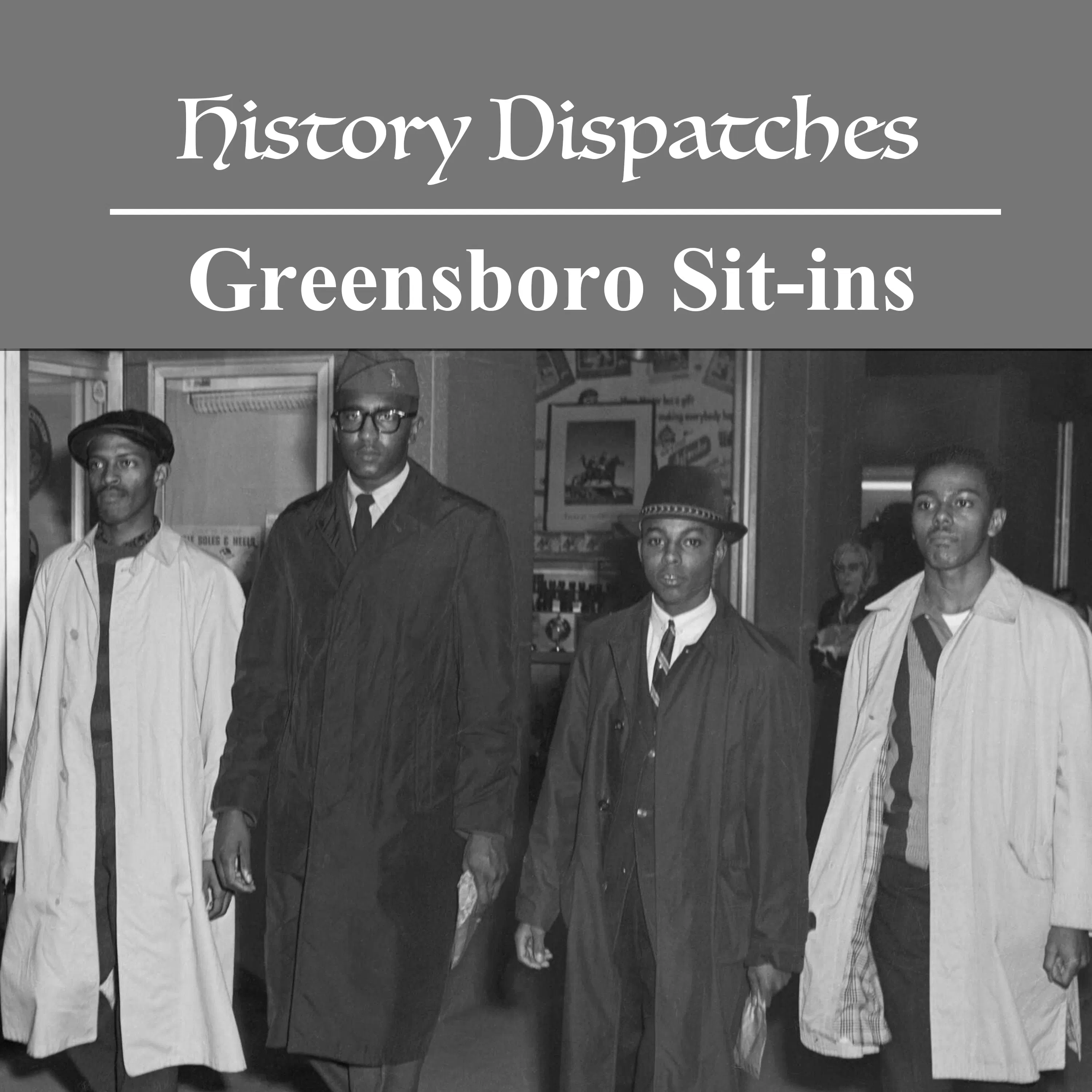
0:00This is the story of the one. As a maintenance tech at a university, he knows ordering from multiple suppliers takes time away from keeping their arena up and running. That's why he counts on Granger. To get everything he needs, from lighting and HVAC parts to plumbing supplies, all in one place, and with fast, dependable delivery, he's stocked and ready for the next tip-off. Call 1-800-Granger, click Granger.com or just up by Granger for the ones who get it done. On February 1, 1960, in Greensboro, North Carolina, four young black students went into a Woolworth's department store, bought some items, then sat at the lunch counter and ordered food. They were denied service. But instead of going home and not returning, the men came back the next day, and the next and the next, until thousands of people were staging sit-ins all over the South in protest of segregated seating at restaurants. This is the story of the Greensboro sit-ins.
1:10Good morning, good afternoon, and good evening and welcome to History Dispatches. My name is McKinley John with my dad, Matt. Dad, how are you today? I'm good, good, good. Here in History Dispatches, we cover a little bit of history every single weekday, and today we're heading to one of the most important eras in American history. Yes, civil rights movement of the 1950s and 60s. We've mined many of stories from this, but I don't know if I've heard of this one, so I'm excited. Dad, you take it away. Yeah, and one of the great things about this story is it's a happy ending. You know, so many stories of protest and things like that end up with some big shots. Dead bodies and something, yeah. This is actually, it works. And you know, unless you're a segregationist, in which case don't listen to our show. Yeah, we all come out on top on this one. So let's do a little bit of background. Like McKinley said, 1950s, 1960s, the civil rights movement, huge event here in the United States. The thing that was very big at that time was the non-violent protest.
2:10No one stood for that more than Martin Luther King, Jr. Now at this time in the United States, department stores were a big thing. They were called five at nine stores as well, but they are not like department stores that we know today. What giant blocks of dead mall space? Most of these would have food service in them as well. So a person would go to the store and they would get everything they needed. You could buy stuff for your car, get groceries, get whatever and then go and sit down and have a cup of coffee and a sandwich. You had all these places with these food service counters in them. Now the sit-in, which is what we're gonna talk about today, was a tactic that was not new. It had been used many times, including successfully in places like Chicago, St. Louis, Baltimore in the 50s. That takes us up to Greensboro, North Carolina, 1960. And we have four young men, Joseph McNeil, Franklin McCain, E.Z.L. Blair, Jr. and David Richmond. These guys were freshmen, students at North Carolina,
3:10Agricultural and Technical State University. And they would get together and they'd tend to say, you know, what could we do to fight segregation? They were inspired by Martin Luther King and the concept of non-violent protest. And they came up with a simple and classic plan. They were gonna go to an FW Woolworth, the department store, and Occupy seats at the food counter. They would then ask to get food and of course they would be denied. After that, they would just go home. They would sit there all day long and when the store closed, they would leave. The next day they would come back and the next and the next and the next until they got what they felt was important, which was for Woolworth to desegregate the lunch counters in all their stores all over the country. So that takes us to February 1st, 1960, the four young men who have been called the Greensboro Four or the A&T Four, the A&T Air for the Agricultural and Technical University that they were part of. They showed up at Woolworth's, bought some items in the store such as toothpaste
4:11and then they went to the stores lunch counter, sat down, ordered a cup of coffee and a donut. Of course, as predicted, they were refused. Now these guys would get hassled, basically from customers and even the staff, including an African American woman who belittled them, calling them troublemakers and so forth. Although I do want to mention one of the guys said an old white lady come up to them and said she was really proud of them, huh? And said, I wish we had had you 10, 15 years ago. So, you know, you've got some sympathy there too. They were of course asked to leave. They refused and the manager to his credit didn't freak out, he just said, okay, and he left them alone. His opinion was that they'll have their little moment of protest and they'll go home, but they're not going to come back. There was no calling a police, no arrest, no confrontations. The men stayed till the store closed and they went home. So the next day our four students would return but with some friends. There would be a total of 29 students at the Woolworth store the next day.
5:12This included four women, not too shabby. As always, these people and this was very important to them. They were polite, they were courteous. They bought stuff in the store, make sure they had the receipt. So no one could say you're stealing it and they just said at the counter after they were denied service, of course. And they did their schoolwork. Now at this point, the sit-in word of it had spread but now the newspapers and the TV stations heard about it and they were showing up. So the word of it was really starting to spread. That night, the Greensboro four people, they sent a letter to Woolworth's corporate office and said, please desegregate your counters. Woolworth responded, not directly to them. You know, they of course are going to converse with people like that. They put out a blanket statement, said, what's done at the counters in our stores is according to local custom, which is a no. They weren't B.S. meaters. Yeah, tripping. Yeah. That brings us up to the next day, February 3rd. 60 people showed up, third of them women.
6:14Also, pro-segregation has showed up, including clan members. So now we start getting a little bit dicey. Yeah, some tempers are getting a little freight here. The next day, February 4th, 300 plus people showed up. High school students, college students, including white college students. And because they had so many people, they decided to expand their protest. They went to Cress, which was another department store like Woolworth and they sat at their counters. Now, the numbers of people here are going to naturally lead to some issues. There will be insults and comments made. At one point, some eggs were thrown at some of the protestors. And one of the pro-segregationists tried to light one of the protestors' jackets on fire, which didn't really do much. And the police right away grabbed this guy and arrested him. As a note, the police, they laid off things, which I give them credit for. They basically were like no one's causing property damage, no one's attacking other people. There's no physical harm happening.
7:15And if anyone tried it, they did arrest them. So that takes us up to the next day, February 5th. The protests are growing. Hundreds of people are at these events. Pro-segregationists were there as well. This leads to swearing and yelling. And that was the day they had some more arrests. Couple women were removed. There's three people taken away by the police. Woolworth got so frustrated they would contact the colleges. Because again, the colleges were seen as the hotbeds for the radicals. And they said, can you intervene somehow? Well, on February 6th, 1400 students would gather at North Carolina, A and T, and they would vote to continue the protests. And that day, more than 1,000 people would show up as well as counter protesters and pack the stores. In fact, at the Woolworths where this all started, there was a bomb threat that afternoon. There was no bomb, but they had to shut everything down at that point. These protests are going to continue. And you know what, they're going to spread beyond Greensboro and beyond North Carolina
8:16and show up throughout the United States. McKinley, it's time to talk about factor. I love factor. And why is that? Well, it gives you fast, convenient, delicious meals when I need them, which is important, considering I'm a busy parent. The two things I love about factor is that it's fast and tasty. Normally, you can't get both from this type of meal. It's one or the other, but not with factor. You get both. I love their huge selection with 100 rotating weekly meals. I recently got the queso poblano chicken and the smoky barbecue chicken and they were both fantastic. That is so awesome. Factor brings quality food to you. It's always fresh and always tasty. So check out factor. I use it. My family uses it. I know you'll love it. And you know what, Dad? We got a great offer for our listeners. That's right. Head to factor meals.com slash dispatches pod 50 off and use code dispatches pod 50 off to get 50% off and free breakfast for a year.
9:16Eat like a pro this month with factor. New subscribers only varies by plan. One free breakfast item per box for one year while subscription is active. So these student sit-ins that had been organized just a week before have spread all across the country, especially in the South because that is where most of the segregation was taking place. Then on March 16th, President Eisenhower would weigh in. He would express his concern for those he said weren't simply fighting for human and civil rights. He said he was deeply sympathetic with the efforts of any group to enjoy the rights of equality that they are guaranteed by the Constitution. So when the president comes out and basically says, I'm in your corner, that's a big moral boost right here. And so these sit-ins would just grow. They would pop up all over the South. They really went through North Carolina at first, Winston Salem, Durham, Raleigh, Charlotte, then moved on to other places. Richmond, Virginia, Lexington, Kentucky,
10:1855 cities and 13 states. Wow. And you saw things happening. You saw success. In Nashville, the sit-ins basically ended segregation in the downtown department store lunch counters. By May of that year. And as I said, most of these protests were peaceful, although there were some instances of violence. There was also some arrests for trespassing disorderly conduct disturbing the peace, that sort of thing. The other thing that was fascinating is the protests would spread. It wasn't just lunch counters at a public facility. This was now swimming pools, libraries, art galleries, parks, beaches, museums, primarily in the South. And they kind of said, you know what? These are public things, just like Woolworth says. It's a public department store. You should be accommodating to everyone. And so the sit-ins would spread. Back in Greensboro, there were some tensions, but nothing ever got too bad. The students continued to keep showing up. The sit-ins at Woolworth's and other retailers
11:20would change not just as a sit-in, but then a boycott. And you know what? When people start losing money, they're going to... Money talks. So soon, when stores were boycotted, the owners went, okay, yeah, we don't have any segregationist policies anymore. In July of 1960, so this is not even six months after the start of the protests. The Woolworth's, where it all started, experienced a $200,000 loss. And the store manager, Clarence Harris, he had a reduction in a salary for not meeting sales goals. So what he did on July 25th, 1960, he went and asked four of his employees, who were all black. We have their names, Geneva, Tisdale, Susie Morrison, Anita Jones, and Charles Bess. And he said, please change into your street clothes. You know, take off your Woolworth's uniforms. And he did, asked him to go sit at the counter in his store. And quietly, they became the first blacks to ever be served at a Woolworth counter in Greensboro, North Carolina.
12:20Dang. With that, the dam was broken. Very soon, others were going to follow, although some would take time and like, I think the Woolworth's in Jackson, Tennessee took until 1965. And that was after, that was after the Civil Rights Act, yeah. But, you know, so many others broke down after that. They just went, this is not worth the hassle, the loss of money, all that kind of stuff. And as you alluded to, Mick, the 1964 Civil Rights Act would mandate desegregation of public accommodations. So that would really be the ultimate nail in the coffin there and the segregation in places like this. I love this story because it worked. And, you know, why did it work? Well, I think the people who started it and those who followed with them stayed with a simple, non-violent plan. You know, these guys weren't running in their burning stuff and screaming. They were just polite. They were buying stuff at the store. They were consumers. And the public was kind of sympathetic because I mean, Woolworth is a public place.
13:21It's a restaurant for God's sake. Who are you to just deny someone who wants to have a sandwich or a cup of coffee? That seems petty and hypocritical. What they're asking is just simple decency, you know, just that I can go in and be treated politely. If I'm keeping up my end of the social bargain being polite, paying for my goods and services, why can't I just have something to eat? Why can't I have a drink? I think that's why it works so well because again, how can you deny people the right to go eat somewhere? Anyhow, the Woolworths and its lunch counter service would close down, including the one in Greensboro in 1993. And I love this start. Geneva, Tisdale, who was one of the women that first ate at the counter back in July of 1960. She was also one of the women who was on service on February 1st when the protests started. She was still working at the Woolworth counter in 1993 and was there the last day that it served up food. One other note I want to mention is the lunch counter where this all started.
14:22Portions of it were saved after the building was taken down and they have gone to various museums, including the Smithsonian and to the International Civil Rights Center and Museum in Greensboro. So if you go there, you can see there and you see that. That's the Greensboro sit-ins. That's part of the real counter that those people went in and started this whole process. That's awesome. Otherwise, that's the story of the Greensboro sit-in. It is a critical point in American history and American civil rights. And it inspired and helped encourage the use of nonviolence in its approach to desegregating the United States. That is really cool. The whole segregationist stuff. It boggles my mind. This is America. It's about the most capitalist place you can imagine and you won't take someone's money. It's just odd. Yeah, this is just about someone getting a cup of coffee and you can make money off of it. Yeah. Why are you not doing that? That's stupid. It's insane. But also makes me feel a little guilty because it's like, what did you do, your freshman year of college? Well, I sat in at the Greensboro counter in 1960 where it would have been all too easy for me to get beat up
15:25or something like that. What did I do? Well, I played a lot of video games. Hats off to those four gentlemen who began it all in the thousands of other students and other people who just joined in, joined in just fascinating. It's really cool. Well, I'll leave you with our tidbit of the day. Woolworth was a pioneer in the department store industry. They were founded in 1878 in Utica, New York. However, like many retailers, they're business faded. And by the 1990s, the name Woolworths was gone. The company did continue on, but ultimately sold most of its business interests to other retailers like Walmart. The company did emerge in the 2000s as Foot Locker, which I actually remember. They were a sportswear retailer. However, in 2025, Dick's Sporting Goods bought Foot Locker for $2.4 billion, marking an end to the corporate legacy of Woolworths. So there you go. Like many department stores there now, the way of the dodo. Yeah. Well, Dad, thank you very much. You're welcome. Dear listener, thank you so much for joining us today.
16:25We really appreciate it. If you have any stories you want to bring our attention to, we have a form on our website, historydispatches.com. Drop us a line there. We'd love to hear from you. Thank you so much and have a wonderful day. Welcome to True Spies. The podcast that takes you deep inside the greatest secret missions of all time. You'll meet the people who live life undercover. What do they know? What are their skills? And what would you do in their position? Vengeance felt good, seeing these people pay for what they'd done, felt righteous. True Spies from Spicecape Studios, wherever you get your podcasts.
More episodes


