About this episode
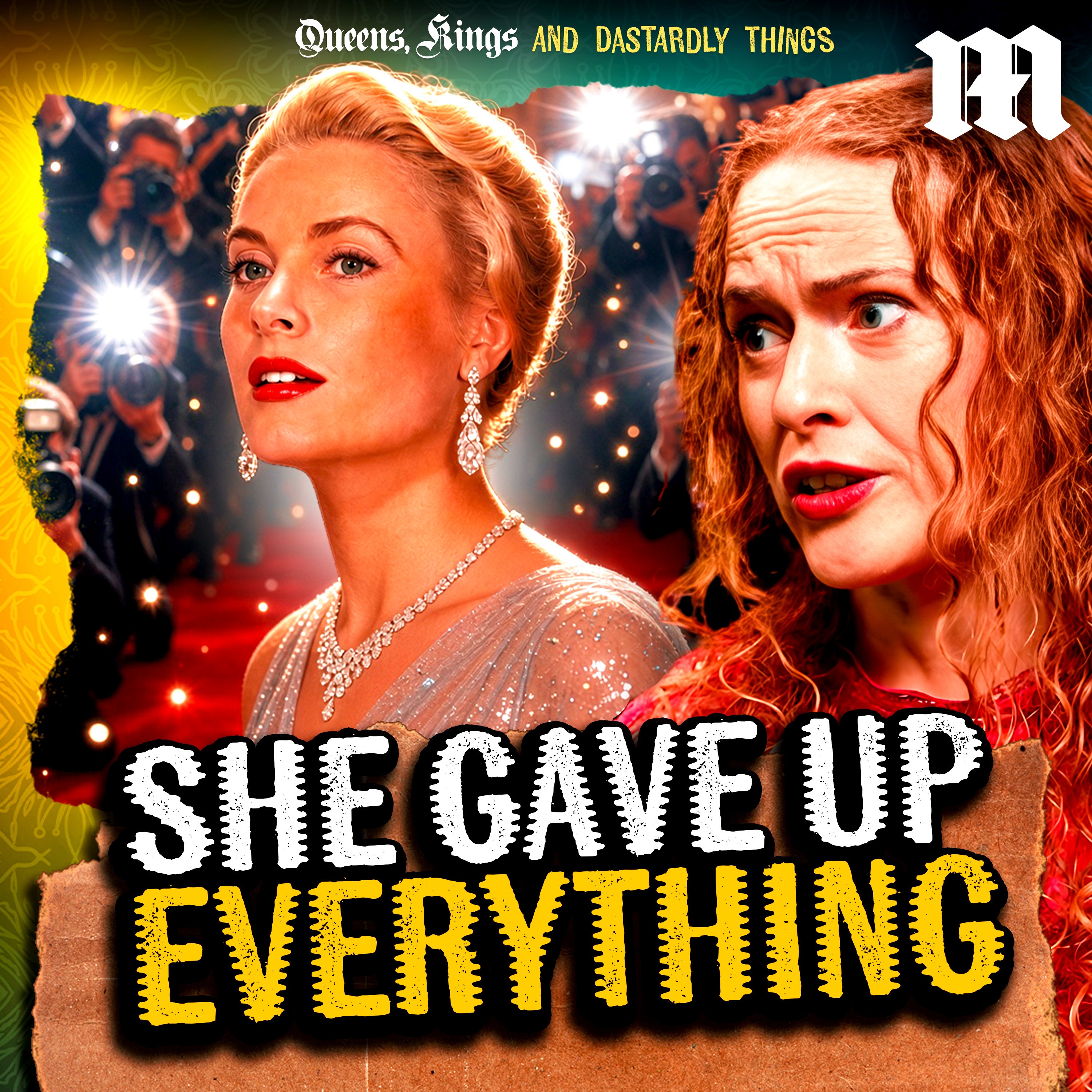
Grace Kelly had it all: beauty, an Oscar, Hollywood stardom and a glittering career ahead of her. Then she married a prince.
Robert Hardman and Professor Kate Williams revisit one of the great celebrity fairy tales of the 20th century: the marriage of Grace Kelly to Prince Rainier of Monaco. But behind the wedding-of-the-century photographs lay a rather more complicated story.
From Grace’s battles to make it in the decidedly sleazy world of 1950s Hollywood to an extraordinary royal courtship – involving Aristotle Onassis, Marilyn Monroe and even a young JFK – they explore how an American movie star found herself transformed into a European princess.
There was also a price. Grace was required to give up acting, provide a $2 million dowry and even undergo a fertility test before the marriage could go ahead. Yet the woman who surrendered her Hollywood career would ultimately transform Monaco itself, bringing glamour, money and international respectability to the tiny principality.
So was Grace Kelly’s marriage really the fairy tale the world was sold or did becoming a princess cost her far more than anyone realised?
Hosts: Robert Hardman and Professor Kate Williams
Series Producer: Ben Devlin
Production Manager: Vittoria Cecchini
Content Editor: Joseph Palmer
Executive Producer: Bella Soames
A Daily Mail production. Seriously Popular.
Sign up to Palace Confidential, the FREE royals newsletter from the Mail's top experts. Delivered straight to your inbox every Thursday, it's the smartest way to stay in the royal inner circle. Just head to dailymail.co.uk/palaceconfidential to sign up today.
Hosted on Acast. See acast.com/privacy for more information.
Get every episode summarized
Each time Queens, Kings, and Dastardly Things publishes, we email you a written briefing from the transcript — the topics, who appeared, and any specific claims, with the ad reads skipped.
Email me new episodesFree for 3 shows. No card needed.
Hosts & guests

Transcript ready
361 searchable segments. Every word is indexed and playable.
Full transcript
Queens, Kings, and Dastardly Things — Grace Kelly: Hollywood Princess. Machine-transcribed; use the interactive transcript above to jump the player to any line.
Seriously, Captain. So, Kate, what are we got coming up on the show today? Robert, we've got Glamour, we've got Beauty, we've got Hollywood, we've got Royalty, and we've got the Dark Side of Royalty, the Dark Side of being the Fairy Princess. It is Grace Kelly, Grace of Monaco. Hello, and welcome to another episode of Queen's Kings and Dastardly Things. I'm Robert Harbman, Daily Mail columnist and Royal Bographer, and I'm joined as ever by my co-host Professor Kate Williams, Royal Bographer and historian. Hello, Kate. Hello, Robert. And today we are looking at an extraordinary glamorous royal moment in the 1950s that had the world glued to its screens as a beautiful young royal lady, became world famous. And I'm not talking about the Queen's coronation, I'm talking about another equally glamorous moment
down on the Mediterranean, and that is the marriage of who Kate? Grace Kelly, incredible Oscar-winning Hollywood actress and Prince Rhaeny of Monaco. Which, I mean, on paper, looks like an absolutely classic 20th century fairy tale. Hollywood glamour, Bachelor Prince with a fairy tale castle on the Mediterranean, Yacht, glamour, stars. I mean, it's all there. But let's look at where and how this came about, because it wasn't a huge love story, really, was it? Well, it was, presented as a whirlwind love story. It was this whirlwind wondrous, exciting love story. And it was on the front pages of all the newspapers when the engagement was announced in early 1956, and they married in April 1956, as she say. We are on the fantastic anniversary this year in the Cathedral of Monaco. And time said it was the wedding of a blonde from Philadelphia in a proprietor of an amusement park, pretty mean. But for most, it was the great romance. And so this
is why there was this magnificent MGM film made, the wedding of the century of Grace and Rainier's Not Grace was an MGM actress. She was an MGM actress. She signed to the MGM studio. And various battles with them when she was two films that weren't MGM, for example, the country girl that won her an Oscar. But this was her final film for MGM. And this film was the wedding of the century. And when you watch it, it is so beautiful. She's so serene when it's fascinating because she says it was a nightmare really the whole thing because as soon as she went into the Cathedral, all she could see was the Voleflexes and Hasselbladds and Nikons and all she could see were Kamalens. It's a royal wedding. If you get a marry royalty, that comes with the comes with the time. That's very lacking in sympathy there, Robert. Well, let's go back a little in time because as we say, this, I mean, this was in post-war year and in fact post-war western world. This was a fabulously glamorous moment. Grace Kelly,
superstar, Prince Rainier, most eligible man in the world, etc. coming together. But Grace Kelly's rise to Hollywood fame. I mean, it was, as you've said in your book, Kate, and there's a whole chapter in Regina, which is your very wonderful new book, which I've been reading. But you really go into the battle that Grace Kelly had to get to the top and it was pretty sleazy, wasn't it? I am fascinated by Grace Kelly. I'm totally fascinated by her. And she has this, I mean, her life is so interesting. And she fought, like you say, she absolutely fought to get to the top. And she's not as fought, but another one gets to mind. Another version. I mean, she's she's the, she's, she's born into a wealthy family. Her father, Jack, is this very successful builder. He's, you know, when, when, when, when Grace gets married, they, they myth weave and her mother says, her mother Margaret says, oh, I'm the wife of a bricklayer, but how many times
Jack Kelly actually laid any bricks is debatable. But certainly he's a very wealthy, probably a very wealthy, boss of developer. He's been a champion row, he's been a champion row, he's been in the Olympics. And they have this tough family life. She's the third. And she says, it's probably 1929 in Philadelphia. She said, I grew up competing, competing for love. And her father over and over again says, oh, Grace went to Mount to much, went to Mount to much. When she wins in Oscar, he says, I was thought it would peggy. That's the eldest girl, Margaret. And she's always dismissed by the family, but she's determined. And she goes to the, it comes a model. She goes to the American Academy of Geratic Arts. Her uncle is a screenwriter and she, he's one of his scenes. And then when she graduates, there's a lot of TV, but the time. I think she started off, didn't she? In sector side. Yes, a lot of, a lot of, a lot of, a lot of, a lot of, I spray it's not the, not the most glamorous start to Hollywood career. Well, a lot of these 50s housewife adverts, it always interests me when people now put them on the internet saying, look at these happy women doing these happy things with the,
shock, you know, the, the early tradwives doing the cooking and the, and the bug spraying. But of course, these were professional women. These weren't, these weren't housewives. They were models, professional models like Grace. And she lives in New York at the Barbies and Hotel to Women for Women. And she's a very successful model. But yes, it's not, it's not high couture. It's, it's bug spray. But these, this is where the money is. It's advertising the domestic products for magazines, for the housewife in the 1950s. And she breaks into TV, but it's really hard to break into movies. I've got a small role in 14 hours, but then she's spotted by Gary Cooper, who wants her in high noon, which is written by the great Carl Foreman. Yeah, great man. Great man, great, incredible screenwriter. And she is a young bride and that's a very anti-macartheist film. And she's a young bride and Gary Cooper has been chased out of town. And this is a real breakthrough for her. And after this, she's in a lot of films. She goes into this next film pretty much is called Magonbo. And it's with Clark Gable and it's with Ava Gardner. And another actress had to drop out,
I believe she could she was pregnant. And there's actually totally made up words. Magonbo was a Hollywood nightclub. So they called this film that Magonbo in Africa. And Clark Gable had to rescue Grace Mapantha. So the whole thing is very dubious representation of Africa. But and Grace gets a golden globe for it. But what you see over and over again is when Grace is written about by her have to say pretty much mostly male biographers is say why did she have so many affairs? Why does she have an affair with Clark Gable and all these actors and all these directors? She obviously has a father figure complex. It's because of Jack Kelly being so mean to her. She's got a father figure complex. Or she's cast as an infomaniac in this obsession with, you know, Grace has this huge sexual passion. And she's just an infomaniac and she's obsessed to that father. And this is why she has a fair after a fair after a fair. And why, you know, one biographer says he can't really work out the sort of discrepancy that a woman who's seen as the most chased in Hollywood with the white gloves is the most sexually active. But to me,
this is the whole point. This is the whole point of what Grace does. She's not having affairs with men her age young men in their early 20s or struggling writers or waiters or would be actors. The only way you can succeed in this brutal place that she says is a brutal place is by having affairs with these leading men who are all pretty much men twice her age, men old enough to be her father because that's what screen love is a woman in her early 20s and a man in his 50s. So you effectively she had no option to sleep her way to the top. That was the anyway to get the big part. I see. You know, essentially about the phrase sleep her way to the top, isn't it? Because that's what is said. But you know, these are these men who expected this is the only way to get it and all the power is with the directors and the actors. And a woman is judged. Grace says, I was the feminine background for a film and the man carries the story. And that's what she says she was. And that's what most actors have seen as a very she was the lady wasn't she? She was seen as a lady as opposed to say Marilyn Monroe, everyone of course you realize that Marilyn has to do the same.
Fascinates me that this is what Hollywood does. This is what he's expected of women. And it's not even particularly secretistic because at one point her mother very unhelpfully lists all affairs to a journalist, doesn't she? Yes, on the eve of Grace's wedding. So why Mrs. Kelly does that is she jealous? Is she angry? Or does she just we've seen it happen? A journalist gets chatting to someone and they get friendly and they say it's off the record. And who knows? But yes, Mrs. Kelly puts all these lovers out there. But this is the thing I think Hollywood said women have to do this and you will have no choice. And you know, the Hollywood wants a woman to be a lady so that all those girls across America and across the world reading those picture magazines and the movie magazines, they can say, well, this is a place that I can be and and and Hollywood can pretend to be virtuous, but really those men who are in charge are using and abusing the girls and it's pretty much a place where women are being trafficked and Grace manages to get to the top and it's so tragic
really because she is 26 when she retires. At that point, she's nearly at the level where she can start calling the shots. She can actually start having the power herself. She's well in Academy Award. She's so successful. She's box office and then she retires and she retires to marry. She retires because well, we'll come onto that in a minute, but she has a pretty domineering husband as we're about to discover. But let's let's talk about the the courtship. So Grace is at the height of her powers. She's a Hollywood superstar. And then she comes to Europe and that's when she meets Rainier and Rainier. I mean, let's let's have a quick look at where he is at this point. I mean, the throne of Monaco, it's pretty rickety, isn't it? We're talking a small principality. If it doesn't come up with an air and France is going to annex and absorb this tiny little kingdom. So the pressure is on Rainier to marry, to find a bride and to have children. How do they meet Kate?
Rainier has two problems. He has to find a bride and have children, ideally a son. And he also, his principality is totally broke post-war. They've got no money. They are in the doldrums. And he also has an image problem. And Aristotle O'Nassus, who are, you know, are, he's always around. And the Aristotle O'Nassus has become an investor in Monaco. And Aristotle O'Nassus says to Rainier, you need a wife. And I tell you who you want. You want. Hollywood movie star. They bring glitz and glamour. And they bring people from the United States to Monaco because post-war no one has any money apart from people in America. So only Americans have got any money. So this is this idea that O'Nassus cooks up. Let's get you Rainier married to an actress. Now, Rainier does like actresses. He's had a longer affair with a friend actress, Giselle Pascal. But she failed these fertility tests that they have. She felt the fertility test. I mean, horrific. So he can't matter. And I think, as you say in the book, later on, actually had a child, despite failure of the living. Exactly.
So they were totally wrong. Obviously, she does have a child with someone else. Very dodgy fertility tests. But it may be. I'm also saying in book, it's fascinating line. It's sort of way, throwaway line. But I love it where you just point out that Rainier also had an affair with Elizabeth Taylor while she was on Honeymoon. Oh, yes, she was on Honeymoon. You know, we, we, we, we, they, they all got the morals of an alley cat. There's a lot. She was on the on Honeymoon with Conrad Hilton. And she was only 18 or so. That had been another big MGM wedding with a dress designed by the famous designer Helen Rose. And yes, he's having a fair with Elizabeth Taylor. So he likes actresses, but which to marry now, he, one of the top ones he thinks about is marrying Marilyn Monroe. Now that to me is brilliant. And Marilyn, she doesn't attain the idea of she calls him Prince Rainier. And she says, well, Prince Rainier. It's Rainier. Well, good. And she says, she was such a comedian, Marilyn. She's always so dismissed. And she says, she says, well, give him a couple of days with me, give him an hour or two with me and I'll get him over, I'll win him over.
But she was focused on her career. Marilyn was a career woman despite how much she's dismissed by society. And that didn't really happen. So Rainier needs a wife. And Grace Kelly goes over to the Cannes Film Festival in 1955 in May. And on the way down, a journalist who's married to an actress friend on the train, he says, maybe you should go and meet Rainier. We could take some photos of Paris match. She thinks it's going to be a wonderful way of, you know, Paris match photos and it'll be marvellous. And Grace is okay. I'm going to meet the prince if you feel like it. Or why does it favor? And then she gets to Monaco and she says, well, maybe I will go. I've got so much to do. Maybe I'll get my hair done. And she's instructed by a friend, chapter friend of hers. Is she, you really have to go? This is the prince. So there's this sort of discussion about Grace going to the palace. And she says she's got to get there at three because she's got to host a reception at the Cannes Film Festival. She's a guest of honor. And Rainier says, I'm so busy. I can't meet you to a four. I've got friends. And well, the agreement has made that they'll meet at three.
So Grace gets to the palace at three. There's been a strike. She can't wash her hair. She addresses, wrinkled. She almost has, you know, it's almost impossible to get there. She gets there and he's not there. And he turns up at four. So he does finally turn up at four, which is a power move really, isn't it? Saying yes, you actress. You told me I had to meet at three. Right someone for tea at three and then don't turn up to four. Spoke getting off to a great school. He makes it clear who's boss. And then they go on a tour. He said, then he says to her, do you want to tour the palace? I've seen quite a lot of it. But he takes on a tour of his menagerie. And they take the photos. And apparently, according to the journalist and the photographer who are there, they felt as if they were third wheels that there was this chemistry between them. And Grace goes away saying he's charming, so charming. And that begins this correspondence between them. They start a correspondence. They write back and forth. And then Rainier comes over in in November. He comes over and he said, I'm not shopping for a wife. I'm not. But he gives
this interview saying, well, I'm looking for a wife. And when you're a prince, it's very difficult to find a wife because you can't just meet a pretty girl and take her out to dinner. It's all a big operation. But I'm looking for a wife. He says, I'm looking for a wife. Five to ten years younger. And a good housekeeper and cook and good at managing servants. He's not looking for a housekeeper and cook. This is the prince of Monaco. That's just really I think corresponding to what the 50s would expect of a man looking for a wife. And everyone who's he's shopping for a wife. And he's got to find a wife. And Grace Kelly is a Hollywood actress. She's successful. And she's Catholic. And that is really important. She's from this big, powerful Catholic Irish family. They know the candidates. They are. I was going to say there's a lot of similarities with the Kennedys in the story because here you've got a domineering father, lots of children having to compete for their place in his affections. And they're very wealthy, but they're not quite in the elite because there is still sort of snobbery in in US sort of class system where a big Irish
Catholic family's aren't quite in the sort of very top tier. And as you say in the book, Kate, I mean, at one point JFK later on in life tells tells Jackie I could have married Grace Kelly. I mean, they knew each other. They didn't they date each other. They dated each other. I'm sure Jackie was delighted by that statement. And she is considered as a possible wife for Jack, but our man, Arjo who controlled everything about his son. Joe Kennedy, the father of the clan. He didn't approve. He thought she was too Hollywood. So he decided against her. But when Jack is very ill with back surgery, Jackie invites Grace Kelly over to cheer him up. So this knows what happened. That could have been a very different story. But so anyway, we have the. Yes, this is the Kelly's. The Kelly's. The current with the Kennedys. And so Rainier comes over. And he's really coming over to propose. He's coming over to pose. He arrives at the Kelly household at 7 pm on Christmas day, accompanied by a priest. Very convenient. I mean, it's just a priest. As you say in your book,
he's he's quite a he's he's Mr Fixit. Isn't he? It's Mr Fixit. He's he really is pro grace and he writes to Grace saying you've shown him what a American girl can be. And you've really. So father Tucker is the fixer. Father Tucker sees a way of graining power. So he's saying to Rainier, look, you've got to propose and you're saying to Grace, look, this guy's really nice prince. He's marvelous. He's a marvelous prince. And Grace agrees to marry him. The photos are on the front of all the papers. It's all wonderful. It's all a dream moment. Rainier goes back to Monaco. I've got the girl. I've got the girl. It's all marvelous. And then Grace has told a few things. She's told a few things that she hadn't realized when she agreed. So a lot of the people say, well, why did Grace marry him? She had such a great career. Why does she marry him? And there's been some of it is quite sexist. They go, well, she was getting older. You know, she was going to start losing the roles. I mean, she's only 25 years ago. She's getting very young. Really, I think it's very clear that she
thought she could continue her career while married. Many acts in Elizabeth Taylor, just as we talked about, many acts as did. And I think studios liked their actresses married. It gave them a veneer of respectability. And when she tells MGM, they say, oh, marvelous. We'll have a reception. I love it. Marilyn Monroe had plenty of husbands. So I think she thinks she can continue her acting career. So she expects that she'll be able to go back and forth. But now she'll be married. And hopefully all those creepy leading men and directors will back off because she's married to the prince pretty power move. But three things are told to her. Number one, she's got to give over a dowry. And this dowry is two million dollars. And how can it be amounts in 1955? It's quite a lot now. But I mean, huge amounts of money. And her father is appalled by this, isn't it? Her father is furious. He said, I'm not, I'm not paying to marry some broken downal prince. And yeah, father Tucker has to come in and fix it and say, well, it's the European way. You have to have the dowry. It's the European way. And Grace begs her father. And what they do is take some of her
money that she saved. And I think they take it from her inheritance as well. So it means that most of her inheritance is given to the so the she's giving this huge leg up by marrying this prince that she's being sort of pushed up the up from to great wealth and status. In fact, she's being brought in. She's got, she's basically got to pay the way for this, this clapped out bankrupt tin pot, the whole half royal family. They're not royal either, are they? Because I mean, the Gremaldis, they're not actually royal highnesses. They are seren highnesses, which is one notched down. So just for our listeners who are wondering, you know, how, how royal is this? So it isn't actually a kingdom. It's a principality. The title is prince. But they're not technically royal. They are seren highnesses. So, you know, it's probably starting to look not quite the fairy tale that she was sold in that I'm marrying this guy. And it looks like my film studios want me to carry on
being an actress, but he doesn't want me to work anymore. And I've got to give him all my worldly goods or my money. He's got to take all of that. And my father's too. So, well, but we were talking about the demands laid on grace after she says yes, Teranio, she's told she has to give over the diary. She's told no more movies for Miss Kelly. That's what the princess. No more movies for Miss Kelly. I mean, that's, yeah. So he's already laying down the law. Prince Frani, before they've even got married. He's saying, you'll never work again. That's it. You'll never work again. She says, oh, well, I'm going to carry on doing my contract. He says no more movies. And then she's also told that she has to take this fertility test. This has to be done at a hospital in Philadelphia. And some of the biographers say, oh, well, this can't be true. Because she actually said that she told a friend of her. She had to do this. And he reported it. Some biographers say this can't be true. This can't be true. They couldn't do it at the time. And of course, it's much more technical now. You can do that with scans. But there were rudimentary versions. And it was not as pleasant as just having a scan waved over your
stomach. It was much more intrusive and grace is subjected to this. She passes the test. The $2 million is given over. So the wedding can begin. She can be sent over to Monaco with relations and dogs. And they put her dress designed by Helen Rose in a coffin in the ship's mortuary. So journalists won't find it. But I bet if you've been on that ship, well, but looking for the dress, you'd have gone looking down in the mortuary. You wouldn't put off by the thought if you were trying to find the dress, you'd have been doggated and said, yeah, one of those. You think of the sort of journalist that goes around opening coffin lids in the mortuary's case. No, I just think you've got the nose for a story. But nobody, yes, it's me. No one rumbled the dress. No one rumbled the dress. So we get to the wedding. And of course, she still is under contract to MGM. Part of the deal is that they get to screen this extraordinary wedding. It is, as everyone keeps calling it, the wedding of the century. And just tell us a bit about the wedding day because again, everyone has been sold a fairytale. But Grace Kelly or Grace Grameldi, as we will shortly have to call her Princess Grace,
doesn't really see it that way. She doesn't see it that way. It's, I mean, all brides, it's very stressful. Royal weddings are very stressful, but she sees it as her role as an actress when she goes into the cathedral. She'd all I see her role of flexors and nickens and hassleblads. It was a nightmare. That's what she said. She, I think, had hoped that they'd marry in Philadelphia. But this is now Monaco. It's a big wedding. And all of Europe descends upon there. There's more, I think, I think there's more journalists there covering this from NBC than there were covering the D-Day landings. And you know, who also descends the great jewel thieves of Europe also descend. And I believe the wife of the Democratic party treasurer, she loses a large amount of jewelry. So they, they know that everyone's out at the wedding and they scope round stealing loads of jewelry. But Jack Kelly is happy. Jack Kelly says that was some wedding. I think he thinks he can never be excluded by snobbish Philadelphia society ever again. Grace Kelly has married. And one more
thing that Grace has told is that if she has children, they are the property of Monaco. So she can dissolve the marriage. She can divorce. But the children will always stay in Monaco. And that's made very clear to her. Okay, tell us a bit about the honeymoon. Grace and Prince Rainier set off on this yacht. They have this private honeymoon going around the Mediterranean, which I'm sure must have been a great relief after the exhaustion of the wedding. And, and that yacht has a really interesting history. I know you love yachts. Well, yeah, I think it was it's now called the Grace. It was a wedding present from Aristotle and Assis. He keeps popping up in all these stories. He is the ultimate Mr Fixit. And he, yeah, he gives them this yacht and it's still still going strong. I think you can still rent it in the Galapagos Islands. Yes. When your child's Darwin tour in the Grace Kelly suite. You can. And it was in the Navy. It was in Dunkirk. So it was a warboat. It was like a little ship. It was a little ship in the Dunkirk. So it was one of the ship's exit. It's
quite small. So in then it after the war, I think maybe it's going to be scrapped. But, Assis, the great ship, a ship owner buys it, gives it to Grace and Rainier. Then it, then it goes around on their honeymoon. Then it ends up with various hands. And now you, it has, it's running very, I think, exclusive tours of the Galapagos. And you can be in Grace Kelly's suite. So, anyway, so not in the Grace Kelly yacht. So she, she becomes this, well, effectively, beautiful princess. She has no choice. She's told you can't do any more films. There's that rather tragic moment that in the time of the wedding, she is contracted to have a wonderful part in a film that's basically been written for her. Hasn't it? Designing women. The great designer Helen Rose. It was going to be a marvelous, endless shots of wonderful gowns. And it was going to be really a wonderful show. It's going to be the high point of her career at this point. I think she has to turn around and say sorry, I can't do it. She has to turn it down. And Lauren Bacool gets the role and Grace is furious with her.
But Lauren said, well, she got the prince. I got the part. Yeah, one of the great Hollywood lines. So, she throws herself into motherhood. First, princess Caroline is born, then prince Albert. And then finally, I think Caroline's 57. And finally, Stephanie, the third child comes in 1965. And throughout all this, Grace is, she's sort of found a new purpose in a way. She throws herself into really proper charitable activity, not just sort of cutting ribbons and things. I mean, she's quite a hands-on charity executive and really puts the sort of fundraising operation in Monica, which still goes on today, things like the Red Cross Ball. All thanks to Grace. All thanks to Grace. And what I found fascinating, really, your book, Kate, was the way in which she's also giving giving Monica the sort of impromarter of respectability, because it has, as we said earlier, after the war, it's pretty much bust. It's always been described as a sunny place for shady people.
But because there it's got this Hollywood princess now, they can start to get, they can borrow money off American banks. They can start to leave a rage up a bit. You know, the things like the casino and the radio station, all these things start to rise in value. And it's all on the back of basically princess Grace, making the place look glamorous and respectable. She's put Monica on the map. I mean, Rainier said, no one moves from Miss Kelly, but she's now the ultimate movie star playing the role of the princess. I mean, she is the princess, but she's selling Monica to the world. And she does it so brilliantly. She's so, so in. She's so graceful. She's always marvelous. So having Grace Kelly there is a huge help. There is one moment you talk about this in your book where there's a possibility of Grace returning to the screen. At one point, she almost escapes, as it were, she almost persuades Rainier to allow her to do one more role.
But then the people of Monica will complain because they say, we don't, we don't want to have an actress on our throne. We want a proper princess. And this is Marnie, Hitchcock's Marnie. Now, she's done three films with Hitchcock before she retired, Dilem Firmoda, rear window, and the last one to catch a thief. And Hitchcock really was the director who saw Grace Kelly's talent. He said, I'm going to give more to her than her just being the love affair or the love interest. She saw her as the great actress that she was and he really did foreground her. I mean, so they have this great relationship and she really credited him with teaching her really how to act. And now he comes to her and says, play this role, play Marnie. And Grace is so desperate. And she asks Rainier and Rainier sees that she's, well, she's really, you know, sad. She's broken almost. And she's done, you know, she's, she's, she's had to sacrifice everything and she just wants one last go. And this is not a film like designing woman. This is not, this is about it. This is about
a beef and it's got all kinds of dodgy storylines. But not anything like, you know, floating around in beautiful dresses like the Helen Rose film would have been. But you know, Rainier actually does consider it because he sees how sad Grace is. He has the air. Grace has fulfilled this part of the contract. She's done so much for Monaco. Why not give her something? And he does want to. But the people of Monaco, as you say, protest so intensively about the idea of Grace being on the movies ever again. So she has to say no. Well, there are. And we aren't getting echoes of our own royal story here because of course, as Princess Diana came onto the scene in the in the in the late 70s, early 80s, she very much looked to Princess Grace as a sort of almost a role model didn't she? And Princess Grace was there at the Royal Wedding in 1981. And she was very popular with the Royal Houses of Europe Grace Kelly. I think people thought that, you know, she'd definitely
been good for the sort of European Royal brand, even though it was a very small royal house. And that's a near-resignation point that she kind of, I think I know I think it's absolutely right, that she creates sort of glamour associated glamour for all of Europe, even though most royal houses didn't come to her wedding, they were too, sort of down the pecking order for it to be full of royalty. It was really much more hollywood than it was royalty. But she was invited to the wedding of Charles and Diana. And I think that could have been the makings of a great friendship with Diana actually. Diana's first major engagement when she's wearing that black dress. And she's criticised for wearing black. She's criticised that it's too low-cut and poor Diana is really overwhelmed by all this criticism and why hasn't anyone told her. And she and Grace go to the powder room and get chatting. And Diana says, oh my goodness, you know, what is all this? And Grace says, don't worry, it'll get a lot worse. There's a form of a black humour there and sympathy.
Yes. Well, I think that would have been quite a friendship. But of course, sadly, it was not to be because, as possibly presaging, what would happen to poor Diana many years later. But in 1982, Grace Kelly is driving down that notoriously windy road into Monaco. And with Princess Stephanie alongside her, and the car goes over the edge. The car goes over the edge. We think she had a stroke of a lorry driver behind her, sees that it's a cast of a verse and tries to write itself and goes over the edge. And Princess Stephanie, who's only 17, thankfully, survived. She has minor injuries. And it's just so heartbreaking that Grace has lost. Well, of course, the other echo throughout the story is, you know, here we have an American actress marrying into royalty. But unlike another more recent example, which brings to mind, this one, you know, it was a success. I mean, she did have to face up to the fact, and it was imposed on her by Rainier, that she couldn't be
half in half out. It was basically Rainier said, you will be Monaco Princess. Yes. You will not work. She had no real choice. She had the royal house of Monaco said, you're going to be royal. You can't go and act. So you can't be half in half out. And whereas, obviously, a generation later, Harry and Meghan said, well, we're off. Grace Kelly said, well, you know, I'm going to be a princess. As she said, she said, Rainier showed me patiently what the way was. She said, I didn't really understand what a princess was. And Rainier showed me patiently, ie, this is what a princess is. While it was an extraordinary story, I think unquestionably, Monaco owes her a great debt to this day. Monaco owes everything if I've you asked me. And it was, it was clearly a fairy tale on paper. That's how we in the media presented it to the world. But as we have heard, it was a fairy tale tinged with a lot of
tension. I think she was very long-suffering. And she did her duty. And it's a fairy tale that didn't have a happy ending. But nonetheless, she's still talked about to this day. I mean, we've had not that long ago. We had a number one hit single called Grace Kelly. I mean, it is so interesting that to this day, I think most of the world remembers her. And tell me if you agree with this Kate. But I think most people remember her as Grace Kelly, rather than as Princess Grace. What do you think? I think you're right. I think we will remember her as Grace Kelly. And she was this beautiful, wonderful, magnificent actress on the brink of great stardom and even possible power in Hollywood. And then she gave it all up to marry the prince. Well, I'm afraid that's all we have time for this week. But it just remains for me to say for me, Robert Hardman. And me, Kate Williams. Good bye. Good bye.
More episodes
More from Queens, Kings, and Dastardly Things

The Bayeux Mysteries!
Queens, Kings, and Dastardly Things

The Aragon Girls
Queens, Kings, and Dastardly Things

Tudor Season: The Bloody End
Queens, Kings, and Dastardly Things

Tudor Season: Monstrous Henry
Queens, Kings, and Dastardly Things