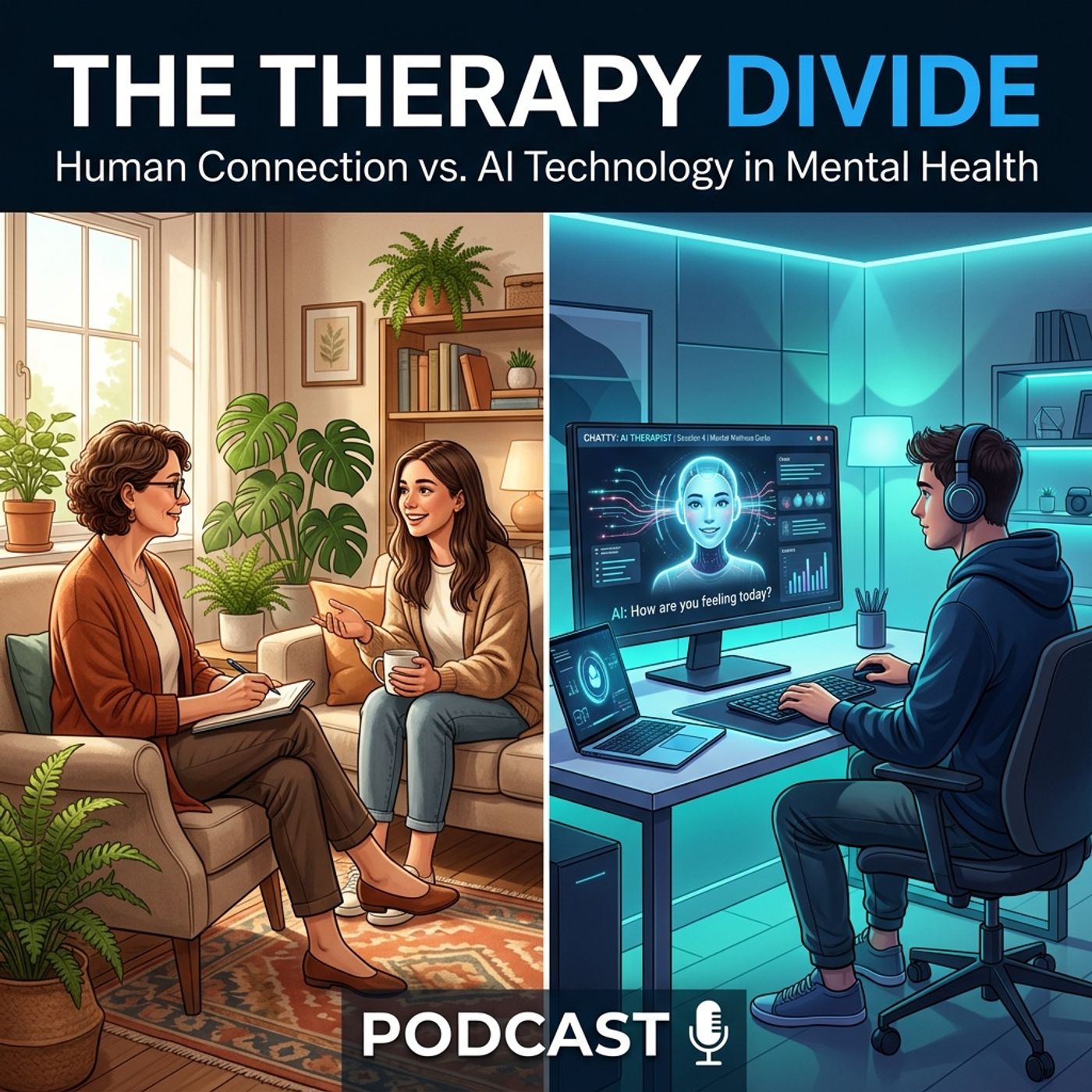
Facing Our Fears_ Understanding AI Anxiety
About this episode
Recent studies indicate that nearly fifty percent of Americans express more concern than excitement about the growing presence of AI in our lives. A report from the Pew Research Center reveals that these feelings of apprehension are becoming a global trend, with many fearing the implications of such rapid technological advancement. I
Become a supporter of this podcast: https://www.spreaker.com/podcast/conspiracy-theories-exploring-the-unseen--5194379/support.
Get every episode summarized
Each time Conspiracy Theories Exploring The Unseen publishes, we email you a written briefing from the transcript — the topics, who appeared, and any specific claims, with the ad reads skipped.
Email me new episodesFree for 3 shows. No card needed.
Hosts & guests
Transcript ready
60 searchable segments. Every word is indexed and playable.
Full transcript
Conspiracy Theories Exploring The Unseen — Facing Our Fears_ Understanding AI Anxiety. Machine-transcribed; use the interactive transcript above to jump the player to any line.
The Toyota Tundra and Tacoma are built to keep going, blending rugged muscle with precision engineering, all supported by Toyota's time-tested legacy of dependability. Step into a Tundra and feel the unyielding capability with the available I-Force Max engine Tundra puts out impressive power, torque, and towing performance and the Rumi high-tech cabin keeps you connected on the go. Or take a look at Tacoma made for drivers who push past the path, agile, tough and relentless with available features like crawl control, portable JBL speaker, a power lift gate, so gear goes in fast and the adventure keeps moving. The Tacoma and Tundra are engineered to endure season after season, mile after mile. So drive one home today, visit toyota.com or stop by your local Toyota dealer to find out more Toyota. Let's go places. Artificial intelligence or AI has seamlessly woven itself into the fabric of our daily lives, enhancing everything from health care to entertainment, yet as it becomes more prevalent, a new wave of anxiety has emerged among the public, aptly named AI-anxiety.
In this episode, we'll dive into what AI-anxiety really means, how it impacts our mental health and societies evolving relationship with these powerful technologies. Recent studies indicate that nearly 50% of Americans express more concern than excitement about the growing presence of AI in our lives. A report from the Pew Research Center reveals that these feelings of apprehension are becoming a global trend, with many fearing the implications of such rapid technological advancement. In fact, when individuals use AI chatbots regularly, research from JAMA Network Open shows they face a 30% higher likelihood of experiencing symptoms of depression. This connection raises an important question, are we becoming more isolated or anxious as we engage more with these intelligent systems? On the flip side, it's worth recognizing that AI has also been designed to support our mental health. Consider AI chatbots like woebot, which have shown promise by reducing symptoms of anxiety
and depression by as much as 20%. This duality in AI's role, both as a potential source of anxiety and a supportive tool for mental health, creates a fascinating, yet complex dynamic. However, the statistics reveal mixed feelings about AI in mental health care. A sobering 83% of people still prefer human practitioners as they go to for support, highlighting a strong desire for human connection when dealing with personal struggles. After all, while AI can crunch numbers and provide information at lightning speed, it lacks the emotional nuance and empathy that come from a human therapist. As we explore this landscape, it's essential to recognize the divergent perspectives that exist. On one hand, proponents of technological optimism argue that AI can revolutionize mental health care by making support more accessible, especially for underserved populations. On the other hand, skeptics raise valid concerns about the risks of relying too heavily on AI,
emphasizing that the therapeutic process is at its core deeply human. Dr. Roy Purlis, a psychiatrist and a leading voice in this dialogue, reminds us of the crucial need for cautious integration of AI in mental health. He emphasizes that as beneficial as these innovations can be, we must preserve the human elements of care and connection. A report by Common Sense Media reinforces this sentiment, cautioning that chatbots could be unsafe for vulnerable populations, particularly teenagers seeking mental health support. This brings us to another critical point, the urgent need for regulatory frameworks guiding the use of AI in mental health. With advances happening at a dizzying pace, we must ensure ethical standards prioritize user safety and well-being. Organizations like OpenAI are taking steps to address these concerns, focusing on developing AI technologies that foster mental health rather than detracting from it. As we conclude today's discussion, it's clear that AI anxiety is a complex challenge,
reflecting a delicate balance between leveraging technological advancements and preserving authentic human connections. Navigating these conversations will help us harness AI's potential as a supportive tool while safeguarding our mental well-being. Thanks for joining the Fortune Factor podcast.
More episodes
More from Conspiracy Theories Exploring The Unseen

The Digital Mirage_ AI and the Death of Authentic Romance
Conspiracy Theories Exploring The Unseen

The Trust Trap_ AI and the Future of Romance
Conspiracy Theories Exploring The Unseen

The Ghost in the Machine_ Navigating AI Romance
Conspiracy Theories Exploring The Unseen

The Love Recession_ Why Digital Romance is Offline for Good
Conspiracy Theories Exploring The Unseen