
ExecMBA Podcast #431: Office Hours Spotlight | Dr. Tracey Hoke
About this episode
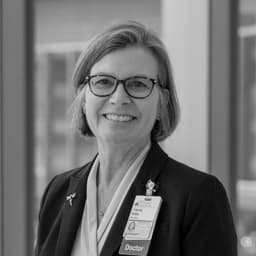
In this special edition of the Darden Admissions podcast, we share a recent installment in our ongoing ‘Office Hours’ faculty spotlight series, a conversation with Dr. Tracey Hoke. Dr. Hoke is trained as a Pediatrician and Pediatric Cardiologist, and she is the inaugural health Chair, Innovation in Healthcare Operations at UVA Health. We talk with Dr. Hoke about her medical career, what led her to Darden, the courses she teaches – Challenges in Healthcare and Solutions in Healthcare – her advice for prospective MBA students considering a career in healthcare, what makes Charlottesville an attractive destination for biotech and life sciences firms, and more. For more insights, tips, and stories about the Darden experience, be sure to check out the Discover Darden Admissions blog and follow us on Instagram @dardenmba.
Get every episode summarized
Each time The ExecMBA Podcast publishes, we email you a written briefing from the transcript — the topics, who appeared, and any specific claims, with the ad reads skipped.
Email me new episodesFree for 3 shows. No card needed.
Hosts & guests
Transcript ready
760 searchable segments. Every word is indexed and playable.
Full transcript
The ExecMBA Podcast — ExecMBA Podcast #431: Office Hours Spotlight | Dr. Tracey Hoke. Machine-transcribed; use the interactive transcript above to jump the player to any line.
Welcome to a special edition of the Darden Admissions Podcast. I'm your host Brett Twitty and you're listening to a new episode. On the Steps of the Podcast, I'm excited to share the latest installment from our ongoing Factly Spotlight series series we call office hours featuring a conversation with Tracy Hope. Tracy is the inaugural chair for Innovation and Healthcare Operations at UVA Health and she also teaches at the Darden School of Business. If you're interested in healthcare opportunities at Darden, just healthcare in general, this conversation is essential listening. As always, if this conversation is helpful for you, please like this episode and subscribe to this podcast so you never miss an update. Remember, you can always check the episode description for more social channels and more. Now that further ado, here's our office hours conversation featuring Dr. Tracy Hope. Tracy, thank you so much for being here. Happy to be here. Thanks for joining and everybody. All right. For those of you who are new to this, this is a general structure for the conversation. So, first, third of the conversation is about an hour, first, third of the week of how
Tracy's background, what kind of got her into the work that she does. The middle, third or so will be about the classes that she teaches how she works with Darden students. And then maybe we'll have some time for some current events, some things that maybe Tracy's thinking about as she works in healthcare and healthcare operations and all these kinds of things. So, Tracy, tell us a little bit more about you. Who are you and what do you do? Sure. Well, I'm Tracy Hope. I am a 20 year faculty member at the School of Medicine. And this is my 10th year teaching at Darden in my first year joining as a faculty member. My background is that I was born on an Air Force base. My dad was a fighter pilot in Vietnam. My mom was a trauma nurse. And so I remember them telling stories about how exciting of being a fighter pilot was and how exciting and important being a nurse was. And so when I grew up, I wanted to be a nurse. And my mom said, geez, you know, you really should go to medical school.
Maybe you'll end up in a leadership position. Maybe you'll, you know, develop new knowledge. Maybe you'll maybe you'll change the world. So, I went off to med school and became a pediatrician and then a pediatric cardiologist. And the real turning point in my career was as a fellow at Hopkins, I was geared up to go into one of the wet labs in Marfan gene discovery back in the day. But instead got wooed over to the School of Public Health. And I did a public health degree and an outcomes research degree, which was the very first program in the country that offered a master's in clinical research essentially, which lots and lots of doctors get now, but was kind of new then. And so learned a lot about public health policy, population, dynamics, metrics, interventions. And it was just pretty amazing to see that I could help babies in the cath lab one by
one. Or I could change law and healthcare requirements, so to speak in the country by using these other techniques. And so, so that got me recruited to the NIH. My first job was at the NIH, which I loved, heartling and blood. Did some Epi, did some device development, some drug development, did some resuscitation research, adults, kids. And in 2006, my husband said, hey, I want to go back to UBA. We had done our internship residencies here. And he was recruited back to start a hospitalist group. And I came along as a soccer mom, two little kids and looking for part time work at that point. And it was an interesting negotiation. I wish at that point I had had my current, dark and experience, but in any event, I came on faculty as a pediatric cardiologist and also came as the chief medical officer for children and the vice chair of the department for clinical outcomes. And we worked on things that mattered to kids across the Commonwealth, really.
Infections, things like asthma treatment for everybody, basically trying to keep kids out of the hospital and or treat them with best practice in the hospital. My cardiac surgery, kids got a lot of attention in terms of the kinds of standardization we brought to the care we delivered around surgery in that period, but also in the ambulatory period pre and post op. And again, a lot of work around infection reduction and things like that. And that is what got me noticed by the health system. So in 2013, I became the chief of quality and performance improvement for UBA health. And that was another major turning point. I went to work for the CEO. I have worked for the CEO as a direct report ever since. I sat in on 15 years of cabinet meetings and budget negotiations and prioritization of effort and resources. And in preparation for that, I did the tech program at Darden.
And I happened to do it at a time that the faculty was just really, really excellent. It was Venkat's very first time in the leadership space. Alec Horniman taught me about strategy and Marion taught me about marketing and the Bob's taught me about operations and other things. And so it was a really great experience, both to meet people, to be able to ask lots of questions and learn a bit about how elite business people think, but then also to write some cases and to come back over the years and talk about how healthcare business people think. And so that's sort of my, how did I get to Darden's story from souped nuts? Thank you for sharing that. And I will say for folks who are joining us today, I mean, part of our goal with this conversation is to shine a light on healthcare opportunities at Darden. It's sort of a project we've also been pursuing via the podcast. We just featured Nikki Hastings who is the executive director. I guess now CEO of the Seville Bio Hub, which is all kinds of biotech stuff happening in
Charlottesville. And so seeing Charlottesville is not just a place where you come to school and maybe there's outdoor activities, all kinds of, you know, water, breweries, all this kind of stuff, but also seeing it as a place that's really vibrant with some interesting business happening. A lot of that business is around biotech and life sciences. So Tracy's part of this overall effort to kind of shine a light on what's happening around healthcare. If you're interested in this, you're in the right place, or maybe just interested in kind of hearing a little bit more about the learning experience also in the right place. So Tracy, what is it like as a doctor to make that transition from, you know, working with patients to being in the leadership of an organization? Yeah, it was really deliberate for me because I don't like to do things I'm not well trained for. And so I spent lots of time translating my School of Public Health learnings in terms of how to assess the situation, how to analyze data, how to make meaningful conclusions and recommendations, and how to turn that into a implementation design.
And then to study, did I really make a difference in these kids in terms of infection rates or length of stay in the hospital or read mission to the hospital or whatever my my outcome of interest is. And so it was really that basic science training of being a doctor, coaxed postulates and good hypothesis thinking and then the methods that Bloomberg taught me. And then the practice that I had at the NIH, I was lucky enough at the NIH to be tapped for a handful of leadership positions as well. So I got to use those skills in real world situations and populations. And so coming to the University of Virginia as a leader in the Children's Hospital was a natural transition or felt natural. Although it was also what taught me that I needed more specific training in some of the the skills that we learn, we teach and learn and practice at Darden, things like negotiation, things like the finances of healthcare, things like managing budgets and whatnot.
And so it was a deliberate growth trajectory for me. Lots of doctors get promoted to be leaders because they're good doctors. And I've watched many doctors fail because they're not trained to be leaders. They're charismatic and inspirational and really good at their clinical jobs, but not necessarily trained to run a business or to lead hundreds of people, thousands of people or to talk to a board to manage finances that are highly, highly regulated and highly watched, so to speak, especially when you're a state institution. So I wanted to be ready. And I thank Darden for that, both for the experience that I had in TEP. This was back when it was a six week residential and so it was quite an event, so to speak. But also the connections and all of the help I've received over the years when I have reached out to ask questions. We got a question from one of our registrants who works as a doctor, maybe interested in
developing into a healthcare leader. If you could go back and give your earlier version of your self advice, things that somebody should know if they're thinking about this health care leadership path, what would you encourage them to think about what kinds of developmental opportunities should they be thinking about? Yeah, so for a doctor, so it's a little bit different than anybody would like to be a leader. For a doctor, I would say there are two paths. One is into the C suite, so running the business, really understanding how does the budget work, what are the regulations, what are any of the specifics of your situation. Again, I mentioned we happen to be a state institution that comes with a tremendous amount of oversight. And so there's the chief medical officer, chief quality officer, chief operating officer, CEO space. But the other option for physicians, of course, is more physician leadership, whether it be a division head or a chairman of a department or the dean of the school of medicine or physician's
practice group leader. And so I think there are at least two paths for physicians. There are probably even more paths for others, so to speak. But I think the key is understanding and respecting that being a good clinician does not always translate to being a good business person. Although I do think the combination of the two skills is really, really powerful. We've got a number of doctors come to our executive MBA program, and I hear that sort of like there's the medical piece, but then I realize I need a different skill set to be able to be successful with this leadership thing. And I don't know the business in the way that I need to know it, and I don't necessarily have all the tools in my toolkit. So we actually, this is interesting. We've got a couple questions here about like, what if you're not a medical person, though, is it's still possible to work in that like you don't have a lot of background in healthcare, but you're interested in healthcare. Obviously it's a huge part of the US economy. It's, you know, what seems to be ever growing industry, lots of different ways you can work in it. Do you have to have a background in healthcare or to work in healthcare?
Not necessarily, although you will notice that most executive vice presidents of large systems are clinical in one way or another, nurses, doctors, pharmacists, others. But plenty, plenty of roles. And actually this is a talk I'm giving at the healthcare 101 session that are club sponsors on Monday. So maybe there'll be a video or slides you guys might want to grab for that. But there are all sorts of places in the organization where the skills that MBAs carry are important. And the most obvious one is our finance engine. We have an absolutely huge hundreds of people involved in revenue cycle, whether it's, you know, the expense side or the interaction that we have with payers or the data management side, a tremendous amount of our reporting comes through revenue cycle. And so there's lots of room and we need the skill set that MBAs bring to the table in that finance engine for sure. The other place that you'll see lots of MBAs is business planning.
You know, we spend a lot of time, you know, maybe this crossover between finance and strategy figuring out, you know, who should we compete with for what? You know, we sit in a little bit of a privileged geography. The next I see is like us are Vanderbilt and Duke, which are hundreds of miles away. And so, so we have, we have some opportunity that some centers don't have, but we have limited resources. And so, you know, we're always talking about what's the next big investment. Do we build a heart center? Do we build a, we build a cancer center? Do we build a children center? Do we build a women center? You know, how do we best spend our resources, serve the community, get reimbursed so that we can do more? We're a nonprofit and everything goes back into it, but, you know, but we need a margin to survive. And so, so you'll see lots of the MBA skill set in that strategy planning space. Another place that you see the MBA skill set is in the C suite itself, our CEO, our CEO, our CFO, they all carry this credential, of course.
And I can tell you that I, as the longest running chief quality officer at this institution, survived not because I'm a good doctor, probably because I'm trusted by my peers, but mostly because I was taught to think by Darden and I'm able to take a very complex situation, analyze it, present it in a very digestible way and make a recommendation that at least to my track record has been, has been on point. So, so no, you don't have to be clinical to lead in this space, but you absolutely have to have good clinical partners and do everything that you can to get into the clinical space as an observer to see, to see how it works. I always tell my, my nonclinical peers, trying to solve a problem in a boardroom is, is, is the recipe for disaster in this, this business and probably any other, but the bunny student on and go down to the OR and see how sterile processing actually works. And then you can talk to people about what we might do differently. And so, interesting to think about like to actually observe it be there on the ground,
so to speak with the frontline medical providers, I have to imagine that that is a real tension in most hospital systems between, or can be between the sort of business people and the, and the medical providers. It's only, are there other ways to overcome that? I mean, you already, do you just have to like get into the weeds with people and understand what the work looks like? Well, again, you know, my, my sort of claim to fame over here is having brought a lean transformation to this organization. And so, one of the basic principles of lean is, you know, respect the frontline. And most people think respect means, you know, no people's names and be nice, which is a requirement. But what I think it really means is understand that they know their business better than you know their business. And so, again, don't try to sit in a boardroom and even look at a process map and try to figure out what the right new investment is in this space or what the right process redesign is in this space. But actually go and see, I can tell you a, you know, a very plain story about a time
when we had pressure injury rates in our spine surgery patients that were way too high, something like 40% too high. So skin injuries and patients who were lying on their, on their, their, their, their bellies while they were having their backs operated on. And the EVP at the time looked at me as the chief quality officer and said, let's go watch one of these things and see what happens. And we went down to the OR where spine surgery was, was being prepped and we stood with someone who did not have a college degree. I think Clarence had a high school degree and he, but he was the circulating support in the, in the spine room. And he showed us this thing called the Jackson table, which is a metal table that kind of looks like a cross. You lay belly down, arms out and, you know, sometimes for more than 10 hours to have your back operated on. And he said, no wonder it's herring people look, look, look at it. It's a, you know, it's a pretty dangerous machine. And, and he said, I wish, you know, I had a couple of hours and a little help to think
about it because I think we could probably do better with our padding. We could do something that the infection prevention team would support. We could do something that was cleanable. We could do something that was reusable. But, but I really think we could do better. And to my EVP's credit, he said, Clarence, I'm getting you the day off. And because we're a big institution with lots of energy and expertise, we got somebody from the material science group at the School of Engineering. And we got somebody from infection prevention control. And we got Clarence and a couple other people from the R, the day off. And they designed a new pad that we tested and installed and dropped our pressure injury rate in that space to almost zero. So it was just one of those moments where if I had been sitting in a conference room with the spreadsheet and a process map, I never would have known what to do. And yet it was completely obvious what to be done when I stood there for a minute and talked to somebody who did the work every day. So those are just, that's just one very plain and simple example of how you learned things
you, you would never expect when you're actually standing next to people who do the work. And I'll just quick plug. If you do have questions for Dr. Hoke as we go along, please put for the AskVLQ and we've already got a couple. And thanks, thanks for those. So Tracy, you are the inaugural health system chair for innovation and healthcare operations. Tell us a little bit more about what this role involves and what entails. Yeah, yeah, after 20 years on faculty and 15 years as a chief quality officer, our current EVP asked me if I would try to take on something new. And the reason why he established this innovation in healthcare operations chair is that it's hard to collaborate across the schools at UVA. It's hard to collaborate across the Commonwealth. It's hard to bring in an innovator and pilot test anything in the laboratory that is the clinical environment, which is what's required. And so I have some experience in that space. We have some success in that space, whether it's internal builds that we brought to pilot
and then ultimately implementation and now standard of care or partnerships co-design builds with innovators, founders who were able to come to the table with a solution for a problem that we designed. And I've been sponsoring crossgrounds efforts for the 10 years that I've been sitting both at the Med School and at Darden and getting student groups and student faculty groups together again to take on real world meaningful problems that the health system is struggling with. I'll get resourced in the end all the way to implementation, but we all learn a lot about each other in the system. And sometimes those business plans sit on the shelf for a minute or two, but ultimately come back around it. So Mitch was hoping for more of that to function more at the crossgrounds level and to continue to bring student faculty groups together to maybe create an accelerator that will allow
founders and innovators to access us as a learning laboratory in a more streamlined way. And I'm only two months on the job and I will tell you, I know that this is worthwhile because of the number of people who have come to me to say, thank goodness we finally have someone to talk to about this and we have a place to go and hopefully we'll build something over the next couple of years. Is innovation hard in healthcare? Maybe an obvious question, but still I'm curious. Innovation is hard, right? Any founder will tell you that. Innovation is hard. Changing the way people do work, changing the way people think, changing their tools, changing displays, every time Outlook comes up with a new look, everybody, panics, it changes hard and if I ever get a tattoo, it's going to be that change is hard and that's what innovation is all about. I will say it is a little bit easier now in healthcare to innovate after COVID because we were forced to and allowed to.
So that was a pretty magical time where a crisis of truly global proportions meant that we could do things differently, that we normally because of our highly regulated environment and because of our constant legal oversight, we wouldn't normally have been able to do. So those of us who weathered that storm and are still in the business are able to look back and say, actually we can try something new if we do it in a deliberate and careful and monitored way. So I would say innovation is a tiny bit easier than it used to be. The hardest part about innovation right now is that our electronic medical records, Epic is the dominant player in this space, there are others, but we're an Epic shop as an example, more than half of Americans have an Epic medical record number, so that's how pervasive this tool is. That electronic medical record is very inflexible.
So it is very hard to bring in a technical tool. It's much easier to innovate in the process space than it is in the technical space because it is very difficult to plug in to Epic, even when they sell you something from their orchard, which is where their app store is called and where their apps are sold. We actually have an experience with an app we tried to buy that was built by the University of Michigan and it wasn't until I called the person who has my job at the University of Michigan and said, hey, we can't make this thing work, even though Epic sold it to us and they sent us the code which we had to then rewrite. That is, I think, the largest hurdle is the technical piece. But prior to that, for people with ideas or people with successes in other industries that they want to try in healthcare, I think the first hurdle is finding a system that is interested in that solution. Do you have the problem that is able to be solved by the solution?
Do you have the interest in testing something new? Can you make the connections? That's where this accelerator role comes in is bringing people to the table with good ideas and then bringing people who run hospitals with very well-known problem sets together so that they can co-innovate, they can co-design, and then you're much more likely to get a test on the table if you've come with a clinical partner who has the problem you're trying to solve. Good evening. A few questions here. One of which builds on maybe what you just shared, this tech angle, electronic medical records, you know, AI, entering the equation. When you think about the future skills, the skills that future healthcare leaders will need, what comes to mind, particularly as this tech piece may ramp up and AI and all this starts to become increasingly part of the equation? Yeah, I think the foundational skills are still important, right? Like, we're still running a business.
And so the idea that you understand your inputs, you understand your outputs, you understand your flexibility and regulations and that you understand your customers. I don't like to use that term in healthcare very often, but when I talk to C-suite people, I do because we have a whole cadre of customers that include all of the people who take care of patients and all of our patients and our communities and our partners and others. And so I might, you know, my first gut answer to that is that the foundations of good business management will still apply. I think what will get tricky very fast is how much of the technical tools that we either use now or that are being promised to us or tested somewhere in our environment, how much of them will be efficiency tools and make it easier to take care of patients or faster or reduce waste such that we don't repeat imaging or those sorts of things.
Versus knowing when a tool is capable of making a decision, especially a clinical decision, and so that's the place where I think we're all sort of hunkering down and trying to figure out how are we going to take that on? How are we going to take it on in a development and testing space and then how are we going to implement it in an operations space? Because as you can imagine, the potential legal downside of mistakes is huge and companies are not comfortable being sued for malpractice. So there's a lot that's I think where we're all trying to be careful. We want to use these efficiency tools. We want to do what we can to make it easier to take care of patients, but we also want to be really careful about the responsibility that we bear as trained providers. There's been, I've just followed a little bit of the conversation around AI and healthcare
delivery and this sort of like, radiology is one of these that comes up all the time with AI and like, what skills, how much knowledge do you need? It still seems like you have to be a very well trained radiologist to be able to use the AI. What are your thoughts on all of this? Because I think sometimes AI is presented as like, oh, this will solve all the problems and it can create all these solutions that we can't think of fast enough as humans. I mean, any reactions here, Trace? Yeah, sure. No, I mean, there's a reason why radiology is paving the way in medicine in terms of AI integration. And it's pixelated. It's exactly, it's digital. It's exactly the kind of data that AI can be good for. And it's a massive amount of data. And that's what AI is best at, seeing patterns that the human eye can't see or would take hours and hours and lots and lots of work to see. So imaging is a space where AI is here. In my world in cardiology as an example, I can read an EKG in under 30 seconds.
But if I put a 24 hour monitor on a kid, it takes me 20 minutes to read 24 hours of rhythm strips. And so these are the kinds of places where I think AI can capture big data and patterns can be taught what abnormal or not normal looks like. Maybe it's not abnormal, but it's not what we expected. It can really tee up in an efficiency sort of way. Things like chest X-rays or 24 hour cardiac monitors for someone who has experience in the business and understands that not normal may not be abnormal, but I need to look at not normal and make sure that I agree. And so I think that's where it's where it can be really valuable is to help us manage the volumes that we manage as providers in a sort of maybe pre-screened way and prioritized way so that we can do more with what time we have to devote to it.
And so I think that's the first place where AI is really going to break in is making it easier to see big patterns or to see patterns of big data. I'm sorry, or to see not normal. I think we're still at this point going to have to call normal versus not normal and then decide on what the next step is. But that's a place where AI is moving fast is learning all the time when I see something that I was taught wasn't normal. Is it abnormal or is it a new not normal that I can tuck away and learn just like that medical student did and then keep going and get better and better. So soon things will be different, but that's about where we are right now. Is this a challenge for doctors to get comfortable operating in this kind of environment and using these technologies or introducing the technologies into the equation? It depends on which generation you come from as you probably can guess. My daughter who's a fourth year biomedical engineering student headed to medical school and a digital native born in 2005.
So one of the first digital news, she has absolutely no problem thinking about how to use tools, how to use any of the technologies that are in front of her. And in fact, really enjoys it. I think she would feel handicapped if she was sent to the library and found a bunch of books she had to read. But we do have a generation of full-time professors as an example who aren't comfortable in this space. It's not the way they were trained to think. And so, and it's not the speed at which they were trained to think. And so I do think it matters how you sort of grew up in the world in terms of your ability to really capitalize on the tools that are coming right now. But I think this, you know, this horse is out of the barn. This is what it's going to take to practice in the modern era.
That must make your work in healthcare operations and innovation very interesting to sort of think about these kind of lumpier organizations where you maybe have some people who are very comfortable with technology, other people not so much. How do you think about socializing something in that kind of environment? Yeah. Well, you know, one of our rules is solve problems that matter. So we try not to bring in technology unless we have a problem we're trying to solve because there are a lot of really shiny hammers out there for which we don't have the nail in question. And so we try to make sure that whatever we're bringing in is a problem for patients because providers are very sympathetic to the needs of their patients or a problem for providers that they are spending too much time writing their notes and that this is going to actually help them be faster or require less editing or whatever. For the benefit is or TEP a bunch of chest esterase so that they can read them all in an hour instead of three.
Whatever it might be, we try to make it big the why, really obvious and really mission connected. It's either because the patients will benefit or you as a provider will benefit because we know change is hard and we don't want to change people's workflow or even just that muscle memory of using a tool that changes if we're not doing it for a really good reason. And that gets you a long way. If people understand that you're changing their world, you're moving their cheese because it'll make us provide safer care or better care or it'll be easier for you to provide care, then that's usually enough to get you going. I think the other, not trick, but maybe principle that we live by is it is our job, those of us who run the system, who create the layout in the ED, who create the tools in the EMR, who create the manufacturing plant that is our pharmacy, those of us who are setting
up the systems, that one of our principles is that whenever we're making a decision about how to set something up that clinicians are going to interact with, you have to make the right thing to do, either the only thing that they can do or the easiest thing so that you're always putting in front of people as best you can, both the most efficient way to practice, but also the best practice. So that if you've got a trainee or if you've got a rare disease or if you've got a situation where someone might make a mistake as an example, you've done everything you can in your systems to put the right choice in front of them first to help them get there. So I think, I think we again, we just try to follow some very basic principles to go after problems that we know matter to patients and providers and then to make the right thing to do the easiest thing to do. And if you can check both boxes with a process redesign or a technical intervention, then
you're probably going to make it over the hurdle with a bunch of people who are either uncomfortable with new anything or uncomfortable with technology in general. Let's talk about your Darden experience. So I'm curious, how did you get involved with teaching at Darden? How did it become a thing? Yeah, that is sort of an interesting experience because it happened basically the minute I finished TEP. So when I was in that program, I was one of two physicians. There were two faculty from the School of Medicine who were able to participate and the other was not able to participate as much as me. And so I got to tell all my stories and I got to ask all my questions and I became somebody who everybody knew in the class. And ultimately ended up taking my case challenge, which was an exercise that was a part of the curriculum to create a business case challenge that you're learning team and then the
other learning teams could contribute to and advise. Mine was a moment in our lean management system development that was pivotal and ended up really truly putting us on the map. But because I was able to describe it in a way that a bunch of people who had no idea how healthcare worked but were good leaders and good business people could help me. And that turned into a case that I wrote with Bob Landel and just writing a case with Bob Landel was an experience in and of itself. And so then I started teaching that case with him in the executive program and then in the challenges and solutions courses that at the time Paul Matherne was running. And I really liked teaching and I had such good real world examples to bring to the cases that Paul was bringing to the table that I started teaching a couple more cases and writing
a couple more cases. And then in the last years of his transition as he was planning retirement, I taught half of his cases. And so it's just been a very natural progression from student to participant to teacher. And it's been a great compliment to the teaching that I do on the medical school side. I teach the business of medicine for the medical students. And it's just it's just been a nice journey so to speak to take that medical school teaching style, which is so didactic and so sort of syllabus driven and factoid important to this conversational learning style that we have. And this year in my challenges course, which I'm teaching right now, of the 50 who are enrolled in this second year elective, easily 25 have a history and healthcare in one way or another. And that is a major turning point. We have never had a challenges class that was that well versed in the industry.
And so it brings some unbelievably good conversation to the table because I'm not the only one with good examples anymore. That's great. I'm curious about teaching business students versus teaching in future doctors. What's it like to teach business students? Oh gosh, well, you know, the garden business students bring something to the table that most of our medical students don't, which is real world work experience. You know, most medical students plow right through. Maybe they do a post back year, but they don't usually have a lot of experience in the workforce. And almost all garden students come with with something and usually something impressive, you know, some meaningful experience in the workforce. And so again, we get great examples from each other. I think, you know, my current class has seven physicians and a nurse and a dietician. And I think seven or eight people from all the branches of the military. And a couple people who have worked for industry in in pharma or devices or insurance.
And so, you know, I think when I teach medical students, I'm really trying to make sure that as doctors, they understand the system they're working in. Their first job at that point is to be a good doctor, right? Like that's all I really want from them. But I do want them to understand the business that they work in and how payment works and how funds flow. And so they don't get frustrated by not understanding and thinking that somehow, you know, resources aren't going where they think they should and they don't understand the why, the business, you know, the business piece of it. But when I talk to business students, you know, my my primary job is to make them good CEOs. You know, I tell them some of them are going to be CEOs of healthcare companies. They're all going to be CEOs. And so, you know, so every single class I teach, I try to teach a couple of, you know, foundationally important healthcare lessons. But every class has a foundationally important business management lesson. And so I think that's been been the success of late because we've got really good conversation
coming from those with deep experience in healthcare and healthcare businesses. And those who are just really good business people. Well, tell us about the challenges in healthcare course. You mentioned you're teaching it right now. What's this course? I mean, title says it all, but tell us a little bit more about what this course is about. Yeah, it's a little bit of a 101. There's, you know, I give a glossary at the beginning. These are the words we use in healthcare and things you should should, should understand. And we talk about the very foundational, you know, business elements of the industry, you know, what, what kind of businesses are in healthcare from hospitals to pharmaceutical companies, to insurance companies to not for profits, academic medical centers, etc. We talk about, you know, we talk about the concepts of merger and acquisition as a way to demonstrate a couple of different kinds of business models in healthcare. Whether again, it be an academic model or a for profit model or an avialatory only model,
etc. And so it's a little bit of how, you know, how does this business work? We talk about insurance and funding. Of course, that's a really interesting conversation right now given the big, beautiful bill and what it's doing to the federal funding programs that at least academic and state hospitals depend dearly on. And so we use the case in that space. And then just yesterday I had a really great guest come from the public health sciences group to talk about global healthcare and the different models that are in different parts of the world. And the pros and cons because there isn't a perfect model, frankly, anywhere. Switzerland might get sort of close, but other than that, there are pros and cons to everyone I know. And then we experiment with presenting resource recommendations to the board of a pharmaceutical company. That's a need exercise that we'll do in a week or two. And we have someone who does that for a living come join us from one of the big pharma houses. And then we end by talking about
how we handle processes and error and the sort of physician clinician workforce needs in healthcare because again, COVID left us on our heels in that space. So really it's an overview of all of the the things you need to be able to think about and some of the language you need to know to be in a healthcare space and have some street cred. And then in the solutions course, this year it's a Q1, Q3 offering in the Q3 course. I bring in innovators and vendor partners and talk about how we've tried to take on some of these big problems and where we've been able to drive success and where we've not, you know, where we thought we were going to integrate and got stuck and everything in between. So it's a little bit of an overview first and a innovation and solutions course second. And in between, I sponsor tons of independent studies. I think that's one of the things
that my position brings to this opportunity that you just won't see many places, which is a catalog of projects of problems served up by the CEO's cabinet and the physician practice groups leadership. And this year our Center for Health and Humanities ethics, interestingly, brought forward a project. And so I'm able to put a bunch of opportunity on the table for students who want to do more, who want to spend more time with me, who want to spend time with a healthcare leader who want to take on an actual problem. And sometimes we write white papers because they're at the research stage. Sometimes we write cases because there, you know, something has already happened to this worthy of attention in a classroom. And then most times we write business plans and, you know, market analysis and resource recommendations suitable for a board presentation, things like that. And so it's a year round effort, but it hinges on this overview in the fall,
the innovation course in the spring and independent study whenever we get a good problem to solve. Yeah, we previously had a conversation with Mark Rujano and Kristoff Herpfer about healthcare opportunities at Darden. This is an office hours from maybe about a year ago. And they were talking about how essentially in the full-time MBA program, they try to create sort of electives across the second year, at least one elective per quarter. The students could stay engaged with healthcare. It's really cool to hear about the independent study piece, though, for people who want to maybe work more directly on something, not just learn about it, but maybe actually get their hands dirty up on a more project. That is very cool. I didn't know about that, honestly, Tracy. You guys have to give a lot of students who take you up on that. Last year, I think I sponsored 10 or 12 students across six or eight projects. Yesterday, I just sent the catalog to the 50 students in the challenges class. And I'm looking at my desk because I have my running list. I think I already have
six or eight signed up for four or five projects. And they'll be more. We also have one Q1 for very, very motivated MD MBA student who has a project to bring retinal screening ophthalmology, retinal screening into our primary care clinics, and happened to have a primary care clinic that wants to test it. So it just worked out. But but you get the idea that when we have these these well-scoped projects that can fit into 45-hour effort across a seven-week period, I try to package them in a way that we can grab a student to join because I think it's one of the few ways you can get experience in healthcare. If you're unable to find that summer internship that delivers it in a more comprehensive way. One of the things I know when we were talking sort of like preparing for this conversation, you had mentioned that's I guess really an interesting aspect of the opportunity at that garden is the close connection between garden and the health system.
Right? Your role obviously bridging this, but so much access and opportunity that comes from the connection between these two places. You want to talk a little bit more about that? Sure. I mean, I think the the most easily accessible part of this connection is me and my network. You know, I've worked here for 20 years. I trained here in the 90s. I've been in the C-suite for 15 and so you know, students come to me all the time and say, hey, can you connect me to a supply chain person over there so I can just have a conversation? Can you connect me to revenue cycle? Can you connect me to the COO? Because you know, I see that you have a search up and running and I want to know what good COO's look like or whatever it might be. So I think that that real world connection that I make really, literally every day because if I don't know the person, I know how to get close to the person in the role. And so I think that's probably the most tangible piece that everybody feels. But then this independent study, this project work piece, the collaborations that I connect with faculty around, Chuck Howard sets two doors
down for me in the FAB and he's interested in patient experience work. And one day we were standing in the hallway and it occurred to me that I had my hands on a bunch of patient experience data that he could probably use. And we formed a little connection and wrote an IRB application and off we went. So I think that the durable connections to the people in the health system and the data sources that we sit on and buy and manage is probably the most tangible way people will feel it. But then also these little mini internships that I call independent studies that get people into the business to try it. Is it over-regulated and not something they want to do or is it too hard to change physician's behavior because you don't quite have the mission driven reason to sit on. And then ultimately we're moving from a initiative to a concentration which means we have a
connection to a bunch of other classes across grounds that are in this space or well-suited for this space. And that of course will also get us to more of an accelerator mindset of serving as a hub for people who come from any place in the institution or maybe from outside to say, hey, I have an idea who should I talk to or I have a prototype who could test it or I have a problem who can help me solve it. I think that's ultimately where we want to go is to provide good course content and the opportunity to do real world projects but also a place to come to just make a connection and get your foot in the door. That's ultimately what I'm hoping we'll be able to bring. Yeah, I think one of the things we always stress with perspective students and it's maybe not obvious. If you haven't been to Charlottesville and you haven't had a chance to be part of the UBA community yet but how much access there is and how relatively easy that access comes just by virtue
of being at Darden, being at UVA, like not a long line to get in touch with someone, the easy sort of, like, oh, I know that person. Let me just connect to you and everybody's always happy. Like, I think for people who have these kind of these interests and they want to take a deeper dive and really kind of throw themselves into something, that's one of the benefits of being at UVA and just being in Charlottesville. It's just the number of connections. We talk about this a lot with students who have an entrepreneurial interest or maybe interested in biotech or something that's a little bit more that start-up quality. Very easy to get plugged into that community and obviously true with health care here too. Absolutely, absolutely. I think this is, you know, again, we all, we're here because we're academics, we're thoughtful, we're curious, we want, we love students, we love young people, we love new ideas. And so to your point, there's a lot of red tape to manage from time to time, but ideas and collaborations don't fail because people don't want to do these things. They failed because we have some issue with funding across streams or something like that. And so that is another
piece we're trying to break down. It's nice that Scott Beardsley is our president now and maybe can help us with some of that red tape and hopefully we'll make these collaborations easier than they are now. But really, you will always find a welcome ear if you have a new idea or a bunch of questions. The how can be harder than the conversation about the what, but you'll always find somebody who's interested to talk about it. It was great talking with Nikki Hastings, CEO of CBL BioHub and just getting her perspective on why there are so many biotech life sciences firms in Charlottesville. There's also some really big name companies that are coming to the area as well, building office, his operations there. What is it about Charlottesville that you think makes it attracted to these kinds of firms? Well, I think there are two things. I think one, most of us trained somewhere else at some point in our careers and healthcare leaders are often
in big cities because your hubs are Boston, San Francisco, Chicago, Baltimore. That's where you're going to find big, big hospital institutions. We made choices about how we wanted to live and where we wanted to live. I think lots of people are here because of the lifestyle that this beautiful place in the world offers. But separately, I think there was a very deliberate infrastructure build in this area, starting with our first supercomputer at IV now with the new data center coming online. Paul Manning's investments, both in intangible and tangible. Now, Asperzenica and others coming to join. I think part of it is that this is a really good place to be. We've talked about the collaborative spirit. We've added now the quality of people who come here
from other places because they choose to live differently. Then a very deliberate series of investments at the level of the board, at the level of the hospital to really make this a place that is friendly to industry. This isn't always the connection that you find being led by an academic institution building for a community. I think it's multi-fold, but those are probably two really important pieces of it. Nicky was saying that the Commonwealth, obviously, it's big business to try to get a business to come to your particular state and a locality, was moving at the speed of business. That was really resonating with these companies. That's how you get Asperzenica coming to Charlottesville. There's also, I guess, Merck is up in Elton. I think maybe some other pharmaceuticals coming to the area. Again, I think people think about Charlottesville. You
sort of read the press about Charlottesville. It's like a wonderful place to live and visit it on this case. But there's actual real business also happening there. It's not just the college town. I'm sitting here in the DC area that we wonder and go out and saying there. But it's a great place. We also wanted to make a point that if you're interested in healthcare, it's a great place to be in a distance to it, just generally being a great place to be. Trace, we've got a few more minutes left. I'm curious. We've talked about a lot here, but are there any particular healthcare stories that you're following, any news that's caught your attention as you're thinking about leading in healthcare? Just curious. Yeah, there's a lot. I would say the entire AI story that we talked a little bit about is, of course, top of mind for all of us. Another piece of the post-COVID era is that we are now seeing pharmaceuticals being developed in a precision medicine manner that are incredibly effective. A new pancreatic cancer drug was just announced this week.
Maybe last week, but also incredibly expensive. We're really trying to figure out how are we going to bring those cures, in many cases, to the table in a way that we can afford it, that the country can afford it. I think that's something that I'm watching in my lifetime. We have had lots of medicines that could postpone symptoms or prolong life, but now we have medicines that can cure but the cost infrastructure around them is right now unbearable in the population sense. I think that's another area that we're all following. Maybe a third more foundational one is our workforce. Our workforce took a tremendous hit in healthcare during COVID. We lost an entire generation of physicians at the whole 10-year professor level and we lost an entire generation of nurses closer to the mid-career level. That loss of institutional memory across the country
is irreplaceable. At the same time that we're bringing in these new tools, we've lost so many of the shepherds of the tools. We're all thinking about how to train our workforce, how to apprentice and grow our workforce. What can we do differently? How do we get people to practice the top of license and bring other extenders into the business and use tools in a responsible way and empower patients to take the lead where appropriate. I think that's probably the third piece that most people who are in leadership in healthcare are thinking about right now is how to we've stabilized our workforce after the absolute threat that COVID delivered. This isn't going to last the way we do it now. How do we modernize and go forward? I'll come to conversations about not enough people going to medical school or maybe not enough seats at medical school to meet the need and the demands. Somebody dimensions to that.
Maybe a little bit of an MBA specific question before I get to the last last question. If you come into an MBA program now and you wanted to work in healthcare, what's the piece of advice you would give that person? Something for them to think about is they consider that MBA journey, again, particularly if they're interested in working in a healthcare-related role. Yeah, I think it's a little bit like the reverse of what I told you about my doctors. Our MDs need to be good doctors, first and foremost. Our MBAs need to be good business leaders, first and foremost. I really believe in the Darden mantra that good business management applies across all industries. I think job one is do well in the core. That's the beginning. But then, of course, take advantage of us. Take advantage of your faculty who have all of these connections, ask lots of questions, shadow us, do independent study projects with us, see how this works, see if it's something you're really comfortable with. Take advantage of your clinical partners. MBA classes now have lots of clinical partners
between our MD MBAs and those who had clinical training before they got here. We have MBA, MCHs in the midst. Take advantage of those co-workers, your peers, your co-workers, your cohort, to explore and then work really hard for that summer internship that's in the industry. And think of the industry as really broad because yes, we're hospitals and clinics, but boy, we're also pharmaceutical companies, device companies, insurance companies, home health companies. You have to post-cure care companies. You have to think of this industry as how we get to be 20% of the GDP is this big, broad business that applies to health care in general. And I think getting close to it in any way is helpful if you want to build some street cred for what comes next. And we'll be featuring a couple conversations on our podcast with leaders at the health care club. It's always a good resource for people to be aware of. I think most people,
probably you're interested in working in health care, you're involved with that club at Darden. Tracy, for folks who come to these sessions and are interested in what we talked about here today, we always give people maybe a little like, if you want to learn more, kind of a piece here. So, are there any books, maybe a couple of two or three books you might recommend for someone who's got an interest in the conversation today, some of the things we've discussed here and wants to learn more? Books are so outdated right now. I hate to say that. I do have a handful of books on my shelf and books that I like. But maybe anything that a tool go on, D writes, anything that Peter Pronevost writes, there are a handful of pundits in this space that are keeping up with the times, so to speak. They have written books, but there are also much more easily digestible and accessible podcasts and things like that. I think one of the things I try to teach my challenges class to do is to pay attention to healthcare in the news and dive into things that sound interesting.
One of the news pieces from this week is that Humana is dropping their Medicare Advantage program. That is a huge signal that the CMS funding model is shifting. And if you read that headline, it might make you curious, but if you dive into the story and then read more about Medicare Advantage programs, you realize that it's the backbone of the CMS strategy to control waste and cost. So I think maybe less so than a book. Pay attention to healthcare in the news, dive into the stories and the resources. And like I said, ask those of us who are in it. Lots of questions because we can point you in the right direction in the moment. Well, Tracy, this has been a great conversation. Thank you so much for taking time out of you're really busy day and I have a lot going on. It's wonderful talking a little bit more about healthcare opportunities here at Dord. Yeah, thanks everybody. And I'm really easy to find. There are three hoax that UVA and Tracy, there's only one Tracy. So so find me if you have any questions or ideas or or you want to be a part of a project.
All right, thank you so much, Tracy. Everyone have a wonderful weekend. Thanks everybody. And that was our office hours conversation with Dr. Tracy Hope. As always, if you have any comments, suggestions, requests, anything like for us to cover here on the podcast for all ears, we could be reached at Darden, that's the ARD and AverageInient.edu. Till next time, stay safe, be well, and thanks for listening.
More episodes
More from The ExecMBA Podcast

ExecMBA Podcast #430: In Conversation | Nikki Hastings, President, CvilleBioHub
The ExecMBA Podcast
ExecMBA Podcast #429: Executive MBA and Part-Time MBA Application Launch Episode
The ExecMBA Podcast
ExecMBA Podcast #428: Office Hours Spotlight | Professor Shane Dikolli
The ExecMBA Podcast
ExecMBA Podcast #427: 5 Tips for Executive MBA Applicants
The ExecMBA Podcast