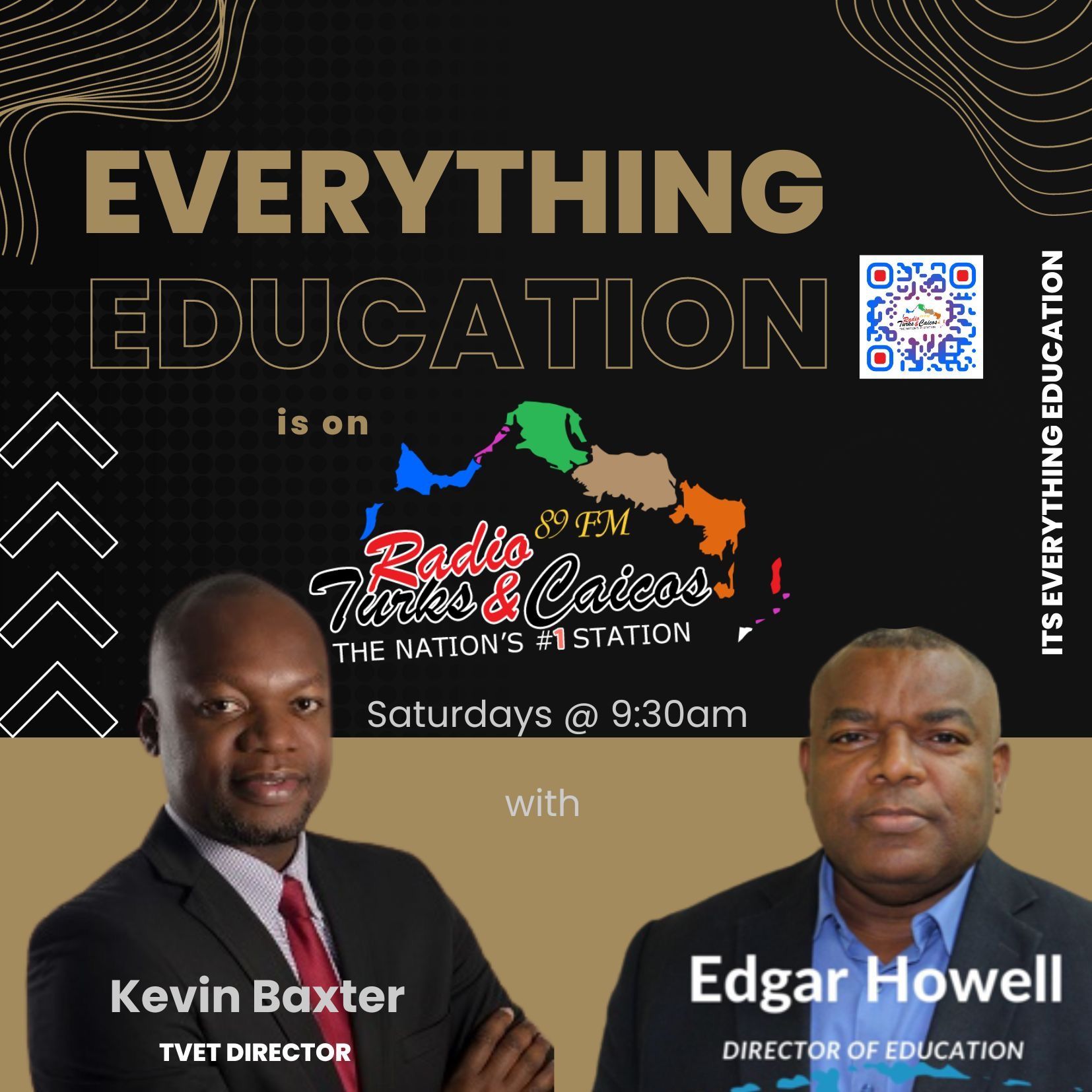
About this episode
No show notes were published with this episode.
Get every episode summarized
Each time RTC FM publishes, we email you a written briefing from the transcript — the topics, who appeared, and any specific claims, with the ad reads skipped.
Email me new episodesFree for 3 shows. No card needed.
Hosts & guests
Transcript ready
728 searchable segments. Every word is indexed and playable.
Full transcript
RTC FM — Everything Education March 28, 2026. Machine-transcribed; use the interactive transcript above to jump the player to any line.
🎵 🎵 Better education for best of all! 🎵 Oh! 🎵 Best of all! 🎵 To the best of all! 🎵 For best of all! 🎵 To the best of all! 🎵 Best of all! Good morning, Turks and Kekos. It's another beautiful Saturday morning. And I'm in studio with you. It's everything education, where education is everything. Good morning, Kevin. Good morning, Sir Ed. Good morning, Turks and Kekos. How are you this morning, Sir Ed? Kevin, I'm doing better than good. Oh, yeah. What's better than good, good, good, er? I have good er. Good er. Don't let your English teacher be with that. Or if I was or that, good er.
No, no, no. There is. No, no. Good er. We're gonna be challenged by this. Yeah, well, we'll have to challenge us later. We could get away with it already. It's out there. Yes, it is, it is. It's a beautiful Saturday morning, listeners. Remember, you're waking up with us this morning. We welcome you to everything, heard on the best of the Caribbean across the world. You know, that week on all platforms, Sir Ed. On Facebook, on iTunes, on the Android store, the Google Play store, you miss an episode of him. Back catchers on podcasts. Whoa. Yes, sir. I'd have even been on podcasts. I don't even know what that is. Where you are. See, I'm that old. You are on podcasts. So, listeners, remember you are if you miss the show, be sure to download the app and jump on and you'll be sure to find an episode where you hear
Sir Ed and myself discussing matters concerning the landscape of it. Sir Ed. I'm still in the water since I haven't seen you. And I haven't missed a missed fact. And I have been a matter of fact, I heard one there. They won't tell you know, but it happened back to you. Remember that one with spiders that you did. Yeah. I know that you're afraid of spot. That's why you're laughing at you. Let's not talk about lizards. No. Before we get into the fun pack, but I think it's it's only right that we say good morning to all of Turks and Kekas wherever you are. We can up in these islands. We have to have you joining us this morning. I want to say a special good morning to Mildred. Mildred expects me to say good morning to her. And when I don't, I was accosted to almost pretty good morning. We're happy that you're listening this morning. Have a little bit of an auto regular business. Yes. I know a new list and a new list or producer tells us that we have a fan base or growing fan base.
That's it. I don't know who those persons are, but you're enjoying the soothing sounds of it. And welcome to the end. And the lady who allows us to drive with her at work. As she said, I'm in the hour every morning. Yeah, we're happy that you're joining and I'm allowing us to be in your vehicle with you this morning. Now for the fun. Fun fact, what do you have for us? After this, I'm going to hear my wasn't there. We haven't done this in a while. Like I said, in a while. But what's the fun fact? It takes a drop of water, one drop of water, 90 days to travel the entire Mississippi River. You're talking 2,340 miles. It's not again, like slowly falls in the back. I'm in the back. Does that indicate anything? I'm in the back. No, absolutely not. My mind select is this is all where I'm sitting. You're just in the back. Yes. Eat it. It takes a drop of water, 90 days, 90 days,
to travel the entire Mississippi River. And the Mississippi River is 2,340 miles long. OK. So we're talking about time, time, distance. I don't know. OK, so you were at the class that's one point. Oh, she is. You remember something, OK? Those of you who did that, who did that? Who made us a drop of water at the top of the Mississippi? People who have an interest in people who want in the world. The persons who actually put it in the evening. How fast the river moves? How do you understand the sedimentation that's going to be moved along the riverbed? If you know anything about the riverbed, I'm not talking about pillars. OK. Yes. So the river. Actually, the river begins. Yes, the floor of the river. And that changes along the course of the river. So you want to understand how quickly it will take a river to move sediment from where it begins out to the ocean. Interesting. Yeah, enough of that.
I thought the river has only had banks. Because you want money. Right. So for those of you, yeah, it is. It is 90 days from the start to finish 9,340 miles, three months, two measures, two measures, I don't know. So they are specialists. For those of you celebrating a birthday, we want to say, we have not done this in a while. In a while. And so we have a lot of coverage. Kevin is going to see. I am indeed. OK, for the birthday celebrations, you've celebrated a birthday all the time. Your celebration birthday today. A very, very special happy birthday. Happy being a native birthday. Peabird day to you. Happy birthday to you. Happy birthday. Happy birthday. Happy birthday to you. Yeah, you know, I did it.
Yeah, I'll sing for the red star. Yes, he will. You will. He'll listen to us. We're here and we're having fun on a Saturday morning. Of course, sir Edgiver. And I'm wondering to myself, who would study these aspects of physics, as the word geography, meteorology. You know, and I can only think of a person. OK, called in there. Have you persons come to mind? Yeah. One. Holly Hamilton. As she happens to be, you know, with us, that she's not a lone listener. Dr. Holly Hamilton is the director of geology. Here in the Turks and Kekos Islands, no stranger to everything education. Welcome, doc. Also, we have Kenley Smith. Kenley is also not a stranger to everything. And welcome to the meteorite. That word meant it.
I'm just going to say, I'm just going to say meant to this meteorite. Meteorite, you know, you've got. You did say that in the back of the class. So this one got me tripping. Yeah, you got me tripping. All right. And so we also have Trayvon handfield. Yeah, Trayvon is first time greasing everything. Trayvon is a metasistant in the unit. So Trayvon, Dr. Holly, Kenley, welcome to everything education. Kenley is the radio reader guy. And so I'd hear from Trayvon. But Kenley's a reader guy. I'd hear from Trayvon. And I'd hear from Dr. Holly. Kenley is going to stand up back. And he's going to comment. He's going to roll because I hear you have some. I thought I had them. Dr. Holly, Trayvon, Kenley, welcome to everything education. Good morning, good morning, good morning. Someone says, good morning, this morning. Famous. Yes. It's breakfast time. Trayvon, good morning, everyone. How can I say season?
Oh, Kenley, what about you? Yeah, you know, hold on, hold on, drum roll. Hello, Turks and Gakers. Oh, it's good to be back. How are you guys doing this morning? The weather, man, the weather, the weather, the weather boys, welcome, welcome guys to everything education. It's the last time, Dr. Holly, I don't remember why you were back. What did you? I remember talking about Brikey. And guess what? What, did I promise? I had my dad show me how to do it. Excellent fathers, yes. We rock. I made two batches so far. So he did it for you. And then he taught you how to do it. Yeah, I brought him in the kitchen and I had him mix it up because you know, those older folks, they don't go by measurements. No, no, they just follow. Yeah, so I had him for it. And then I rematch it to see what it was
because I need to work with calculations, you know. And anyway, I got to figure it out though. I could make my own fried cakes now. Oh, excellent. Fathers, fathers, we, we want proof. You're pretty good. Oh, man. And don't, don't just bring it. We want to watch you make. Just in case it's not your father's cooking. Father's, let's do more of that. Teach our daughters how to make fried cakes. I don't know, so well, that too, you know, why I try my hand at the basic stuff. All right, you got it. Don't tell me this. I know we have guests. Can anyone of you? What did you prefer? No, can you? Remind us, can you go to the restaurant? Yes. Yes. Last time I told you about my very, very particular sauce. Yes. I only get from one supplier. But they think they fight at the chef. Oh, I don't think Remy's there anymore. He was probably giving you too much. Maybe. Maybe. But I don't think Remy's there anymore.
So what happens now? Oh, no, I get so somewhere else now. Oh, OK. You found another. I'm glad. Just as good. It's not just like Remy's stuff. Look, they don't call the name of the place. Right. Say what I want to buy. What did you do for breakfast? I just had it in the body. Oh, you know, the log put it on my chest that I was feeling for some nice grits and eggs. Nice old grits and eggs, so thankfully, my mom taught me how to make it. You're right. Come on, chef. I must be with the gizzled eggs. I'm blaming the Lord. He's still on my chest. Hey, and I'd have my mother get up and come here. Well, she would get up. She said, use the grown man. Now, you can make more stuff. I won't get on my bed. But did she show you how to make any? Oh, yes. Yes, yes, yes. We must teach us how to culture and preserve it. Yes, indeed, indeed. And there's a certain flavor that you want to transfer. Because the flavor can get lost.
And that's it in terms of measuring, measuring, ensuring that correct quantities are inserted in the part. Sure. I'm in agreement with you, but I have an observation as well. I grew up where we used oil stool. They taught me how to use what some people refer to as three sisters. You take three rocks and you put them outside and you get some wood or sticks and you burn a fire and you cook on the outside. And then we graduate it to propane. And then we graduate to electors. And I can tell you, the taste is bright with heat. What? I think it has something to do with the smoke. Pair it out of those three sisters. Give me that any later. Oh, yeah. Is it not a gauge? Well, they don't gauge. Unlike Dr. Holly. Oh, you gauge it. How far does it stand? All right, listen, all you need is fire. And if you know your pot, you... If you know your pot, you know when to move it. When to stir? Yeah. I went through moves of sticks.
I went there with the next one. When to add some. They learned it. They learned it. Yeah, it's certainly certainly. Listen, I'm not here to delve all morning or have the experts in in-suited with us this morning. And we're going to talk a little bit about the meteorological services that are offered, especially under the back-off world meteorologist word met. So many syllables. Word met there. Dr. Holly is an expert in meteorology. We'll... You can't ask the word much better than that. She was at the front of the class. Yeah. I was at the Pacific Day. Oh. Well, I don't know. I'm the Holly word met this that he mentioned earlier this week. Why is word met day? Why do we need a word met day the first place? Yeah. So excellent question.
So yes, world met day was on March 23rd, so Monday. So every 23rd of March, the world meteorological organization commemorates that day because of the coming into force of the convention, which established a world meteorological organization on March 23rd, 1950. So every 23rd of March, we will be... We... Wow. No, I'm mixing up my words. That's when you allow people at the back of the course. We recognize that day because of that. And so typically, what it does, the purpose of that day is to showcase the essential contribution of national meteorological and hydrological services to the safety and the well-being of society. So, and usually what happens is, you know, met services around the world. They'll have particular activities. The world meteorological organization, they also hold, like, a meeting.
And they have presentations and speakers and support. But that happens all around the world to just reflect upon the day and the importance of what we can't do society on a whole. A lot of persons would pay specific attention to our inner attention to what in the world of. And it's important, humans have, because we live in a queer nature occurs. And there are various forces of humans need to understand. It's only through the services of Dr. Holly. You know, these professionals who are on the front line utilizing technology, utilizing their skillset, interpreting what's happening.
Because for me, if I see the sky looking at particular way, there's only one. It's going to rain. But not necessarily. That's not necessarily so. They may be other, because they may be other variables that must be interpreted, you know. And on all these fancy things. So it's important that the world, as it were, would essentially identify particular day to say, you know, this is a day set aside for observance and knowledge. Kevin, I didn't think that you would stop talking. Okay, and I jump in. Please. All right. So this year, the theme was so every year, a theme is chosen. And this year, the theme was observing today, protecting tomorrow. And I think I realize not that every year,
there isn't a point of really communicating globally, locally, you know, communicating the importance of Matt. But I think I observe a real strong force of that this year. And I think that's because to come back with, if, you know, persons were aware of what was happening last year in terms of Matt services, especially, you know, to enable to the North and the US, you know. And with all of that, what we realized in the field is that people don't understand fully the importance of meteorology, is placed into so many different sectors, you know, whether it's tourism, health, agriculture, transportation, everything relies on information about the weather and climate.
So like when in the US, they were experiencing significant cuts, you know, to their services, to people and so forth. It was impacting their ability to work. And so we really need globally, and we need governments to realize the importance of Matt services. The thing is, people look at meteorological services is just to tell you what the weather is. But again, observing today, protecting tomorrow to get to that point, there's so much involved. So observation, yes, will might be aware of the weather stations that are deployed. People might be aware of human observers, like Ken Lee and Travon, who actually go out and observe weather conditions. And all of that gets reported to a global system, which then feeds into a larger platform that the modeling centers who then create forecast models
that we as meteorologists look at produced forecast, like all of that feeds into that. But then there's other things that persons aren't aware of. I mean, persons might be aware of the satellite imagery that data plays into observations as well. That's crucial to be able to see what is happening currently across the globe or in your region and how things are moving. Because then you know how it will impact you down in time. But there's other things that people aren't aware of. Aircraft, did you know that aircraft collect weather information as you fly it while you're flying? Like all of that feeds, yeah. So the airplanes themselves, they are taking observations while they are en route. And all of that feeds in again to that global system, which helps to feed into and initialize these models that we use. That's a live data. As they move forward.
I want to ask a question and make an observation, which should go first. Let me use that user already deliberated. They can observe it. So you need there. Make an observation first. And then ask the question. Most of us have experienced sitting before our televisions and watching a broadcast from the United States of America about weather. And it's important, I think, to make the point that the observations made in Turks and Cakers would allow for more accurate assessment of what is going on. In TCI, rather than listening to a reporter sitting in an office space or somewhere in another country, that's the observation. The question is, why is this important, or should be important in Cakers Island? It's not only how we are impacted by weather, but how our behavior could also influence weather patterns and other. Yeah. And even the observations we make
isn't only important locally. Again, like I said, we send that off to the global platform, which essentially every data point mattered. And this is why the World Meteorological Organization is working so hard towards closing the observation gap. Because the more observations that we can get around the globe be into those models, then theoretically, that should improve broadcast or the outlooks that you're getting. So then we should be able with more confidence to provide you information on what to expect in terms of weather and how it could impact impact. So a government looking to ensure that its citizens or residents that would want to invest in. Absolutely. And that's exactly the point. I was hoping that you would have said that out of them. Depending on who's listening to the morning. Right. Yes. And again, it's not just weather stations.
It's, you know, right now we're involved with the regional project with CDB, so the Caribbean Development Bank and the Caribbean Institute of Meteorology and Hydrology, they're working towards trying to improve the marine weather monitoring within the region, the Caribbean region. So they're actually just about ready to then two to three marine buoys. So to each member state in the Caribbean Med Organization so that we can deploy locally. And then we can have more information in terms of what's happening in terms of the marine condition, you know, waves and so. So then we can better forecast again and anticipate when, you know, we have significant waves or when marine conditions are going to be hazardous for mariners. So you have the marine observations. You have radar. We haven't even talked about radar.
Radar is crucial because when you look at satellites, satellite gives you the top view. So you can see the clouds. But the radar allows you to see through the clouds and see what's in that. So whether there's precipitation, a lot of precipitation, what type of precipitation. And then that really would help beef up our early warning system because if you see a frontal system or if you see a thunderstorm cloud forming, then that will give us the ability to better inform, you know, whether there's a, you know, a thunderstorm watching these to be issued. And so. And you have an observer. And you have. The meta system, which is essentially an observer and dream. Right. That was a question that I think I hope that was going to be asked earlier on. What's the difference? How does it matter to Turks and Kekers Islanders? So how many more do you need? Lots of all. The meta system position is an entry level position.
So typically you have people coming in with no appearance, you know, they're fresh out of school or. Canley was young, a young career professional sort of still finding his way. It's not young anymore. Well, they still are youth. Yes. But. And so you come in and we get you trained. So Devon could talk about it, but he recently actually went to the UK and did the aeronautical, meteorological observer training. So now he has the ability to produce metas. And that's a type of report that's specific to aviation. And that's something that goes out every hour. So that airlines and pilots are aware of what the conditions are at the aerodrome. So he's now certified to do that. And canley would have. He would have in his early days, been a meta assistant and went through the full training. And now is a meta observed. So yeah, I mean,
I would have, I would love to have at least five to six observers. And because the plan we're growing right. So the plan is we continue to move people up. So as. As like persons like canley continue to move up the chain, then I need people coming in to fill that space. And so until we get to a point where we are at a capacity that we can handle, you know, all the met services that are required from us. And I need people coming in. So you're having a talk with people in education. How can we help with that? What do you see would be our role in helping you? I guess just bringing more. I know there's a lot of focus with STEM. But then, you know, bringing the awareness of meteorology in that as a STEM subject or career as well. And then and having the kids aware of what is needed to become a meteorologist.
We would, we just took part in the telekin energy TCI science field. And our booth was quite busy. I think I spoke for the full two hours straight. Because everybody was so fascinated. They wanted the main question. And you guys could correct me if I'm wrong was, how do we observe the weather? And I love that. Because now that gives us the opportunity to show people what we look at. And we had one of the 3D printed weather stations on display. So we could show that. And then we had a light dream of the satellite loop. It was what, I mean, we put that on in our office. That's what we look at. So we can see as the clouds move in. And when they go out to observe just the other day, Trevon went outside and he observed Sarah's moving in. And then he came in and you want to say what Sarah says? Sarah's will be a high level cloud. And high level clouds are between the range of, I would say.
Correct me if I'm wrong. 30,000 feet and above. And my rate, my rate just can't be a little off. That's about right? 26,000. 26,000 and higher. Yeah, the feathery looking one to whiskey. So he came in the office and looked at the satellite loop. And he's like, oh, that's why I'm seeing Sarah's moving in. So it all into place. But I forget what I was on with that. As you recollect your thought, they recently there were some rings affecting Hawaii. You may have caught it. And one of the complaints from residents was if there were early warning systems, if the warning systems were activated, they could have prepared themselves better. So they suffered severe devastating floods in Hawaii recently.
Their complaint I remember specific was if the warning systems. They knew because certainly somebody must have known. Because in terms of the with the closure gathering, those serious not to be. There was not to be confused with serious accent radio. It is very important that. And you mentioned the data points. Collecting the data can ensure that it is interpreted. You know what you're seeing from above. You know, get the radar can actually see what's within that clouds. So that can be transmitted to those of our regular citizens on the ground. Yeah, I think I know of the case that you're talking about, but I don't know enough about it to comment on it. I will say is, you know, at the end of the day is still not a perfect science. So they could have foreseen or expected that there would have been rain.
But then there's always how much. And sometimes things just develop that quickly. But just like here recently when we had some rain, I would have forecasted that rain would have occurred. And I think I might have forecasted I don't know three inches or so like that. But it ended up on that particular day being maybe five or almost eight inches or something to that effect, which caused significant flooding through. But the models sometimes they can fall in that area and not really show. You know, it's like I said, it's not a perfect science. It might not show you exactly, you know, the amount of rain that you can anticipate. So when things like that happen, you just as a meteorologist or a forecast that you bank that in your memory. And whenever you see a case like that pop up again,
now you know you have to consider that it could be more than what the models are suggesting to you. And then you would compensate to that. So when we had a rain event coming here, here recently I think about a week or so ago, I would have made sure I alerted the relevant stakeholders for the chance that, you know, the models are suggesting it could be one to three, but we'd have to consider, especially if there's thunderstorm, because with thunderstorms you have the hard and tense short bursts of rains, which here, especially quickly, but so, you know, it's one of the things Kevin that I appreciated with listening to weather forecast of the Bahamas. They would tell you localized conditions could be very what is being forecast. So you know, the potential is to have something much greater than they were forecasting. Or it could be that and then we've had both. So, so we, I think we've, we've occupied our time together.
That's right today talking about the world meteorological day, the theme that's being used and some of the work that's being done here. Do we have a word of the week? Do we have a word in this side? Why do they find the word of the week, sir? We got to bring them back because I want to hear. Well, I mean, obviously this is interesting stuff. Got involved in something like this. And I love this area anyway. You can be here all day. This is your daily week. Did we do precipitation before? I think we did. We did. I think we did. All right. The only thing that comes to my mind quickly is the probability of precipitation. I know that's more than one word. But I know that that trips people up, especially with the forecast. So, the probability of precipitation is basically the chance that you will experience rainfall because we don't have snow and stuff here. So, chance of rainfall in your area.
So, the forecast area for a particular period. So, usually that would be communicated in the forecast. So, if I say there's a 10% chance of isolated showers this morning. So, in that period of time, you have an understanding, well, there's a low chance that I might experience some isolated showers. Now, what trips people up is, I think, forecast is for Turks and Kiko. Right. I'm not specifying exactly where. But I know somewhere in that area. We can... There could be a shower. So, people will look at them and be like, oh, it didn't rain. But you don't know. Because oftentimes we are, again, we're looking at webcams and so far. And we're based at the airport. But we see up in Grace Bay. There's some showers coming down. So, there's my 10%. That's really a shower. The probability of precipitation. Yeah, probability of precipitation. So, listen, we're happy that you join us this morning.
We are enjoying listening to our guests. And we're calling it a day. Probability of evacuation. No, we're not evacuating anywhere. Just the probability. I'm at the hall of your host. And I'm giving bikes down on behalf of our one of us. Do have yourselves a wonderful rest of the day. Continue. Tune in. Tune in. Tune in. Oh, oh-oh, oh-oh-oh. Education is in time.
More episodes


