About this episode
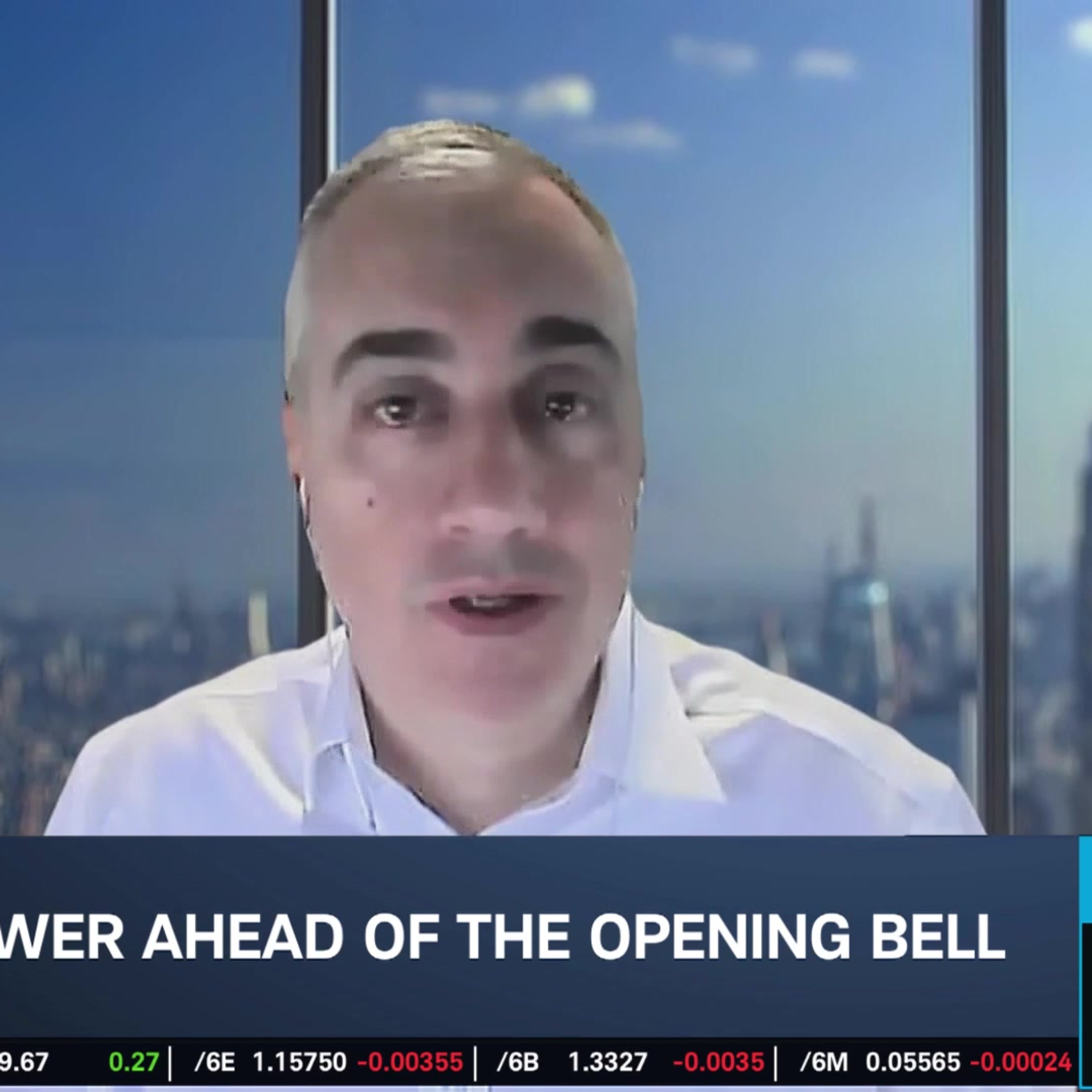
Jonathan Chappell with Evercore ISI explains why his firm has an In Line rating and $390 price target for FedEx (FDX). This, as the company announced a new same-day delivery initiative to keep up with Amazon (AMZN). However, a report from the Wall Street Journal says USPS will add a 8% fuel surcharge on packages. Jonathan talks about ways the business can navigate the volatile energy environment without adding significant margin pressure.
======== Schwab Network ========
Empowering every investor and trader, every market day.
Options involve risks and are not suitable for all investors. Before trading, read the Options Disclosure Document. http://bit.ly/2v9tH6D
Subscribe to the Market Minute newsletter - https://schwabnetwork.com/subscribe
Download the iOS app - https://apps.apple.com/us/app/schwab-network/id1460719185
Download the Amazon Fire Tv App - https://www.amazon.com/TD-Ameritrade-Network/dp/B07KRD76C7
Watch on Sling - https://watch.sling.com/1/asset/191928615bd8d47686f94682aefaa007/watch
Watch on Vizio - https://www.vizio.com/en/watchfreeplus-explore
Watch on DistroTV - https://www.distro.tv/live/schwab-network/
Follow us on X – https://twitter.com/schwabnetwork
Follow us on Facebook – https://www.facebook.com/schwabnetwork
Follow us on LinkedIn - https://www.linkedin.com/company/schwab-network/
About Schwab Network - https://schwabnetwork.com/about
Get every episode summarized
Each time Schwab Network publishes, we email you a written briefing from the transcript — the topics, who appeared, and any specific claims, with the ad reads skipped.
Email me new episodesFree for 3 shows. No card needed.
Hosts & guests
Transcript ready
117 searchable segments. Every word is indexed and playable.
Full transcript
Schwab Network — Evercore ISI on FDX Navigating Energy & Delivery Pressures. Machine-transcribed; use the interactive transcript above to jump the player to any line.
Welcome back. Good morning. We're over some Diane Kinghall coming to you live from the 4 of the New York Stock Exchange. We're looking across the transportation and logistics space and we want to welcome in our next guest, that's Johnson Chappelle, Senior Managing Director, Surface Transportation and Marine Transportation Equities at Ever for ISI. Thank you so much for joining us, Johnson. So FedEx has managed to kind of shake off the worries around rising and elevated crude oil prices. We got crude oil sitting above $94 a barrel today. Talk us to how you view FedEx right now. It's been an outperformer year today. Yeah, well, there's a couple different things there. We'll just touch on the crude part first. When fuel prices are essentially a pass-through, there is a surcharge mechanism with a one week lag. So the impact on their financials from buyer fuel prices is effectively caught up every week with the fuel surcharge. So that's not a big issue as it relates to the company's outlook or the stock. The bigger potential issue would be if gasoline prices were elevated for a period of time. And it started to impact the consumer confidence and the consumer wallet.
Then you could potentially have a medium-term volume impact. Outside of fuel and what's happening with the Middle East, your FedEx has been a significant outperformer over the last couple of years. They've implemented a significant productivity initiative around combining their express and their ground networks, closing a lot of facilities, managing the workforce with a lower volume outlook and then really focusing on higher yielding, higher margin, business-to-business packages at the expense of their traditional B2C, the stuff that you see delivering to your porch. Obviously, Amazon's been targeting that Walmart target or doing a lot of final mile. So that's become a more competitive landscape, a lower price and a lower yield landscape. In fact, it's taking its network really improved the productivity around it focused on business to business. And that's been one of the big reasons that they've been beating estimates mostly on the yield side. Okay, there's a couple of things I want to dive into. I want to get back to the point that you made about the consumer and worries about the consumer as it relates to gas prices and the potential ripple effect to FedEx.
One of the things that I hear from experts is the closer we get to $4 a gallon and we're knocking on it right now. Triple A deal, if you'll gauge us at $398 for gallon of regular today on average. That's when you start to see a pull back and shift in consumer habits. How much does that matter for FedEx? It would matter quite a bit and for the entire transportation landscape. So if you look at the way that the stocks have reacted to the war since the beginning of this month, the transportation group had been a significant outperformer since basically the start of the fourth quarter. You're coming off a four year downturn and trucking trucking is kind of the early cycle tip of the spear, so to speak. Capacity had been coming out. There had been some real green shoots on the demand side, ending with the manufacturing ISM numbers breaking the important 50 threshold, both in January and February. So a lot of optimism around transports, the stocks have done incredibly well up anywhere from 40 to 100 percent depending on the sub-segment. And then when the war broke out, it created this kind of medium-term risk associated with
just what you're speaking to. Our economists at Everglow ISI did a deep dive on the impact of the fuel prices and they think it's a crude number, not a gasoline number, so there has to be some type of equivalent. But somewhere around 97 to $107 a barrel for a sustainable period of time would start to have an impact on the consumer probably after about a month or two. So we're not there yet. It's only been four weeks since the conflict broke out, gasoline prices, crude prices have been very volatile through that time. There's days where we get to that threshold, but we haven't broken it and we haven't been there for a sustainable period of time. So I think that's the fear today, but we haven't seen that on the ground yet. And that 97 to $107 from your economist, Evercore, is that WTI is the reference or is it brand? Yeah, WTI. Okay. And then, so I hear your point, we're not there yet, but we are 27 days into this war, so we're approaching a month there, so I know that that isn't concerned because the longer it lasts, even if we're not at the triple digit level, the longer prices remain
elevated. We know that's a pressure point, but I want to go back to the point you made about last mile, you know, we know that FedEx is getting into that business at same day delivery to try to keep up, let's say, Amazon or Walmart. What's your thought on that and how it can act as a catalyst for FedEx? Well, they're doing it very smartly, is the way I'd address it. They're not committing a lot of resources because again, this is a very competitive kind of lower price, lower yield, lower margin type business, but they don't want to exit it completely. What they've done is created this partnership with a company called OneRail, so they can target some of their packages into this OneRail system, still be able to compete and conceivably get volume growth into the final mile, but they're doing it in a very smart way where it's not tying up a lot of their resources. It's not impacting their plans to target kind of higher margin businesses, healthcare, stuff associated with data centers. That's where the focus is, where they want to grow for the things that you see, the FedEx claims the FedEx trucks, but they can still market this last mile business under the FedEx
umbrella with FedEx packaging, but it's delivered by this agreement that they have with OneRail and some of the drivers with that business as well. I think it's a way to stay in that market, the traditional FedEx market as it evolved over 20, 30 years into that business without doing it in a way that really threatens their margins. Okay. And I want to get your thought on this, so we've seen reports, Wall Street Journal reporting that the US Postal Service is going to be adding an 8% fuel surge charge. Could you see to packages? Could you see something like that for FedEx? Well, FedEx and UPS have been doing that for decades. I mean, my first reaction to the USPS headline yesterday is what took them so long. I guess it's a government organization, so it's a little bit different, and I don't want to be flip about it because 8% to the consumer is still something, but as I noted earlier, the FedEx UPS fuel surge charge mechanisms update every single week, and 8% is very low relative to what they've already been pushing on their fuel surcharges. So we don't want to say that they make money on fuel, but there is a period of time if
where fuel goes up in a parabolic manner, stabilizes and comes down with that lag on the surcharge as fuel is coming down, they do make a little bit of money. It all nets out in the end, but they have very sophisticated surcharge programs to be able to pass through the consumer, and the USPS, unfortunately, just isn't as sophisticated enough. So it's finally got to a desperate times type situation there. All right. Thank you, Jonathan. We appreciate your time this morning and your thoughts across FedEx. That's Jonathan. We've got a $390 price target on a FedEx of Evercore ISI coming out.
More episodes
More from Schwab Network

JNJ Balances Growth, Patent Transitions, and Legal Overhangs
Schwab Network

nCino (NCNO) CEO on Earnings, AI in Banking & Overcoming "SaaS-pocalypse"
Schwab Network

The Big 3: NET, TWLO, ASTS
Schwab Network

Tie Lasater on Inflation Floors, Energy Risk, and Private Credit Stress
Schwab Network