Eric Macramalla: NFL Replacement Refs & NHL Needs Stiffer Discipline!
About this episode
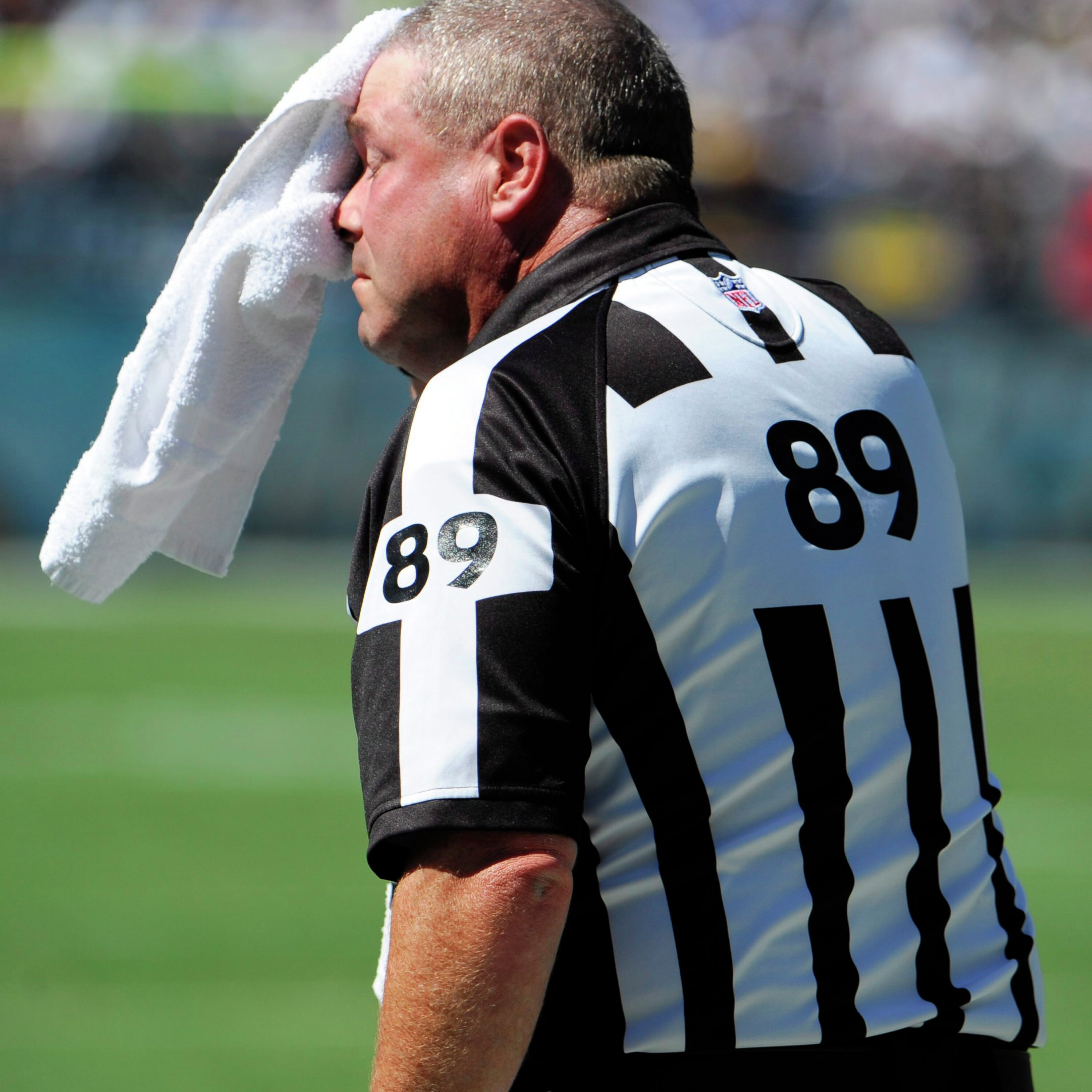
Eric Macramalla joined Conor and Shaun and they talk NFL replacement refs and what NHL suspensions should look like after Gudas took out Auston Matthews!
Get every episode summarized
Each time The Morning Show with Conor McKenna and Shaun Starr publishes, we email you a written briefing from the transcript — the topics, who appeared, and any specific claims, with the ad reads skipped.
Email me new episodesFree for 3 shows. No card needed.
Hosts & guests
Transcript ready
667 searchable segments. Every word is indexed and playable.
Full transcript
The Morning Show with Conor McKenna and Shaun Starr — Eric Macramalla: NFL Replacement Refs & NHL Needs Stiffer Discipline!. Machine-transcribed; use the interactive transcript above to jump the player to any line.
When life gets unpredictable, preparation matters. In medicine, it's all about staying alert. Ready for whatever comes through the door. On the road, it's no different. That's why Volvo designs vehicles to help anticipate risk, reduce harm and protect lives. The Volvo XC90's advanced safety systems inspire confident decisions wherever the road takes you. The Volvo XC90 for life. Proud sponsor of the Pit Podcast. Learn more at VolvoCars.ca-safety. Camels are inherently not beautiful. They're adorable.
We have a Pat Camelware Egyptian, his name is Spot. But who says, oh, my Camel is very beautiful. No, mine is. Well, then let's have a competition. I know. Well, it's the neighborhood flex, you know? Like I have the nicer bicycle than you. And rounded round we go. Oh, yeah. Well, let me show you. Look at my Camel here. As a matter of fact, let's get an expert here who we can agree on is an expert and let the judging begin. I mean, this is a world in which we have like a competition where people roll wheels of cheese down steep hills and kill themselves. Yeah, break their necks while doing it, right? So why not a $60 million 40-day Camel Beauty Pageant? With what? A $60 million price? Yeah. Is it $60 million? $60 million? No, $60 million? Magic carpet? Like what? Look at that. No, those are beautiful hops. No, those hops are not real. No, they're real. They're spectacular. Well, they don't bounce the way that... That's right. It's an unnatural bounce to that hump.
Yeah. And then you know. They're too perfect. Yeah. It doesn't move. The way it's supposed to move. I want to see a guy take his Camel to the clinic, the cosmetic clinic, to have lip fillers pulling. I want to see that entire process. I don't care about the competition. I want someone to get a camera and just to record all of that from walking the clinic to the Camel back in a chair with his head up and getting fillers injected into its lips and getting, I don't know, button enhancement. I don't know. Is that possible? Do camels do the... Do you want... Because I guess they're butt sag, right? No. Yeah. You know a lot about camels. Do I have an ice in a round? Like, as you said before commercial break, I am Egyptian. I wonder if it's like a DIY project. You know, honey, I can't go out for lunch today. I've got to enhance our Camel Hector in the back. Alternatively, how awkward that conversation is with the veterinarian. When you're taking your Camel in for a routine checkup. Listen. And then you take him aside and you're like, look, we've got a few bucks.
We've got a competition coming up this weekend. No, it's not. Can you do something about his nostril? Can you make him? That's right. It's got a brinoplasty. And they're not even there. They want powder lips, dermal fillers around their nose, Botox to soften their faces and silicone wax to inflate their humps. Could you make the humps bigger? I want my Camel to have bigger humps. Yeah, bigger is better. So they say. This is amazing, by the way. Thank you for finding this. This made my way. You pay attention to these stories, you know? Yeah, I'm always. As an Egyptian, this is like one of the best stories of the year. Like kicking what is probably empirically one of the ugliest animals and having a beauty contest. I can't believe you think camels are ugly. What a hater. Beautiful creatures. Why that Egyptian? I could say that. Because I can go two ways on this, right? You know, I could say that I'm offended. And I can write a letter to the CRTC saying Conor and Sean, the story about camels and go, what was the problem?
Well, it was a true story about camels. I'm still authentic because I'm Egyptian. You often joke about your Egyptian heritage as you're sort of doing right now. I am curious what your approach is as a parent. For instance, let's just say, I'm of Irish descent amongst other things. I've got some Swedish, some Scottish in there along the way as well. But Irish really sort of more than anything else. We just had St. Patrick's Day this week. The kids weren't even dressed in green. It was a disgrace, you know? Did they drink? They did not. Nor did I. I think this might have been the first St. Patrick's Day in a while where I didn't even have a pint of Guinness, which is a different conversation in a different story. Yeah, but you're more of an old-fashioned guy, right? So if you have an old-fashioned on St. Patrick's Day, someone's going to punch you in the face. No, the Irish are not a violent people, are they? But anyway, what's your approach to passing on, you know, like say, for instance,
people that are of Italian descent, very often when it comes to like an international soccer tournament, you know, the World Cup or Euros coming up, you get fired up and you're cheering for Italy. What's your approach to passing on, you and Emily's ethnicities to your descendants? Is that a point of emphasis for you as a parent? Yeah, it's not a point I've told them. I look, we built the pyramids 5,000 years ago. We've been coasting on that ever since. But didn't the Jews build the pyramids? We built them for us. Okay. Yeah, they have, right? They're the ones, you know, carrying all the rocks around. But so we've been coasting on that ever since. So that's kind of what I tell them. We talk a bit about being Egyptian. The thing I guess about being Egyptian is, it's the one ethnicity, or it's the one ethnicity. People find it kind of funny in a weird way. It's something different about being Egyptian. Like, hey, can you show me how you walk, for example? There's a song, right? The Bengals walk like an Egyptian. It's just something different about it.
So if I tell someone in Egyptian, sometimes the response is, oh, cool. You know, I'm like, oh, okay, I guess I didn't think so. But we talk a bit about being Egyptian. It manifests through the food, I guess, as well, that I make for the kids on a regular basis, because they don't really love it as much as I do. But, you know, we do talk about it. They're half Egyptian. And I try and get them to embrace that side of them. What's that food? Huh? What kind of food? Oh, well, there's a couple staples in the Egyptian diet. One's called more, hey, it's like a green soup. You put it on rice, you put some chicken in there, some onions and stuff. It's really, really good. It's a staples. I'm gonna call it fool. It's just fava beans with lemon and olive oil and salt and you put Peter Bradstuff. This is things like that. Those are the effect of the staples. But there's a lot of food. And, you know, that food tends to be quite good because it comes from that part of the world. Emily is from my, as you said,
my Commonwealth spouse. She's from the Maritimes French Canadian. So their food is slightly less interesting. Huh. Right? How dare you? Yes. She likes to make the tuftsia, which is good. But for me, I like the tuftsia. I'm like, well, I shouldn't say this, but I will. It looks like dog foods. I don't know if I want to eat it. I know. I know. I know. It wasn't really good. It wasn't really good tuftsia. I love it, tortilla. What are your tortilla or chicken pot pie? Gun to your head. Oh, chicken pot pie. Chicken pot pie. Because you can't eat it without burning your tongue. Same thing with onion soup. You order any of those two things that you're going to burn your tongue back. It doesn't like a puff pastry. You know, the puff pastry, to me, puts it over the top, you know? The chicken pot pie? Yeah. It's a different crust than a tortilla you're saying. I think so. It's more flaky. Okay. Yeah, fluffy. I wouldn't say I'm an expert on that. Fluffy like a beautiful camel that has had implants. Hey, Eric. The NFL is looking at replacement referees, apparently. They're grease in the wheels to maybe bust out
the replacement officials again. Now, are they banking on the fact that most fans or that remember what happened in 2012 have now died and are too old to remember? That was pretty bad, wasn't it? It was so bad. It was just yesterday. Yeah. I can't believe that was 14 years ago. But can you imagine the NFL trotting out? How does a $23 billion a year business even consider that running it back and having another fiasco like we saw not that long ago? When life gets unpredictable, preparation matters. In medicine, it's all about staying alert. Ready for whatever comes through the door. On the road, it's no different. That's why Volvo designs vehicles to help anticipate risk, reduce harm and protect lives. The Volvo XC90's advanced safety systems inspire confident decisions wherever the road takes you. The Volvo XC90's for life. Proud sponsor of the pit podcast. Learn more at VolvoCars.ca-safety.
I'm Luke Wilson. Join me each week for Film Never Lies. Since retiring from the NFL, I've had a lot of my mind now. I've got my own show. So if you're tired of lazy takes, if you want honest conversations, join us each week. Film Never Lies available on all TSN platforms in the iHeart radio app. So referees are typically part-time employees. They're not independent contracts. They're not full-time. So they're part-time. I think they get paid like 10 or 12 grand a game, which if you do the math, it's about 200 grand a year. There are bonuses in place. It's super bowl. If you're one of the better ones, you get 25, 50 Gs. On top of that, when the NFL is saying, look, it's still a part-time gig. We're going to pay you part-time. We're paying you $12,000 for three hours of work. We think that that is reasonable. It is a really big business. But the one way you're able to achieve such tremendous financial and fiscal success is by making sure that you engage in good habits. I think if anyone's running the NFL, I think they would probably do the same thing.
I think 200 grand per ref. There are lots of referees that ref these games, and it's adding up, right? So I think the NFL is going to have to avoid it, and they are going to get this settled. I expect I think the deal runs out one in May of this year. I remember after Ed Hockley, you remember him? He was the rep that was always cut and muscular. Of course. When he retired, I emailed him, and I said, hey, do you want to come to my show? And I think it's Ed Hockley's a lawyer, right? He's a founding member of a firm, Joan Skeleton Hockley, or something. And then he said to me, and his email back, he goes, you know, I very much appreciate the request, but I promised my wife I would take a break from doing media and just being in the public eye, so he continues to practice civil litigation. I think in the state of Arizona, I think that's where he lives, but he was a lawyer on the side. That was his job,
and then his part-time job was being an NFL ref, and he was very good at it. That's just the reality of the job. So you can ask to get paid more, maybe $250,000, rather than $200,000, but there's a limit to what the NFL is going to pay these guys because they are part-time employees. But is the fact that they're critically important to the game? I mean, the difference between today and 2012, although there are many differences, but one of them in the world of sports is that legalized sports betting has become as pervasive as it has, and you'd have to think the integrity of officials becomes more important to protect than ever before. How big of a part of that, how big of a part of the negotiation or the conversation about how you compensate NFL referees should revolve around making sure that they're not vulnerable to compromising positions that we've seen so many athletes and officials and coaches and everybody involved in in the last couple of years. That's an interesting question, actually. I guess if I reflect on that,
my initial reaction is times of change, absolutely, and it may well be far more tempting or easier to get someone to start placing bets on games even if they're referees. It would seem, however, that the amount of money somebody makes may not necessarily insulate them for making these bad decisions. I think of a manual class A, who was set to make about $125 million for the rest of his career and was making some really good coin, and he was placing bets for between $7,000 and $10,000 on a pitch, whether it would be a pass ball or a ball or a strike or whatever it was. I don't know the extent that being paid well safeguards a league against this type of activity, although I think it's fair to say, Connor, that more often than not, the players that get caught are the supporting cast members on teams
who don't make the same amount of money as the superstars. So maybe there's something to be said there, but how much would you need to pay them to ensure that this doesn't happen? I don't know if there's a reasonable amount that would ensure that that doesn't happen without going overboard. What about the total compensation package? Like you mentioned, on average, maybe you make it north of just $200,000, which I know for you is a tiny stipend, but I wonder about, if my laser tag money, does the, because the NFL generates so much revenue, $23 billion in 2024, 2025, should there be a connection that, because the league is flush, that the referees also should get a, get a cut and be paid accordingly, or it doesn't fit because they're not players and we don't pay to, and don't get entertained by the referees. Well, I mean, the NFL minimum salary is $885,000, and these are for players actually playing the game.
You got players on entry-level deals, don't make a lot of money, and they got to wait for that second contract to really cash in if there are players of consequence. This first thing I'd say is that the players themselves maybe don't make enough as well. Other thing I guess is that, while the league generates $23 billion in revenue, that's not profit, and they still have to account for their expenses. I think you're running any kind of business here. You have an eye on the bottom line on profitability, and they want to remain to be profitable business. Now, it is an absolute behemoth, but I guess what the league is saying is there needs to be a limit on what we pay the referees. We have so many referees. They're an important part of the game. We've told them they're an important part of the game, but they're not the game. And the referees from this standpoint say, we have leverage because in 2012, that was an absolute disaster. So you can understand that positions on each side, ultimately Goliath is going to prevail over David here. I would expect.
What's coming up on your... What happened on your smash hit radio show offside this week? With my billions of pod bills, I talked a lot about NHL discipline. There was this report that... You know what this economy, David said, you know, we have to re-examine how discipline is imposed on players, and there was a report that you have to amend the CBA to... If you want to change that, and that's not the case, heart rate will be 18 of the NHL CBA. This provides that... Providing discipline for on-ice conduct is discretionary. The league can do whatever the hell it wants to do. It's on an absolute power, and they have to honor past precedent. That moving forward, gooties me on me on Austin Matthews, that's 20 games, minimum 20 games. So that was the first thing, and I guess the second thing is, there are things going to change, and I don't think they're going to change. George Pyro's, when he was a little presser there, and it's unusual for the NHL to sit on George Pyro,
so I guess there was a lot of pressure to get him out there, because when Conor McDavid makes, you know, a public declaration about his dissatisfaction with discipline and the player department of safety, you have to do that. But he said, you know, in that statement, that they do a great job, and they've had people who've been with the department since the very beginning. So there's this inertia, and this is... You know, the NHL is looking to manage this contradiction. They understand they feel as though that the revenue is generated by virtue being a really inherently physical game that straddles that line, and they don't want to really change that. So they hire people like Pyro's to come in. So Pyro's is going to hang down significant discipline. It causes, like, this level of cognitive dissonance, right? What it does is, he made his living punching people in the face. And if he comes down hard in other players, it serves to undermine or de-legitimize his career to certain extent, and his identity as a hockey player. So having guys like Pyro's and Pronger and Brian Burke
as they had the player department of safety, makes perfect sense, because what it does is it continues to align that office and that department with the ultimate goal of the NHL to keep the game on the edge, to keep it violent. And to ensure, and this is the part, I think, that annoys a lot of us, is that we seem to care more about the players and the league does. And then the league has to do a much better job caring about the health and safety of these players. It shouldn't just fall on the fans to express outrage in the players. Who just did the awesome matches? They said, yes. That was intentional, maybe reckless, but likely intentional. It is likely altered, you know, awesome matches career. And we're going to give you five games for that. That's simply not enough. You have to implement discipline that serves to eliminate behavior rather than gently discourage it. And right now, the league is doing the ladder and not the former. And it's not acceptable.
Wouldn't you be curious to see the results of a pole and the question is posed to them? Should that have warranted a, let's say 20 is too much. Should that have warranted a 15 game suspension? And what the results of that pole would be? Because part of this conversation is that the PA has a history of going to bat for the aggressor and getting that suspension lessons, right? Appeal the suspension. They don't want their members suspended. They don't want their members not earning. And there is this weird internal conflict of interest with protecting the members that are being targeted by players like this. As Pierla Bruns pointed out in the last week, these incidents have become far, they're a few and far between. Part of what made that goodest thing remarkable was that we, how rarely we see stuff like this happen in the NHL anymore. But I mean, any idea, either of you guys, like what, or what all NHL players together might say,
if they were asked to weigh in on whether Gouda should have been had the book thrown at him here as PA members? Well, my sense is the majority of players would have liked to have seen Gouda's get a far more severe suspension from it. That was avoidable and ended up having a very serious outcome, ending a star player's season or just any player's season and altering the course of his career. And it's just the way it's going to be. It's going to take a while for that thing to heal. So it does change things. I think that they would like to see that. I guess they might be of the mind that if Gouda's knows that's 20 games without pay, he doesn't stick out as me. And I think that's probably a fair statement to make. And I think the players would like to see avoidable dangerous hits removed from the game. Sean? 20 games is to me. That's a crazy number to me. Just off the Gouda's thing.
And I know, I guess I would slightly disagree. I don't believe the players would vote. I think the majority would vote that, you know, maybe a couple of more games that maybe five is too light. Maybe 10 is the right number. Somewhere around there and Eric Conner is my is my logic misapplied here when I bring up the fact that players don't like when other players take down discounts because it's all about leveling up for the next contract, for the next contract, that in a world where a guy like Gouda is on that hit on Matthews gets 20 games, maybe they think, well, what if one of my guys does that? And then he gets 20 games. You know what I mean? Are they also looking out for their own bottom line and their own team success based off of that? Well, I guess, you know, Sean, I, 20 games is a lot. I think the players are really kind of trying to live for that type of reaction because you want players on the ice not to make those decisions. You want to impose discipline
that serves to completely eradicate that conduct and that behavior rather than just discourage it. And players have finite careers and finite earning potential. I guess that's why players would be in favor of stiff discipline. We understand that they still have a PA historically has sided with the aggressor. I mean, for lack of a better term that they want to protect the aggressors in these situations. That really was the crux of my point. And I bet you do. If that's been the PA's stance historically, then why would anything ever change? And it's easy to blame Colin Campbell and it's easy to blame George Paros and it's easy to blame everyone that there is to blame for it. The PA is not coming out swinging. And even Connor McDavid was pretty guarded in his remarks there. And it was remarkable. The reason it was so remarkable was that he said anything at all. Traditionally, these guys kind of keep quiet. They kind of keep to themselves.
And I think that's a big part of the reason why the culture is what it is. And I bet you there's this belief that there's everybody knows there's in this inherent risk of being a national hockey league player. And I'll give you a sign up for this and that yes, there is Baronucle fighting occasionally in the league and there are accidents, there are deliberate accidents. If you want to phrase it that way, that happened in the league. And I part of me thinks Eric, that's why the NHL to Conners Point more often than that sides with the aggressor for for that reason. And for obviously, you know letting that player keep more money in this pocket ultimately. Yeah, I mean, a couple of things I counter you know, it is not George Paros's polter or Colin Campbell's fault. it's the league appointing those individuals with a view to maintaining the status quo and ensuring that they align with the tradition of the league, that is a violent league. So far as the union goes, yeah, it is. They are in a conflict of interest and it's tough. I guess what the league would say, the NHLPA, this after director Walsh would say, is that the appeals are illegal issue. That is, we assess the length of the suspension. We
determine whether it's in keeping with past practice and precedent. And if it's not, then it's incumbent on the union to appeal that decision to ensure that a new precedent isn't set. That being said, when Gary Cedar Cross checks Paul Carey in the head years ago, I remember looking at going, wait a minute, they both have the same representative, the NHLPA, how do you resolve, whereas the inherent clearly, clearly a conflict of interest. So it is an imperfect system. I think players are fine with incidental violent contact. I just don't think they love the notion of a racquetaurus going airborne, hitting someone behind the net, or a good stick in his knee out on another player and a result in a significant injury. I think they're good with the incidental contact in the game. Whatever that contact is, and some of it's really violent, I just, my sense is that they don't love the type of contact that is avoidable and causes a great harm and puts great harm on these players. What about the idea of a third party? Being and putting this out of the hands of the league entirely and having an independent
body of some sort, dull out punishments in these situations. I remember that was discussed during a lot of, when the NFL was handing out a lot of discipline for domestic violence, beginning with the Ray Rice and Greg Hardy and a lot of stuff. So that was one of the discussions. I think it would probably never happen. Actually, I'll probably, it would never happen because the NHL is a short venture. It runs a private business and it doesn't want to have any third parties that come in and provide some level of unpredictability. They're running a business. They want to maximize revenue and Gary Batman and his view has adopted a set of principles governing principles that he believes can maximize that revenue. I don't agree. I think that his approach is slightly flawed when it comes to allowing or not seeking to eliminate this type of behavior, but bringing your third party to any business be sports or otherwise creates a level of unpredictability that any business would want to avoid. Eric, thanks for your time as always.
I love you guys. I love you more than beautiful studying camels with fake humps. Introducing Brian Adams Radio. On I-Hard Radio. Kavifus 360. Husted by Brian Adams himself. Join me for an insider look on a wild ride to 40 years of global rock and roll. Brian Adams Radio. I'm ready. Now available on the free I-Hard Radio app. Or ask your smart speaker to play Brian Adams Radio on I-Hard Radio. Who's ready to rock? Can we work out? Kids won't run.
More episodes
More from The Morning Show with Conor McKenna and Shaun Starr

Hour 4 - Friday 05/08/26
The Morning Show with Conor McKenna and Shaun Starr

Joe Yerdon: Habs v Sabres Game 2 Preview!
The Morning Show with Conor McKenna and Shaun Starr

Hour 3: Habs Breakfast & Darren Dreger
The Morning Show with Conor McKenna and Shaun Starr

Darren Dreger: Habs Game 2 Adjustments!
The Morning Show with Conor McKenna and Shaun Starr