About this episode
If you have a sibling with autism, your future child’s risk for an autism diagnosis is increased by 2 - 3.5x. Orchid’s whole genome embryo reports can help mitigate your child’s risk by screening for 200+ genetic variants definitively linked to autism and other neurodevelopmental disorders. Discuss your situation with a genetics expert.
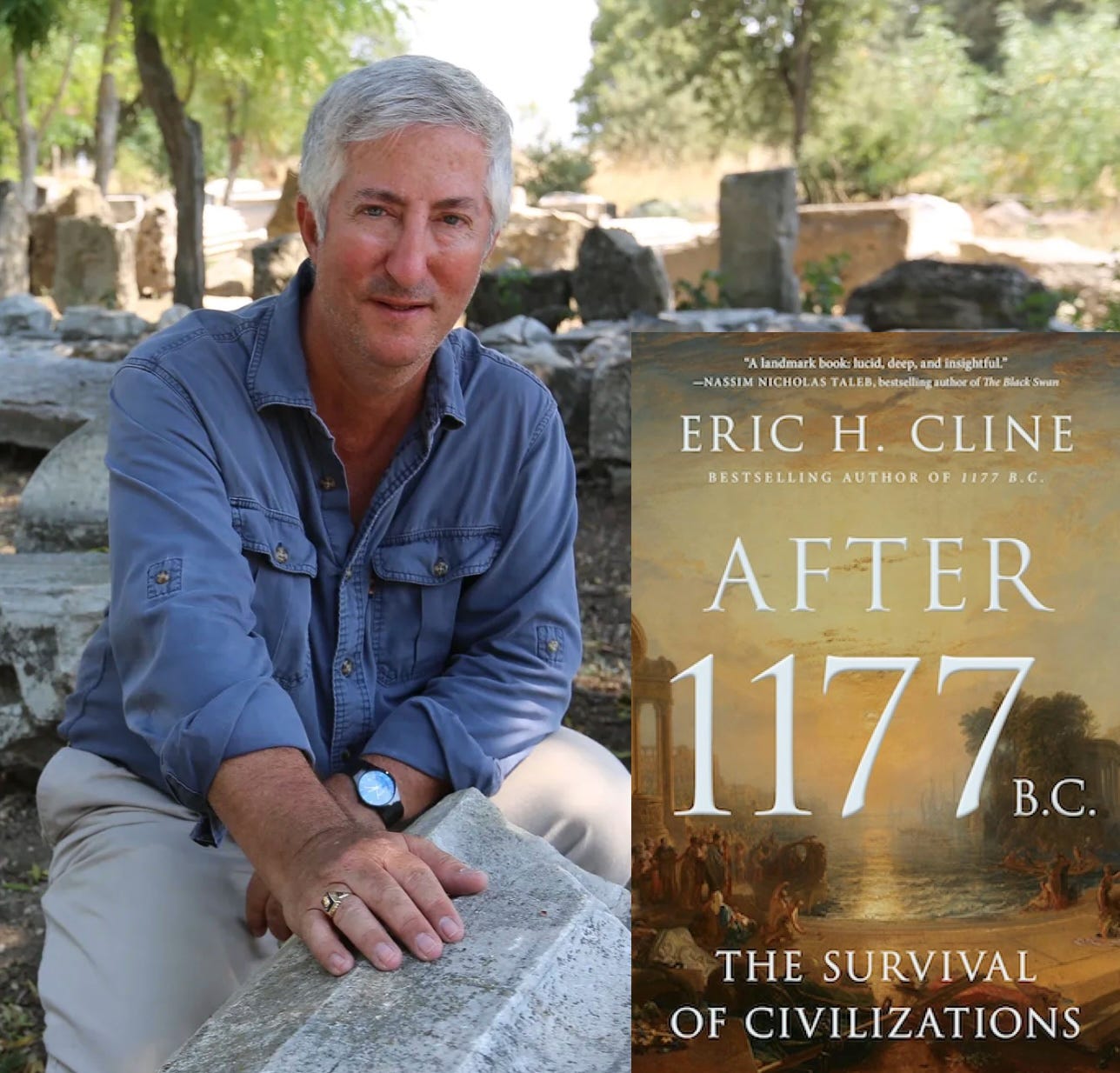
On this episode of Unsupervised Learning Razib talks to George Washington University archaeologist Eric Cline. The author of 1177 B.C. - The Year Civilization Collapsed, Cline has a new book out, After 1177 B.C. - The Survival of Civilizations. While 1177 B.C. closed with the end of the first global civilization, that of the Eastern Mediterranean at the end of the Bronze Age, After 1177 B.C. tells the story of those who picked up the pieces. But first Cline and Razib talk about the popular appetite for ancient history, and how 1177 B.C. became a surprise bestseller. Cline’s training is in archaeology and they discuss how new technologies like ancient DNA and isotope analysis are now contributing to transforming our understanding of the past.
Then they turn to he organization of After 1177 B.C., how Cline decided to build on regional geographically focused histories rather than constructing a tightly integrated single narrative thread. This gets to the reality that the period covered in After 1177 B.C. is one of disintegration and isolation, as the networks binding together ancient Near Eastern kingdoms collapsed, with some states like that of the Hittites disappearing, and others like Egypt re-emerging sharply restructured.
Cline and Razib also discuss the lacunae in our understanding of the past, and the possibility that civilization may have gone through more cycles than we yet understand, with perhaps some social and technological complexity in the Pleistocene that we had not previously anticipated. Cline points out that Göbekli Tepe certainly must have had precursors in the Pleistocene, as local people could not have constructed such a site without skill and know-how accumulated over generations.
Get every episode summarized
Each time Razib Khan's Unsupervised Learning publishes, we email you a written briefing from the transcript — the topics, who appeared, and any specific claims, with the ad reads skipped.
Email me new episodesFree for 3 shows. No card needed.
Hosts & guests

No transcript yet
This episode has not been transcribed. Request it and it moves to the front of the queue.
More episodes
More from Razib Khan's Unsupervised Learning
Kyle Orton: Muslims before Islam
Razib Khan's Unsupervised Learning
Gabriel Rossman: the late marvelous Dr. Arday and the state of sociology
Razib Khan's Unsupervised Learning

Monologue: Jason Arday, Nathan Cofnas and the wages of DEI
Razib Khan's Unsupervised Learning

Nikolai Yakovenko: the wages of the Hugging Face hack
Razib Khan's Unsupervised Learning