
Episode 26 – Electrical Test Equipment Every Electrician Should Know
About this episode
Sponsored by Rogers
It’s an electricians job to be able to identify what’s going on in an electrical circuit, and sometimes this can be a difficult task. Having a firm knowledge of how to use various pieces of electrical test equipment can be the difference in solving a problem and making a guess. In this episode, I cover all of the pieces of test equipment I believe an electrician should know how to use.
#1 Basic Jaw-Type Multimeter/Tester
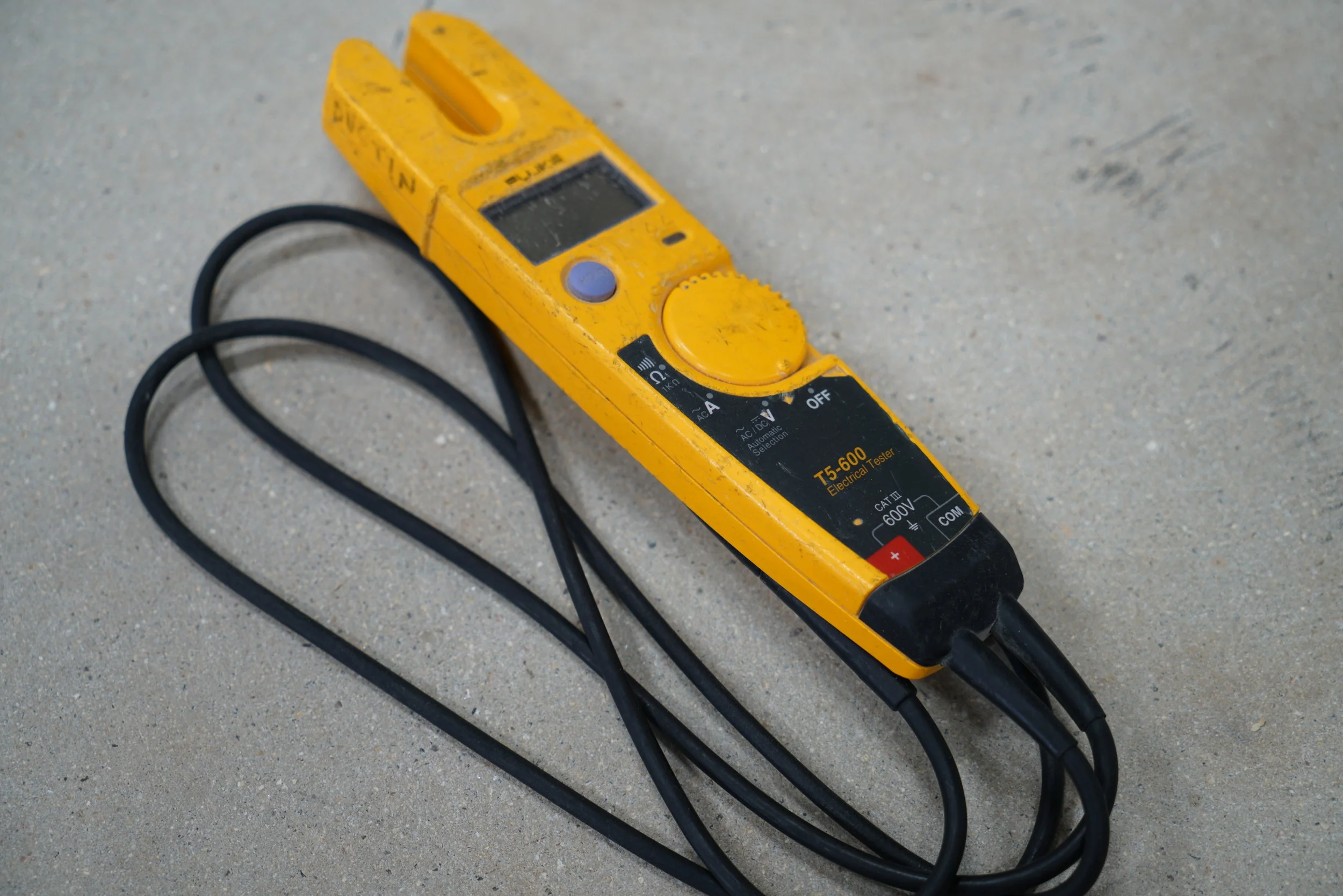
This is a pretty obvious piece of equipment for an electrician to have, but you’d be surprised at how many electricians and apprentices out there don’t know how to use one. Well, let’s dive in!
For starters this is not “technically” a multi-meter. Fluke calls it a tester, but most of us in the field still call it a multi-meter, so for the sake of this article I’m going to continue calling it a multi-meter. It has multiple functions, which is why we call it a “multi-meter.” It can read voltage (difference of potential), amperage (current flowing in a conductor), resistance (opposition to current flow in a conductor), and continuity (whether or not you have a complete loop.
Most of the time, this is all an electrician will need to know. This Fluke T5-600 fits in your back pocket, has detachable leads that can be snapped into the tool, or used hands-free, and a backlit LED display. This model is one of the most used testers on the market, and because of its rigidity and reliability will continue to be so for quite some time.
#2 Clamp-on Ammeter
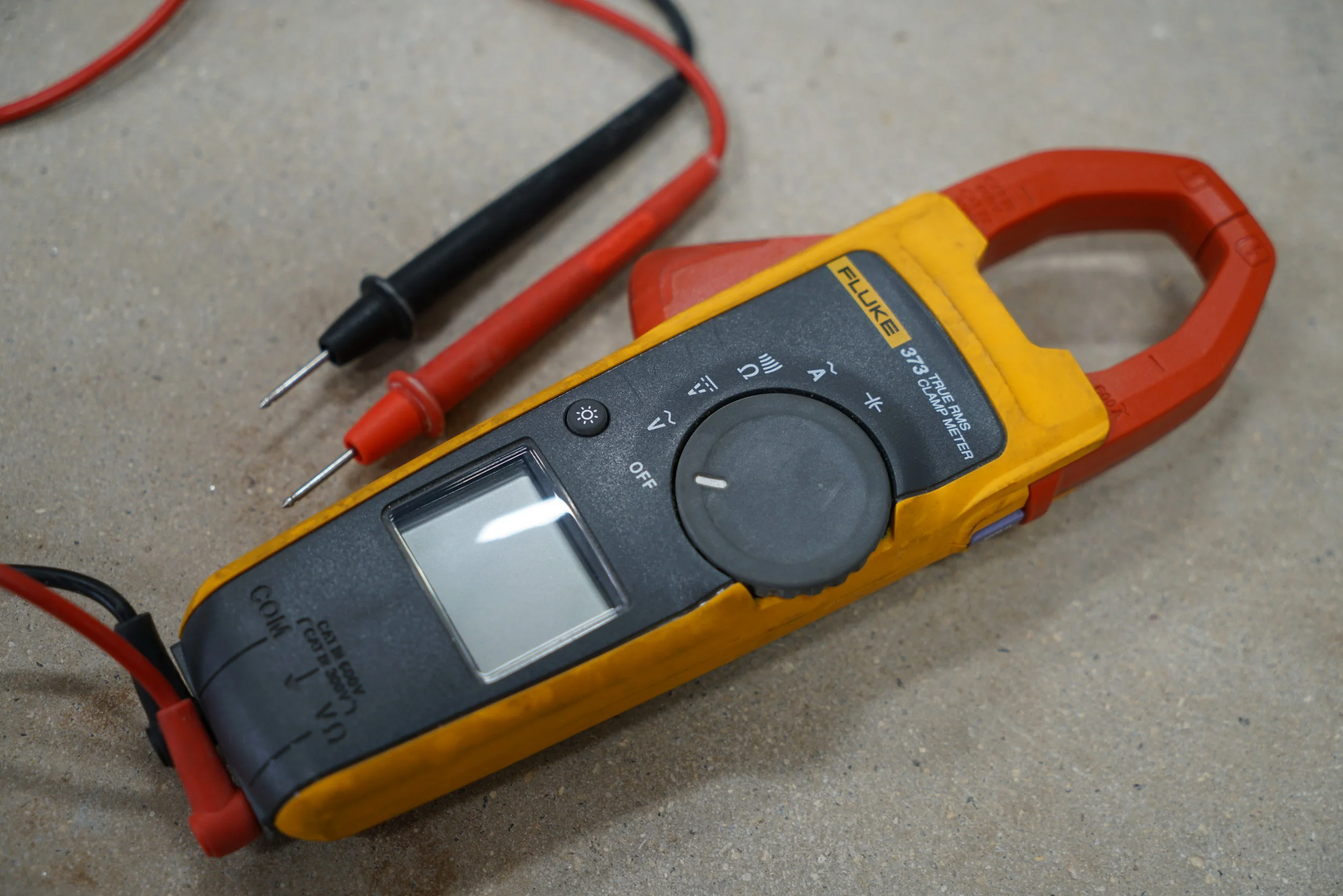
The clamp-on ammeter is similar to a standard tester or multimeter with the addition of a clamp/jaw that reads amperage on large diameter conductors. What the clamp provides is the ability to measure larger size wires for use on feeders and service-entrance conductors. In addition to measuring amperage, this tester also allows you to read voltage, resistance, continuity, and capacitance. This specific model (Fluke CL323) does not allow you to snap the leads to the tool so it can be a bit cumbersome to use when testing voltage – unless you have something nearby that you can clamp on to, allowing the tester to hang in front of you while you use the lead
Want to learn more about becoming an electrician or mastering the craft? Visit ElectricianU.com for courses, resources, and everything you need to succeed!
Get every episode summarized
Each time Electrician U publishes, we email you a written briefing from the transcript — the topics, who appeared, and any specific claims, with the ad reads skipped.
Email me new episodesFree for 3 shows. No card needed.
Hosts & guests
No transcript yet
This episode has not been transcribed. Request it and it moves to the front of the queue.
More episodes
More from Electrician U

Care About Your Impact
Electrician U

Electricians QUIT Trashing Each Other and Build Up the Trade
Electrician U

Big Changes Coming to Electrical Codes in 2026!
Electrician U

Tools, Training, and Real Change
Electrician U